Is your home feels generic and soulless? Every room looks like it came straight from a furniture catalog? You want warmth, character, and a space that feels genuinely lived-in and loved.

Farmhouse style is the answer you have been searching for. It combines rustic charm with modern comfort in a way that feels timeless. These 33 practical steps will guide you through creating a beautiful farmhouse home from scratch.
1. How to Understand the Core Principles of Farmhouse Style
Farmhouse style is built on simplicity, functionality, and natural beauty. Every piece of furniture and decor should feel purposeful rather than purely decorative. The aesthetic celebrates imperfection, age, and the beauty of handmade and natural materials.

Study farmhouse design by looking at real working farmhouses rather than staged showrooms. Notice how utility and beauty coexist naturally in these spaces. A genuine farmhouse aesthetic never feels overdone or forced in any way.
| Farmhouse Core Principle | How It Applies |
|---|---|
| Simplicity | Only keep what is functional or meaningful |
| Natural materials | Wood, linen, cotton, stone, iron |
| Imperfection welcome | Distressed finishes, worn textures |
| Warm neutrals | Cream, white, grey, warm beige |
2. How to Choose the Right Farmhouse Color Palette
The farmhouse color palette is built on warm, muted neutrals with earthy accents. Getting the colors right is the foundation of the entire look. Wrong colors make even perfectly chosen furniture feel off and disconnected.

Start with a base of warm white or soft cream for walls throughout the home. Layer in warm grey, sage green, and dusty blue as secondary accent colors. Add natural wood tones and black iron accents for depth and grounding contrast.
| Farmhouse Color Role | Best Color Choice |
|---|---|
| Primary wall color | Warm white or soft cream |
| Secondary accent | Warm grey or sage green |
| Textile accent | Dusty blue or muted rust |
| Grounding color | Matte black or dark charcoal |
3. How to Choose Farmhouse Furniture That Feels Authentic
Farmhouse furniture is sturdy, simple, and built to last generations. It should look like it has a history even when it is brand new. The right furniture choices make the whole room feel grounded and authentic immediately.

Look for furniture with visible wood grain, simple joinery, and honest construction. Avoid furniture with excessive ornamentation or overly polished, perfect surfaces. Distressed finishes, turned legs, and plank-top tables are all hallmarks of true farmhouse style. You’ll also love to see front porch designing to decorate your farmhouse.
| Farmhouse Furniture Feature | What to Look For |
|---|---|
| Wood finish | Natural grain, light distressing |
| Table legs | Turned, tapered, or trestle style |
| Construction | Simple joinery, honest materials |
| Upholstery | Linen, cotton, canvas slipcovers |
4. How to Use Shiplap Walls to Define Farmhouse Character
Shiplap is the single most recognizable element of farmhouse interior design. Even one shiplap accent wall transforms a room’s entire character and warmth. This wall treatment adds texture and depth that paint alone cannot achieve.

Install shiplap on the wall behind your sofa, fireplace, or bed for maximum impact. Paint it crisp white or soft cream for the most classic farmhouse result. Leave small gaps between boards for authentic shadow lines that add visual depth. Learn more about wood wall treatments from DIY cheap wood ceiling for extending the shiplap look overhead.
| Shiplap Application | Room Impact |
|---|---|
| Behind sofa | Warm, defined living room focal point |
| Fireplace wall | Classic farmhouse hearth feature |
| Behind bed | Custom headboard wall look |
| Kitchen accent | Charming, cottage kitchen character |
5. How to Find and Style a Farmhouse Dining Table
The farmhouse dining table is the heart of the entire farmhouse home. It should be large enough to gather everyone comfortably around it. A beautiful farmhouse table communicates generosity, warmth, and the importance of shared meals.

Look for a solid wood trestle table with a plank top surface for the most authentic look. A pedestal base or sawhorse legs also suit farmhouse style beautifully. Style with mismatched chairs on the sides and matching benches for a relaxed, collected feel.
| Farmhouse Table Style | Seating Recommendation |
|---|---|
| Trestle plank table | Mixed chairs and wooden bench |
| Pedestal base table | Matching chairs with linen cushions |
| Sawhorse leg table | Metal stools and wood chairs |
| Reclaimed wood table | Any seating style works |
6. How to Decorate With Reclaimed Wood Throughout Your Home
Reclaimed wood is the soul of authentic farmhouse design. It carries history, character, and imperfections that make it irreplaceable. No new wood, no matter how well finished, carries the same depth and warmth.

Source reclaimed wood from salvage yards, architectural dealers, or online marketplace sellers. Use it for floating shelves, mantel beams, headboards, and coffee table tops. The mix of grey tones, nail holes, and worn patina creates instant authenticity in any space.
| Reclaimed Wood Use | Room Application |
|---|---|
| Floating shelf | Kitchen, living room, bathroom |
| Fireplace mantel beam | Living room focal point |
| Plank headboard | Master bedroom feature wall |
| Coffee table top | Living room centerpiece |
7. How to Choose and Layer Farmhouse Textiles
Textiles are where farmhouse style gets its softness and livability. The right fabrics add warmth, texture, and a handmade quality to every room. Poor textile choices make even a well-furnished farmhouse room feel cold and uninviting.

Use natural fibers exclusively — linen, cotton, burlap, and wool belong in a farmhouse home. Layer multiple textiles in the same neutral palette for a rich, collected look. Grain sack patterns, stripes, checks, and simple florals are the most authentic farmhouse textile prints.
| Farmhouse Textile | Best Room Use |
|---|---|
| Linen slipcover sofa | Living room centerpiece |
| Buffalo check throw blanket | Sofa, armchair, bedroom |
| Grain sack pillow covers | Sofa, chairs, bed styling |
| Jute or sisal area rug | Living room, dining room |
8. How to Style a Farmhouse Kitchen From Scratch
The farmhouse kitchen is the most iconic room in the entire farmhouse home. It should feel like it has been cooking family meals for generations. Every element from the cabinets to the countertops should support this warm, functional aesthetic.

Paint kitchen cabinets in warm white or soft grey for an instant farmhouse transformation. Add open shelving on one wall for displaying dishes, jars, and plants. Choose a farmhouse apron-front sink as the single most impactful kitchen upgrade available. Get complete styling guidance from kitchen counter decor ideas for a beautifully finished farmhouse kitchen workspace.
| Farmhouse Kitchen Element | Design Impact |
|---|---|
| Apron-front sink | Iconic, instantly recognizable |
| Open wood shelving | Displays and accessibility |
| White or grey cabinets | Clean, classic foundation |
| Subway tile backsplash | Timeless, simple, authentic |
9. How to Incorporate Vintage and Antique Finds
Vintage and antique pieces give farmhouse style its soul and authenticity. New items alone create a farmhouse look that feels too perfect and manufactured. The genuine aged quality of real antiques cannot be replicated by any new reproduction.

Shop at estate sales, flea markets, antique malls, and online vintage marketplaces regularly. Look for old crocks, vintage signs, wooden crates, and ironstone pottery. Mix these found pieces with newer items for a collected-over-time rather than all-at-once appearance. Find more vintage styling inspiration from vintage cottage decor ideas that complement farmhouse aesthetics perfectly.
| Vintage Find | Where to Source It |
|---|---|
| Antique crocks and jugs | Estate sales, antique malls |
| Old wooden crates | Flea markets, online |
| Vintage farmhouse signs | Antique dealers, Etsy |
| Ironstone pottery | Estate sales, antique shops |
10. How to Design a Farmhouse Living Room
The farmhouse living room should feel like the most comfortable, welcoming room in the house. It invites people to sit down, relax, and stay for hours without any effort. Every design choice should serve comfort and natural beauty simultaneously.

Center the room around a large, comfortable sofa in linen or a neutral slipcover fabric. Add a wood coffee table, layered rugs, and a mix of throw pillows in farmhouse prints. Include one or two vintage or antique pieces to anchor the collected, layered look.
| Farmhouse Living Room Layer | Design Purpose |
|---|---|
| Large linen sofa | Comfortable, neutral centerpiece |
| Layered area rugs | Warmth, texture, definition |
| Wood coffee table | Grounding, natural element |
| Mixed throw pillows | Pattern, texture, personality |
11. How to Create a Farmhouse Bedroom Retreat
A farmhouse bedroom should feel like a peaceful countryside retreat. It is the room where softness, simplicity, and natural materials matter most. Getting the farmhouse bedroom right creates a genuinely restorative sleeping environment.

Choose an iron or wood bed frame as the room’s anchor piece. Layer the bed with linen bedding, a chunky knit throw, and grain sack pillow shams. Add a reclaimed wood nightstand and a simple ceramic lamp on each side.
| Farmhouse Bedroom Layer | Texture Added |
|---|---|
| Linen duvet cover | Breathable, natural, soft |
| Chunky knit throw | Tactile, cozy, handmade |
| Grain sack pillow shams | Pattern, vintage character |
| Shiplap or wood accent wall | Architectural warmth behind bed |
12. How to Style a Farmhouse Bathroom
A farmhouse bathroom combines vintage charm with clean, functional design. It should feel like a private retreat within the home rather than purely utilitarian. Simple choices in materials, fixtures, and accessories create enormous impact in any bathroom size.

Choose white subway tiles for the shower and a classic pedestal or apron sink. Add shiplap or beadboard walls for instant farmhouse texture and character. Use oil-rubbed bronze or matte black fixtures for a warm, authentic farmhouse hardware finish. Pair with bathroom counter decor ideas for a beautifully styled farmhouse bathroom surface.
| Farmhouse Bathroom Feature | Design Effect |
|---|---|
| White subway tile shower | Clean, timeless, classic |
| Apron or pedestal sink | Authentic farmhouse fixture |
| Beadboard or shiplap walls | Cottage texture and warmth |
| Oil-rubbed bronze fixtures | Warm, aged hardware finish |
13. How to Use Mason Jars as Farmhouse Decor
Mason jars are one of the most versatile and beloved farmhouse decor elements. They are inexpensive, practical, and instantly recognizable as part of the farmhouse aesthetic. Used creatively, they appear in every room from kitchen to bathroom to bedroom.

Use mason jars as vases for wildflowers and greenery throughout the home. Fill them with dried herbs, cotton stems, or lavender for fragrant displays. Use large mason jar clusters as a centerpiece on the farmhouse dining table.
| Mason Jar Decor Use | Room Application |
|---|---|
| Wildflower vase | Kitchen, dining table, bathroom |
| Herb or cotton stem fill | Shelves, windowsills |
| Candle holder | Living room, bedroom ambiance |
| Pantry storage jar | Kitchen counter organization |
14. How to Style a Farmhouse Mantel
The farmhouse mantel is one of the most visible and important styling spaces in the home. A beautifully styled mantel elevates the entire room around it. Getting the scale, height variation, and material balance right makes all the difference.

Lean a large vintage mirror or an old wooden sign against the wall above the mantel. Add a collection of candlesticks in varying heights on one side for asymmetric balance. Place a potted plant, a vintage crock, or a lantern on the other side for contrast.
| Farmhouse Mantel Element | Design Role |
|---|---|
| Large leaning mirror or sign | Backdrop, scale, focal point |
| Varied height candlesticks | Vertical rhythm, warmth |
| Greenery or plant | Life, organic softness |
| Vintage crock or lantern | Authentic farmhouse character |
15. How to Add Farmhouse Lighting Throughout the Home
Lighting is one of the most impactful and most overlooked elements of farmhouse design. The right light fixtures add sculptural beauty and set the tone of every room. Farmhouse lighting should feel warm, simple, and slightly industrial or vintage in character.

Choose Edison bulb pendant lights for kitchen islands and dining rooms. Use lantern-style ceiling fixtures in hallways and living spaces. Opt for simple ceramic or linen shade table lamps in bedrooms and reading corners.
| Farmhouse Lighting Style | Best Room |
|---|---|
| Edison bulb pendant | Kitchen island, dining room |
| Lantern ceiling fixture | Hallway, living room, porch |
| Galvanized metal pendant | Kitchen, laundry room |
| Ceramic base table lamp | Bedroom, living room side table |
16. How to Decorate With Galvanized Metal Accents
Galvanized metal is a quintessential farmhouse material that references agricultural and industrial roots. It adds a cool, slightly industrial contrast to warm wood tones throughout the home. Used in the right doses, galvanized metal elevates the authenticity of any farmhouse space.

Use galvanized metal buckets as planters on the porch or in the kitchen. Add galvanized metal light fixtures, tubs, and trays throughout the home. A large galvanized metal trough used as a planter or centerpiece makes a bold farmhouse statement.
| Galvanized Metal Use | Room Application |
|---|---|
| Bucket planters | Kitchen counter, porch, bathroom |
| Metal tray | Coffee table, console table |
| Pendant light fixture | Kitchen, dining room |
| Metal trough planter | Porch, entryway, garden |
17. How to Use Open Shelving in a Farmhouse Kitchen
Open shelving is a defining feature of the farmhouse kitchen. It displays beautiful everyday objects and keeps frequently used items easily accessible. Styled well, open shelving transforms a kitchen from functional to genuinely beautiful.

Install simple wooden floating shelves or metal bracket shelves on one kitchen wall. Style with white dishes, mason jars, wooden boards, and small plants. Keep it curated rather than cluttered — every item on the shelf should earn its place. Find open shelving installation tips from closet shelving ideas that apply directly to kitchen shelf building.
| Open Shelf Styling Layer | Object to Use |
|---|---|
| Back of shelf (tallest) | Stacked plates, tall jars |
| Middle layer | Bowls, smaller jars, plants |
| Front of shelf (shortest) | Small crocks, folded linens |
| Leaning against back | Wooden cutting board, small sign |
18. How to Incorporate Farmhouse Signs and Typography
Vintage signs and typography add personality and a nostalgic quality to farmhouse spaces. Words like GATHER, HOME, FARM FRESH, or WELCOME feel natural and warm in a farmhouse context. The right sign in the right place adds enormous character at minimal cost.

Use metal marquee signs, wood block letters, or painted canvas signs for different room personalities. Scale matters enormously — a sign that is too small looks lost and unconvincing. Choose words that feel genuine to your family rather than generic farmhouse phrases.
| Farmhouse Sign Style | Best Room |
|---|---|
| GATHER wood sign | Dining room, kitchen |
| HOME metal letter set | Living room, entryway |
| FARM FRESH canvas print | Kitchen, laundry room |
| Family name sign | Entryway, living room |
19. How to Bring Nature Inside With Farmhouse Botanicals
Nature is at the core of the farmhouse aesthetic in every room. Fresh, dried, and faux botanicals connect the interior to the landscape outside. A farmhouse home without plants and natural elements always feels incomplete and slightly sterile.

Place cotton stems, dried lavender, eucalyptus, and pampas grass throughout the home. Use simple terracotta pots and galvanized metal buckets as plant vessels. Fresh herbs in mason jars on the kitchen windowsill are the most charming farmhouse botanical detail. Explore bathroom plants for plant varieties that bring farmhouse botanical beauty to every room.
| Farmhouse Botanical | Display Location |
|---|---|
| Cotton stems in a vase | Living room, bedroom |
| Dried lavender bundle | Kitchen, bathroom |
| Eucalyptus in mason jar | Any room, universally beautiful |
| Fresh herbs in terracotta | Kitchen windowsill |
20. How to Style Farmhouse Open Shelving in the Living Room
Open shelving in the living room adds a curated, collected quality to the farmhouse aesthetic. It displays books, plants, baskets, and personal objects in a layered, beautiful way. This is one of the most versatile and impactful design additions to any farmhouse living room.

Install simple plank shelves on one wall and style in threes and fives. Mix books with small plants, vintage objects, and woven baskets for texture variety. Leave some shelf space deliberately empty so the display breathes and feels intentional.
| Living Room Shelf Layer | Farmhouse Object |
|---|---|
| Books | Stacked horizontally or vertically |
| Plants | Small pothos, succulent, herb |
| Vintage objects | Old crock, antique clock, sign |
| Woven baskets | Rattan, seagrass, natural fibers |
21. How to Choose Farmhouse-Appropriate Flooring
Flooring sets the tone for the entire farmhouse home before a single piece of furniture is placed. The right floor immediately communicates warmth, authenticity, and natural beauty. The wrong floor undermines even the most carefully chosen farmhouse furnishings.

Wide plank hardwood floors in warm oak or hickory tones are the most authentic farmhouse flooring. Distressed or hand-scraped finishes add character and hide everyday wear beautifully. Reclaimed wood flooring is the ultimate farmhouse floor but comes at a premium price point.
| Farmhouse Floor Option | Character It Adds |
|---|---|
| Wide plank oak hardwood | Classic, warm, timeless |
| Distressed hickory hardwood | Rustic, character-filled |
| Reclaimed wood planks | Authentic, storied, unique |
| Wood-look luxury vinyl plank | Budget-friendly farmhouse look |
22. How to Use Baskets Throughout a Farmhouse Home
Baskets are one of the most functional and beautiful elements of farmhouse style. They organize clutter, add natural texture, and contribute to the warm, collected aesthetic. A farmhouse home uses baskets generously throughout every single room.
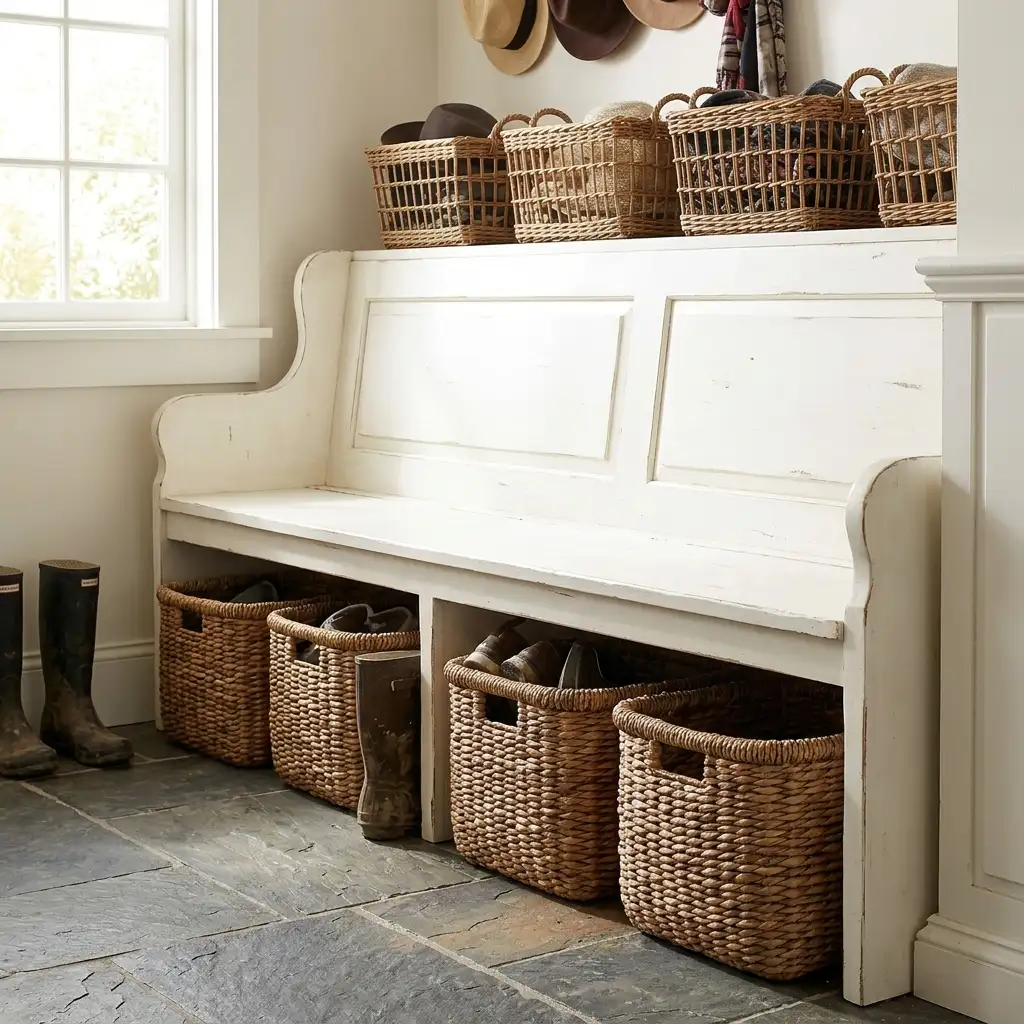
Use large baskets under coffee tables for blanket and magazine storage. Add labeled baskets to open shelving in the kitchen and laundry room. Hang woven baskets as wall art in the living room for a boho-farmhouse accent. Find expert organization inspiration from hidden storage ideas for using farmhouse baskets to maximize storage beautifully.
| Basket Use | Room Application |
|---|---|
| Under coffee table | Blanket and magazine storage |
| On open kitchen shelves | Dry goods, produce, linens |
| As wall art cluster | Living room, dining room |
| Laundry room sorting | Labeled by laundry type |
23. How to Decorate a Farmhouse Entryway
The farmhouse entryway sets the tone for the entire home the moment someone walks in. It should feel warm, organized, and immediately communicate the farmhouse aesthetic. A well-styled entryway makes every arrival feel like a proper homecoming.

Add a simple wooden bench with hooks above for coats and bags. Place a large woven basket below for shoes, umbrellas, and seasonal items. Hang a vintage mirror above the bench and add a small plant or lantern beside it.
| Farmhouse Entryway Element | Function |
|---|---|
| Wooden bench with storage | Seating plus hidden organization |
| Wall hooks above bench | Coats, bags, hats, keys |
| Large woven basket below | Shoes, umbrellas, seasonal gear |
| Vintage mirror above bench | Light, space, practical function |
24. How to Add Farmhouse Character to a Rental Home
Renters can fully embrace farmhouse style without making permanent changes. Removable, temporary, and furniture-based solutions create an authentic look. You do not need to own your home to live in a beautiful farmhouse aesthetic.

Use peel-and-stick shiplap wallpaper on one accent wall for texture without damage. Add a freestanding wooden bookcase to create the look of built-in shelving. Style every surface with farmhouse textiles, baskets, and botanicals for maximum impact.
| Rental-Friendly Farmhouse Hack | Permanent Damage |
|---|---|
| Peel-and-stick shiplap wallpaper | None |
| Freestanding wooden furniture | None |
| Removable hook systems | None |
| Textile and basket styling | None |
25. How to Style a Farmhouse Coffee Table
The coffee table is the most styled surface in the entire farmhouse living room. It is at eye level when seated and constantly in view throughout the day. A beautifully styled farmhouse coffee table anchors the entire seating area.

Use a large wooden tray to define the styled area and contain the display. Add a stack of two or three books topped with a small object. Place a simple vase with stems and a small candle for warmth and organic beauty. Get complete coffee table styling inspiration from coffee table decor ideas for the most beautiful farmhouse coffee table arrangement.
| Coffee Table Styling Layer | Farmhouse Object |
|---|---|
| Base tray | Wooden, woven, or metal |
| Book stack | Two to three meaningful books |
| Vase with stems | Cotton, eucalyptus, wildflowers |
| Candle | Simple white pillar or taper |
26. How to Create a Farmhouse Laundry Room
A farmhouse laundry room is practical, cheerful, and beautifully organized. It should make a chore feel like less of a burden and more of a pleasant routine. The right design choices transform the most utilitarian room into a genuinely lovely space.

Paint the walls white and add shiplap or beadboard on one accent wall. Install open wooden shelving above the washer and dryer for supplies and baskets. Use a galvanized metal bucket, glass jars, and labeled baskets for detergent and supply organization.
Find complete organization strategies from linen closet organization that apply perfectly to a farmhouse laundry room setup.
| Farmhouse Laundry Room Element | Design Function |
|---|---|
| White shiplap accent wall | Texture, brightness, farmhouse character |
| Open wood shelving | Display and accessible storage |
| Galvanized metal containers | Farmhouse aesthetic, practical use |
| Labeled linen baskets | Sorting, organization, visual order |
27. How to Decorate With Farmhouse Candles and Lighting
Candles are essential to the warm, inviting glow of a farmhouse home. They add ambient light, gentle fragrance, and a flickering warmth that electric lights cannot replicate. The right candle placement transforms an ordinary farmhouse room into a magical retreat.

Use white pillar candles grouped in clusters of three for the most classic farmhouse look. Place candles inside hurricane glass holders, lanterns, and simple iron holders throughout. Use unscented candles in frequently used rooms and scented candles in bathrooms and bedrooms.
| Candle Style | Farmhouse Placement |
|---|---|
| White pillar candles | Mantel, dining table, shelf |
| Taper candles in iron holders | Dining table centerpiece |
| Candles in hurricane glass | Coffee table, bathroom |
| Lantern with pillar candle | Porch, entryway, shelf |
28. How to Choose Farmhouse Hardware and Fixtures
Hardware and fixtures are the jewelry of the farmhouse home. They appear on every door, cabinet, and faucet throughout the house. Choosing the right finish makes everything look more cohesive and intentional throughout.

Oil-rubbed bronze and matte black are the two most popular farmhouse hardware finishes. Choose one finish and use it consistently throughout each room for visual cohesion. Bin pull, cup pull, and simple bail hardware are the most authentic farmhouse cabinet choices.
| Farmhouse Hardware Finish | Best Room Application |
|---|---|
| Oil-rubbed bronze | Traditional farmhouse, warm rooms |
| Matte black | Modern farmhouse, any room |
| Brushed nickel | Transitional farmhouse style |
| Antique brass | Vintage farmhouse, kitchen |
29. How to Style Farmhouse Shelves in the Bathroom
Farmhouse bathroom shelving adds both storage and beauty to a functional space. Open shelving in the bathroom displays beautiful everyday objects while keeping them accessible. It creates the boutique hotel feeling that makes a farmhouse bathroom feel truly special.

Install simple wood floating shelves above the toilet or beside the sink. Style with rolled white towels, mason jar organizers, a small plant, and a candle. Keep the display simple and uncluttered with maximum three to four items per shelf. Pair with bathroom counter decor ideas for a fully styled farmhouse bathroom from shelf to counter.
| Farmhouse Bathroom Shelf Item | Display Purpose |
|---|---|
| Rolled white towels | Clean, spa-like display |
| Mason jar with cotton balls | Organized, farmhouse styled |
| Small plant or succulent | Life, organic softness |
| Simple white candle | Warmth, spa atmosphere |
30. How to Create a Farmhouse Gallery Wall
A farmhouse gallery wall adds personality, history, and warmth to any room. It tells the story of your family, your values, and your love of the farmhouse aesthetic. A well-executed gallery wall feels curated and personal rather than random and cluttered.

Mix framed vintage botanical prints, family photos, and simple typography art. Use a consistent frame finish — all black, all white, or all natural wood — for cohesion. Lay the arrangement on the floor before hanging to perfect the composition.
| Farmhouse Gallery Wall Element | Frame Finish |
|---|---|
| Vintage botanical prints | Black or natural wood frames |
| Family black and white photos | White or cream frames |
| Simple word or quote art | Any consistent finish |
| Small vintage mirror | Matches frame finish chosen |
31. How to Add Farmhouse Style to a Small Space
Small homes and apartments can fully embrace farmhouse style with smart choices. The key is using farmhouse principles without overwhelming a compact space. Light colors, multifunctional furniture, and strategic styling make small farmhouse spaces feel generous.

Use light cream and white walls to maximize the sense of space and light. Choose furniture with legs rather than pieces that sit on the floor to create airiness. Style surfaces with just two or three well-chosen farmhouse objects rather than large collections. Find space-saving organization ideas from small kitchen organization that work beautifully in any small farmhouse home.
| Small Space Farmhouse Tip | Design Effect |
|---|---|
| Light cream walls | Maximizes space and light |
| Furniture with legs | Creates airiness beneath |
| Minimal surface styling | Prevents visual overwhelm |
| Mirrors to reflect light | Doubles perceived space |
32. How to Incorporate Farmhouse Style on a Budget
Farmhouse style does not require expensive purchases or major renovations. Many of the most authentic farmhouse elements are the least expensive ones. Budget-conscious shoppers are actually at an advantage because thrift finds look more genuine than new purchases.

Shop thrift stores, estate sales, and flea markets for vintage crocks, signs, and wooden pieces. Make your own shiplap feature wall from basic pine boards for under $100. Paint existing furniture in white or cream to instantly farmhouse-ify any piece you already own.
| Budget Farmhouse Upgrade | Approximate Cost |
|---|---|
| DIY shiplap accent wall | $50–$100 in materials |
| Thrifted vintage crock or jug | $2–$20 |
| Paint existing furniture white | $15–$30 in paint |
| Mason jar display collection | $10–$20 |
33. How to Maintain and Evolve Your Farmhouse Style Over Time
Farmhouse style is meant to grow and evolve organically over the years. A farmhouse home that stays exactly the same for a decade misses the point of the aesthetic. The beauty of farmhouse design is that it improves and deepens with every new addition.

Add pieces slowly and intentionally rather than styling a room all at once. Allow the home to develop its character through genuine use, seasonal changes, and meaningful additions. A truly beautiful farmhouse home always looks like it has been lovingly collected over many years. Find fresh seasonal inspiration from French country decor ideas for layering European farmhouse influences into your evolving home style.
| Farmhouse Style Evolution | How to Approach It |
|---|---|
| Seasonal updates | Change textiles and botanicals |
| Gradual vintage additions | Add one meaningful piece at a time |
| Furniture updates | Replace pieces as better ones are found |
| New DIY projects | Add character through handmade elements |
Frequently Asked Questions
What are the key elements of farmhouse decor?
The key elements are natural materials, neutral colors, vintage or antique pieces, shiplap or reclaimed wood, and functional simplicity. Linen textiles, galvanized metal, mason jars, and open shelving are also defining farmhouse features. The aesthetic celebrates imperfection, warmth, and a sense of history throughout.
How do I start decorating in farmhouse style?
Start with your wall color — paint all walls warm white or soft cream first. Then add one shiplap accent wall in a primary room like the living room. Build from there by adding farmhouse textiles, vintage finds, and natural materials one piece at a time.
Is farmhouse style the same as rustic decor?
Farmhouse and rustic styles share natural materials and a love of wood but differ in refinement. Farmhouse style is cleaner, brighter, and more intentional than purely rustic decor. Farmhouse incorporates white and cream tones, linen, and a touch of modern simplicity that pure rustic design does not include.
How do I make my home look like a farmhouse without renovating?
Use textiles, plants, and accessories to create the farmhouse look without any renovation. Add linen throw pillows, jute rugs, woven baskets, and mason jar displays immediately. Swap out light fixtures, hardware, and cabinet pulls for farmhouse-appropriate finishes for a bigger impact.
What is modern farmhouse style?
Modern farmhouse blends the warmth and natural materials of traditional farmhouse with cleaner lines and contemporary touches. It uses the same shiplap walls, linen textiles, and reclaimed wood but pairs them with sleeker furniture and matte black accents. This style avoids the overly rustic or country elements of traditional farmhouse design.
Conclusion
Farmhouse style is not a trend. It is a timeless design philosophy built on warmth, simplicity, and the beauty of natural and imperfect things. A well-executed farmhouse home feels like it has been loved and lived in for generations even when it is brand new.
Work through these 33 steps at your own pace and let the home develop organically. Trust the process, shop slowly and intentionally, and choose things that genuinely move you. Your farmhouse home will become more beautiful with every passing year and every new addition you make.