A small bedroom does not have to feel like a storage closet with a bed in it.
Most people with tight spaces make the same handful of mistakes: dark paint, too much furniture, lamps eating up floor space, curtains hung too low. The room ends up feeling cramped before a single decoration goes up.
Knowing how to decorate a very small bedroom is less about what you add and more about what you stop doing.
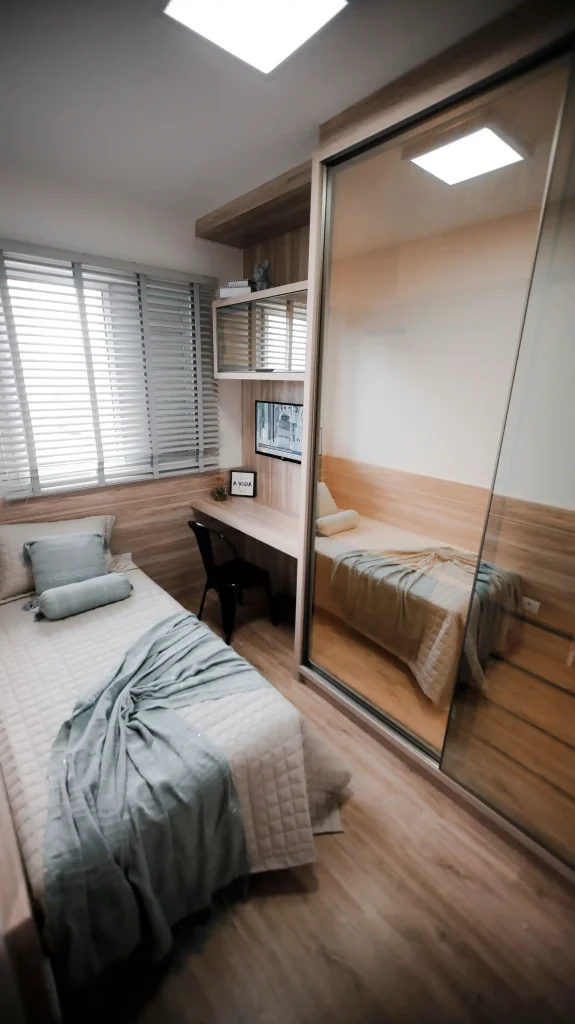
This guide walks you through twelve specific changes, in the exact order that makes sense, so each decision builds on the one before it.
You will move some furniture, make a few purchases under $50 total, and end up with a room that feels noticeably bigger and calmer by the end of the weekend.
No contractor, no renovation, no knocking down walls. Every step here works in a rented apartment or a house you own. The whole process takes about one afternoon for the physical changes, plus drying time if you decide to paint.
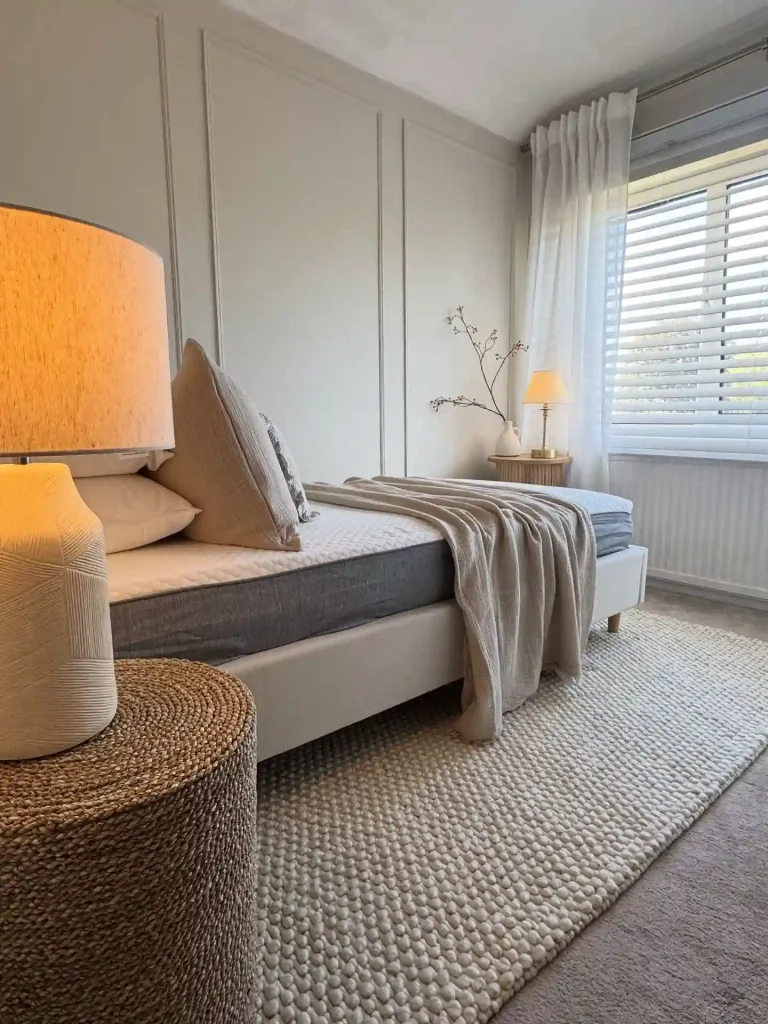
credits: @at_homewith_dd
Start with the floor plan and work your way through. The difference between a room that feels tight and one that feels calm is almost always a handful of small decisions made in the right order.
Clear a path to your tape measure and let’s map the room first in just 12 steps.
Step 1: Measure your room and draw a simple floor plan before moving anything

Write down the width and length of the room in feet, then sketch it out on graph paper using one square per foot. Mark every door swing, window, and outlet location.
This takes 15 minutes and saves hours of physically dragging furniture around to test positions. A floor plan lets you see what fits on paper before your back pays the price of finding out the hard way.
Step 2: Pull the bed away from the corner to open the layout

A bed shoved into the corner looks like it is hiding. Centered on the main wall with at least 18 inches of walking space on each side, it anchors the room instead of shrinking it.
If your room genuinely cannot give you 18 inches on both sides, aim for 24 inches on one side and 12 inches on the other. The visual breathing room matters more than perfect symmetry.
Step 3: Choose a light wall color that reflects rather than absorbs light
Soft white, warm cream, pale sage, or light greige all work well.
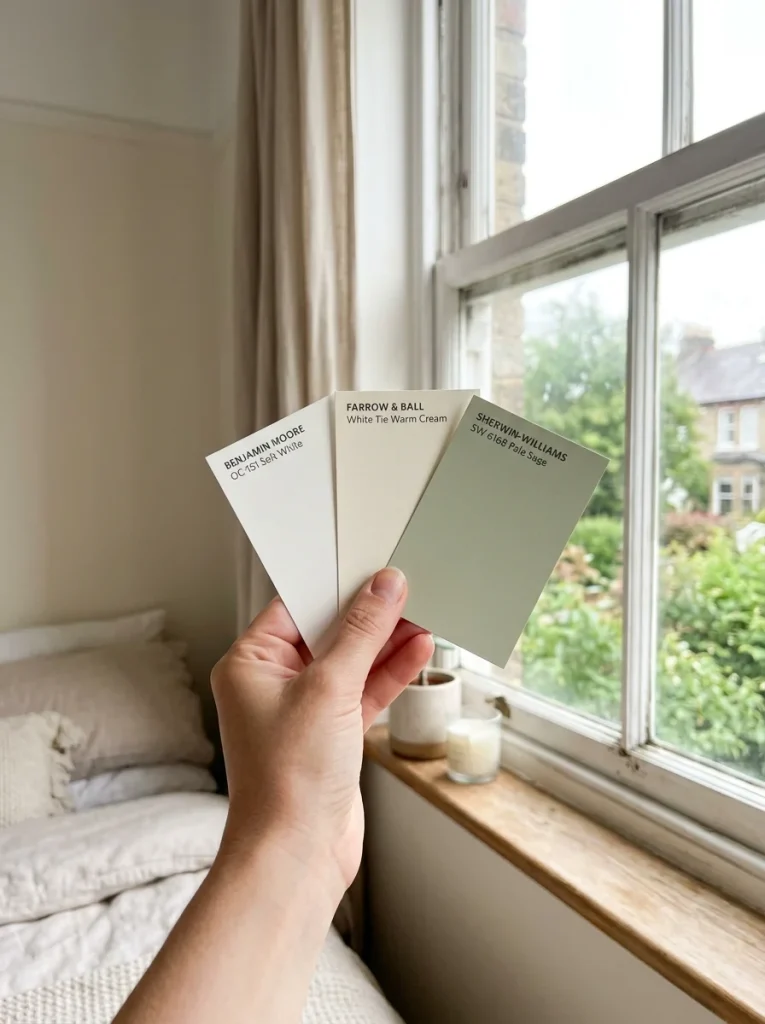
The rule is simple: hold a paint chip up to your window in natural daylight and check whether it looks warm or cool in that specific light.
Your room’s light determines how any color will read on the walls, not the color on the chip under store lighting.
Avoid anything below a light-medium value on the paint strip. Deep colors make walls feel closer. In a small bedroom, that feeling compounds fast.
Step 4: Mount your lighting on the wall instead of using floor lamps

Floor lamps and table lamps sitting on nightstands eat into the two most valuable things a small bedroom has: floor space and surface space.
A plug-in wall sconce takes neither. Mount one on each side of the bed at approximately 54 to 60 inches from the floor, which puts the light at reading height when you are sitting up.
Most plug-in sconces need only a drill, a wall anchor, and ten minutes to install. The cord runs down the wall and plugs into a standard outlet behind the bed.
See more ideas on bedroom accent wall to make your bedroom more decorative.
Step 5: Replace your bulky nightstand with a wall-mounted shelf

A floating shelf installed at mattress height does everything a nightstand does and occupies zero floor space. A 10 inch deep shelf is enough for a lamp, a book, and a glass of water. Install it using wall anchors rated for at least 15 pounds, even if the shelf itself feels light.
Drywall anchors without a stud behind them fail under repeated light pressure over time, and a shelf that pulls out of the wall at 2am is not a small problem.
Step 6: Use curtains that hang from ceiling to floor to fake height
The rod goes 4 to 6 inches below the ceiling, not above the window frame. This is the single most overlooked trick in small bedroom decor.
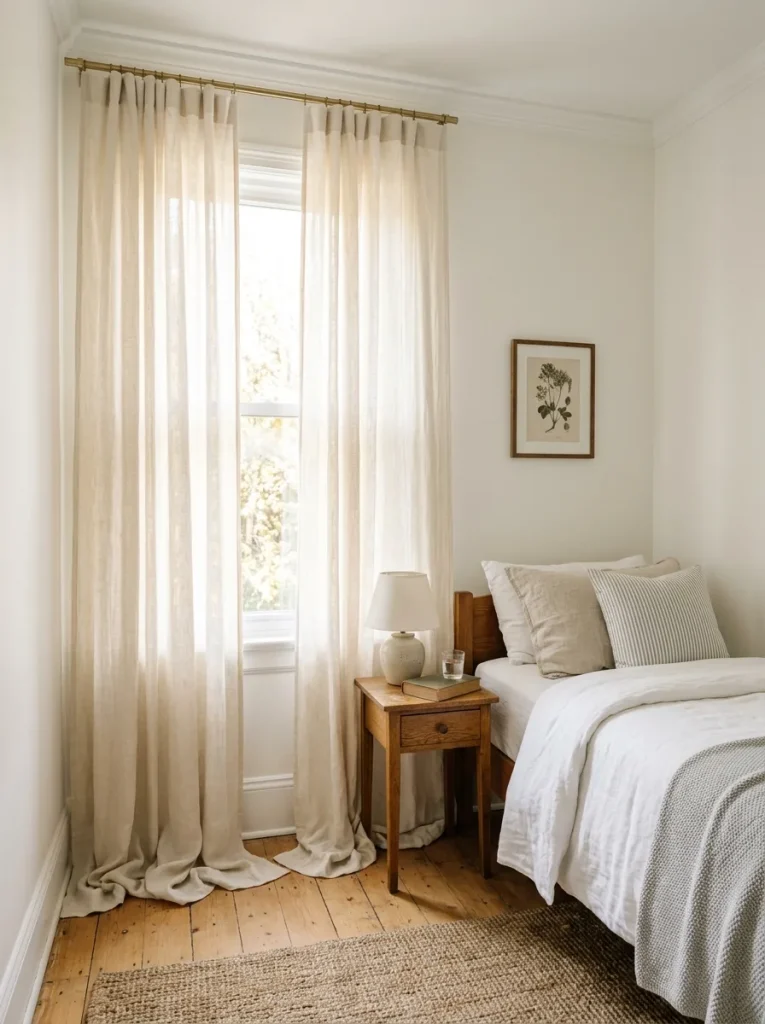
When the curtain starts at the ceiling and falls all the way to the floor, the eye reads the full wall height as intentional. A curtain hung at window-frame height does the opposite and makes the ceiling feel lower than it is.
Step 7: Pick one focal wall and keep the other three plain
The wall your bed sits against is your focal wall. That is the only wall that gets a headboard, artwork, a gallery arrangement, or an accent color.
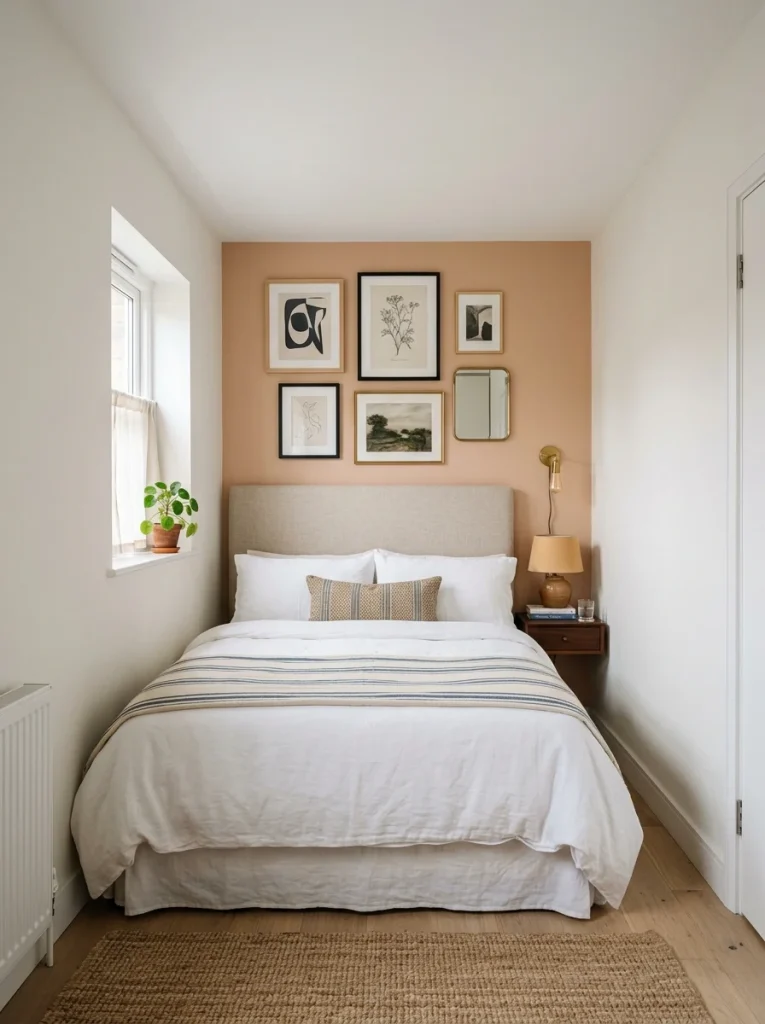
Every other wall stays clean. One decorated wall gives the eye a place to land. Four decorated walls give the eye nowhere to rest, and a small room with no visual quiet space feels chaotic regardless of how nice each individual piece is.
Step 8: Add a mirror on the wall opposite the window
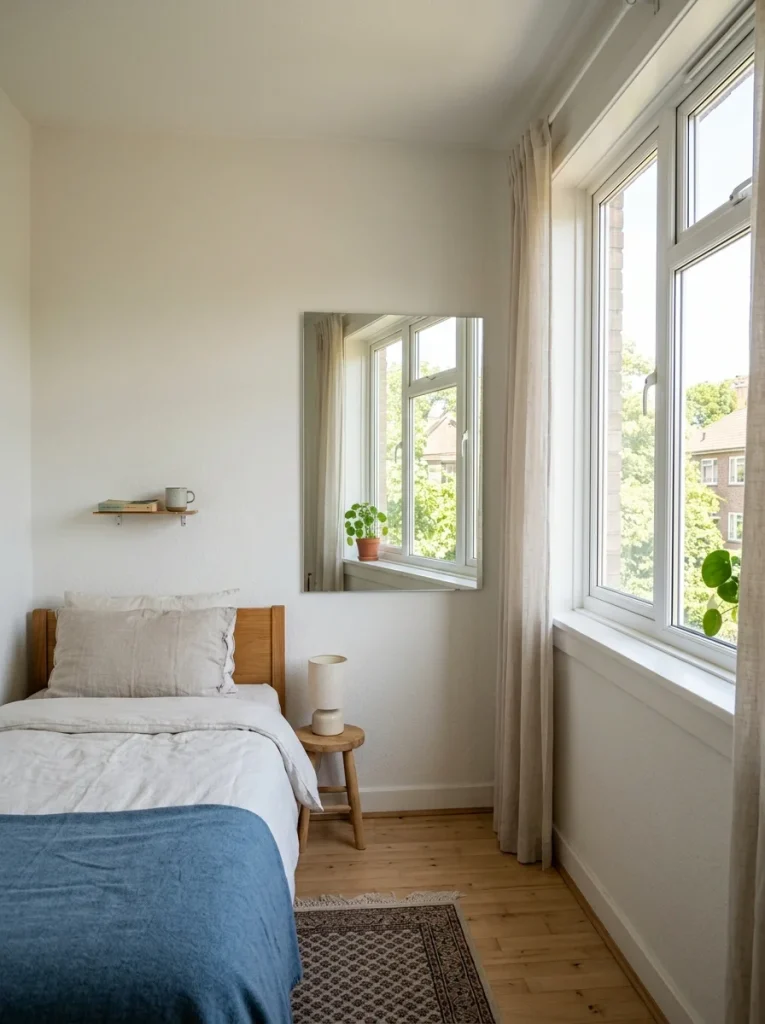
The mirror does not need to be large or expensive.
A 24 by 36 inch leaner or a simple frameless rectangle hung at eye level is enough.
Natural light hits the mirror and bounces back into the room, which makes the space feel brighter and visually doubles the sense of depth.
Hang it so the center of the mirror sits at roughly 57 to 60 inches from the floor, which is standard eye level for most adults standing in the room.
Step 9: Store under the bed with flat bins or risers
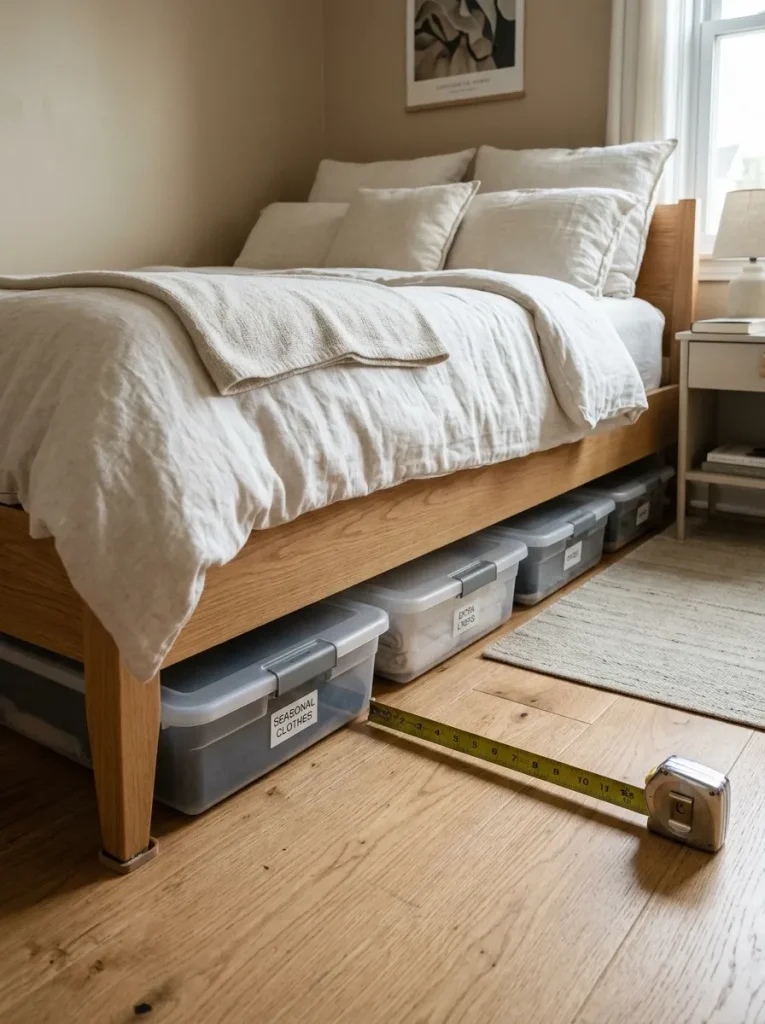
Slide flat storage bins under the bed for folded clothes, extra bedding, or off-season items. Bins with lids keep dust out and stack cleanly. If your bed frame sits too low for standard bins, 4 to 6 inch bed risers lift the frame enough to fit most options sold at home goods stores.
Measure the clearance under your frame before buying anything. Standard flat bins need a minimum of 7 inches of clearance. Anything less and you are forcing bins in at an angle, which defeats the purpose entirely.
Step 10: Choose furniture with legs instead of pieces that sit on the floor
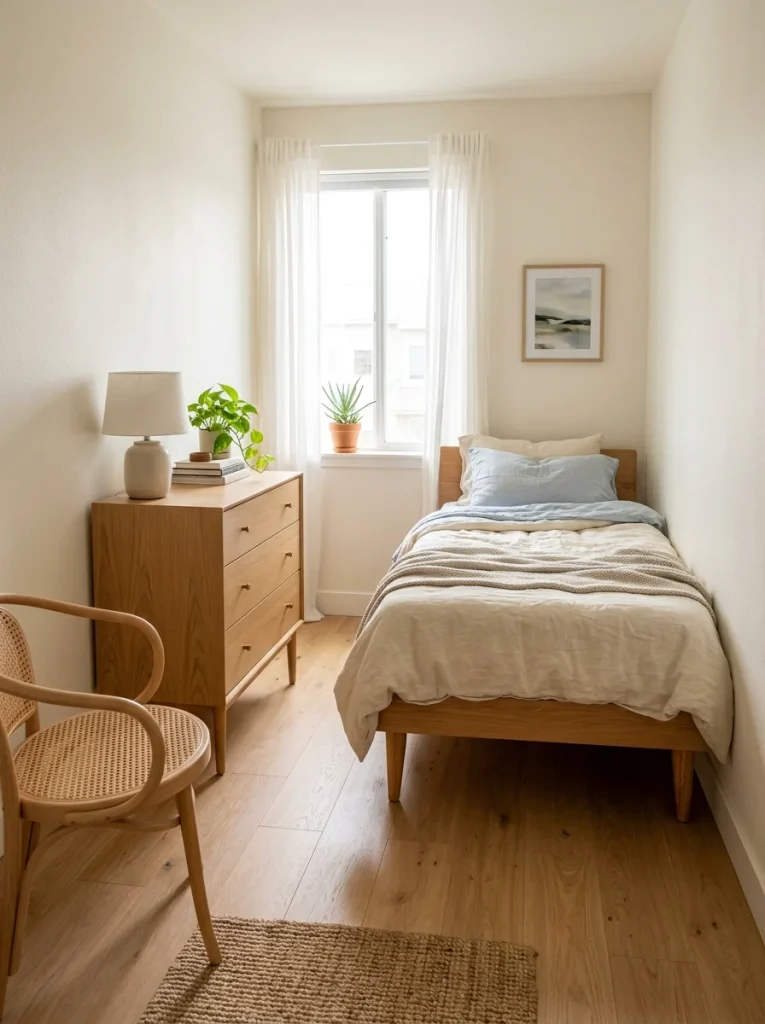
Solid-base furniture that goes straight to the floor acts like a visual wall. It stops the eye and cuts the room into sections. Furniture with legs lets light and sightlines pass underneath, which makes the floor area read as continuous and larger. When shopping for a bed frame, dresser, or chair for a small bedroom, check these before buying:
- Legs at least 4 inches off the floor
- No solid wood or fabric panels reaching the ground
- Avoid platform beds with closed bases in rooms under 120 square feet
- Open-frame or tapered leg styles work best visually
A secondhand dresser with solid base can be upgraded with furniture legs from a hardware store for under $20, which is worth knowing before you rule out a piece you otherwise like.
Step 11: Limit decor to three surfaces and style each one with purpose
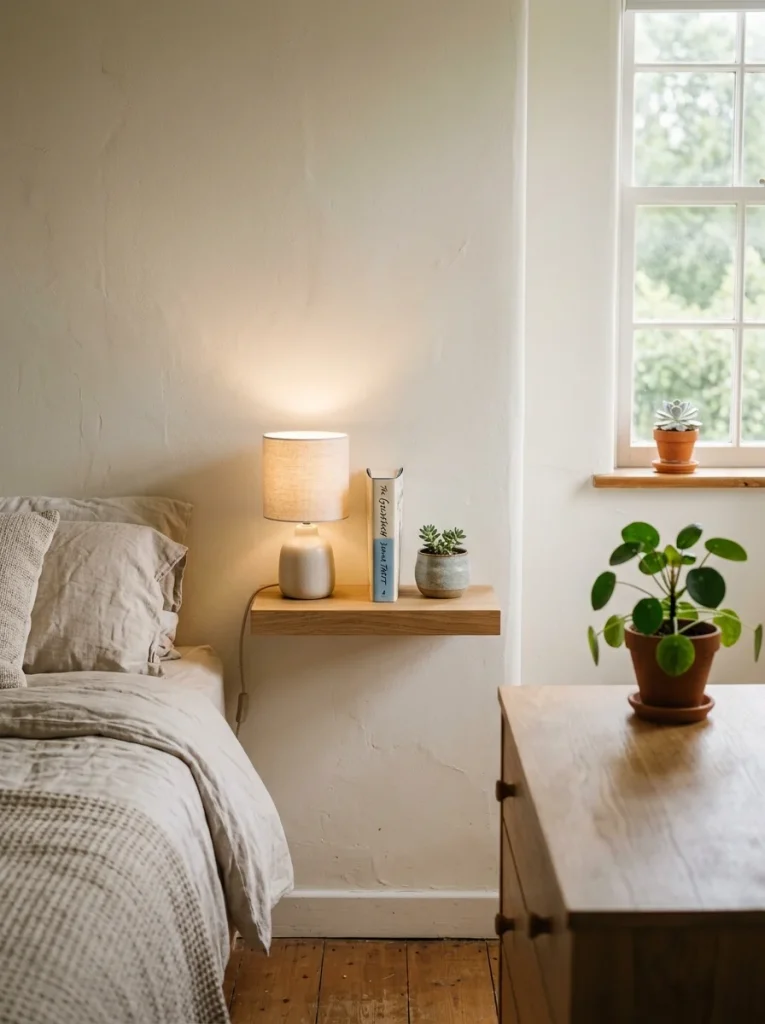
Pick exactly three surfaces in the room to decorate: the floating shelf, the top of the dresser, and one windowsill or wall ledge. Every other flat surface stays clear. On each chosen surface, place no more than three items grouped at different heights. Here is a simple guide to what works on each surface:
| Surface | What Works | What to Avoid |
|---|---|---|
| Floating shelf | Small lamp, one book, one object | Multiple frames, candles crowding edge |
| Dresser top | Tray with 2 to 3 items, one plant | Scattered jewelry, random bottles |
| Windowsill | One small plant or one object | Rows of items blocking light |
Surfaces that hold too many things make a small room feel like a junk drawer with good lighting. Three items per surface is the ceiling, not the starting point.
Step 12: Add one plant to bring life in without taking up floor space

A plant on the floating shelf, on the dresser tray, or hung from a ceiling hook adds something no mirror or curtain can: warmth that feels genuinely lived-in rather than staged. The key word here is one. A single healthy plant reads as intentional. Four plants in a small bedroom reads as a hobby that got out of hand.
For low-light small bedrooms, pothos and snake plants are the most reliable choices. Both handle irregular watering and minimal natural light without dropping leaves or dying dramatically. A 4 to 6 inch pot fits any shelf without crowding it.
FAQs
Can I decorate a small bedroom on a tight budget?
Most of the changes in this guide cost little to nothing. Repositioning furniture, changing what sits on your surfaces, and hanging curtains higher are free or under $30. The mirror and wall sconces are the only purchases that make a meaningful difference and both are available at budget home stores for under $40 each.
What size bed works best in a very small bedroom?
A full bed is the largest size worth considering in a room under 100 square feet. A queen can work in rooms between 100 and 130 square feet if the layout allows for at least 18 inches of walking clearance on one side. A king in a small bedroom leaves no room for anything else and makes the space feel like a mattress showroom.
Should I use blackout curtains or sheer curtains in a small bedroom?
Sheer curtains during the day let natural light in and make the room feel more open. If you need blackout coverage for sleep, layer a blackout panel behind a sheer. Two rods on the same window give you both options. Blackout curtains alone, closed during the day, make a small bedroom feel noticeably smaller and darker.
My small bedroom has no closet. Where do I put everything?
A slim wardrobe or armoire against one wall handles hanging clothes without requiring renovation. Under-bed storage handles folded items. Wall hooks on the back of the door handle bags, belts, and accessories. Spreading storage across three zones keeps any one area from feeling overwhelmed.
Your small bedroom now has a layout that breathes, surfaces that are styled with purpose, and storage that does not fight the decor for attention. That shift from cramped to calm is real, and you did it without touching a single wall structurally.
The natural next step is adding a rug in the right size to anchor the bed and pull the whole room together. That one addition tends to make everything else click into place visually.
If this guide helped, save it to your small bedroom decor board on Pinterest so it is there when you are ready for that next layer.