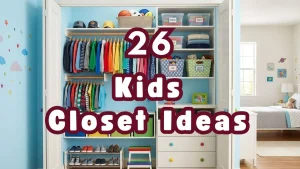
Getting a kids closet under control feels impossible until you see what a little planning can do.
The problem is rarely the size of the closet. It’s that most setups are designed for adults, with rods too high to reach, shelves too deep to see into, and no real system for the small stuff that multiplies fast: hair clips, baseball caps, school shoes, sports gear, and next season’s sizes bought ahead of time.
These kids closet ideas cover everything from tiny nursery closets with almost no square footage to large walk-in spaces that need zones and structure to stay functional.
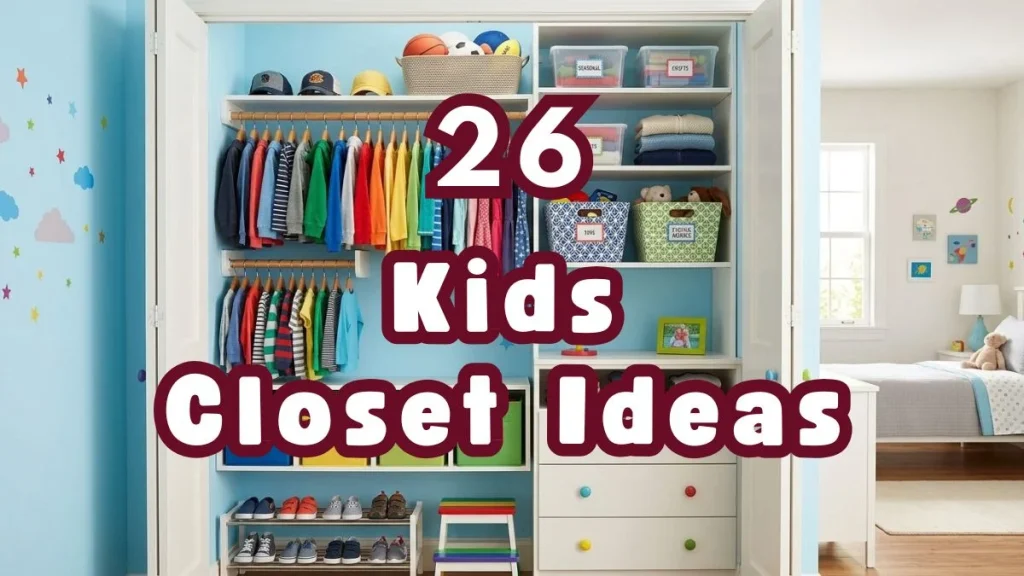
Some ideas cost almost nothing, like switching to matching hangers or adding a tension rod. Others take a weekend, like painting the back wall or moving a dresser inside. Every single one is built around how kids actually use their space, not how we wish they would.
Whether you’re setting up a first closet for a baby, reorganizing for a school-age child, or trying to build a system a teenager will actually maintain, there’s something here that will make the daily routine easier for everyone in the house.
1. Paint the Back Wall Dark to Make a Small Girl’s Closet Look Intentional

Credits: @romoyte
Most kids closets stay white from floor to ceiling, which is fine but forgettable.
This one flips that by painting the back wall a deep teal, and the contrast against white built-in shelving is striking.
The dark backdrop makes every colorful clothing item pop like it’s on display rather than stuffed away.
The layout uses a central tower for shelving and four drawers, with hanging rods on both sides at two heights. The upper shelf holds oversized storage bags and a large basket for bulkier items.
Middle shelves hold books, small toys, and a few little baskets for accessories. The door panel on the left side holds a macrame hair bow organizer, a small but clever touch that keeps hair accessories off the floor.
A woven lidded basket on the floor catches overflow without looking messy.Paint only the back wall, not the sides, so the white shelving pops against it.
Use a dark, saturated color like deep teal or navy so bright kids’ clothing stands out.
Avoid painting all four walls dark in a small closet, it kills the light you need.
Skip busy wallpaper patterns behind clothing racks, the items get lost visually.
2. Label Every Bin in a Boy’s Closet So He Can Actually Put Things Away Himself

Credits: @hausnummereinszwei
The system only works if a kid can use it without help.
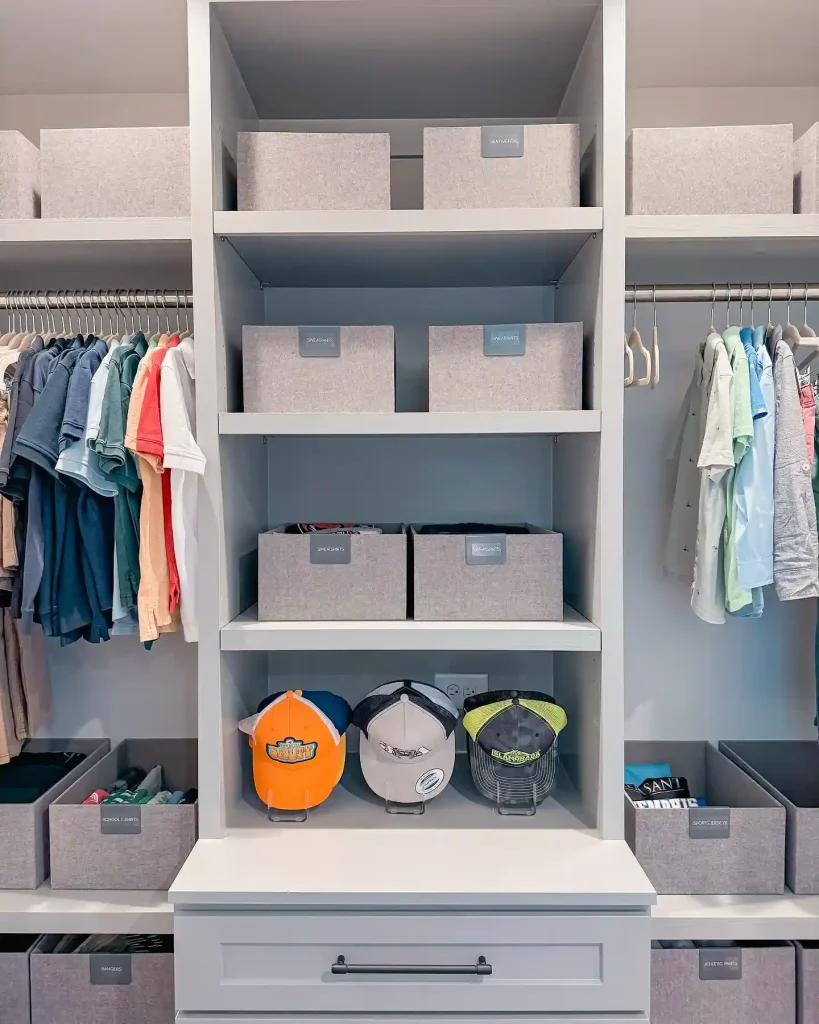
This boy’s closet nails that with matching fabric storage bins lined up across three shelf levels, each one labeled with exactly what’s inside. You can make out labels for sweatshirts, sweatpants, school t-shirts, sports jerseys, athletic pants, and even hangers. You can also try linen closet ideas especially for girls.
The genius detail is the bottom shelf of the center tower, which holds baseball caps displayed upright on individual stands so they hold their shape and are easy to grab. Open hanging rods on either side keep shirts visible and accessible.
Every bin matches. Every label is consistent. That uniformity is what makes a busy boy’s closet look calm instead of chaotic.
3. Use the Closet Door Itself as Storage in a Baby or Toddler’s Room
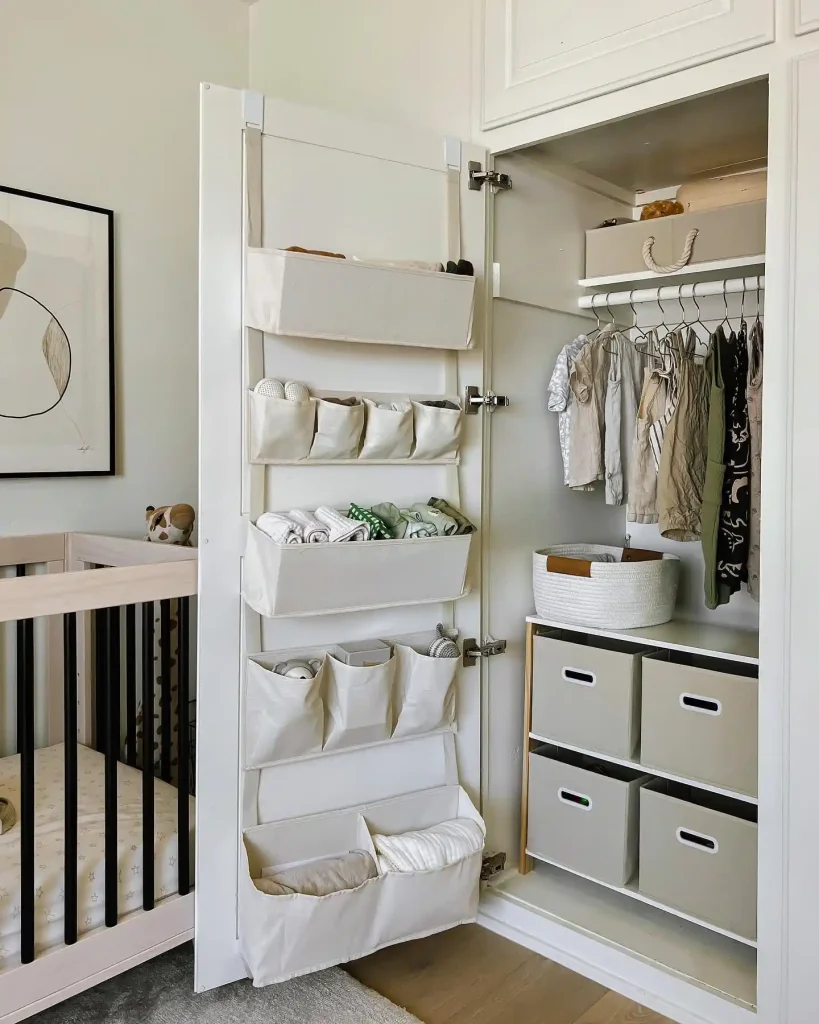
Floor space in a nursery is precious. This setup makes the closet door work as hard as the closet shelves inside by hanging a multi-pocket fabric organizer that runs nearly the full height of the door.
Credits: @homeyohmy
The pockets vary in size, with wider bins at the top and bottom for bulkier items and smaller individual pockets in the middle for socks, pacifiers, small toys, and other tiny things that normally get lost in drawers.
Inside the closet, the approach is equally calm. Neutral fabric bins with cutout handles stack on the floor, a hanging rod holds baby garments, and a rope-handled basket sits on the upper shelf. The whole palette stays cream and linen, which keeps the nursery feeling quiet even when the closet is fully packed.
The over-door organizer alone adds several extra square feet of vertical storage without touching a single wall.
4. Add Fairy Lights and an Open Wardrobe
Credits: @sortandsimplifyorganizing
Closed closet doors mean out of sight, out of mind, and tiny kids tend to forget what they own.
This setup solves that with a fully open wardrobe unit where everything is visible at once. Two hanging rods, one above the other, hold a full collection of dresses and tops arranged roughly by color, with soft pinks and blush tones dominating.
A string of round fairy lights runs along the top rail, giving the whole unit a warm glow that makes it feel special rather than purely functional.
The left side holds open shelves for stuffed animals and small decorative pieces, keeping the space feeling like part of the room rather than hidden storage. Below the hanging sections, a mix of clear-fronted and solid drawers handles folded items and shoes.
The result is a closet a child actually wants to interact with, which goes a long way toward building independent dressing habits.
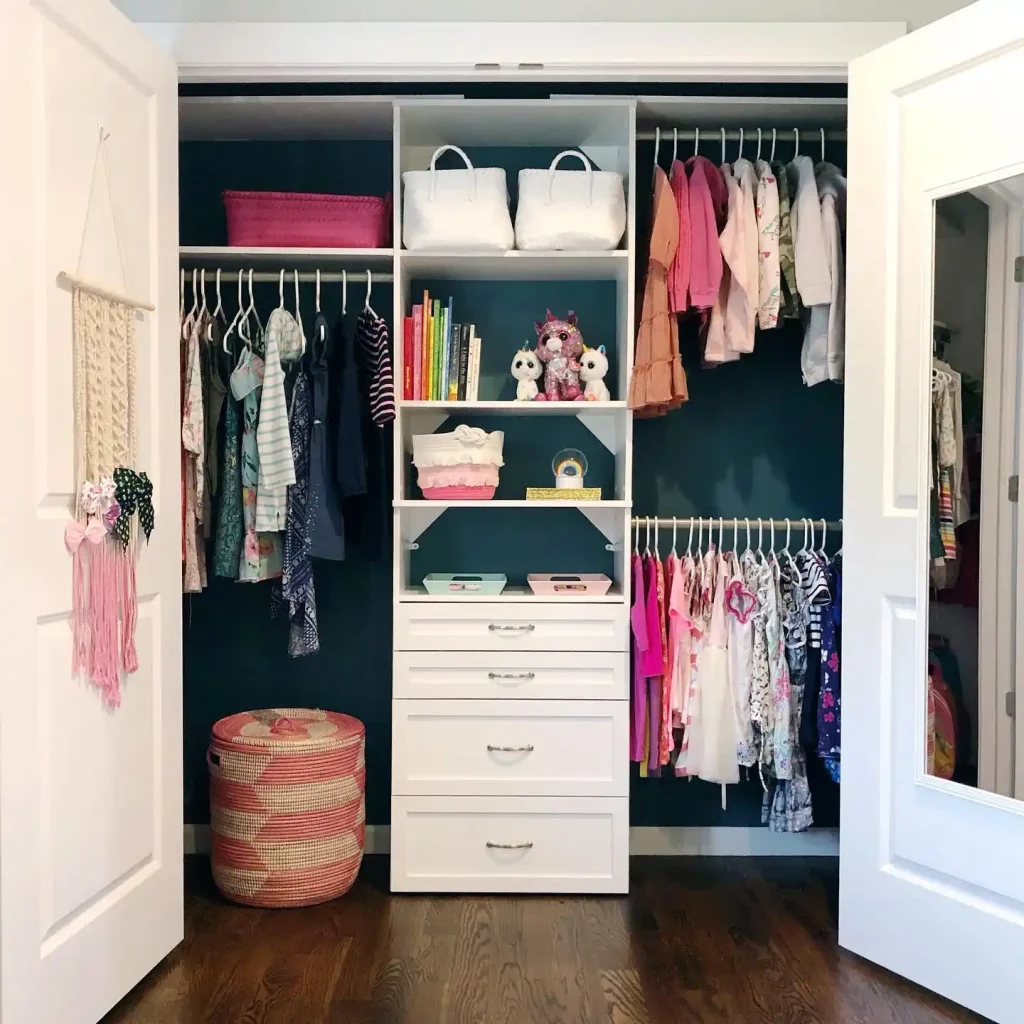
5. Stack Double Hanging Rods Inside Wardrobe Doors to Double the Hanging Space
The inside panels of a wardrobe door are almost always wasted.
This girl’s closet uses them well, fitting a short hanging rod inside each door panel so smaller dresses and tops have their own dedicated spot.
Credits: @ourhome.becoming
The main section of the wardrobe gets two stacked rods as well, one at a higher level for longer pieces and one lower for shorter items, which roughly doubles what a single-rod setup could hold.
Woven baskets across the upper shelf hold stuffed animals and smaller accessories while staying open enough to grab from. A bottom drawer with a clear view edge shows shoes lined up in rows, making it easy to find a matching pair without pulling everything out.
The door-panel rods are the standout move here. It costs almost nothing to add them and instantly creates space for a whole extra row of clothing.
6. Sort Clothes by Color on the Hanging Rod for a Rainbow Effect
Color-coding a kids closet rod takes maybe 20 minutes to set up and makes getting dressed noticeably faster.
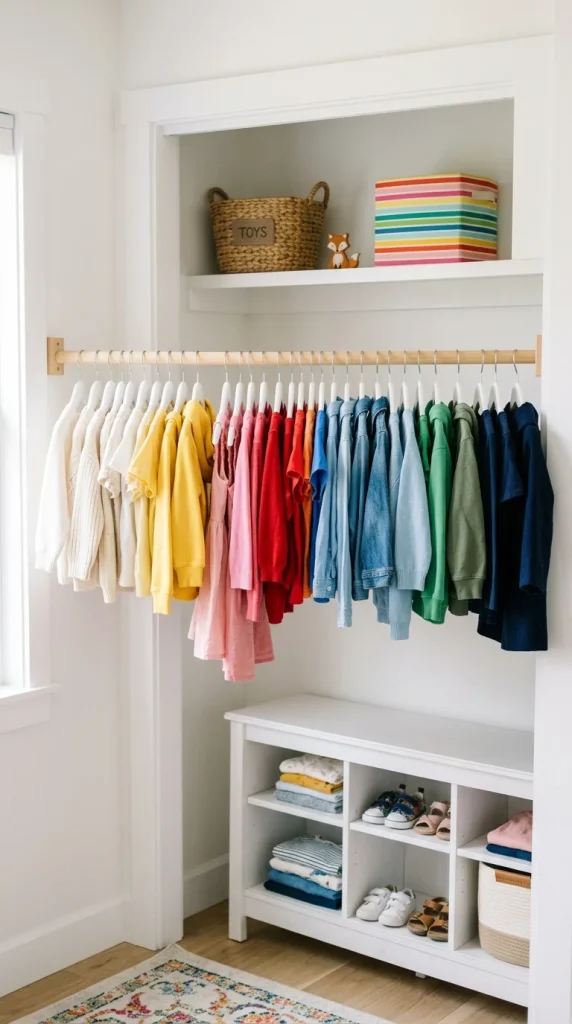
Instead of digging through a jumbled rail, a child can scan by color and find what they want in seconds. It also makes it immediately obvious when one color category is overflowing while another barely has anything.
Group by color family rather than exact shade. Whites and creams together, then yellows, pinks, reds, blues, greens, and darker neutrals at the end.
💡 Quick Tip
Do the sort after laundry day when everything is clean and out at once. It takes a fraction of the time compared to doing it mid-week.
7. Mount a Pegboard Inside the Closet for Bags, Belts, and Accessories
Pegboards are usually a garage or craft room idea, but they work brilliantly inside a kids closet.
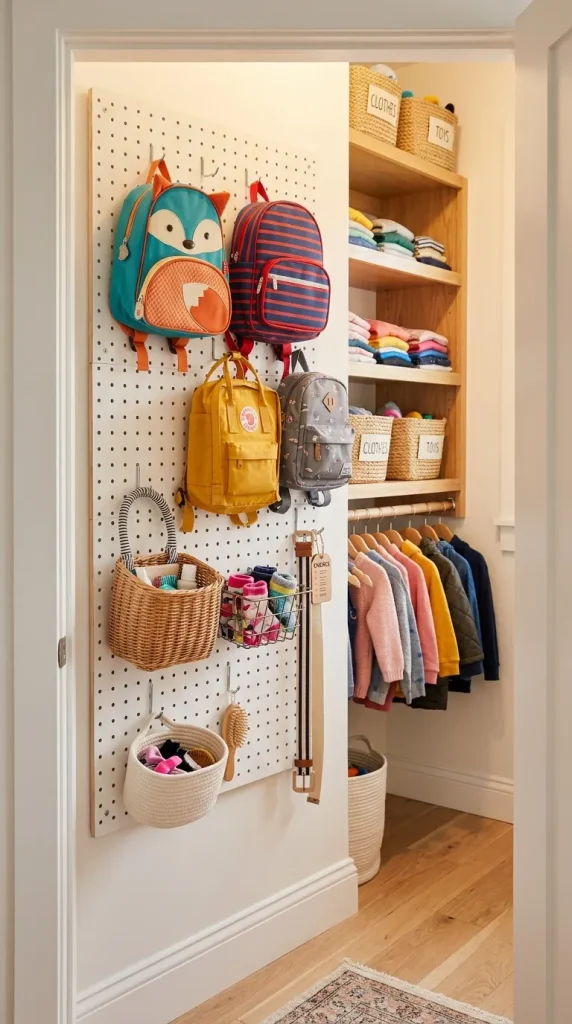
Mount one on the side wall or the back wall above a low shelf, then add a mix of hooks, small baskets, and pegs. Backpacks, sports bags, belts, sunglasses, and hair accessories all have a home without taking up shelf or floor space.
The big win is that everything stays visible. Nothing gets buried.
8. Add a Low Hanging Rod So Young Kids Can Dress Themselves
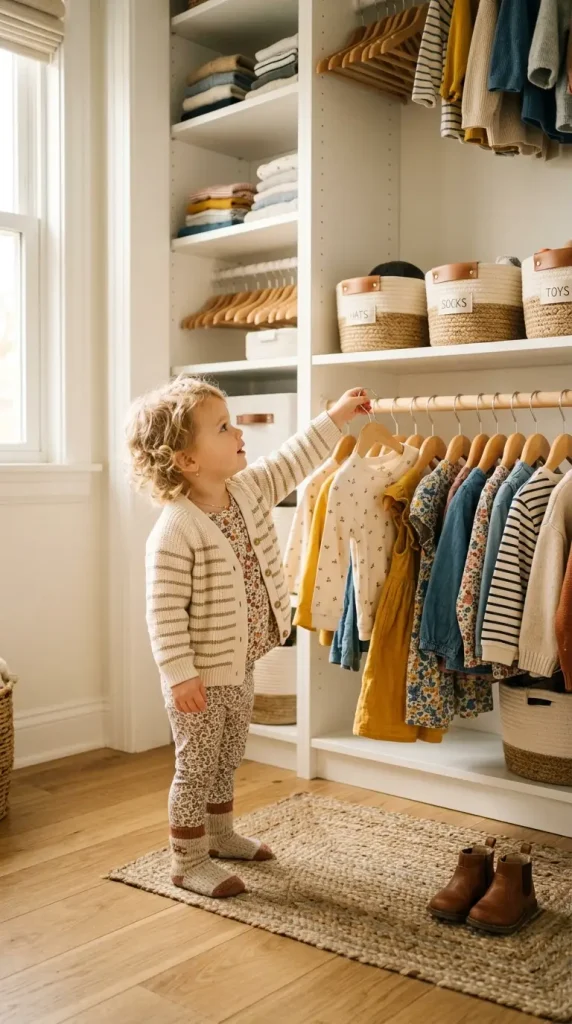
Most closet rods sit at adult height, which means a 3 or 4 year old needs help every single morning. Dropping one rod to about 3 feet off the ground changes the whole dynamic. The child can flip through their own options, pull out a shirt, and hang things back up without asking.
Keep their most-worn everyday pieces on the low rod and seasonal or special occasion items higher up.
9. Use Clear Shoe Pockets on the Closet Wall for Small Toy and Accessory Storage

Hanging clear shoe pockets are usually sold for shoes, but in a kid’s closet they store just about everything better than any drawer does.
Hair ties, small figurines, craft supplies, socks, sunglasses, and chargers all slide in and stay visible through the clear front panel.
Hang one panel per category or mix items freely. Either way, nothing gets lost at the bottom of a bin again.
10. Build a Reading Nook Corner Into a Large Walk-In Kids Closet
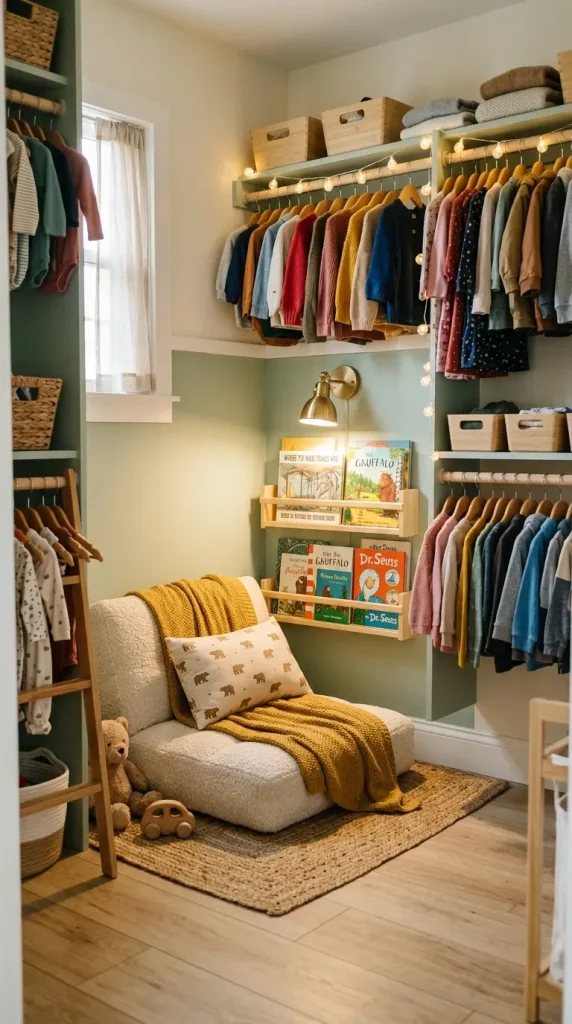
If the closet is big enough, carving out one corner for a small reading seat makes the space genuinely exciting for a child. A low cushioned bench or floor cushion tucked against the back wall, a tiny wall-mounted shelf for books at arm’s reach, and a small clip light overhead is all it takes.
Kids who have a cozy nook in their closet actually spend time in there, which makes tidying feel less like a chore and more like going to a favorite spot.
Giving a child ownership of a cozy corner in their closet makes them want to keep the whole space tidy.
11. Hang a Full-Length Mirror on the Closet Door for a Functional Finishing Touch
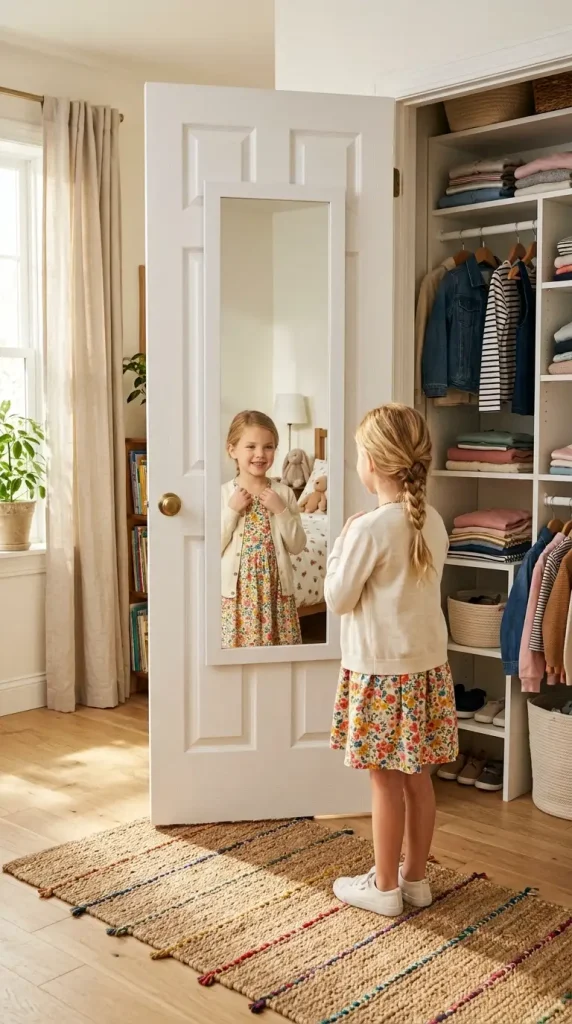
Kids, especially school-age ones, check their outfits before they leave.
A full-length mirror on the closet door puts that step right at the source, so they look, adjust, and head out without wandering to the bathroom. It also makes a small closet feel noticeably larger by bouncing light around the room.
Choose a mirror with a simple frame that suits the room’s existing style. Lean it against the door or mount it flush with adhesive strips for a cleaner look.
Mount the mirror at a height the child can actually see themselves fully, not adult eye level.
Choose a frame that matches the room’s hardware or bedding for a pulled-together look.
Skip heavy framed mirrors on hollow-core doors since the weight can pull hinges over time.
Avoid placing it where direct sunlight hits first thing in the morning and creates glare.
12. Use a Tension Rod Under a Shelf to Hang Spray Bottles or Small Accessories
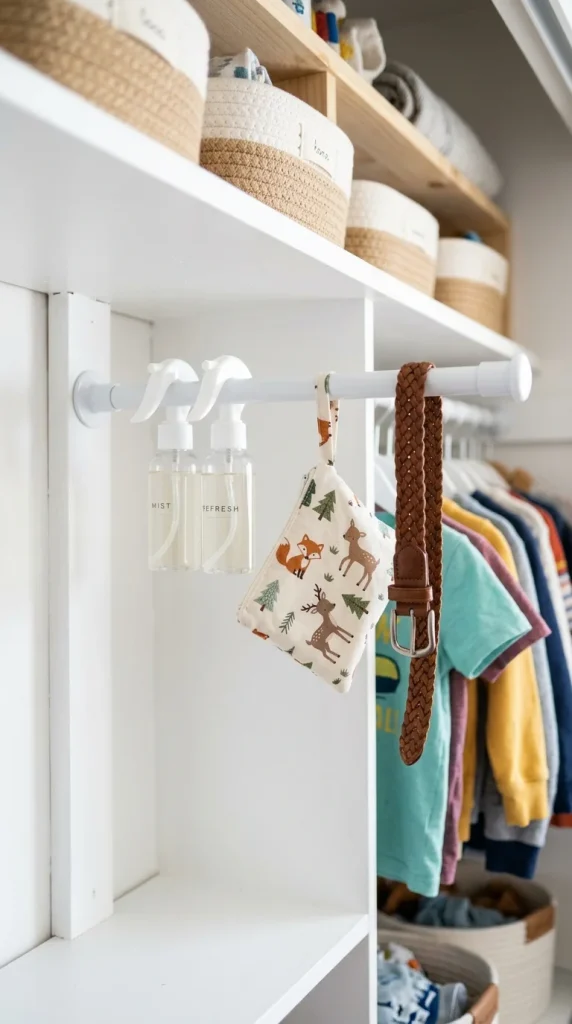
A tension rod costs next to nothing and creates a whole extra hanging layer.
Wedged horizontally under an existing shelf, it holds spray bottles, small bags on hooks, belts looped over it, or even a row of folded scarves draped across.
In a kids closet it works especially well under the top shelf for hanging spray detangler, a small bag of hair supplies, or rolled seasonal accessories.
No drilling, no damage, and completely removable when needs change.
13. Dedicate One Shelf Entirely to Next-Day Outfit Prep
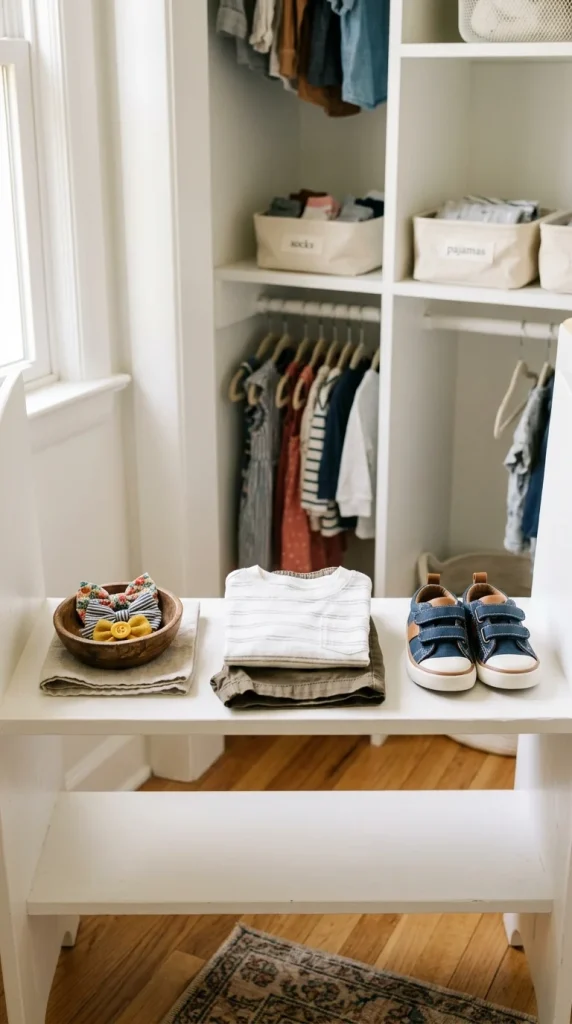
One low, easy-to-reach shelf labeled “tomorrow’s outfit” removes the morning scramble entirely. The child picks clothes the night before and lays them on that shelf, shoes included. In the morning everything is ready and the decision is already made.
It sounds almost too simple, but for kids who struggle with transitions, having that shelf as a routine anchor makes mornings run noticeably smoother.
14. Install Pull-Out Drawers at Floor Level for Shoes
Shoes on a closet floor always end up in a pile.
Pull-out drawers or rolling trays at floor level keep them flat, paired, and easy to grab. Each drawer holds one row of shoes displayed toe-out so the style is visible at a glance.
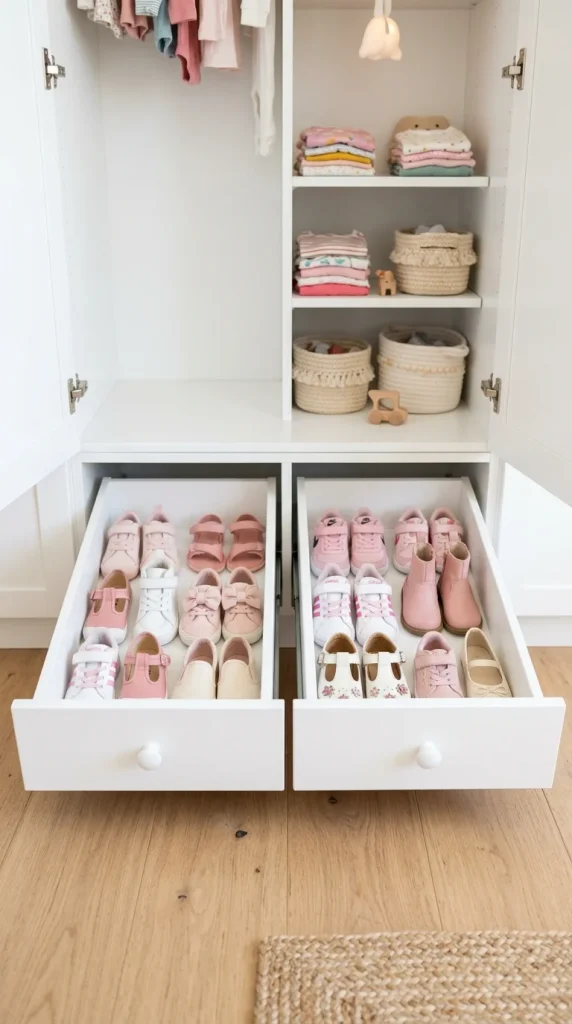
For younger kids, one drawer per season works well. For older kids, sorting by shoe type, school shoes, sneakers, sandals, keeps things even more manageable.
The drawer front keeps the floor looking tidy even when the drawer is slightly overfull.
📌 Good To Know
Low pull-out drawers are also ideal for storing extra bedding, seasonal pajamas, or spare uniforms since kids can reach them without help.
15. Add Removable Wallpaper to the Closet Back Wall for a Playful Accent
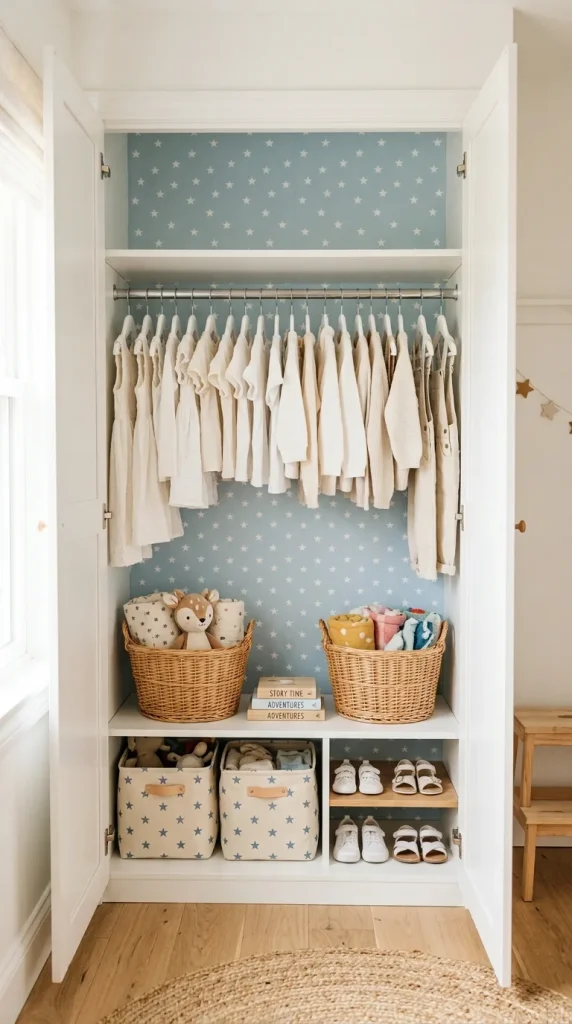
A printed removable wallpaper on the closet back wall turns the inside into a small moment of delight.
Stars, clouds, animals, or a simple geometric print all work well since the closet is only glimpsed in short bursts, so a bolder pattern than you’d use on a bedroom wall feels just right here.
Removable options mean it peels off cleanly when the child outgrows the theme, with no repainting required.
16. Store Folded Jeans and Pants Vertically in Drawers Like Files
Filing folded pants vertically rather than stacking them flat means every pair is visible at once when the drawer opens.

No more digging to the bottom of a stack and unfolding three pairs to find the right ones. Each pair stands on its folded edge, slightly fanned so the colors show.
It takes a little longer to fold this way initially but saves real time every single morning.
17. Create a Uniform Section With a Labeled Divider on the Hanging Rod
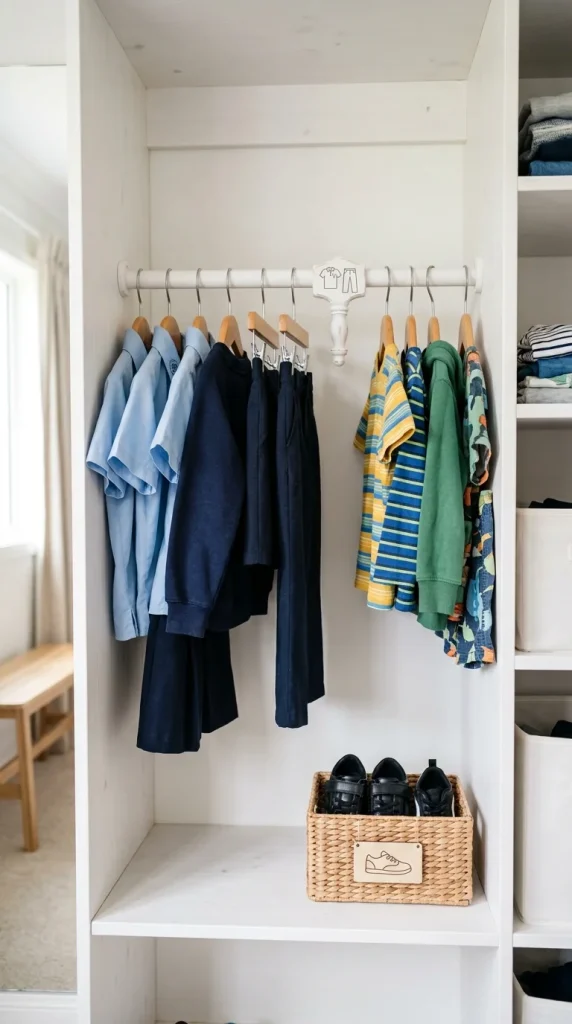
School uniform pieces tend to get mixed in with everything else, which leads to frantic mornings.
A simple rod divider, a clip-on ring with a small tag, separates the uniform section from casual clothes on the same rod. The child knows exactly where to go on a school morning without scanning the whole rail.
Pair it with a small basket below for the matching school shoes and the whole school-day kit is in one spot.
18. Mount a Small Hooks Rail at Kid Height on the Closet Side Wall

A row of hooks at a child’s shoulder height on the closet side wall handles everything that doesn’t hang well on a rod. Backpacks, sports bags, swim bags, robes, and tomorrow’s jacket all get a hook. The key is keeping the rail low enough that the child can reach every hook independently.
Four to six hooks is enough. More than that and they stop putting things away because it feels like a sorting task rather than a quick drop.
⚠️ Watch Out
Install the rail into a stud, not just drywall. A backpack filled with books puts real weight on hooks and a drywall anchor alone will eventually pull out.
19. Use Matching Slim Velvet Hangers Throughout for an Instantly Tidier Look
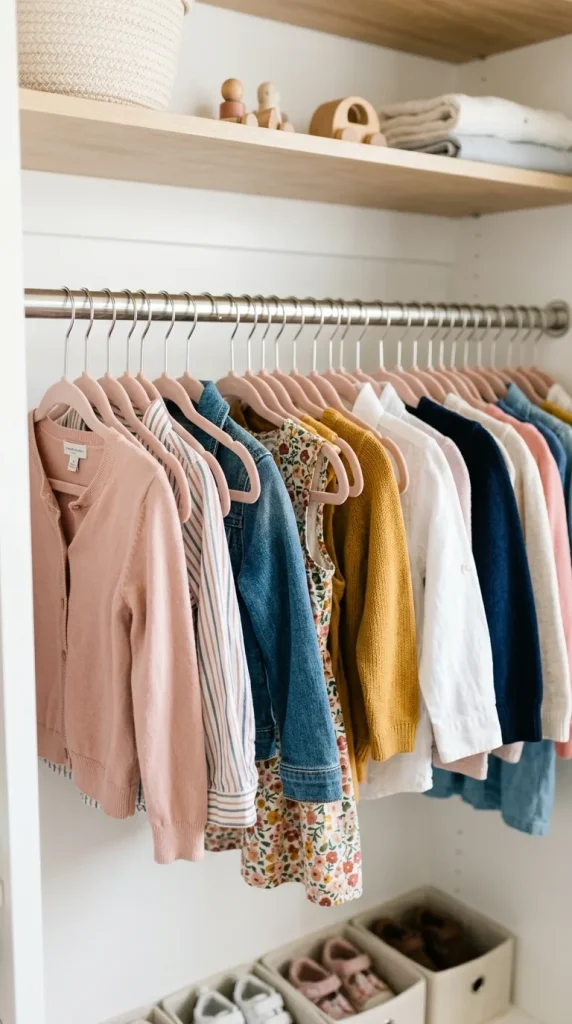
Switching from a mix of bulky plastic, wire, and mismatched hangers to one style of slim velvet hanger is one of the lowest-effort, highest-impact changes in any kids closet.
Clothing stops slipping off, the rod looks uniform, and about 30 percent more items fit because the hangers are so thin.
Buy a set sized for kids, which are narrower than adult versions and keep small shoulders from stretching out.
20. Add a Small Dresser Inside the Closet to Free Up Bedroom Floor Space
Moving a compact dresser inside the closet rather than leaving it in the bedroom opens up significant floor space for playing.
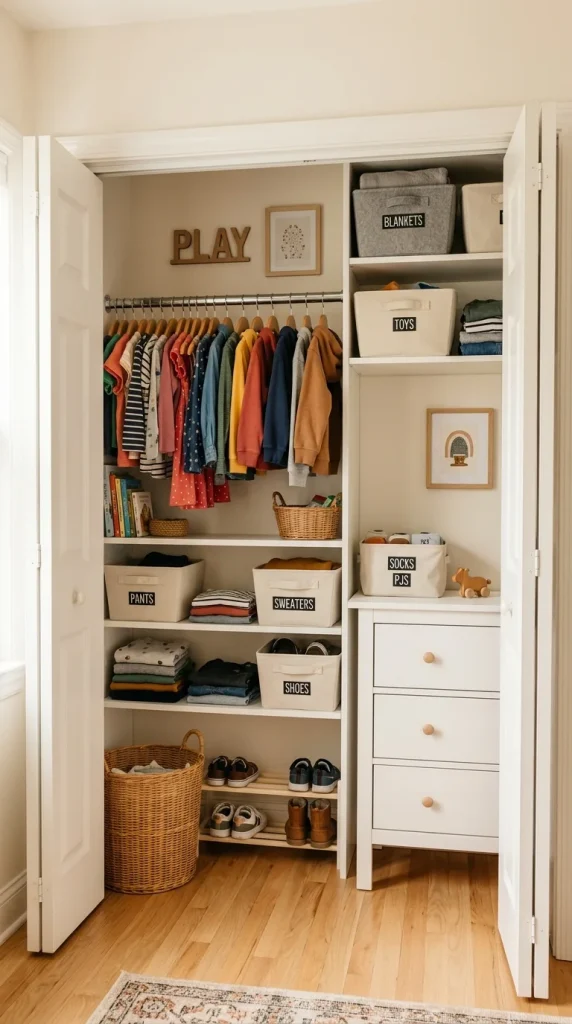
A three or four drawer dresser fits inside most standard reach-in closets if the hanging rod is shifted to one side. Socks, underwear, pajamas, and folded tees live in the dresser while the rod handles everything that needs to hang.
The bedroom feels calmer and the closet becomes a fully self-contained wardrobe zone.
21. Hang a Chalkboard or Dry-Erase Board Inside the Closet Door for Weekly Outfit Planning
A small chalkboard or dry-erase panel on the inside of the closet door gives older kids a place to plan outfits for the week ahead. They write Monday through Friday, sketch or jot the outfit idea for each day, and the decision is already made before the morning rush hits.

It also becomes a surprisingly useful communication spot for notes between kids and parents about what’s needed, what’s running out, or what needs to go in the laundry.
22. Sort Seasonal Clothes Into Labeled Bins on the Top Shelf
The top shelf of a kids closet is the hardest to reach, which makes it the best spot for things you only need a few times a year. Labeled fabric or cardboard bins hold off-season clothes, holiday outfits, and items bought in the next size up, out of the way until they’re actually needed.
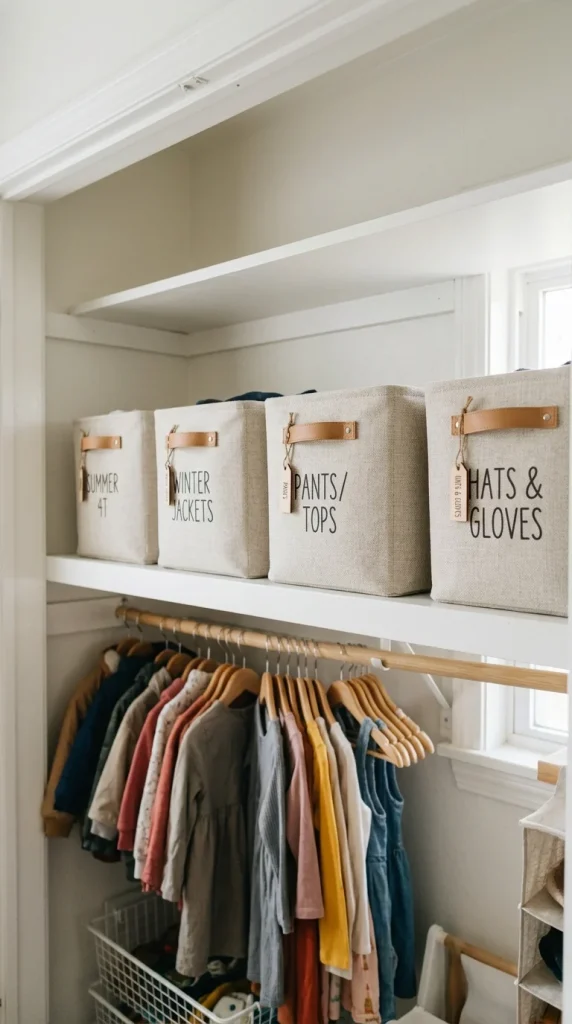
Label clearly with both season and size so swapping at the start of a new season takes minutes rather than a full afternoon of guessing.
💡 Quick Tip
Add a small adhesive label on the front AND the top of each bin. When you’re looking down from a step stool, the top label is what you’ll actually read.
23. Use a Tiered Hanging Organizer for Folded Tops and Sweaters
A canvas tiered hanging organizer clips onto the closet rod and adds five or six shelves of folded storage without using any floor or shelf space. It’s one of the best solutions for sweaters, folded tees, and pajama sets in a closet that’s short on drawers.
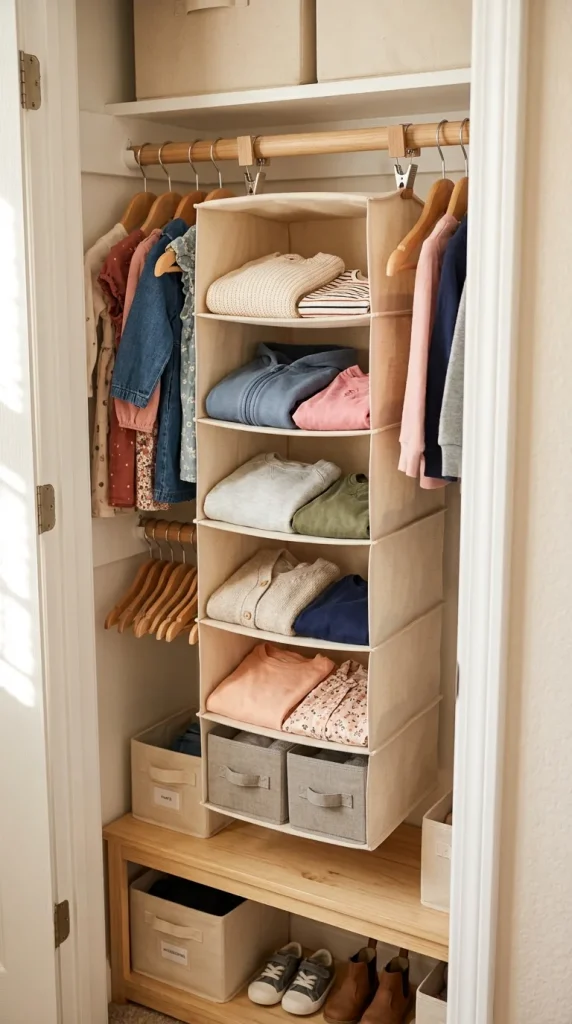
The key is keeping each tier to one category so it doesn’t become a jumbled stack. One tier per item type: tees, sweaters, pj tops, pj bottoms, and so on.
24. Create a Sports Gear Zone With Hooks, a Ball Bin, and a Shoe Tray
Active kids accumulate sports gear fast and it ends up everywhere except where it should be. A dedicated zone inside or just outside the closet with a set of heavy-duty hooks for bags and jerseys, a tall bin or basket for balls, and a shallow tray for cleats and sports shoes keeps all of it corralled in one place.
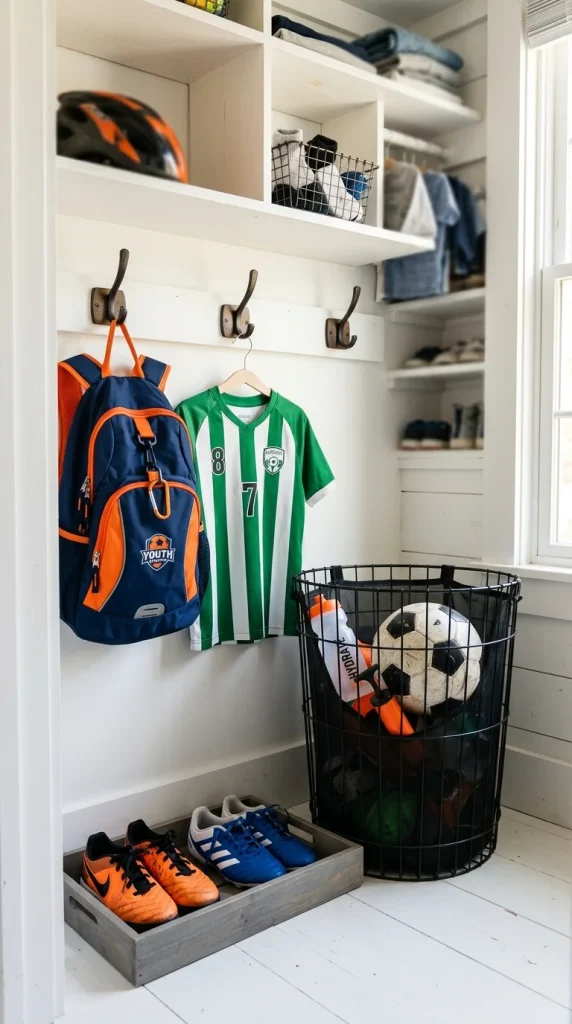
The child knows where to drop things when they get home and where to find them before practice, which removes a common source of household chaos.
25. Line the Closet Floor With a Washable Mat to Protect Shoes and Catch Dirt

A closet floor takes real abuse from muddy shoes, dropped items, and little feet. A washable flat mat or runner cut to fit the closet floor protects the surface underneath and makes cleanup a matter of pulling out the mat and tossing it in the wash. Choose a low-pile option so shoes sit flat and drawers still open without catching.
Light-colored mats show dirt faster, which is actually useful since it’s a reminder to clean before things get ground in.
26. Add a Small Donation Basket to Make Decluttering a Habit, Not an Event
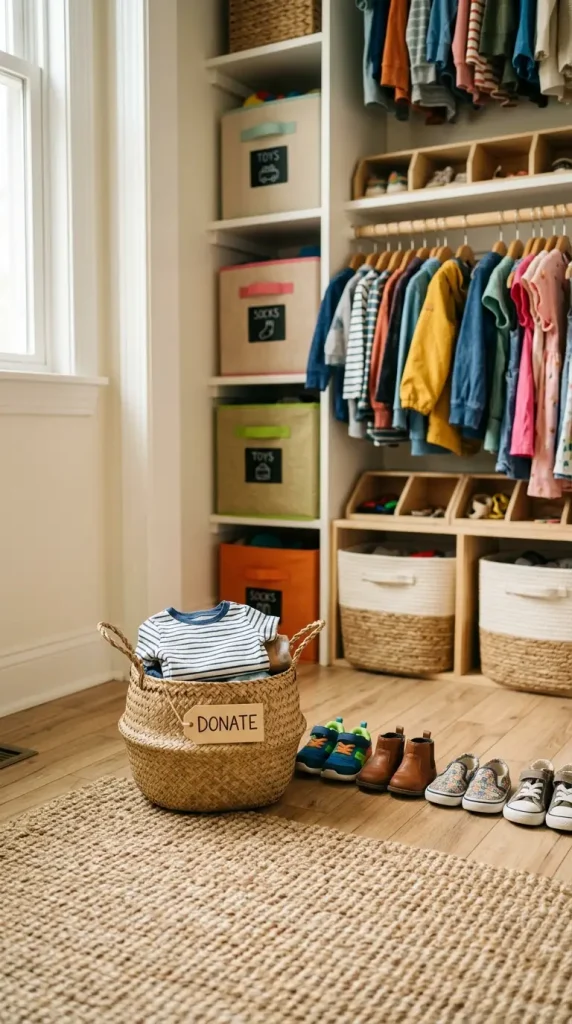
Most kids closets get purged once or twice a year in a big stressful session. A small labeled basket on the closet floor changes that pattern. When something no longer fits or the child decides they don’t want it anymore, it goes straight into the basket instead of back on the shelf. Once the basket fills, it leaves the house.
It teaches kids that letting go of things is a normal, easy part of having a closet, not a big deal.
Ongoing micro-decluttering means you never face a closet so full it’s overwhelming to tackle.
Conclusion
A well-organized kids closet does more than look good in a photo. It makes mornings quieter, reduces the amount of time you spend hunting for things, and quietly teaches kids that putting things away is simple when everything has a clear spot.
Start with one or two ideas that match your biggest daily frustration, whether that’s the shoe pile, the chaotic hanging rod, or the mysterious drawer no one can find anything in.
Small changes stack up fast. Save this post so you can come back to it when you’re ready for the next round.