
Most bathrooms feel cold and clinical. Hard tile, artificial light, and no living element make the room feel like a utility space rather than a retreat.
Plants change that. A single well-chosen plant turns a bathroom from functional to beautiful. Several plants create a spa-like feel that makes every shower feel less like a routine and more like a moment.

Every plant in this guide was chosen because it thrives in the specific conditions a bathroom creates: humidity, variable light, and temperature swings.
1. Peace Lily (Spathiphyllum)

The peace lily is the most forgiving option on this list. It tolerates low light without complaint, and the humidity that builds up in a bathroom is exactly what it wants. Glossy dark green leaves and white spathes give the room an immediate spa feeling.
It also tells you when it needs water. The leaves droop visibly, then perk back up within hours of a drink. That communication makes the peace lily one of the easiest plants to keep alive because it never lets you guess.
It filters airborne toxins like formaldehyde and benzene, which commonly come from bathroom cleaning products. One warning: it is toxic to cats and dogs, so keep it on a shelf they cannot reach.
Light: low to indirect. Water: every one to two weeks. Pet safe: no.
2. Snake Plant (Sansevieria)
The snake plant is nearly impossible to kill. It handles low light, irregular watering, and temperature swings without showing any stress. Its upright, architectural form suits modern, minimalist, and Scandinavian bathrooms.

What sets the snake plant apart is that it releases oxygen at night. Most plants only produce oxygen during daylight. That makes the snake plant especially useful in a bathroom attached to a bedroom, where nighttime air quality matters.
It can go weeks without water and never demands attention. If you travel often or forget to water plants, this is the one to choose.
Light: low to bright indirect. Water: every two to six weeks.
For bathroom counter decor ideas that incorporate snake plants as part of a beautifully styled vanity display, explore this guide on bathroom counter decor for complete bathroom styling inspiration.
3. Pothos (Epipremnum aureum)
Pothos is the best beginner trailing plant for a bathroom. It tolerates almost any light level, survives irregular watering, and produces long vines that cascade beautifully from a shelf or hanging planter.
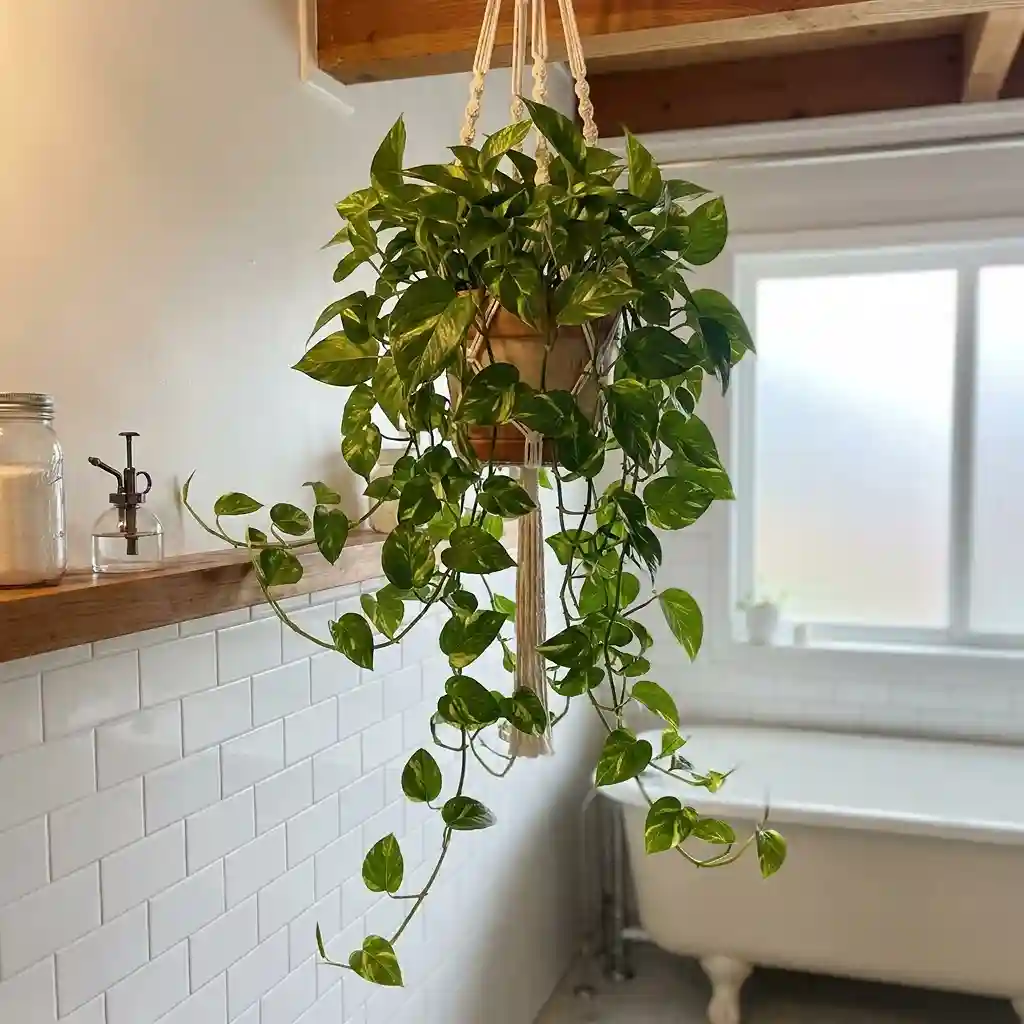
The heart-shaped leaves come in green, golden, and variegated varieties. In bathroom humidity, the vines grow quickly and can reach several feet within a single growing season. Pinch back any stems that get too long to encourage a fuller plant.
A single pothos on a high shelf creates a genuinely living installation. It filters formaldehyde and carbon monoxide from the air as it grows.
4. Boston Fern (Nephrolepis exaltata)
Boston ferns are one of the most effective air-purifying plants available and they absolutely love bathroom humidity. The feathery, arching fronds create a lush, tropical atmosphere that makes any bathroom feel like a rainforest retreat.

Ferns dry out quickly and prefer consistently moist — but not waterlogged — soil. A bathroom provides the ambient humidity that ferns crave, reducing the frequency of misting that indoor ferns in dry rooms require. Position in a hanging basket or on a high shelf where the arching fronds can cascade freely.
| Feature | Detail |
|---|---|
| Light requirement | Indirect light — no direct sun |
| Watering frequency | Every 3–5 days — keep soil moist |
| Humidity preference | Very High — essential for health |
| Mature size | 12–36 inches spread |
| Air purifying | Yes — one of the best air purifiers |
| Pet safe | Yes — safe for cats and dogs |
5. Spider Plant (Chlorophytum comosum)
Spider plants are cheerful, fast-growing, and completely non-toxic. The arching green and white striped leaves produce baby plantlets on long stems that hang down and look striking in a hanging planter.

Spider plants tolerate a remarkably wide range of conditions. Low light is acceptable though they grow more vigorously in moderate indirect light. Humidity from the shower accelerates their already fast growth rate. Propagate the spiderettes in water and create additional plants for free within weeks.
6. Aloe Vera
Aloe vera suits a bright bathroom window where it receives plenty of indirect or filtered sunlight. The plump, succulent leaves store water efficiently, making aloe one of the most drought-tolerant plants for bathroom use. The soothing gel inside the leaves treats minor burns, sunburn, and skin irritation instantly.

Aloe needs excellent drainage — the most common cause of aloe death is overwatering in a pot without drainage holes. Choose a terracotta pot with a drainage hole and a fast-draining cactus mix. Water thoroughly and then allow the soil to dry completely before watering again.
| Feature | Detail |
|---|---|
| Light requirement | Bright indirect to direct |
| Watering frequency | Every 2–3 weeks |
| Humidity preference | Moderate — tolerates bathroom conditions |
| Mature size | 12–36 inches depending on variety |
| Air purifying | Moderate — removes benzene |
| Pet safe | No — toxic to cats and dogs |
For a complete English cottage bathroom and bedroom decor guide where aloe and other natural plants create a fresh, organic atmosphere, explore these English cottage bedroom ideas for the aesthetic framework that pairs beautifully with bathroom plant displays.
7. Bamboo (Lucky Bamboo — Dracaena sanderiana)
Lucky bamboo is not true bamboo, it is a dracaena that grows beautifully in water alone, making it the easiest possible bathroom plant to maintain. Arrange stalks in a glass vase with pebbles and water. Change the water every two to three weeks. That is the complete care routine.

The graceful vertical stalks create a Zen, spa-like atmosphere that suits minimalist, Asian-inspired, and contemporary bathroom aesthetics perfectly.
Stalks are available in straight, braided, and spiral forms for different visual effects. A group of three stalks symbolizes good fortune in Chinese tradition.
8. Orchid (Phalaenopsis)

A blooming orchid on a bathroom shelf adds instant elegance. The moth orchid, Phalaenopsis, is the most bathroom-friendly variety. It prefers indirect light, and the humidity from daily showers mimics the tropical habitat it evolved in.
Orchids bloom for two to four months per cycle, then rest before reblooming. Water by submerging the pot in water for fifteen minutes every seven to ten days, then letting it drain completely. Never let the roots sit in standing water.
This is one of the few flowering plants on the list that is safe for cats and dogs.
9. ZZ Plant (Zamioculcas zamiifolia)
The ZZ plant tolerates the lowest light levels of almost any indoor plant. Dark bathrooms with minimal or artificial lighting suit the ZZ plant perfectly. The waxy, deep green leaves reflect whatever light is available and create a glossy, dramatic appearance.

ZZ plants store water in underground rhizomes, which lets them survive weeks or even months without watering. They are genuinely difficult to kill through neglect.
The upright growth habit suits contemporary and minimalist bathrooms that need a structural plant with almost no care demands.
Light: very low to moderate indirect. Water: every two to four weeks.
10. Air Plants (Tillandsia)
Air plants are the most extraordinary bathroom plants because they require no soil whatsoever. They absorb water and nutrients through their leaves directly from the air. The bathroom’s ambient humidity and steam from the shower provides significant hydration without any active watering on most days.

Mount them on driftwood, place them in glass terrariums, sit them on pebble trays, or attach them to wall-mounted frameworks. Because no pot or soil is required, the styling possibilities are almost unlimited.
Mist them thoroughly two to three times a week or give them a twenty-minute soak weekly. They are safe for cats and dogs.
Light: bright indirect, avoid direct sun. Water: mist two to three times a week or soak weekly. Pet safe: yes.
11. Eucalyptus
Fresh eucalyptus hung from the shower head is one of the most popular bathroom plant ideas for a reason. The steam from a hot shower releases the plant’s essential oils, filling the room with a clean, invigorating fragrance. It feels less like a plant and more like a spa treatment.

Hang a bundle of fresh branches from the shower head bracket or a hook behind the door. Tie them with twine. The eucalyptus stays green and fragrant for two to four weeks, then you replace it with a fresh bundle.
Dried eucalyptus in a vase on the counter gives you the visual without the shower installation. The silvery-green branches pair with almost any bathroom palette, and the scent lasts for months.
12. Lavender
Lavender in a bathroom window adds fragrance, beauty, and a calming sensory experience. The silvery-grey foliage and purple flower spikes create a distinctly Provençal or cottage bathroom atmosphere. The lavender fragrance has measurable stress-reducing properties — perfect for a bathroom used for relaxation.

Lavender is one of the few plants with measurable stress-reducing properties. The scent has been studied for its calming effect on the nervous system. For a bathroom used for evening baths and wind-down routines, that combination of beauty and effect is hard to match.
Give lavender the brightest light available in the bathroom. A south or west-facing window works best. It also needs good airflow, so do not crowd it against other objects on the sill.
You;ll also like warm rustic living room ideas for the natural, plant-rich interior aesthetic that suits bathroom plant displays perfectly.
13. Cast Iron Plant (Aspidistra elatior)
The cast iron plant earns its name completely. It survives neglect, low light, irregular watering, and temperature extremes that would kill most other plants. Dark, windowless bathrooms suit the cast iron plant perfectly. It is the only reliable option for bathrooms with genuinely no natural light whatsoever.

The broad, dark green strap-like leaves create a bold, architectural display. The plant grows slowly but lives for decades with minimal care. A single large cast iron plant in a beautiful pot creates a dramatic statement in even the most challenging bathroom environment.
14. Chinese Evergreen (Aglaonema)
Chinese evergreen plants offer extraordinary variety in leaf color and pattern. Varieties range from deep green to silver, pink, red, and orange. They tolerate low to moderate light and appreciate the consistent humidity of a bathroom environment. The color variation allows a Chinese evergreen to suit any bathroom color palette.

Choose a variety that complements the bathroom’s color scheme. Silver-leaf varieties suit grey and white bathrooms. Pink and red varieties suit warmer bathrooms with earth tones. Deep green varieties suit any bathroom. Each variety is equally easy to care for despite its dramatically different appearance.
15. Ivy (Hedera helix)
English ivy creates beautiful trailing displays in bathroom hanging baskets or from high shelves. The classic lobed leaves in green or variegated green-and-white trail dramatically over pot edges. Ivy is an exceptionally effective air purifier, removing airborne mold spores — particularly valuable in a humid bathroom environment.

Ivy prefers cooler temperatures and moderate to bright indirect light. The bathroom suits ivy well if it has a window.
Mist regularly or allow the shower steam to provide ambient humidity. Trim any stems that become too long to encourage dense, bushy growth from the base.
16. Heartleaf Philodendron (Philodendron hederaceum)
The heartleaf philodendron is one of the fastest-growing and most forgiving trailing bathroom plants. The large, heart-shaped leaves in deep glossy green trail beautifully from shelves, hanging baskets, and windowsills. Growth accelerates significantly in the humid conditions of a frequently used bathroom.

Philodendrons tolerate low light though they prefer moderate indirect light for the fastest, healthiest growth. Water when the top inch of soil feels dry to the touch.
The simple care routine and the rapid, lush growth make the heartleaf philodendron one of the most satisfying bathroom plants to grow.
17. Monstera Deliciosa (Swiss Cheese Plant)
English ivy creates beautiful trailing displays in bathroom hanging baskets or from high shelves. The classic lobed leaves trail dramatically over pot edges, and the plant is an exceptionally effective air purifier.

Ivy specifically removes airborne mold spores, which is especially valuable in a humid bathroom. It also filters formaldehyde and other common indoor pollutants.
Ivy prefers cooler temperatures and moderate to bright indirect light. A bathroom with a window suits it well. Mist regularly or let shower steam provide the ambient humidity. Trim any stems that get too long to encourage dense, bushy growth from the base.
Light: moderate to bright indirect. Water: every one to two weeks.
18. Begonia

Begonias add extraordinary color to bathroom windowsills and shelves. Rex begonias have spectacularly patterned leaves in silver, red, purple, and green. Wax begonias produce cheerful flowers in pink, red, and white through the growing season.
Both suit bathroom conditions well. They prefer bright indirect light and appreciate the consistent humidity. Good drainage matters because soggy roots are the most common begonia problem.
A well-lit bathroom window gives begonias the conditions they need for continuous leaf and flower production. A large rex begonia on a bath tray becomes a sculptural feature in its own right.
19. Calathea (Prayer Plant)
Calatheas produce the most intricate leaf patterns of any common houseplant. Stripes, spots, and geometric shapes in green, white, purple, and pink make every leaf a small work of art.
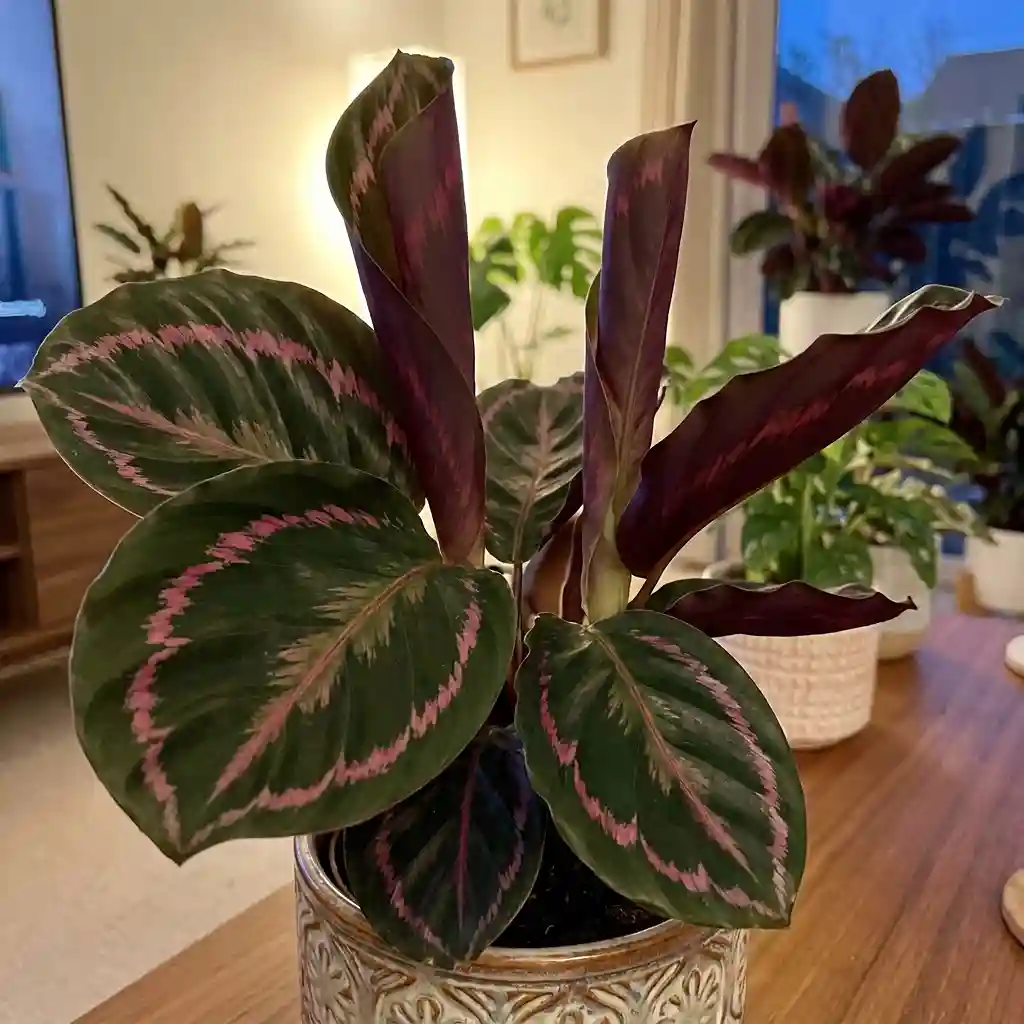
Calatheas are demanding but rewarding. They need consistent moisture, high humidity, and warm temperatures without draughts.
The bathroom’s natural humidity is genuinely beneficial for calatheas, which otherwise require frequent misting or a pebble tray filled with water to maintain adequate ambient humidity indoors.
20. Bird of Paradise (Strelitzia reginae)
A bird of paradise in a large, well-lit bathroom creates one of the most dramatic indoor plant displays possible. The paddle-shaped leaves make an unmistakably tropical statement.

This plant suits a spacious bathroom with large windows rather than a compact en-suite. The plant needs room to grow and plenty of natural light to perform at its best.
The investment in caring for a bird of paradise repays itself in extraordinary visual impact that makes the bathroom genuinely extraordinary.
21. Bromeliad
Bromeliads produce the most vivid and long-lasting flowers of any bathroom plant. The central flower spike in red, orange, yellow, or pink lasts for months before fading. The rosette of stiff, strap-like leaves creates a bold, architectural form between flowering cycles.

Bromeliads are adapted to tropical conditions and thrive in the warmth and humidity of a bathroom. Water by filling the central cup — the natural reservoir formed by the leaf rosette — rather than the soil. Change the water in the cup weekly to prevent stagnation. The soil should remain barely moist at all times.
22. Rubber Plant (Ficus elastica)
The rubber plant is one of the most architecturally striking bathroom plants available. Large, glossy leaves in deep green, burgundy, or variegated green and cream create a bold statement in any bathroom corner. The upright, tree-like growth habit suits tall corners where hanging or trailing plants would not fit.
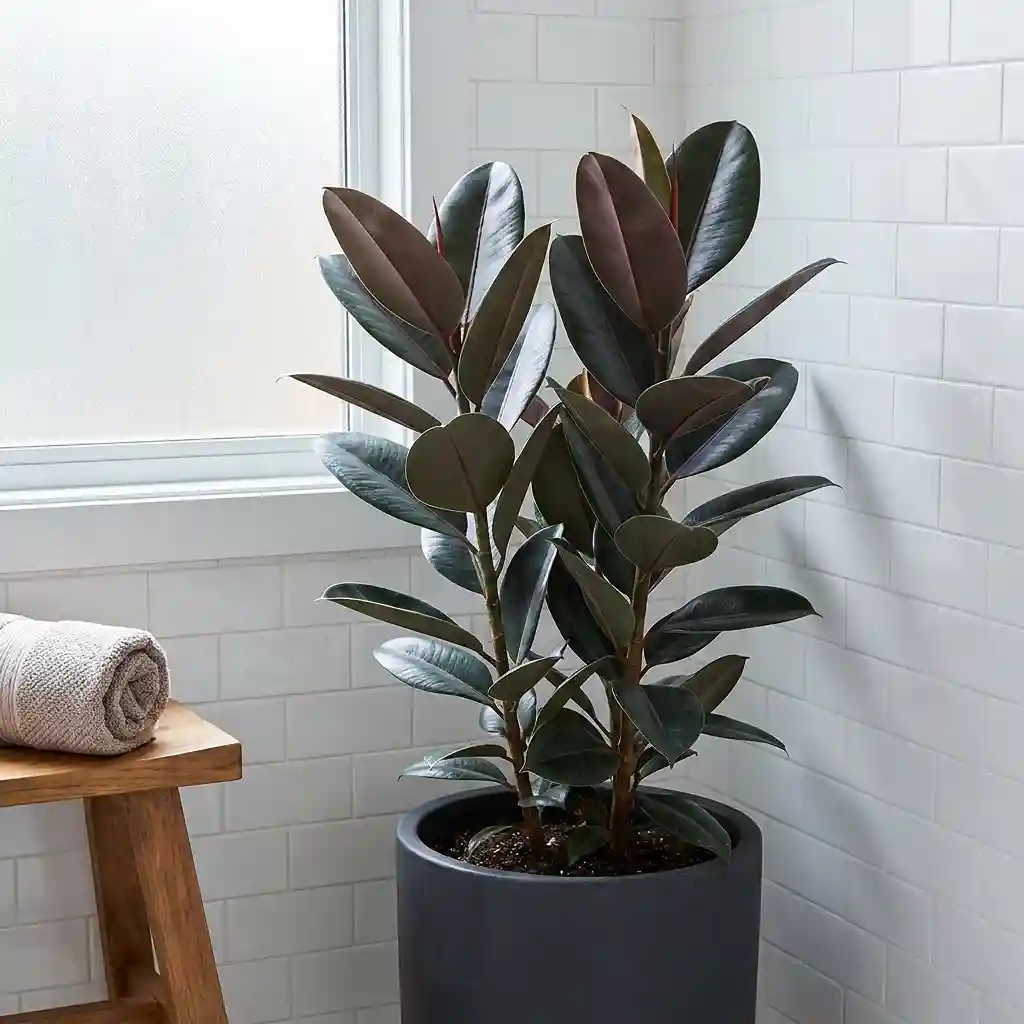
Rubber plants prefer bright indirect light and benefit from the consistent humidity of a bathroom environment. Wipe the large leaves with a damp cloth monthly to remove dust and keep them glossy. A rubber plant in a beautiful ceramic pot in a bathroom corner creates an immediately impressive design feature.
| Feature | Detail |
|---|---|
| Light requirement | Bright indirect — tolerates moderate |
| Watering frequency | Every 1–2 weeks |
| Humidity preference | Moderate to High |
| Mature size | 6–10 feet indoors |
| Leaf varieties | Green, burgundy, variegated |
| Pet safe | No — toxic to cats and dogs |
For vintage craft room and bathroom design inspiration that pairs bold plants like rubber plants with beautifully styled interiors, explore these vintage craft room ideas for the design approach to integrating bold plant statements within a beautifully designed space.
23. Croton (Codiaeum variegatum)
Crotons produce the most brilliantly colored leaves of any bathroom plant — vivid combinations of red, orange, yellow, green, and purple on a single plant. The extraordinary leaf color creates a living artwork that no manufactured decoration can replicate. The bathroom’s warmth and humidity suits crotons well.
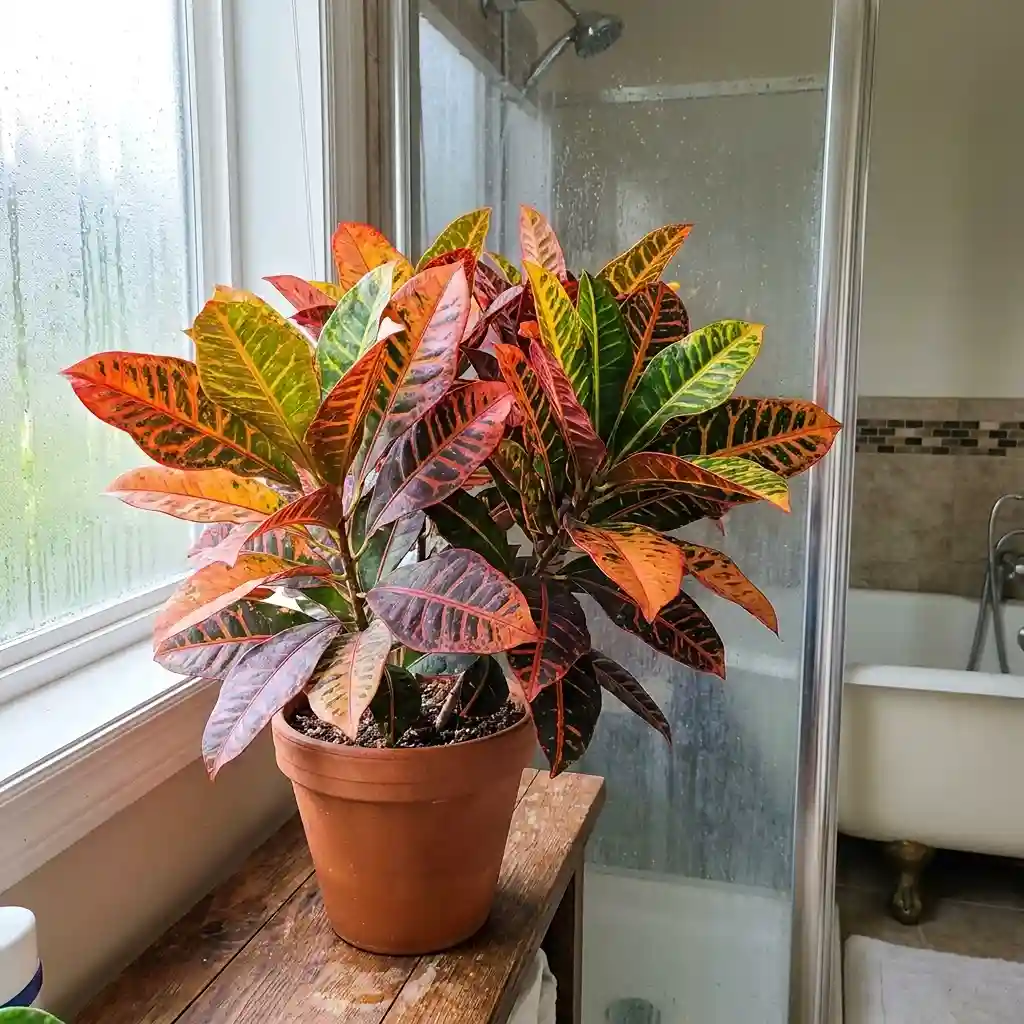
Crotons need bright light to maintain their extraordinary color. In low light, the vivid colors fade to plain green. A well-lit bathroom window gives crotons the conditions they need to remain brilliantly colored throughout the year. Water regularly but allow the top inch of soil to dry between waterings.
| Feature | Detail |
|---|---|
| Light requirement | Bright indirect — essential for color |
| Watering frequency | Every 1–2 weeks |
| Humidity preference | High — prevents leaf drop |
| Mature size | 18–36 inches |
| Color range | Red, orange, yellow, green, purple |
| Pet safe | No — toxic to cats and dogs |
24. Dracaena
Dracaenas are an extremely diverse plant family ranging from slim, upright varieties to wide, bushy forms. All share the quality of tolerating low light and irregular watering — making them excellent bathroom plants. The striped or solid green, yellow, and red leaves create a striking tropical appearance.
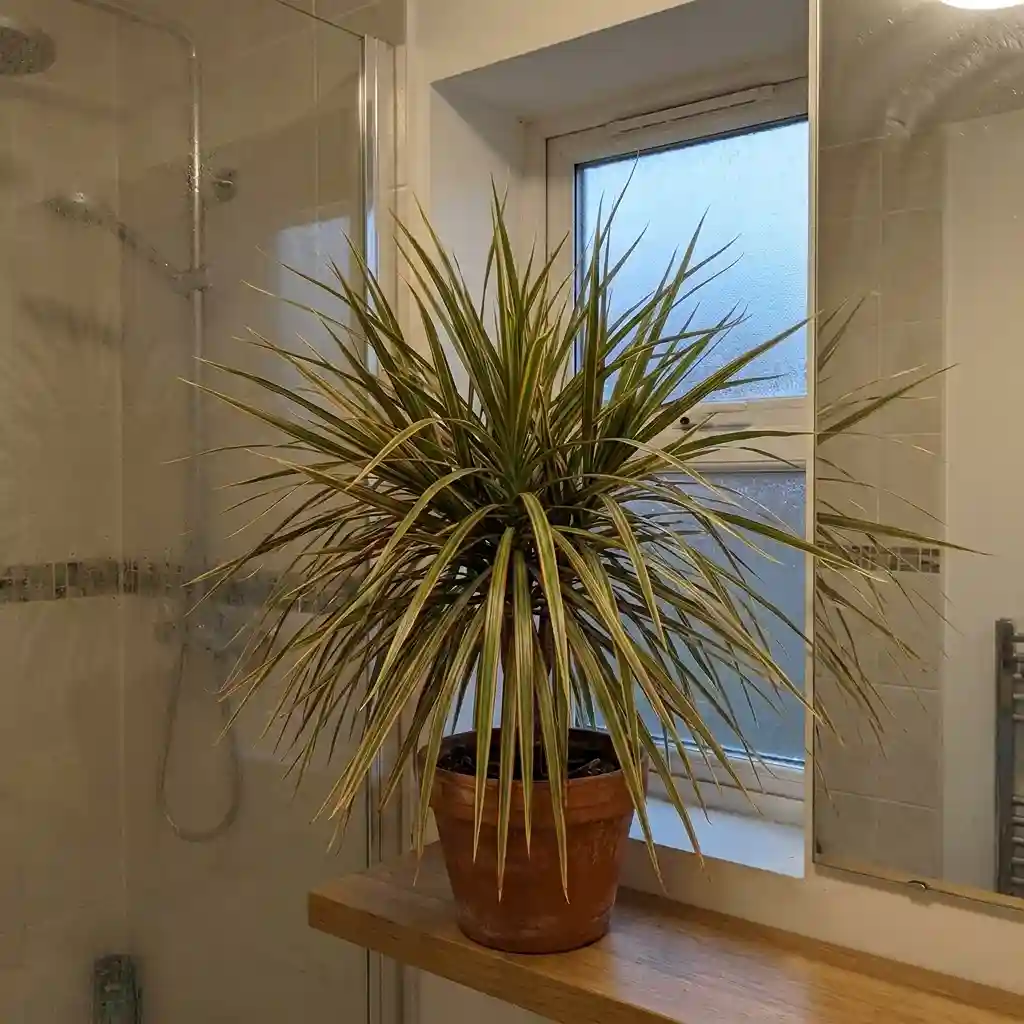
Dracaena marginata, the dragon tree, is the most popular bathroom variety. The slim, upright trunk topped with a crown of red-and-green striped leaves creates an instantly architectural feature. Dracaena fragrans produces one of the sweetest fragrances of any indoor plant when it eventually blooms.
They also filter benzene and trichloroethylene from the air.
25. Nerve Plant (Fittonia)
Nerve plants are small, compact, and astonishingly detailed. The intricate leaf veining in white, pink, or red against a deep green background looks like embroidery on every leaf.
They are perfect for compact bathroom shelves, glass terrariums, and small decorative pots on a vanity countertop. A terrarium with a nerve plant inside becomes a small living display that stays humid without any attention.

Nerve plants love water and humidity, which makes a bathroom their ideal environment. They wilt dramatically when thirsty and recover within hours of watering. Position in indirect light and never let the soil dry out completely. This one is safe for cats and dogs.
26. String of Pearls (Senecio rowleyanus)
String of pearls is one of the most visually unusual and most beautiful succulent trailing plants. The long strings of perfectly spherical bead-like leaves cascade from hanging pots in extraordinary curtains of green. A hanging string of pearls in a bathroom window creates an unforgettable visual feature.

String of pearls needs bright light and infrequent watering — a bright bathroom window is ideal. The succulent beads store water, making the plant drought-tolerant but susceptible to rot from overwatering. Allow the soil to dry completely between waterings. The cascading bead strings grow rapidly in the right conditions.
For bathroom curtain ideas and complete bathroom styling approaches that pair beautifully with dramatic trailing plants like string of pearls, explore these bathroom curtain ideas for fabric and display approaches that complement striking bathroom plant installations.
27. Anthurium
Anthuriums produce waxy, heart-shaped flowers in vivid red, pink, white, and purple that last for months. The glossy leaves and long-lasting flowers make anthuriums one of the most impressive bathroom plants for sustained visual impact. They suit the warm, humid conditions of a well-used bathroom perfectly.
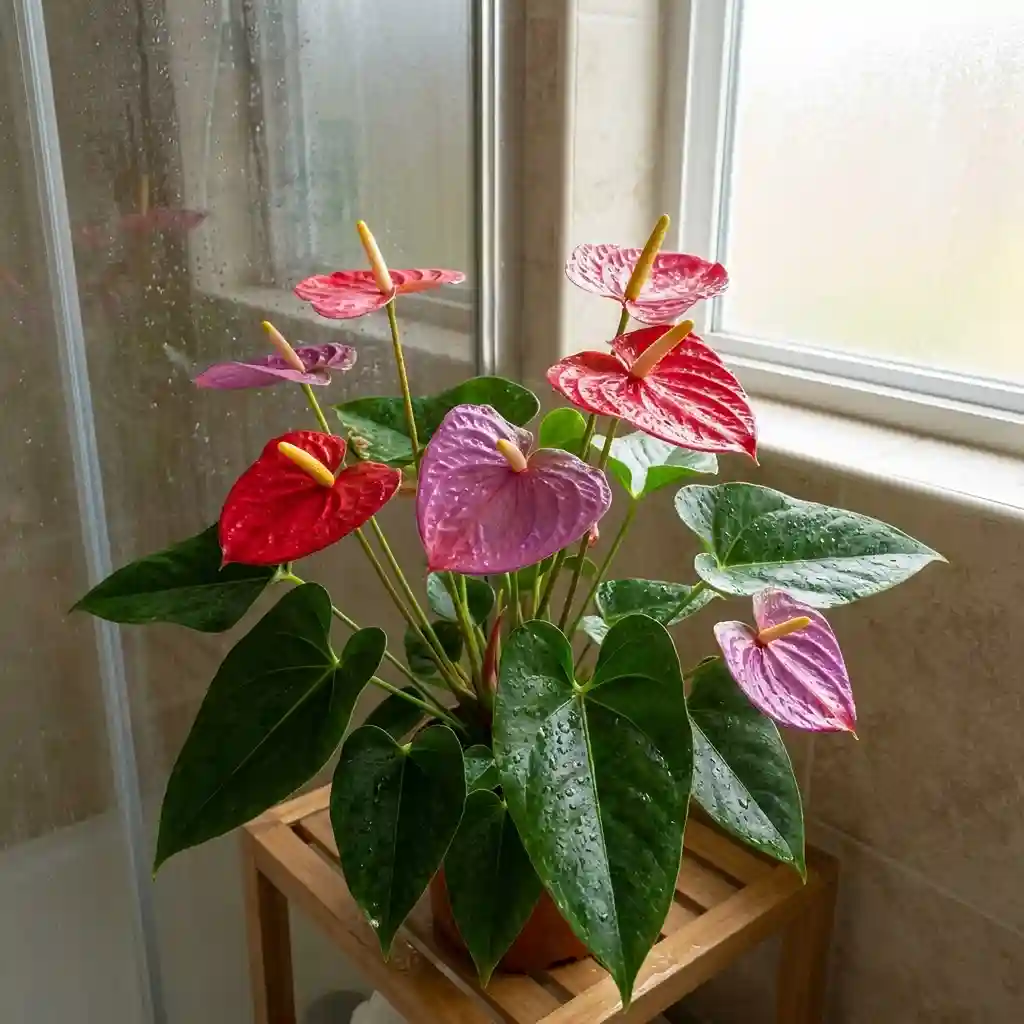
The flowers of an anthurium are not true flowers — they are modified leaves called spathes. They last for two to three months before fading. With adequate light and regular fertilization, anthuriums rebloom continuously throughout the year. The combination of beautiful foliage and long-lasting flowers makes anthurium exceptional value as a bathroom plant.
28. Pitcher Plant (Nepenthes)
A pitcher plant in a bathroom is extraordinary and genuinely functional. The hanging tubular pitchers trap and digest insects — making the pitcher plant an entirely natural, organic pest control solution for a bathroom that occasionally attracts small flying insects.
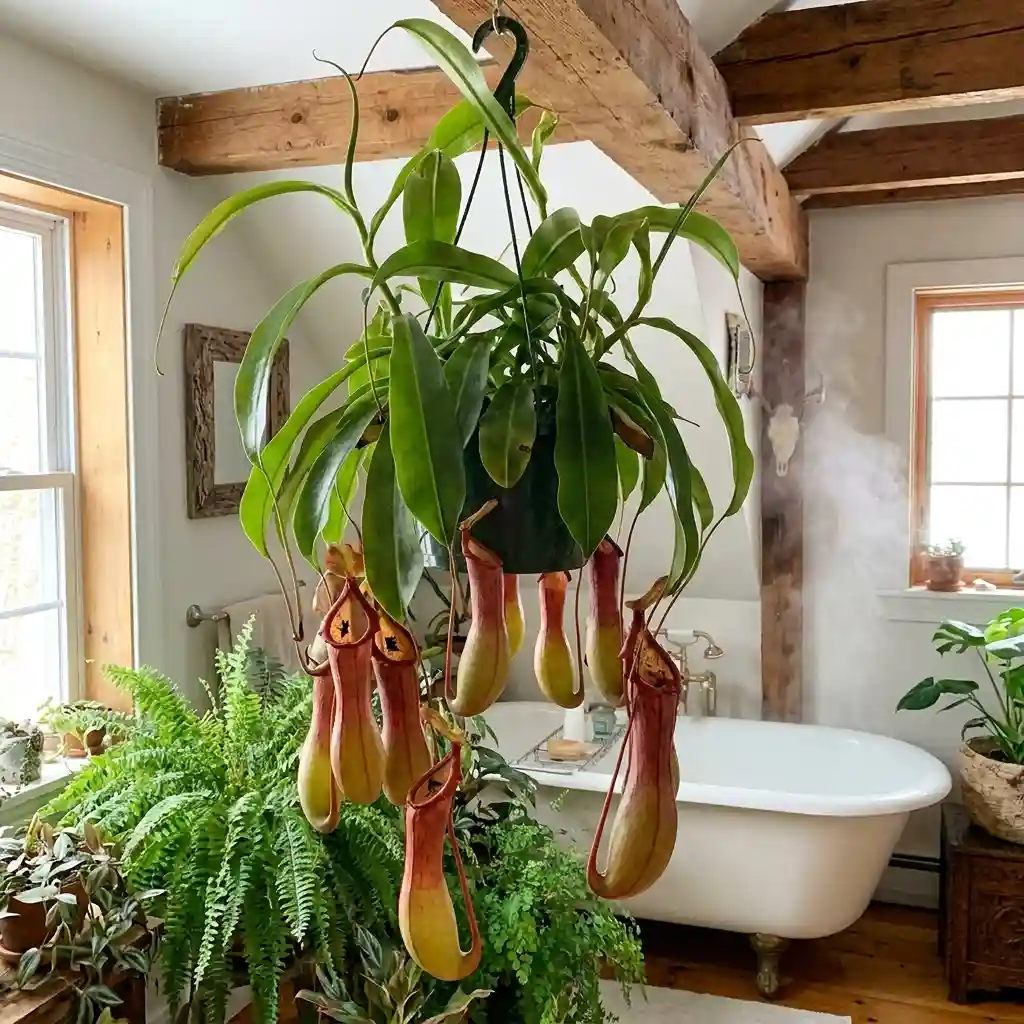
Pitcher plants need high humidity, warm temperatures, and consistently moist conditions — the bathroom provides all three naturally. Use only rainwater or distilled water — tap water minerals damage the plant’s delicate root system. Position in bright indirect light and watch the extraordinary pitchers develop and fill with digestive fluid.
29. Tradescantia (Spiderwort)
Tradescantia is one of the fastest-growing and most vividly colored trailing plants for bathroom use. Varieties include deep purple, green-and-purple striped, and silver-and-green forms. The colors are vivid and the growth is rapid — a small plant fills a hanging basket within a single growing season.

Tradescantia tolerates a wide range of light conditions though its most vivid color develops in moderate to bright indirect light. The bathroom humidity accelerates its already rapid growth. Trim back stems regularly to encourage dense, bushy growth and prevent the plant from becoming leggy.
For dorm room and small apartment bathroom plant ideas that use fast-growing, colorful plants like tradescantia to add immediate personality to compact spaces, explore these dorm room ideas for plant styling in compact living situations.
30. Gardenia
A blooming gardenia in a bathroom window creates one of the most extraordinary fragrance experiences of any indoor plant. The intensely sweet, complex fragrance of gardenia flowers fills the bathroom completely. Combined with the visual beauty of the large, creamy white flowers against deep glossy green leaves, gardenia creates a genuinely luxurious bathroom atmosphere.
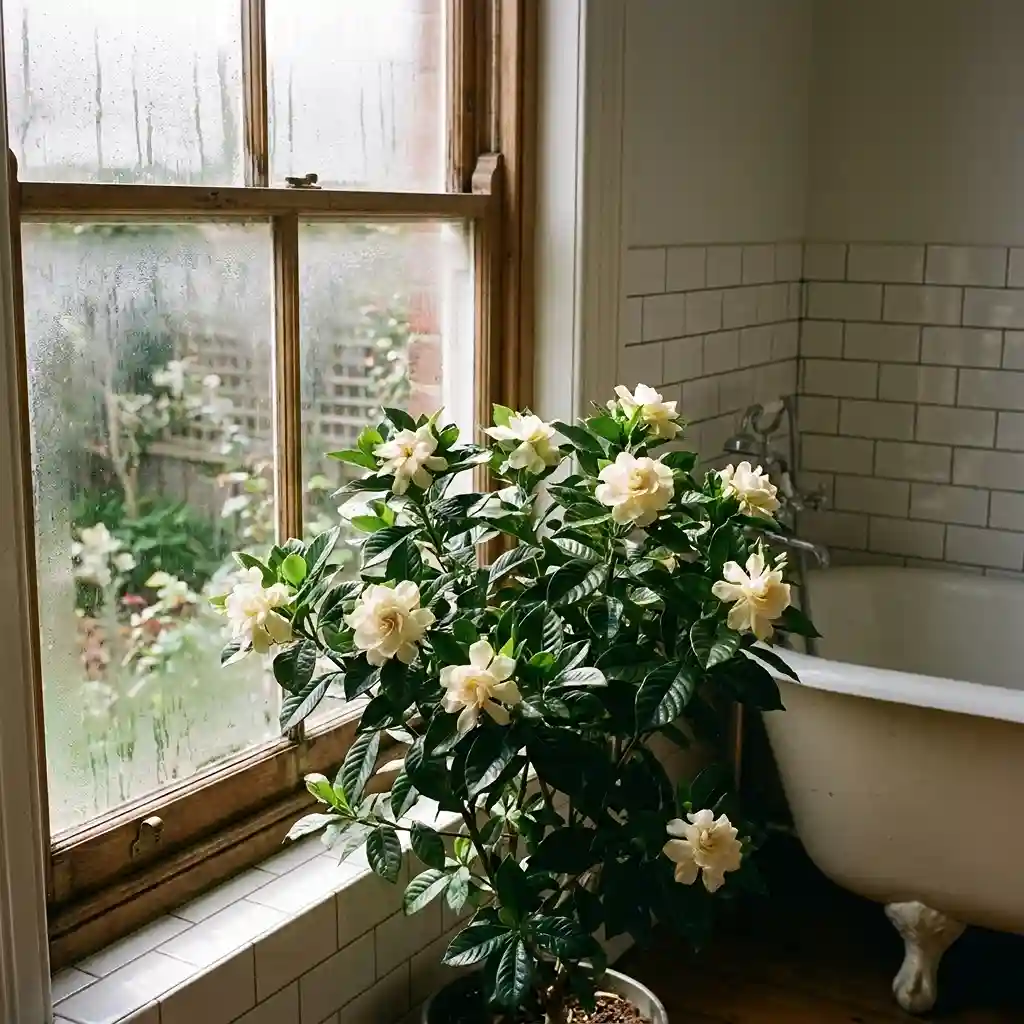
Gardenias are demanding. They need bright light, consistently warm temperatures, high humidity, and careful watering with non-alkaline water. The bathroom’s humidity is genuinely beneficial for gardenias that typically struggle in dry indoor conditions. The reward for meeting their requirements is extraordinary fragrance and beauty.
31. Pilea Peperomioides (Chinese Money Plant)
The Chinese money plant has become one of the most sought-after houseplants for its distinctive round, coin-shaped leaves on long petioles. The unusual leaf form creates a playful, modern aesthetic that suits Scandinavian, minimalist, and contemporary bathroom styles beautifully.

Pilea produces offshoots — pups — around the base of the mother plant that separate easily and propagate into new plants. A thriving pilea in a bathroom quickly becomes a collection of pileas to display throughout the home. The coin-shaped leaves are said to bring good fortune — making pilea both beautiful and symbolically meaningful.
| Feature | Detail |
|---|---|
| Light requirement | Moderate indirect — rotate regularly |
| Watering frequency | Every 1–2 weeks |
| Humidity preference | Moderate to High |
| Propagation | Easy — pups form naturally at base |
| Mature size | 12–18 inches |
| Pet safe | Yes — safe for cats and dogs |
For small studio apartment and compact bathroom ideas where pilea and other compact plants create maximum visual impact in minimal space, explore these small studio apartment ideas for plant placement strategies in compact spaces.
32. Watermelon Peperomia (Peperomia argyreia)
Watermelon peperomia is named for its extraordinary leaf pattern — dark green stripes on silver-green that perfectly mimics the exterior of a watermelon. The compact, bushy plant suits small bathroom shelves, vanity countertops, and grouped plant displays on window ledges.

Peperomias store water in their thick leaves, making them tolerant of irregular watering — ideal for busy households. They tolerate the lower light levels of many bathrooms and appreciate the ambient humidity from showers and baths. The compact size and extraordinary leaf pattern make watermelon peperomia one of the most rewarding small bathroom plants.
| Feature | Detail |
|---|---|
| Light requirement | Low to moderate indirect |
| Watering frequency | Every 2–3 weeks |
| Humidity preference | Moderate — tolerates bathroom conditions |
| Mature size | 6–12 inches — compact |
| Visual feature | Watermelon-striped leaf pattern |
| Pet safe | Yes — safe for cats and dogs |
For complete bathroom styling ideas including how to incorporate beautiful plant displays into a fully designed bathroom space, explore these bathroom curtain ideas for styling approaches that frame bathroom plant displays within a complete, beautifully designed bathroom.
Frequently Asked Questions (FAQs)
Q1: What plants grow best in a bathroom with no windows?
Snake plants, ZZ plants, cast iron plants, and Chinese evergreens are the best choices for windowless or very dark bathrooms. All four tolerate the lowest possible light levels of any common houseplant. They grow slowly in very low light but remain healthy for years. Supplement with a full-spectrum grow light for two to four hours daily to improve their condition in completely dark bathrooms.
Q2: Are bathroom plants safe for homes with cats and dogs?
Many popular bathroom plants are toxic to pets. Safe options include spider plants, Boston ferns, air plants, prayer plants, pileas, and watermelon peperomia. Toxic plants including pothos, peace lilies, and snake plants should be placed completely out of pet reach — high shelves or hanging baskets are the safest positions. Always verify the toxicity of any plant before bringing it into a home with animals.
Q3: How often should I water bathroom plants?
Most bathroom plants need watering every one to two weeks. The bathroom’s natural humidity slows soil moisture evaporation compared to other rooms. Always check the soil before watering — push a finger one inch into the soil and water only if it feels dry at that depth. Overwatering is significantly more damaging to bathroom plants than underwatering.
Q4: Can I put any plant in a bathroom?
Most tropical and subtropical plants thrive in bathrooms because the warm, humid conditions closely mimic their natural environment. Succulents and cacti that prefer dry conditions are the least suitable choices unless the bathroom has excellent light and ventilation. Mediterranean herbs like rosemary and lavender suit bright bathroom windows but struggle in humid, dark conditions.
Q5: How do I prevent bathroom plants from getting overwatered from shower steam?
Shower steam adds humidity to the air but does not water the soil directly. The risk from steam is fungal issues on leaves rather than overwatering. Ensure adequate air circulation in the bathroom by leaving the door open or using an exhaust fan after showering. Allow the bathroom to dry between showers before returning sensitive plants to their position.
Conclusion
A bathroom without plants is a bathroom at half its potential. Every plant in this guide is chosen specifically for its ability to thrive in the humid, variable conditions that bathrooms create. Every plant makes the bathroom more beautiful, more fresh, and more genuinely enjoyable to spend time in.
Start with one or two plants that suit your bathroom’s light level and your care availability. Build from there as your confidence grows. A bathroom transformed by living plants is genuinely one of the most rewarding and most affordable home improvements available. The investment is minimal. The transformation is extraordinary. And every morning routine becomes something worth looking forward to.