
The ceiling is the one surface most homeowners never touch. Paint chips. Wallpaper peels. The plain white overhead just sits there doing nothing for the room.
A wood ceiling changes that. With basic tools, a weekend of work, and the right material choice, any ceiling can go from forgettable to extraordinary.
The materials cost a fraction of professional installation. A bedroom ceiling runs $200 to $600 in DIY materials. The same ceiling installed professionally runs $1,500 to $4,000.
The result is a feature worth looking at every single day.

These 36 diy cheap wood ceiling ideas cover every approach, every material, every skill level, and every budget — so you can find the perfect wood ceiling for your space and build it yourself.

1. Understand Why Wood Ceilings Transform Rooms
Wood adds warmth no painted surface can replicate. The grain, the texture, and the natural variation create a depth that changes how a room feels.

The bedroom in this photo shows the effect. Wood beams frame a vaulted section of the ceiling above a wood four-poster bed. The wood overhead and the wood of the bed frame speak the same design language. The room feels warm, calm, and completed by the ceiling itself.
Wood ceilings also absorb sound. The textured surface softens noise rather than reflecting it back across the room. The room becomes more pleasant to spend time in before you even look up.
The cost is genuinely modest. Materials for a standard bedroom ceiling run $200 to $600 depending on the wood species. Professional installation of the same ceiling runs $1,500 to $4,000.
| Wood Ceiling Type | DIY Material Cost | Professional Cost | DIY Savings |
|---|---|---|---|
| Peel-and-stick planks | $1–$2 per sq ft | $4–$6 per sq ft | 60–70% |
| Shiplap boards | $1.50–$3 per sq ft | $5–$8 per sq ft | 60–70% |
| Pallet wood | Free–$0.50 per sq ft | $4–$7 per sq ft | 80–90% |
| Plywood sheets | $0.50–$1.50 per sq ft | $4–$6 per sq ft | 75–85% |
| Tongue-and-groove | $2–$4 per sq ft | $6–$10 per sq ft | 60–70% |
2. Choose the Right Wood Material for Your Budget
Material is the biggest cost decision. The same room can be covered for $100 using pallet wood or $800 using cedar tongue-and-groove.

This basement ceiling uses planks in a light natural tone. The black industrial pipe light fixture runs along the surface. The white staircase and the planked ceiling create a warm, finished look in what was likely a raw space.
Pallet wood and plywood are the cheapest starting points. Shiplap from a lumber yard sits in the middle. Cedar and pine tongue-and-groove cost the most but produce the most polished result.
Match the material to the room. A bedroom deserves a finer material than a garage workshop. Plywood that looks plain in a living room looks perfect in a utility space.
📌 Good To Know
Basements hold more moisture than rooms above grade. Seal the wood on all sides, not just the face, and leave a small gap at the walls so the planks can move with the seasons.
3. Gather the Right Tools Before Starting
Having the right tools on hand prevents the mid-project hardware store trips that kill momentum.

The bedroom in this photo shows what a completed wood plank ceiling looks like when the installation was done well. The vertical planks run the length of the A-frame roof. The black wire pendant hangs from the ridge. The bed sits below in light wood that matches the ceiling tone.
A circular saw cuts boards to length. A miter saw handles the angled corners. A finish nailer speeds board attachment and produces more consistent results than hand nailing. A chalk line snaps straight reference lines across the ceiling.
Rent the nail gun and miter saw if you will only use them once. Buy the circular saw, level, chalk line, and safety glasses.
| Tool | Purpose | Rent or Buy | Approximate Cost |
|---|---|---|---|
| Circular saw | Cut boards to length | Buy | $50–$150 |
| Miter saw | Angle cuts at corners | Rent | $30–$50 per day |
| Nail gun (finish nailer) | Attach boards to ceiling | Rent | $30–$50 per day |
| Chalk line | Mark straight reference lines | Buy | $8–$15 |
| Level | Check alignment | Buy | $15–$30 |
| Safety glasses | Eye protection | Buy | $5–$15 |
| Stud finder | Locate ceiling joists | Buy | $15–$40 |
4. Find the Ceiling Joists Before Any Installation Begins

Every board on a wood ceiling has to fasten into a joist. Boards fastened only to drywall will eventually fall. This is the rule that matters more than any other.
The image shows the step in action. A man on a ladder presses a chalk line reel against the ceiling and snaps a straight blue line to mark the position of a joist. The line guides every board and every fastener that follows.
Standard joist spacing is 16 inches on center in most homes. Some older homes use 24-inch spacing. Confirm the actual spacing in your specific ceiling before buying material.
5. Build a Simple Pallet Wood Ceiling for Free
Pallet wood is available for free from warehouses, hardware stores, and garden centers. Disassembled carefully, a stack of pallets provides enough boards to cover a full ceiling at almost no cost.

The ceiling in this photo shows what whitewashed planks look like in a finished hallway. Crown molding around the edges. A brass flush-mount light in the center. The planks have visible grain and slight color variation that reads as reclaimed material, even if it started as new boards.
Use only pallets marked HT. Avoid pallets marked MB. Clean every board. Remove every nail with a pry bar. Sand all surfaces with 60-grit paper, then 100-grit for a smooth, splinter-free finish.
⚠️ Watch Out
Whitewash sits in the grain differently on every board. Mix one large batch of wash for the whole ceiling, otherwise the color shifts from board to board and looks patchy in daylight.
6. Install Peel-and-Stick Wood Planks for Zero Mess
Peel-and-stick planks are the most renter-friendly ceiling option. They apply directly to a clean, flat surface with no nails and no construction experience.

The great room in this photo uses light wood planks across a vaulted ceiling. The recessed lights are cut cleanly into the surface. The planks run in one direction and create a warm, unified ceiling that ties the whole open space together.
The backing holds firmly overhead when applied correctly. Press each plank firmly along its full length right after placing it.
Start from a straight reference line marked on the ceiling, not from the wall. Ceilings are rarely square. Walls create inaccurate starting points.
For complete wood ceiling ideas covering every material, finish, and installation approach beyond peel-and-stick including planks, beams, and plywood, explore this comprehensive guide on cheap wood ceiling ideas for the full range of affordable wood ceiling approaches.
7. Install Shiplap Boards as the Most Popular DIY Choice
Shiplap is the most popular DIY ceiling material for good reasons. It installs quickly. It creates clean shadow lines between boards. It accepts paint, stain, and whitewash equally well.

This living room uses white shiplap across a vaulted ceiling with exposed wood beams running horizontally. A chandelier hangs from the ridge. The shiplap creates the shadow lines that give the ceiling texture, and the beams break up the surface into defined sections.
Start the first row at one wall along a straight, level reference line. Nail each board through its face into the joists. Leave a small gap between boards for the shadow line effect.
A spacer keeps the gaps consistent. Uniform gaps make the ceiling look intentional rather than improvised.
For a comprehensive shiplap ceiling design guide covering installation techniques, finish options, and design applications across every room type, explore these shiplap ceiling ideas for the complete resource on shiplap ceiling design and installation.
8. Use Plywood Sheets for the Fastest Large-Area Coverage
Plywood covers large areas faster than any individual plank system. A single 4 by 8 sheet covers 32 square feet in one piece. A 200 square foot ceiling needs just seven sheets.
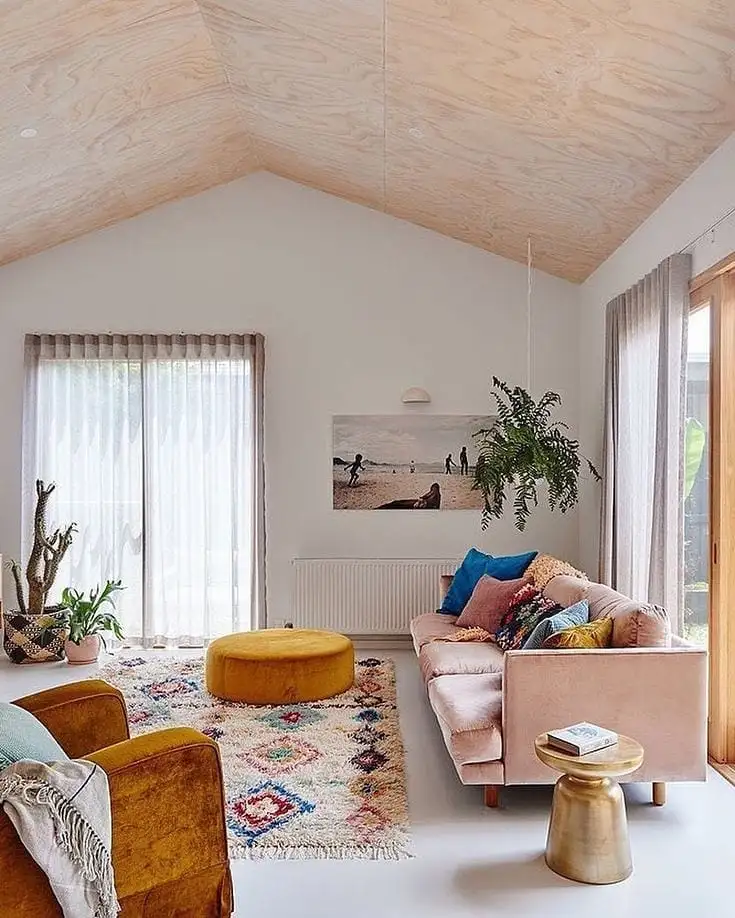
This living room uses plywood panels across a vaulted ceiling. The grain is visible and forms a pattern across the panels. The tone matches the pink sofa and the colorful rug. The ceiling reads as designed rather than improvised.
Sand every sheet surface smooth before installation. Fill any voids with wood filler and sand flush. Apply a wood conditioner before staining for even color absorption.
Paint works beautifully over sanded and primed plywood. The grain shows subtly through the paint.
9. Create a Whitewashed Wood Ceiling for Coastal or Cottage Style

Whitewashing sits between natural wood and full paint. The white settles into the grain while the wood pattern shows through. The result is lighter than raw wood but richer than painted white.
This ceiling shows the finished effect. The planks are pale, with a subtle grain visible through the white. Crown molding runs along the wall edges. A brass ceiling fan with white blades sits in the center. A white curtain on the right echoes the ceiling tone.
Mix white latex paint with water at roughly one to one for a medium wash. More paint makes it more opaque. More water makes it more translucent.
Apply the mix with a brush and wipe back immediately with a clean rag before it dries. Work in small sections.
10. Build DIY Faux Wood Beams From Lumber
Faux beams built from three boards into a hollow U-shape look like solid structural beams at a fraction of the weight and cost.

The hallway in this photo uses three dark stained beams running across a flat white ceiling. Each beam has a flush-mount brass light hanging beneath it. The beams break up the length of the hallway and give it a defined rhythm.
Two side pieces and one bottom piece glued and nailed together create the box. Mount the box over a nailer strip attached to the ceiling.
Size the beam to the room. A 4 inch wide, 4 inch deep beam suits low ceilings in small rooms. A 6 inch wide, 6 inch deep beam suits higher ceilings in larger rooms.
Space beams evenly, typically 36 to 48 inches apart, for the most natural structural appearance.
See faux wood beams ceiling ideas for the complete faux beam design resource.
11. Create a Herringbone Pattern Wood Ceiling
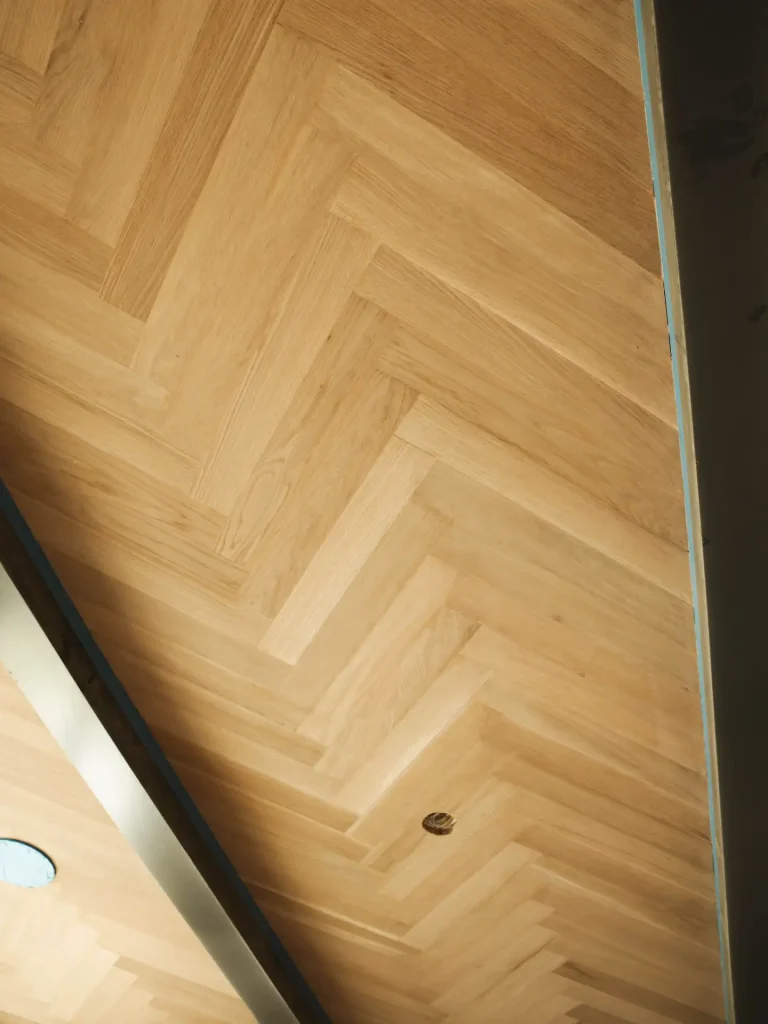
A herringbone pattern uses the same planks as a standard installation but arranges them at 45-degree angles in a V-shaped interlocking pattern. The angled arrangement creates visual energy that a horizontal installation cannot achieve.
The bathroom ceiling in this photo shows the finished effect. Light oak planks run in a herringbone pattern across the entire surface. A recessed light sits cleanly within the pattern. Blue painter’s tape marks the edge where the ceiling meets the wall, ready for finishing.
Mark the ceiling center point before beginning. Start the first two boards at the center line arranged in a V shape. Work outward from the center in both directions at once to maintain symmetrical alignment.
- The extra cost is worth the extraordinary visual result
- Cut every end piece at 45 degrees for clean joints at the walls
- Order 20 percent more material than the calculated area to account for waste
- The herringbone pattern wastes about 15 percent more material than a straight installation
12. Install a Wood Plank Ceiling in a Bedroom
A wood plank ceiling in a bedroom creates the most immediately transformative sleeping environment possible. The warmth overhead changes how the entire room feels from the moment you walk in. Even a simple pine board ceiling painted white creates a dramatically more beautiful bedroom than plain drywall.

For complete bedroom design ideas where a wood plank ceiling creates the most beautiful and most characterful sleeping environment, explore these slanted ceiling bedroom ideas for bedroom-specific ceiling design approaches that apply directly to any wood plank ceiling installation in a bedroom.
Position the bed before installing the ceiling so the plank direction can be chosen relative to the bed placement. Planks running parallel to the length of the bed create a sense of extension. Planks running perpendicular to the bed create a sense of width. The plank direction choice is one of the first design decisions to make.
13. Add a Wood Ceiling to a Small Living Room and Dining Area

A wood ceiling in a combined living and dining space creates visual unity across the open plan. The continuous warm surface overhead connects the two zones and makes the space feel designed as one room.
This open-plan space uses light wood planks across the entire ceiling. Recessed lights sit evenly across the surface. The oak dining table and the light sofa below match the ceiling tone. The plank lines run without interruption from the living area into the dining area.
Install planks in one direction across both zones without a break at the boundary. The uninterrupted lines overhead create the visual unity that defines the combined space.
- Consistent direction across both zones reads as cohesive
- Parallel to the long wall creates an expansive effect
- Perpendicular to the division creates a defined separation
14. Install a Wood Ceiling in a Studio Apartment
A wood ceiling in a studio apartment creates warmth in a compact space where every design element works harder than in a larger home. The ceiling is the one surface visible from nearly every point in the room.
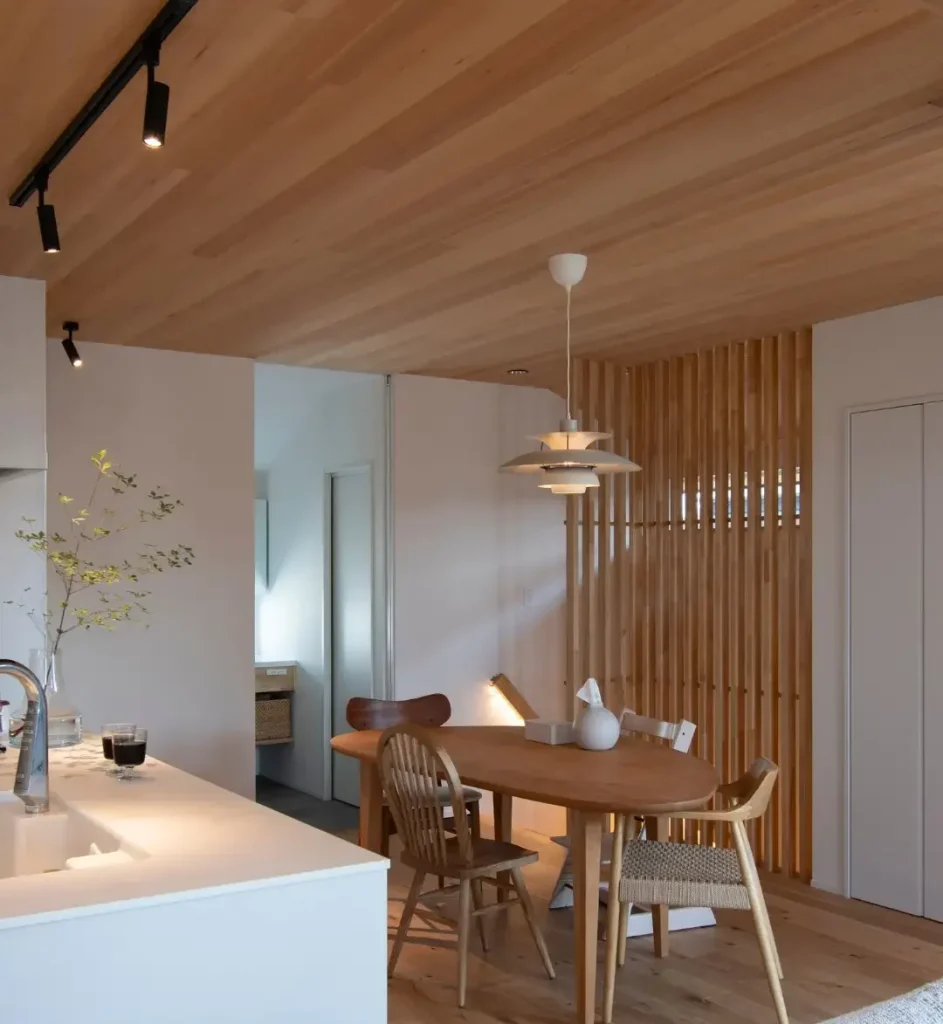
The studio in this photo uses light wood planks across a flat ceiling. Black track lighting runs along the surface. A slatted wood divider separates the dining area from the living space, echoing the ceiling material.
Light-toned or whitewashed planks suit studios best. They reflect available light downward rather than absorbing it. The warmth of wood overhead prevents the compact space from feeling institutional.
Find more small studio apartment ideas for comprehensive approaches to making a small studio apartment genuinely beautiful with a wood ceiling as a central design feature.
15. DIY a Tongue-and-Groove Wood Ceiling for a Polished Finish
Tongue-and-groove boards interlock along their edges to create a seamless surface. Unlike shiplap, which shows a shadow gap between boards, tongue-and-groove creates an almost continuous wood surface.

The living room in this photo uses tongue-and-groove planks across a vaulted ceiling and beams. The whole assembly is painted a deep navy blue. A stone fireplace anchors the left wall. A leather sofa and a jute rug ground the space below.
Install tongue-and-groove from one wall to the opposite. The groove edge of each board receives the tongue of the next.
16. Create a DIY Wood Ceiling in a Home Office

A wood ceiling in a home office adds inspiration and warmth to a space where people spend significant focused time every day.
The natural material overhead creates an organic, restorative quality that drywall and paint simply cannot provide.
A better ceiling genuinely improves the daily experience of working in the space.
17. Install a Wood Ceiling in a Basement Room
A basement with a raw or poorly finished ceiling benefits enormously from a wood treatment. The warmth of wood counteracts the inherently cool and dark quality of below-grade rooms.

The room in this photo shows the finished result. Exposed pine beams run across a planked ceiling. A white ceiling fan hangs from the center. The iron bed frame and the sliding barn doors complete the farmhouse look. The wood ceiling transforms what could have been a plain basement room into a warm, characterful space.
Seal all wood in basement applications thoroughly with polyurethane. Basements hold more moisture than above-grade rooms. Unsealed wood absorbs that moisture and warps over time.
For complete basement ceiling design ideas covering every approach to transforming basement ceilings from raw to beautiful, explore these exposed basement ceiling ideas for the full range of basement ceiling treatments and then these painted exposed basement ceiling ideas for painted approaches that complement wood plank installations in basement rooms.
18. Paint the Wood Ceiling a Bold Color
A painted wood ceiling combines the texture of real wood with the drama of bold color. The paint sits differently in wood grain than it does on drywall. The grain shows subtly through the color.

The kitchen in this photo uses dark stained planks across a vaulted ceiling and beams. The dark tone contrasts with the pale marble island and the light stone backsplash. Glass pendant lights hang from the ridge. The dark ceiling becomes the defining feature of the room.
Deep navy, forest green, charcoal, and warm terracotta all look spectacular on wood plank ceilings. Choose a matte finish to avoid glare overhead.
For a complete range of painted ceiling ideas covering colors, techniques, and design approaches that work beautifully on wood plank ceilings across every room type, explore these painted ceiling ideas for inspiration that pairs naturally with DIY wood ceiling installations.
| Bold Paint Color on Wood | Atmosphere | Best Room | Wall Pairing |
|---|---|---|---|
| Deep navy | Sophisticated, cozy | Bedroom, study | Warm white |
| Forest green | Natural, calm | Living room, dining | Cream |
| Charcoal grey | Dramatic, modern | Home office, den | Light grey |
| Warm terracotta | Mediterranean, warm | Living room, kitchen | Sandy white |
19. Add Recessed Lighting to a Wood Plank Ceiling
Recessed lighting installed within a wood plank ceiling creates a clean, integrated lighting solution that suits the natural material beautifully. The warm glow of recessed lights against natural wood creates an extraordinary atmosphere in any room.

Plan all lighting positions before installing any boards. Mark the exact positions of each recessed light on the ceiling. Cut the housing holes before installing surrounding boards.
- Run electrical wiring through the ceiling cavity before boards go up
- Fishing wire through a finished wood ceiling is significantly harder
- Space lights 4 to 6 feet apart over main seating areas
- Space lights 24 inches apart over kitchen work zones
20. Create a DIY Wood Ceiling in a Craft or Hobby Room
A wood ceiling in a craft room creates an inspiring, warm creative environment. The natural material overhead improves the atmosphere of a workspace in ways that are hard to quantify but immediately felt by anyone who works beneath it.

A whitewashed or light-painted wood ceiling in a craft room keeps the workspace feeling bright and energized. A natural wood ceiling creates a warm, organic atmosphere that suits painting, pottery, and textile crafts. Choose based on the type of creative work done in the room and the light levels available.

The room in this photo shows exposed dark wood beams across a white vaulted ceiling. The contrast between the dark beams and the light ceiling creates architectural depth. A brick fireplace anchors the space. So choose based on the type of work and the light levels in the room.
21. Stain a Wood Ceiling for a Rich, Natural Look
Staining brings out the natural grain and color of the wood. The stain penetrates the fibers and creates color from within rather than on top. The grain stays fully visible and becomes more beautiful under the color.

The room in this photo shows exposed pine joists and beams across the ceiling. A man on a ladder installs a recessed light into the wood surface. The warm pine tone is the natural color of the wood, ready for stain or sealer.
Apply stain with a brush to a section of ceiling. Wipe back the excess with a clean rag before it dries. Work in sections of three to four boards at a time.
- Wipe consistently in the direction of the grain
- Apply two coats for deeper color
- Let the first coat dry fully before applying the second
- Seal with polyurethane after the stain dries
22. Build a Coffered Wood Ceiling From MDF Trim
A coffered ceiling uses a grid of recessed panels to create architectural depth overhead. The DIY version builds from MDF or pine trim arranged in a rectangular grid applied to the existing ceiling.

The living room in this photo uses a white coffered ceiling with a beam grid. The panels between beams sit slightly recessed. The rest of the room pairs white sofas, boucle chairs, and a black marble fireplace. The ceiling grid gives the room an architectural structure it would otherwise lack.
Measure and mark the grid pattern before cutting any trim. Panels between 18 and 36 inches wide look most proportional on standard ceiling heights. Nail trim pieces to the drywall with a finish nailer and construction adhesive. Fill all nail holes and joints before painting.
Learn comprehensive guide on cheap wood ceiling ideas for the full resource on affordable wood ceiling transformations.
23. Install a Cedar Plank Ceiling for Natural Fragrance
Cedar is a naturally fragrant wood that adds a sensory dimension no other ceiling material provides. The aromatic scent fills the room with a clean, woody fragrance.

The tiny home in this photo uses light knotty planks across the ceiling. Recessed lights sit evenly within the surface. A skylight cuts through on the right. White cabinets below create contrast. The plank ceiling transforms a compact interior into a warm, cohesive space.
Cedar is lightweight and easy to cut. It works with standard finish nailers. It accepts stain, paint, and clear finish equally well.
- Natural reddish-brown tones suit cottage, rustic, and farmhouse styles
- The fragrance lasts two to five years before fading
- Lightly sanding the surface refreshes the scent
- Seal with a clear matte finish to preserve the color and reduce dust
24. DIY a Vintage Wood Ceiling With Reclaimed Materials
A vintage ceiling uses reclaimed timber, old fence boards, and salvaged flooring to create a surface with authentic character that no new material can match.

This log cabin is under construction. The ceiling is covered in reclaimed wood planks and beams with visible weathering, nail holes, and saw marks. A stone fireplace anchors the right wall. A chandelier hangs from the center.
Source reclaimed wood from architectural salvage yards, demolition sites, barn dismantling operations, and online marketplaces. Inspect every board for structural integrity.
- The weathered grey tones and imperfections tell decades of story
- Remove all old nails with a pry bar
- Sand all surfaces thoroughly to remove splinters
- Seal with a clear matte polyurethane to prevent dust and preserve the patina
25. Create a Feature Ceiling Section Rather Than the Full Ceiling
A feature section covers only a portion of the ceiling rather than the entire surface. The partial treatment creates maximum impact with minimum material cost.
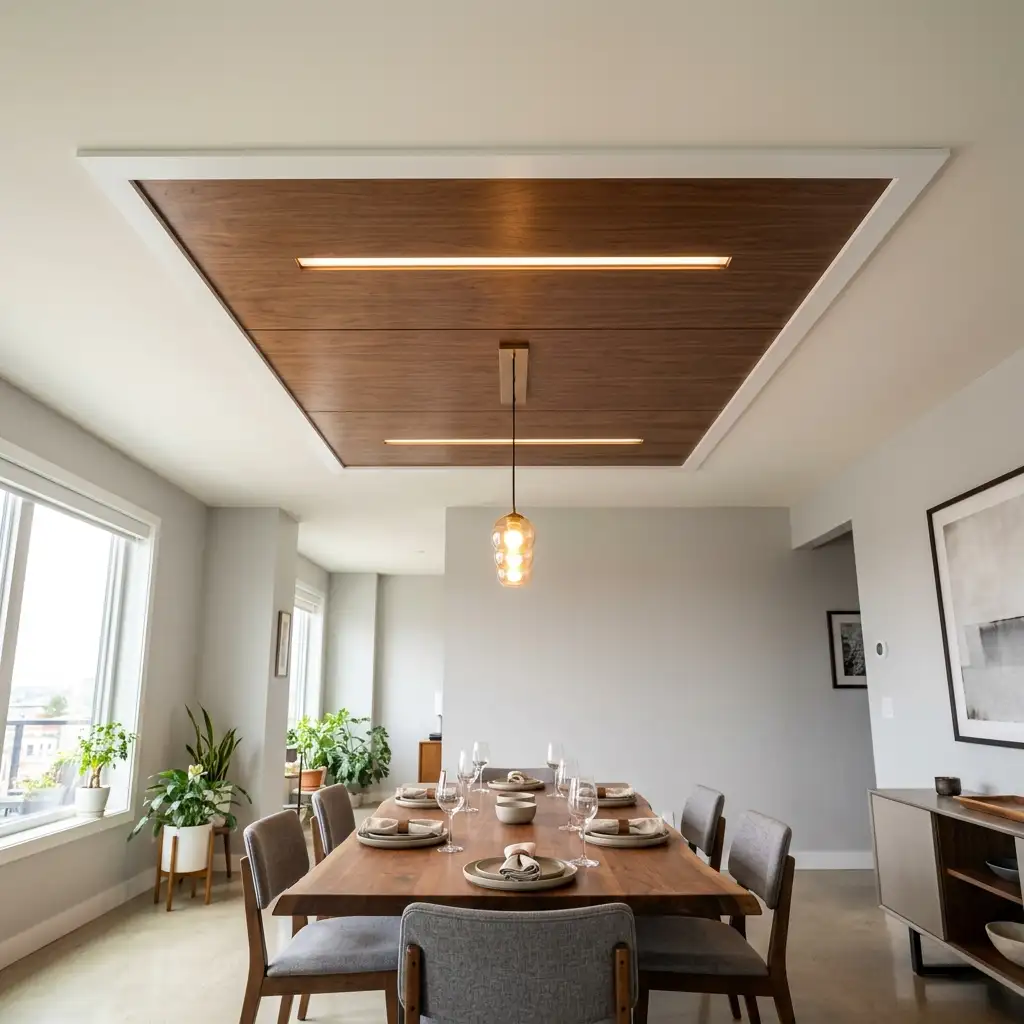
The dining room in this photo uses a dark wood tray inset within a white ceiling. Two integrated LED strips run along the inner edges of the tray. A pendant light hangs from the center. The wood section defines the dining zone without covering the entire ceiling.
A feature section typically uses 30 to 50 percent less material than a full treatment. The edge between wood and plain drywall needs a clean border. A simple wood trim strip painted the ceiling color creates a finished transition.
26. Install a Wood Ceiling in a Boy’s Bedroom
A DIY wood ceiling in a boy’s bedroom creates a rugged, adventurous atmosphere that most boys genuinely love. The natural wood overhead adds a cabin or treehouse quality that makes the bedroom feel exciting and genuinely personal.

Dark stained boards above a gaming or music-themed room. White shiplap above an adventurous, outdoors-themed room. Natural pine planks above a cabin or sports-themed room. The wood ceiling choice suits every boy’s bedroom theme and makes the room feel genuinely extraordinary compared to a plain painted ceiling.
27. Add String Lights to a Wood Plank Ceiling
String lights mounted to or woven between wood ceiling planks create extraordinary warmth and atmosphere. The warm light plays against the wood grain texture creating a golden, dimensional glow that flat ceilings and plain lighting cannot replicate.
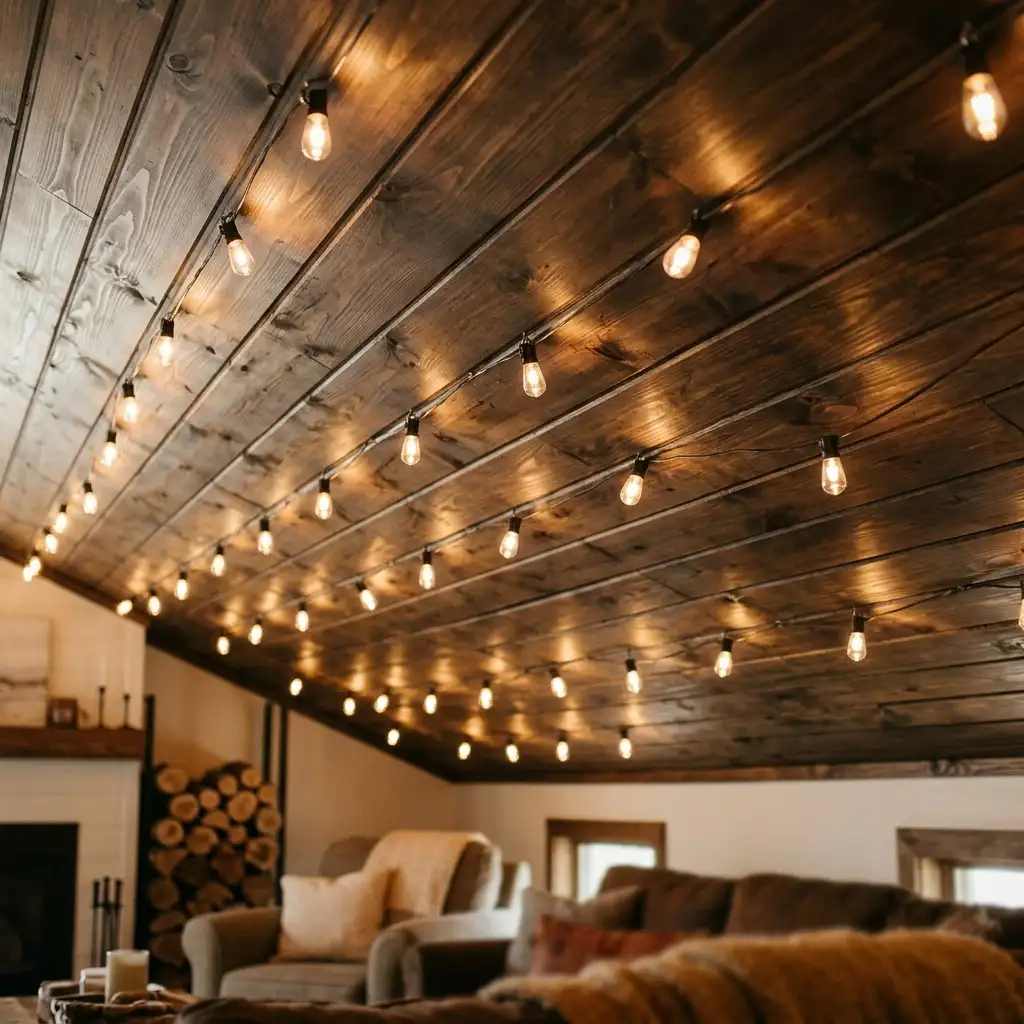
Mount cup hooks into the ceiling joists behind the wood planks. Thread string light cables along the plank lines. The hooks sit in the shadow gaps between planks and are effectively invisible. The warm glow emanates from the cable strung along the natural ceiling lines.
28. Create a DIY Wood Ceiling for a Country Teen Bedroom
A DIY wood plank ceiling in a country-style teen bedroom adds the warm, natural character that defines the country aesthetic while creating a room that feels genuinely grown-up and distinctive. The natural material suits the country design direction perfectly.

White shiplap above a pale sage green bedroom wall creates the classic country bedroom ceiling combination. Add vintage-style lighting fixtures in brushed bronze or oil-rubbed black for a complete country teen bedroom ceiling that looks extraordinary for a very modest DIY material investment.
29. Finish and Protect the Wood Ceiling Properly
A finished and protected wood ceiling lasts for decades. An unfinished or poorly sealed one absorbs dust, develops surface damage, and may require full replacement rather than simple maintenance.
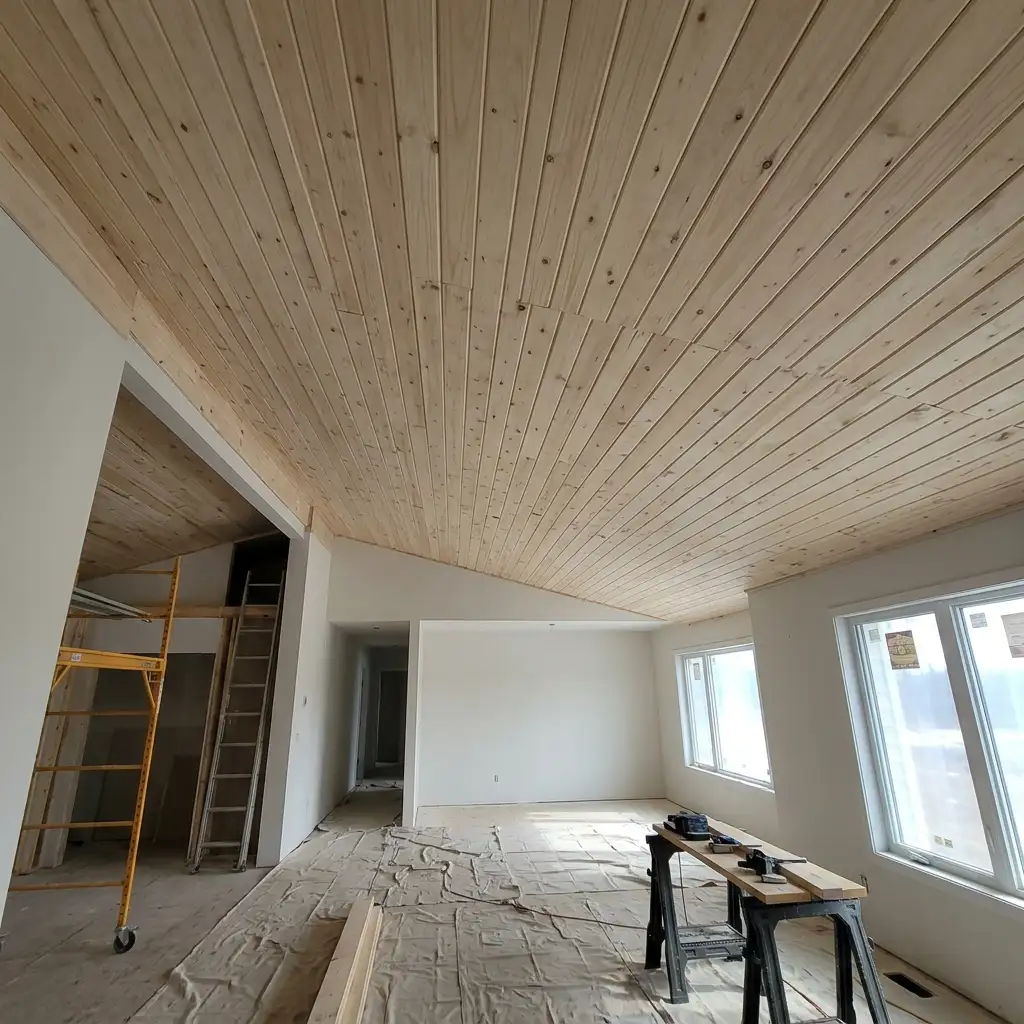
Apply finish in optimal conditions. Temperatures between 60 and 85 degrees Fahrenheit with low humidity. Use a natural bristle brush for oil-based finishes. Use a synthetic brush for water-based finishes.
- Apply in thin, even coats
- Two or three thin coats produce a better result than one heavy coat
- Water-based polyurethane dries in two to three hours and stays clear
- Oil-based polyurethane adds a warm amber tint and lasts longer
- Hard wax oil creates a natural matte finish that suits rustic ceilings
30. Troubleshoot Common DIY Wood Ceiling Problems
Even well-planned projects run into problems. Knowing the common issues in advance prevents minor problems from becoming major failures.

The kitchen in this photo is mid-renovation. Reclaimed wood beams run across the ceiling. White oak cabinets line the walls. A stone fireplace rises on the right. The island is wrapped in cardboard and blue tape for protection. The photo captures a normal construction phase where careful prep is protecting what is already installed.
Common problems and fixes:
- Loose boards mean missed joists. Mark joist positions clearly before starting and re-nail any board that does not hit wood.
- Cupping boards are caused by high moisture content. Acclimate wood in the room for 72 or more hours before installation.
- Off-level rows start with an unlevel first row. Always check the first row with a level before nailing it permanently.
- Visible nail holes mean the wrong filler was used. Use wood-colored filler to blend into the surface.
- Gaps at walls come from imperfect walls. Fill with flexible caulk and paint over, or cover with quarter-round trim.
31. Calculate Materials Accurately Before Purchasing
Accurate material calculation prevents both costly overbuying and frustrating shortfalls mid-project. Measure the ceiling area carefully — length multiplied by width gives square footage. Add 10 percent for waste on straight installations and 15 percent for herringbone or diagonal patterns.

Convert the square footage into board quantities using the actual coverage width of the chosen board. A 1×6 board covers 5.5 inches of width — not 6 inches. A 1×4 board covers 3.5 inches. The nominal width overstates actual coverage and leads to shortfall if not accounted for in calculations.
32. Apply the DIY Wood Ceiling to a Hobbyist Space

A hobby room with a DIY wood ceiling creates the most inspiring creative environment possible. The natural warmth of wood overhead makes any creative space feel genuinely special — a room worth spending time in regardless of the activity happening within it.
33. Create a DIY Wood Ceiling in a Small Apartment
A wood plank ceiling in a small apartment transforms the most visible surface in the home. In a compact space, the ceiling is visible from nearly every position. Improving it improves the entire apartment’s perceived quality.

This apartment living area uses warm wood planks across the ceiling. The gray wall behind the sofa creates a neutral backdrop. A white sofa with textured throws sits below. Potted plants and a warm yellow pot add color and life.
Light-toned or whitewashed planks suit small apartments best. They reflect available light downward rather than absorbing it. The warmth of wood overhead prevents the compact space from feeling dark or generic.
The ceiling is the one surface a renter can usually improve without major changes. Peel-and-stick planks work well for that exact reason.
34. Add a Wood Ceiling to a Laundry Room
A wood ceiling in a specialty room transforms the space into one of the most distinctive rooms in the home. The kitchen in this photo shows how a partial wood ceiling adds architectural weight without covering the entire surface.

Use moisture-resistant polyurethane sealant on wood ceilings in laundry rooms. The moisture and humidity from washer and dryer use requires a durable seal that prevents moisture absorption into the wood. A properly sealed wood laundry room ceiling lasts for decades without warping, discoloration, or deterioration.
35. Maintain a DIY Wood Ceiling for Long-Term Beauty
A properly maintained wood ceiling lasts for decades and looks better with age. A neglected ceiling deteriorates faster and eventually requires complete replacement. The maintenance investment is modest — the payback in longevity is substantial.

Dust the ceiling every three to six months with a soft brush attachment on a vacuum. Inspect the surface annually for any areas where the finish has worn or where wood has begun to show weathering. Touch up worn finish sections with matching sealant before deterioration spreads to surrounding areas.
36. Plan the Complete DIY Wood Ceiling Project From Start to Finish
A successful DIY wood ceiling project requires planning every stage before buying anything. The planning investment of a few hours prevents the costly mistakes that derail most DIY projects.

Start with room measurement and joist location. Choose the wood material and finish based on budget and aesthetic. Calculate material quantities with 10 percent waste added. Create a tool list and source everything before starting day one. Plan the installation sequence — which wall to start from, which direction the boards run, where lighting is positioned. Execute one stage at a time.
The DIY wood ceiling you build over a weekend costs a fraction of professional installation. It creates a genuinely beautiful, lasting improvement to any room. And the satisfaction of looking up every day at something you built with your own hands adds a dimension of personal pride that no purchased improvement can provide.
| Project Stage | Time Required | Order | Key Decision |
|---|---|---|---|
| Measure and plan | 2–4 hours | 1st | Material choice |
| Source and purchase materials | 1–3 hours | 2nd | Budget allocation |
| Gather and prepare tools | 1–2 hours | 3rd | Rent vs buy |
| Mark joists and prepare ceiling | 1–2 hours | 4th | Joist spacing |
| Install boards | 4–12 hours | 5th | Direction and start point |
| Fill, sand, and finish | 2–4 hours | 6th | Stain or paint |
| Final inspection and touch-up | 1–2 hours | 7th | Quality check |
Frequently Asked Questions (FAQs)
Q1: What is the cheapest DIY wood ceiling material?
Pallet wood is the cheapest, since it costs nothing in materials. Reclaimed fence boards and demolition lumber are equally affordable. Plywood sheets at 1/4-inch thickness provide the lowest cost per square foot of any purchased material, at $0.50 to $1.50 per square foot. Peel-and-stick planks at $1 to $2 per square foot are the easiest to install at the lowest cost for a beginner.
Q2: Do I need special skills to install a DIY wood ceiling?
Basic DIY skills are sufficient for most wood ceiling installations. Shiplap, peel-and-stick planks, and plywood sheet installations require only the ability to measure accurately, cut straight lines with a circular saw, and use a nail gun. Patience and careful planning matter more than technical skill.
Q3: How long does a DIY wood ceiling installation take?
A 10 by 12 foot bedroom ceiling typically takes one full day for one person working at a moderate pace. Larger ceilings or more complex patterns take proportionally longer. Peel-and-stick planks install faster than nail-up shiplap. Allow an additional day for finishing, including sanding, filling, staining or painting, and sealing.
Q4: Can I install a wood ceiling over existing drywall?
Yes, in most cases. Use 1/4-inch plywood or thin plank material applied over existing drywall with screws long enough to penetrate through the drywall and into the ceiling joists behind. Never attach a wood ceiling to drywall alone. The fasteners must reach the structural joists. A stud finder locates joists through existing drywall accurately.
Q5: How do I prevent a DIY wood ceiling from sagging or falling?
Every fastener must penetrate into a ceiling joist, never into drywall alone. Mark all joist positions clearly with chalk lines before beginning. Use fasteners of adequate length. Finish nails should penetrate at least 1.5 inches into the joist beyond the board and drywall thickness. Check that every board is properly secured at each joist crossing before moving on.
Conclusion
A DIY wood ceiling is one of the most rewarding home improvement projects available. The material cost is modest. The skill requirement is achievable. The transformation is extraordinary.
A ceiling that was a blank, forgettable surface becomes the defining design feature of the room. Something worth looking at every single day.
Choose the material that suits your budget and your room. Build the plan before buying anything. Prepare the tools and the surface properly. Install one board at a time, checking alignment and fastening at every step. Finish and seal the surface thoroughly.
Then step back and look up. The ceiling you built with your own hands, warm, textured, and beautiful, is one of the most satisfying things you will ever create in your home.