A mobile home without a deck feels incomplete. There is no transition between inside and outside. No place to sit in the evening. No outdoor space that feels like it genuinely belongs to the home.
A well-designed deck changes everything. It extends the living space outdoors. It adds curb appeal from the street. It creates the outdoor room that every home deserves.

These 30 mobile home deck ideas work with every budget, every lot size, and every mobile home style to create an outdoor space you will use every single day.
1. Understand Mobile Home Deck Basics First
A mobile home deck differs from a site-built home deck in one important way. The deck is a separate freestanding structure rather than attached to the home’s framing. Mobile home manufacturers typically do not warranty decks attached directly to the home structure.
A freestanding deck sits beside the mobile home and connects through the door threshold. The gap between deck and home seals with a simple threshold cover strip. The freestanding design allows the home to settle and shift independently of the deck without structural conflict.

Check local regulations before building any deck. Many mobile home parks have specific rules about deck construction, size limits, and approved materials. Some parks require park management approval before any exterior addition begins. Knowing the rules before starting prevents costly demolition and rebuilding.
| Deck Type | Connection to Home | Structural Independence | Best For |
|---|---|---|---|
| Freestanding | Threshold seal only | Full | Most mobile homes |
| Ground level | None — flush to grade | Full | Low-clearance homes |
| Elevated | Stair access only | Full | Homes with steps |
| Wraparound | Multiple threshold points | Full | Corner entrance homes |
| Attached (rare) | Bolted to rim joist | Partial | Permanent foundation homes |
2. Plan the Deck Size and Layout Carefully
The deck size should suit both the home’s scale and the available outdoor space. A deck that is too small looks awkward and provides limited functional use. A deck that is too large overwhelms the home and may violate park or zoning regulations.
A minimum usable deck for one or two people is 8×10 feet. A comfortable deck for small gatherings needs at least 10×12 feet. A full outdoor living deck with dining and lounging zones needs 12×16 feet or larger. Plan the furniture you want to use before finalizing the deck dimensions — the furniture must fit comfortably with adequate movement space.
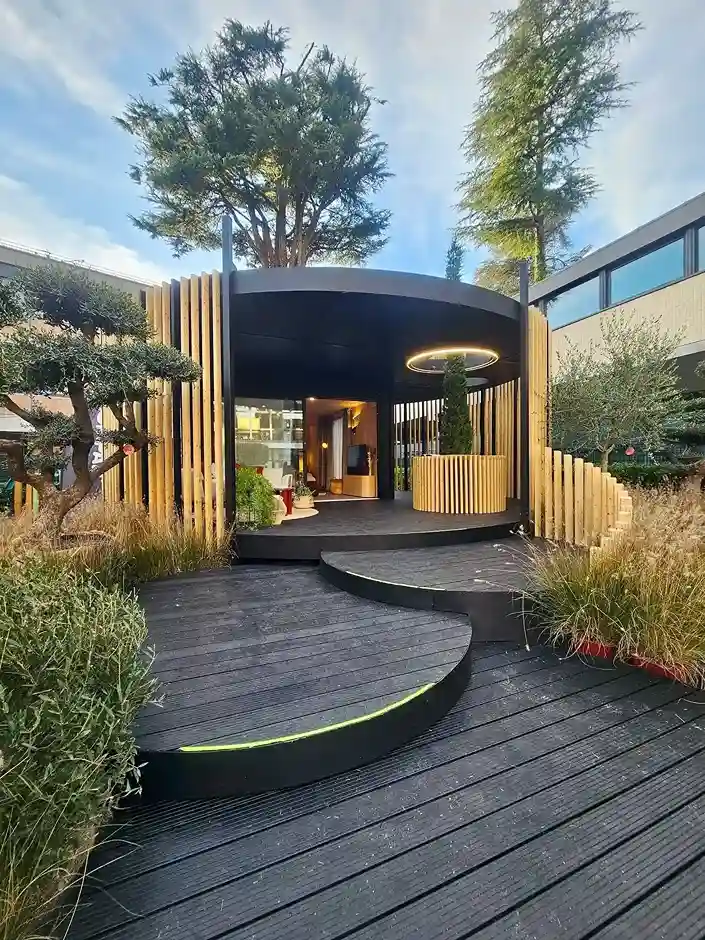
Draw the layout on paper at scale before purchasing any materials. Show where the entry door aligns, where stairs will be positioned, and where the furniture zones will sit. A planned deck always works better than one built without a clear layout intention.
3. Choose Pressure-Treated Lumber for a Budget Deck
Pressure-treated pine is the most affordable and most widely available decking material for a mobile home deck. It resists rot, moisture, and insects through chemical treatment. A properly built and maintained pressure-treated deck lasts fifteen to twenty years.

The material cost for a basic 10×12 foot pressure-treated deck is typically $400–$700 in lumber and hardware. This makes it the most accessible decking option for mobile home owners on a tight budget. The affordability allows a larger, more functional deck for the same budget as a smaller deck in premium materials.
Sand the deck surface before use and apply a water-repellent stain or sealant within 30 days of construction. Re-seal annually to maintain the wood surface and maximize the deck’s lifespan. A maintained pressure-treated deck looks beautiful for years.
| Deck Material | Cost per sq ft | Lifespan | Maintenance Level |
|---|---|---|---|
| Pressure-treated pine | $3–$6 | 15–20 years | Annual sealing |
| Cedar | $5–$8 | 20–30 years | Every 2–3 years |
| Composite | $7–$15 | 25–30 years | Minimal |
| Aluminum | $10–$20 | 30+ years | Very low |
| Tropical hardwood | $10–$18 | 25+ years | Annual oiling |
4. Build a Simple Ground-Level Deck
A ground-level deck also called a floating deck, sits directly on the ground on concrete blocks or compacted gravel. No digging, no posts, no complex footings. The simplest mobile home deck design builds in a single weekend.
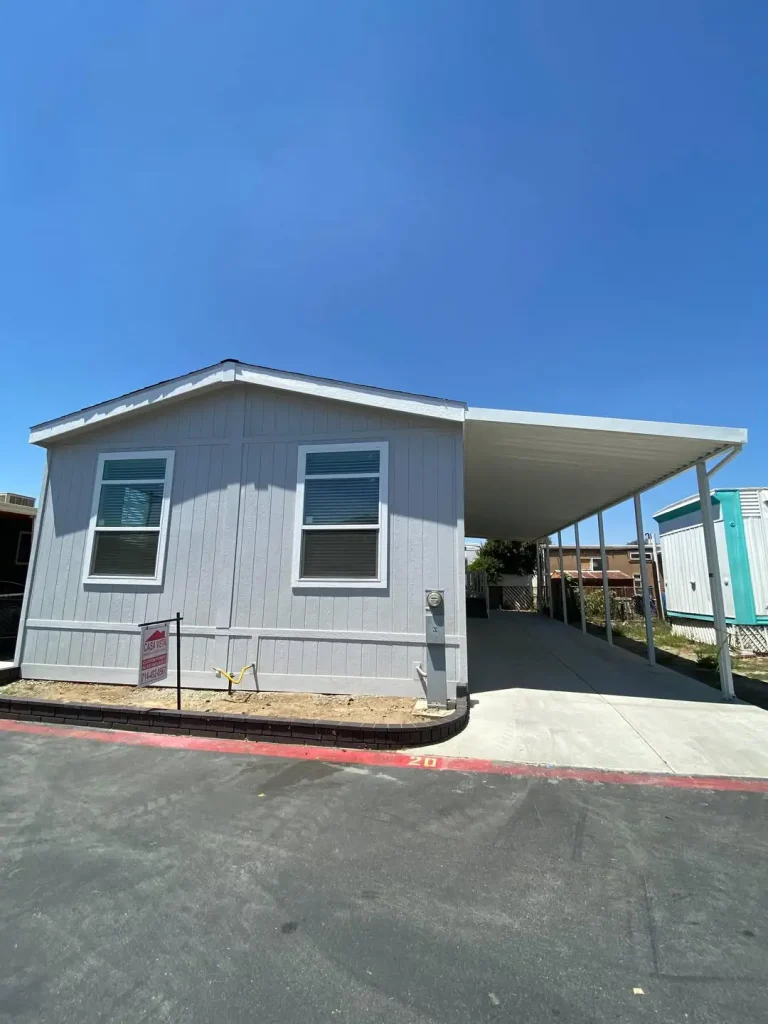
Position concrete deck blocks on a compacted gravel base at 4-foot intervals across the deck area. Set pressure-treated 4×4 beams across the blocks. Lay 2×6 joists across the beams at 16-inch spacing. Screw decking boards across the joists. The complete structure sits on the ground without any permanent concrete footings.
A ground-level deck suits mobile homes with very low entry clearance where steps would be too steep on a raised deck. The flush-with-grade design creates the smoothest, most accessible transition from ground to deck surface. It is also the most renter-friendly deck design — it is removable if the home relocates.
- Concrete deck blocks cost $3–$6 each and require no digging or concrete mixing
- A gravel base beneath the deck blocks improves drainage and prevents heaving
- Leave a 1/8-inch gap between decking boards for drainage and wood movement
- Extend the gravel base 12 inches beyond the deck perimeter to prevent mud splash
- A ground-level deck can be built in a single day with basic carpentry tools
5. Add a Wrap-Around Deck for Maximum Outdoor Space
A wrap-around deck extends around two or three sides of the mobile home. It creates the maximum outdoor living area and provides access to the home from multiple entry points. The wrap-around deck is the most impressive mobile home deck option both functionally and visually.

A complete wrap-around deck requires more planning and more materials than a single-side deck. The corners require careful framing to create a seamless transition between deck sections. Each section of the wrap-around can serve a different purpose — dining on one side, lounging on another, entry and seating on the front.
The curb appeal impact of a wrap-around deck is transformative. A mobile home with a full wrap-around deck looks like a proper country house rather than a manufactured home. The deck creates the architectural presence that gives a mobile home a genuinely settled, permanent appearance.
6. Create a Front Porch Deck for Curb Appeal
A front porch deck along the front of the mobile home creates immediate and dramatic curb appeal. The porch defines the entry, provides a welcoming outdoor seating area, and transforms the home’s facade from utilitarian to charming.

A simple 8-foot wide front porch deck that spans the full front of the mobile home costs $600–$1,200 in materials depending on deck width and home length. The return in curb appeal and daily enjoyment far exceeds the investment. A front porch deck is the single most impactful exterior improvement available to most mobile home owners.
For complete guidance on transforming a mobile home’s exterior and interior with smart, affordable improvements that pair naturally with a new front porch deck, explore this comprehensive mobile home guide for every aspect of mobile home renovation and decoration that creates a genuinely beautiful home.
| Front Porch Deck Size | Home Width | Seating Capacity | Cost Estimate |
|---|---|---|---|
| 8×10 ft | Any | 2–3 people | $400–$700 |
| 8×14 ft | 14 ft single-wide | 3–4 people | $600–$1,000 |
| 8×16 ft | 16 ft single-wide | 4–5 people | $700–$1,200 |
| 8×24 ft | 24 ft double-wide | 6–8 people | $1,000–$1,800 |
7. Add a Pergola or Roof Structure Over the Deck
A pergola or solid roof structure over the mobile home deck creates a covered outdoor room. The covered deck is usable in light rain, provides shade during hot afternoons, and creates a sheltered outdoor space that extends the deck’s useful season dramatically.

A simple pergola built from pressure-treated 4×4 posts and 2×6 rafters costs $400–$800 in materials for a standard deck size. A polycarbonate roof panel pergola adds full rain protection for an additional $100–$300. A solid shingle roof creates the most permanent, most weather-resistant covered deck structure.
For complete covered patio and pergola design ideas that translate directly to mobile home deck covering, explore these covered patio ideas for every approach to creating a beautiful, functional covered outdoor room.
8. Install a Composite Deck for Low Maintenance
Composite decking eliminates the annual maintenance requirement that pressure-treated wood demands. Composite boards resist fading, staining, and moisture without any painting, staining, or sealing. A composite deck looks as good in year fifteen as it does in year one with only occasional cleaning.

The higher initial cost of composite decking is offset by the complete elimination of annual maintenance costs and time. A composite deck on a mobile home is genuinely a set-it-and-forget-it surface. The boards never splinter, never rot, and never require replacement from deterioration.
Choose a composite board color that complements the mobile home’s siding color. Light-toned composite boards suit lighter homes. Darker boards suit darker siding. A contrasting color can look intentional, but a harmonious color always looks more integrated with the home.
9. Use Pavers as a Budget Deck Alternative
Concrete pavers laid on a compacted gravel base create an affordable deck alternative that suits mobile homes with ground-level entry points. The paver surface is durable, easy to install, and available in dozens of colors and patterns.

A paver deck costs $3–$6 per square foot in materials — comparable to a basic pressure-treated wood deck but requiring significantly less carpentry skill to install. No cutting, no fasteners, no complex framing. Pavers sit on sand and gravel and can be replaced individually if any piece cracks or stains.
For complete DIY patio under budget ideas that cover paver selection, base preparation, and installation techniques that translate directly to building a paver deck beside a mobile home, explore this complete guide on DIY patio under budget for every step of the affordable outdoor surface creation process.
10. Add a Hot Tub Pad to the Deck
A reinforced deck section designed to support a hot tub is one of the most popular mobile home deck additions. The hot tub pad uses heavier structural framing to handle the significant weight of a filled hot tub — typically 3,000 to 5,000 pounds depending on size.

Position the hot tub pad at one end of the main deck structure. Use doubled 2×10 joists on 12-inch centers for the hot tub section. Set posts below the hot tub area at maximum 4-foot spacing. Confirm the ground beneath is stable and compacted before building.
A covered pergola structure above the hot tub pad creates the ultimate mobile home spa experience. The combination of a hot tub, a covered deck overhead, and string lights creates an outdoor retreat that rivals any high-end resort spa experience.
11. Build a Multi-Level Deck for Visual Interest
A multi-level deck creates distinct zones at different heights connected by short steps. The lower level might serve as a garden patio or a fire pit area. The upper level serves as the primary outdoor living space directly at the home entry height.
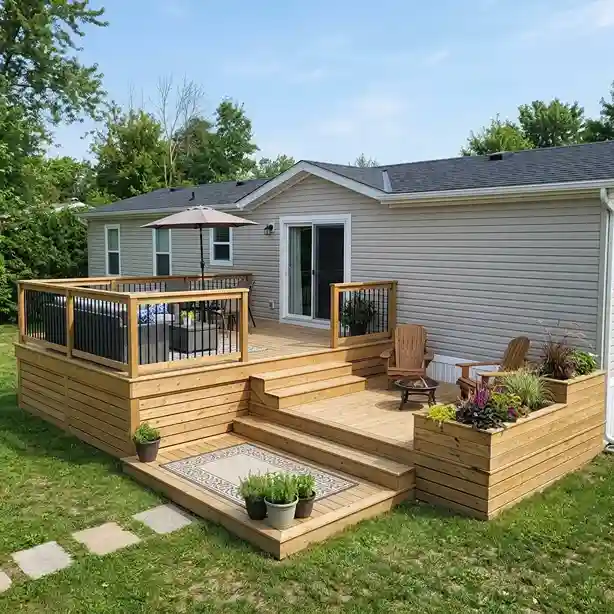
Multi-level decks add significant visual interest to any mobile home exterior. The different levels create architectural depth and complexity that makes the entire property look more substantial and more designed. The zones naturally suit different activities without requiring physical or visual barriers between them.
For fire pit and outdoor landscaping ideas that pair beautifully with the lower level of a multi-level mobile home deck, explore these fire pit landscaping ideas for every approach to creating a beautiful fire pit zone that connects naturally to a multi-level deck design.
12. Add Deck Skirting for a Polished Appearance
Deck skirting closes off the open space beneath the deck and creates a clean, finished appearance. Without skirting, the framing, posts, and ground beneath the deck are visible. With skirting, the deck looks like a proper architectural element rather than a temporary addition.

For the complete range of cheap deck skirting ideas covering lattice, horizontal boards, bamboo, composite, and many other affordable skirting options that create a beautifully finished deck appearance, explore these cheap deck skirting ideas for every budget-friendly approach to completing a mobile home deck with beautiful skirting.
The most popular mobile home deck skirting choices are lattice panels, horizontal wood boards, and composite panels. Each creates a clean, finished appearance at varying cost levels. The skirting also prevents animals from nesting beneath the deck and blocks wind from passing under the deck floor.
| Deck Skirting Type | Cost per linear ft | Installation | Visual Style |
|---|---|---|---|
| Lattice panels | $3–$6 | Easy | Classic, cottage |
| Horizontal wood boards | $4–$8 | Moderate | Modern farmhouse |
| Vinyl lattice | $4–$7 | Easy | Low-maintenance classic |
| Composite panels | $6–$12 | Moderate | Contemporary |
| Bamboo roll | $2–$4 | Very Easy | Tropical, casual |
13. Create a Dining Zone on the Deck
A dedicated dining zone on the mobile home deck creates an outdoor dining room that makes every meal more enjoyable. A table, four to six chairs, and a simple overhead structure create a complete outdoor dining experience.

Choose a dining table sized appropriately for the deck dimensions. A 36-inch round table suits a small deck with two chairs. A 60-inch rectangular table suits a larger deck with four to six chairs. Allow at least 36 inches of clearance around the table on all sides for comfortable movement during meals.
An outdoor dining zone on a mobile home deck extends the effective living and entertaining space of the home dramatically. Meals outdoors, morning coffee with a view, and casual entertaining all become part of daily life when a comfortable dining setup is always ready and accessible.
14. Add a Built-In Bench Around the Deck Perimeter
Built-in bench seating along one or more sides of the deck perimeter creates permanent, space-efficient seating. The bench uses the deck perimeter rail section as its back support, eliminating the need for separate chair backs. The bench face closes the rail gap and creates hidden storage beneath the seat.
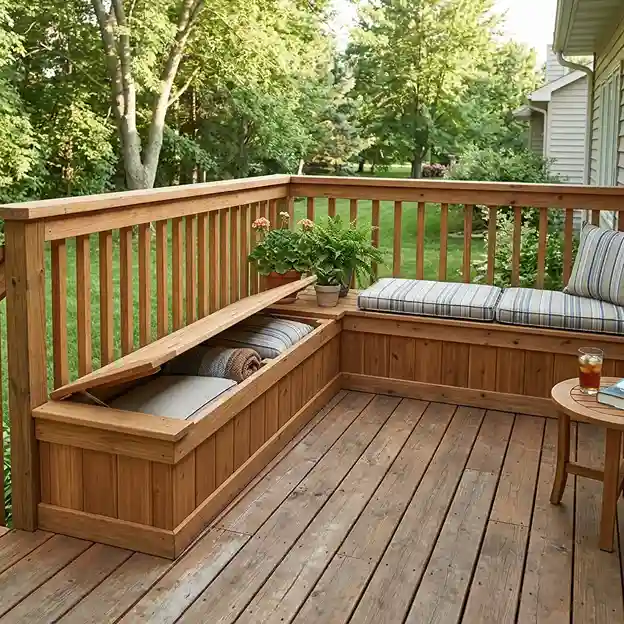
A built-in bench provides more seating in less space than individual chairs. When guests arrive, the bench accommodates three to four people in the space that two chairs would normally occupy. Built-in storage beneath the bench seat holds cushions, outdoor games, and entertaining supplies invisibly.
For pool deck and outdoor seating ideas that use built-in bench seating and perimeter seating effectively in an outdoor living space, explore these pool deck under budget ideas for budget-conscious outdoor seating approaches that translate directly to mobile home deck built-in bench design.
15. Install String Lights for Evening Atmosphere
String lights transform a mobile home deck from a daytime space to an all-hours outdoor room. The warm glow of Edison bulb string lights creates an immediately atmospheric and genuinely magical evening environment that costs almost nothing to achieve.
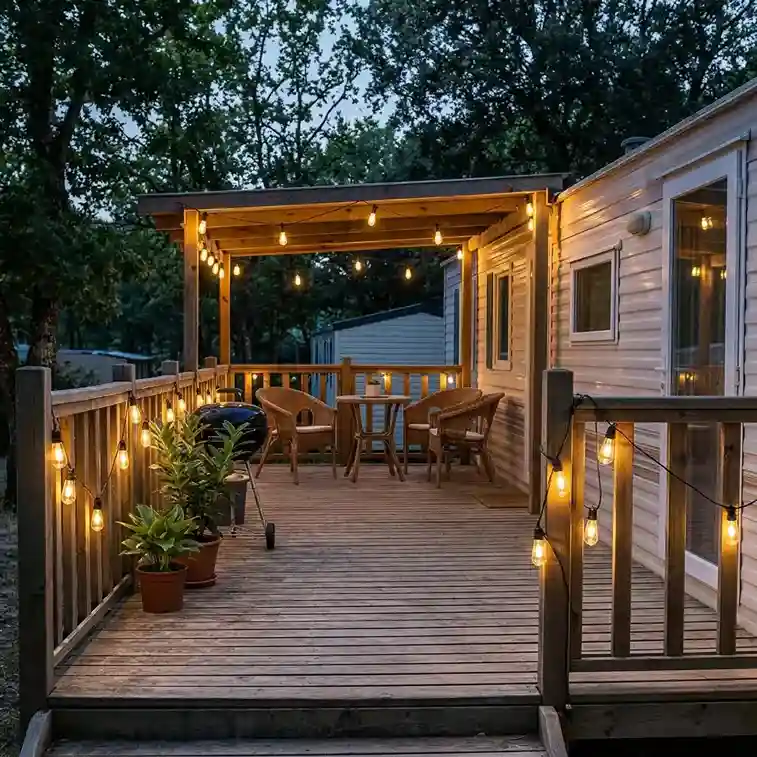
Hang string lights from the pergola rafters, between posts, or from the home’s exterior wall to a mounted post at the deck perimeter. Warm white bulbs at 2200–2700 Kelvin create the most welcoming and most flattering glow. A smart plug with a timer automates the lights without any manual operation required.
- Install a weatherproof outdoor outlet on the home exterior or deck post for string light power
- Use IP44 or IP65 rated string lights for outdoor weather resistance
- Warm white bulbs always look more inviting than cool white or colored alternatives
- A smart plug costs $10–$15 and automates lights completely through a phone app
- Hang lights at 8–10 feet overhead for the most flattering and most usable overhead coverage
16. Build a Covered Entry Landing
A covered entry landing at the mobile home door is the smallest and most functional deck addition possible. Even a 4×6 foot covered landing provides a weather-protected transition between the door and the steps. It prevents rain from entering the home when the door opens in wet weather.
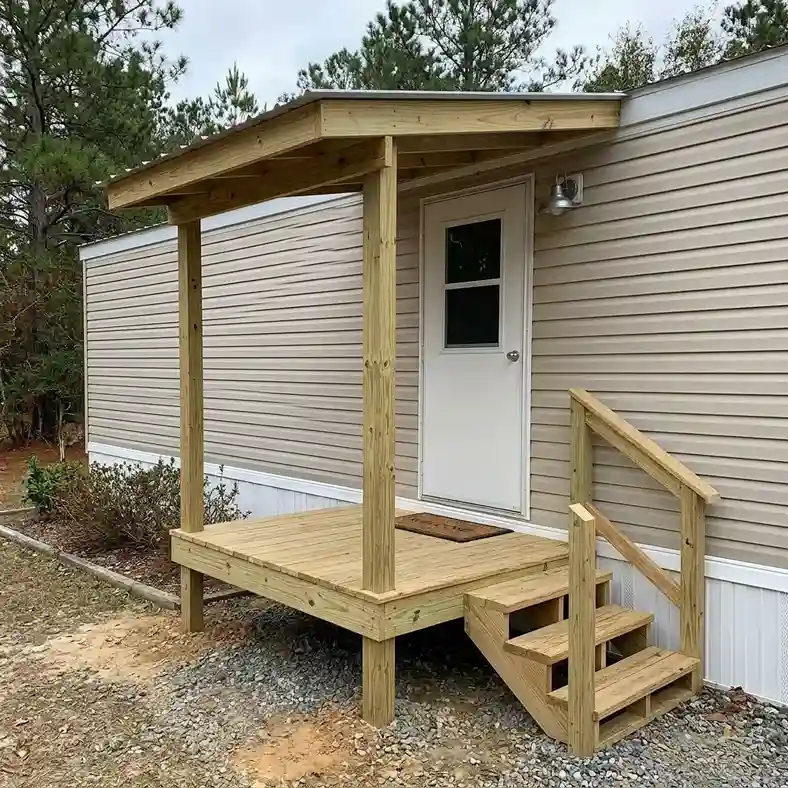
A covered landing with a small roof overhang costs $200–$500 in materials. It dramatically improves the daily experience of entering and exiting the mobile home in any weather. The covered landing also creates the first impression for every visitor — a properly sheltered entry signals that the home is cared for and considered.
For barn door and entryway design ideas that pair beautifully with a well-designed mobile home entry landing, explore these barn door ideas for attractive door and entry design approaches that complement a new covered landing at a mobile home entry.
17. Create a Shade Garden Beside the Deck
The ground surrounding a mobile home deck provides an opportunity for a shade garden that connects the deck to the landscape. Plantings beside and beneath the deck soften the transition between structure and garden. The deck stops looking like a box dropped on bare ground and starts looking like a genuine part of the landscape.

Choose shade-tolerant plants for areas beneath the deck where sunlight is limited. Hostas, ferns, sweet woodruff, and ajuga all thrive in the partial shade beneath and beside a deck structure. Edge the planting area with simple landscape edging to create a clean boundary between the planted zone and any surrounding lawn.
For complete fire pit landscaping and outdoor planting ideas that create beautiful, cohesive outdoor spaces around structures like mobile home decks, explore these fire pit landscaping ideas for planting, surfacing, and outdoor design approaches that frame any outdoor structure beautifully.
18. Add a Small Fire Pit Area at the Deck Edge
A small fire pit area at the edge of or adjacent to the mobile home deck creates a gathering destination that draws people outdoors every evening. The fire pit sits at grade level on a non-combustible surface at a safe distance from the deck edge.

Position the fire pit a minimum of 10 feet from any combustible deck surface. A gravel or paver pad beneath and around the fire pit creates a safe, clean fire zone. Simple log rounds, Adirondack chairs, or a pair of Adirondack chairs and a small side table create the complete fire pit seating arrangement.
The fire pit beside the deck creates the most-used outdoor zone on the property during cool evenings and through autumn. People gather around the fire after dinner. The conversation continues longer than it would on a plain deck. The fire pit is one of the highest-use outdoor features available for mobile home properties.
19. Install a Privacy Screen Along One Side
Privacy is a common challenge in mobile home parks where homes sit close together. A privacy screen along one or more sides of the deck creates a visual barrier that makes outdoor time genuinely private and relaxing.
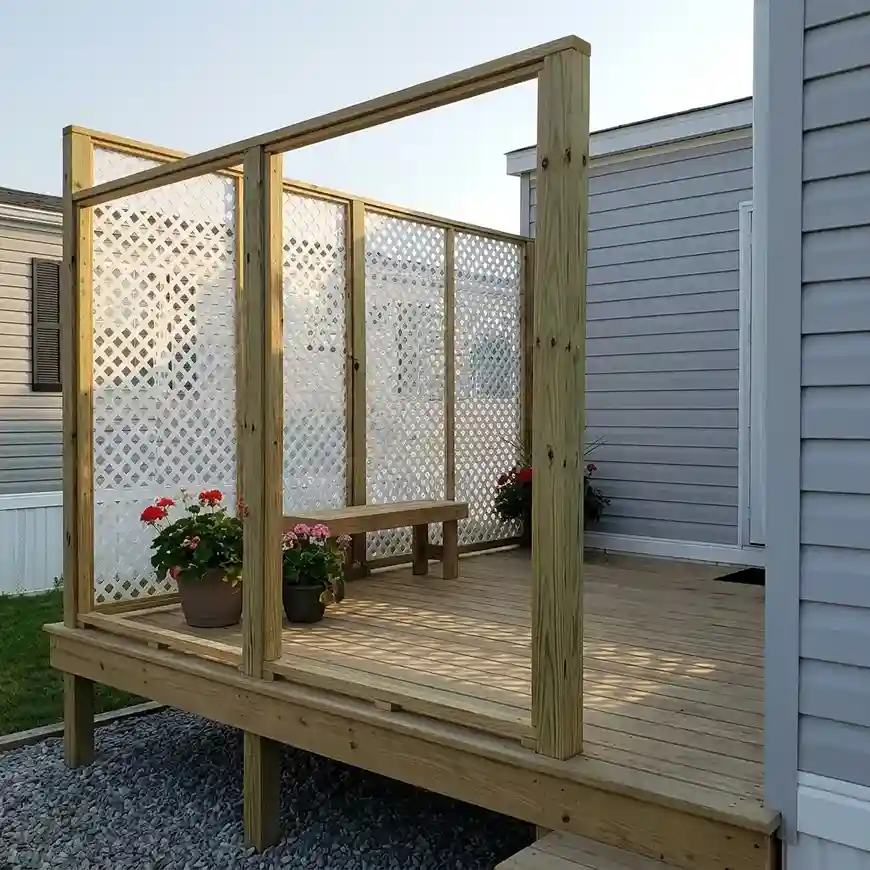
Lattice panels on a simple post frame create an attractive and affordable privacy screen. Horizontal wood boards spaced with deliberate gaps allow airflow while blocking direct sightlines. Outdoor fabric panels on a tension cable system create a softer, more flexible privacy solution.
A privacy screen combined with container plantings creates the most complete and most beautiful privacy solution. The structural screen provides immediate privacy while the plants soften the screen’s hard edges and add organic beauty that grows more effective every season.
20. Use a Pool Deck Layout Around an Above-Ground Pool
A mobile home deck designed around an above-ground pool creates an extraordinary outdoor living environment. The deck frames the pool, provides walkway access around it, and creates sunbathing and seating areas beside it. The combined deck-and-pool setup transforms the entire mobile home property.
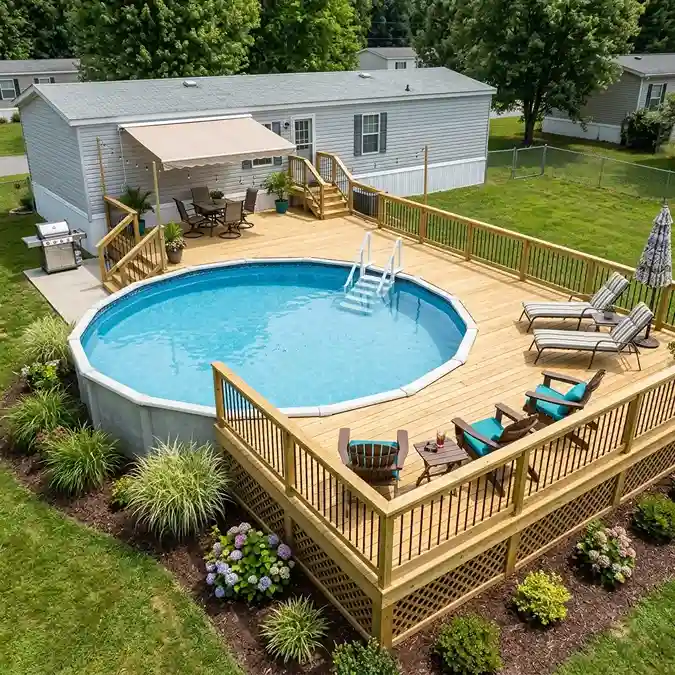
Frame the deck around the pool perimeter with handrails on all pool-adjacent sides. The handrail height must meet local safety requirements — typically 36 inches for residential pool decks. Provide step access from the deck level to a pool ladder entry point.
For complete pool deck ideas and designs that create beautiful, functional poolside outdoor living spaces, explore these pool deck under budget ideas for every affordable approach to building a beautiful deck around an above-ground pool on a mobile home property.
21. Add Potted Plants for Immediate Personality
Potted plants on a mobile home deck add color, life, and personality immediately. They require no structural work and no garden preparation. They can be moved, replaced, and rearranged freely as preferences and seasons change.
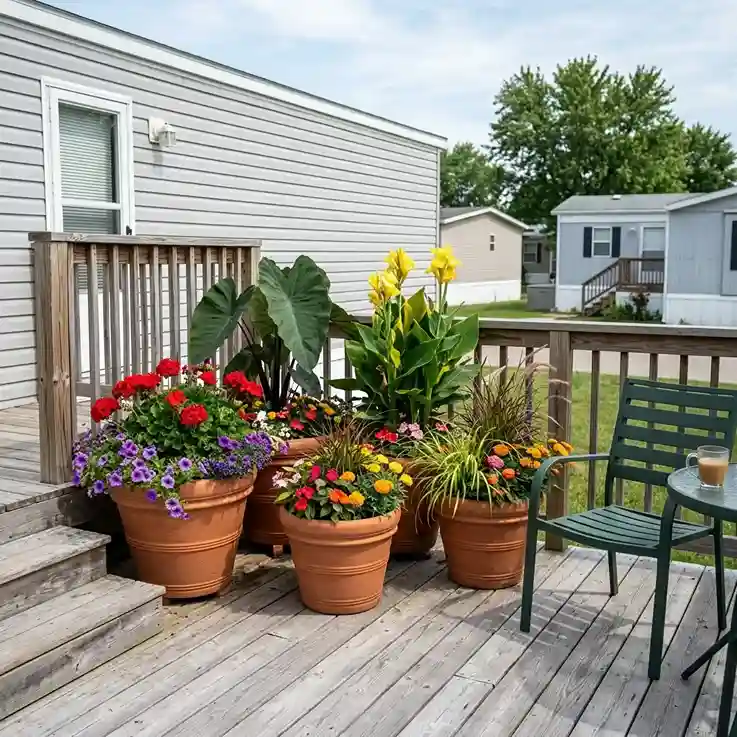
Choose large pots for maximum visual impact. A single large terracotta pot with a bold flowering plant creates more impact than multiple small pots. Group three or five pots together rather than scattering individual pots across the deck. The grouped arrangement looks designed rather than random.
Choose plants suited to the available sunlight on the deck. Full-sun decks suit petunias, geraniums, lavender, and rosemary. Partial-shade decks suit impatiens, begonias, and ferns. Match plant selection to the actual light conditions for plants that thrive rather than struggle.
22. Create a Rustic Deck With Reclaimed Materials
A rustic mobile home deck uses reclaimed timber, salvaged posts, and upcycled materials to create a genuinely characterful outdoor space at very low material cost. The worn, aged quality of reclaimed materials adds authenticity that new lumber rarely achieves.
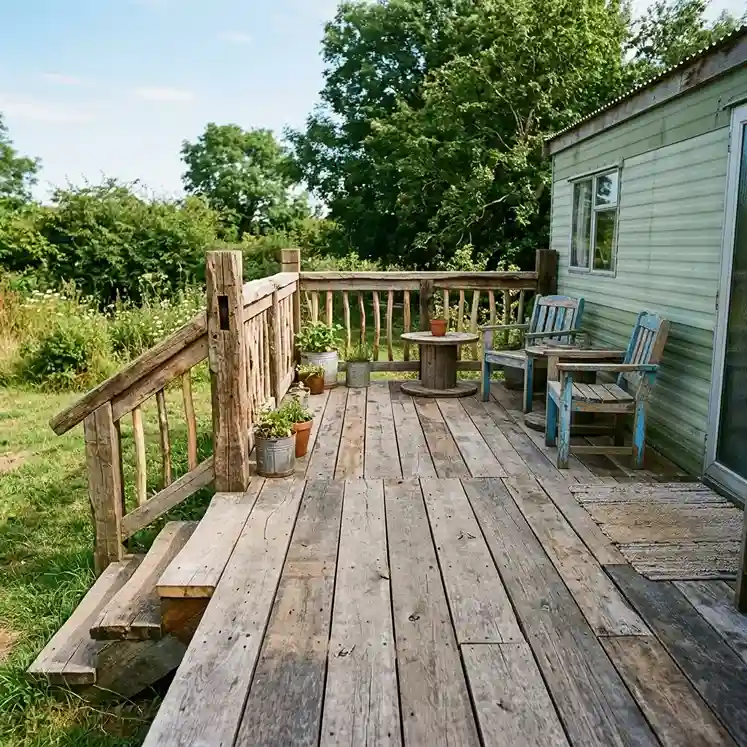
Source reclaimed decking boards from architectural salvage yards, demolition sites, and online marketplaces. Inspect every board for structural integrity before installation. Sand smooth all surfaces that will be touched by bare feet. Seal reclaimed wood thoroughly to protect it from further weathering.
A rustic reclaimed wood deck suits mobile homes with a farmhouse, country, or vintage aesthetic. The worn character of the reclaimed wood creates a deck that looks as though it has always been part of the property. For warm rustic outdoor and indoor design inspiration that pairs with a reclaimed wood mobile home deck, explore these warm rustic living room ideas for the complete rustic design language that connects indoor and outdoor spaces beautifully.
23. Design a Deck for a Single-Wide Mobile Home
A single-wide mobile home has a narrower footprint than a double-wide. The deck design must respect this narrower scale to avoid overwhelming the home. A single-wide deck typically runs along one long side of the home from front door to back.

A 10-foot wide deck beside a single-wide mobile home creates generous outdoor space without overwhelming the narrower home profile. Position the long side of the deck beside the main living area and entry door. The deck becomes an outdoor extension of the interior living space.
Built-in bench seating along the outer deck edge suits a single-wide deck particularly well. The built-in bench maximizes seating without consuming the limited floor area that freestanding chairs would require. The bench also creates a visual edge that frames the deck and defines its boundary.
24. Create a Double-Wide Mobile Home Deck
A double-wide mobile home provides a much larger footprint and more design flexibility for deck planning. A double-wide deck can accommodate a full outdoor kitchen, a dining zone, a lounging zone, and a hot tub pad simultaneously.

The front elevation of a double-wide mobile home suits a wide, generous front porch deck that spans the full home width. The scale of the double-wide demands a deck that matches its proportions. A narrow deck on a double-wide home looks undersized and unbalanced.
| Double-Wide Deck Zone | Minimum Size | Equipment | Cost Level |
|---|---|---|---|
| Dining zone | 10×12 ft | Table, 6 chairs | Low |
| Lounging zone | 10×12 ft | Sofa, chairs, coffee table | Low-Moderate |
| Outdoor kitchen | 8×10 ft | Grill, counter, mini fridge | Moderate-High |
| Hot tub pad | 10×10 ft | Reinforced framing | Moderate |
25. Add Outdoor Lighting for Safety and Atmosphere
Outdoor deck lighting serves both safety and atmospheric purposes. Safety lighting illuminates steps, edges, and transition points to prevent trips and falls in low-light conditions. Atmospheric lighting creates warmth and ambience for evening use.

Low-voltage LED step lights mounted on riser faces illuminate each step from below. Post cap lights mounted on top of each deck post illuminate the deck perimeter. Surface-mounted LED deck lights recessed into the deck board surface illuminate the deck floor from below. Each lighting type suits a different aesthetic and budget level.
Solar-powered deck and step lights require no wiring and install with simple adhesive or screws. They charge during the day and illuminate automatically from dusk to dawn. The zero-wiring installation makes solar deck lighting the most accessible upgrade available for any existing mobile home deck.
26. Create a Mudroom-Style Deck Entry
A deck entry designed with mudroom functionality creates the most practical mobile home outdoor space possible. Covered coat hooks, a boot scraper, a small bench for sitting while removing shoes, and organized storage for outdoor gear transform the deck entry into a working transition zone.
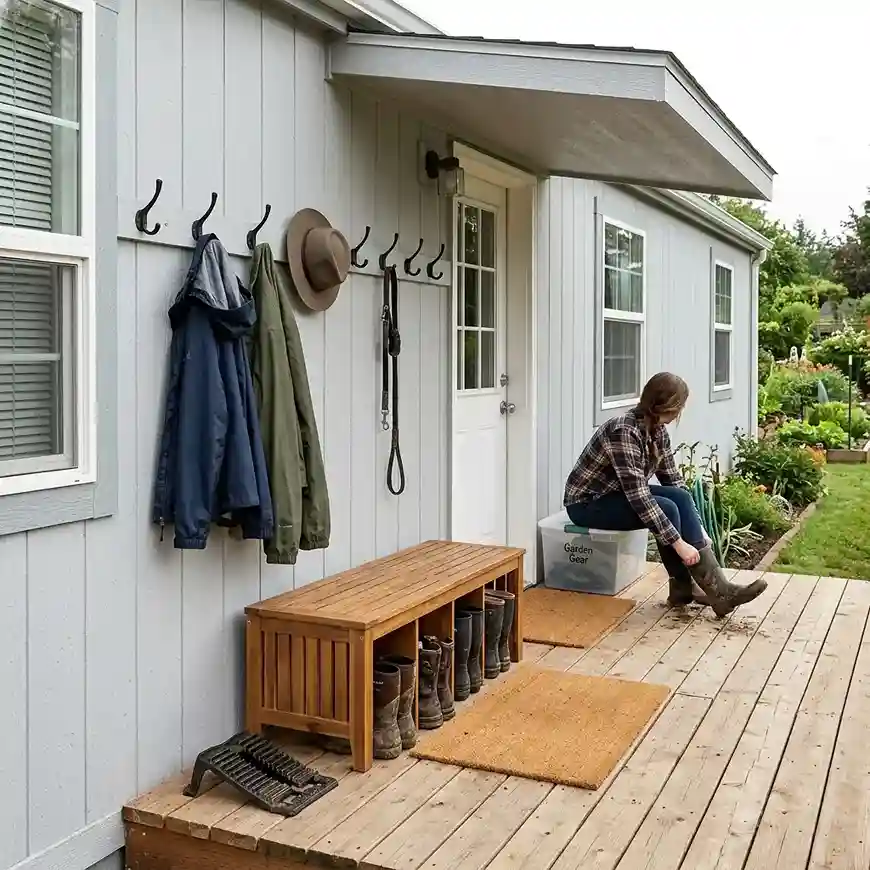
For complete mudroom and entry design ideas that create beautifully organized, highly functional entry zones that suit mobile home deck entry areas perfectly, explore these IKEA mudroom ideas for affordable, practical, and beautiful entry organization solutions that work directly on a covered mobile home deck entry.
A mudroom-style deck entry with a covered overhead, a bench with storage beneath, and organized hooks for coats and bags creates an exceptional first impression while solving the practical challenge of outdoor gear management that every mobile home entry faces.
27. Build a Deck With Built-In Planter Boxes
Built-in planter boxes along the deck railing or perimeter create a continuous garden border that frames the deck beautifully. The planters hold flowers, herbs, and trailing plants that cascade over the edge of the deck.
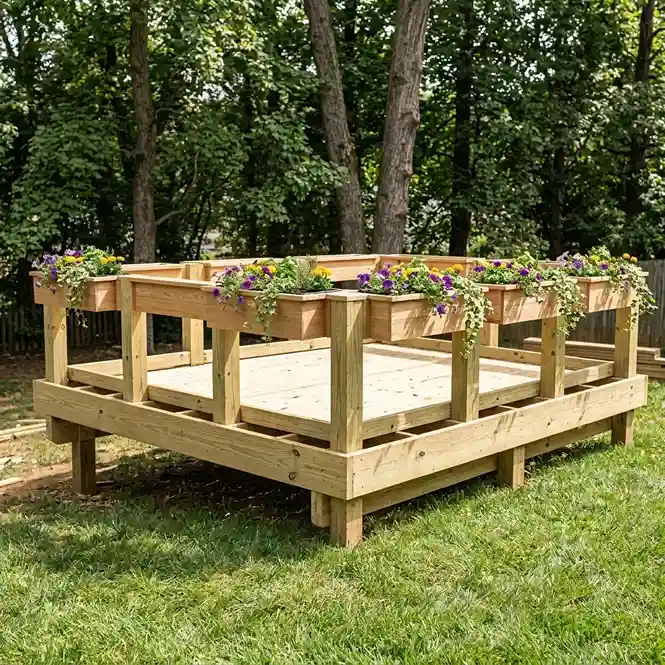
Build planter boxes from cedar for natural moisture resistance. Line the interior with plastic sheeting before filling with soil to protect the wood from constant moisture contact. Position the planter boxes on the outer side of the railing top for the most attractive display from the yard.
Herbs growing in built-in deck planters create a beautiful and practical combination. Fresh basil, rosemary, thyme, and mint are accessible from the kitchen door while looking beautiful on the deck. The herb planter boxes add fragrance to the outdoor space that makes evening time on the deck even more pleasant.
28. Design a Deck for a Sloped Mobile Home Lot
A sloped lot creates unique deck design challenges. The deck must compensate for the grade change between the home entry and the lower ground level. The result can be a beautiful multi-level deck that uses the slope as a design asset rather than an obstacle.
Higher posts on the lower side and shorter posts on the upper side create a level deck surface above a sloped lot. The varying post heights create an elevated deck on the downhill side that may require a railing on all sides depending on height above grade. The space beneath the elevated section on the downhill side can be skirted or used for under-deck storage.

A sloped lot deck looks particularly impressive from below because the elevated side shows the full deck profile. A beautiful railing system, proper skirting, and well-chosen deck material all contribute to a deck that looks genuinely architectural from the yard-level view.
29. Add a Hobby or Workshop Corner to a Large Deck
A large mobile home deck with a covered section can accommodate a dedicated hobby or workshop corner. A potting bench for gardening. A small outdoor workbench for basic tool use. A craft table for outdoor creative projects. The covered deck section protects the work area from rain while maintaining the outdoor atmosphere.

For complete hobby room design ideas that inspire a dedicated hobby zone on a covered mobile home deck where creative and workshop activities can happen outdoors in a protected, organized space, explore these hobby room design ideas for organizational and design approaches that suit both indoor and covered outdoor hobby spaces.
A potting bench on a covered deck section suits gardening enthusiasts. The covered outdoor space allows potting and repotting without bringing soil and mess inside the home. The outdoor potting bench keeps garden supplies organized and accessible while remaining outside where they belong.
30. Maintain the Deck Seasonally for Long-Term Beauty
A mobile home deck properly maintained lasts significantly longer than one left unattended. Annual maintenance prevents the deterioration that makes decks look tired and eventually fail structurally. Maintenance investment is always smaller than replacement cost.

Inspect the entire deck each spring before the outdoor season begins. Check every post footing for movement or deterioration. Test every railing by pushing firmly — loose railings are a safety hazard that requires immediate repair. Inspect every deck board for cracks, rot, and raised fasteners. Sand any rough surfaces smooth.
Clean the deck surface with a dedicated deck cleaner or a mild soap and water solution. Power washing removes embedded dirt, mildew, and grey weathering from wood surfaces. Allow the deck to dry completely — at least 48 hours — before applying any new sealant or stain. A properly maintained deck looks beautiful for the full length of its intended lifespan.
| Annual Maintenance Task | Time Required | Cost | Impact on Lifespan |
|---|---|---|---|
| Full inspection — all components | 1–2 hours | $0 | Very High |
| Surface cleaning and power wash | 2–3 hours | $0–$50 rental | High |
| Sand rough surfaces | 1–2 hours | $5–$15 sandpaper | High |
| Re-seal or re-stain surface | 3–5 hours | $30–$80 per can | Very High |
| Tighten all fasteners and railings | 1–2 hours | $0 | Very High |
Frequently Asked Questions (FAQs)
Q1: Do I need a permit to build a deck on a mobile home?
Most jurisdictions require a building permit for any deck above a certain size or height. Additionally, most mobile home parks require management approval before any exterior addition begins. Check both your local building department and your park management before starting. Building without required permits can result in mandatory removal, fines, and insurance complications that far exceed the cost of obtaining the permit properly.
Q2: What is the best decking material for a mobile home?
Pressure-treated pine offers the best value at the lowest cost for most mobile home owners. Composite decking is the best long-term investment for those who want minimal ongoing maintenance. Cedar provides a beautiful natural option at a moderate price point. The best material is the one that suits your budget, your aesthetic, and your willingness to maintain the surface over time.
Q3: How do I attach a deck to a mobile home without voiding the warranty?
The safest approach is a freestanding deck that does not attach to the mobile home structure at all. A freestanding deck sits beside the home with only a threshold seal at the door connection. This approach preserves the home’s structural warranty and allows the home to settle independently of the deck. Consult your home manufacturer’s guidelines before making any connection to the home structure.
Q4: How large should a mobile home deck be?
The minimum functional size is 8×10 feet for a small seating area. A comfortable family deck needs at least 10×12 feet. A deck that accommodates dining, lounging, and entertaining needs 12×16 feet or larger. Plan for the furniture you want to use and ensure at least 36 inches of circulation space around every piece of furniture before finalizing the deck dimensions.
Q5: How much does it cost to build a mobile home deck?
A basic 10×12 foot pressure-treated wood deck costs $600–$1,200 in materials for a DIY build. Professional installation adds $1,000–$2,500 in labor. A composite deck in the same size costs $1,500–$3,000 in materials DIY. A covered pergola structure adds $500–$1,500 to any deck. Total project costs range from $600 for a simple DIY deck to $5,000+ for a fully covered, composite, furnished deck installed professionally.
Conclusion
A mobile home deck is one of the most impactful improvements you can make to your property. It creates outdoor living space that did not exist before. It improves curb appeal dramatically. And it becomes one of the most used and most enjoyed spaces on the entire property throughout every season that outdoor living is possible.
Start with the size and material that suits your current budget. Even the most modest deck, an 8×10 foot ground-level pressure-treated platform with a simple railing, transforms how you live in and relate to your home. Build from there as budget allows. The mobile home deck you create becomes the outdoor home your indoor home always needed.