
Before picking up a saw or ordering supplies, estimating your exact material needs is the key to avoiding costly over-purchasing.
Factors like your deck’s perimeter length, ground clearance, and unique obstacles like steps or corners directly dictate how many boards, sheets, or fasteners your project will require.
Using our Cheap Deck Skirting Cost Calculator & Material Estimator below, you can quickly calculate your exact square footage, outline your full supply list, and preview an itemized DIY budget tailored to your chosen material.
Deck Skirting Cost Calculator & Material Estimator
Enter your deck measurements and local store prices to get an accurate material and cost breakdown.
Deck skirting solves this instantly. It hides the underside, finishes the edges, and makes the whole deck look intentional and designed. The best part is that great-looking skirting does not require a large budget.
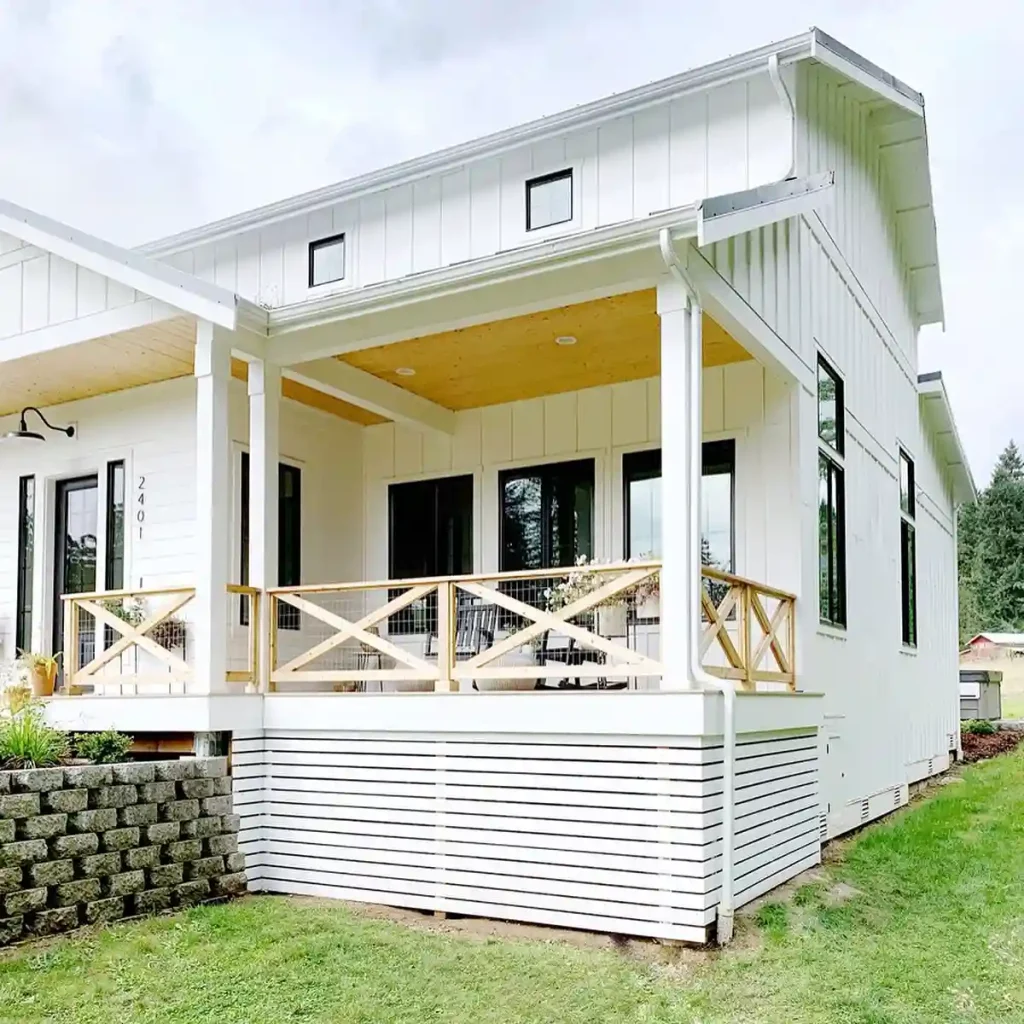
These 23 cheap deck skirting ideas prove that finishing your deck properly costs far less than most people assume.
1. Use Lattice Panels for a Classic Budget Solution
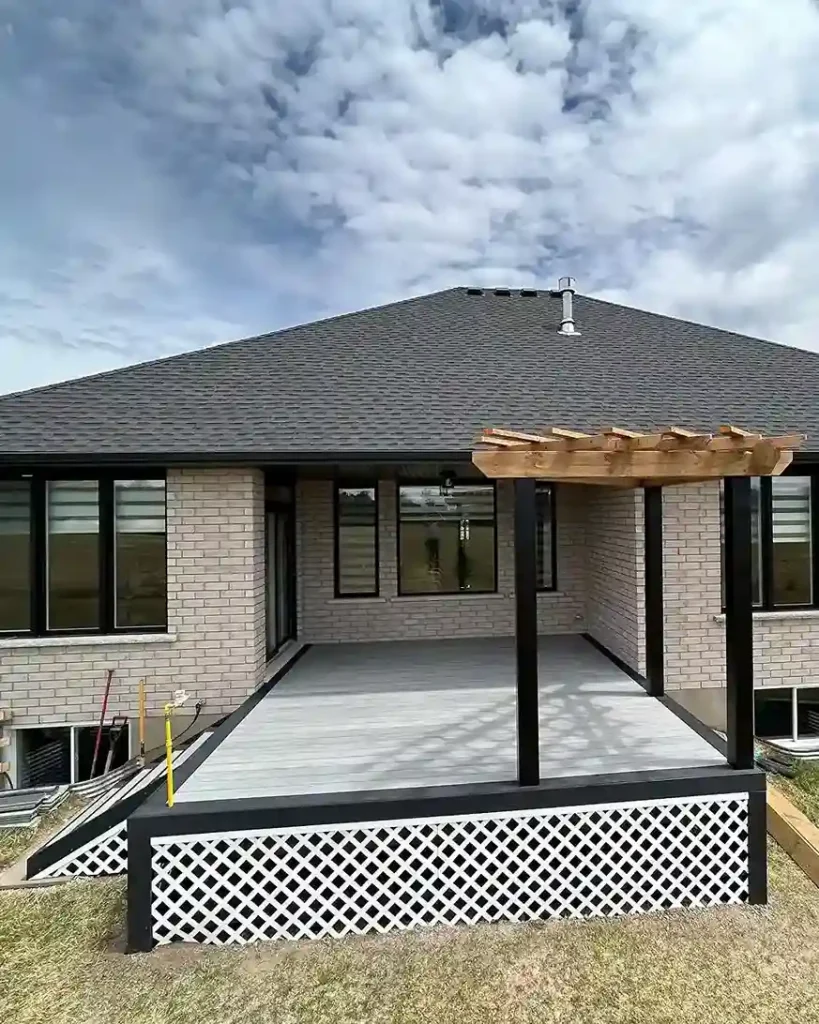
Lattice is the most popular and affordable option for a reason. It is sold at every home improvement store, and the grid pattern lets air move while blocking the view underneath.
Standard 4×8 panels cut easily with a circular saw or jigsaw. They attach to a simple wood frame between the deck framing and the ground. Paint or stain them to match the deck above.
I have used white PVC lattice twice now. It costs about $20 to $35 per panel and never needs painting. Wood diagonal lattice is cheaper up front but needs a fresh coat every few years.
My honest opinion: white lattice on a black frame looks far better than white on white. The contrast makes the pattern stand out. In the photo above, that is exactly what is happening. Read our guide on under budget pool decking for more learning.
2. Install Solid Panel Skirting for a Bold Modern Look
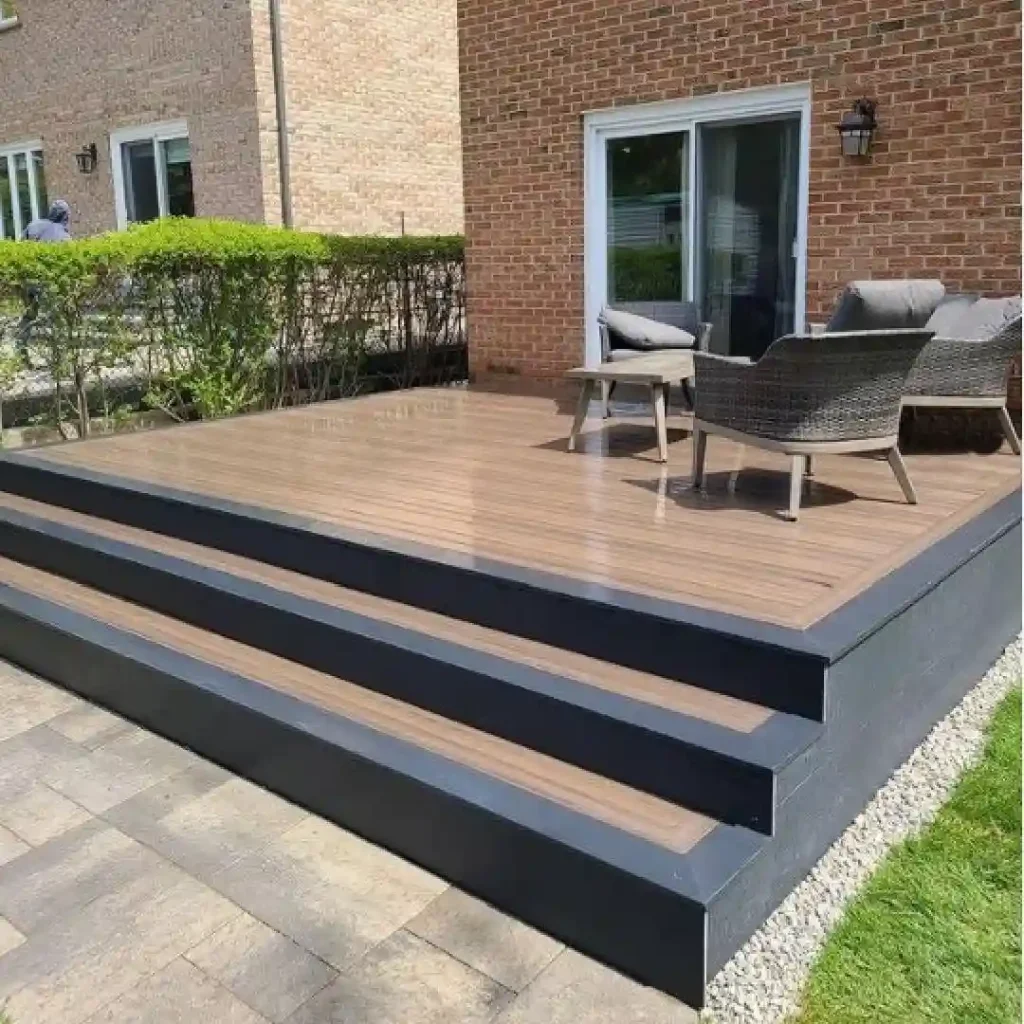
This is the style that stops people in their tracks. Solid black panels under a warm wood deck look sharp, deliberate, and expensive. They are neither.
Solid panels hide everything underneath, including whatever is stored under the deck. They also block airflow, so if you go this route, install vent grilles evenly around the perimeter. Skip the vents and you will trap moisture under the deck.
Material options are wide. Painted exterior plywood is the cheapest. Composite panels cost more but last longer. Powder-coated aluminum panels cost the most but never need refinishing.
The steps in this photo use the same black material as the skirting. That continuity is what makes the whole thing look designed rather than assembled.
3. Use Vertical Wood Boards for a Fence-Like Finish
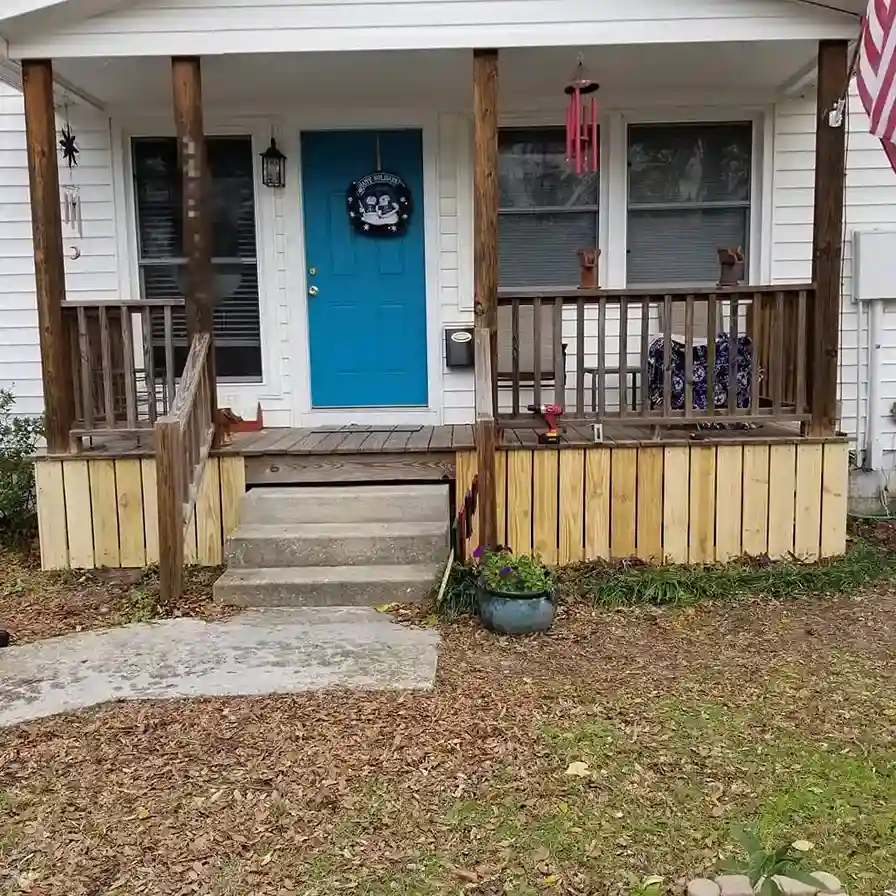
Vertical boards look like a fence panel. That is the whole appeal. It suits farmhouse, cottage, and country decks perfectly, and it is one of the cheapest options you can build.
You can space them open like a picket fence or install them tight for full concealment. Tight looks formal. Spaced looks casual. Both look finished.
Rough-sawn pine is the most budget-friendly choice. Sand it lightly, apply exterior paint or stain, then attach to a top and bottom rail frame. Basic carpentry skills are enough.
One thing I wish someone had told me earlier: untreated pine greys out within a year. The new boards in this photo are still pale because they have not been sealed. Seal them if you want that warm tone to last. Read our guide on under budget diy patio development for more information.
4. Repurpose Old Fence Boards for Free Skirting
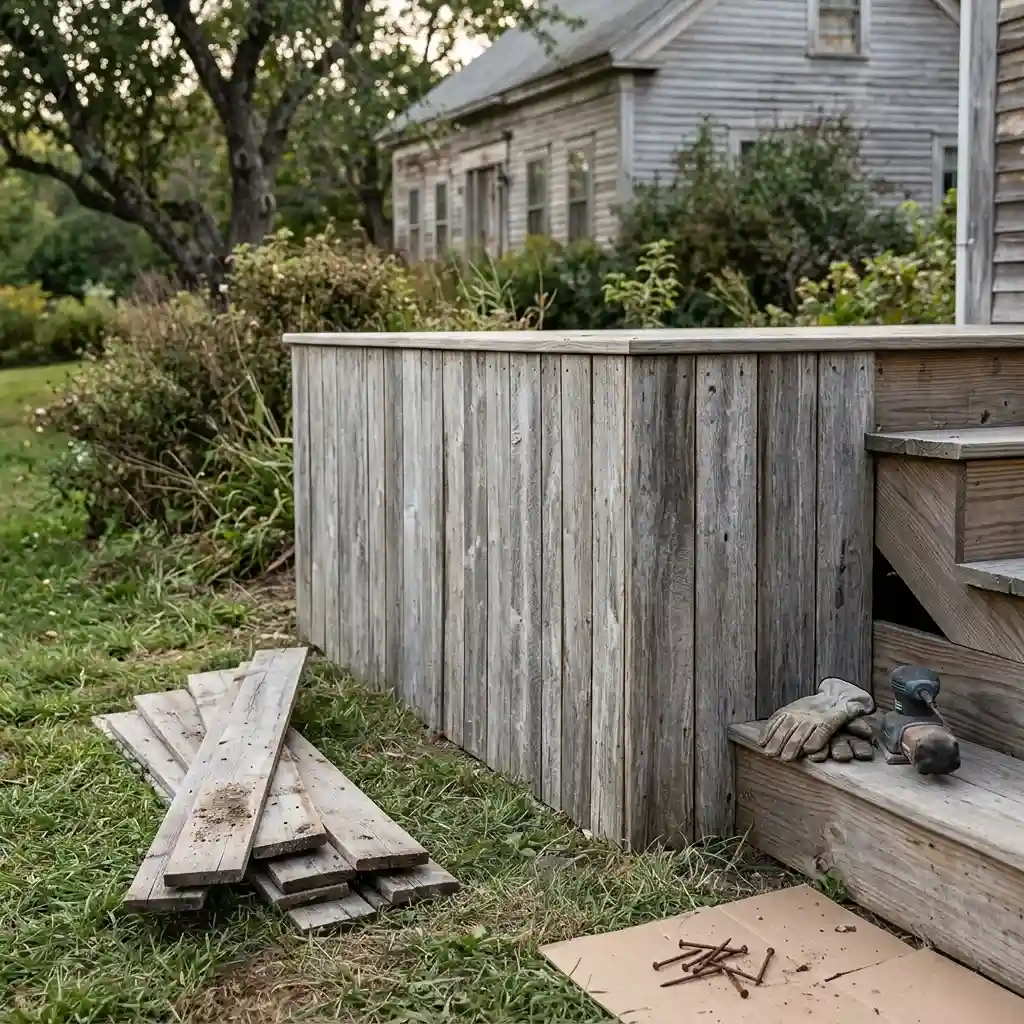
Old fence boards from a neighbor replacing their fence are usually yours for the asking. They already have that grey-silver weathered tone that suits rustic decks better than anything you can buy.
Sort them by color before installing. Boards from different fences age differently, and a patchy skirt looks messy. Once sorted, they look deliberate.
Remove old nails, sand rough edges, and check for rot before installing. That is the whole job.
I have seen people pay $80 for “reclaimed look” boards at big box stores when a neighbor would have handed them over for nothing.
5. Try Bamboo Roll Fencing for a Tropical Budget Finish
Fastest option on this list. Unroll it, staple it to the deck framing, done. An hour or two for a full deck.
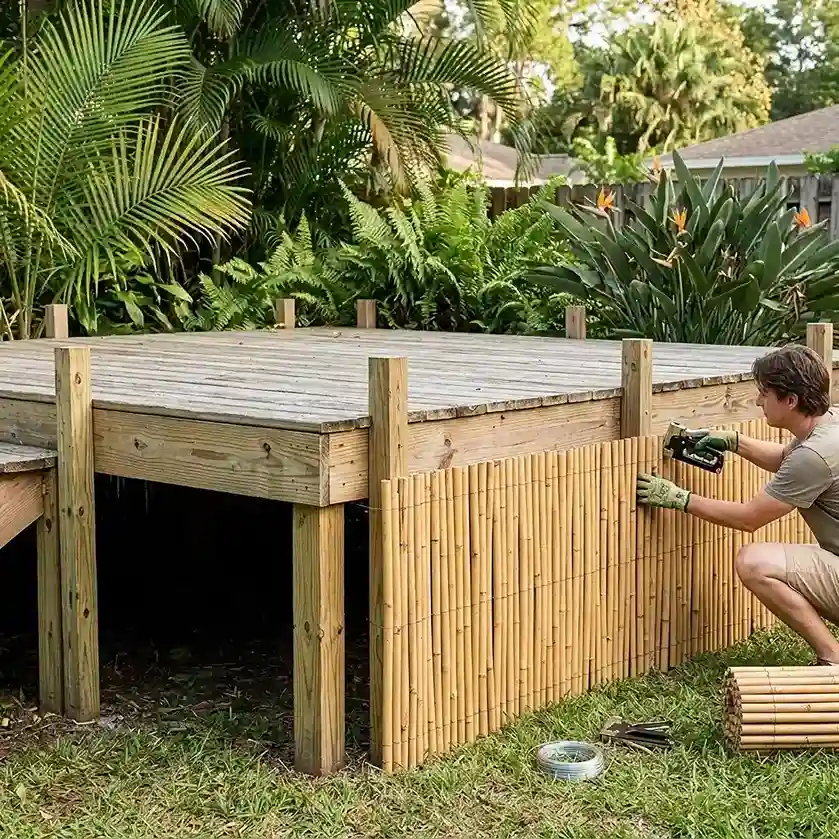
Bamboo suits tropical, beach-house, and tiki-bar aesthetics. It is not a permanent solution. Expect three to five years before it starts to deteriorate, and seal it annually to stretch that number.
Cost runs $15 to $25 for a 4 foot by 8 foot roll. That is about $2 to $3 per linear foot of deck perimeter.
Here is the detail people get wrong: bamboo rolls are held together with thin wire. Staple through the wire, not just the bamboo. Staples through bamboo alone pull out on windy days.
6. Install Corrugated Metal Panels for an Industrial Edge
If you want the deck to look sharp and industrial, this is the move. Corrugated metal is rot-proof, needs no maintenance, and looks completely different from every other option on this list.
Buy corrugated roofing panels at any hardware store. Cut with metal shears or an angle grinder. Attach with roofing screws that have rubber washers. Galvanized steel resists rust far better than untreated metal.
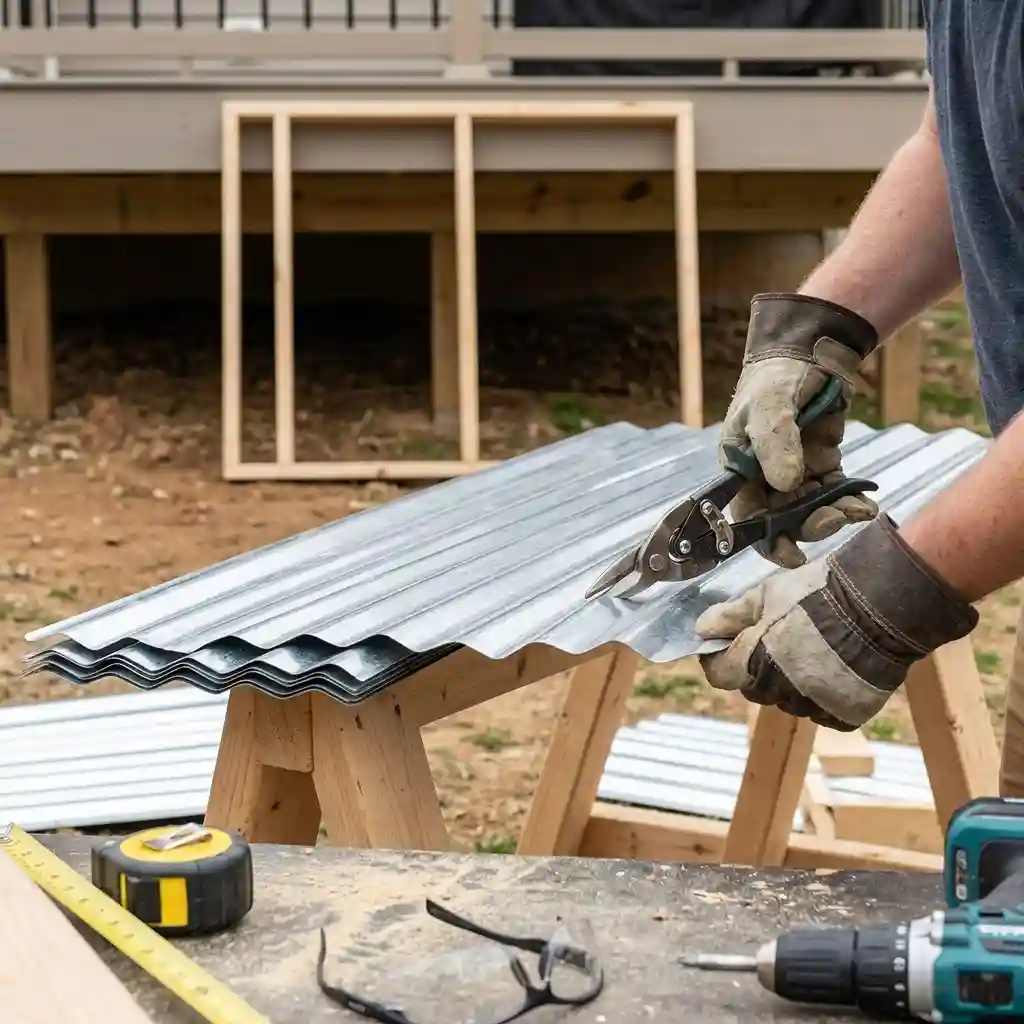
Two things I learned the hard way: wear gloves when cutting, the edges are razor sharp, and leave a small gap between the panels and the ground so moisture does not wick up.
Cost runs $50 to $150 in materials for an average deck. Pre-painted black or charcoal panels look especially good with dark stained wood and black hardware.
7. Prep the Deck Frame Before Any Skirting Goes On
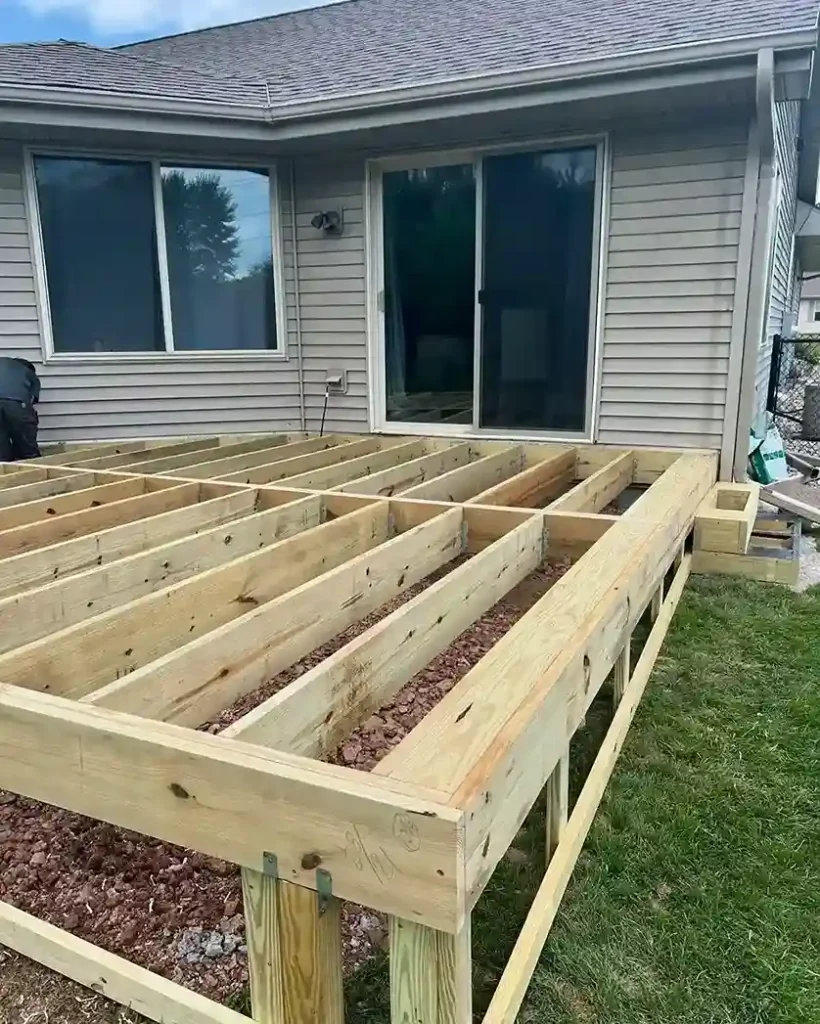
Look at the frame. The bays between the joists are filled with gravel, and the hardware is visible. That is a deck that has been prepped for skirting.
Skirting should never be the first thing you build. Fix the frame first. Check for soft or rotting wood. Replace any joist that flexes. Treat the exposed framing with a wood preservative. Add gravel fill between bays if the ground beneath holds moisture.
Once the frame is solid and dry, skirting goes on fast and stays put. Skirting on a wet or soft frame traps the problem instead of solving it.
Two details I would add to what this photo shows. Line the inside of the skirt with hardware cloth to keep animals out, and bury the bottom edge 6 to 12 inches if you want the strongest defense.
8. Create a Living Skirting With Plants and Shrubs
Plants used as natural deck skirting are both beautiful and completely free of manufactured materials. Low-growing shrubs, ornamental grasses, and spreading ground cover plants planted along the deck perimeter fill the gap between deck and ground naturally over time. The living skirting looks genuinely beautiful and improves with every passing season.
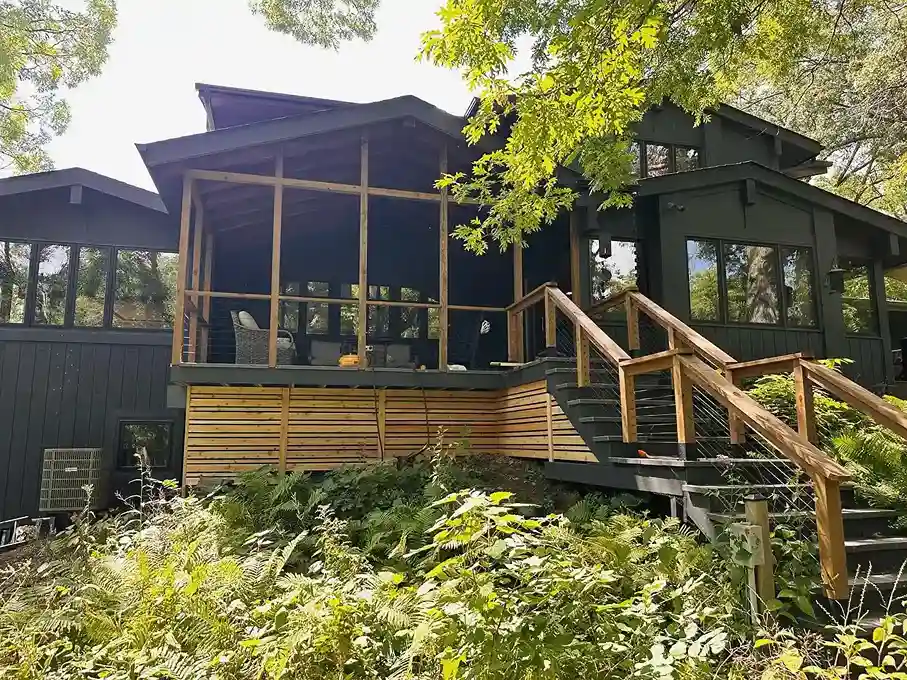
Choose plants suited to the light conditions beneath and beside the deck. Low-light tolerant varieties like hostas, ferns, and sweet woodruff suit shaded areas. Lavender, rosemary, and ornamental grasses thrive in sunny exposures. Install landscape fabric beneath the plant zone to suppress weeds between plants. This is the only skirting option that gets better-looking every single year.
9. Use Concrete Blocks for a Chunky Budget Base
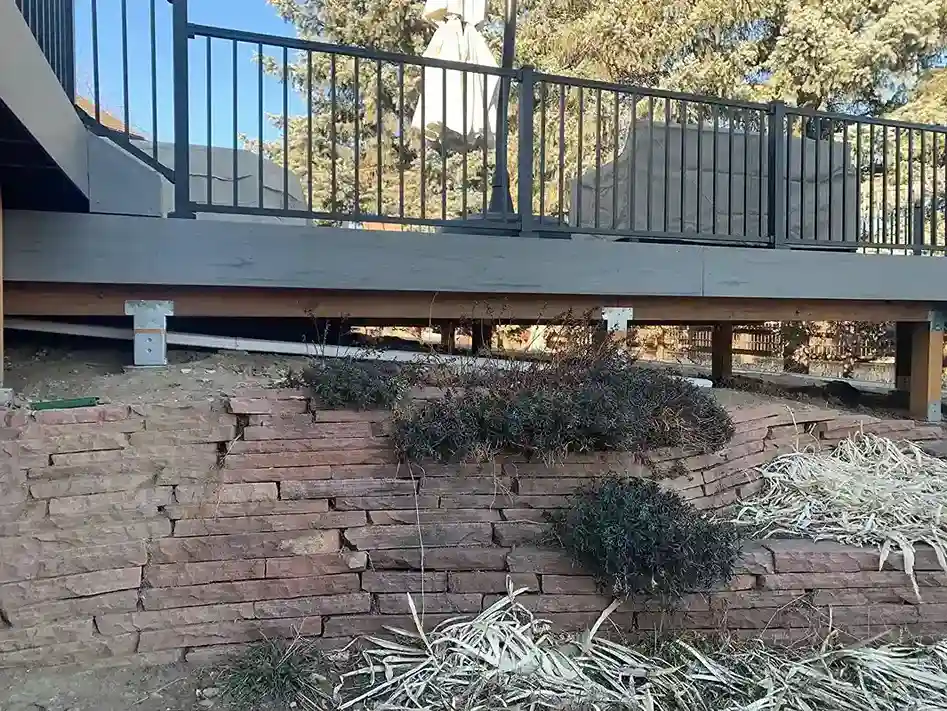
Stacked concrete blocks give the deck a heavy, grounded base. Retaining wall blocks stacked two to three courses high create a defined edge. No mortar needed for a simple stack.
Blocks cost $1 to $5 each depending on style. Standard grey is the cheapest. Textured retaining blocks and split-face blocks cost a little more but look better. Stone veneer over a plywood base is another option if you want the look of natural stone at a fraction of the cost.
This is a good choice on sloped yards. A low block wall can hold back soil on the high side while also acting as the skirt. Two problems solved with one material.
10. Install Composite Skirting Boards for a Long-Lasting Finish
Composite skirting is the set-it-and-forget-it option. It matches composite deck boards almost perfectly, and it never needs painting or staining.
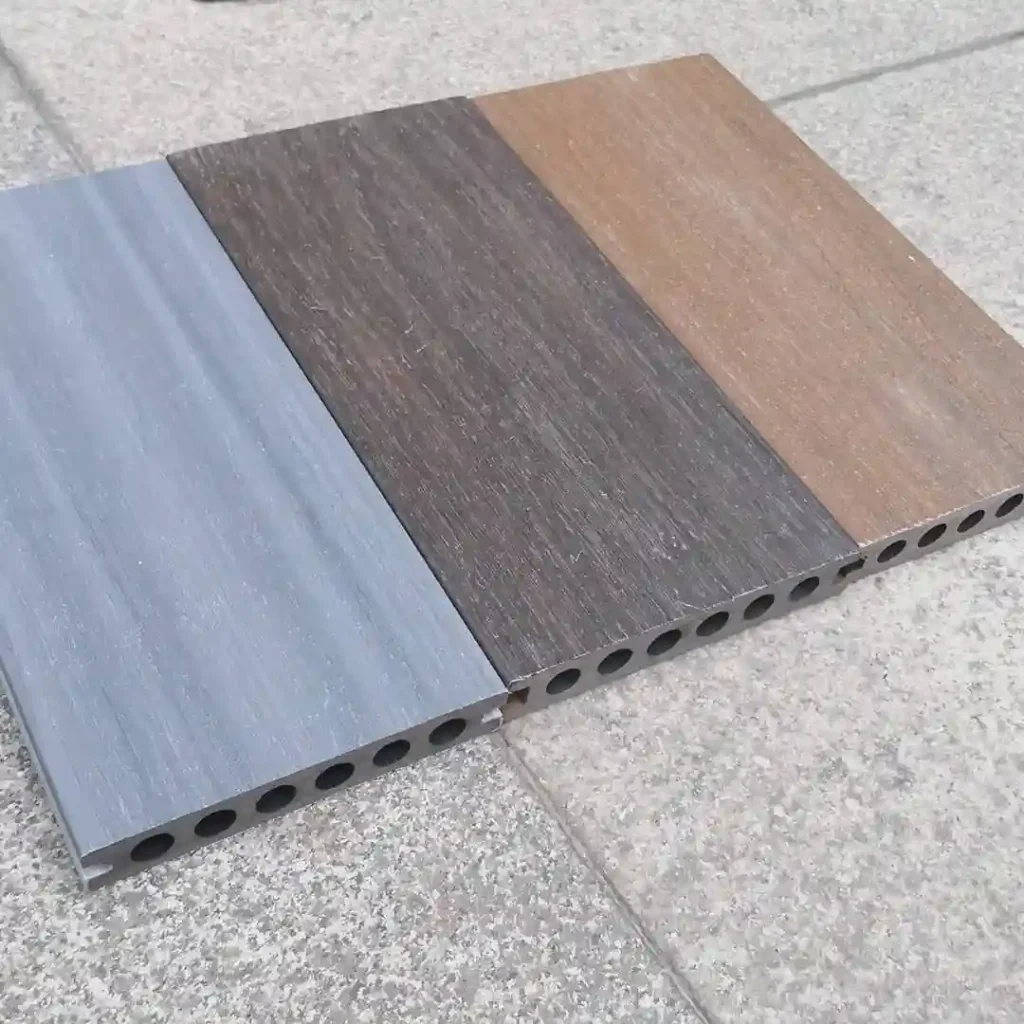
Buy from the same manufacturer who supplied your deck boards. Color matches across product lines are rarely exact, and a slightly off tone is noticeable on a skirt.
Cost runs $2 to $4 per linear foot. More than wood up front, but you never buy stain again.
Install with hidden fastener clips for a screw-free face. Composite flexes more than wood, so use clips every 12 to 16 inches, not every 24. Otherwise the skirt bows out within a season or two.
11. Use Pallet Wood for a Free Rustic Skirting
Pallets are free if you know where to look. Warehouses, hardware stores, and garden centers give them away daily. Disassembled pallet boards make excellent rustic skirting, and the weathered grey-brown tone needs no staining.
Only use pallets marked HT, which means heat-treated. Skip anything marked MB, those are chemically treated and not safe to cut indoors.
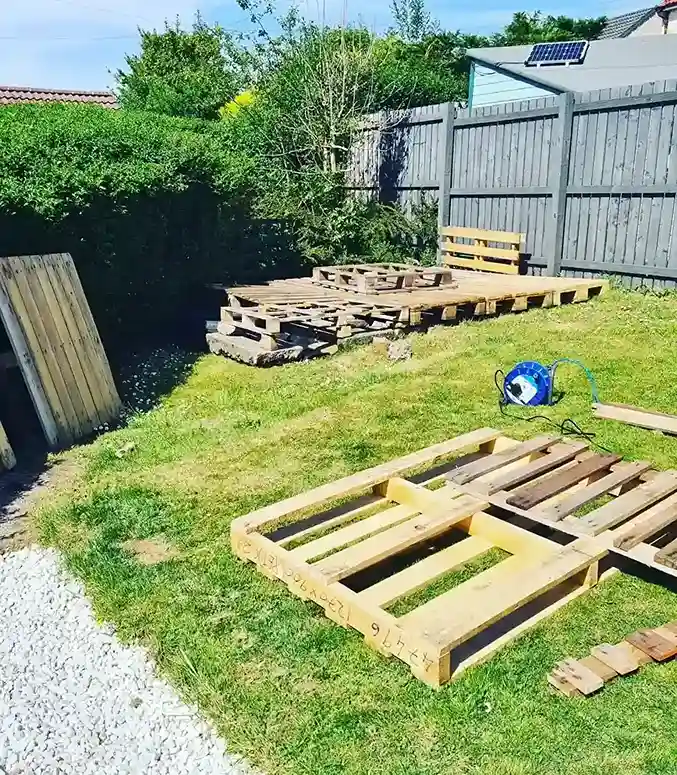
Disassemble with a pry bar and hammer. Remove every protruding nail. Sand rough edges. Install horizontally for a casual look or vertically for a fence-like finish. Seal with a clear exterior sealer.
Material cost: zero. Time cost: one weekend of disassembly plus one weekend of installation. That is the trade-off. If your time is worth more than the boards, buy new.
12. Add a Chalkboard Paint Skirting Panel for Fun
A plywood skirting panel painted with chalkboard paint creates a functional and fun deck skirting feature. Children can draw on the panels around the deck.
Menu boards for outdoor entertaining can be written directly on the surface. Seasonal decorations and messages chalk onto the surface and wipe off cleanly.
It is a genuinely creative budget skirting approach.
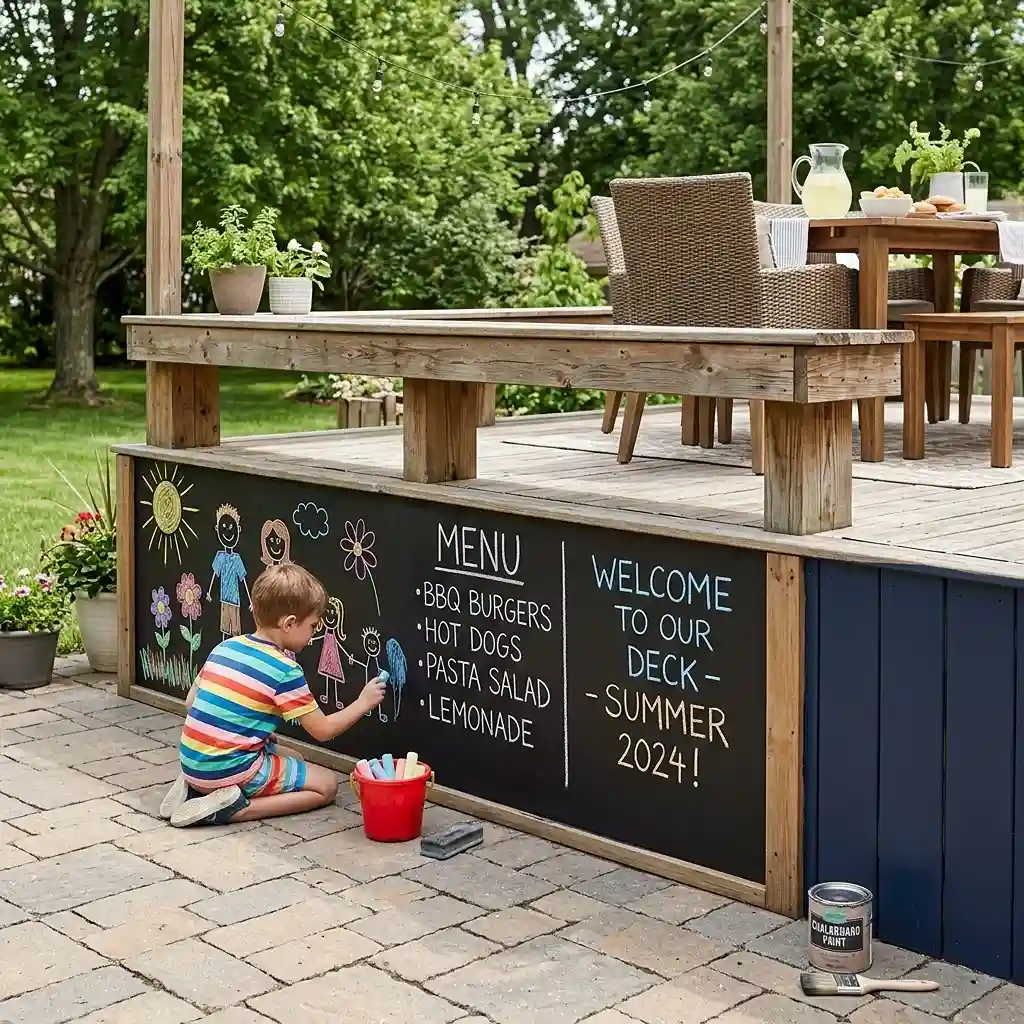
This works best on the most visible side of the deck facing the outdoor entertaining area. Paint the remaining sides in a coordinating exterior color.
The chalkboard panel becomes a conversation piece and a functional feature that guests notice and enjoy. Chalkboard paint costs $15–$25 per can and covers a significant panel area in two coats.
13. Use Vinyl Lattice for a Low-Maintenance Classic Option
Vinyl lattice looks like wood lattice and never needs painting. It does not rot, warp, or attract insects. Clean it with a garden hose.
It costs slightly more than wood lattice up front. Over ten years, it costs less because you never buy paint or stain. Vinyl lattice lasts 25 to 30 years. Wood lattice lasts 10 to 15 years with regular maintenance.
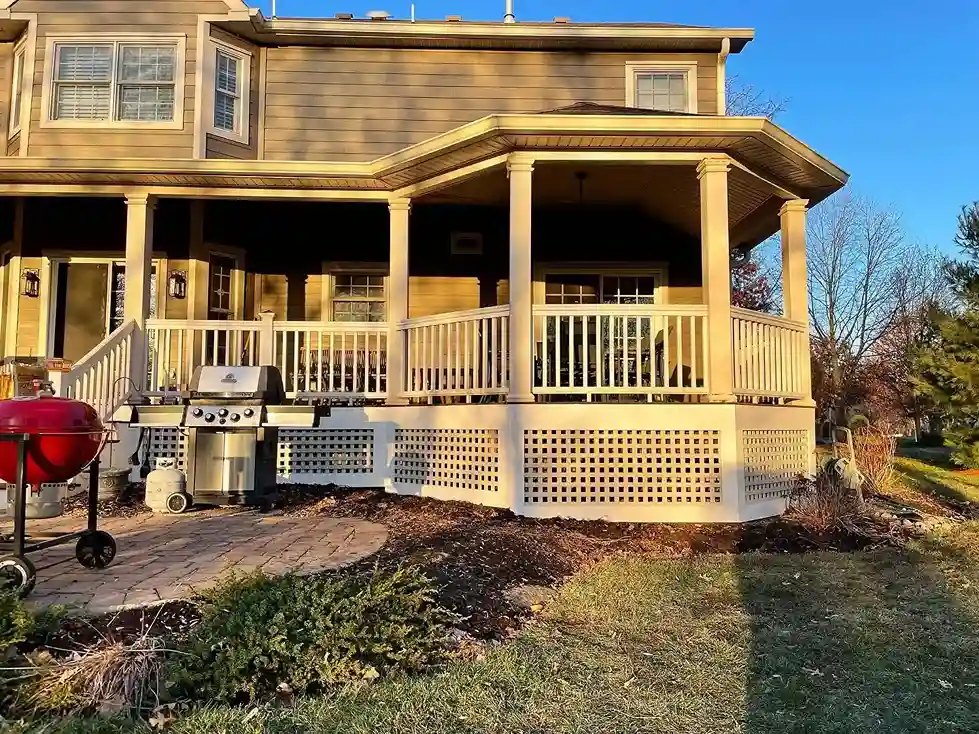
The octagonal porch in this photo shows what vinyl lattice can do on a curved or angled skirt. Vinyl is more flexible than wood and cuts cleanly with a fine-tooth blade.
One note: white vinyl next to a white railing reads as classic. White vinyl next to dark railing reads as modern. Both work. Just pick the one that matches your house.
14. Install a Simple Wood Frame With Wire Mesh
A wood frame with wire mesh infill creates a clean, modern, and extremely affordable deck skirting. The mesh allows maximum airflow beneath the deck. Small animals cannot access the underside. The industrial quality of the wire mesh suits modern farmhouse and contemporary outdoor styles well.
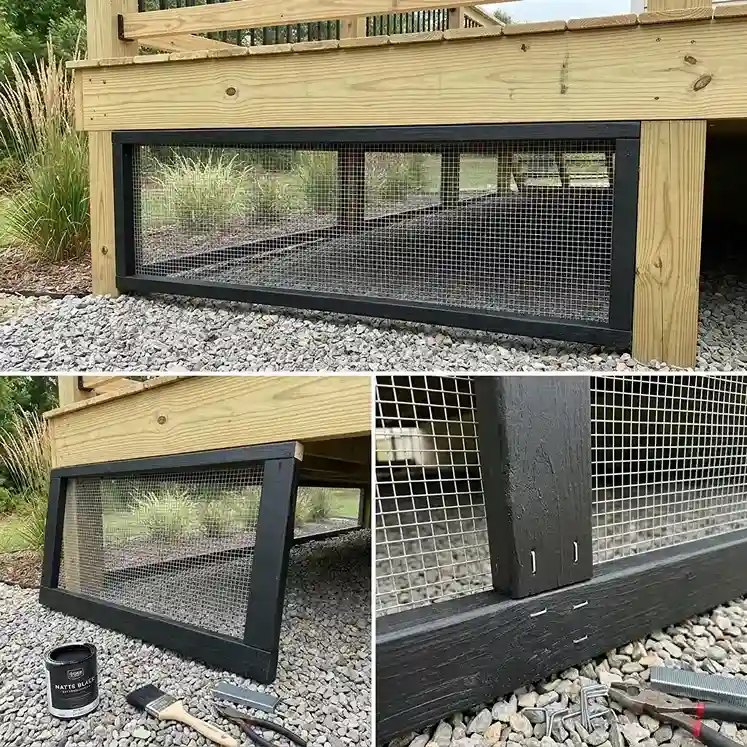
Build simple rectangular frames from 2×4 lumber. Staple galvanized hardware cloth or welded wire mesh across each frame. Mount the completed frames between the deck framing and the ground. Paint the wood frame and wire together in black, white, or dark grey for a cohesive result. This approach costs $50–$100 for an average deck.
- Use galvanized or PVC-coated wire mesh for maximum rust resistance outdoors
- 1/2 inch hardware cloth prevents small animals and rodents from accessing the deck underside
- Paint the wood frame and wire together in one consistent color for a finished look
- This approach works especially well combined with a simple wood frame painted in matte black
- Welded wire mesh is stiff and easy to work with compared to flexible chicken wire
15. Use Leftover Deck Boards as Matching Skirting
If you have leftover deck boards from the main deck build, using them as skirting creates a perfectly matched, seamless finish. The grain, color, and material are identical to the deck surface above. The result looks genuinely professional and intentional. The cost is zero if you planned your material quantities to include extra boards.
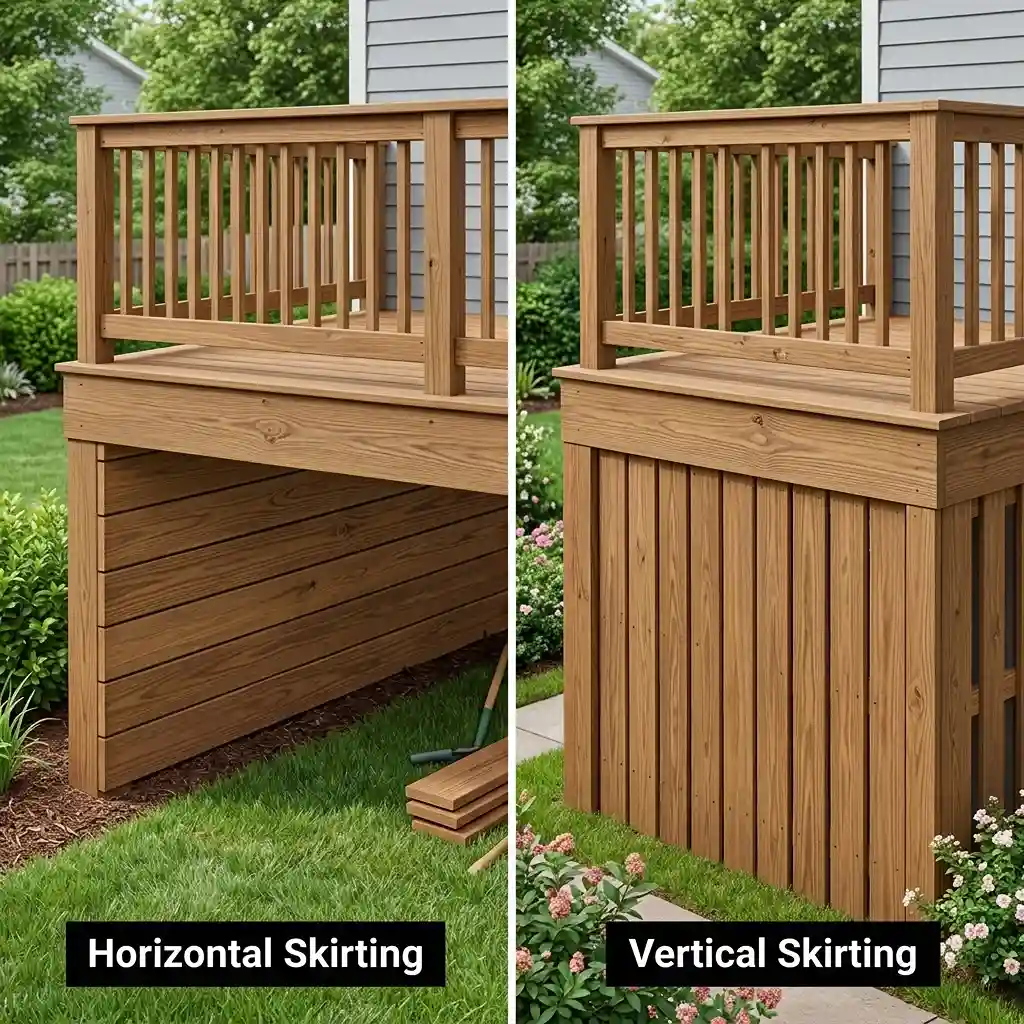
Install the leftover boards vertically or horizontally depending on the aesthetic you prefer. Vertical boards echo fence boards and create a solid, cottage-style skirting. Horizontal boards echo the deck surface and create a modern, wrap-around look. Either approach uses material you already paid for and delivers the most cohesive possible skirting result.
16. Create Stone Veneer Skirting for a High-End Look
Stone veneer applied over a plywood base creates a deck skirting that looks like expensive natural stone at a fraction of the cost. Faux stone veneer panels made from lightweight polyurethane or concrete composite are widely available at home improvement stores. They glue directly onto a prepared surface with construction adhesive.
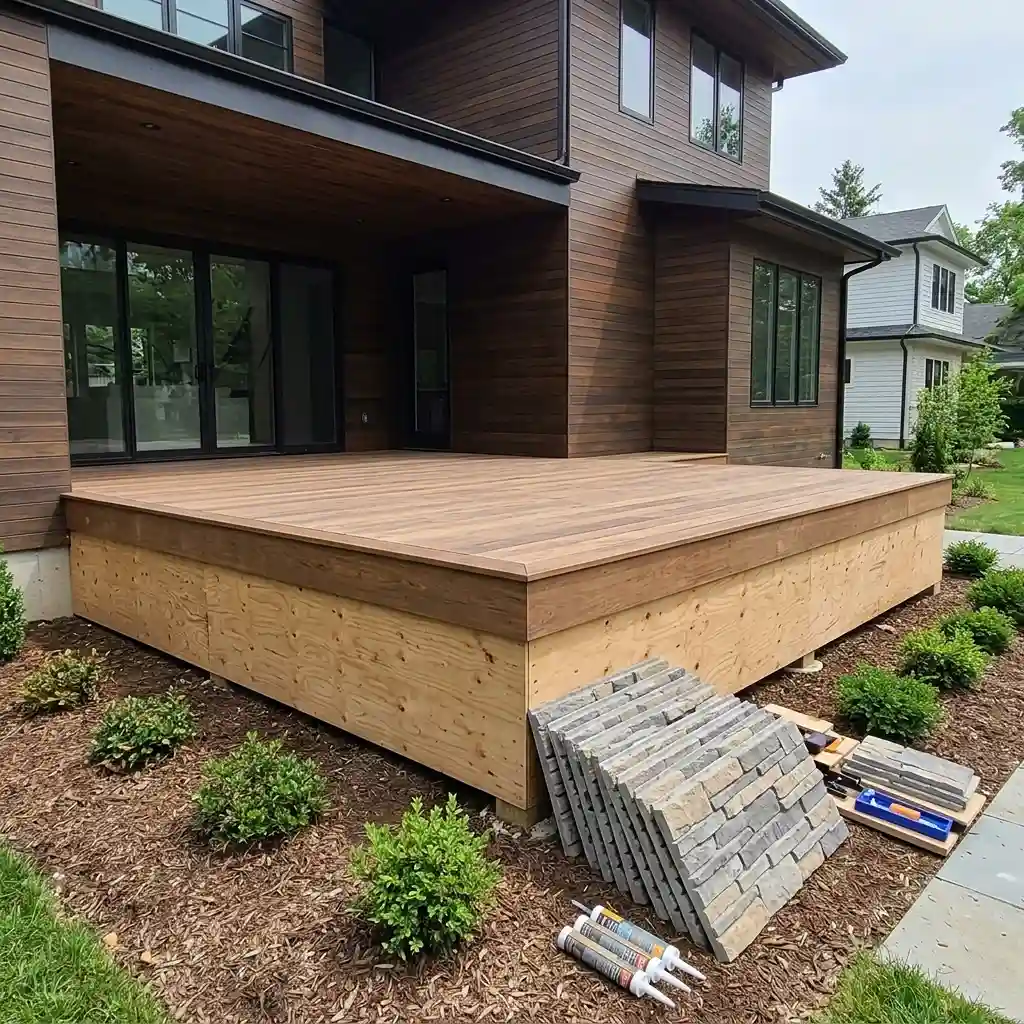
| Stone Veneer Type | Cost per sq ft | Weight | DIY Friendly |
|---|---|---|---|
| Polyurethane faux stone | $2–$5 | Very Light | Yes |
| Concrete composite panels | $4–$8 | Moderate | Yes |
| Real stacked stone veneer | $8–$15 | Heavy | Moderate |
| Peel-and-stick stone | $3–$6 | Very Light | Very Easy |
17. Use Cedar Shingles for a Cottage Charm Finish
Cedar shingles look like the side of a New England cottage. They shed water naturally, age to a silver-grey over time, and resist rot without any treatment.
Apply them like roof shingles over a plywood backer. Start at the bottom, overlap each row by half the shingle length, and stagger the vertical joints between rows. Secure with galvanized nails.
The look is best on cottage, farmhouse, and coastal decks. On a modern deck, they look out of place.
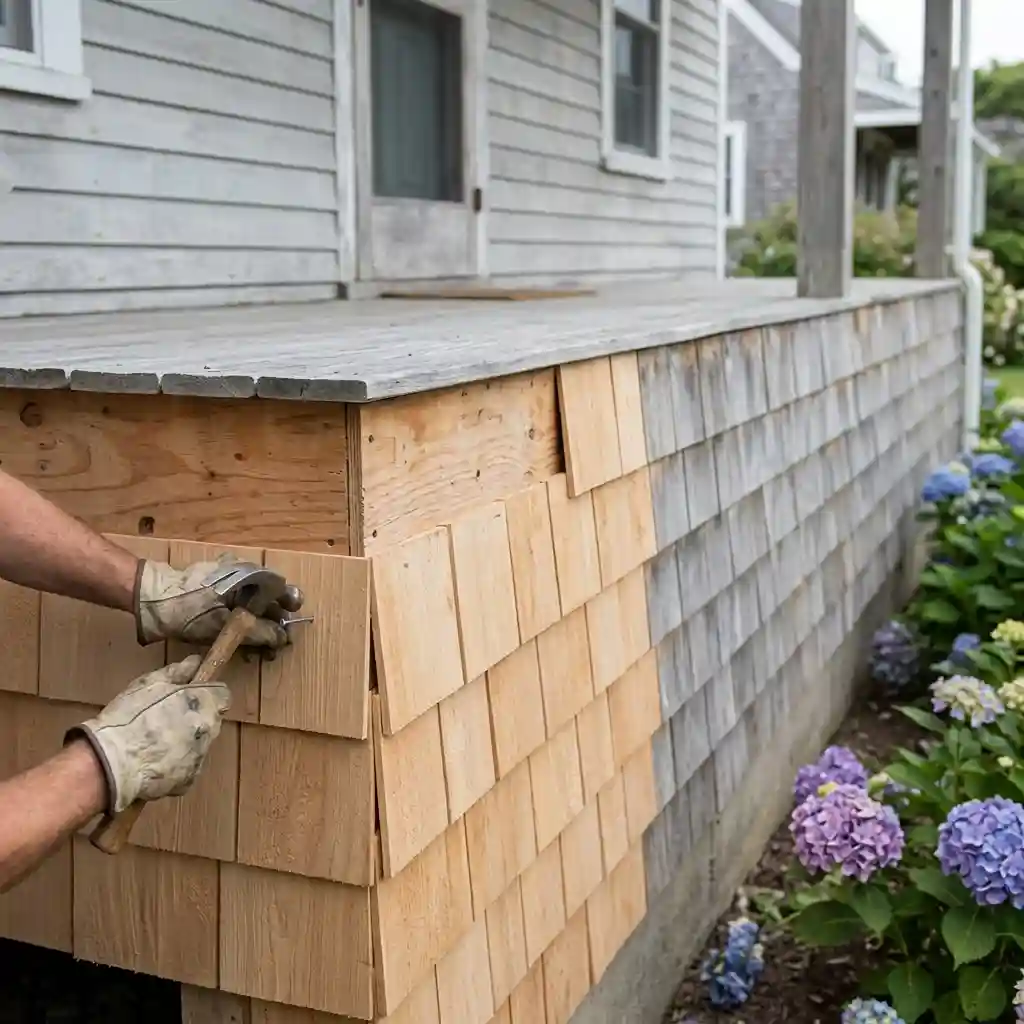
Cedar shingle skirting costs $1.50 to $3 per square foot. That is a mid-range price for a look you cannot get from any other material on this list.
The hydrangeas in the photo are a reminder. Cedar skirting looks best with plants around it, not bare dirt.
18. Install a Simple Painted Cinder Block Skirt
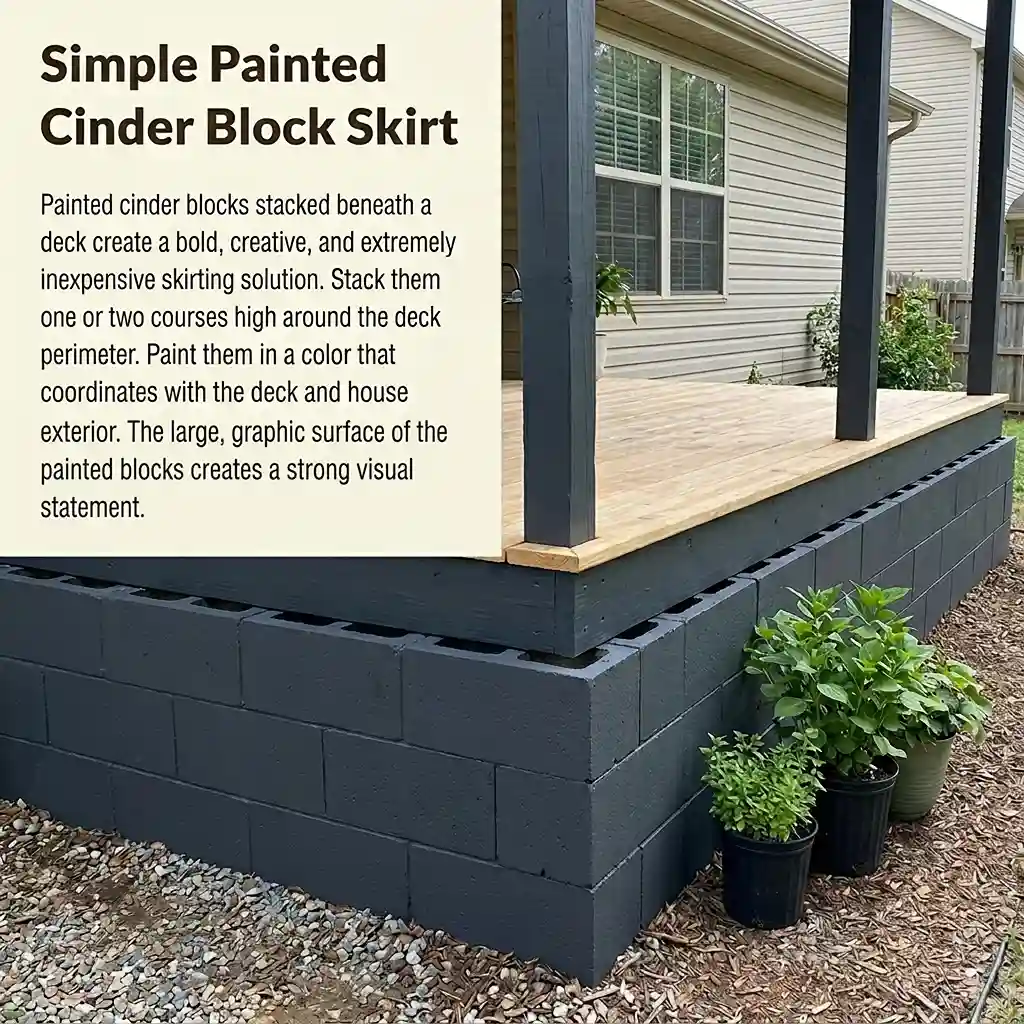
Painted cinder blocks stacked beneath a deck create a bold, creative, and extremely inexpensive skirting solution. Stack them one or two courses high around the deck perimeter.
Paint them in a color that coordinates with the deck and house exterior. The large, graphic surface of the painted blocks creates a strong visual statement.
| Cinder Block Paint Color | Deck Style Pairing | Effect Created |
|---|---|---|
| Crisp white | Coastal, farmhouse | Clean, Mediterranean |
| Charcoal grey | Modern, industrial | Bold, contemporary |
| Warm terracotta | Rustic, Mexican-inspired | Earthy, warm |
| Sage green | Cottage, garden | Natural, soft |
| Classic black | Any style | Sharp, defined |
19. Use Reclaimed Brick for a Heritage Look
Old brick has depth of color and texture that new brick cannot replicate. Reclaimed brick laid beneath a deck looks like it has always been there.
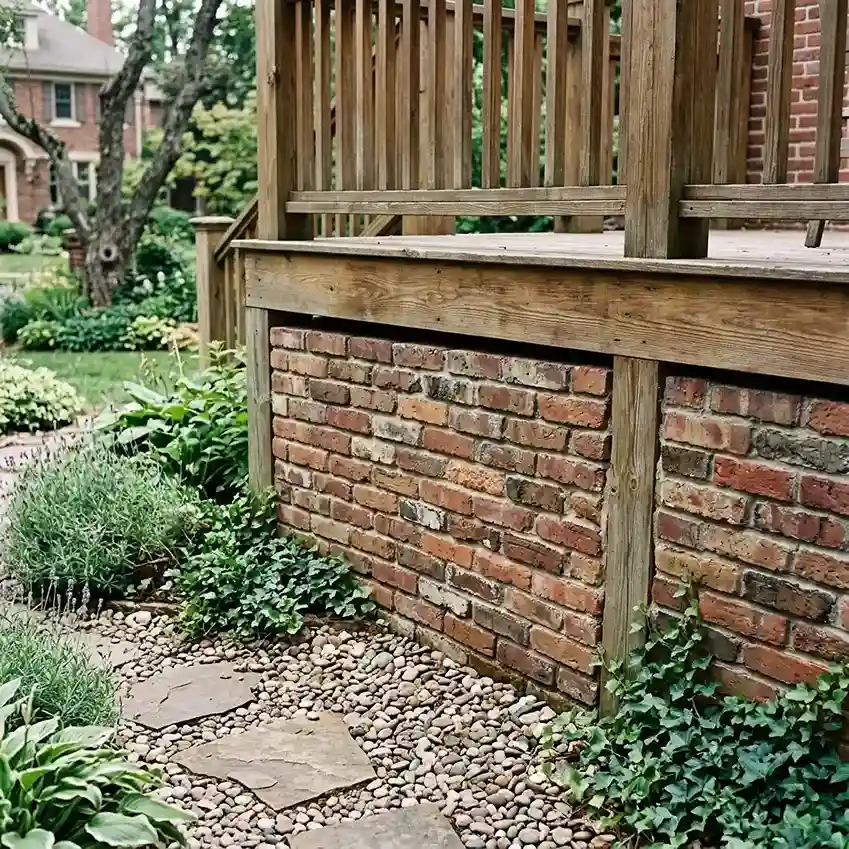
Source it from demolition sites, architectural salvage yards, or online marketplaces. It is often free or cheap because people want it gone.
Stack it dry, without mortar, for a removable installation. Use mortar for a permanent one. Two to three courses fills most deck gaps.
The image shows the finished result. Warm red and ochre tones under a wood deck, with ivy and gravel around the base. This is one of the best-looking options on the entire list.
One thing to know: reclaimed brick is heavy. Plan for the weight before you start stacking.
20. Add Decorative Cutout Panels for Visual Interest
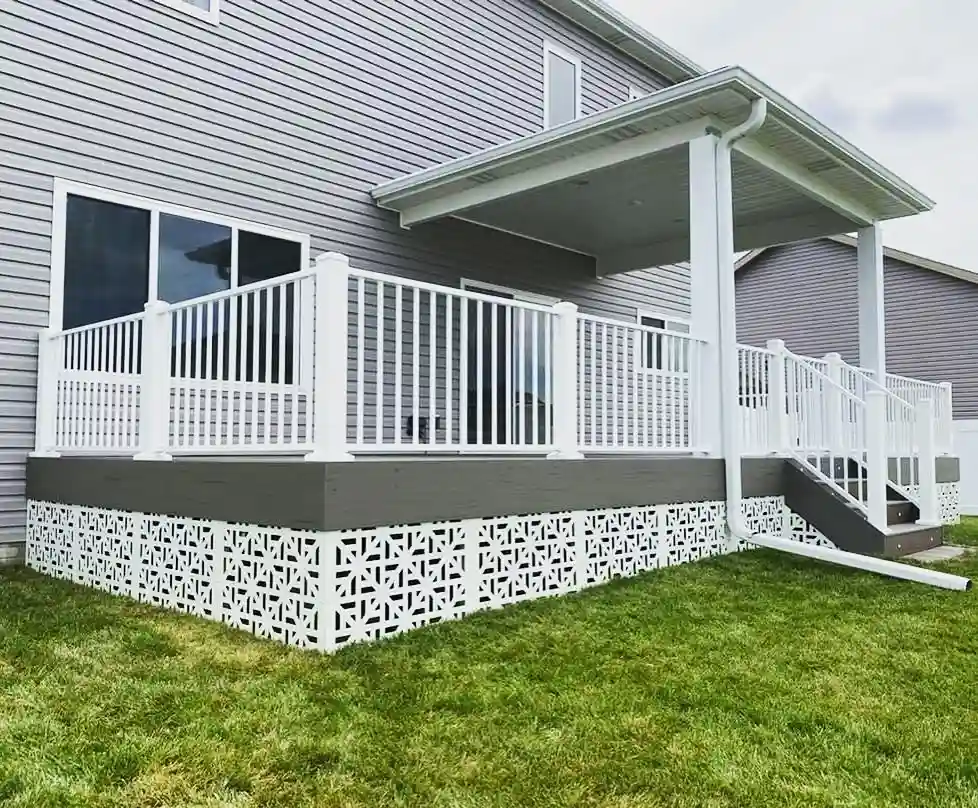
This is the artisan option. Cutout panels bring a custom, hand-made quality to skirting at very low cost.
Use plywood and a jigsaw or router. Simple shapes work best: geometric patterns, repeating circles, diamonds, or stars. The cutouts add airflow, texture, and a personal touch.
The white panels in this photo use a repeating geometric cutout that looks factory-made. It was cut by hand.
Mark the pattern with a pencil before cutting. Use a jigsaw for curves and a circular saw for straight lines. Drill starter holes for interior cutouts. Sand every edge before painting.
Apply two coats of exterior paint in a solid color. The cutouts pop more when the background behind them is dark, so line the inside with black mesh if you want maximum contrast.
21. Use Tin or Metal Roofing Panels Painted for a Unique Finish
Leftover tin roofing panels or inexpensive metal sheets make creative and durable deck skirting. Cut to height and installed in a simple wood frame, metal panels create a skirting that is genuinely weatherproof and completely rot-proof. Paint them in any exterior color for a finished, polished appearance.
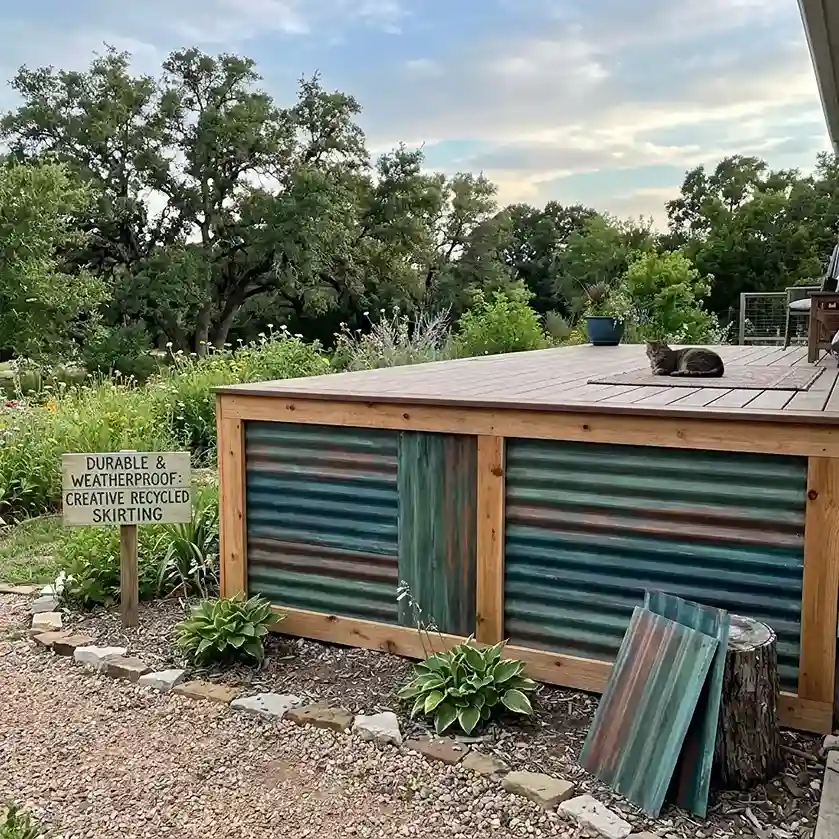
| Metal Panel Color | Deck Style | Visual Effect |
|---|---|---|
| Barn red | Rustic farmhouse | Classic, countryside |
| Galvanized grey | Industrial, modern | Raw, honest |
| Matte black | Contemporary | Bold, graphic |
| Forest green | Cottage, natural | Grounded, warm |
| Cream white | Coastal, traditional | Clean, fresh |
22. Install a Simple Gravel Skirt for a Minimal Look
A gravel border filling the gap beneath the deck is the simplest and cheapest skirting solution. It requires no framing, no cutting, and no special skills.
Lay landscape fabric beneath the deck perimeter, install a simple edging border, and fill with decorative gravel. The result is clean, minimal, and completely functional.
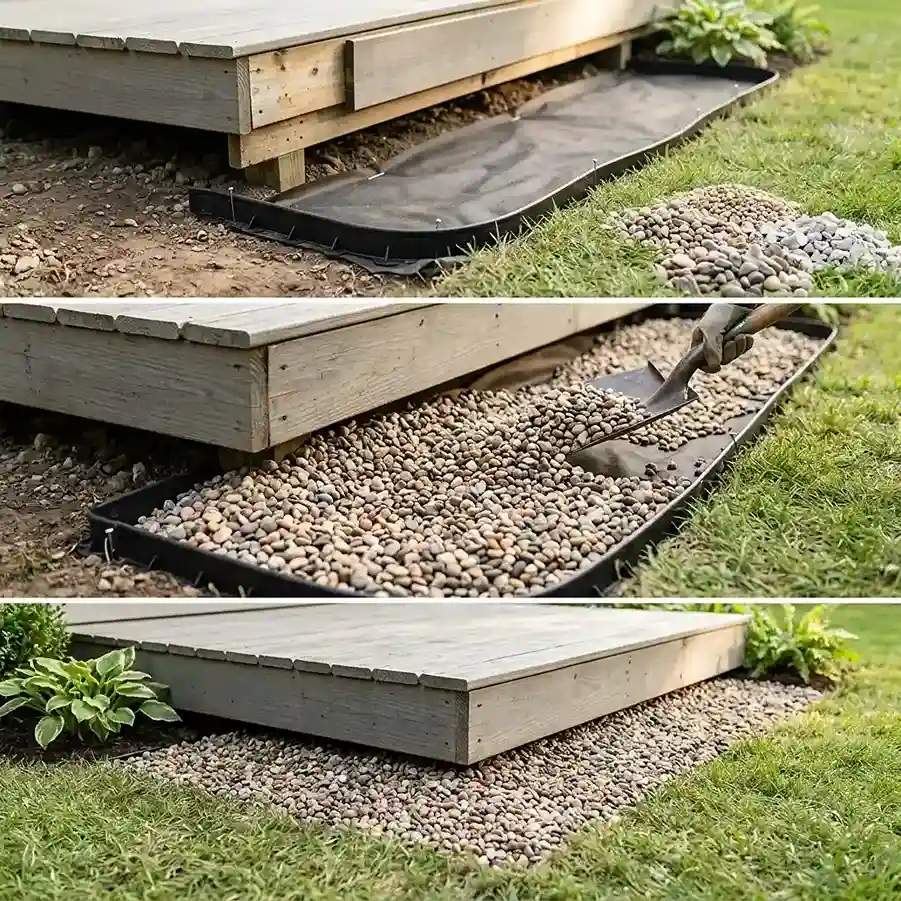
A gravel skirt drains perfectly, suppresses weeds, and looks naturally appropriate beneath any deck style. Pea gravel, river rock, and crushed limestone all work beautifully.
Larger river rocks create a bolder, more dramatic border. Finer gravel creates a cleaner, more refined appearance. Total materials cost for a gravel deck skirt is typically $30–$80 for an average deck size.
23. Combine Two Skirting Materials for a Custom Look
The most distinctive and visually interesting deck skirting combines two complementary materials.
Concrete blocks on the base course with horizontal wood boards above.
A wire mesh frame with a planting bed in front. Lattice on the sides with solid plywood on the most visible front panel. Mixing two materials creates a custom look that no single-material approach can achieve.
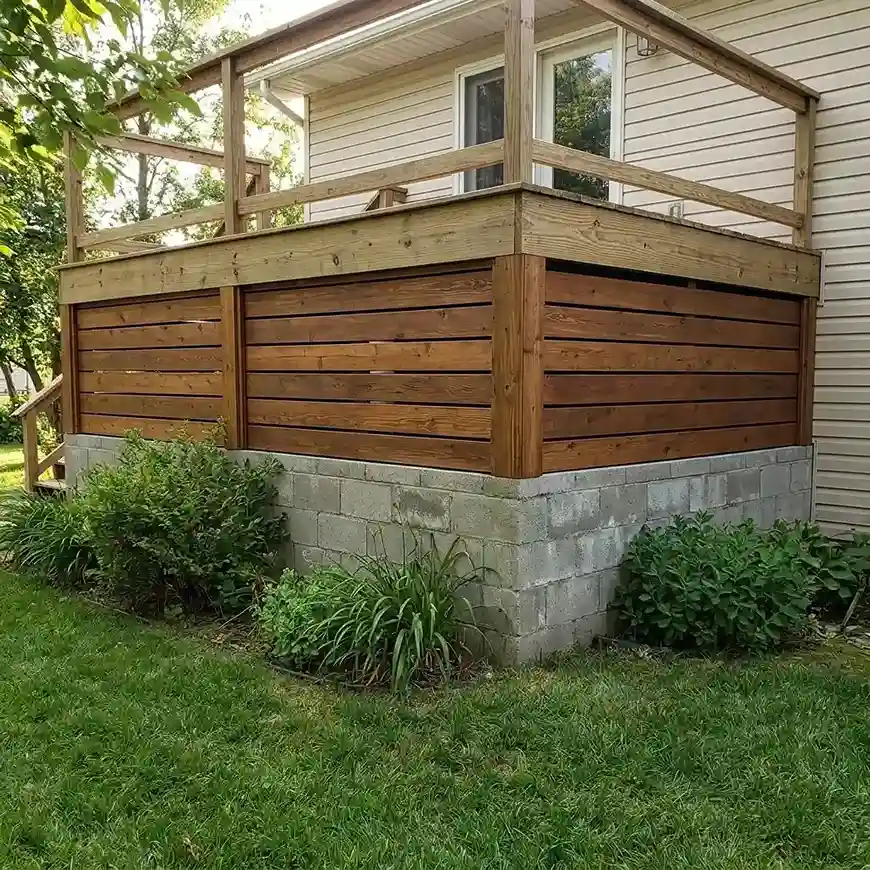
| Material Combination | Effect Created | Cost Level |
|---|---|---|
| Lattice top + solid bottom panel | Traditional with a modern base | Low |
| Metal mesh + wood frame | Industrial modern | Low |
| Stone veneer base + wood boards above | Upscale, layered | Moderate |
| Concrete block + gravel border | Minimal, architectural | Very Low |
| Reclaimed wood + wire mesh | Rustic with airflow | Very Low |
The combination approach also lets you allocate budget where it matters most. Use the most attractive material on the front-facing, most visible panel. Use cheaper materials on the sides that face fences or garden beds. This strategic thinking delivers maximum visual impact for minimum total spend. A beautifully combined two-material deck skirting can be completed for under $150 for an average deck.
Conclusion
Cheap deck skirting is one of the highest-return improvements you can make to any outdoor space. The gap under your deck is a small problem with an oversized impact on the look and feel of your backyard. Filling it with any of these 23 options takes a weekend and rarely costs more than $300.
Here is what I would do if I were starting over. Pick one material and commit. The worst version of this project is a skirt that uses four different materials because you could not decide.
If your budget is under $100, start with bamboo roll, gravel, or pallet wood. All three are cheap, fast, and look intentional.
If your deck is on a slope or you have animals digging underneath, go straight to the wire mesh frame or the concrete block base. Both solve the problem permanently.
If you want it to last 25 years without touching it again, composite or vinyl lattice is the answer. More money up front, zero maintenance after.
And if you want the best-looking result for the least amount of money, take the free option. Old fence boards from a neighbor and a weekend of work will get you a skirt that looks like it was built by a pro.
Your deck deserves a finished base. That base costs far less than you think.