
A fire pit is easy to buy and hard to place well.
Put it in the wrong spot and you get smoke in your face, chairs that sink into wet grass, and a circle nobody uses after the first month. Put it in the right spot and your backyard becomes the room you live in from spring through fall.

That is what this list is about. These fire pit landscaping ideas cover gravel circles tucked into trees, curved seat walls that block wind, paver patios with warm lighting, rustic log stool setups, and a few builds that work next to a pool or in a tiny city yard.
Some are weekend projects. Some need a crew. Every one of them solves a real problem, from drainage to seating to keeping the smoke out of your eyes.
Skim the photos, save the ones that fit your yard, and start with the layout. The rest gets easier once the spot is right.
Build a Simple DIY Stacked Stone Fire Pit Ring
A gravel circle keeps the fire pit low maintenance, and it happens to look right at home under birch trees.

This setup uses a stacked stone ring with a metal bowl insert, so the fire sits off the ground and the stone edge doubles as a footrest. Six dark Adirondack chairs face inward with room to walk between them.
The gravel drains well and hides ash and footprints. A mulch border and a stone edge keep the gravel from wandering into the lawn.
💡 Quick Tip
Pack the base with crushed stone before you lay gravel on top. A loose base is the main reason fire pit circles sink after a wet winter.
Curved Wood Bench Built Into the Fire Pit Ring

This one replaces loose chairs with a built in bench that curves around the pit.
The seat is made from narrow wood slats set on edge, which gives it a clean ribbed look and sheds rain instead of soaking it up.
Behind the bench, wide stone treads step down toward the gravel center. It works well for a yard that is still being finished, since the hardscape can go in before the planting.
Recreate this look
Stone Seat Wall That Doubles as a Wind Break

Curved seat walls do two jobs at once. They give you extra seating when a crowd shows up, and they block the wind that makes a fire feel cold even when it is burning well.
This patio pairs a low stone wall with matching Adirondack chairs and a stone fire pit in the center. Warm landscape lights sit in the wall, which keeps the glow low and easy on the eyes after dark.
A seat wall adds seating without crowding the fire, and it cuts the wind that ruins a cool evening.
Metal Slat Chairs on a Gravel Circle in the Lawn
Green metal slat chairs give this fire circle a lighter feel than heavy wood.

The pit itself is a simple rusted steel bowl set on a gravel disc, which keeps the whole thing easy to move or replace later.
A thin stone curb holds the gravel in place and gives the mower a clean edge to follow. Stone step pads lead across the grass, so guests never walk through the lawn in good shoes.
Paver Patio With Seat Walls and Landscape Lighting
This build shows what a little lighting does for a fire pit after dark.
Warm lights tucked into the curved seat walls wash the pavers and mark the edges, so nobody trips on the way in. Boulders sit at the entrance as a natural threshold.

The fire pit is a stacked block ring with a metal insert, which lets air in under the logs and keeps the smoke moving up and away instead of into your face.
| Lit fire pit area | Unlit fire pit area |
|---|---|
| Guests stay longer and use it on cool nights. | Area goes unused once the sun drops. |
| Edges and steps are easy to see. | Tripping risk on uneven pavers. |
| Light adds depth to the walls and planting. | Flat look, hard to photograph. |
Plant a Native Plant Border Around the Fire Pit Area
Native plants arranged in a loose border around the fire pit area create the most beautiful and lowest-maintenance fire pit landscape possible.
Native plants are adapted to local soil and rainfall conditions. They require minimal watering once established. They support local wildlife and pollinators. And they look completely at home in the landscape because they are.

Choose native ornamental grasses, perennial wildflowers, and low-growing shrubs for the fire pit border planting. Keep plants at least six feet from the fire pit edge for safety clearance. Plant in informal drifts rather than rigid rows for a natural, relaxed appearance.
Native plantings improve with every season as they establish and spread organically. The fire pit zone enclosed within a native plant border feels genuinely embedded in the landscape.
Build a Fire Pit Seating Area With Adirondack Chairs
Adirondack chairs are the most iconic fire pit seating choice. Their wide, flat arms support drinks. Their reclined angle positions the body perfectly relative to the fire.

Their low profile keeps the fire visible over the seating level. And their relaxed, outdoor aesthetic suits every fire pit landscape style from rustic to contemporary.
Arrange four to six Adirondack chairs in an arc around the fire pit with enough spacing between chairs for comfortable movement.
Brightly colored resin versions suit playful, casual backyard landscapes.
Sunken Fire Pit With a Curved Stone Seat Wall
A low seat wall that curves around the pit gives this spot a tucked in, sunken feel. The wall is capped with flat stone, so it works as a bench, a footrest, or a place to set a drink.
A flagstone path wanders in through gravel, which slows you down and makes the walk feel like part of the evening. Wide oak canopy overhead keeps the area shaded well into the afternoon.

⚠️ Watch Out
Check for low branches before you build. Oak limbs that hang within 15 feet of the flame can scorch or catch embers on a windy night.
Install a Gas Fire Pit for Low-Maintenance Ambience

Square Concrete Fire Table With Built In Bench Seating
This one swaps the classic round pit for a square gas fire table with a wide flat ledge.
The L shaped bench runs along two walls and tucks into the corner, which saves space on a small roof deck. Crushed glass sits over the burner instead of logs, so there is no smoke and no ash to scoop.
LED strips under the bench seats bounce warm light off the pavers and make the whole area glow without a single overhead fixture.
Pergola Fire Pit Corner That Feels Like a Room

A dark wood pergola turns an open lawn into a defined outdoor room. This corner uses a stone fire pit ring at the center, four cushioned lounge chairs around it, and lanterns hung from the pergola posts for soft light.
String lights run under the beams, and climbing vines on one post soften the structure without hiding it. A gravel path leads in from the deck, so the transition from indoors to outdoors feels intentional.
- ▸Anchor the pergola on footings, not just on grade, so frost does not shift it.
- ▸Leave the top open or slatted so smoke has somewhere to go.
- ▸Run a gravel path to the pit so wet grass does not soak your shoes.
Flagstone Patio With Moss Between the Stones

Wide flagstone with moss and creeping thyme in the joints gives this patio an aged look, as if it has been there for decades.
The stone fire pit matches the patio material, which keeps the whole space calm and quiet.
Four wooden Adirondack chairs with neutral cushions sit loose around the fire, easy to pull back when the heat gets strong.
The planting beds wrap tight to the patio edge, so there is no bare dirt to look at.
Plant moss and thyme in the joints for a soft, lived in look.
Use the same stone for the patio and the fire ring.
Do not use thin joints, they crack and fill with weeds.
Avoid mixing three or four stone types in one small patio.
Create a Fire Pit Corner in a Small Backyard
A small backyard does not prevent a beautiful fire pit landscape. Thoughtful design turns even a compact outdoor space into an intimate and appealing fire pit destination.
The smaller scale actually works in favor of the fire pit — the warmth, light, and atmosphere are more concentrated and more noticeable in a smaller space.

Position the fire pit in a corner of the small backyard to maximize the remaining open floor area. Use a smaller diameter fire pit — a 24 to 30-inch inner diameter suits compact spaces better than large fire pits designed for expansive landscapes.
Two curved benches arranged in an L-shape around the corner fire pit create the most space-efficient seating arrangement. Plant a low hedge or a bamboo screen along the fence line for privacy without reducing the sense of openness in the small yard.
Fire Pit Nook Wrapped in Evergreen Privacy
Tall evergreens do more than look good. They block wind, muffle road noise, and make a small fire circle feel private even in an open yard. This one uses a pea gravel base with a stone path curving in from the lawn.
Four wood Adirondack chairs, two with throws, face a stacked stone ring. The planting wraps in close behind the chairs, so the green becomes a backdrop instead of a border.

Tiered Seat Wall With a Built In Fire Ring

This patio steps down in two levels, with a curved seat wall that runs the full length behind the pit. The wall is capped with smooth stone, and two small lights sit in the face so the steps stay visible after dark.
The fire pit is built from the same stone as the wall, which ties the whole build together. Lavender, grasses, and agave fill the raised bed behind, so the green edge stays soft against all that hard stone.
Fire Pit Beside a Pool on a Clean Stone Deck
A fire pit next to a pool has to be planned carefully.

This one uses a round stone table style pit with a domed lid that doubles as a table when there is no fire. The deck is a light gray stone, and the planting bed curves along the pool edge with river rock and layered shrubs.
Teak chairs sit on the far side, which keeps them clear of splashing water. A mix of hydrangea, grasses, and low perennials softens the hard edges of the pool deck.
⚠️ Watch Out
Keep a fire pit at least 10 feet from a pool edge and check your local rules on open flame near water. Splash zone plus wind equals singed furniture.
Create a Fire Pit Landscape With Mexican Tile Accents
Mexican tile accents in a fire pit landscape create an extraordinarily colorful and festive outdoor space. Hand-painted Talavera tiles embedded in a concrete bench cap, set as a mosaic in the paver surround, or used as decorative accents on the fire pit wall create a vibrant, cultural richness that makes the fire pit area genuinely unique.
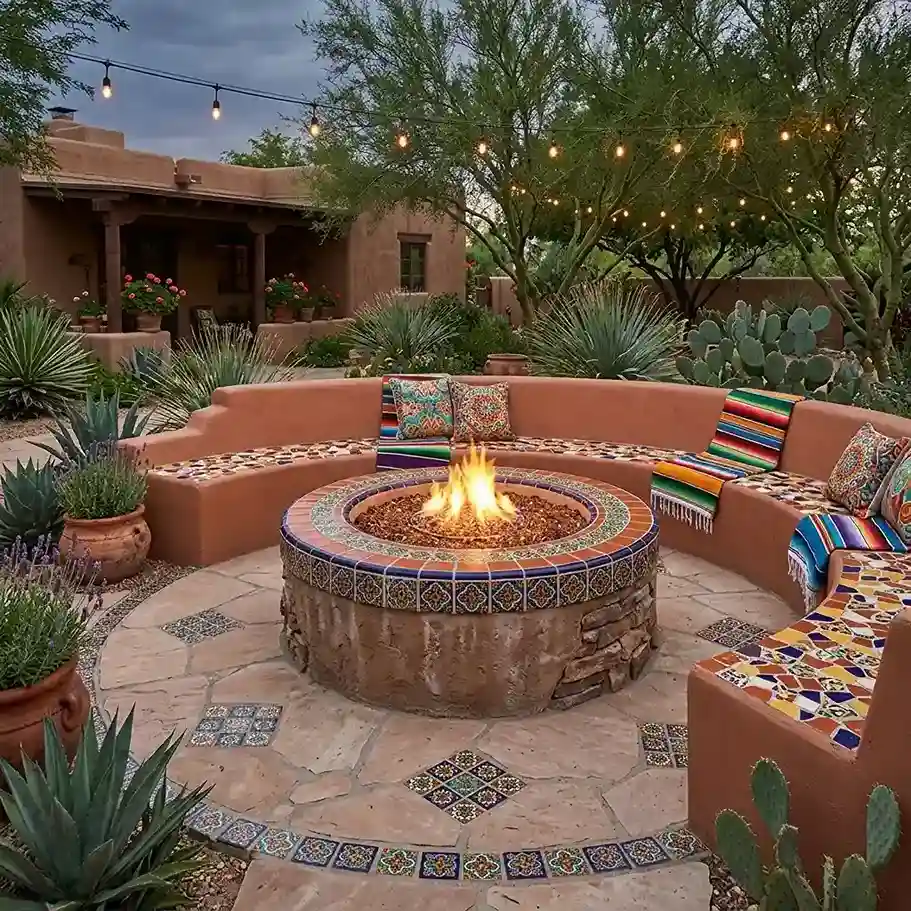
For complete Mexican home decor inspiration that translates beautifully to an outdoor fire pit landscape with colorful tile accents, explore these Mexican home decor ideas for the full design language that creates joyful, colorful, and deeply personal outdoor spaces.
Design a Fire Pit Seating Area With Outdoor Sofas
Outdoor sofas around a fire pit create a living room atmosphere in the landscape. Deep, comfortable cushioned seating transforms the fire pit area from a place people visit briefly into a destination they settle into for hours. The comfort of proper outdoor sofa seating makes the fire pit genuinely irresistible on cool evenings.

Choose outdoor sofas in weather-rated materials — powder-coated aluminum or teak frames with Sunbrella-covered cushions last for years in outdoor conditions. Arrange sofas in a U-shape or an L-shape opening toward the fire pit. Add a weather-resistant coffee table at the center of the arrangement for drinks, snacks, and decorative objects.
For dark, rich interior color inspiration that translates beautifully to a sophisticated fire pit seating area with deep-toned outdoor sofas, explore these dark brown couch living room ideas for the layered, warm aesthetic that works equally well outdoors.
Backyard Fire Pit With a Lit Path Leading In

A path that lights up as the sun goes down changes how people use a yard. This build uses irregular flagstone stepping stones through mulch, with small solar path lights on both sides.
The fire pit sits on a gravel circle with dark Adirondack chairs and a rusted steel bowl insert.
String lights overhead tie the seating area back to the house, so the walk from the deck to the fire feels connected instead of dark.
Rustic Log Stool Fire Pit in the Woods

This is the simplest build on the list, and it may be the most fun. A metal fire bowl with a spark screen sits at the center of a gravel circle edged in stone. Seating is six cut log stools with a couple of folded blankets on top.
A wood rack holds split logs within reach. Solar torches mark the path back to the cabin. No chairs, no walls, no fuss. Just fire, logs, and trees.
Raised Stone Planter Wall That Frames the Fire Pit
A raised planter does three jobs at once. It adds height, it holds the plants that would otherwise spill onto the patio, and it gives the fire circle a clear edge.
This build uses dry stacked stone for the wall and fills it with lavender, sedum, and ornamental grasses. The fire pit is built from the same stone, so the whole thing reads as one piece.
A flagstone path cuts through the gravel to reach the seating area.

Design a Fire Pit Landscape With a Bay Window View
A fire pit positioned to be visible from a bay window inside the house creates a beautiful visual connection between the interior and the outdoor landscape.
The flickering fire viewed through a bay window on a cold evening creates an atmosphere inside the house that rivals sitting outdoors beside the fire itself.

Position the fire pit on the central axis of the bay window for the most symmetrical and pleasing interior view. Clear the sightline between the bay window and the fire pit of any objects that would interrupt the view.
Plant low ornamental grasses or perennials on either side of the sightline rather than in it. Install landscape lighting along the sightline pathway so the view from inside remains beautiful even when the fire is not lit.
For bay window design ideas that maximize this indoor-outdoor visual connection, explore these bay window ideas.
Wet Flagstone Patio With a Curved Bench and Fire Ring

Freshly sealed flagstone shows off the color of the stone, which runs from gray to rust to tan in a single patio. This build uses a curved stacked stone bench wall that wraps along one side and a matching round fire ring at the center.
The stone is set in a thick mortar joint, which handles freeze and thaw better than tight joints. The pit has a flat ledge, so it works as a table when there is no fire.
Corten Steel Fire Bowl With Built In Log Storage
Corten steel gets better with age. The rusted surface is the finish, not a flaw, and it holds up to weather without paint or stain. This build sets a wide corten bowl on a low ring that stores firewood underneath, which keeps logs dry and close at hand. A curved wood bench wraps behind it, with patterned cushions in rust and cream.

Warm pendant lights hang from a slatted overhead structure, and layered tropical planting fills the raised beds behind.
📌 Good To Know
Corten steel is not the same as plain steel. Plain steel rusts through, corten steel forms a stable outer layer that protects the metal underneath.
24. Design a Fire Pit Landscape for Entertaining
A fire pit landscape designed specifically for entertaining accommodates larger groups comfortably and includes features that support food, drinks, and social gathering. The entertainment-focused fire pit area goes beyond seating to include serving surfaces, food preparation areas, and storage for entertaining supplies.

Include a side table or a serving cart within the fire pit area for food and drink service. A portable bar cart positioned beside the seating circle keeps drinks accessible without requiring trips to the house.
25. Create a Fire Pit Landscape With a Cottage Garden Style
A cottage garden fire pit landscape surrounds the gathering area with an abundance of romantic, flowering plants that create a lush, informal, and deeply beautiful outdoor room.

Roses, lavender, foxgloves, hollyhocks, and ornamental alliums planted in informal drifts around the fire pit seating create a garden that flowers progressively from spring through autumn.
26. Add a Firepit Swing or Hanging Chair
A hanging swing chair positioned near the fire pit creates a dreamy, distinctive seating option that elevates the entire outdoor space.
The slow, gentle movement of a swing chair is profoundly relaxing beside a fire. It becomes the most sought-after seat in the entire fire pit area and a genuine conversation piece for every guest who visits.

Hang the swing chair from a pergola beam, a heavy-duty tree branch, or a dedicated A-frame swing stand positioned at the perimeter of the fire pit seating circle. Choose a chair with weather-resistant materials — a rattan or wicker shell with outdoor-rated cushions suits most landscape styles.
Position the swing far enough from the fire pit that gentle swinging does not bring the occupant dangerously close to the heat source — a minimum of six feet from the fire ring edge.
27. Design a Fire Pit Landscape With Colored Concrete
Colored and textured concrete surrounding a fire pit creates a durable, seamless, and surprisingly beautiful patio surface.
Integral color mixed into the concrete creates a consistent tone throughout the slab rather than a surface coating that wears away. Stamped texture patterns added to the wet concrete mimic the appearance of stone, brick, or wood plank at a fraction of the cost.

Choose a warm terracotta, sandy buff, or slate grey concrete color for the fire pit surround. A stamped flagstone or slate pattern adds visual interest without increasing material cost significantly.
Apply a UV-resistant concrete sealer every two years to maintain the color and protect the surface from freeze-thaw damage. Colored stamped concrete fire pit patios cost $8–$18 per square foot professionally installed — significantly less than the natural stone materials they mimic.
28. Create a Fire Pit Landscape With Outdoor Rugs
Outdoor rugs around the fire pit seating area add color, warmth, and a designed quality that transforms a basic patio into a styled outdoor room.
Multiple rugs in coordinating patterns and colors define different seating zones within the larger fire pit area. They soften the hard patio surface underfoot and make the outdoor furniture arrangement feel anchored and intentional.
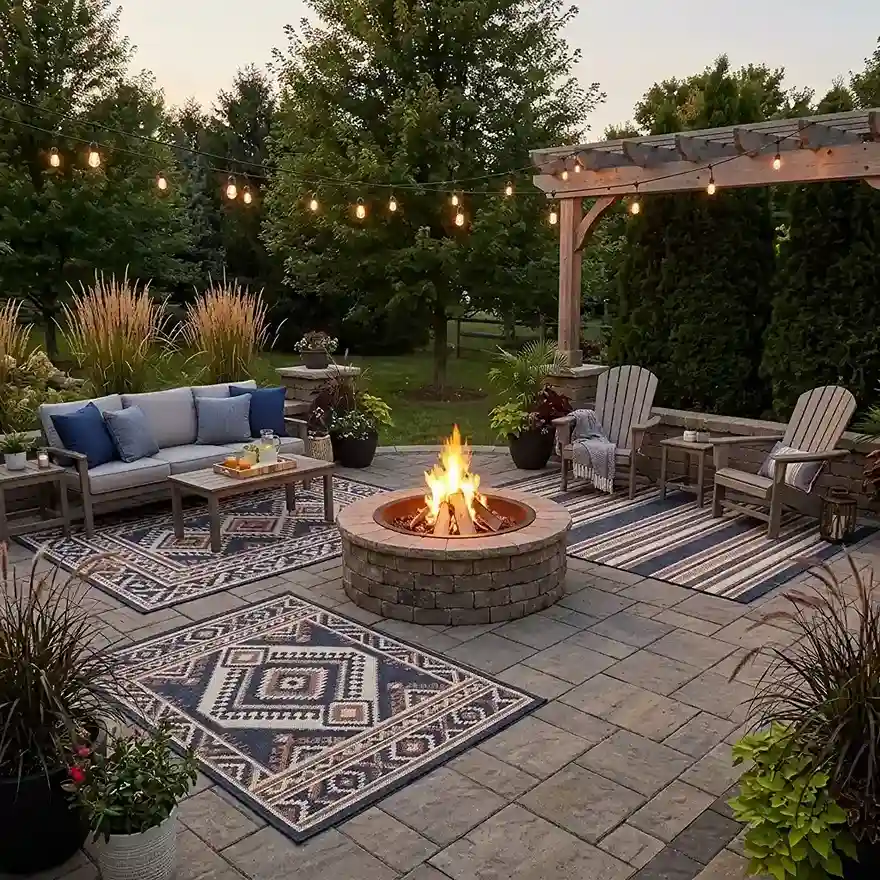
Choose polypropylene outdoor rugs rated for direct sun and moisture. They dry quickly after rain, resist mold, and clean with a garden hose. Flat-weave construction prevents water pooling on the rug surface.
29. Build a Fire Pit Landscape With Raised Timber Decking
Raised timber decking around or adjacent to a fire pit creates a warm, natural outdoor room at a higher level than the surrounding yard. The deck elevation creates a defined platform that separates the fire pit gathering area from the lawn and garden beyond. The wood surface adds warmth that stone and concrete cannot provide.
Keep the fire pit itself off the timber decking surface — set it on a non-combustible paver or stone pad positioned at the deck edge or at grade level adjacent to the deck.

Ensure a minimum four-foot clearance between the fire pit edge and any combustible decking material. Pressure-treated pine decking suits most budgets. Cedar and composite decking add durability and reduced maintenance for a higher initial investment.
For more on living in small spaces where indoor-outdoor connection through deck design is maximized, see these small living room with dining area ideas for layout principles that apply equally to outdoor deck and fire pit areas.
30. Plant a Lavender Border Around the Fire Pit
Lavender planted around the fire pit seating area creates one of the most sensory and beautiful fire pit landscapes possible. The scent of lavender carried on warm evening air combines with wood smoke in a uniquely evocative and deeply pleasant way. The purple flower spikes provide color from late spring through summer. The silver-grey foliage looks beautiful year-round even after flowering is finished.

Plant English lavender in a continuous border at least six feet from the fire pit edge. Space plants 18 to 24 inches apart for full coverage within two growing seasons. Plant in well-drained soil — lavender rots in wet soil and thrives in poor, dry conditions that many other plants dislike. Trim plants by one-third after flowering each year to maintain compact, productive growth.
A lavender-bordered fire pit landscape is one of the most beautiful and most fragrant outdoor spaces in residential gardening.
31. Design a Natural Stone Fire Pit With a Waterfall Backdrop
A natural stone fire pit with a recirculating waterfall built into the stone backdrop behind it creates one of the most dramatic and luxurious residential fire pit landscapes imaginable.
The combination of fire, water, stone, and plant life engages every sense simultaneously. The waterfall sound adds an atmospheric backdrop to every fire pit gathering.

Build the stone backdrop wall from the same fieldstone as the fire pit for visual unity. Embed a recirculating pump at the base of the wall behind the stone face.
Water flows up through tubing hidden within the stone and cascades down the face of the wall into a small catch basin. Plant moisture-loving ferns, hostas, and mosses in the planting pockets around the waterfall for lush, natural softening of the stone surfaces.
| Water Feature + Fire Pit Combination | Effect | Budget Level |
|---|---|---|
| Simple fountain near fire pit | Sound, gentle visual | Low |
| Sheet waterfall wall backdrop | Dramatic, immersive | Moderate-High |
| Pond with fountain, fire pit adjacent | Natural, serene | Moderate |
| Pondless waterfall behind fire pit | Safe, dramatic | Moderate |
32. Add String Lights and Lanterns for Fire Pit Atmosphere
String lights and lanterns layered with the fire pit light create the most magical possible fire pit atmosphere. The warm light sources at multiple heights — the fire at ground level, lanterns at table level, string lights overhead — create a dimensional, enveloping warmth that makes the fire pit area feel like a genuinely special place.

Hang string lights in a canopy pattern from four or more overhead anchor points around the fire pit area. Use warm white Edison bulbs at 2200–2700 Kelvin for the most flattering, amber-toned glow. Position lanterns on side tables, on the ground at the outer edge of the seating circle, and along any pathway leading to the fire pit.
Hurricane lanterns with real candles add flickering warmth that electric alternatives cannot fully replicate. The complete lighting arrangement makes the fire pit area beautiful whether the fire is lit or not.
- Hang string lights at a height of eight to ten feet for the most flattering overhead effect
- Use smart plugs with sunset timers for effortless automatic string light operation
- Choose lanterns heavy enough not to tip in wind — weighted bases are essential outdoors
- Vary lantern heights — floor level, table height, and hung from branches or posts
- Solar lanterns eliminate extension cords and operate automatically from dusk to dawn
33. Create a Complete Fire Pit Landscape With Every Element Combined
The most memorable fire pit landscapes combine stone, water, planting, lighting, seating, and atmosphere into a single cohesive outdoor room. Each element reinforces the others. The stone fire pit connects visually to the stone seating wall. The seating wall echoes the retaining wall behind the planting. The planting surrounds and softens the hardscape. The lighting makes everything beautiful after dark. The fire ties everything together at the center.

None of these individual elements requires enormous investment. But combined with a clear design vision — unified materials, a cohesive plant palette, and thoughtful spatial arrangement — they create a fire pit landscape that becomes the most loved and most used space in the entire property. Plan each layer sequentially. Install the foundation hardscape first. Add the planting. Then layer in the lighting and the furniture. The complete fire pit landscape that results is genuinely extraordinary.
| Fire Pit Landscape Layer | Element | Investment Level |
|---|---|---|
| Foundation | Gravel base, stone fire pit ring | Low |
| Hardscape | Paver or flagstone surround | Moderate |
| Seating | Built-in stone bench or outdoor furniture | Low-Moderate |
| Planting | Native border or cottage garden | Low-Moderate |
| Lighting | String lights, path lights, lanterns | Low |
| Water feature | Fountain or waterfall | Optional, Moderate |
| Accessories | Rugs, throws, side tables | Low |
| Total impact | Complete outdoor room | Far less than expected |
Frequently Asked Questions (FAQs)
Q1: How far should a fire pit be from the house and other structures?
The minimum recommended distance from any structure — house, fence, garage, or shed — is ten feet. Many local fire codes require a minimum of fifteen to twenty-five feet. Check your local fire codes and HOA regulations before installing any fire pit. Overhead clearance from overhanging trees and branches should be at least twenty feet above the fire pit grate.
Q2: What is the best surface material around a fire pit?
Gravel and paving stones are the safest and most practical fire pit surface materials. Both are non-combustible and completely fire-safe. Natural stone, concrete pavers, brick, and decomposed granite are all excellent choices. Avoid wood decking immediately adjacent to a fire pit — maintain a minimum four-foot non-combustible zone around any fire feature.
Q3: Do I need a permit to install a fire pit?
Many municipalities require permits for permanent fire pit installations. Open burning regulations also vary significantly by location — some areas prohibit wood-burning fire pits entirely during certain conditions or seasons. Gas fire pit installations that connect to a natural gas line always require a permit and professional installation. Check local regulations before building any fire pit.
Q4: What plants are best to plant near a fire pit?
Choose fire-resistant plants with high moisture content — lavender, rosemary, succulents, and ornamental grasses all have good fire-resistance characteristics. Avoid resinous or oil-rich plants near a fire pit — rosemary is borderline and should be kept at the minimum six-foot clearance distance. Maintain all plant material at a minimum six-foot clearance from the fire ring edge.
Q5: What is the most low-maintenance fire pit landscape?
A gas fire pit on a gravel surround with native plant borders requires the least ongoing maintenance. Gas eliminates ash cleanup and wood storage. Gravel requires only occasional raking and top-up. Native plants need minimal watering, pruning, or fertilization once established. This combination delivers a beautiful, functional fire pit landscape with approximately one hour of maintenance per month during the growing season.
Conclusion
A great fire pit area comes down to three things. A flat, well drained base. Seating that fits how many people you actually host. And a layout that keeps the smoke moving away from where you sit. Get those right and the stone, the plants, and the lights are just the finishing touches.
Start with one idea from this list that matches your space and your budget. Mark the circle on the ground with string or paint before you dig, sit in it at the time of day you plan to use it most, and adjust from there.
Save this to your backyard ideas board so you can come back to it when you are ready to build.
You’ll also love to read more ideas on covered patios, garage gym in home, jungle gym for kids, shed house plans and many more informative blogs on homefixtrends.