Most people never build the patio they want. A quote comes in high, the idea gets shelved, and the backyard stays unfinished for another year.
A beautiful patio does not need a contractor or a five-figure budget. It needs a plan, the right material for your skill level, and a properly prepared base.

This guide covers the full process. Planning, materials, ground prep, installation, drainage, and the finishing details that turn a slab into an outdoor room. Every cost is realistic. Every step is beginner-friendly.
By the end, you will know what to build, what to buy, and what to skip.
Let’s start.
1. Plan Your Patio Before You Buy Anything
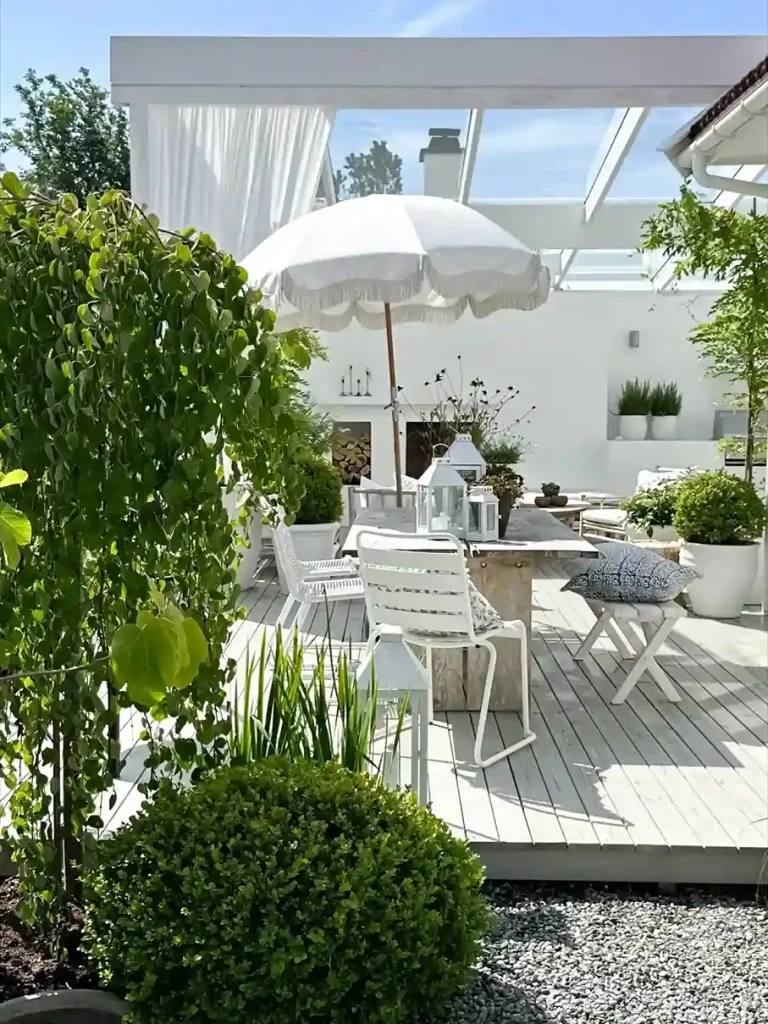
The furniture is one clear dining zone, the pots are all one color, and the palette is white and natural wood. That is planning, not luck.
Planning is the most important step in any DIY patio project. Decisions made on paper cost nothing. Decisions changed mid-build cost time, money, and frustration. Measure your space, draw it to scale on graph paper, and mark where doors, windows, and existing features sit.
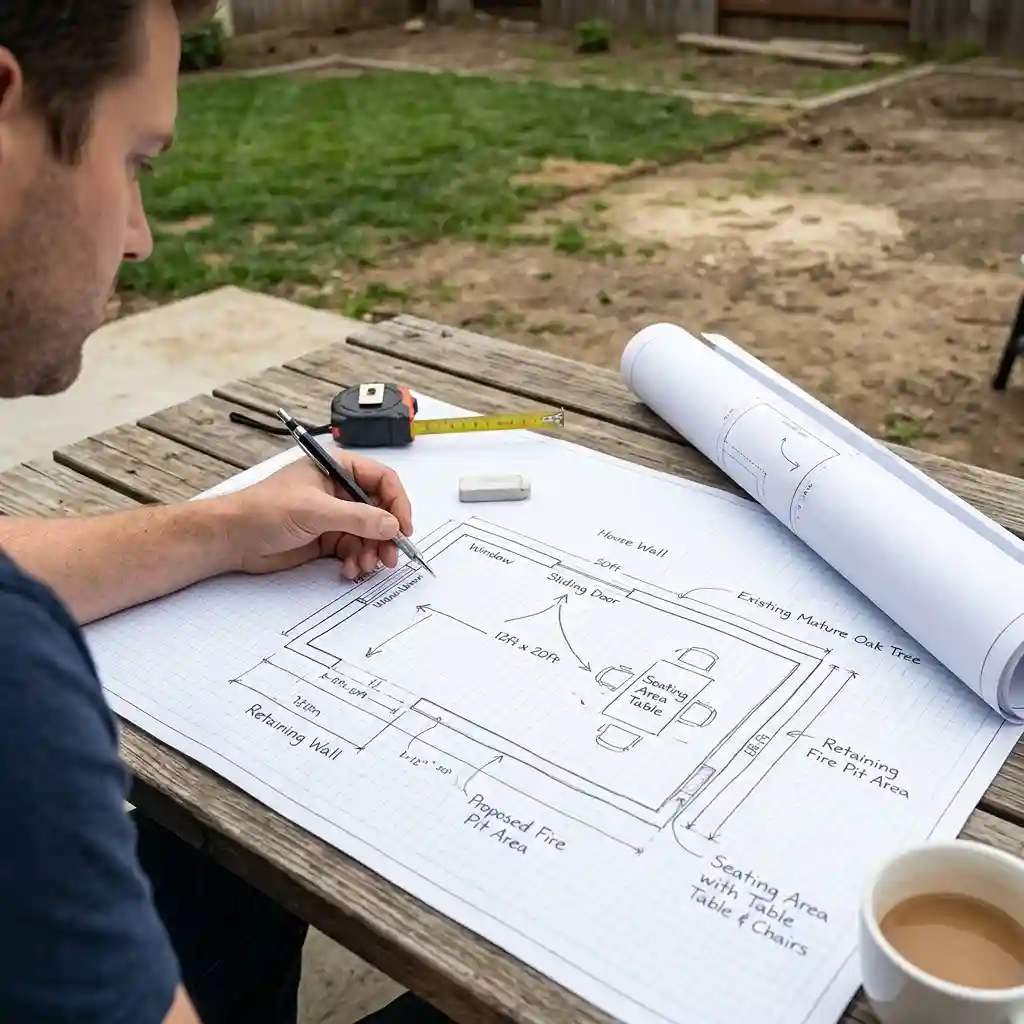
Sketch where furniture will go and how traffic flows around it. Rectangular is the easiest and most budget-friendly shape. Decide your color palette now, so you can buy pieces from different stores on sale and still have them match.
Pick one color palette before you shop. In this photo everything is white or natural wood, so pieces bought months apart still look like a set
You can also try outdoor kitchen with patio.
2. Choose the Right Location

This patio sits directly against the back wall, under a pergola, with seating facing inward toward a fire table. That placement is one of the most comfortable you can choose.
Location affects everything. Full afternoon sun is unbearable in summer without shade. Full shade stays cold and damp. Morning sun with afternoon shade is the ideal combination in most climates.
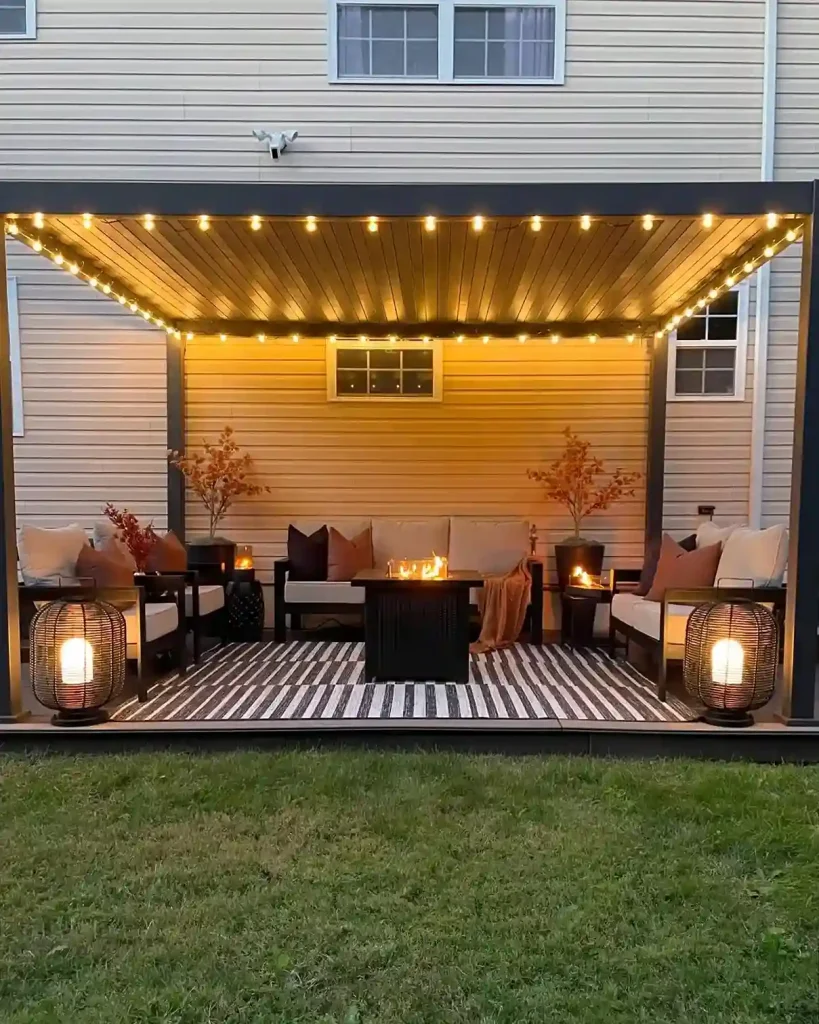
Keep the patio close to the back door. A patio connected to the house gets used daily. One placed far from the door gets used twice a season. Check the slope of the ground, avoid low spots where water collects after rain, and confirm there are no buried utilities before you dig.
- Morning sun, afternoon shade is the most comfortable position
- Within 10 feet of the back door maximizes daily use
- Avoid low-lying areas where water collects after rain
- Call 811 in the USA before digging to check for utilities
- A pleasant view makes the patio more enjoyable every day
3. Understand Your Budget Breakdown
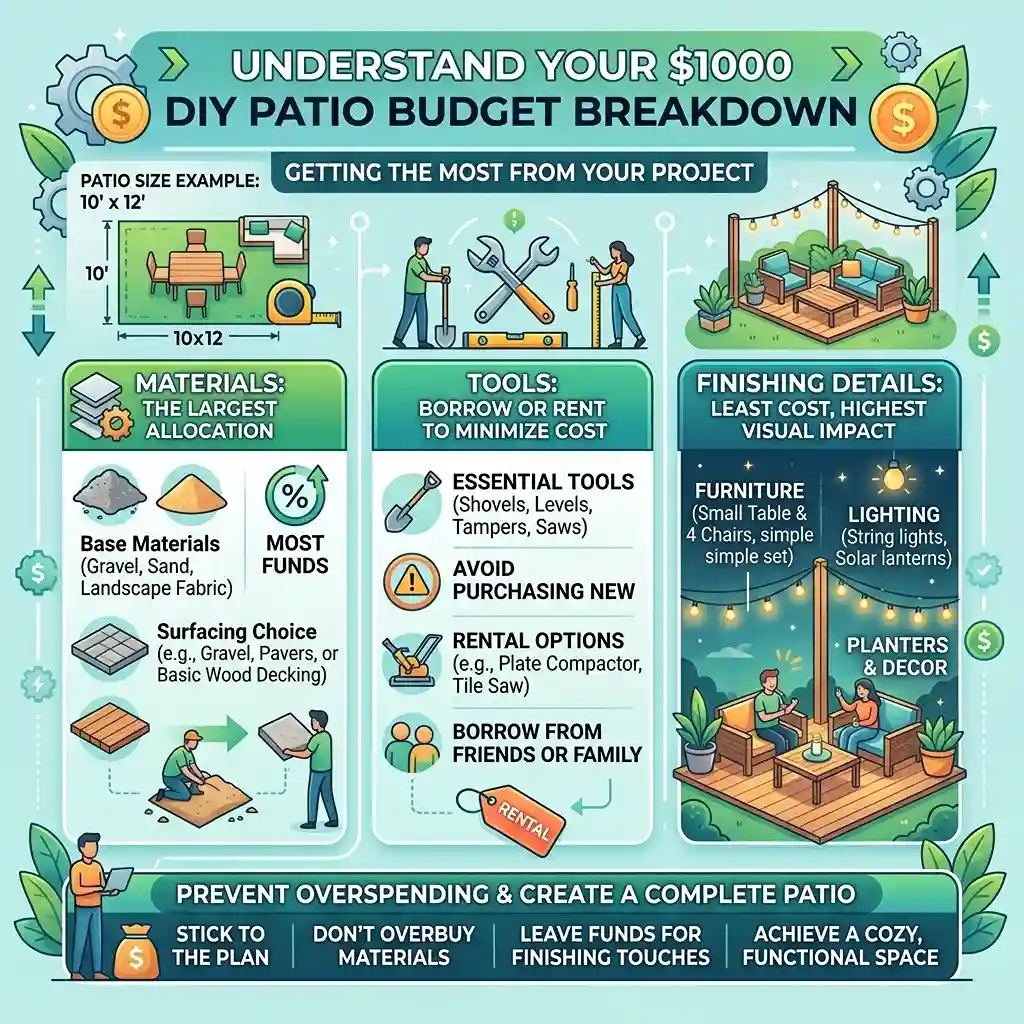
Here are four main budget options side by side. Read it before you pick a material, because the wrong material for your skill level will ruin the project no matter what you spend.
Match the material to your skill level as much as your budget. A beautifully installed gravel patio looks better than a poorly installed stone one every time.
Concrete pavers are the best balance of cost, appearance, and DIY-friendliness. Gravel is the cheapest and easiest. Pressure-treated wood is warmer underfoot. Recycled concrete pieces give you a free flagstone-look surface.
| Budget Category | Percentage of $1000 | Approximate Amount |
|---|---|---|
| Base preparation materials | 25–30% | $250–$300 |
| Surface materials | 40–50% | $400–$500 |
| Tools and equipment | 10–15% | $100–$150 |
| Edging and borders | 5–10% | $50–$100 |
| Finishing touches | 10–15% | $100–$150 |
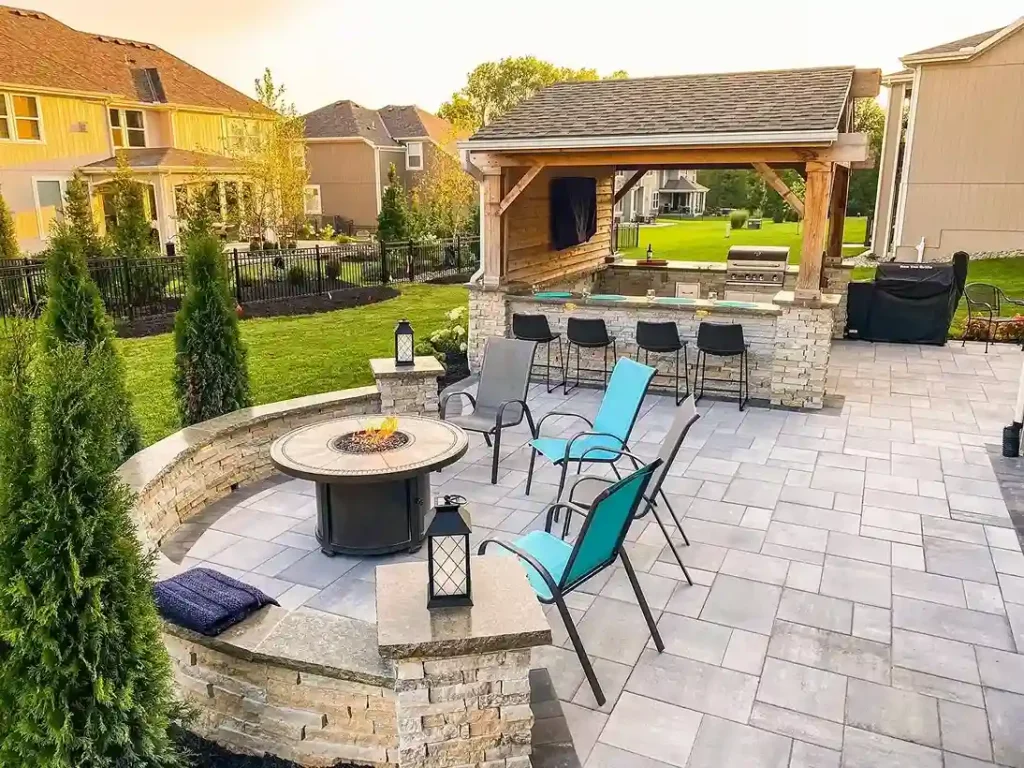
Do not buy the cheapest paver you can find. Bargain pavers chip at the edges and fade unevenly within two seasons. Mid-range pavers cost about a dollar more per square foot and last many times longer.
4. Choose Your Patio Material Wisely
Your material choice is the single most important budget decision. Each option has different costs, difficulty levels, and final appearances.
Match your material to your skill level as much as your budget. A beautifully installed gravel patio looks better than a poorly installed stone one every time.
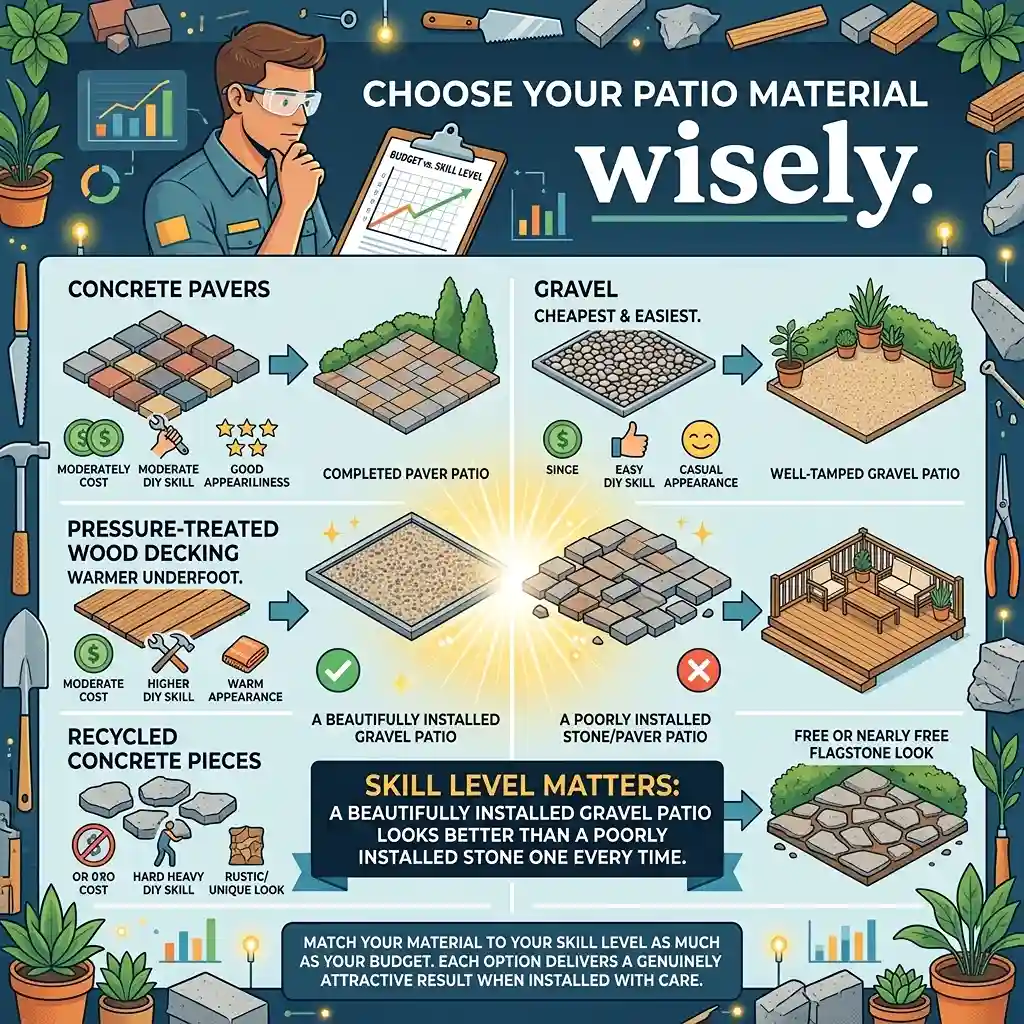
Concrete pavers are the best balance of cost, appearance, and DIY-friendliness. Gravel is the cheapest and easiest. Pressure-treated wood decking is warmer underfoot.
Recycled concrete pieces create a free or nearly free flagstone-look patio. Each option delivers a genuinely attractive result when installed with care.
| Material | Cost per sq ft | DIY Difficulty | Look | Longevity |
|---|---|---|---|---|
| Pea gravel | $1–$2 | Very Easy | Casual, natural | 5–10 years |
| Concrete pavers | $3–$6 | Easy-Moderate | Polished, versatile | 20–30 years |
| Pressure-treated wood | $4–$7 | Moderate | Warm, natural | 15–20 years |
| Recycled concrete pieces | Free–$2 | Easy | Rustic, unique | 15–25 years |
| Brick pavers | $4–$8 | Moderate | Classic, traditional | 25–50 years |
5. Gather Your Tools Before Starting
Having the right tools before starting prevents frustrating mid-project trips to the hardware store. Most DIY patio tools are available to rent cheaply from home improvement stores if you do not own them.

Having the right tools before you start prevents mid-project trips to the hardware store. Most patio tools are available to rent cheaply. Buy the basics you will use again. Rent the specialized equipment you will use once.
- Shovel and spade for excavation and gravel spreading
- Plate compactor for base compaction, about $50 per day to rent
- Rubber mallet for setting pavers without damage
- Level and string line for establishing a flat surface plane
- Tape measure, pencil, and safety glasses
- Wheelbarrow for moving materials around the site
- Utility knife for cutting edging and landscape fabric
6. Prepare the Ground Properly
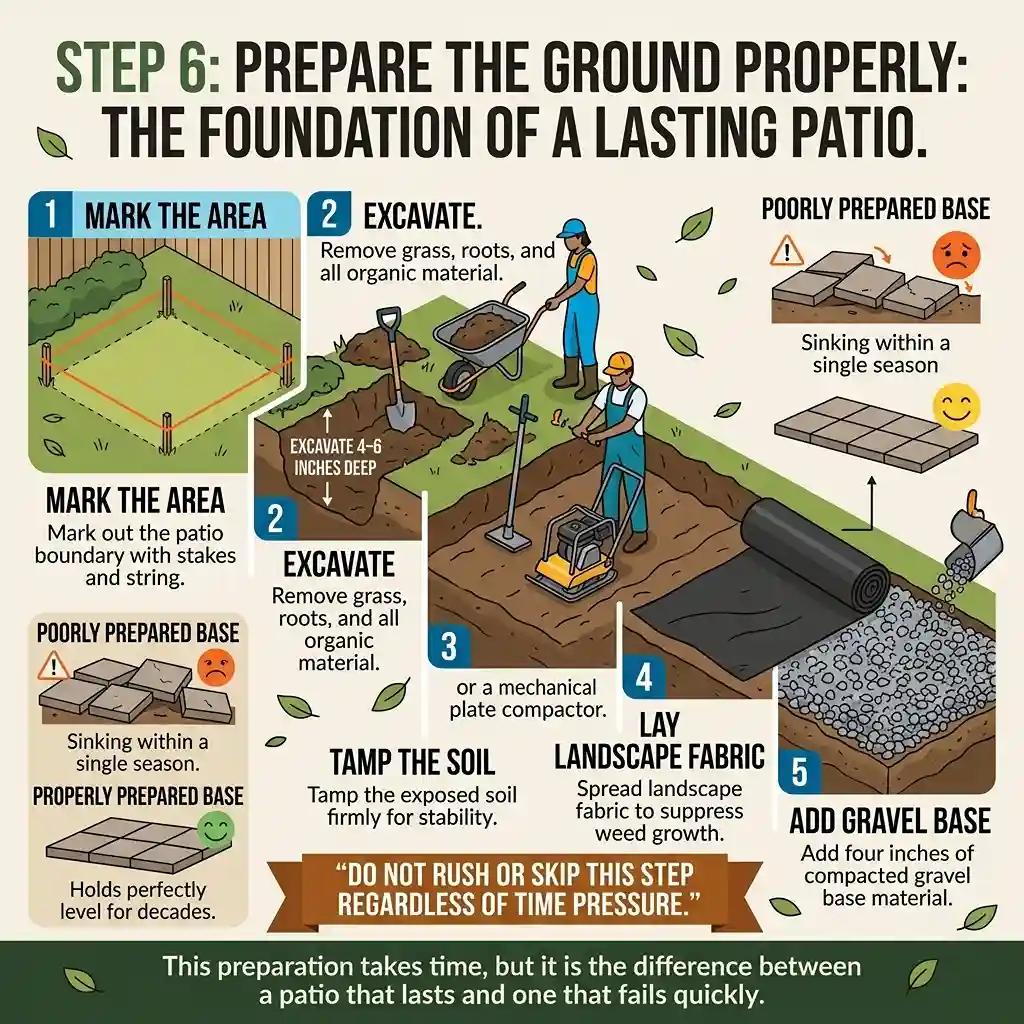
Ground preparation is the foundation of any successful patio. A poorly prepared base causes pavers to shift, sink, and become uneven within a single season. A properly prepared base holds perfectly level for decades. Do not rush or skip this step regardless of time pressure.
The brick is laid in a curve without shifting, and the fire ring sits flush. That only happens when someone excavated, compacted, and leveled before laying anything.
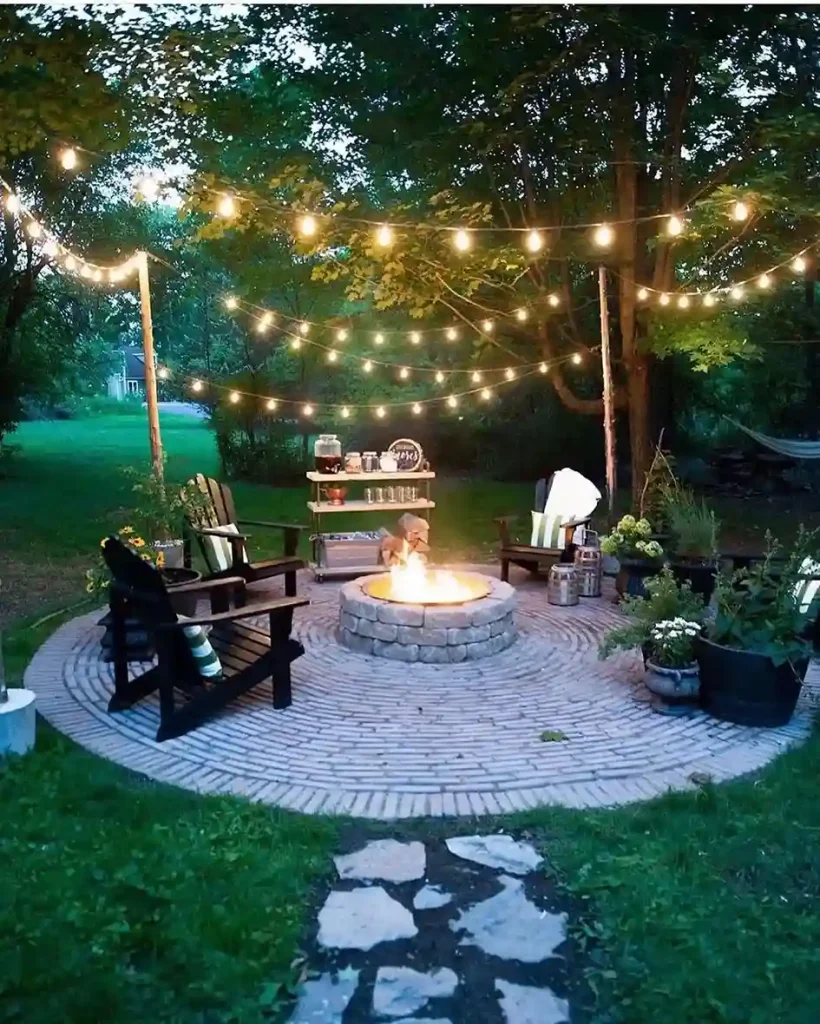
Ground preparation is the foundation of any successful patio. A poorly prepared base causes pavers to shift, sink, and go uneven within one season. A properly prepared base holds level for decades. Do not rush this step.
Mark the area with stakes and string lines. Excavate four to six inches for a paver or brick patio. Remove all grass, roots, and organic material. Tamp the exposed soil firmly. Lay landscape fabric to suppress weeds. Add four inches of compacted gravel base.
7. Build a Simple Gravel Patio for Under $200
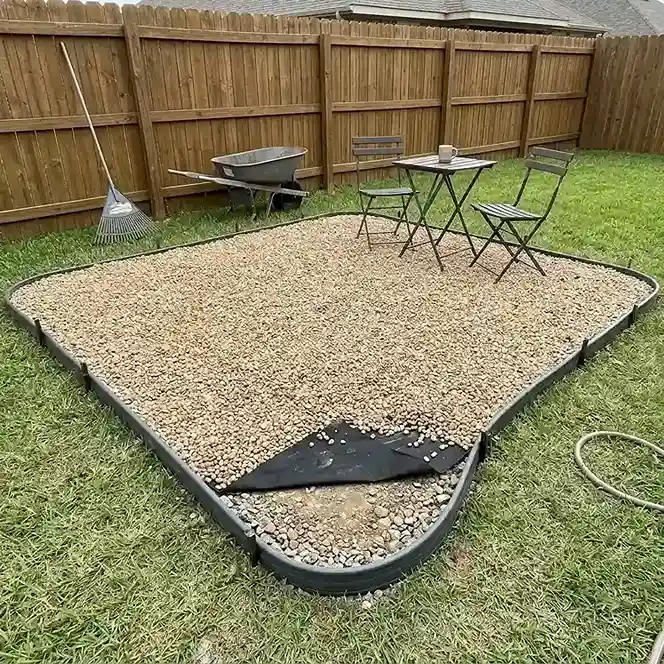
This is exactly what a gravel patio looks like mid-build. The black steel edging is in, the landscape fabric is down, and the gravel is going in. The table and chairs are already on it. This is one afternoon of work.
A gravel patio is the fastest, cheapest, and most beginner-friendly option. The entire project can be done in a single day for well under $200. Pea gravel, crushed limestone, and decomposed granite all work. Gravel drains instantly, so puddles never form.
Mark and excavate the area four inches deep. Lay landscape fabric across the base. Install plastic or metal edging around the perimeter. Add four inches of compacted gravel base. Top with two inches of decorative gravel. Rake smooth and use it the same day.
8. Lay Concrete Pavers for a Polished Budget Result
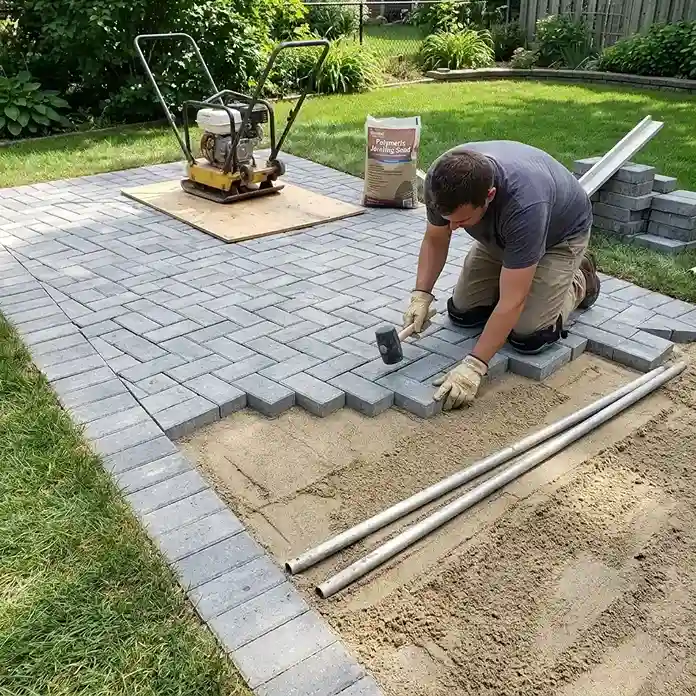
Concrete pavers are the most popular DIY patio material for good reason. They look professional, they are durable, and they are DIY-friendly. A properly laid paver patio is hard to tell apart from a professional install.
After ground prep and the gravel base, add a one-inch layer of coarse sand. Screed it flat using a long board and two parallel pipes as guides. Set pavers from one corner outward in your chosen pattern. Tap each paver level with a rubber mallet. Fill joints with polymeric sand. Compact the surface with a plate compactor over plywood. The result is flat, stable, and beautiful.
9. Build a Simple Wood Deck Patio on a Budget
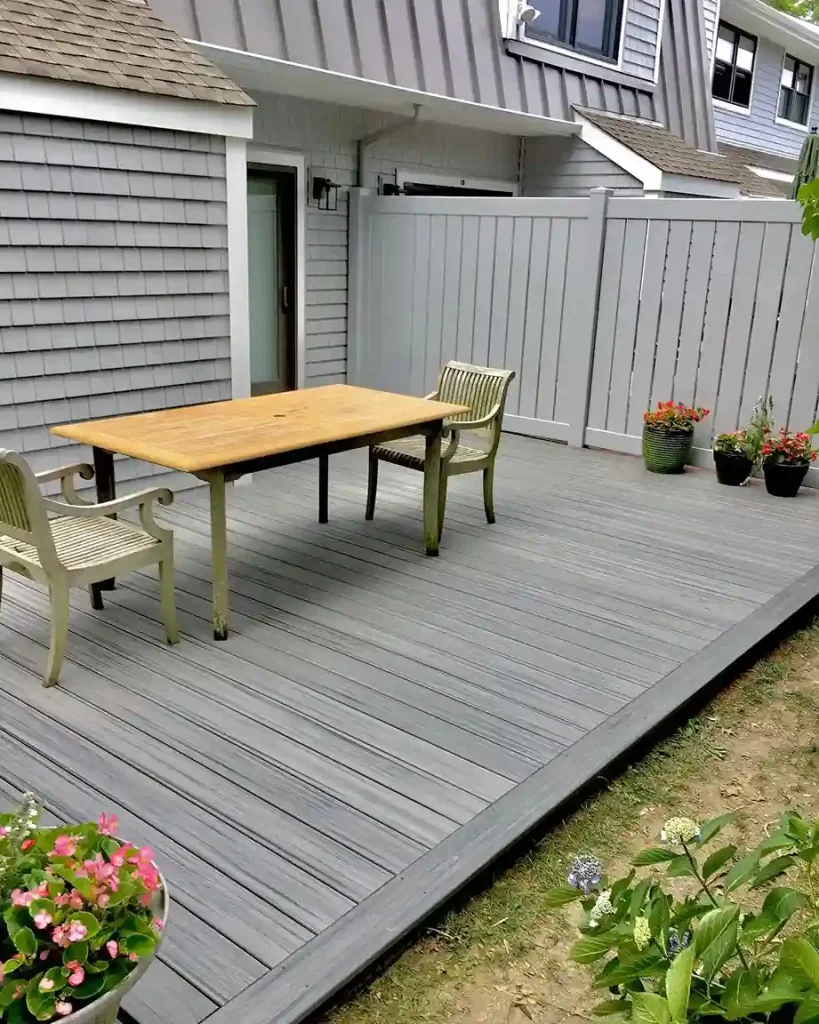
A ground-level wood deck built from pressure-treated lumber is warm underfoot and well within DIY range. It is slightly more involved than a paver patio, but the skills are basic. A properly built and maintained deck lasts fifteen to twenty years.
Lay out concrete deck block footings on firm, compacted ground. Set pressure-treated 4×4 beams across the footings. Add 2×6 joists at 16-inch spacing. Screw decking boards across the joists with uniform gaps. A 10 by 12 foot version costs $400 to $700 in materials depending on lumber prices.
- Use exterior-grade screws rated for pressure-treated lumber
- Pre-drill near board ends to prevent splitting
- Leave a 1/8 inch gap between boards for drainage and wood movement
- Apply a water-repellent stain or sealant within 30 days
- Re-apply sealant annually to extend the deck lifespan
Real-world tip: Composite costs more up front but less over time because it needs no annual staining. Natural wood costs less to build but more to maintain.
10. Create a Flagstone Patio From Recycled Concrete
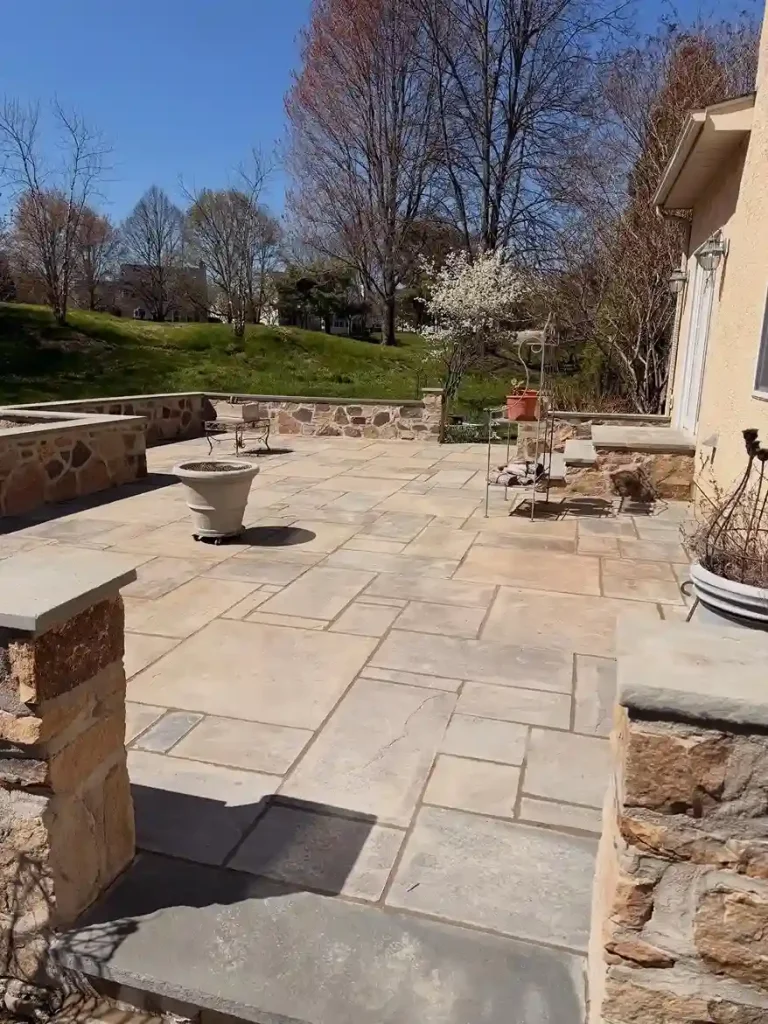
This patio uses large natural flagstone laid in a random pattern with tight joints. The stone sits on a sand base and is bordered by a low stone retaining wall on two sides. This is the highest-end look on this list, and it can still be done affordably.
Flagstone has a character no manufactured material can match. Every stone is unique, the surface is naturally slip-resistant, and the patio improves with age as the stone weathers.
The affordable way to build flagstone is to use irregular cut stone, also called random flagstone. It costs less per square foot than uniform cut pieces and looks more natural. Lay it puzzle-style across a prepared sand base and fill the gaps with sand or fine gravel.
Tip: The stone retaining walls here cost more than the patio surface itself. If your budget is tight, skip the walls. A flat flagstone patio with a simple edge is still one of the best-looking options available.
11. Install Proper Edging to Define and Contain
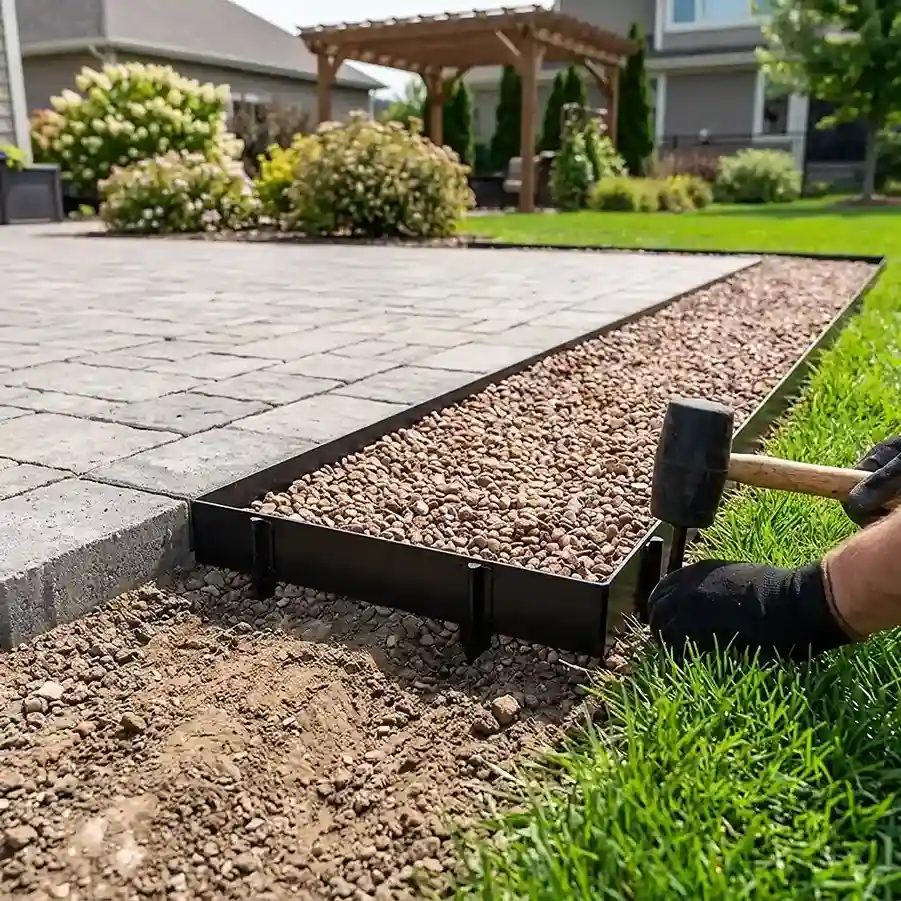
Edging is a small detail that makes an enormous difference. Without it, gravel spreads into the lawn, pavers shift outward over time, and the boundary looks soft and unfinished. With proper edging, everything stays where it belongs and the patio looks defined and intentional.
| Edging Type | Cost per linear ft | Appearance | Best With |
|---|---|---|---|
| Black plastic landscape | $0.50–$1.00 | Invisible when installed | Gravel, pavers |
| Steel landscape edging | $1–$3 | Clean, modern | Pavers, flagstone |
| Timber sleeper edge | $2–$5 | Warm, natural | Gravel, wood deck |
| Brick soldier course | $2–$4 | Traditional, defined | Pavers, flagstone |
| Natural stone border | $3–$8 | Beautiful, permanent | Any surface |
12. Manage Drainage to Prevent Water Problems
Poor drainage ruins a patio quickly. Water that pools on the surface creates a slippery, unusable space. Water that drains toward the house foundation causes serious structural damage over time.
Proper drainage management is essential and must be built into the design from the very beginning.
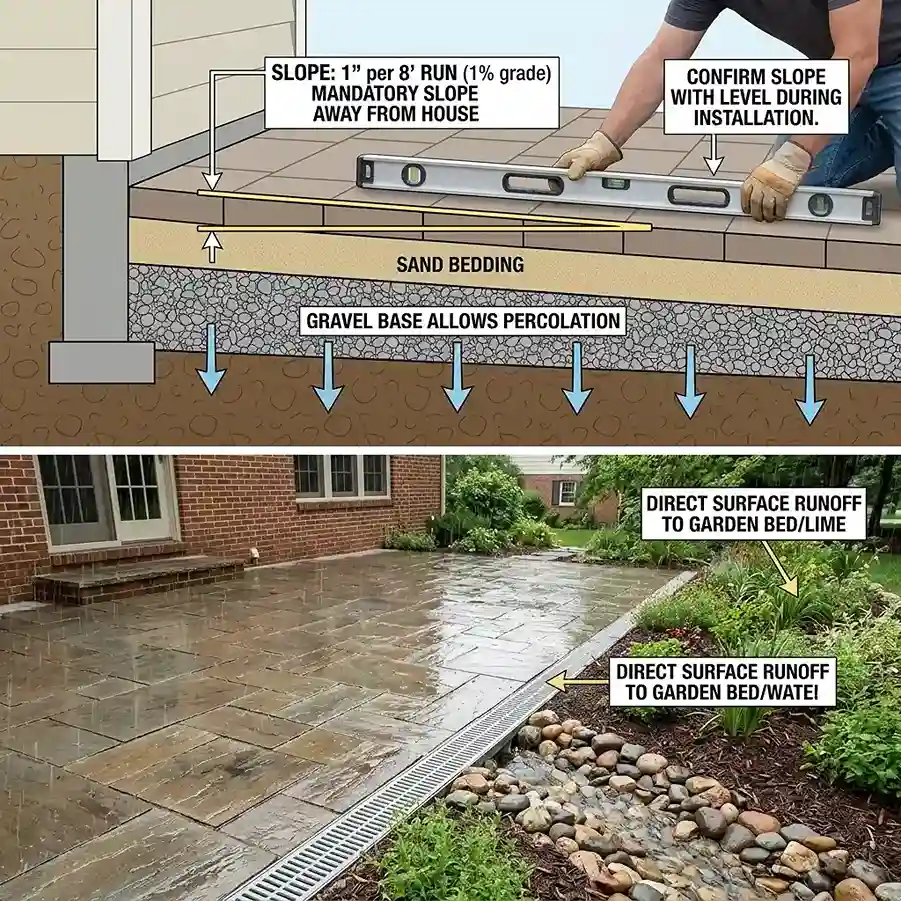
Slope the entire surface away from the house by one inch per eight feet of run. This gradient is invisible to the eye but moves water efficiently. Confirm the slope with a level during installation. Direct surface runoff toward a garden bed, lawn, or drainage channel, never toward neighbors or the house.
13. Add a Budget Pergola or Shade Structure
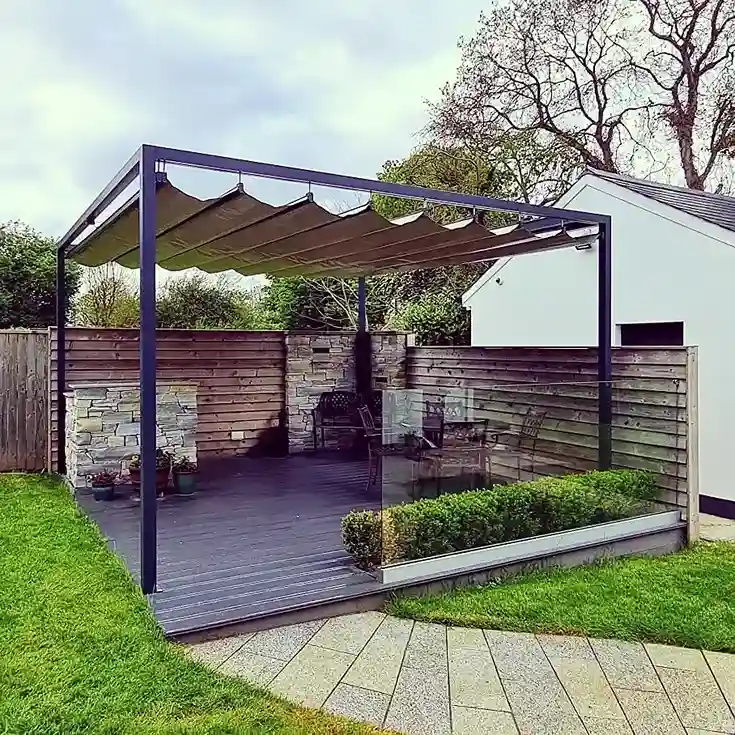
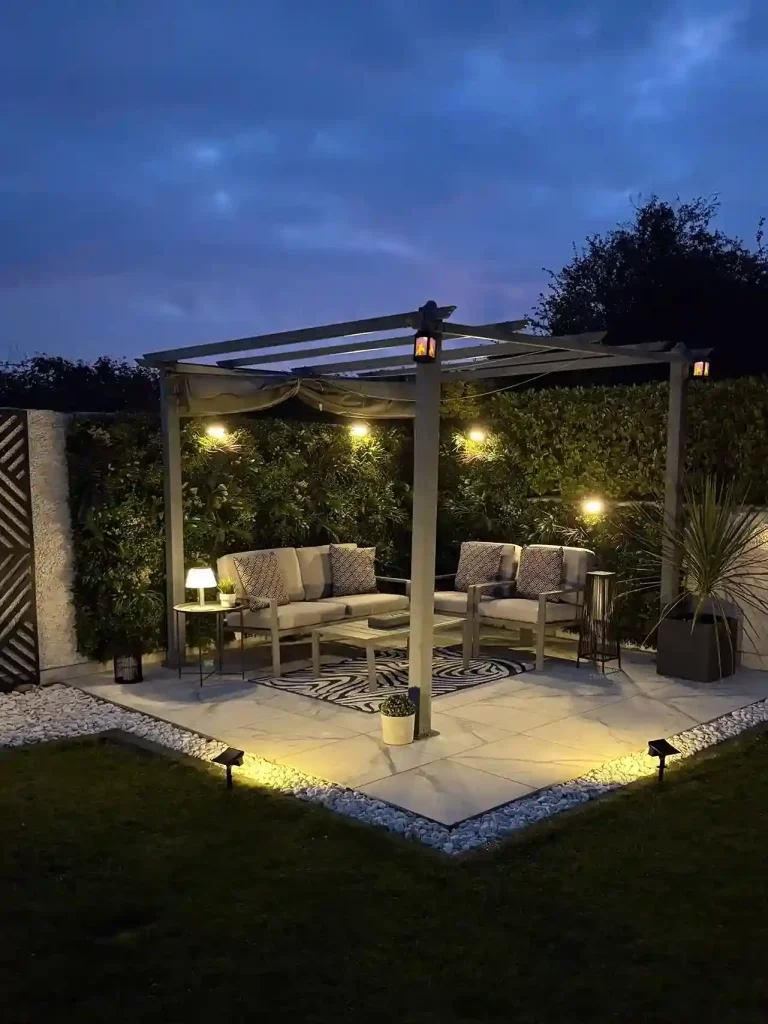
This black pergola has a retractable fabric canopy that slides across the top. That one feature turns a basic frame into a full shade solution you can open or close depending on the sun.
A patio without shade is unusable for most of the day in summer. A simple DIY pergola adds shade, structure, and a defined ceiling to the outdoor room. Built from pressure-treated 4×4 posts and 2×6 rafters, a basic pergola costs $200 to $500 in materials for a 10 by 12 foot structure.
If a full pergola is out of budget, start with a shade sail. It costs a fraction, installs in an hour, and covers more actual shade than an open pergola.
14. Choose Budget Outdoor Furniture That Lasts
Outdoor furniture completes the patio and makes it genuinely usable.
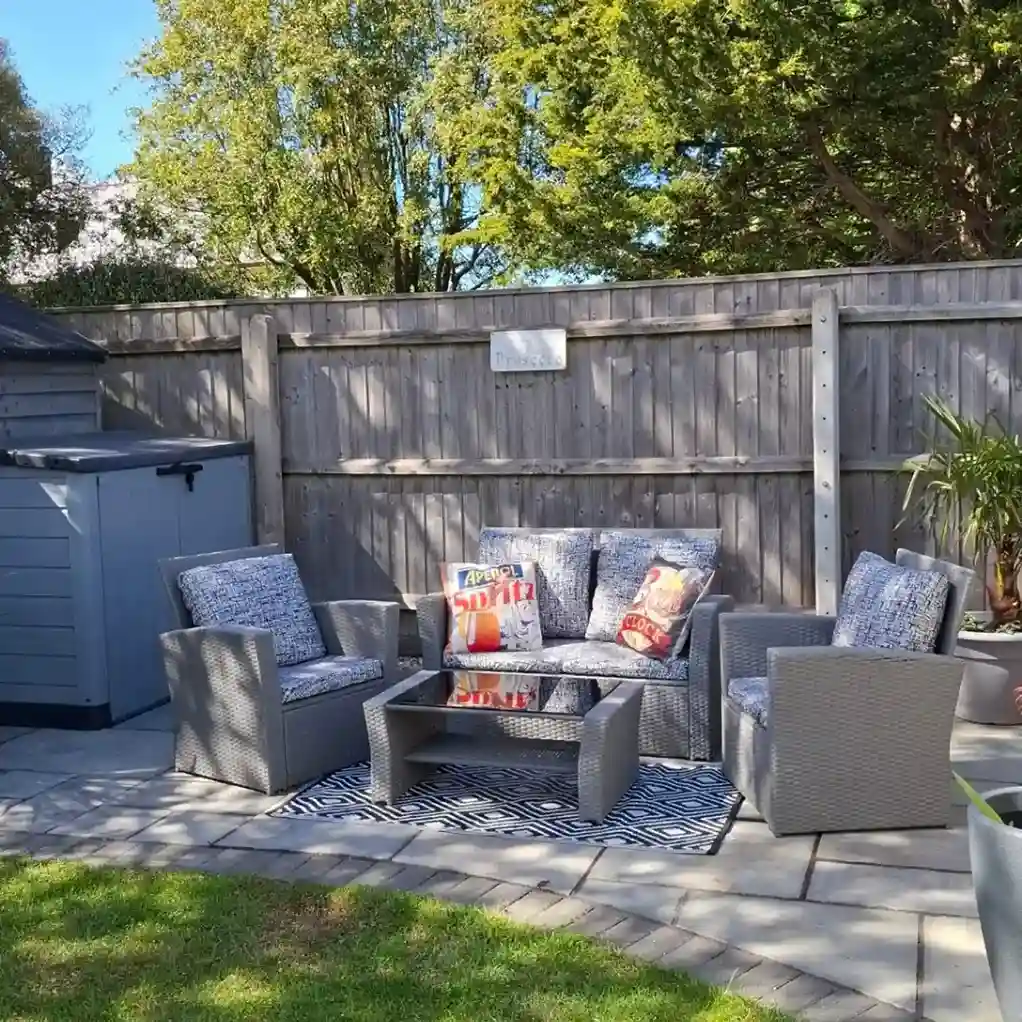
This grey wicker set sits on a paver patio with a small patterned rug underneath. The furniture is mid-range, not luxury, but it looks intentional because the cushions coordinate and the layout fits the space.
Outdoor furniture completes the patio and makes it usable. Budget options have improved dramatically. Resin wicker, powder-coated steel, and weather-resistant composites all provide years of service at accessible prices.
- Measure the patio before buying any furniture
- Leave at least 36 inches of clearance around a dining table
- Choose neutral frame colors that work with any cushion
- Shop end-of-season sales in late summer for the best prices
- Add outdoor cushions in a bold pattern for instant personality
The rug under this furniture set is doing real work. It anchors the seating area and stops the chairs from scraping the pavers. A basic outdoor rug costs $30 and makes a budget furniture set look styled.
15. Light the Patio for Evening Use
A patio used only during daylight hours delivers a fraction of its potential value.
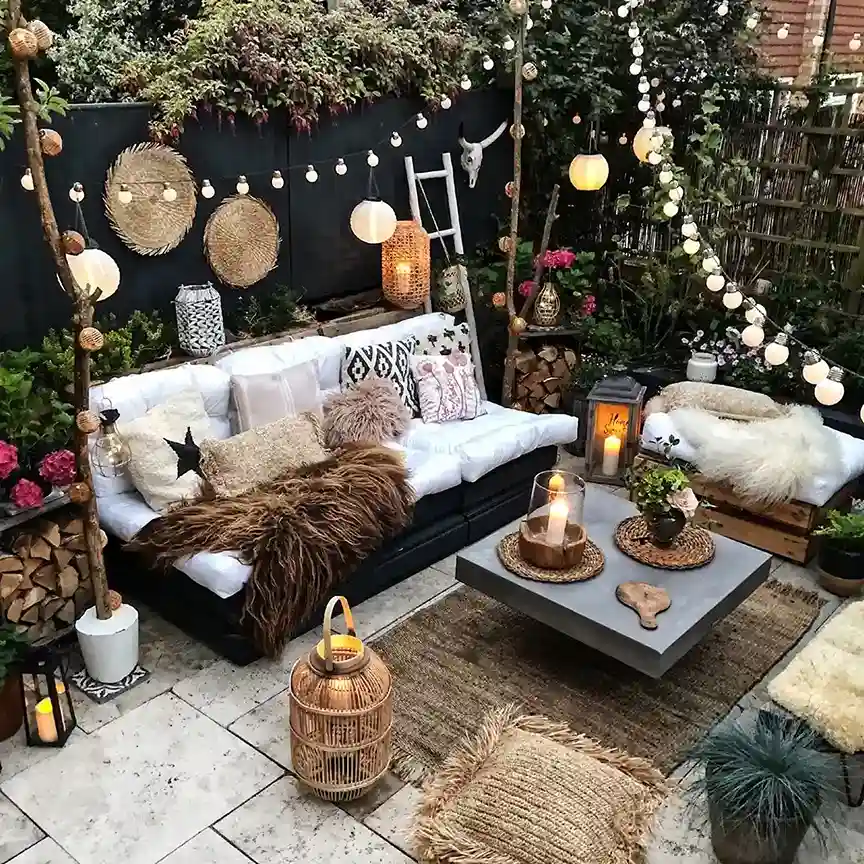
Set up patio for evening. String lights cross overhead, paper lanterns hang from the fence, candles sit on the table, and the whole scene glows warm. None of it was expensive.
Good outdoor lighting extends the usable hours of your patio into every evening. Solar options cost nothing to run. Wired options are brighter. Either way, lighting transforms the patio after dark.
16. Add Plants and Greenery on a Tight Budget
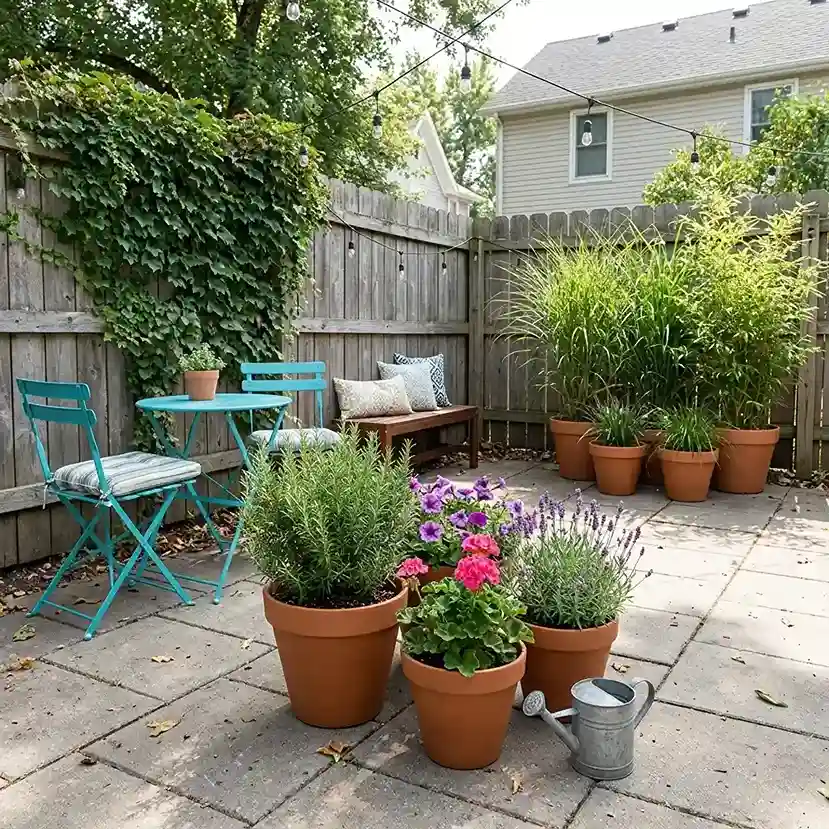
Use a turquoise bistro set and a cluster of terracotta pots to bring color and life into a plain paved corner. The pots hold rosemary, lavender, and geraniums, all easy to grow and cheap to buy.
Plants are the single most impactful finishing touch on any patio. They add color, fragrance, life, and privacy. Budget-friendly options include lavender, rosemary, ornamental grasses, geraniums, and petunias.
Group three to five pots together at corners and beside seating areas for maximum impact. Choose pots in a consistent color for a cohesive look. Tall grasses or bamboo in large pots provide natural screening.
17. Build a Simple DIY Fire Pit for Cozy Evenings
The circular base is excavated, filled with gravel, and being tamped firm. Block edging is stacked around the perimeter, ready for the fire ring.
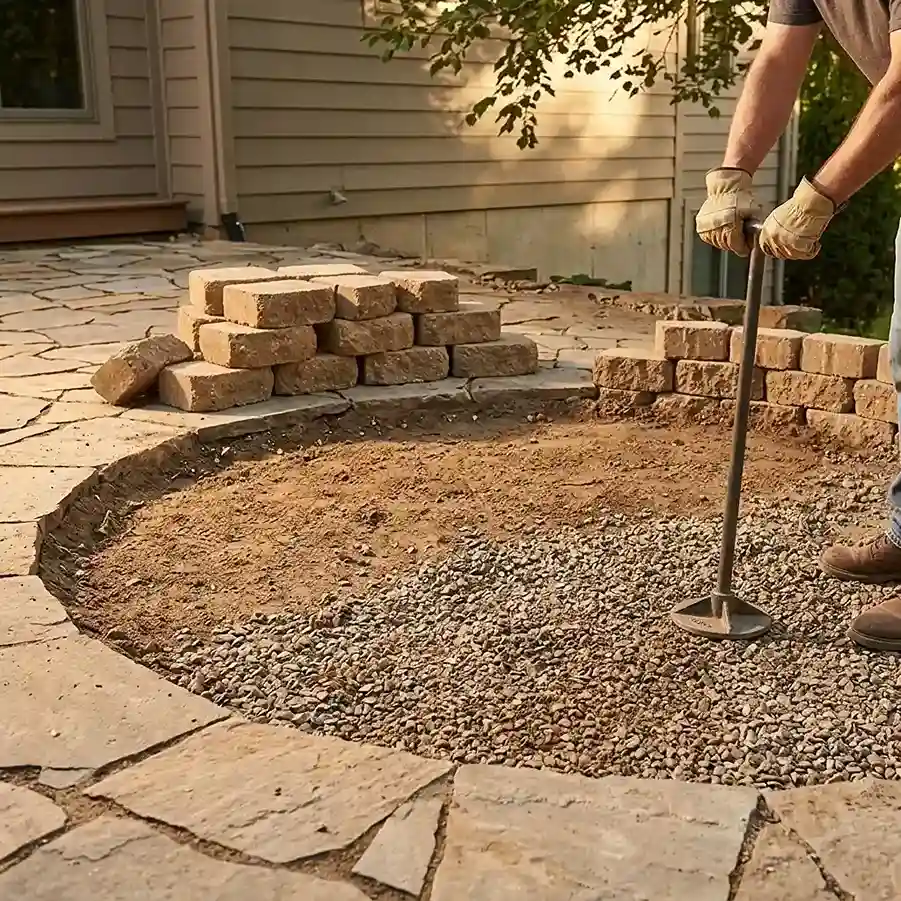
A fire pit extends evening enjoyment throughout the season. A basic DIY fire pit built from retaining wall blocks costs $50 to $150 in materials and takes an afternoon.
Stack retaining wall blocks in a circle about three feet in diameter. Three to four courses creates the ideal height. Level the ground thoroughly before starting. Place the pit on a gravel base at least ten feet from any structure. Fill the interior with gravel before adding a steel fire ring insert.
18. Add Privacy on a Budget
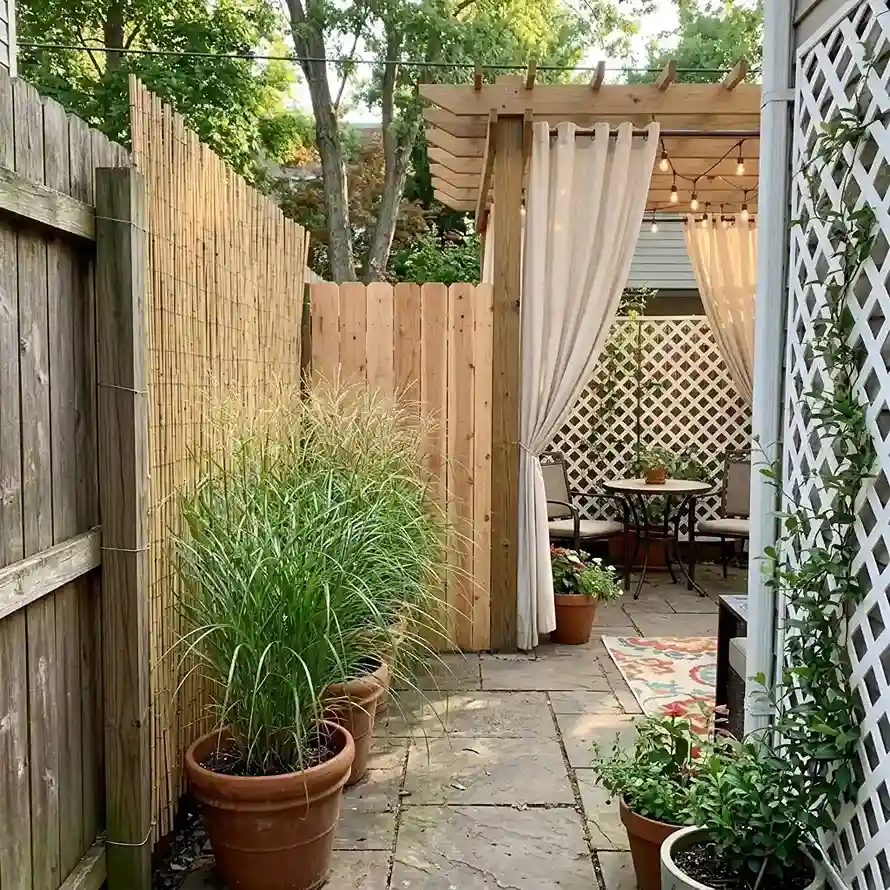
Narrow patio solves privacy with three cheap solutions stacked together: a bamboo roll screen on the fence, tall potted grasses along the edge, and cream curtains hanging from a small pergola frame.
Privacy transforms a patio from a space you use cautiously into one you enjoy completely. Simple, affordable solutions work well.
- Bamboo roll screens cost $20 to $40 and attach with wire ties
- Six-foot ornamental grasses in large pots create a natural screen
- A simple cedar fence panel on one exposed side costs $30 to $60
- Outdoor curtains on a pergola provide flexible privacy
- Lattice panels with climbing plants create permanent screening over time
19. Finish the Patio With Styling Details
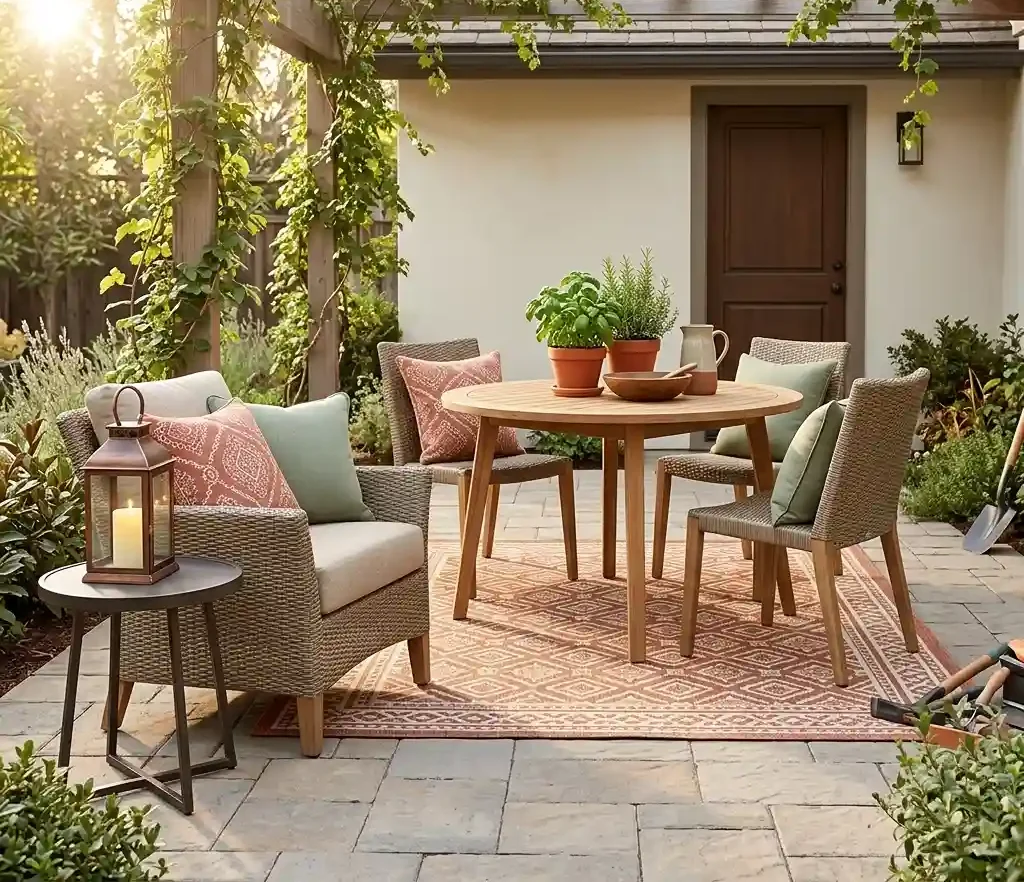
The round table is centered on a coral patterned rug, the cushions coordinate in rust and sage, a lantern sits on the side table with a lit candle, and vines climb the pergola.
Styling details separate a construction project from a finished outdoor room. They cost very little but deliver the final ten percent of impact that makes the space feel complete.
Choose accessories in two or three coordinating colors that match your cushion fabric. Repeat those colors in pots, lanterns, and decorative objects. A consistent color story makes even the simplest collection of budget items look considered and designed.
20. Maintain Your Patio to Protect Your Investment
A well-maintained patio lasts for decades. A neglected one deteriorates within a few seasons.
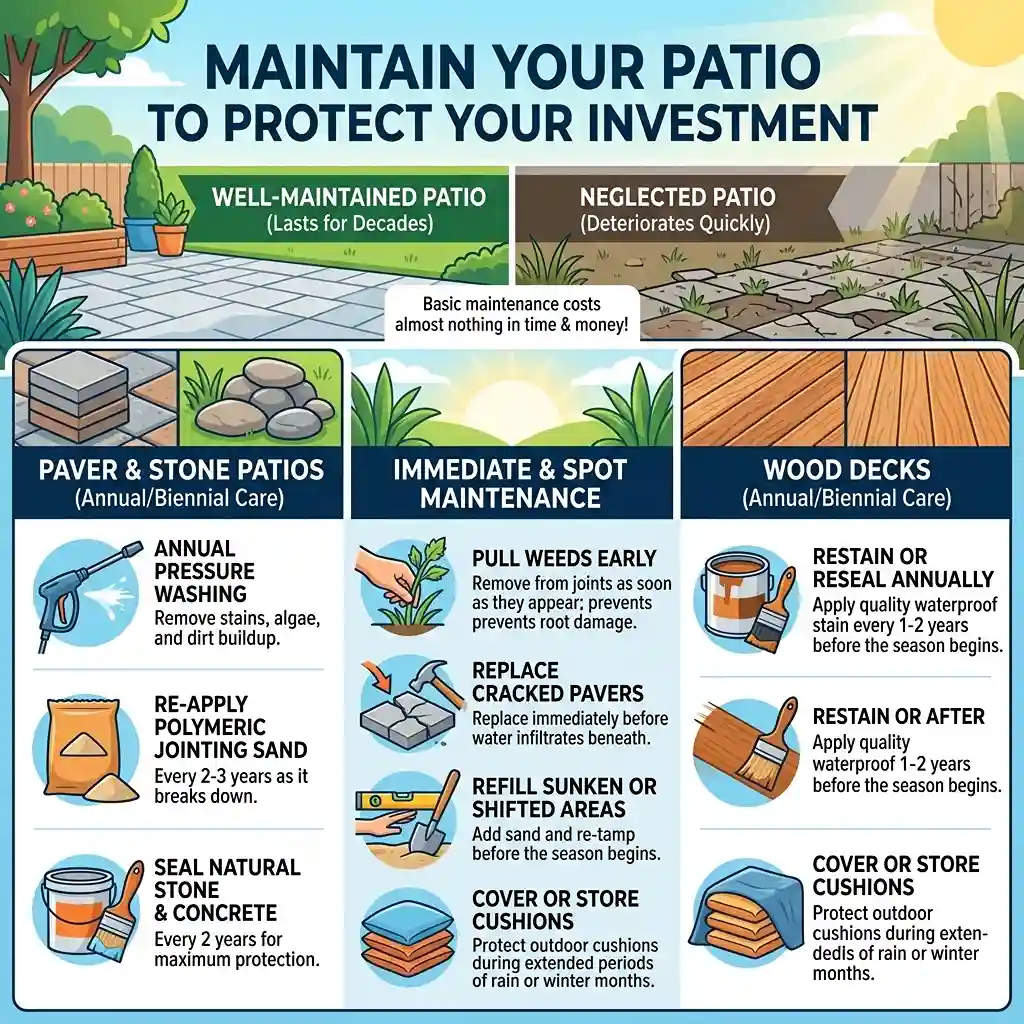
Pavers and stone need annual pressure washing, polymeric sand every two to three years, and sealing every two years. Wood decks need annual or biennial restaining. Immediate tasks include pulling weeds early, replacing cracked pavers, refilling sunken areas, and storing cushions.
A well-maintained patio lasts for decades. A neglected one deteriorates within a few seasons. Basic maintenance costs almost nothing in time and money, and it protects the investment you made in building it.
- Pressure wash pavers and stone annually to remove stains and algae
- Re-apply polymeric jointing sand every two to three years
- Seal natural stone and concrete every two years
- Restain or reseal wood decks annually before the season
- Pull weeds from joints as soon as they appear
- Replace cracked or shifted pavers immediately
- Cover or store outdoor cushions during extended rain or winter
Real-world tip: The single most important maintenance item on this list is sealing. A $40 can of sealer every two years adds a decade to the life of a concrete paver patio. Skip it and the surface starts pitting within five years.
Read more about pool deck ideas
21. What I’d Do Differently If I Built It Again
I’d rent the plate compactor from day one, not halfway through. I started tamping the gravel base by hand with a rented hand tamper to save $50. Two hours in I gave up and rented the plate compactor anyway. The hand-tamped section settled unevenly within three weeks and I had to relay six pavers. The compactor rental is not optional.
I’d slope the patio away from the house before I laid a single paver. I got the surface level, felt proud of it, and realized afterward that water was pooling along the house wall every time it rained. I had to pull up the edge row of pavers, re-grade the base, and relay them. Adding a 1-inch drop per 8 feet of run sounds trivial — it matters enormously. Check the slope every few rows, not just at the end.
I’d buy 15% extra pavers, not 10%. Every guide says add 10% for cuts and waste. I ran out of pavers on day two because my cuts were messier than expected on the curved edge. The store was out of my batch and the color match on the new batch was slightly off. Now I always buy 15% extra and return the unused ones.
I’d do the plants last, after the furniture was in place. I planted the pot cluster first, then realized when the table went in that the plants were exactly where one of the chairs needed to go. Moving a heavy terracotta pot with an established ornamental grass is not fun. Place the furniture first, then arrange the plants around it.
The string lights made more difference than anything else. I almost skipped them to save $35. Don’t. The patio I built looks decent at noon and genuinely beautiful at 9pm with string lights on. Buy them before you decide you don’t need them.
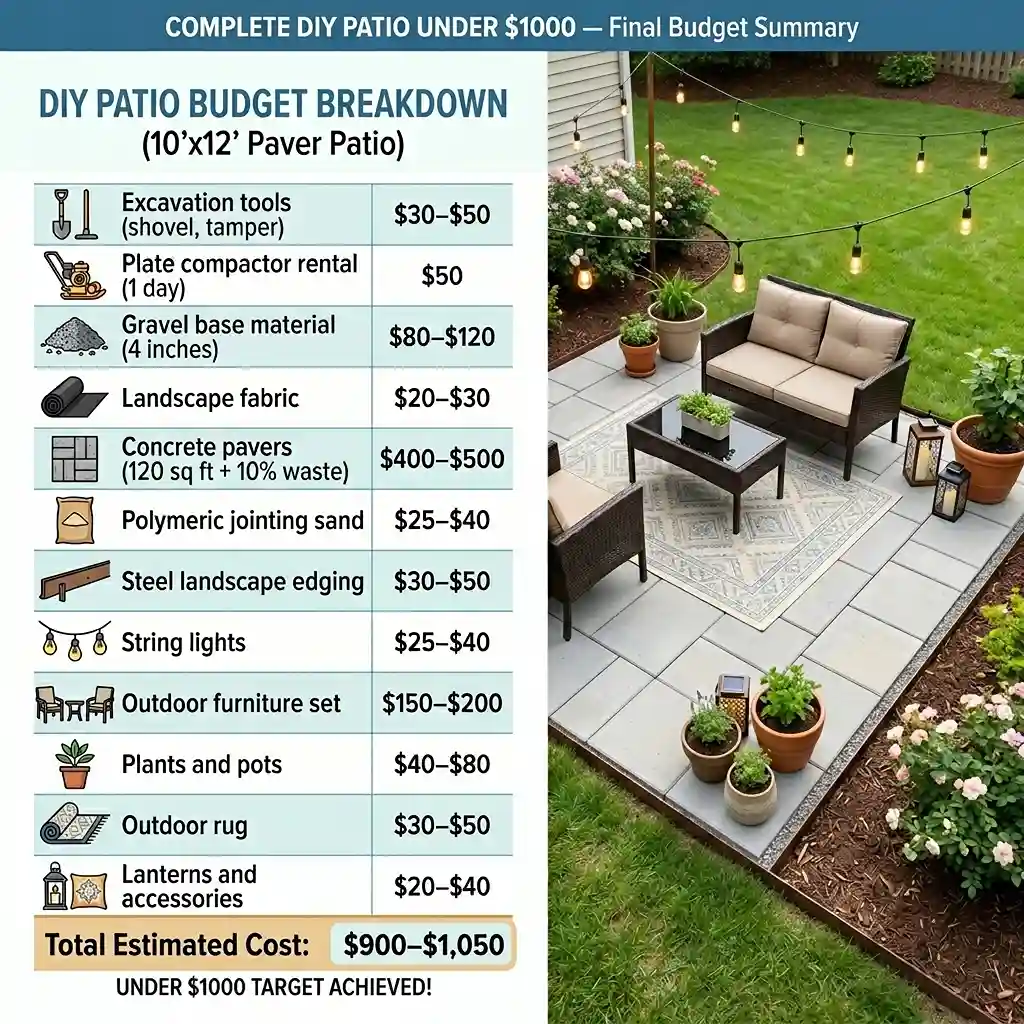
| Item | Estimated Cost |
|---|---|
| Excavation tools (shovel, tamper) | $30–$50 |
| Plate compactor rental (1 day) | $50 |
| Gravel base material (4 inches) | $80–$120 |
| Landscape fabric | $20–$30 |
| Concrete pavers (120 sq ft + 10% waste) | $400–$500 |
| Polymeric jointing sand | $25–$40 |
| Steel landscape edging | $30–$50 |
| String lights | $25–$40 |
| Outdoor furniture set | $150–$200 |
| Plants and pots | $40–$80 |
| Outdoor rug | $30–$50 |
| Lanterns and accessories | $20–$40 |
| Total | $900–$1,050 |
The final total sits right at the $1000 target. Swap pavers for gravel, buy furniture second-hand, or borrow tools, and you finish well under $1,000 with no loss in quality.
Frequently Asked Questions (FAQs)
Q1: Can I really build a nice patio for under $1000?
Yes. A 10 by 12 foot concrete paver patio with furniture, lighting, and plants is achievable for $800 to $1,000 with DIY labor. Choosing gravel instead of pavers, sourcing second-hand furniture, or borrowing tools brings the cost lower. Many patios are finished for $500 to $700 with careful planning.
Q2: How long does it take to build a DIY patio?
A gravel patio takes one day. A concrete paver patio takes one full weekend, one day for excavation and base preparation, one day for laying and finishing. A wood deck takes two to three weekends depending on size. Add one extra day for furniture and planting.
Q3: Do I need a permit to build a patio?
Most ground-level patios under a certain size do not require a permit. Rules vary by location. Check with your local municipality before building any permanent structure, including a pergola or raised deck. Fines for unpermitted work can exceed the cost of the patio.
Conclusion
A patio under $1,000 is not a compromise. It is a real, finished outdoor space you will use every day from spring through fall.
The difference between a patio that lasts and one that fails is not the budget. It is the preparation. Plan before you buy. Choose a material that matches your skill level. Prepare the ground properly even when you want to skip it. Everything else follows from those three things.
Start with one section at a time. Lay the base. Add the surface. Finish the edges. Bring in furniture. Hang the lights. Build the fire pit next summer if that is what your budget allows. A patio grows into itself over time, and that is fine.
The patio you have been staring at from inside the house is closer and cheaper than the contractor quotes make it seem. This weekend is a reasonable time to find out.