Your living room feels cold and lifeless in winter. The central heating runs constantly but the room never feels truly warm. There is no focal point. No heart to the space. Every evening on the sofa feels comfortable enough but never genuinely cozy. Something essential is missing and you feel it every single time you sit down.

Source: @kosa_design
A wood burning stove changes everything. It becomes the soul of the living room. The crackling fire, the radiant warmth, and the dancing flames transform the entire atmosphere of the room instantly. A wood burning stove is simultaneously a heating solution, a design statement, and a daily source of comfort and joy.
This complete guide covers everything you need to know about designing a living room around a wood burning stove beautifully and correctly.
What Is a Wood Burning Stove and How Does It Work?
A wood burning stove is a closed metal firebox that burns wood fuel to produce heat. Unlike an open fireplace, the stove contains the fire completely within a sealed chamber. This makes it significantly more efficient at converting wood into usable room heat. The fire burns inside the stove and the heat radiates outward through the metal casing into the room.

Source: @frankieseamark
Air enters the stove through controlled vents at the front or bottom. This air feeds the fire and allows you to control the burn rate and heat output precisely. Smoke and gases exit through a flue pipe connected to a chimney or external flue system. Modern wood burning stoves are highly engineered devices that combine maximum heat output with minimum fuel consumption and emissions. You can also try burning stove in boys bedroom for your son if it’s really cold in your areas.
| Stove Component | Function |
| Firebox chamber | Contains and burns the wood fuel |
| Air control vents | Regulate oxygen for burn rate control |
| Glass door panel | Allows flame viewing while sealing chamber |
| Flue pipe connection | Removes smoke and combustion gases |
| Cast iron or steel body | Radiates heat into the living room |
Why Choose a Wood Burning Stove for Your Living Room?
A wood burning stove offers benefits that no other heating solution can match. The warmth it produces is radiant heat rather than convected air heat. Radiant heat warms people and objects directly rather than just warming the air. This feels significantly more comfortable and genuine than central heating warmth. Read our guide on hobby room to make your time valuable.
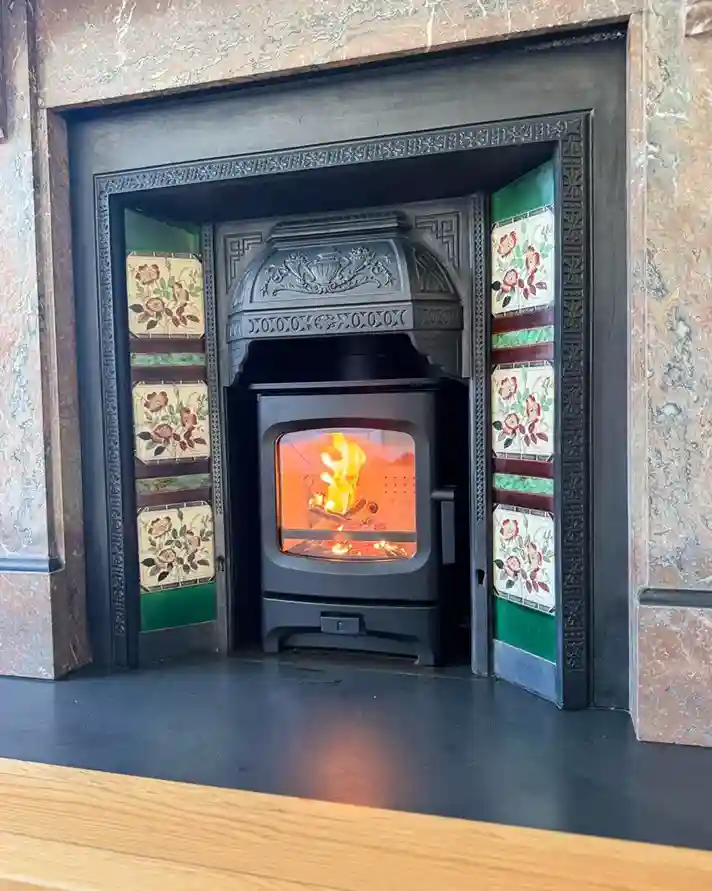
Source: @stove_works_wales
A wood burning stove also provides complete heating independence from the grid. During power cuts and heating system failures, the wood stove continues to burn and heat the room. It adds real monetary value to your property. It creates the most beautiful and characterful focal point any living room can have. The combination of practical heating performance and extraordinary aesthetic impact makes a wood burning stove one of the best home improvements available.
| Benefit | Detail |
| Radiant warmth | Heats people and objects directly |
| Grid independence | Works during power cuts and boiler failure |
| Property value increase | Adds real monetary value to homes |
| Beautiful focal point | Most characterful living room feature |
| Lower heating costs | Wood fuel cheaper than gas or electric |
Choosing the Right Size Wood Burning Stove for Your Living Room
Choosing the correct stove size is the most important technical decision you will make. A stove that is too small will struggle to heat the room adequately. A stove that is too large will overheat the room and waste fuel. Getting the size right ensures efficient, comfortable heating throughout the cold season.

Source: @jotulstoves
The standard calculation is one kilowatt of output for every fourteen cubic metres of room volume. Measure the length, width, and height of your living room and multiply them together to find the cubic volume. Divide that number by fourteen to find the minimum kilowatt output you need. Add one or two extra kilowatts for rooms with large windows, poor insulation, or open-plan connections to other areas of the home.
| Room Size | Recommended Stove Output |
| Small room up to 50 m3 | 3 to 4 kW output stove |
| Medium room 50 to 100 m3 | 5 to 7 kW output stove |
| Large room 100 to 150 m3 | 8 to 10 kW output stove |
| Open plan living space | 10 to 15 kW output stove |
| Poorly insulated older home | Add 1 to 2 kW above calculation |
Types of Wood Burning Stoves: Which Style Suits Your Living Room?
Wood burning stoves come in a wide range of styles, shapes, and designs. The right style depends on your living room aesthetic and the architectural character of your home. Traditional cast iron stoves with ornate detailing suit period and farmhouse properties. Clean-lined contemporary steel stoves suit modern and minimalist interiors. See various ideas on IKEA mudroom to store things.

Source: @carolinemcquistin
Freestanding stoves are the most common type. They sit on legs or a plinth and can be positioned anywhere in the room with a suitable flue. Inset stoves fit directly into an existing fireplace opening for a built-in appearance. Double-sided stoves burn on both sides and heat two adjacent rooms simultaneously. Cylindrical stoves add a sculptural, modern quality to contemporary living rooms.
| Stove Style | Best Living Room Aesthetic |
| Traditional cast iron stove | Period, farmhouse, and cottage homes |
| Contemporary steel stove | Modern, minimalist, and Scandinavian rooms |
| Freestanding plinth stove | Flexible placement, any interior style |
| Inset fireplace stove | Existing chimney breast and fireplace |
| Cylindrical sculptural stove | Bold modern statement piece |
Where to Position a Wood Burning Stove in the Living Room
The position of the stove determines how effectively it heats the room and how well it functions as a design focal point. The most natural position is against the main chimney breast wall, reusing an existing flue. This is the easiest installation and the most traditional arrangement.

Corner positions work beautifully in rooms where the main wall is otherwise unsuitable. A corner stove with a twin-wall flue running up through the corner creates a compact, efficient installation. Central floor positions are the most dramatic option. A stove positioned in the center of the room radiates heat in all directions equally and becomes an extraordinary visual statement. Always ensure adequate clearance distances between the stove and any combustible surfaces on all sides.
| Stove Position | Key Consideration |
| Against chimney breast wall | Uses existing flue, traditional look |
| Corner position | Twin-wall flue, compact footprint |
| Central room position | Maximum heat distribution, dramatic look |
| Beside internal wall | Twin-wall flue required, flexible design |
| Inset into alcove | Built-in appearance, space-efficient |
Installing a Wood Burning Stove: What You Need to Know
Wood burning stove installation must be carried out by a certified professional installer. In the United Kingdom, installers must be registered with HETAS, the official competency scheme for solid fuel heating. An uncertified installation is illegal, dangerous, and invalidates your home insurance. Always use a qualified and registered professional.

Source: @flamingfires
The installation involves connecting the stove to a suitable flue system, installing the hearth to the correct specifications, and ensuring adequate air supply to the room for combustion. The installer will assess your existing chimney, recommend a flue liner if needed, and ensure all clearance distances meet building regulations. A professional installation certificate is issued on completion. This certificate is required for house sales and insurance purposes.
| Installation Requirement | Why It Matters |
| HETAS registered installer | Legal requirement in United Kingdom |
| Flue liner assessment | Existing chimneys often need relining |
| Hearth installation to spec | Non-combustible surface under stove |
| Air supply calculation | Adequate oxygen for combustion |
| Completion certificate | Required for insurance and house sales |
Hearth Design Ideas for a Wood Burning Stove Living Room
The hearth is the non-combustible platform on which the stove sits. Building regulations specify minimum hearth dimensions to protect the floor from heat and stray embers. But beyond the safety requirements, the hearth is also a significant design element. A beautifully designed hearth elevates the entire stove installation from functional to spectacular.

Natural stone hearths in slate, limestone, or granite are the most popular choice. They are durable, heat-resistant, and available in dozens of beautiful natural finishes. Concrete hearths suit industrial and contemporary living rooms. Brick hearths complement traditional and farmhouse stoves perfectly. Porcelain or ceramic tile hearths offer enormous pattern and color variety at a more accessible price point.
| Hearth Material | Best Living Room Style |
| Slate stone hearth | Farmhouse, traditional, and industrial rooms |
| Limestone or travertine | Period, elegant, and classic interiors |
| Polished granite | Modern, sleek, and contemporary spaces |
| Exposed brick hearth | Rustic, farmhouse, and industrial rooms |
| Large format porcelain tile | Contemporary and easy-clean surface |
Mantel and Surround Ideas for a Wood Burning Stove
A mantel above the wood burning stove creates a complete architectural focal point in the living room. It frames the stove beautifully and provides a display surface for candles, art, plants, and decorative objects. The mantel transforms a standalone stove into a full fireplace feature that anchors the entire room design.

Wooden beam mantels are the most popular choice for wood burning stove living rooms. A thick oak or pine beam creates instant rustic character. Painted wooden mantels suit farmhouse and traditional rooms. Stone mantels in limestone or marble suit period and elegant living rooms. A floating concrete mantel shelf suits minimalist and industrial interiors. Even a simple wooden shelf mounted above the stove creates the framing effect beautifully.
| Mantel Style | Design Effect |
| Rough hewn oak beam | Rustic, warm, and characterful |
| Painted white wooden mantel | Classic, farmhouse, and timeless |
| Limestone or marble surround | Elegant, period, and sophisticated |
| Floating concrete shelf | Minimalist, industrial, and modern |
| Reclaimed wood beam | Eco-friendly and full of history |
Best Wall Treatments Behind a Wood Burning Stove
The wall behind the wood burning stove is the visual backdrop for the entire installation. The right wall treatment dramatically amplifies the beauty of the stove and creates a cohesive, finished focal point. The wrong wall treatment makes even an expensive stove look underwhelming and incomplete.
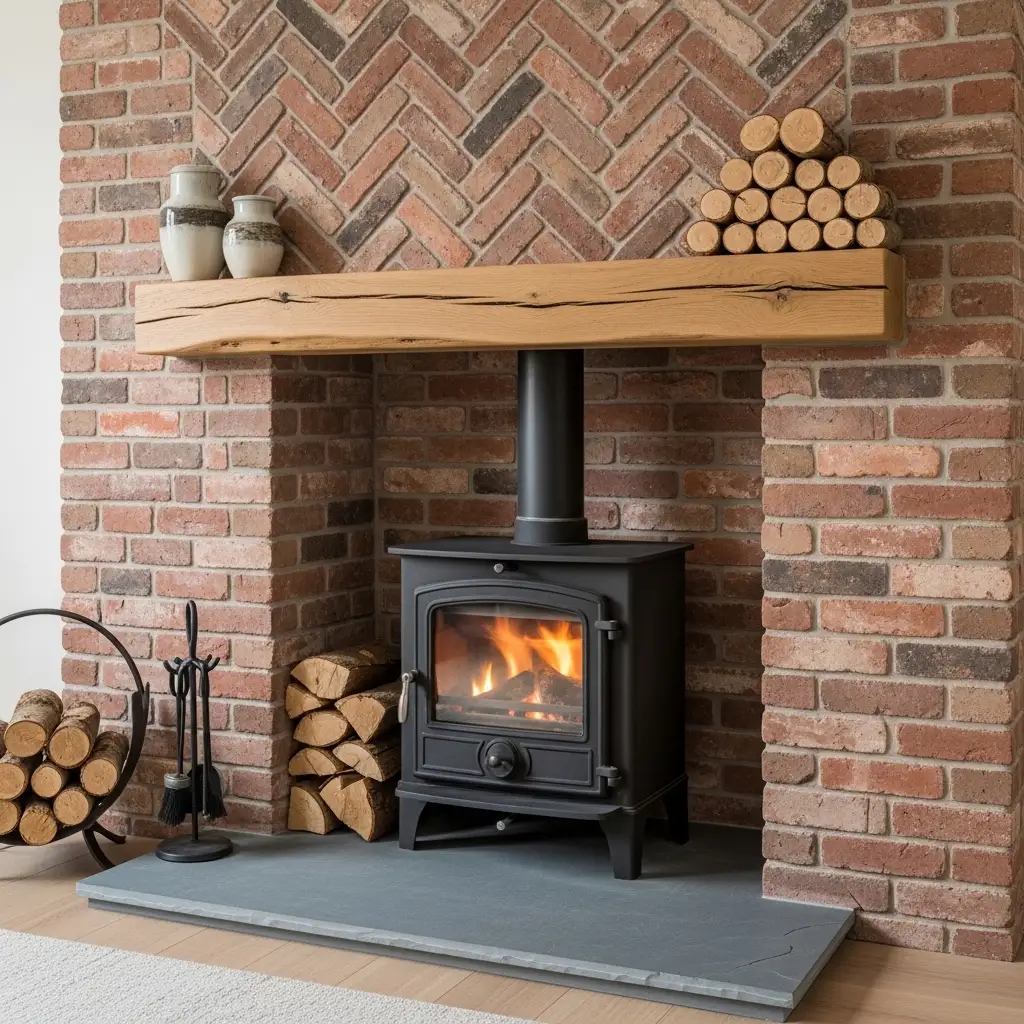
Exposed brick is the most universally loved backdrop for a wood burning stove. Original brick adds warmth, texture, and authentic character. Brick effect tiles achieve a similar look where original brick is not available. Natural stone cladding panels add dramatic texture and depth. Shiplap or tongue-and-groove timber paneling creates a Scandinavian or farmhouse atmosphere. Dark painted plaster in charcoal or deep green behind the stove creates a bold, dramatic effect.
| Wall Treatment | Atmosphere Created |
| Original exposed brick | Warm, authentic, and timeless character |
| Brick effect tiles | Brick look without original masonry |
| Natural stone cladding | Dramatic texture and earthy depth |
| Shiplap timber paneling | Scandinavian and farmhouse warmth |
| Dark painted feature wall | Bold, dramatic, and sophisticated backdrop |
Furniture Arrangement Around a Wood Burning Stove
The furniture arrangement in a living room with a wood burning stove should always prioritize the stove as the focal point. All seating should be oriented toward the stove, just as furniture in traditional rooms was arranged facing the fireplace. The stove creates the natural anchor around which the rest of the room is organized.

Position the main sofa directly facing the stove at a comfortable viewing and warming distance. Flanking armchairs on either side create a symmetrical, welcoming arrangement. Avoid placing furniture too close. Maintain minimum safe distances from the stove surface on all sides. A coffee table between the sofa and stove completes the primary seating group. This arrangement creates the most sociable and warmth-enjoying room configuration possible.
| Furniture Position | Arrangement Principle |
| Main sofa facing stove | Primary viewing and warming position |
| Armchairs flanking sides | Symmetrical welcoming arrangement |
| Coffee table at center | Anchor between sofa and stove |
| Safe clearance distance | Minimum 1 metre from stove surface |
| No furniture blocking flue area | Keep area above stove completely clear |
Color Palette Ideas for a Wood Burning Stove Living Room
A wood burning stove creates a warm, amber glow that influences every color in the room when it is burning. The color palette you choose should work beautifully both with and without the fire lit. Warm, earthy colors harmonize naturally with the warmth of a burning stove.

Terracotta, warm cream, and deep ochre yellow create a Mediterranean warmth that complements the stove beautifully. Deep forest green with warm wood tones creates a dramatic, nature-inspired atmosphere. Navy blue and white with wooden accents creates a crisp, classic combination. Charcoal gray with warm copper and brass accessories is an increasingly popular sophisticated palette. Neutral greige with burnt orange accents suits the stove’s warm tones perfectly in any style of room.
| Color Palette | Room Atmosphere |
| Terracotta and warm cream | Mediterranean warmth and coziness |
| Deep forest green and wood | Dramatic nature-inspired richness |
| Navy blue and white | Crisp, classic, and timeless |
| Charcoal gray and copper | Sophisticated and contemporary |
| Neutral greige and burnt orange | Versatile warmth for any style |
Flooring Ideas for a Living Room with a Wood Burning Stove
The flooring in a wood burning stove living room must be both beautiful and practical. Hard flooring in particular works magnificently alongside a wood burning stove. The warmth from the stove radiates downward and outward, making the floor itself feel warm in the area surrounding the hearth.

Oak engineered wood flooring is the most popular choice. Its warm honey tones complement almost every stove style and color. Stone flags in slate or limestone create a traditional farmhouse feel that perfectly suits a traditional cast iron stove. Polished concrete flooring suits modern stove installations in contemporary living rooms. A large area rug over hard flooring adds warmth, texture, and comfort to the seating area while maintaining the practical hard floor around the hearth.
| Flooring Type | Best Stove Style Pairing |
| Oak engineered wood | All stove styles, universally beautiful |
| Slate or limestone flags | Traditional and farmhouse cast iron stoves |
| Polished concrete | Modern and contemporary steel stoves |
| Terracotta floor tiles | Rustic, Mediterranean, and farmhouse rooms |
| Natural stone with underfloor heat | Ultimate luxury alongside wood stove |
Lighting Design for a Wood Burning Stove Living Room
Lighting in a wood burning stove living room must create the perfect complement to the natural flickering light of the fire. Harsh overhead lighting fights against the warmth and intimacy that the stove creates. Warm, layered, and dimmable lighting works with the fire rather than against it.

Install all overhead lighting on dimmer switches. Dim the lights significantly when the stove is burning to allow the firelight to dominate the atmosphere. Add table lamps on side tables and console tables for warm pools of ambient light. Wall sconces on either side of the chimney breast create a symmetrical, elegant effect. Candles on the mantel shelf add to the warm, multi-source light atmosphere that the stove naturally invites.
| Lighting Type | Role in Stove Room |
| Dimmable overhead light | General light, dimmed when stove burns |
| Warm table lamps | Soft ambient pools beside seating |
| Wall sconces on chimney breast | Symmetrical elegant accent lighting |
| Mantel candles | Add to warm multi-source light effect |
| Hearth candles when stove unlit | Maintains focal point in summer |
Log Storage Ideas for a Wood Burning Stove Living Room
A log store beside the wood burning stove is both a practical necessity and a beautiful design opportunity. Keeping a supply of dry logs immediately beside the stove eliminates the need to go outside in cold weather for every refuel. It also gives you one of the most naturally beautiful decorative elements you can have in a living room.

A large wicker log basket beside the stove looks warm and rustic. Built-in log alcoves on either side of the chimney breast create a symmetrical architectural feature. A steel log holder with a handle sits directly beside the stove for the most convenient access. Stacked logs in a brick alcove add extraordinary natural texture and pattern to the room. A reclaimed wood log store or crate adds character while keeping logs organized and accessible.
| Log Storage Style | Design Effect |
| Large wicker log basket | Warm, rustic, and natural texture |
| Built-in alcove log storage | Architectural symmetry beside stove |
| Steel log holder beside stove | Practical and industrial-look storage |
| Stacked log alcove display | Beautiful natural texture and pattern |
| Reclaimed wood log crate | Character-filled eco-friendly storage |
Mantel Styling Ideas for a Wood Burning Stove Living Room
The mantel shelf above the wood burning stove is one of the most visible and important display surfaces in the entire living room. Styling it beautifully creates a complete, finished focal point that draws every eye toward the stove. A poorly styled mantel undermines even the most beautiful stove installation.
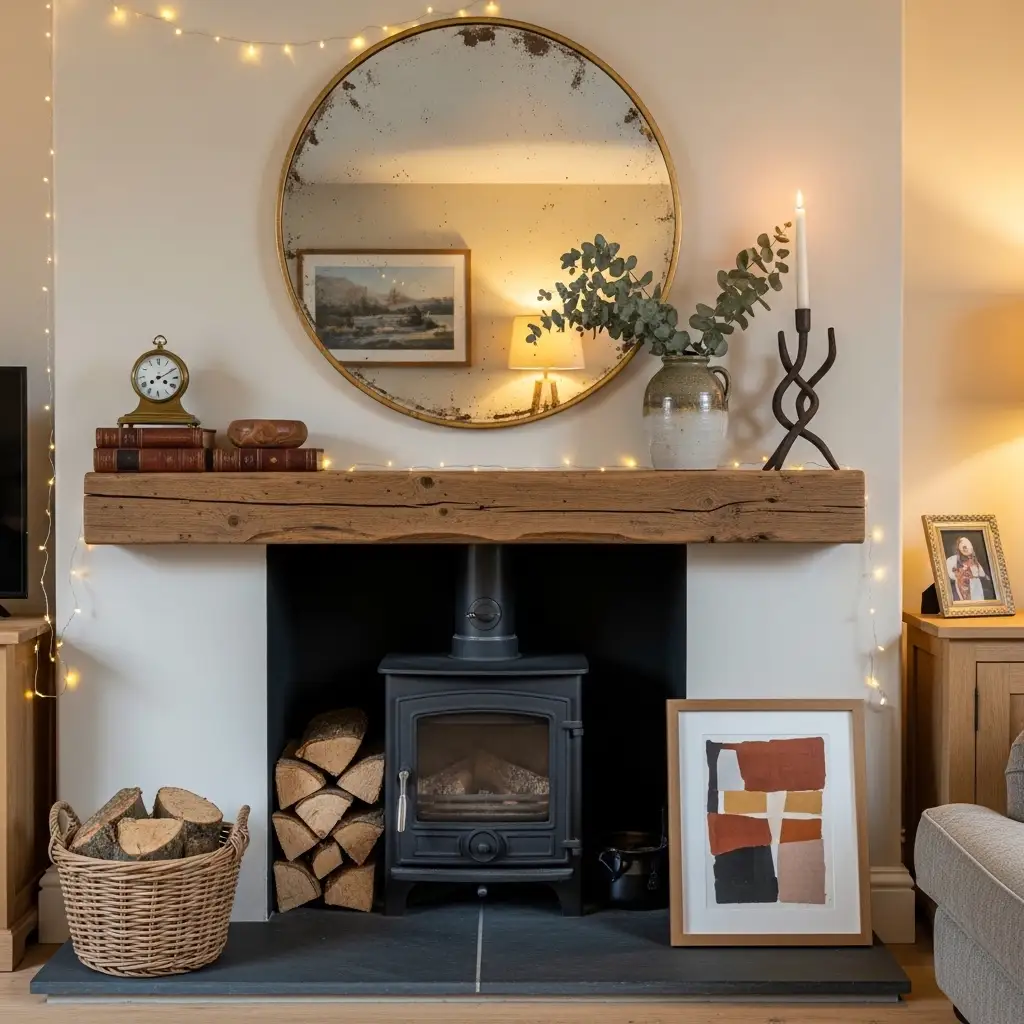
Create a layered arrangement starting with the largest piece at the center and working outward with progressively smaller items. Lean a large mirror or artwork against the wall above the mantel as the anchor. Add candles of varying heights on either side. Include a small plant or dried botanical arrangement. Scatter a few meaningful objects like a clock, a vase, or sculptural pieces. Change the styling seasonally to keep the mantel looking fresh and intentional throughout the year.
| Mantel Styling Element | Placement Tip |
| Large mirror or artwork | Centered against wall above mantel |
| Candles in varying heights | Either side of central anchor piece |
| Small plant or botanicals | One side for natural organic touch |
| Clock or sculptural object | Asymmetric balance point on shelf |
| Seasonal decorative elements | Update with seasons for freshness |
Farmhouse Living Room with a Wood Burning Stove
The farmhouse living room is perhaps the most natural and beloved setting for a wood burning stove. Exposed beams, stone floors, shiplap walls, and a cast iron stove combine into the ultimate expression of rural warmth and character. This style has become enormously popular in both genuinely old farmhouses and brand new homes that aspire to that timeless aesthetic.

Use a traditional cast iron stove with legs for the authentic farmhouse look. Frame it with a rough hewn oak beam mantel. Expose the original brick or stone on the chimney breast. Add a wicker log basket and a cast iron companion set. Layer natural textures through linen curtains, wool rugs, and wicker accessories. Fresh flowers and seasonal botanicals complete the picture. A farmhouse wood burning stove living room feels like the warmest, most welcoming room imaginable.
| Farmhouse Stove Room Element | Styling Choice |
| Traditional cast iron stove | Legs, ornate detail, dark finish |
| Oak beam mantel | Rough hewn, natural, and characterful |
| Exposed brick chimney breast | Original or brick-effect cladding |
| Wicker log basket | Natural texture beside the stove |
| Linen and wool textiles | Soft layered natural fabric textures |
Modern Living Room with a Wood Burning Stove
A modern living room with a wood burning stove creates a beautifully unexpected combination. The raw, ancient energy of fire inside a clean, contemporary space produces a tension that is visually stunning and deeply satisfying. The stove becomes even more dramatic when surrounded by the clean lines and neutral palette of modern design.

Choose a contemporary steel stove in a matte black or anthracite finish. Position it on a large format stone or concrete hearth. Use a floating concrete or minimal steel mantel shelf. Keep the wall behind plain in a dark paint color or large format tile. Let the stove be the undisputed focal point with minimal competition from other decorative elements. Modern furniture in clean-lined shapes in gray, white, and natural wood completes the sophisticated contemporary look.
| Modern Stove Room Element | Design Choice |
| Contemporary steel stove | Matte black or anthracite finish |
| Large format stone hearth | Minimal grout lines, clean surface |
| Floating concrete mantel shelf | Minimal and architectural |
| Dark paint feature wall behind | Charcoal or deep green backdrop |
| Clean-lined neutral furniture | Gray, white, and natural wood tones |
Scandinavian Style Living Room with a Wood Burning Stove
Scandinavian interior design and wood burning stoves share a deep cultural connection. In Nordic countries, the wood stove has been the heart of the home for centuries. The hygge philosophy of warmth, comfort, and togetherness is embodied perfectly by a wood burning stove in a beautifully simple Scandinavian room.

Use white walls and light birch or pine flooring as the clean Nordic base. Choose a simple, cylindrical or rectangular contemporary stove in white, cream, or matte black. Keep the hearth minimal in pale stone or concrete. Add natural textures through sheepskin throws, chunky knit cushions, and woven rugs. Simple candles on the mantel. A single large plant in one corner. Every element should feel calm, considered, and deeply cozy.
| Scandinavian Stove Room Element | Design Principle |
| White walls and light wood floor | Clean, simple, and light-filled base |
| White or cream contemporary stove | Simple form, Nordic aesthetic |
| Pale stone or concrete hearth | Minimal and natural surface |
| Sheepskin and wool textiles | Warm layered natural textures |
| Candles and simple botanicals | Gentle hygge atmosphere elements |
Safety Rules for a Wood Burning Stove Living Room
Safety around a wood burning stove is non-negotiable. The stove reaches extremely high surface temperatures during operation. The hearth and surrounding area must be kept clear of all combustible materials at all times. Children and pets must be kept at a safe distance from the hot stove surface.

source: @edmontonfireplaces
Install a carbon monoxide detector in the room. This is a legal requirement in many jurisdictions and an essential safety measure everywhere. Have the chimney swept professionally at least once per year. Never burn treated wood, painted wood, or household waste in the stove. Only burn dry, seasoned hardwood with a moisture content below twenty percent. Never leave the stove burning unattended overnight with the air vents fully open.
| Safety Rule | Why It Is Essential |
| Carbon monoxide detector installed | Legal requirement and life safety |
| Annual chimney sweep | Prevents dangerous soot buildup |
| Only burn dry seasoned wood | Wet wood creates excessive creosote |
| Never burn treated or painted wood | Toxic fumes dangerous to health |
| Guard for children and pets | Prevents burns from hot stove surface |
Best Wood to Burn in a Wood Burning Stove
The type and quality of wood you burn directly affects the heat output, the cleanliness of the burn, the lifespan of your stove, and the safety of your flue. Only dry, well-seasoned hardwood with a moisture content below twenty percent should ever be burned. Wet wood burns inefficiently, produces excess smoke, and deposits creosote in your flue at a dangerous rate.

source: @shaw_shed.and.garden
Oak is the premium choice. It burns slowly and produces intense, long-lasting heat. Ash is the most versatile hardwood and burns well even when slightly less seasoned than ideal. Birch burns quickly and brightly with a pleasant aroma. Cherry and apple woods are excellent and produce a lovely fragrance. Softwoods like pine burn fast with high heat but deposit more resin. Use softwoods only for kindling, never as the primary fuel load.
| Wood Type | Burning Characteristic |
| Oak | Slow burn, high heat, long duration |
| Ash | Versatile, good heat, burns readily |
| Birch | Quick bright burn, pleasant aroma |
| Cherry or apple | Excellent heat, beautiful fragrance |
| Pine (kindling only) | Fast ignition, not for main fuel load |
Alcove Ideas Beside a Wood Burning Stove
The alcoves on either side of a chimney breast are among the most valuable storage and display spaces in any living room. Used well, they create a beautifully symmetrical, built-in appearance that makes the entire chimney breast and stove installation look genuinely bespoke and architecturally complete.

Built-in shelving in the alcoves creates storage for books, plants, artwork, and display objects. Built-in cupboards below the shelves provide hidden storage for logs, media equipment, and household items. The combination of upper open shelves and lower closed cupboards is the most versatile and popular alcove configuration. Paint the inside back of the alcoves in a contrasting color for depth and visual interest.
| Alcove Configuration | Design Effect |
| Open shelves full height | Display books, plants, and art |
| Shelves above closed cupboards | Display combined with hidden storage |
| Log storage alcove on one side | Practical beautiful log display |
| Contrasting back wall color | Depth and visual interest inside alcove |
| Integrated alcove lighting | Warm glow highlighting display items |
Decorating Around a Wood Burning Stove for Each Season
A wood burning stove living room can be decorated beautifully for every season of the year. In winter the stove is the active, burning heart of the room. In summer it becomes a decorative focal point filled with candles, plants, and decorative arrangements that maintain its visual importance even unlit.

In autumn, surround the stove with pumpkins, rich foliage, dried seed heads, and warm orange and brown accents. In winter, add pine cones, berries, and simple festive greenery to the mantel. In spring, replace heavy textiles with lighter fabrics and fill the mantel with fresh flowers and botanical prints. In summer, place a large houseplant or dried flower arrangement inside the firebox opening for a stunning summer display. The stove remains the room’s focal point throughout every season.
| Season | Stove Decoration Idea |
| Autumn | Pumpkins, foliage, and warm earthy tones |
| Winter | Pine cones, berries, and festive greenery |
| Spring | Fresh flowers and lighter botanical prints |
| Summer | Large plant or dried arrangement in firebox |
| Year-round | Candles on mantel when stove not burning |
How to Create a Cozy Atmosphere with a Wood Burning Stove
A wood burning stove creates the foundation for the coziest living room imaginable. But the stove alone is not enough. The atmosphere around it must be designed equally thoughtfully. Every element in the room should reinforce and amplify the warmth and intimacy that the fire creates.

Layer multiple textures across the room. A thick wool rug underfoot. Heavy linen curtains at the windows. Velvet cushions on the sofa. A chunky knit throw draped over the arm of the armchair. Dim the lighting and allow the firelight to dominate. Add candles on the mantel and side tables. Place a tray with mugs of tea or hot chocolate on the coffee table. These sensory details create an atmosphere of deep, enveloping warmth that makes the living room the most irresistible room in the house on a cold evening.
| Cozy Atmosphere Element | How to Use It |
| Thick wool or shag area rug | Warm and soft underfoot in seating zone |
| Heavy curtains at windows | Blocks cold drafts and adds insulation |
| Velvet and knit cushions | Layered tactile warmth on seating |
| Dimmed lighting throughout | Allows firelight to be the main source |
| Candles on mantel and tables | Multiple warm light sources throughout |
Wood Burning Stove Living Room in a Small Space
A wood burning stove can work brilliantly in a small living room. The key is choosing a stove of the correct kilowatt output for the volume of the space. A small room needs a small stove. An oversized stove in a small room will overheat quickly and create an uncomfortable environment that is impossible to regulate.

A small stove in the three to four kilowatt range suits rooms under fifty cubic metres. Position it in a corner to maximize the usable floor space in front. Use a twin-wall flue that runs straight up through the wall rather than requiring a full chimney. Keep the hearth dimensions as compact as building regulations allow. Use light wall colors and mirrors to keep the small room feeling open and bright despite the presence of the dark stove.
| Small Room Stove Strategy | Recommendation |
| Choose 3 to 4 kW output only | Prevents overheating small space |
| Corner position maximizes floor | Leaves maximum usable floor area |
| Twin-wall external flue | No chimney required, simpler install |
| Compact minimum-spec hearth | Keeps hearth footprint as small as possible |
| Light walls and mirrors | Keeps small room feeling open |
Accessories and Companion Set for a Wood Burning Stove
A quality fire companion set beside the stove provides the essential tools for operating and maintaining the fire safely and efficiently. The companion set typically includes a poker, ash shovel, brush, and log tongs. These tools are used daily throughout the burning season and deserve to be both functional and attractive.

Cast iron companion sets suit traditional and farmhouse stoves beautifully. Brushed steel sets complement modern and contemporary installations. Matte black powder-coated sets suit minimalist and industrial rooms. A heavy-duty log basket or carrier beside the set completes the functional hearth zone. These practical accessories become part of the visual composition around the stove and should be chosen to complement the overall design of the room.
| Companion Set Style | Best For |
| Cast iron traditional set | Farmhouse and period living rooms |
| Brushed steel modern set | Contemporary and minimalist rooms |
| Matte black powder-coat set | Industrial and modern farmhouse rooms |
| Brass finish vintage set | Classic and elegant traditional rooms |
| Minimal single stand tool set | Scandinavian and design-led interiors |
How to Reduce Mess from a Wood Burning Stove
A wood burning stove inevitably produces some mess. Ash, wood chippings, and bark debris are part of the daily reality of stove ownership. Good design and practical habits minimize the visible impact of this mess and keep the living room looking beautiful even on the heaviest burning days.
source: @completefireplacestudio
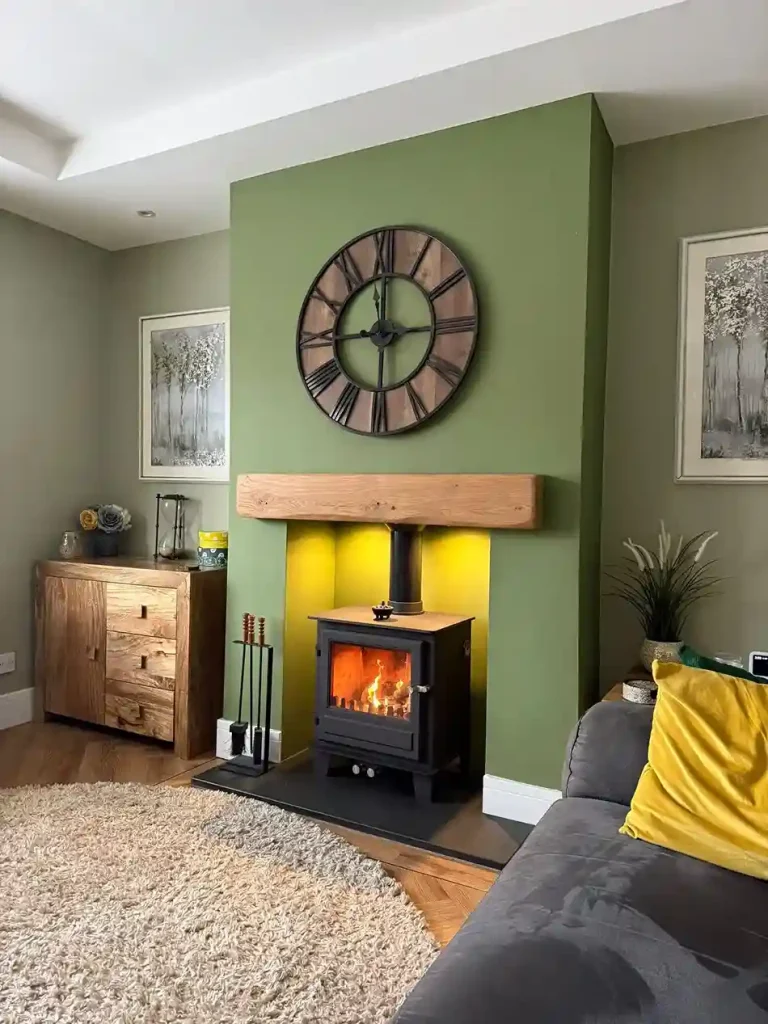
Use a log basket with a solid base rather than an open-weave base to prevent bark and debris from falling onto the floor. Place a hearth rug in front of the stove to catch any ash or embers from the stove door opening. Use a well-fitted ash bucket with a tight-fitting lid for ash removal. Keep the hearth swept daily with a small brush and pan. A well-maintained hearth zone makes the stove a pleasure rather than a chore.
| Mess Management Solution | How It Helps |
| Solid base log basket | Prevents bark debris on floor |
| Hearth rug in front of stove | Catches ash from door opening |
| Tight-lid ash bucket | Contained ash removal and disposal |
| Small brush and pan on hearth | Daily quick sweep of ash and debris |
| Slate or stone hearth surface | Easy wipe-clean non-porous surface |
Wood Burning Stove Maintenance and Care
A well-maintained wood burning stove performs better, lasts longer, and stays safer than a neglected one. Regular maintenance is simple and takes very little time. The most important annual task is the professional chimney sweep. This removes creosote buildup that poses a serious fire risk if left unchecked.

source: @verysmallsmallholding
Clean the glass door with a specialist stove glass cleaner regularly to maintain visibility of the flames. Empty the ash pan regularly but leave a thin layer of ash on the firebox base as this actually helps maintain a good burn temperature. Check door seals annually and replace them if they show any cracking or gaps. Repaint the stove with specialist stove paint if the exterior finish shows wear. Annual professional inspection catches any issues before they become expensive repairs.
| Maintenance Task | How Often |
| Professional chimney sweep | Annually before burning season |
| Clean stove glass door | Weekly during burning season |
| Empty ash pan | Every two to three days when in use |
| Check and replace door seals | Annually or when gaps appear |
| Professional stove inspection | Every one to two years |
Energy Efficiency and Environmental Considerations
Modern wood burning stoves are significantly more environmentally efficient than older models. DEFRA-approved Ecodesign ready stoves meet strict emission standards for particulate matter and carbon output. Burning dry, seasoned wood in an efficient modern stove produces far lower emissions than an open fire while generating significantly more heat.

source: @darkwood2014
Choose an Ecodesign 2022 compliant stove for the lowest possible emissions. Always burn dry wood with a moisture content below twenty percent, verified with a wood moisture meter. Use a Woodsure Ready to Burn certified supplier for pre-dried logs. Avoid burning household waste, treated wood, and coal in a wood-only stove. A responsibly operated modern wood stove is an environmentally conscious choice compared to fossil fuel heating alternatives.
| Eco-Friendly Practice | Environmental Benefit |
| Ecodesign 2022 compliant stove | Lowest particulate emissions available |
| Dry wood under 20% moisture | Cleaner burn, less harmful output |
| Woodsure certified fuel supplier | Verified dry and sustainably sourced |
| Never burn waste or treated wood | Prevents toxic emission release |
| Correctly sized stove for room | Efficient burn without excess fuel use |
Cost of Installing a Wood Burning Stove: Full Breakdown
Understanding the full cost of wood burning stove installation helps you plan and budget accurately. The purchase price of the stove is only part of the total investment. Installation costs, hearth materials, flue work, and chimney lining all add to the overall figure significantly.

source: @conturastoves
A quality mid-range wood burning stove costs between six hundred and two thousand pounds. Professional installation including a flue liner, register plate, and basic hearth typically adds one thousand to two thousand pounds. A more elaborate installation with a bespoke hearth, built-in alcove shelving, and a timber mantel beam can add a further one thousand to three thousand pounds. Total project costs therefore range from approximately two thousand to seven thousand pounds for a complete, beautifully finished installation. The investment is recouped through lower fuel bills and increased property value.
| Cost Component | Estimated Price Range |
| Quality mid-range stove purchase | £600 to £2,000 |
| Professional installation and flue | £1,000 to £2,000 |
| Hearth material and fitting | £300 to £1,500 |
| Timber mantel or surround | £200 to £1,500 |
| Total complete project range | £2,000 to £7,000 approximately |
How to Choose the Best Wood Burning Stove for Your Living Room
Choosing the right wood burning stove for your specific living room requires balancing several factors simultaneously. Output size, aesthetic style, door configuration, and budget all need to align into a single right answer for your home. Taking time to research properly before purchasing prevents expensive mistakes.

Visit a specialist stove showroom rather than buying online without seeing the stove in person. Seeing stoves at full scale in a showroom setting gives you an accurate sense of how they will look in your room. Ask about efficiency ratings, emission certifications, and warranty terms. Request references from the installer and check their HETAS registration. A stove is a twenty to thirty year investment. Choosing it carefully and installing it correctly pays dividends every single day it burns.
| Buying Consideration | What to Look For |
| Kilowatt output for room size | Calculate room volume and match output |
| Ecodesign 2022 certification | Lowest emission standard currently |
| Efficiency rating above 80% | More heat from every log burned |
| HETAS registered installer | Verified competent safe professional |
| Showroom viewing before purchase | See actual scale before committing |
Frequently Asked Questions About Wood Burning Stove Living Rooms
Q1: Do I need a chimney to install a wood burning stove?
No, you do not necessarily need an existing chimney. A twin-wall insulated flue system can be installed through any external wall or through the roof of any room. This allows wood burning stoves to be installed in rooms that have never had a fireplace or chimney. Twin-wall flue systems are fully approved and widely used. They are more expensive than relining an existing chimney but make stove installation possible in virtually any living room in any property.
Q2: How much does it cost to run a wood burning stove?
Running costs depend on your local wood fuel prices, how frequently you burn, and the efficiency of your stove. A cubic metre of hardwood logs from a certified supplier typically costs between eighty and one hundred and twenty pounds. A typical evening burn of three to four hours uses approximately one quarter of a cubic metre. Running a stove on four evenings per week through a six-month burning season costs approximately four hundred to six hundred pounds in fuel. This is typically lower than the equivalent cost of running central heating for the same period in most homes.
Q3: Is a wood burning stove bad for air quality?
An Ecodesign 2022 compliant stove burning dry certified wood produces significantly lower emissions than older stove models and open fires. Modern stoves burn very efficiently with minimal particulate output. The key to clean burning is always using dry wood with a moisture content below twenty percent and operating the stove correctly with adequate air supply. Burning wet wood or household waste dramatically increases harmful emissions. A modern stove operated correctly with certified fuel is a responsible and relatively clean heating choice.
Q4: How long does a wood burning stove last?
A quality wood burning stove from a reputable manufacturer, properly installed and regularly maintained, will last twenty to thirty years or more. The cast iron or steel body itself rarely fails. Consumable parts like door seals, grates, and firebricks are replaceable and typically last five to ten years before needing replacement. Annual professional servicing and sweeping significantly extends the working life of any stove. Investing in a quality stove from a reputable brand is almost always better value than a cheaper stove that requires replacement within ten years.
Q5: Can I cook on a wood burning stove?
Many wood burning stoves have a flat top surface that reaches sufficient temperature for basic cooking and heating tasks. You can boil a kettle, heat soup, or warm food on the top of most stoves during normal operation. Dedicated wood burning cooking stoves with ovens and hot plates are also available for those who want full cooking capability from their stove. However, a standard living room wood burning stove is not designed as a primary cooking appliance and should not be used as a replacement for a kitchen cooker.
Conclusion
A wood burning stove in the living room is one of the most transformative home improvements you can make. It changes not just how the room looks but how it feels, how it is used, and how much time your family wants to spend in it.
The warmth, the atmosphere, the beauty of the living flame, and the deep sense of comfort that a wood burning stove creates are simply impossible to replicate with any other heating solution. It is both a practical investment and a daily source of genuine joy throughout the cold months of the year.
The 30 ideas in this guide give you everything you need to design, install, and style a wood burning stove living room that is beautiful, safe, efficient, and perfectly suited to your home and your family.
Start by choosing the right stove size, finding a HETAS registered installer, and selecting a hearth and surround that suit your living room style. Everything else follows from those three decisions. Your living room is about to become the warmest, most welcoming room in your home. HomeFixTrends is here to inspire and guide every step of your home improvement journey.