
Moving into a dorm room is exciting. But the reality hits fast. Tiny space, plain walls, and zero personality make it feel like a prison cell.
You spend most of your college life in this room. You needs to feel comfortable, functional, and genuinely yours.

These 30 dorm room ideas transform even the smallest, most generic dorm into a space you love coming back to every day.
1. Start With a Color Palette You Love

Pick two or three colors before you buy anything. Then let every purchase follow that decision. Bedding, curtains, desk accessories, artwork, all of it.
A single palette in two or three tones makes mismatched furniture look intentional. It creates calm in a small space where calm is hard to find. Keep the palette tight. Two colors plus one accent. The accent is the one that gets to be bold. Everything else supports it.
Warm and cozy works with terracotta, cream, and sage. Bold and energetic works with navy, mustard, and white. Soft and feminine works with blush, ivory, and dusty rose.
Without a palette, you end up buying things one at a time because each piece looks good on its own. Together they fight. With a palette, every piece you bring in already belongs.
Read more ideas on craft room decor and inspiration.
2. Invest in Quality Bedding First
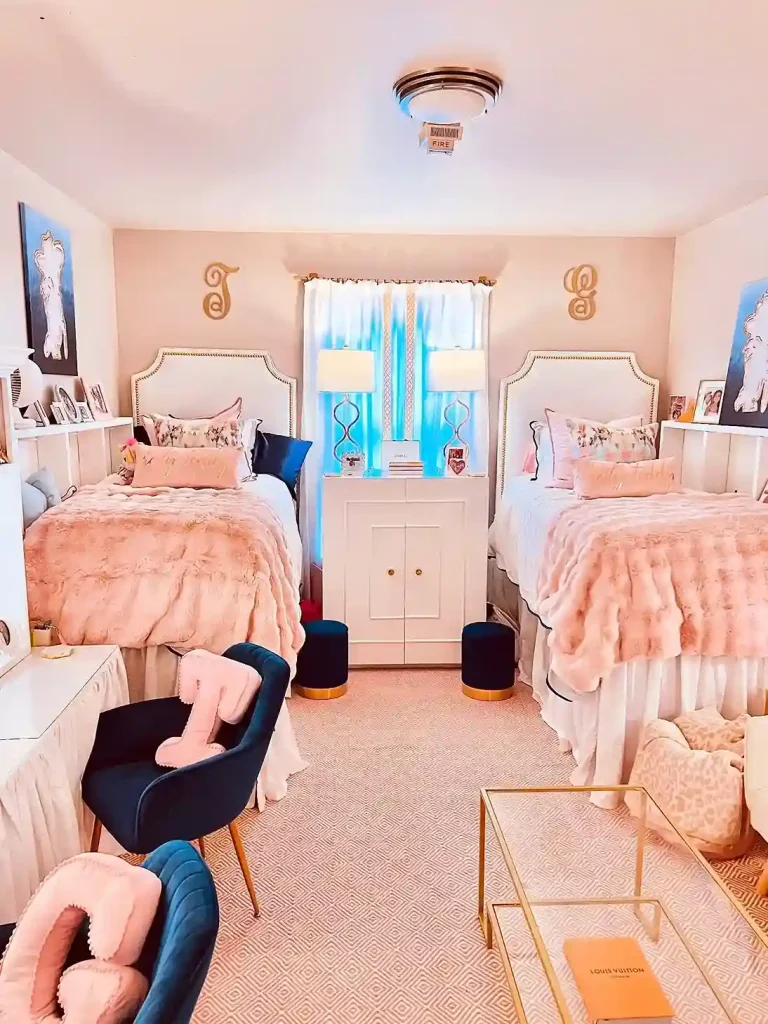
Your bed is the largest surface in the room. Whatever you choose for it sets the visual tone for everything else. Great bedding transforms the space immediately.
Layer bedding in your main palette color with a throw blanket and two or three accent pillows. A well-made bed makes the whole room read as put together, even when the desk is messy and the floor needs a sweep.
Twin XL is the standard dorm bed size. Confirm this before ordering anything. Wrong-sized bedding is the most common and most avoidable freshman mistake, and returns are a hassle when you are 300 miles from home.
3. Loft or Bunk Your Bed to Free Floor Space
Lofting the bed creates an entire living zone underneath. A desk, sofa, or wardrobe fits in the floor space gained. This single change transforms how the dorm room functions.

Lofting the bed creates an entire living zone underneath. A desk, sofa, or wardrobe fits in the floor space gained. No other single change transforms a dorm room this much.
Most dorm beds are designed to be lofted. Check with your RA before making changes. Many schools provide lofting kits for free or at low cost.
The space gained can become a private lounge with a mini sofa and rug, a separated study area under the loft, or a sleeping pod with curtains around the bed. Use the wall beside the loft for extra shelving
4. Use Removable Wallpaper for an Instant Room Makeover

Plain dorm walls drain the personality out of a room before you have unpacked.
Removable peel-and-stick wallpaper or a full-wall pinboard panel transforms a feature wall in an afternoon. It peels off cleanly at the end of the year with no damage to the wall.
Apply it to the wall behind the bed for maximum impact. A floral, geometric, or textured pattern creates personality immediately. One accent wall is more effective than several. Removable wallpaper costs $25 to $60 per roll.
5. Add Removable Command Strip Hooks Everywhere

Command strips are the dorm storage MVP. They let you hang things without damaging walls. Bags, hats, keys, accessories, and wall decor all hang securely on a strip rated for the weight.
Place hooks beside the door for daily-use bags. Use them inside cabinet doors for invisible storage. Match the strip rating to the weight of the item. Follow the removal instructions at year-end for clean, damage-free walls.
6. Create a Gallery Wall With Personal Photos

A gallery wall of personal photos makes the dorm feel like home before anything else in the room is finished. Print photos of friends, family, and meaningful places. Arrange them in a loose grid above the desk or beside the bed.
Keep one frame finish running through the whole wall. Mixing metals or wood tones splits the visual impact. Command picture strips and lightweight frames cost about $40 for a full gallery.
7. Bring in a Rug to Warm the Cold Floor

Dorm floors are cold, hard, and ugly. A rug immediately adds warmth, color, and comfort, and it defines the living zone inside a room that otherwise has no zones.
Choose a rug large enough to extend beyond the bed frame. A too-small rug makes the room feel disjointed. Size up rather than down.
Faux fur rugs look great but trap dust. Shake them out weekly. A flat-weave or machine-washable rug is easier to maintain in a dorm.
8. Use Under-Bed Storage Bins for Hidden Space

The space under a standard dorm bed is the largest unused area in the room. Fabric drawer units, rolling bins, or vacuum storage bags turn it into a real closet.
Measure the clearance under your specific bed before buying. Rolling bins with handles are easier to access than stationary ones. Vacuum bags compress bulky items like comforters dramatically. Label each bin so you do not have to unpack everything to find one item.
A lofted bed with six drawer units under it holds roughly the same volume as a small dresser. You can skip the dresser entirely and free up floor space for a desk and vanity.
Bed risers add extra clearance if the space under your bed is too shallow.
9. Set Up a Functional Study Zone

A productive study zone matters more than almost anything else in a dorm room. Keep the desk completely clear except for current study materials.
A good desk lamp is non-negotiable. Overhead dorm lighting is universally poor for studying. A warm LED lamp with adjustable brightness protects your eyes during long sessions.
Add a small desktop organizer for pens, highlighters, and sticky notes. A clear desk at the start of each study session reduces mental friction. When the surface is already clear, starting is easier.
10. Install Floating Shelves Above the Desk

Floating shelves above the desk add vertical storage without eating into desk surface. They hold books, plants, and decor where they are visible and reachable.
Use removable adhesive shelves rated for your item weights, or check if your dorm allows small nail holes for lightweight shelves. Floating shelves turn a plain wall into a functional display.
Ideas that work well on these shelves: small plants, framed photos, a letterboard, a small mirror, a clock, and one rotating seasonal display. Change it every few months so the wall stays interesting.
11. Add String Lights for Warm Ambient Lighting

Overhead dorm lighting is fluorescent and cold. It kills any cozy feeling the room had before you flipped the switch. String lights fix that in about 30 minutes.
Run them along the top of the wall, drape them across the headboard, wind them around a mirror, or thread them through a shelf. Warm white bulbs at 2200 to 2700 Kelvin create the glow you want. Cool white makes any dorm room feel clinical.
Add a smart plug with a dusk-to-dawn timer. The lights turn on by themselves when it gets dark and turn off when you go to bed. No reaching for the switch.
12. Use a Tension Rod for Extra Closet Space
Most dorm closets are poorly designed with wasted vertical space. A tension rod added below the existing hanging bar doubles the closet hanging capacity. Short items hang on top and the lower rod holds shorter garments.

Add small hooks to the closet side walls for bags and accessories. A clear shoe organizer hung on the closet door holds shoes, accessories, and small supplies. A well-organized closet keeps the room significantly cleaner.
13. Bring Plants for Life and Fresh Air

Dorm air is sealed and recirculated. Plants help. Even one pothos on a shelf or a snake plant in the corner changes how the room feels and looks.
Choose low-maintenance varieties that survive a college schedule. Pothos and snake plants handle almost any light and need water rarely. Succulents and cacti work on a windowsill with occasional care. Air plants are the lowest-effort option, needing only a weekly mist.
Hanging planters like the ones on the wall above use zero floor space. That matters in a dorm.
14. Hang Curtains for Privacy and Style

The curtains above do two jobs. They turn a standard dorm bed into a framed, intentional space. And they give you privacy from a roommate without taking up floor space.
Mount a tension rod between two walls and hang full-length curtains on both sides of the bed. Full-length panels make the bed feel taller and more designed than a short valance ever would. The blue and white patterned panels tie the bed into the rest of the room.
Tension rods fit inside the window frame with no wall damage. Command hooks hold lightweight rods above a window if there is no frame to grip.
15. Create a Cozy Reading Nook

If your dorm does not have a built-in bench, a small upholstered chair in the corner next to a floor lamp and a side table does the same job. The point is to have a spot that is not the bed and not the desk. Somewhere you can sit with a book or a coffee without falling asleep or opening a textbook.
A compact papasan chair or a small armchair works in the tightest dorm corners. Add a throw blanket and one pillow. The reading nook becomes the most-used spot in the room before the semester is over.
16. Organize the Desktop With a Riser and Organizer
The desk is the surface that determines how well you study. Keep it clear.

Start with a desk riser under your laptop or monitor. It lifts the screen to eye level, which improves posture during long sessions, and the space beneath the riser becomes organized storage for a keyboard or notepad.
Add a desktop organizer next to the riser for pens, highlighters, and sticky notes. A small tray on the corner holds everyday items like lip balm, earbuds, and hand cream. Keep the space between the riser and the front edge of the desk clear. That is where your hands work.
The rolling cart under the lofted bed in the photo shows how a mobile unit can move between the desk and the bed depending on where you are working that day. It costs about $30 and replaces a full file cabinet.
17. Add a Full-Length Mirror

A full-length mirror serves two purposes in a dorm. The obvious one is getting dressed. The less obvious one is making the room look roughly twice as big by reflecting light and depth.
Lean it against a wall rather than mounting it. You can move it when you rearrange, and there are zero wall-damage concerns. Pick one with a decorative frame so it doubles as wall art when not in use.
The ivy wrapped around the frame in the photo is a cheap upgrade. A $6 faux ivy garland from any craft store turns a plain mirror into a designed piece. Position the mirror opposite the window if you can, and it will reflect daylight back into the room all afternoon.
18. Use a Pegboard Above the Desk
A pegboard above the study desk organizes all supplies visually. Nothing gets buried in drawers. Every tool stays visible and immediately accessible during study sessions.

Paint the pegboard a color from your main palette. It becomes a functional piece of wall art. Add small shelves and hooks in any arrangement that suits your workflow.
| Pegboard Addition | Holds | Cost |
|---|---|---|
| Small shelf | Books, plants, small organizers | $5–$15 |
| Cup holder | Pens, scissors, brushes | $3–$10 |
| Small bin | Tape, sticky notes, small items | $3–$8 |
| Ledge shelf | Framed photos, small decor | $5–$12 |
| Hook row | Headphones, bags, keys | $2–$8 |
19. Create Zones in a Small Dorm Room

Zones make a small dorm feel larger and more functional. A sleeping zone, a study zone, and a relaxing zone serve different psychological purposes. Moving between them signals a shift in activity.
The room above uses three zones in a small footprint. The bed on the right is the sleeping zone, framed by the headboard and wall art. The desk on the left is the study zone, with the chair facing the wall so nothing distracts. The open floor in the center, with the cow print rug and jute pouf, is the relaxing zone.
Define zones with rugs, lighting, and furniture placement. Different rugs under different zones, different lamps at different heights, and furniture pulled away from the walls rather than lined up against them all help each zone read as separate.
20. Maximise Vertical Space With a Tall Wardrobe
Many dorms provide minimal wardrobe space. A freestanding narrow wardrobe adds significant clothing storage. It uses vertical height rather than consuming precious floor space.

Check dorm regulations before bringing a large wardrobe. Many dorms allow freestanding furniture within reason. A 24-inch wide unit holds a surprising amount of clothing vertically.
Hang an over-door organizer on the wardrobe exterior door. Use the top of the wardrobe for rarely needed items in attractive bins. Every inch of the wardrobe should work as hard as possible.
21. Add a Cubicle-Style Desk Organizer

The desk stays clear when every small item has a home. A cubicle-style organizer with stacked compartments gives pens, sticky notes, chargers, and supplies their own slot so nothing drifts across the surface.
The setup above uses modular wooden cubes. Stack them into whatever shape suits your desk. One slot for pens, one for highlighters, one for sticky notes, one for a phone dock. Below the surface, small open cubbies hold chargers and coiled cables out of sight.
What this system solves:
- Pens and highlighters stop rolling loose
- Charging cables stop tangling on the desk
- Sticky notes stay in one place instead of migrating
- Your phone has a fixed charging spot
Pair the organizer with a small combo corkboard and whiteboard on the wall above. The one in the photo has a corkboard on the left and a weekly schedule board on the right, so papers and reminders stay off the desk surface.
For creative and personal desk decoration ideas that make a study space genuinely inspiring, explore these cubicle decor ideas for desk styling approaches that work equally well in a dorm study zone.
22. Style the Bed Like a Sofa During the Day

A dorm bed is the main seating surface during waking hours. Styled like a sofa, it makes the room feel like a living space instead of a bedroom with a desk in it.
The bed above shows the formula.
- Two large grey back cushions along the wall side of the bed
- A navy duvet or coverlet pulled smooth across the mattress
- Two decorative throw pillows layered in front of the back cushions
- A knit gold throw folded at an angle across the foot of the bed
- A small nightstand beside the bed with a lamp and a mug
The result reads as intentional seating during the day. Push the throw to the side at night and the same surface is a bed again. Total cost for the cushions and throw is $80 to $120, and the transformation changes the whole room.
23. Use Washi Tape for Damage-Free Wall Art
Washi tape creates wall art, frames, and patterns with zero damage. Create a geometric pattern directly on the wall. Frame a poster without traditional frames. Outline a faux headboard shape above the bed.

Washi tape is the cheapest and most reversible way to add real art to a dorm wall. Zero damage, zero residue, and if you change your mind it peels off in seconds.
The wall above shows what one design can look like. A geometric pattern made from triangle shapes in gold, teal, pink, and black washi tape, layered across the wall beside a poster. The close-up shows the peel process. Nothing left behind on the wall.
Ideas that work well in a dorm:
- Geometric triangles, chevrons, or a herringbone pattern
- A faux headboard shape traced above the bed
- A frame outline around a poster or print
- A border stripe along the top of a wall
- Simple shapes like hearts, stars, or waves in a repeated row
Buy two or three tape rolls in your palette colors. A full wall design costs about $15 in tape.
24. Create an IKEA-Inspired Dorm Hack Setup

IKEA pieces work in dorms because they solve multiple problems at once. The setup above uses two slim white drawer towers as the anchor between the beds, with a small fridge in the middle and baskets on top. Everything has a place, and the shared space between the beds stops being dead zone.
Pieces that consistently work in dorm rooms:
- KALLAX cube shelf as a nightstand, a room divider, or a wardrobe base
- TROFAST bins in multiple colors for supplies organized by category
- RASKOG rolling cart for mobile desk storage that moves between desk and bed
- SKADIS pegboard above the desk for flexible vertical storage
- MALM or HEMNES dresser as the main clothing storage if the closet is small
Buy the slim version of each piece where possible. A 14-inch deep dresser fits where a 20-inch deep one does not.
25. Bring Cozy Textiles for a Home-Like Feel
Textiles are what make a dorm feel like a bedroom instead of a hostel. The bed above layers six different textiles to build warmth and texture in one place.

The layering formula:
- Base layer: white textured coverlet
- Middle layer: blush pink fuzzy blanket folded across the foot
- Top pillows: two large patterned shams in the back
- Middle pillows: two standard pillows in soft pink
- Accent pillow: a monogrammed boudoir pillow in the front
- Additional throw: layered over the side for a lived-in look
Choose all textiles in your main palette. Repeat one accent color across pillows, throws, and the bed skirt. Repetition is what makes the layers feel intentional rather than piled on.
26. Install a Bedside Caddy or Pocket Organizer
A bedside caddy attaches to the mattress or bed frame. It holds a phone, charger, book, and glasses within reach from bed. This eliminates the need for a bedside table in a space-constrained room.

A bedside caddy costs $10–$25 and installs in seconds. It frees the floor from nightstand furniture entirely. The space saved by eliminating a bedside table is significant in a tiny dorm.
Add a small adhesive hook to the wall beside the bed. Hang headphones or a light jacket here overnight. Small organizational additions close to the bed reduce morning routine friction enormously.
27. Use Mirrors to Make the Room Feel Larger
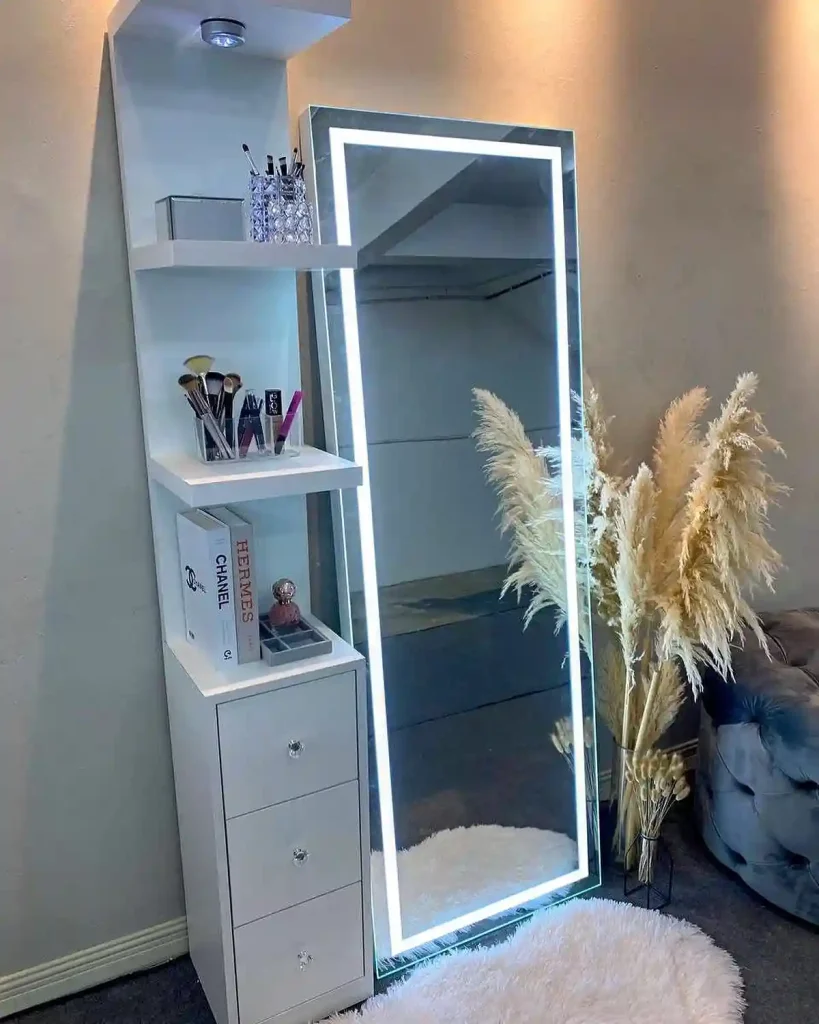
Mirrors are the cheapest way to make a small dorm feel bigger. They reflect light, add depth, and turn a plain wall into a functional surface.
The mirror above is a leaner-style LED model with built-in lighting. Three shelves beside it hold makeup brushes, perfume, and small decor. The combination of the mirror and the shelves turns a narrow wall into a full vanity station.
What to look for:
- A tall leaner mirror for the largest possible reflection
- A model with built-in LED lighting if you plan to use it for makeup
- A companion shelving unit or a slim drawer tower beside it
- A white or light-colored rug underneath to reflect more light
Position the mirror opposite the window whenever possible. Daylight reflected back into the room transforms the space all afternoon.
28. Personalise With Meaningful Decor

The best dorm rooms look like the person who lives in them. The bed above layers personal touches on top of the practical setup. A gallery wall with Matisse prints and small drawings, a dreamcatcher, hanging glass terrariums in the window, a floral pillow mixed with a yellow one.
What to display:
- Photos of friends and family in small frames
- Small prints, postcards, or magazine tear-outs
- Souvenirs or small objects that remind you of home
- Art or prints that reflect your interests
- A favorite book or two on open display
A space that feels personally meaningful reduces homesickness more than any decorating choice. This is not decoration for its own sake. It is comfort.
29. Add a Whiteboard for Planning and Creativity
A whiteboard mounted above the desk is one of the most practical dorm room additions. Class schedules, assignment deadlines, and to-do lists stay constantly visible. Nothing important slips through the cracks during a busy semester.

Use colored whiteboard markers for a more visually organized system. Assign a color to each class or activity. Color-coded planning makes the schedule easier to scan at a glance.
A small whiteboard doubles as a creative doodling surface during breaks. Sketching and writing freely between study sessions improves focus when returning to work. The whiteboard earns its wall space many times over every semester.
30. Keep the Room Tidy With a Daily Reset Routine

A tidy dorm room looks larger than a cluttered one. The same square footage reads differently depending on how it is organized. Five minutes of daily tidying maintains the room you worked hard to create.
The room above stays coherent because every surface has a designated purpose. The bed with its layered textiles. The ottomans for hidden storage. The bench for seating or setting things down. The rug defining the zone. Nothing is left to drift.
The daily reset, in order:
- Clear the desk surface. Two minutes. Everything goes back in the organizer or a drawer.
- Return supplies to storage. Three minutes. Everything back in its assigned place.
- Make the bed. Two minutes. Pillows arranged, duvet smooth.
- Hang or fold worn clothes. Two minutes. Nothing on the floor or the chair.
- Quick floor clear. One minute. Shoes, bags, anything out of place goes where it belongs.
Total time: ten minutes. Do it before bed and the room is set for the morning.
Review and reorganize at the start of each semester. Remove items that no longer serve you. Add solutions for new problems. A dorm room that evolves with you always feels fresh.
Frequently Asked Questions (FAQs)
Q1: How do I decorate a dorm room without damaging the walls?
Use Command strips, Command hooks, and washi tape for all wall decorations. Removable peel-and-stick wallpaper transforms walls without damage. Tension rods mount curtains without holes. Lean mirrors and artwork against walls instead of hanging them. These approaches follow dorm policies while still creating a beautiful, personal room.
Q2: How do I make a small dorm room feel bigger?
Use light colors and mirrors to reflect light and create depth. Loft the bed to free significant floor space. Keep surfaces clear and clutter contained in organized storage. Use vertical space with tall shelving instead of spreading furniture across the floor. A consistent color palette makes the small space feel cohesive and more spacious.
Q3: How do I share a dorm room with a roommate and still have my own style?
Divide the room clearly — your side reflects your style and their side reflects theirs. Agree on shared elements like room temperature and guest policies early. Use your bed, desk, and wall space to express your personal aesthetic fully. Coordinate on one or two shared elements like a rug or a desk lamp for visual cohesion across both sides.
Conclusion
A dorm room does not have to feel temporary. With the right ideas it becomes a genuinely comfortable, functional, personal home for the next year. Every idea in this guide is achievable on a student budget with damage-free installation.
Start with the biggest impact items first. Bedding, rug, and lighting. Build from there with storage, personal touches, and cozy textiles. The dorm room you create becomes a real sanctuary during one of the most exciting and challenging periods of your life.