
Working from home sounds like a dream. But without the right setup, it quickly becomes a nightmare. Distractions pile up. Productivity drops. Your back aches from sitting on the couch all day.

The right home office changes everything. It separates work from rest. It keeps you focused, comfortable, and motivated.
Whether you have a full room or just a corner, these 37 home office ideas will help you build a workspace that actually works.
1. Choose the Right Location First
Location is the foundation of any good home office. A dedicated room is ideal. But a quiet corner works just as well with the right setup. The key is consistency so always work in the same spot.

Avoid high-traffic areas of the home. Kitchens and living rooms bring too many distractions. A bedroom corner or hallway nook can work surprisingly well. Pick a spot with natural light if at all possible.
| Location Type | Best For | Space Needed |
|---|---|---|
| Dedicated room | Deep focus work, video calls | Full room |
| Bedroom corner | Compact setups, renters | 4×4 ft minimum |
| Hallway nook | Very small homes | 3×3 ft minimum |
| Basement space | Noise-sensitive work | Full room |
2. Invest in a Quality Desk
Your desk is the most important piece of furniture in your office. A too-small desk creates constant frustration. A sturdy, spacious surface makes work feel effortless. Get the sizing right before anything else.

Measure your space carefully before buying. Allow room for your monitor, keyboard, notebook, and a drink. A depth of at least 24 inches is recommended. Anything smaller feels cramped within days. Best option if you are living in small studio apartment.
3. Get a Proper Ergonomic Chair
A bad chair destroys your back and your focus. An ergonomic chair supports your spine correctly. It reduces fatigue during long work sessions dramatically. This is one investment you should never cut corners on.

Look for adjustable lumbar support and armrests. Your feet should rest flat on the floor. Your screen should sit at eye level. Proper ergonomics prevent pain that builds up silently over months.
| Chair Feature | Why It Matters |
|---|---|
| Lumbar support | Prevents lower back pain |
| Adjustable armrests | Reduces shoulder tension |
| Seat height adjustment | Proper posture alignment |
| Breathable mesh back | Keeps you cool during long sessions |
4. Install a Standing Desk or Converter
Sitting all day damages your health long-term. A standing desk lets you alternate between sitting and standing. Even short standing breaks make a significant difference. Your energy and focus improve noticeably throughout the day.

A desk converter is a more affordable option. It sits on top of your existing desk. You raise it when you want to stand and lower it when seated. Many models cost far less than a full standing desk.
5. Maximize Natural Light
Natural light improves mood, focus, and energy. Position your desk near a window whenever possible. Face the window from the side rather than directly. This avoids screen glare while still capturing the light.

If natural light is limited, use daylight-spectrum bulbs. They mimic natural daylight very closely. This reduces eye strain and keeps your energy stable. Never work under harsh, cold fluorescent lighting if you can help it.
If you are working with a tricky room layout, these slanted ceiling bedroom ideas show creative ways to position furniture and lighting in awkward spaces that apply perfectly to unusual home office corners too.
6. Use Wall-Mounted Shelves for Storage
Floor space in a home office is precious. Wall-mounted shelves keep floors clear and surfaces tidy. They hold books, binders, equipment, and decorative objects. The office feels organized without feeling cramped.
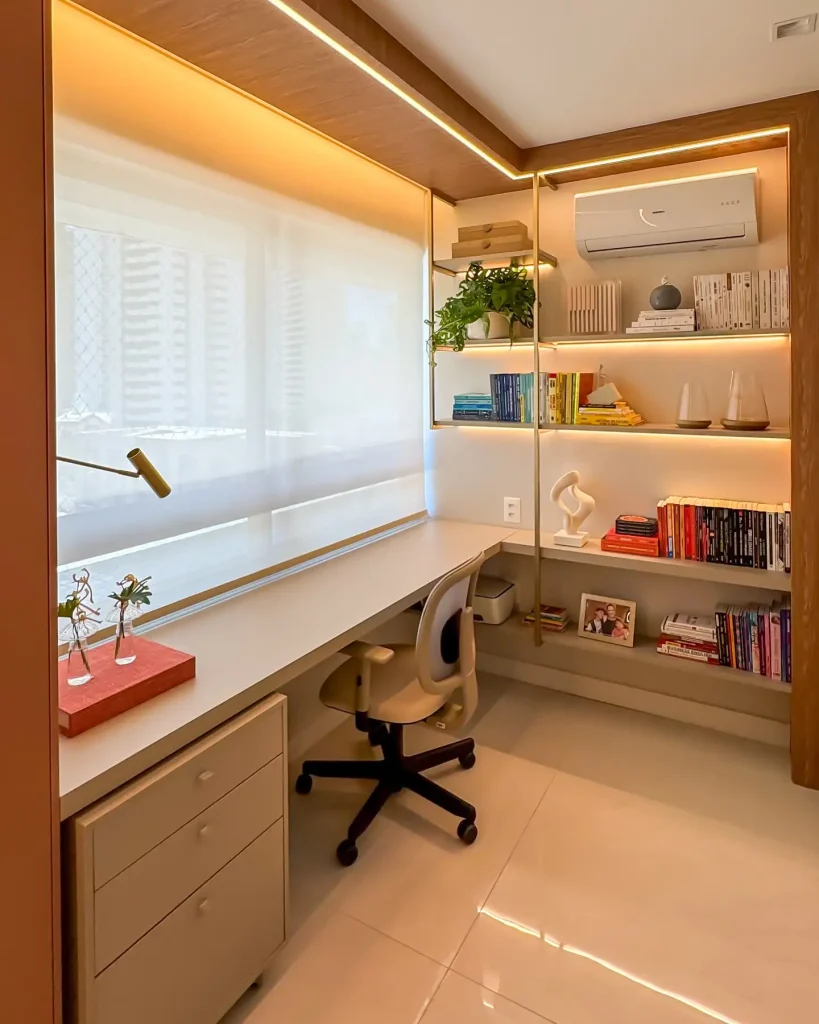
Install shelves above your desk for easy access. Use the highest shelves for items used less frequently. Add small baskets or boxes to keep loose items contained. Styled shelving also makes video call backgrounds look impressive.
| Shelf Style | Best Use | Approximate Cost |
|---|---|---|
| Floating wood shelves | Books and décor | $15–$30 each |
| Metal grid shelves | Equipment and supplies | $20–$40 each |
| Corner shelves | Dead corner spaces | $10–$25 each |
| Pegboard shelves | Flexible, rearrangeable storage | $25–$50 total |
For even more smart storage inspiration, explore these craft room storage ideas that use clever wall storage systems perfectly suited to a home office.
7. Add a Pegboard for Flexible Organization
A pegboard is one of the most versatile office tools available. Mount it on the wall beside or above your desk. Hang accessories, cables, notebooks, and tools from the hooks. Everything stays visible, accessible, and off your desk surface.
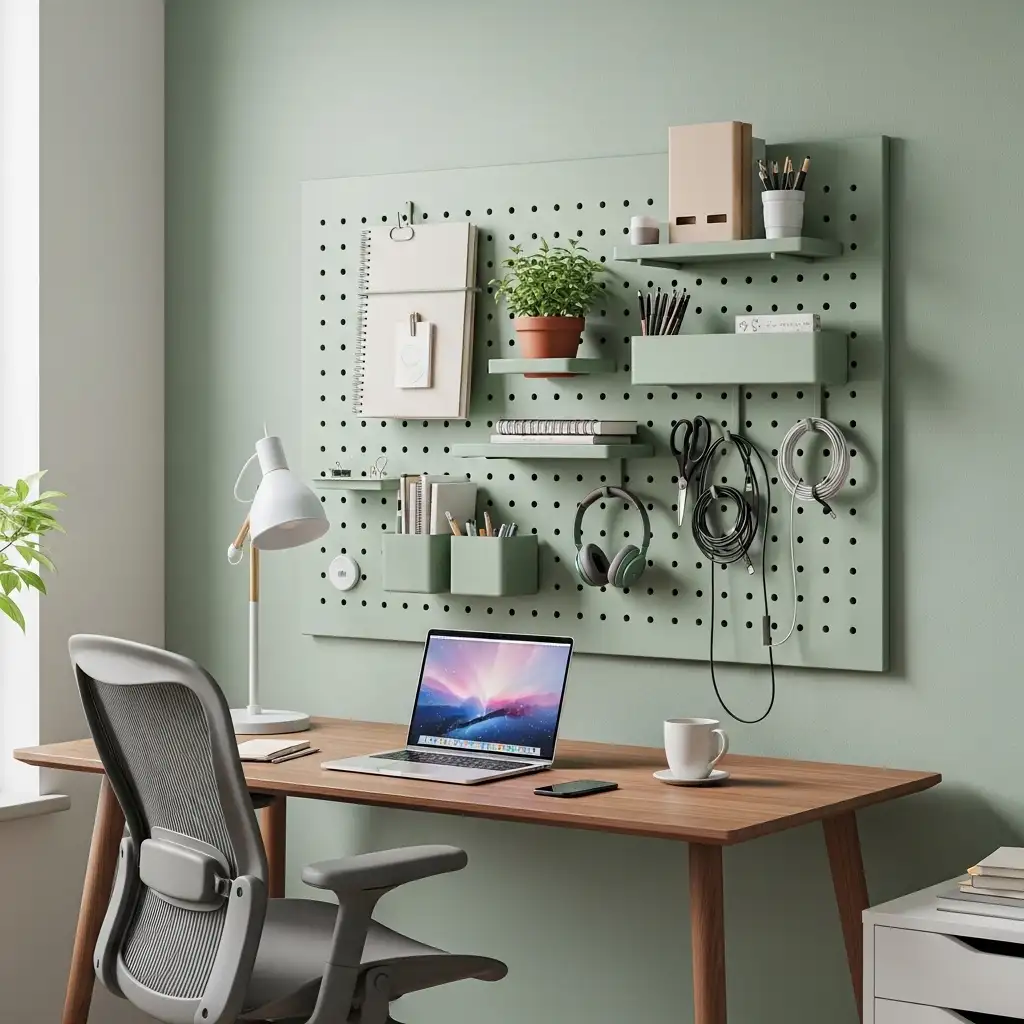
Rearrange the hooks and shelves as your needs evolve. Paint the pegboard to match your office color scheme. A styled pegboard becomes functional wall art. It solves storage problems while looking intentional and designed.
8. Clean Desk Setup

The bones here are simple. A white sit stand desk, a monitor on a raised wood shelf, and a couple of speakers.
What makes it feel like a real room is the styling on top.
A small shelf holds a plant, a model car, a bright alarm clock, and a little mushroom lamp in a soft buttery yellow. The keyboard is mint, the mat is pale, and the one cactus sits in a mustard pot that ties the yellow of the lamp to the rest of the desk.
9. Choose the Right Lighting Setup
One light source is never enough in a home office. Layer your lighting across three types for the best result. Overhead lighting provides general illumination. A desk lamp provides focused task lighting. Ambient lighting behind the monitor reduces eye strain.

A monitor backlight is a small addition that makes a significant difference. It reduces the contrast between a bright screen and a dark room. Your eyes thank you after long work sessions. Good lighting is a productivity tool, not just an aesthetic one.
| Light Type | Purpose | Best Position |
|---|---|---|
| Overhead light | General room illumination | Ceiling, centered |
| Desk lamp | Focused task lighting | Left side of desk |
| Monitor backlight | Reduces eye strain | Behind the monitor |
| Floor lamp | Ambient warmth | Corner of room |
10. Paint an Accent Wall for Inspiration
A plain white office can feel sterile and uninspiring. One bold accent wall changes the entire energy of the room. Choose a color that motivates and energizes you. Deep green, navy, and warm terracotta all work beautifully.

Paint just the wall behind your desk or opposite your screen. This creates a focal point without overwhelming the room. It also makes video call backgrounds look polished and professional. One wall of color costs less than $30 to transform.
For beautiful ceiling and wall color ideas that pair well with bold accent walls, browse these painted ceiling ideas for inspiration that works wonderfully in home office spaces too.
11. Incorporate Plants for a Healthier Workspace
Plants improve air quality in enclosed spaces. They also reduce stress and boost creative thinking. Even one plant on your desk makes the office feel more alive. A shelf of plants makes the whole room feel like a sanctuary.

Choose low-maintenance varieties that thrive indoors. Pothos, snake plants, and ZZ plants need minimal care. They survive in lower light conditions common in home offices. A small plant on your desk is a simple investment with surprisingly large returns.
12. Create a Dedicated Video Call Background
Video calls are a daily reality for most remote workers. Your background says a lot about you professionally. A styled bookshelf, a clean wall, or a small plant arrangement all work well. A thoughtful background builds credibility without saying a word.

Keep the background tidy and consistent. Avoid busy, distracting backgrounds that pull attention. Good lighting from the front is equally important. A ring light positioned correctly makes every video call look more polished.
| Background Style | Professional Level | Setup Cost |
|---|---|---|
| Styled bookshelf | High | $0 if existing |
| Solid colored wall | High | $25–$35 paint |
| Small plant arrangement | Medium-High | $15–$30 |
| Virtual background | Medium | $0 |
13. Use a Whiteboard or Chalkboard Wall
Visual thinkers work better with visible planning tools. A whiteboard keeps tasks, ideas, and deadlines constantly in view. A chalkboard wall takes this further and becomes a design feature too. Both eliminate the need for scattered sticky notes everywhere.

A chalkboard wall is simple to create with chalkboard paint. One coat on a single wall costs around $25–$35. It is completely erasable and endlessly reusable. Magnetic whiteboard paint adds the ability to attach documents and notes too.
14. Build a Home Office in a Closet
A closet office — sometimes called a “cloffice” — is a genius solution. Open the doors and you have a full working setup. Close the doors at the end of the day and work disappears completely. This work-life boundary is incredibly valuable mentally.

Remove the hanging rod and install a desktop surface instead. Add shelving above and below the desk surface. Use the door interiors for hooks, organizers, and pegboards. A closet office punches far above its weight in both function and charm.
If you are working with a compact home and need inspiration beyond the office, these small studio apartment ideas are packed with creative solutions for making every square foot count.
15. Add a Comfortable Reading or Thinking Chair
Not all work happens at a desk. A comfortable chair in the corner supports reading, thinking, and planning. It gives your body a break from the desk posture. Many creative people do their best thinking away from screens.

Choose a compact armchair that fits the scale of the room. Add a small side table and a good reading lamp beside it. This simple addition transforms the office from a single-function room into a fully productive workspace. It makes working from home feel genuinely enjoyable.
16. Install a Door to Reduce Noise and Distractions
An open-plan home office struggles with noise. A door — even a partial one — dramatically reduces sound and distraction. It also signals to others in the home that you are working. This boundary is essential for focus and professional phone calls.

A barn-style sliding door works beautifully in narrow spaces. It slides rather than swinging open, saving precious space. French doors add light while still providing some acoustic separation. Even a heavy curtain across a doorway reduces noise significantly.
| Door Type | Best For | Space Requirement |
|---|---|---|
| Standard hinged door | Maximum noise reduction | Swing clearance needed |
| Barn sliding door | Narrow spaces | Minimal clearance |
| French doors | Light + separation | Standard swing |
| Curtain divider | Renters, flexible spaces | None |
17. Use a Dual Monitor Setup
One monitor limits your productivity significantly. A dual monitor setup allows two documents, applications, or windows open simultaneously. Research on one screen, writing on the other. The workflow improvement is immediate and substantial.

Use a monitor arm instead of two separate stands. Monitor arms free up the entire desk surface below. They also allow perfect height and angle adjustment. The desk looks cleaner, more professional, and more functional as a result.
18. Create a Dedicated Filing and Paper System
Paper chaos is one of the most common home office problems. A clear filing system eliminates the stress of lost documents. Use labeled folders in a filing cabinet or wall-mounted file holders. Handle every piece of paper once and file it immediately.

Go paperless wherever possible. Scan documents and store them digitally. A small desktop scanner costs very little and saves enormous amounts of storage space. A tidy paper system keeps the office calm and professional at all times.
19. Add a Small Bookshelf for Reference Materials
A bookshelf in a home office is both functional and beautiful. It holds reference books, manuals, and professional resources. It also displays personality through book choices and small decorative objects. A well-styled bookshelf makes the office feel like a place of serious work.

Keep only the most relevant and frequently used books on display. Box up books you rarely open to reduce visual clutter. A small curated collection looks more impressive than a crammed shelf. Quality always beats quantity in a professional space.
20. Soundproof Your Home Office
Noise is one of the biggest productivity killers at home. Acoustic panels on walls absorb sound and reduce echo. Heavy curtains also dampen external noise significantly. A good quality headset with noise cancellation handles the rest.

Bookshelves filled with books act as natural sound absorbers too. A thick rug on the floor reduces echo in hard-floored rooms. Soft furnishings throughout the office dampen ambient noise levels. A quieter office is a dramatically more productive office.
| Soundproofing Method | Effectiveness | Cost |
|---|---|---|
| Acoustic wall panels | High | $30–$80 |
| Heavy curtains | Medium | $20–$60 |
| Bookshelf with books | Medium | Already owned |
| Thick floor rug | Medium | $40–$100 |
| Noise-cancelling headset | High (personal) | $50–$300 |
21. Personalize With Art That Inspires You
Bare walls make an office feel cold and corporate. Art that genuinely inspires you improves your mood throughout the day. Choose pieces that reflect your values, goals, or aesthetic. A space that feels personally meaningful drives better work.

Mix framed prints, photographs, and motivational quotes. Arrange them as a gallery wall on one feature wall. Keep the frame styles consistent for a cohesive look. This personal touch transforms a functional space into one you genuinely love working in.
22. Use a Fold-Down or Wall-Mounted Desk
Space is the biggest challenge in many home offices. A wall-mounted fold-down desk solves this brilliantly. It folds flat against the wall when not in use. The room reclaims its full floor space outside working hours.

This solution works in bedrooms, hallways, and living rooms. It creates a home office that appears and disappears on demand. Install a fold-down desk in an alcove for an even cleaner result. The work-life boundary it creates is one of its greatest benefits.
23. Choose a Cohesive Color Scheme
A chaotic color scheme in a home office is mentally exhausting. A cohesive palette of two or three colors creates calm focus. The room feels intentional, designed, and professional. Your brain spends less energy processing visual noise.

Stick to one main color for walls and large surfaces. Use a second color for furniture and textiles. Add a third as an accent through accessories and plants. Repeat each color at least twice throughout the room for visual rhythm.
24. Add a Corkboard or Magnetic Board for Visual Planning
Visual planners need to see their work displayed. A corkboard above the desk keeps current projects visible at all times. Pin mood boards, reference images, and priority lists directly to it. Everything important stays in constant view without cluttering the desk.

A magnetic board offers a cleaner alternative to cork. Attach documents and notes with small magnets. The surface stays flat and the items look neat. Combine a whiteboard and magnetic board in one surface for maximum versatility.
25. Style the Office With Vintage or Antique Pieces
A home office does not need to feel corporate. Vintage and antique pieces add warmth, character, and personality. An old wooden filing cabinet, a vintage desk lamp, or an antique clock all work beautifully. They make the office feel like a place with a story.

Visit antique shops, flea markets, and charity shops for unique finds. A worn leather chair, a brass desk lamp, or vintage framed maps are all perfect. These pieces cost very little but add enormous charm. For vintage styling inspiration, browse these vintage craft room ideas that use antique pieces to create deeply personal and inspiring work spaces.
26. Install a Barn Door or Sliding Panel
A sliding barn door adds character while solving a practical problem. It provides separation between the office and the rest of the home. It slides rather than swinging, saving space in tight layouts. The design statement it makes is remarkable for the cost involved.

Choose a reclaimed wood door for a rustic, warm aesthetic. A painted MDF door with simple hardware works for a cleaner look. Black hardware against a white door is a timeless combination. This single addition elevates the entire home office dramatically.
27. Add a Rug to Define and Warm the Space
A hard floor in a home office feels cold and acoustically harsh. A rug softens the space visually and acoustically. It defines the office zone within a larger room. It also protects the floor beneath a rolling desk chair.

Choose a rug large enough for the desk chair to roll freely on. A too-small rug that catches the chair constantly is deeply frustrating. Flat weave rugs work best under desk chairs. They allow smooth rolling while still adding warmth and color.
28. Mount Monitors at Eye Level
Monitor height is a detail that profoundly affects comfort. A monitor too low causes neck pain over time. A monitor too high causes eye strain. The top of your screen should sit at or just below eye level when seated.

Use a monitor arm for perfect height and angle adjustment. Monitor arms also free up the entire desk surface beneath. A simple monitor riser block is a more affordable alternative. Either option protects your neck and significantly improves working comfort.
| Setup | Neck Angle | Cost |
|---|---|---|
| Monitor on desk surface | Too low, causes strain | $10 |
| Monitor riser block | Improved, adjustable | $15–$30 |
| Single monitor arm | Perfect adjustment | $25–$60 |
| Dual monitor arm | Perfect for two screens | $40–$90 |
29. Use Scent to Boost Focus and Productivity
Scent is one of the most underused productivity tools. Certain smells directly influence focus and mental clarity. Rosemary and peppermint enhance concentration and alertness. Lavender reduces stress during high-pressure work sessions.

A small essential oil diffuser on the desk works beautifully. Choose your scent based on what work you are doing. Creative work benefits from citrus and eucalyptus. Deep focus work responds well to rosemary and mint. Scent is a free upgrade that costs almost nothing to use.
30. Create a Dedicated Storage Wall
A full storage wall in a home office is incredibly functional. Floor-to-ceiling cabinets, shelves, and drawers in one unit hold everything. The rest of the room stays completely clear and focused. The office looks intentional and professionally designed.

Mix open shelving with closed cabinet doors. Open sections display books and decorative objects. Closed sections hide cables, supplies, and paperwork. This combination is both beautiful and highly practical for daily use.
31. Design a Home Office in the Basement
A basement home office offers natural quiet and separation from the rest of the home. It is naturally sound-isolated from household noise. The challenge is lighting — basements often lack natural light. Invest in excellent artificial lighting and warm paint colors to compensate.

Paint the ceiling white or a very light color to reflect light downward. Use warm-toned LED panels and multiple lamp sources. Add plants even without windows — some varieties thrive in low light. A basement office can feel incredibly professional with the right design approach.
For basement ceiling inspiration that transforms a dark, functional space into something beautiful, explore these ideas on painted exposed basement ceilings and exposed basement ceiling that work wonderfully in a home office setting.
32. Use a Nook or Alcove for a Built-In Look
Alcoves and nooks are perfect home office spots. A built-in desk fitted into an alcove looks professionally designed. Shelving above and beside the desk completes the built-in look. The office feels purposeful and permanent rather than improvised.

This setup works in hallways, bedroom recesses, and under staircases. Measure the alcove carefully and build or buy a desk to fit exactly. Add trim and paint everything in one color for a seamless built-in appearance. The result looks custom without the custom price tag.
33. Add a Clock for Time Management
A clock on the wall sounds almost too simple. But visible time awareness improves time management significantly. A desk clock or wall clock keeps you conscious of how long tasks take. It reduces the endless checking of phone screens too.

Choose an analog clock for its calm, unobtrusive presence. A large wall clock becomes a decorative feature simultaneously. Vintage or industrial-style clocks add character to the office. This simple addition costs almost nothing and pays dividends in focus.
34. Incorporate Shiplap or Wood Paneling
Wall texture adds warmth and character to a home office. Shiplap or wood paneling on one wall transforms the space completely. It adds a sense of craftsmanship and intentionality. The office feels less like a spare room and more like a considered space.

Paint the paneled wall a deep, rich color for drama. White or cream shiplap creates a fresh, clean backdrop. This detail photographs beautifully for video calls and social sharing. For shiplap ideas and inspiration, see this detailed guide on shiplap ceiling for design approaches that translate perfectly to home office walls.
35. Set Up a Hobby Corner Within the Office
Many people blend professional and personal creative work. A small hobby corner within the home office supports this beautifully. A compact craft area, a reading nook, or a music corner adds a restorative element. You can shift between focused work and creative relaxation in the same room.

Keep the hobby area physically separate from the primary work desk. Even a few feet of distance makes the mental switch easier. A comfortable chair, good lighting, and dedicated storage make the hobby corner functional. For inspiration on designing creative spaces within practical rooms, these hobby room design ideas offer beautiful and functional approaches.
36. Add a Cubicle-Style Privacy Screen for Open Spaces
Open-plan homes make focused work difficult. A privacy screen or partition beside the desk reduces visual distraction. It creates a psychological boundary around the workspace. Focus improves when the field of vision narrows to the work at hand.

Fabric-covered panels dampen sound and add visual softness. Frosted acrylic panels maintain light while blocking sightlines. A tall bookshelf positioned beside the desk achieves the same effect. For creative ideas on making a workspace feel private and personal within an open setting, browse these cubicle decor ideas that translate directly to home office privacy setups.
37. Keep It Flexible and Evolving
The best home office grows and changes with you. Your needs in year one of remote work differ from year five. Build your office with flexibility in mind from the start. Choose furniture and storage that can be easily rearranged or repurposed.

Review your setup every six months. Identify what is working and what is creating friction. Small improvements made regularly compound into a dramatically better workspace over time. The most productive home office is the one that fits how you actually work — not an idealized version of how you think you should work.
| Review Area | Question to Ask | Action If Needed |
|---|---|---|
| Desk setup | Is the surface large enough? | Upgrade desk or add extension |
| Chair comfort | Any back or neck pain? | Adjust or replace chair |
| Storage | Is clutter building up? | Add shelves or declutter |
| Lighting | Eye strain by end of day? | Add lamp or change bulbs |
| Noise | Struggling to focus? | Add acoustic panels or headset |
Frequently Asked Questions (FAQs)
Q1: How do I set up a home office in a small space?
Use a wall-mounted fold-down desk that disappears when not in use. Go vertical with wall shelves to keep the floor clear. A closet office is ideal for very small homes. Even a dedicated corner with good lighting and a proper chair functions as an effective home office.
Q2: What is the most important piece of home office furniture?
Your chair is the single most important investment. You spend more time in it than any other piece of furniture. An ergonomic chair with proper lumbar support protects your back and sustains your focus. Never compromise on chair quality.
Q3: How do I reduce noise in a home office?
Use acoustic wall panels, heavy curtains, and a thick floor rug. A bookshelf filled with books also absorbs sound. A noise-cancelling headset handles the rest during calls. Even soft furnishings like cushions and throws make a measurable difference.
Q4: What colors work best in a home office?
Soft greens and blues promote calm focus. Warm neutrals like cream and warm grey feel professional without being sterile. A bold accent wall in deep green or navy adds energy without overwhelming the space. Avoid overly bright or overly dark colors for large surfaces.
Q5: How do I separate work from home life when working remotely?
Create a physical boundary with a dedicated workspace. End each day by tidying your desk and closing a door or curtain. A shutdown ritual — closing apps, making a to-do list for tomorrow — mentally ends the workday. Physical and mental boundaries together make remote work sustainable long-term.
Conclusion
A great home office is not about having the most expensive desk or the largest room. It is about designing a space that supports how you work, keeps you comfortable, and makes you want to show up every day. Every idea in this guide is a step toward that goal. Start with what matters most to you and build from there.
Your home office should evolve as you do. Review it regularly and keep improving it. The best workspace you have ever had is entirely within reach. All it takes is intention, a few smart choices, and the willingness to invest in where you spend your working hours.