
Does your basement ceiling looks rough and unfinished?
Exposed pipes, dangling wires, and bare joists make the whole space feel unusable?
You want to fix it but assume it will cost a fortune? That assumption stops most people from ever finishing their basement.
Accurately budgeting for a basement ceiling transformation depends on your room size, material choice, and whether you take the DIY route or hire a professional. Use the interactive calculator below to instantly map out your material costs, tool expenses, and potential DIY savings for your space.
Basement Ceiling Project Cost Calculator
Estimate material, tool, and consumable costs for your basement ceiling project. Compare DIY expenses with professional installation estimates in seconds.
Beautiful basement ceiling does not require a big budget. Smart material choices and simple DIY techniques deliver stunning results for very little money.
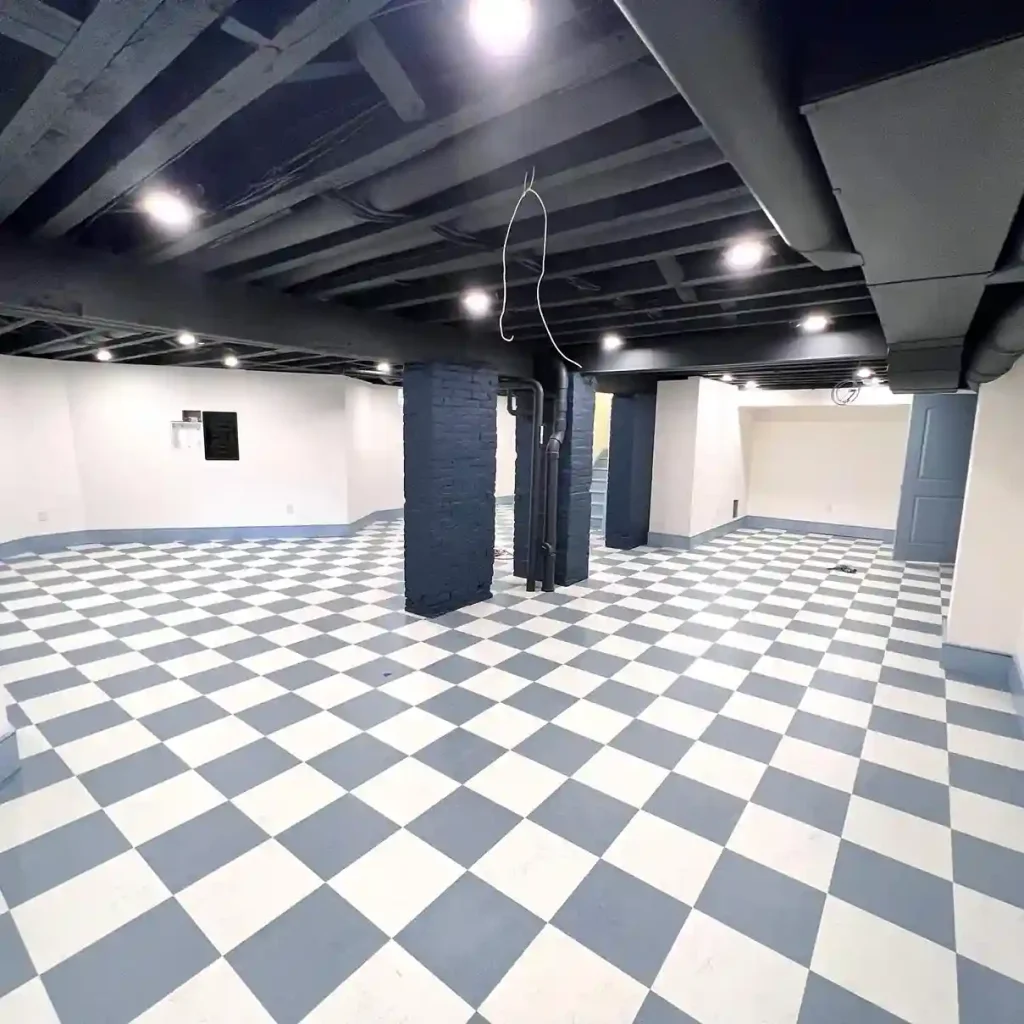
These 30 cheap basement ceiling ideas prove that budget and beauty are not mutually exclusive. Pick the approach that fits your space, your skill level, and your wallet.
1. Paint the Exposed Ceiling Black for an Industrial Look
Black paint on an exposed ceiling is the cheapest basement ceiling upgrade available. You paint everything exactly as it is. Paint joists, pipes, ducts, and wires.
Nothing is hidden or removed. The uniform black color makes all the chaos visually disappear.

The result looks deliberately industrial and designed. It is the same technique used in restaurants, bars, and loft apartments worldwide.
A single gallon of flat black paint covers a significant ceiling area. Materials cost under $40 for most basement rooms.
| Paint Finish | Visual Effect | Best Basement Use | Cost |
|---|---|---|---|
| Flat black | Dramatic, loft-like | Bar, game room, theater | Very Low |
| Dark grey | Sophisticated, moody | Den, lounge, office | Very Low |
| Deep navy | Rich, cozy, dramatic | Media room, study | Very Low |
| Flat white | Bright, airy, clean | Playroom, family room | Very Low |
| Warm cream | Soft, livable | Guest room, hobby room | Very Low |
For a complete guide to painted exposed basement ceiling finishes, colors, and techniques, explore this detailed resource on painted exposed basement ceiling ideas.
2. Leave It Exposed and Style Around It
An exposed basement ceiling costs nothing to create. The trick is styling the rest of the room around it. Industrial shelving, Edison bulb pendants, concrete or wood accents. These all suit a raw ceiling naturally. Done right, the ceiling becomes part of a cohesive look, not an unfinished problem.
The key is commitment. A half-finished exposed ceiling looks abandoned. A fully styled room looks curated and cool.
Your checklist:
- Clean the joists thoroughly. Remove all loose debris, cobwebs, and dangling wires before you style anything.
- Paint the joists in one consistent color, even if you leave pipes unpainted.
- Hang Edison pendants between the joists at consistent heights.
- Choose industrial furniture and shelving to match the raw ceiling.
- Define the floor with a large area rug to anchor the space.
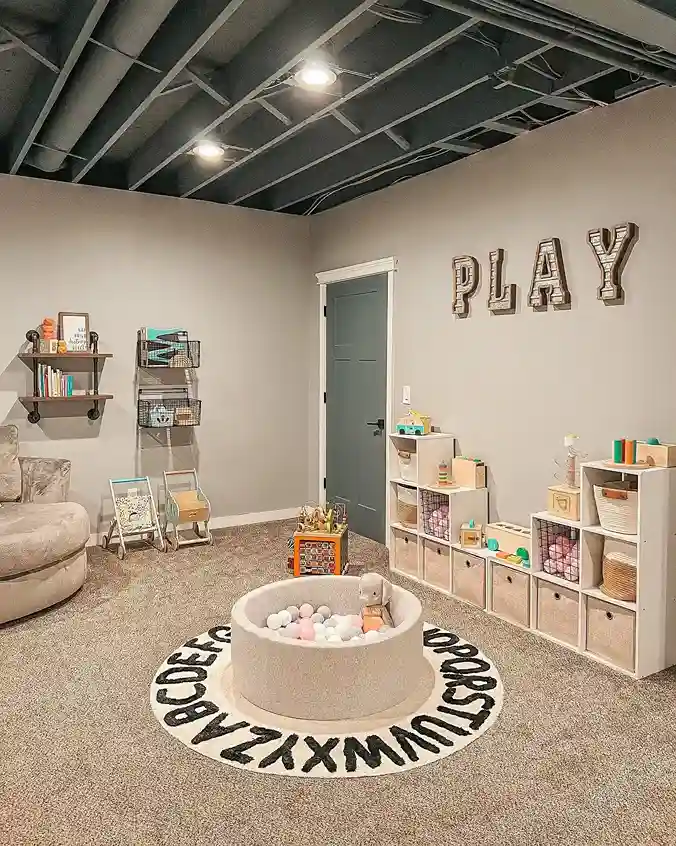
Instead of covering the ceiling, this one paints everything exposed: the joists, the subfloor above, the ducts, the pipes, the wiring. All of it goes one flat dark grey, so nothing stands out and the whole ceiling reads as a single plane. The trade off is noise and dust, because nothing is sealed. The payoff is headroom and access to anything above without tearing a panel down.
For complete inspiration on exposed basement ceiling design approaches and styling strategies, explore these exposed basement ceiling ideas.
3. Install Budget Shiplap Planks for Farmhouse Warmth
Shiplap planks turn a basement ceiling from raw to refined fast. Basic pine shiplap from a lumber yard costs very little per square foot.
It nails straight onto ceiling joists with a standard nail gun. Painted white, shiplap makes even a low basement ceiling feel brighter and more finished.

This one covers the ceiling with white planks and then wraps the structural beam in trim so it reads as intentional instead of exposed. The whole ceiling and beam go white, and the trim work is what makes it look finished. T
his is a middle cost option, more than paint, less than a drop ceiling, and the result feels like a real room, not a basement.
Thin white plank paneling, installed over furring strips so it sits flush.
Wrapped beams in matching trim turn a structural problem into a design feature.
| Shiplap Finish | Room Atmosphere | Approximate Cost per sq ft |
|---|---|---|
| Painted white | Bright, farmhouse, clean | $1.50–$3.00 |
| Natural pine | Rustic, warm, cabin | $1.00–$2.50 |
| Whitewashed | Coastal, airy, soft | $1.50–$3.00 |
| Grey washed | Modern, cool, contemporary | $2.00–$3.50 |
| Dark stained | Dramatic, moody, rich | $2.00–$4.00 |
For a complete shiplap ceiling installation guide covering techniques, finishes, and design applications, explore this detailed resource on shiplap ceiling ideas.
4. Use Peel-and-Stick Wood Planks for a Renter-Friendly Option
Peel-and-stick wood plank panels are the easiest ceiling upgrade available.

They apply directly to any smooth surface with no nails, no tools, and no mess.
The adhesive backing holds firmly overhead. Removal is clean and leaves no permanent damage behind.
Read more cheap wood ceiling ideas for better look.
5. Hang Fabric From the Ceiling for a Dramatic Budget Fix
Draped fabric is an unexpected ceiling solution that costs very little. Large panels of lightweight fabric like linen, muslin, or cotton canvas create a soft, tented effect. The fabric hides pipes, wires, and structural elements completely. No hard installation required.

Pick your color:
- White or cream: Creates a bright, airy tent feel.
- Deep navy or charcoal: Creates a dramatic, cocooning atmosphere.
How to install it:
- Choose fabric that suits your room’s palette.
- Secure panels to the joists with simple cup hooks.
- The whole setup is reversible and costs less than most hard ceiling materials.
| Fabric Type | Ceiling Effect | Cost per Yard | Best Room Use |
|---|---|---|---|
| White muslin | Airy, tent-like, soft | $2–$5 | Guest room, craft room |
| Cream linen | Warm, cottage, relaxed | $5–$12 | Lounge, bedroom |
| Dark canvas | Dramatic, enclosing | $4–$8 | Bar, theater, den |
| Sheer voile | Light, dreamy, romantic | $3–$6 | Bedroom, reading room |
| Burlap | Rustic, textured, earthy | $2–$4 | Cabin room, workshop |
6. Install Budget Drop Ceiling Tiles for Easy Access

Drop ceiling tiles are the most practical cheap basement ceiling solution when you have complex mechanical systems overhead.
The grid framework hangs below the existing ceiling structure. Individual tiles drop into the grid and lift out anytime for plumbing or electrical access above.
Modern tiles look better than ever:
- White mineral fiber tiles: Clean, finished appearance. Cost: $1–$2 per tile. Low moisture resistance.
- White vinyl tiles: Smooth and modern. Cost: $2–$4 per tile. High moisture resistance.
- Faux tin vinyl tiles: Decorative and vintage. Cost: $3–$7 per tile. High moisture resistance.
- Wood-look vinyl tiles: Warm and natural. Cost: $4–$8 per tile. High moisture resistance.
- Smooth foam tiles: Lightweight and easy. Cost: $1–$3 per tile. Medium moisture resistance.
One extra tip: Paint the grid framework to match the tiles for a more seamless look. Total cost for a basic drop ceiling system is very affordable.
7. Apply a Simple White Paint to Existing Drywall
If your basement already has drywall on the ceiling, a fresh coat of white paint is the cheapest upgrade possible. Old, stained, or yellowed basement drywall ceilings look dramatically better after a proper paint job.
Use a high-quality primer first to seal any stains. Apply two coats of ceiling white in a flat finish for the best result.

A basement living area that leaves the ceiling exposed and painted white, then adds a tall wood slat partition for the TV.
The partition hides the back of the TV and gives the room a focal point, so the eye stops looking at the ceiling above. The white painted joists and ducts fade into the background.
This is the cheapest possible way to make an exposed basement ceiling feel finished.
8. Create a DIY Coffered Ceiling With MDF Trim
A coffered ceiling looks expensive. The basic version built from MDF trim pieces costs very little. Arrange simple flat molding strips in a grid pattern directly onto the existing ceiling surface. Paint everything the same color for a seamless built-in result. The grid creates the visual impression of deep architectural panels overhead.

| Coffered Grid Size | Room Size Best Fit | Material Cost Estimate |
|---|---|---|
| 12×12 inch panels | Small rooms under 150 sq ft | $40–$80 |
| 18×18 inch panels | Medium rooms 150–250 sq ft | $60–$120 |
| 24×24 inch panels | Large rooms 250–400 sq ft | $80–$160 |
| 36×36 inch panels | Very large open basement | $100–$200 |
9. Use Reclaimed Pallet Wood for a Free Ceiling Material
Pallet wood is available for free or nearly free from warehouses, garden centers, hardware stores, and online marketplaces. Disassemble pallets carefully.
Sand all boards smooth to remove splinters. Sort by thickness for a more consistent installation. The result is a ceiling that cost almost nothing in materials but looks deeply characterful.
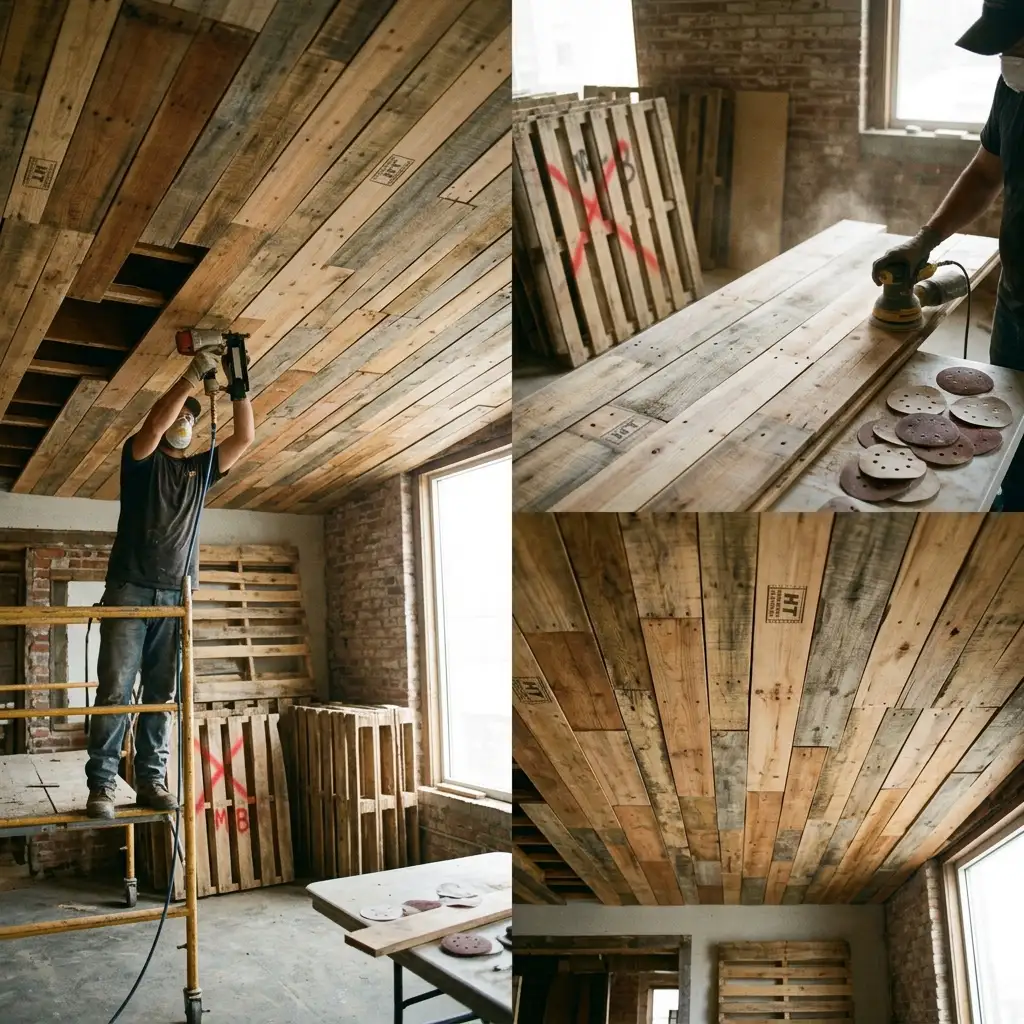
How to Install a Pallet Wood Ceiling Safely
- Source only clean pallets marked HT (heat treated) for safe indoor use.
- Avoid pallets marked MB (methyl bromide treated). These are chemically treated and not safe indoors.
- Sand all faces smooth and knock off any protruding staples or nails.
- Arrange boards in a random pattern for the most authentic reclaimed look.
- Seal with two coats of matte polyurethane for a durable, dust-free finish.
10. Install Budget Beadboard Panels for a Classic Look
Beadboard panels are one of the most affordable finished ceiling options. Sheet form beadboard covers large areas quickly and costs significantly less than individual strips.
The narrow vertical groove pattern adds classic texture to any basement ceiling. Painted white or cream, beadboard suits cottage, coastal, and traditional basement styles beautifully.

How to Install a Beadboard Ceiling
- Attach panels: Beadboard sheets install with construction adhesive and finish nails directly onto ceiling joists.
- Cut to size: Use a circular saw or jigsaw.
- Fill joints and nail holes: Do this before painting for a seamless result.
- The payoff: The finished ceiling looks clean, traditional, and perfect for a livable basement space.
Beadboard options to consider:
- Sheet beadboard (4×8 ft): Covers fast and large areas. Costs $15–$25 per sheet. Easy DIY.
- Individual T&G strips: Authentic and classic. Costs $1.50–$3 per sq ft. Moderate difficulty.
- PVC beadboard: Moisture resistant. Costs $2–$4 per sq ft. Easy DIY.
- Paintable vinyl bead: Easy to finish. Costs $1.50–$3 per sq ft. Easy DIY.
11. Hang Cheap Ceiling Tiles Over Existing Drop Grid
If your basement already has a drop ceiling grid framework in place, replacing the tiles is the cheapest upgrade possible. Old stained tiles swap out for fresh new ones in minutes.
No new framework is needed. The total cost is just the price of replacement tiles. The visual improvement is immediate and significant.

Replace Old Drop Ceiling Tiles for an Instant Upgrade
New tiles in white, wood-look, or tin-pattern designs completely transform a ceiling’s look. Even swapping old yellowed mineral tiles for fresh white vinyl makes the basement feel dramatically cleaner and more finished. This is the lowest-effort, highest-impact cheap basement ceiling upgrade on the list.
Quick steps:
- Measure first. Check the existing grid openings before buying replacement tiles.
- Confirm the size. Standard grids are 2×2 or 2×4 feet. Yours may differ.
- Install gently. Press new tiles into the grid from below at a slight angle.
- Go all in. Replace every tile at once for a consistent fresh look.
- Refresh the grid. Paint the framework if it’s discolored or rusty.
12. Add Faux Wood Beams on a Budget
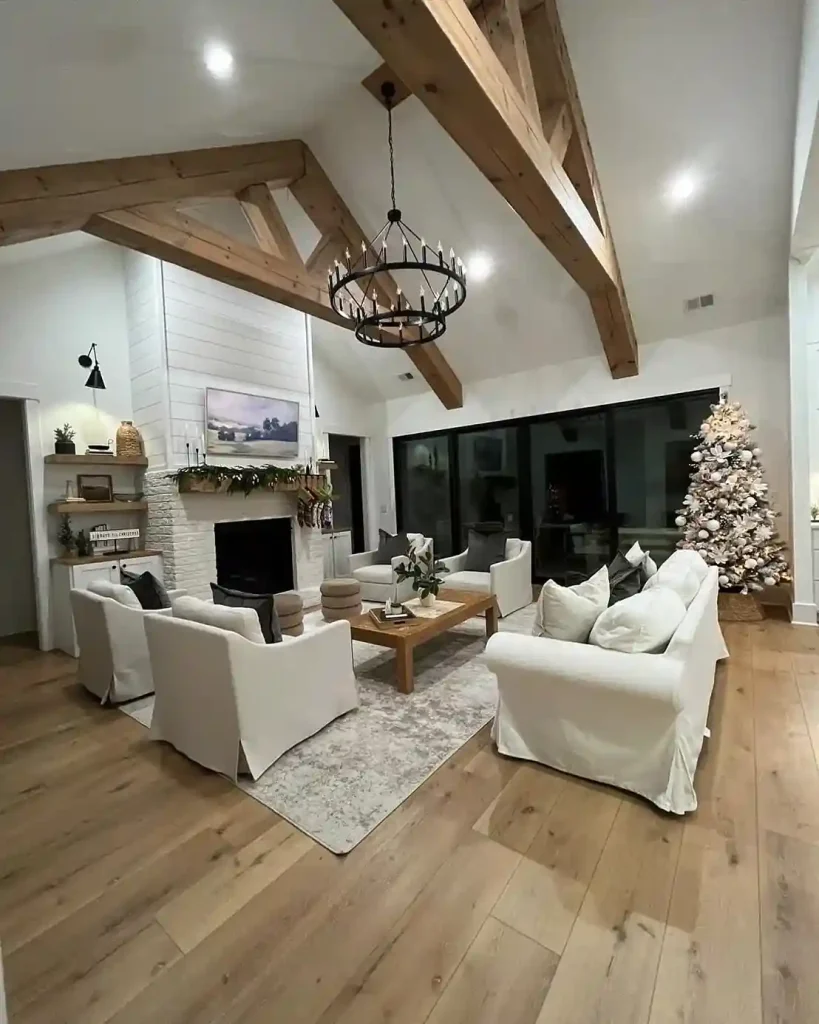
Lightweight faux wood beams made from polyurethane foam cost far less than real timber. They mount directly to the ceiling surface with construction adhesive and simple screws.
The installation takes hours. The result looks convincingly like real structural beams from any normal viewing distance in the room.
| Faux Beam Type | Cost Each | Weight | Finish Options |
|---|---|---|---|
| Polyurethane foam | $15–$50 | Very light | Many wood tones |
| Lightweight MDF box beam | $10–$30 | Light | Paint or stain |
| Hollow pine box beam | $20–$60 | Moderate | Paint, stain, or wrap |
| Wrapped cardboard beam | $5–$15 | Very light | Paint only |
For a complete guide to faux wood beam options, finishes, and installation techniques for ceilings, explore this detailed resource on faux wood beams ceiling ideas.
13. Use Plywood Sheets for Budget Wood Coverage
Plywood is one of the most cost-effective ceiling materials for covering large basement areas.
Standard 4×8 foot sheets cover significant surface area per panel.
Baltic birch plywood has a particularly attractive, even grain that looks genuinely elegant when sanded and finished. Sand all surfaces smooth, fill any voids with wood filler, and finish with polyurethane.

Plywood Ceiling: Tips for a Smooth Finish
- Buy the best grade you can afford. Higher-grade plywood gives you the smoothest, most attractive face.
- Sand thoroughly. Work from 80 grit up to 220 grit for a glass-smooth finish.
- Use wood conditioner before staining. It prevents blotchy, uneven results.
- Fill all panel edge joints with paintable caulk before finishing.
- Consider painting it white. In livable spaces, painted plywood looks cleaner and more finished.
14. Create a Cheap Basement Home Office Ceiling
A finished basement home office ceiling dramatically improves the workspace experience. Working beneath a beautiful ceiling changes how the room feels throughout the entire day.

Even a simple white shiplap or painted drywall ceiling transforms a basement office from a temporary solution into a genuinely inspiring workspace.
For complete basement home office design ideas covering layout, lighting, storage, and ceiling choices, explore this comprehensive guide on home office ideas.
15. Paint Exposed Pipes and Ducts a Contrasting Color
Rather than hiding basement pipes and ducts, paint them in a deliberate contrasting color. Black pipes on a white ceiling create a graphic, architectural look.

Copper-painted pipes on a dark ceiling create a steampunk-inspired atmosphere. White pipes on a black ceiling create a clean industrial contrast.
16. Install a Simple Wood Plank Ceiling in a Craft Room
A wood plank ceiling in a basement craft room creates an inspiring, warm creative environment.

The natural material overhead improves the atmosphere of the workspace in ways that are difficult to quantify but immediately felt.
Even budget pine planks finished with white paint create a significant improvement over bare joists.
For complete basement craft room organization and design ideas that pair with a wood ceiling, explore these craft room storage ideas.
17. Use Cheap Acoustic Foam Panels for a Recording Space
Acoustic foam panels are one of the most budget-friendly ceiling treatments for a basement music room, podcast studio, or recording space.
Foam panels absorb sound and reduce echo dramatically. The cost per panel is very low. Installation with spray adhesive is quick and straightforward.

Acoustic Foam Panels: Cut the Echo
Want a recording studio look? Go with charcoal or black foam panels.
Here’s how to do it right:
- Cover at least 30 percent of the ceiling. That’s the minimum for real acoustic improvement.
- Put panels at reflection points, especially right above where you record.
- Use spray adhesive rated for foam and ceilings. This keeps panels from falling.
- Add corner bass traps too. Ceiling panels plus bass traps give you the most complete treatment.
Bottom line: Panels alone help. Panels plus bass traps change everything.
18. Create a Cheap Ceiling With Bamboo Panels
Bamboo ceiling panels are a sustainable and affordable ceiling material. Natural golden bamboo adds warmth that suits kitchens, sunrooms, and casual living areas.

The panels cut easily with standard woodworking tools and mount onto ceiling joists with finish nails. Bamboo is lighter than most wood species and significantly faster to install.
| Bamboo Ceiling Style | Best Basement Room | Sustainability | Approximate Cost |
|---|---|---|---|
| Natural golden bamboo | Lounge, dining area | Excellent | $2–$4 per sq ft |
| Carbonized dark bamboo | Den, bar, study | Excellent | $3–$5 per sq ft |
| Woven bamboo panels | Boho, tropical, casual | Excellent | $2–$5 per sq ft |
| Painted bamboo | Any style room | Excellent | $2–$4 per sq ft |
19. Add a Cheap Ceiling to a Basement Laundry Room
A finished ceiling in a basement laundry room transforms the most utilitarian space into something genuinely pleasant.
Even basic white painted drywall or drop ceiling tiles make the laundry room feel intentionally designed. Better lighting and a finished ceiling make the chore of laundry significantly more bearable.

- Use moisture-resistant materials in all laundry room ceiling applications
- Install bright daylight-spectrum lighting to counteract the underground location
- Choose easy-to-clean surfaces that wipe down without damage
- Paint any exposed pipes above the ceiling treatment white to minimize their visual presence
- For complete laundry room design ideas, explore these laundry room ideas
20. Install a Cheap Drop Ceiling in a Basement Hobby Room
A drop ceiling in a basement hobby room solves storage and access problems while creating a finished overhead.
Above the grid tiles, you have a hidden zone perfect for storing seasonal items, light equipment, and organized supplies in labeled bins. The ceiling hides the clutter while the room below stays tidy and functional.

For complete hobby room design ideas that pair beautifully with a finished basement ceiling, explore these hobby room design ideas.
21. Use MDF Trim for a Budget Coffered or Panel Effect

MDF trim pieces from the hardware store create the look of expensive architectural ceiling details. Flat molding strips arranged in rectangles or squares on a painted drywall ceiling create a paneled effect. Paint everything, ceiling and trim, in the same flat white for a seamless built-in result.
Quick steps:
- Cut with a miter saw. Clean 45-degree corner joints make all the difference.
- Attach with a finish nailer and construction adhesive. Nail the trim right to the ceiling drywall.
- Fill nail holes and miter joints with painter’s caulk before priming.
- Paint two coats of flat ceiling white for the most seamless result.
The best part: MDF trim costs $2–$6 per 8-foot length. That makes this an extremely affordable upgrade.
22. Try a White Stretch Fabric Ceiling for a Smooth Finish
A basic stretch fabric ceiling system uses inexpensive white fabric stretched across a simple perimeter frame. The fabric pulls taut and creates a completely smooth, flat ceiling surface. All pipes, wires, and structural elements disappear completely above the membrane. The result looks clean, modern, and finished.

| Stretch Ceiling Approach | DIY Feasibility | Materials Cost | Appearance |
|---|---|---|---|
| PVC membrane on perimeter track | Moderate | Moderate | Very smooth |
| Stapled fabric on frame | Easy | Low | Soft, slightly textured |
| Tension fabric panels | Easy | Low | Flat, clean |
| Draped fabric tacked to joists | Very Easy | Very Low | Soft, tent-like |
23. Add Cheap Recessed Lighting to Any Ceiling Type
Recessed lighting makes any basement ceiling look finished and intentional. Whether the ceiling is shiplap, drywall, drop tiles, or painted joists, recessed lights eliminate the harsh single-bulb socket and distribute light evenly across the entire room. The ceiling looks designed rather than functional.
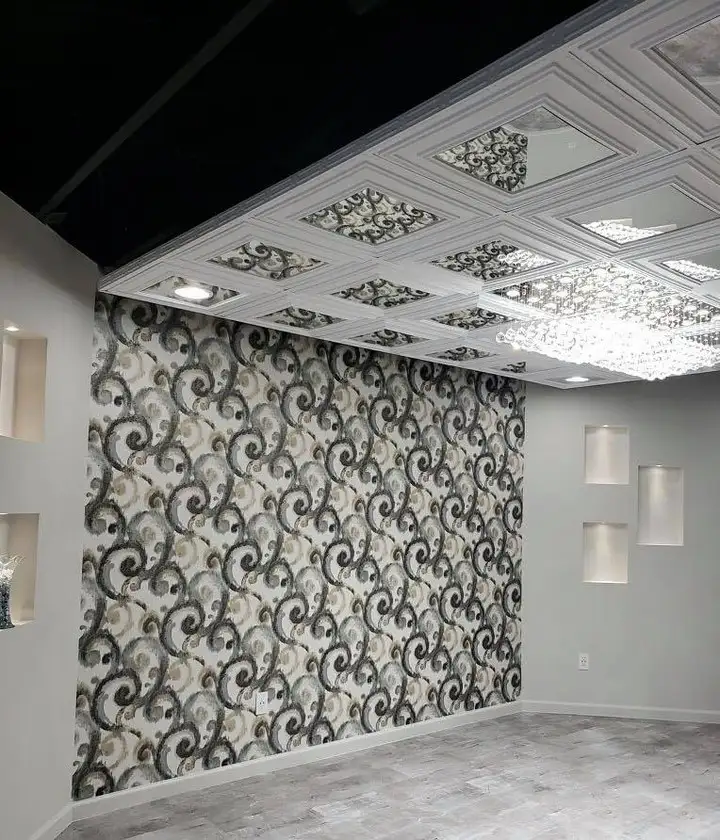
- LED recessed light kits with housing, trim, and bulb cost as little as $8–$15 each
- Install a minimum of one fixture per 20 square feet for adequate illumination
- Use warm white bulbs throughout for a welcoming, livable atmosphere
- Wire all fixtures to a dimmer switch for adjustable mood lighting
- Trim rings in black, bronze, or white suit different ceiling finishes and aesthetics
24. Create a Cheap Cottage Ceiling With Painted Beadboard
Painted white beadboard on a basement ceiling creates a charming cottage atmosphere that makes the basement feel like a proper living space. Combined with warm lighting and soft furnishings, a white beadboard basement ceiling suits reading rooms, craft spaces, guest bedrooms, and casual family rooms beautifully.
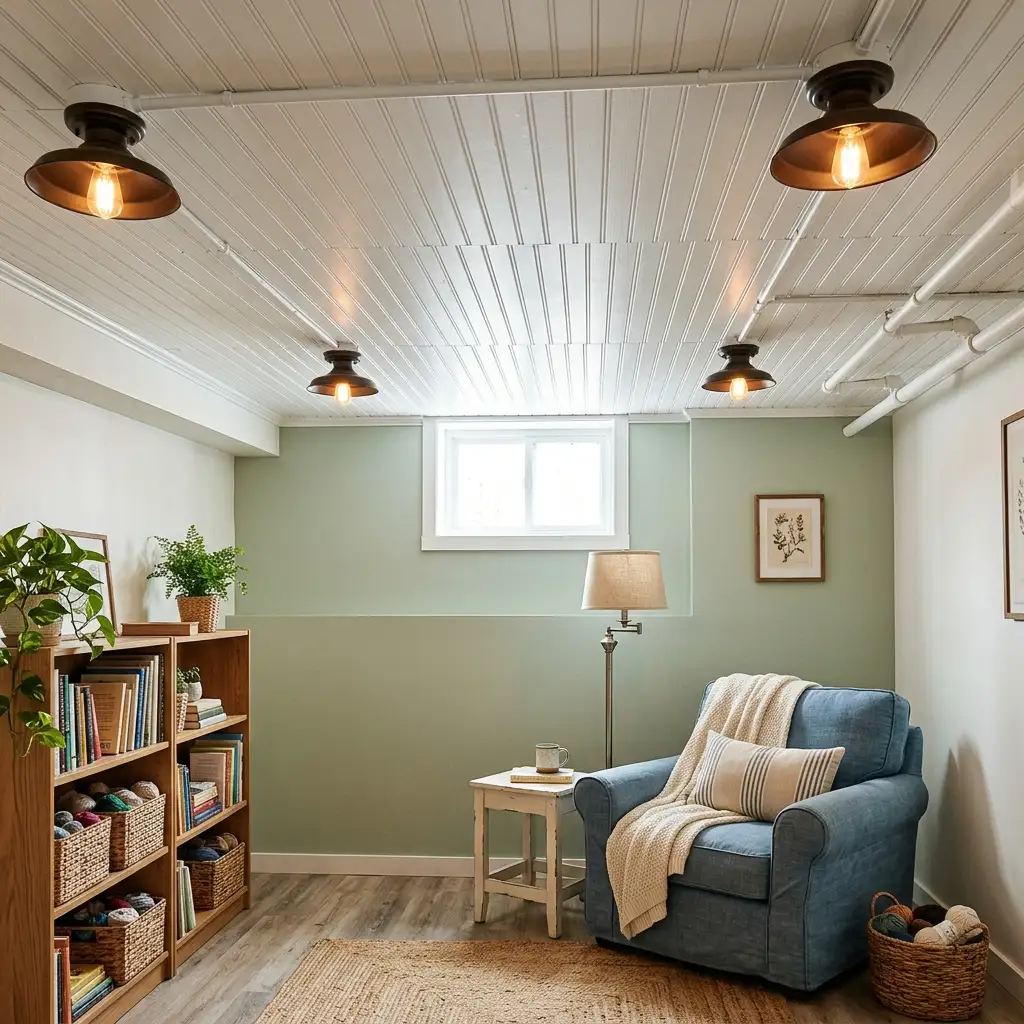
| Beadboard Color | Room Atmosphere | Pairs Best With |
|---|---|---|
| Crisp white | Fresh, airy, classic | Natural wood furniture |
| Warm cream | Soft, cottage, welcoming | Linen and rattan accents |
| Pale sage green | Garden-room, relaxed | Botanical prints, wicker |
| Dusty blue | Coastal, serene | White walls, nautical details |
For English cottage interior design inspiration that pairs naturally with a white beadboard basement ceiling, explore these English cottage bedroom ideas for complete aesthetic guidance.
25. Use a Cheap Ceiling Treatment Above a Boys’ Bedroom
A basement boys’ bedroom deserves a ceiling that makes the space feel exciting and designed. Budget options that suit kids’ rooms include painted exposed joists in a bold color, simple white shiplap, or even glow-in-the-dark paint elements added to a dark ceiling. The ceiling treatment can define the entire theme of the room.

- Black painted exposed ceiling plus LED strip lighting creates a gaming room atmosphere
- White shiplap creates a bright, adventurous cabin or sports room feel
- Navy painted drywall with silver star stencils creates a space-themed ceiling
- Natural pine planks create a treehouse or outdoor adventure atmosphere
- For complete boys bedroom design inspiration, explore these boys bedroom ideas
26. Install a Cheap Ceiling in a Basement Bar or Game Room

A basement bar or game room ceiling sets the entire entertainment atmosphere. Black painted exposed joists create an instant bar vibe. Tin-look drop ceiling tiles create a vintage pub atmosphere.
Dark stained wood planks create a warm, intimate lounge feeling. Any of these approaches cost very little and deliver enormous impact.
For warm rustic living room and entertainment space design ideas that translate directly to a basement bar or game room ceiling, explore these warm rustic living room ideas.
27. Try a Budget Ceiling for a Basement Studio Apartment
A basement studio apartment ceiling makes the difference between a space that feels like a home and one that feels like a converted storage room.
Even the simplest white painted drywall ceiling with recessed warm lighting transforms the livability of a basement studio dramatically. The investment in a finished ceiling pays back immediately in comfort and perceived quality.

- White drywall is the most livable and versatile cheap ceiling for a studio apartment
- Shiplap adds character and warmth without significant additional cost
- Recessed lighting is non-negotiable in a basement apartment for livability
- A ceiling fan with integrated warm light improves both air circulation and lighting
- For complete small studio apartment design ideas, explore small studio apartment ideas
28. Use Painted Joists With Colored Pipe Accents in a Small Apartment
A small basement apartment with limited ceiling height benefits from a deliberate exposed ceiling approach. Paint all joists in flat white.
Paint pipes in a single contrasting accent color — copper, mint green, or bright yellow. The pipes become a designed feature rather than an eyesore. The white joists keep the ceiling light and open.

| Accent Pipe Color | Ceiling Joist Color | Resulting Atmosphere |
|---|---|---|
| Copper metallic | Flat white | Industrial chic |
| Mint green | Flat white | Playful, creative |
| Bright yellow | Flat black | Bold, graphic |
| Matte gold | Dark grey | Sophisticated loft |
| Sky blue | Crisp white | Airy, fresh |
For small apartment design approaches that maximize the livability of a small basement space, explore these small apartment ideas.
29. Add Warmth With a Wood Ceiling Near a Fireplace Zone
A wood plank or beam ceiling section directly above a basement fireplace seating area creates extraordinary warmth and atmosphere. The combination of natural wood overhead and fire below creates a layered sensory experience that feels genuinely luxurious regardless of material cost. Even inexpensive pine planks achieve this effect beautifully.

- Concentrate the wood ceiling treatment above the fireplace seating zone only
- A partial wood section above the fire zone costs a fraction of a full ceiling
- Use heat-resistant polyurethane sealant on wood within six feet of any heat source
- Dark stained planks above a stone or brick fireplace creates a cabin atmosphere
- For complete fireplace hearth design and styling inspiration, see fireplace hearth ideas
30. Mix Cheap Ceiling Methods for a Zoned Basement
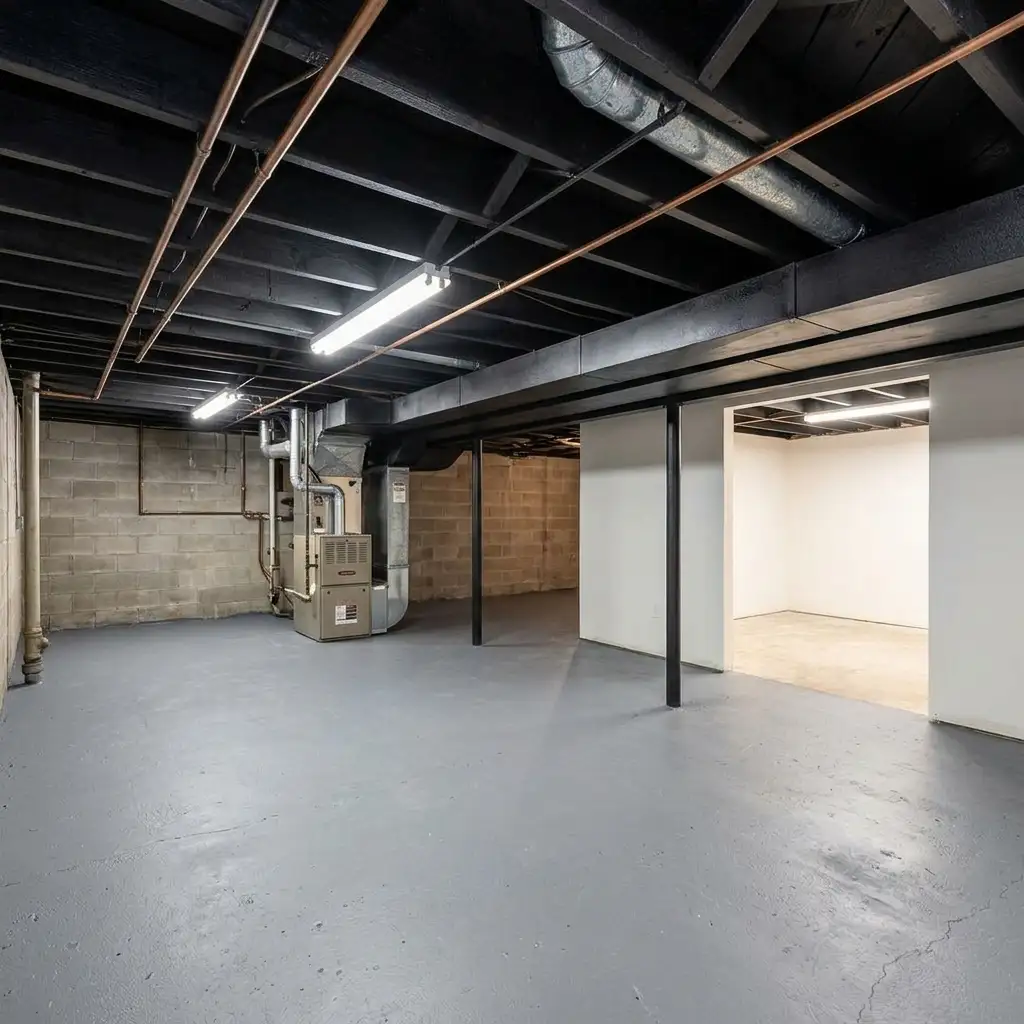
The smartest cheap basement ceiling strategy uses different budget treatments across different zones. Paint the exposed joists in the utility zone.
Install white drop tiles in the laundry area. Add shiplap planks in the main lounge space. Use painted drywall in the bedroom. Each zone gets an appropriate treatment at the right cost level.
| Basement Zone | Recommended Cheap Ceiling | Approximate Cost |
|---|---|---|
| Main lounge area | White shiplap or light planks | Low |
| Home bar or game room | Painted black exposed joists | Very Low |
| Bedroom or guest room | White painted drywall | Low |
| Laundry or utility room | Basic white drop tiles | Very Low |
| Home office | White shiplap or drywall | Low |
| Craft or hobby room | Drop tiles or painted exposed | Very Low |
| Bathroom zone | Moisture-resistant panels | Low |
This zoned approach maximizes budget impact. The most visible and social areas receive the most attractive treatments. The functional utility zones get the most economical solutions. The result is a basement that feels considered and cohesive without spending more than necessary anywhere.
Frequently Asked Questions (FAQs)
Q1: What is the absolute cheapest basement ceiling idea?
Painting the existing exposed ceiling is the cheapest option. One gallon of flat black or white ceiling paint costs $15–$30 and covers most standard basement rooms. The installation requires no professional help, no special tools, and no removal of existing elements. The visual transformation is immediate and dramatic for almost no cost.
Q2: Can I install a cheap basement ceiling myself without professional help?
Yes. Most cheap basement ceiling options are suitable for DIY installation. Painting exposed joists, installing drop ceiling tiles, nailing shiplap planks, and stapling fabric panels all require only basic tools and beginner-level skills. Electrical work for recessed lighting should always be done by or checked by a licensed electrician regardless of other DIY work.
Q3: How do I choose the best cheap basement ceiling for a low ceiling height?
Avoid drop ceilings in basements with ceilings below seven feet as they reduce clearance further. Painted exposed joists are the best option for very low ceilings because they add no thickness whatsoever. Thin peel-and-stick planks and direct-mount shiplap add minimal thickness while still creating a finished appearance.
Q4: Which cheap basement ceiling hides pipes and wires most effectively?
Drop ceiling tiles hide everything above the grid completely and provide easy access when needed. Fabric draped from joists hides pipes visually at very low cost. Peel-and-stick planks on a flat surface hide surface imperfections without access to what is above. Painting everything the same flat black color makes pipes and wires visually disappear without physically removing them.
Q5: How much does the average cheap basement ceiling cost to install yourself?
A painted exposed ceiling costs $30–$80 in materials. Peel-and-stick wood planks average $1–$2 per square foot. Basic shiplap installation runs $1.50–$3 per square foot in materials. A budget drop ceiling system costs $1–$3 per square foot including the grid and tiles. DIY installation eliminates labor costs that typically double the total project price.
Conclusion
A cheap basement ceiling is not a compromise. The right budget choice for your space delivers warmth, character, and livability at a fraction of what most people assume a ceiling upgrade costs. Every idea in this guide is achievable without professional help and without a large budget. The basement above your head is waiting to become something genuinely beautiful.
Start with the simplest idea that fits your timeline and budget today. A single coat of flat black paint, a pack of peel-and-stick planks, or a fresh set of drop ceiling tiles can begin the transformation this weekend. The finished basement you have been imagining is far closer and far more affordable than you think.