A fireplace hearth does more than meet safety codes. It sets the whole tone of your fireplace. Pick the right material and style, and the hearth becomes the heart of the room. Pick the wrong one, and the fireplace never quite feels finished.
This guide covers everything you need to know. Materials like slate, limestone, and granite. The difference between raised and flush hearths. How to style and maintain your hearth for years to come.
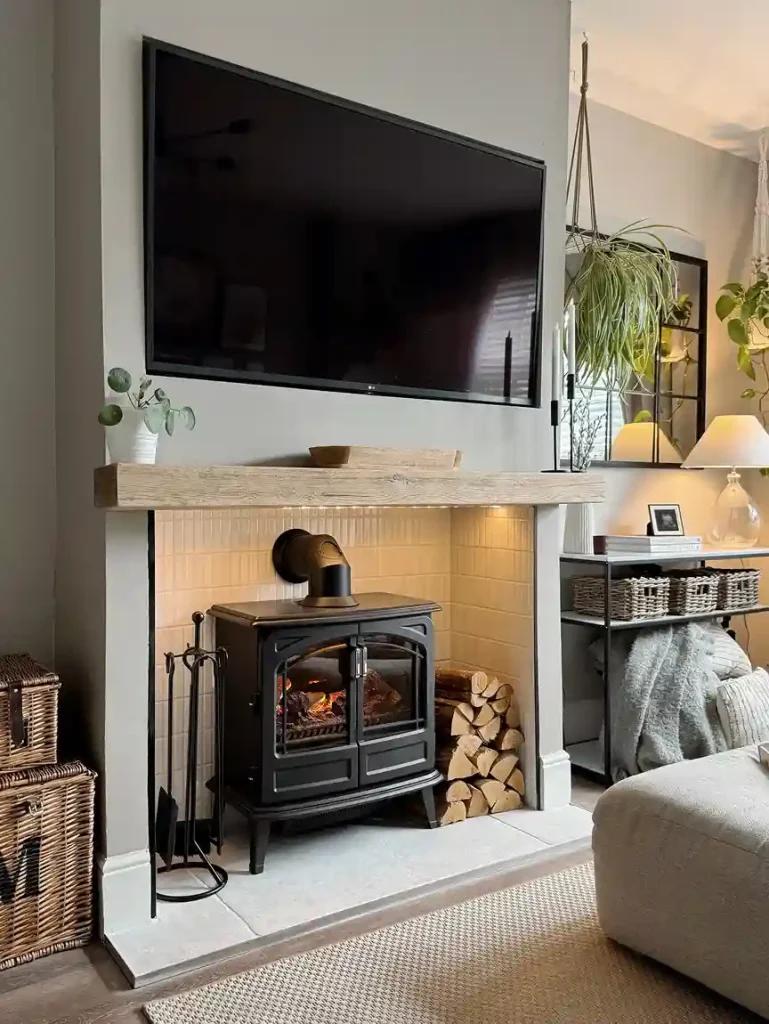
Your fireplace is about to become the most impressive feature in your home. Look very cool when decor with TV.
A Painted Brick Hearth That Doubles as a TV Wall
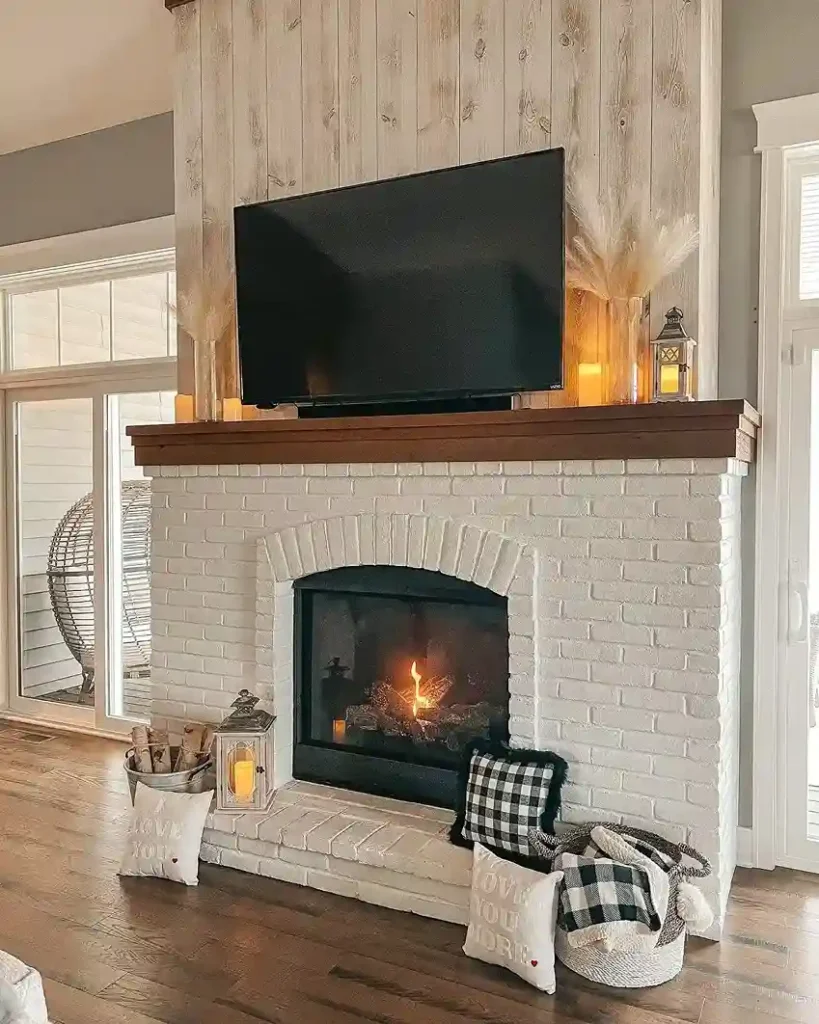
White painted brick carries this fireplace from floor to ceiling, with the TV mounted right above a warm wood mantel. Pampas grass and flameless lanterns soften the hard brick lines.
Buffalo check and script pillows pull it into cozy cabin territory, and a galvanized bucket keeps firewood close at hand.
📌 Good To Know
Painted brick hides uneven color and old soot stains fast, no demo required.
What Is a Fireplace Hearth and Why Does It Matter?
A fireplace hearth is the flat, non-combustible surface that sits directly in front of and beneath a fireplace opening. It serves two equally important purposes.
- The first is safety. The hearth protects the surrounding floor from heat, sparks, and embers that escape the firebox during operation.
- The second is aesthetics. The hearth is a significant design element that frames the base of the fireplace and connects it to the floor of the room.
Streamlined Stone for a Minimalist Mantel
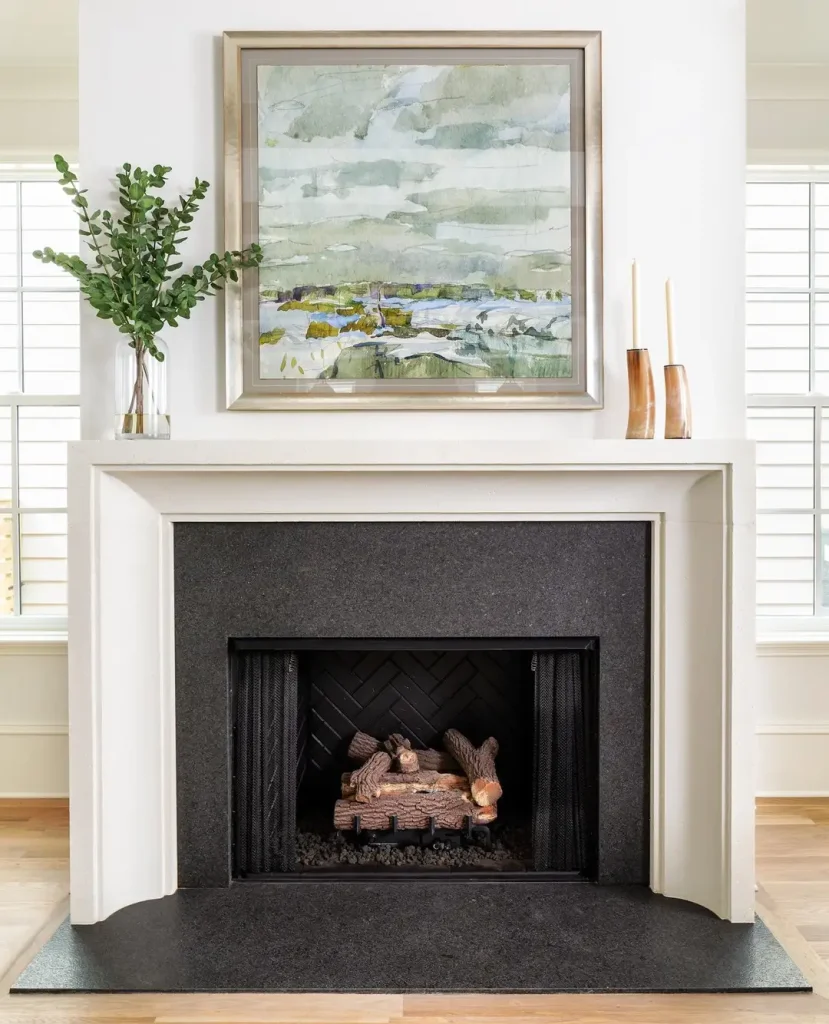
Honed black stone fills the surround and hearth in one continuous slab, framed by a thick limestone mantel. Herringbone tile lines the firebox for a bit of texture against all that flat stone. Slim candle holders and a single piece of art keep the styling restrained on purpose.
A beautiful hearth elevates the fireplace from a practical heating appliance to a genuine architectural centerpiece. This is as true for a traditional wood burning stove living room as it is for a gas fire or decorative open fireplace in any style of home.
Fireplace Hearth Building Regulations and Size Requirements
Before choosing any hearth material or design, understanding the minimum legal requirements for your jurisdiction is essential.
Installing a hearth that does not meet building regulations creates a genuine fire risk, invalidates home insurance in the event of a fire-related claim, and causes significant problems when the time comes to sell the property. It look very aesthetic in the basements with exposed ceiling for a warm look.
Reclaimed Wood Beam Over Soft Pink Brick
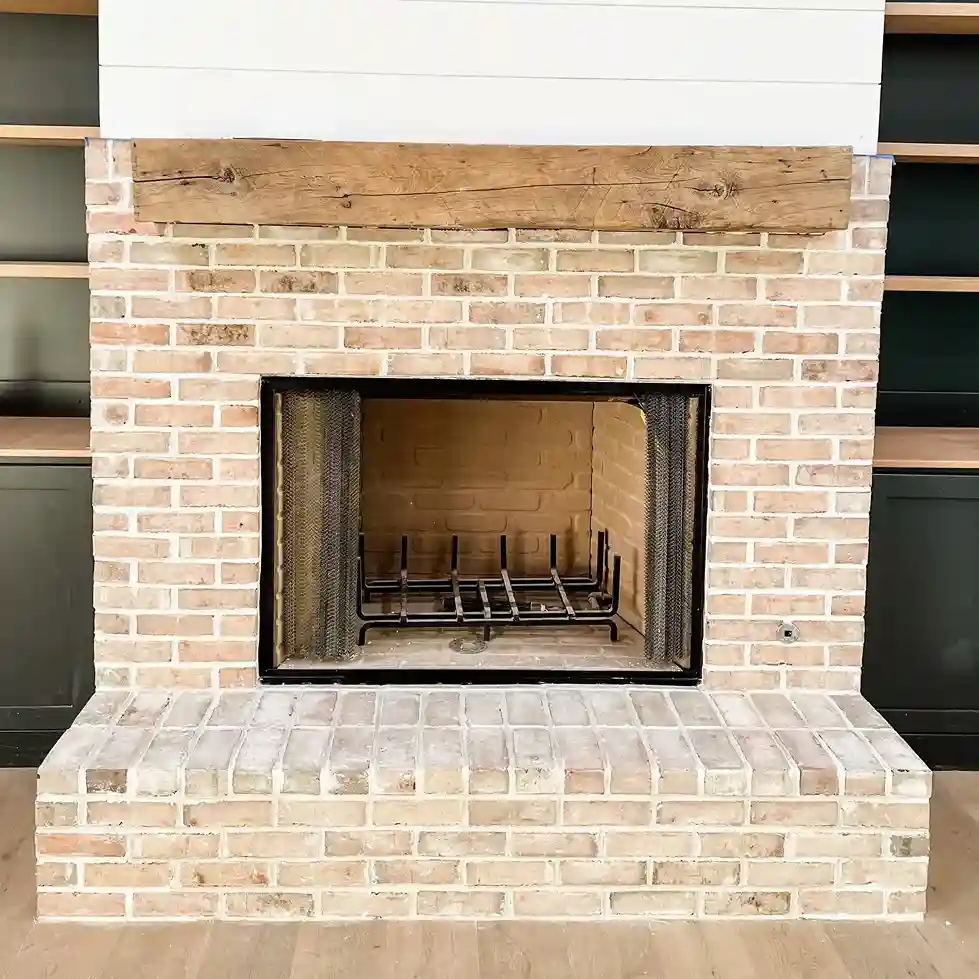
Still mid build, this hearth already shows its bones well.
A weathered reclaimed beam sits as the mantel, raw and unfinished above brick in dusty pink and tan tones.
The hearth floor extends out in matching brick laid flat, giving the whole thing a grounded, lived in feel before a single piece of decor goes up.
What makes this work
Best Materials for a Fireplace Hearth
Picking the right material for your fireplace hearth is one of the biggest decisions in a fireplace renovation. It affects safety, durability, maintenance, and the look of the whole fireplace. Every material has its own strengths and limits.
Your options:
Brick: Traditional, earthy warmth. Perfect for period and farmhouse homes.
Natural stone: The most timeless and universally beautiful choice. Handles heat naturally, develops character with age, and suits every style from farmhouse to contemporary.
Porcelain and ceramic tile: More affordable with an amazing range of colors and patterns.
Slate: Durable and naturally textured. Especially beautiful in rustic and industrial settings.
Polished granite: Sleek and premium. A great fit for contemporary fireplaces.
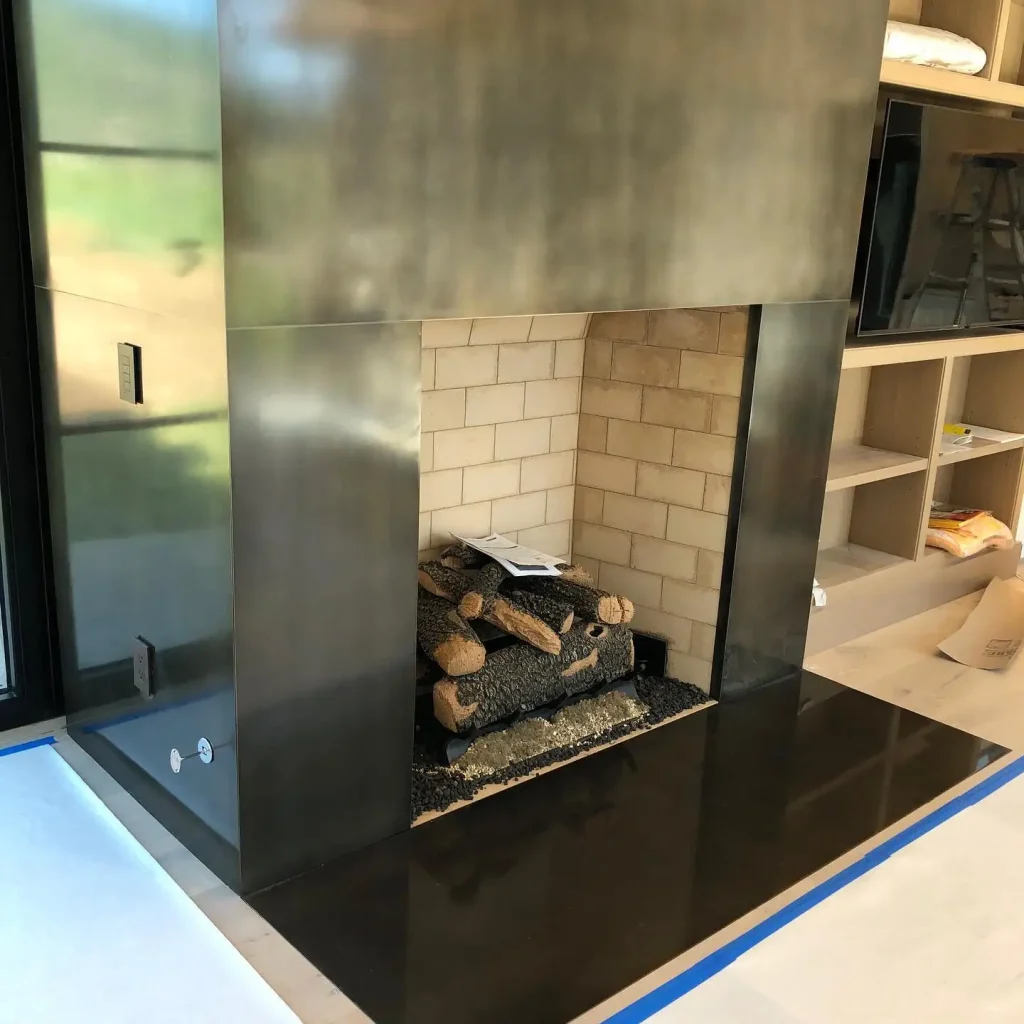
Metal Clad Fireplace with a Glossy Black Hearth
Brushed metal wraps this fireplace floor to ceiling for a look that feels more architecture than decor. The black hearth below is polished to a near mirror finish. Cream subway tile lines the firebox, warming up what could otherwise read cold. Still under construction here, but the shape is already striking.
Metal panels and tile going in, floor still taped off.
A sleek, modern focal wall with real weight to it.
Slate Hearth: The Rustic and Contemporary Choice
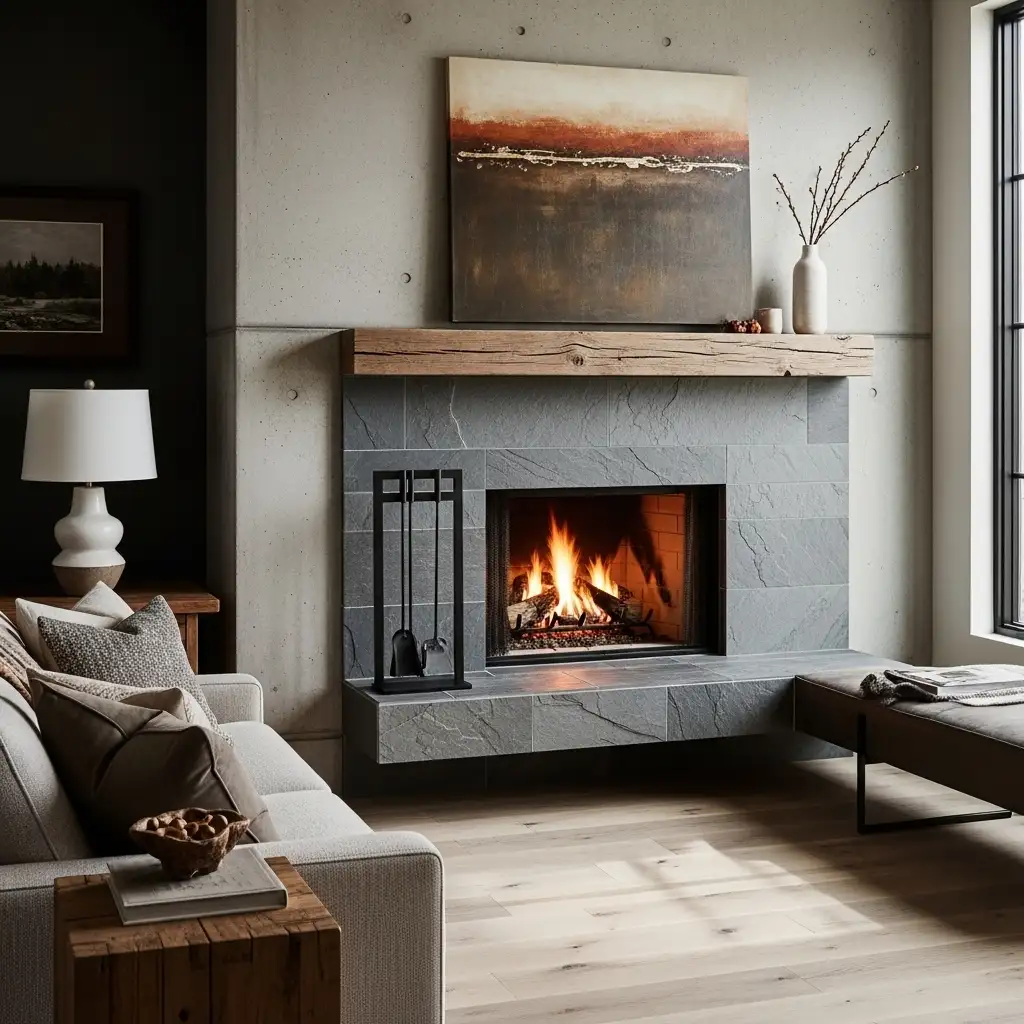
Slate is one of the most popular hearth materials for rustic and contemporary fireplaces alike. Its naturally layered, textured surface has a raw, honest beauty. It looks at home in a farmhouse cottage and a modern minimalist living room equally. Slate is extremely durable, handles heat beautifully, and develops a gorgeous patina with age.
Pick your slate:
- Black slate: The most dramatic option. Its deep, near-black tone creates striking contrast against lighter floors and grounds the fireplace above.
- Gray slate: A softer, more neutral version of the same textured look.
- Natural split slate: Rough surface edges add maximum rustic character.
For those creating a warm rustic living room where natural materials, earthy tones, and handcrafted details combine into a deeply comfortable and characterful space, a slate hearth is one of the most natural and most beautiful choices available. It requires periodic sealing to maintain its appearance and prevent staining from ash and cleaning products.
Limestone Hearth: Elegant and Timeless
Limestone is the go-to hearth material for elegant, period, and farmhouse fireplaces. Its soft cream and honey tones create a gentle backdrop that makes any fireplace look classic and refined. People have used limestone in hearths for centuries because it’s beautiful, durable, and naturally non-combustible.
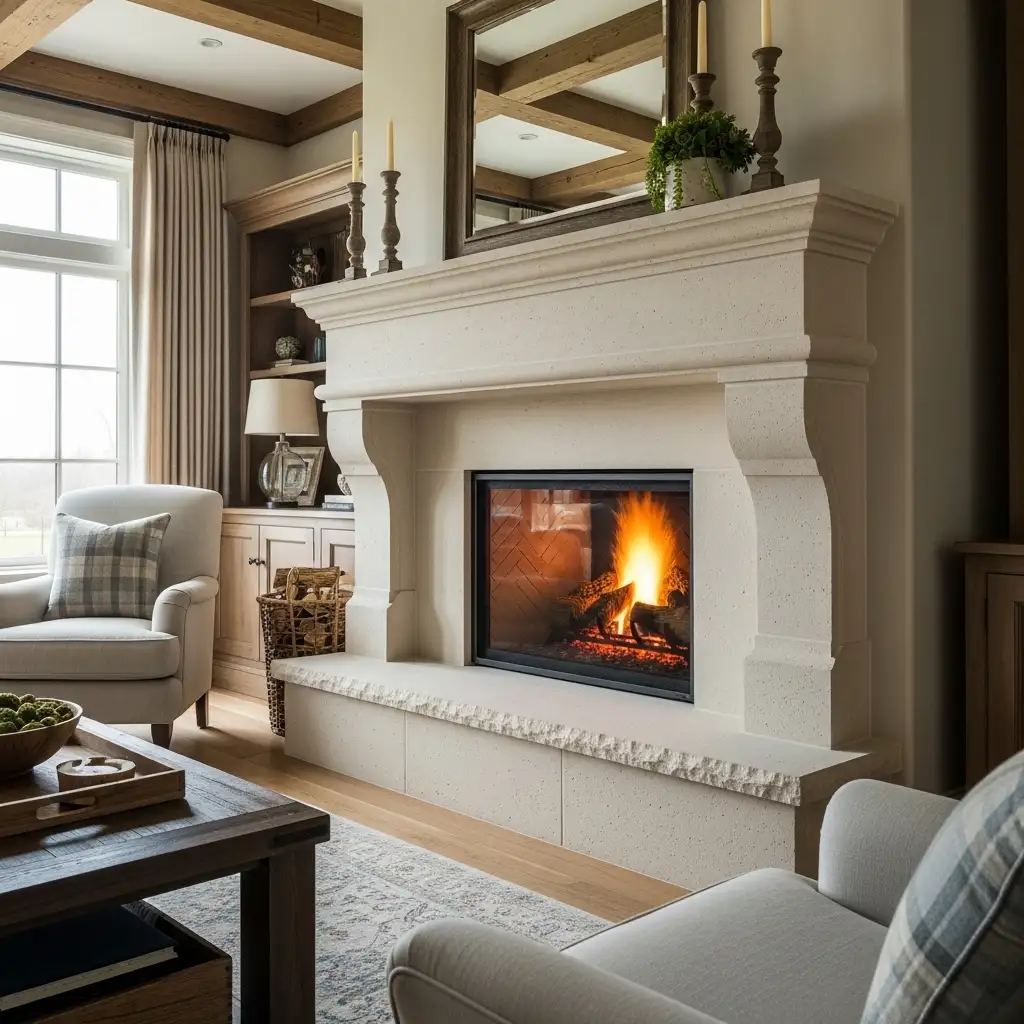
Finishes to consider:
- Honed limestone: Warm cream or honey tones. Perfect for traditional and farmhouse living rooms.
- Brushed limestone: Slightly rougher surface. Adds rustic character.
- Tumbled limestone edges: Creates an aged, worn look that suits period interiors.
Care tips:
- Seal it to protect against stains.
- Clean with pH-neutral products only.
- Skip acidic cleaners. Limestone is porous, and acid can etch the surface permanently.
Granite Hearth: Modern and Premium
Polished granite is the premium hearth choice for contemporary, modern, and formal living room fireplaces.
Its highly polished surface reflects light beautifully, creates a sleek and sophisticated appearance, and requires virtually no maintenance beyond regular wiping.
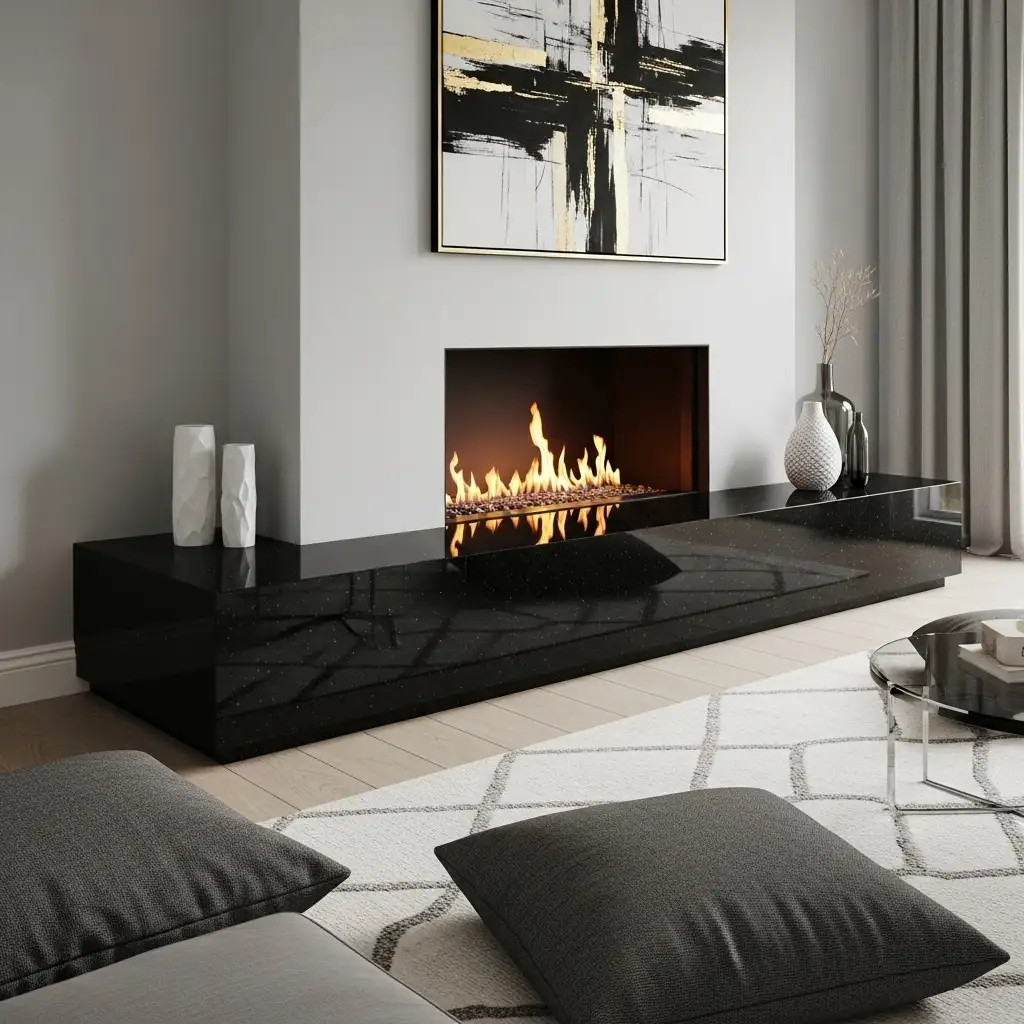
Granite is one of the hardest natural stones available and is extremely resistant to scratching, staining, and heat.
Black polished granite is the most popular granite hearth choice by a significant margin. Its mirror-like surface creates a luxurious, high-contrast effect against any fireplace surround. Absolute black granite with no visible grain variation creates the most contemporary and dramatic look
Granite with subtle movement in gray and silver suits transitional interiors that bridge traditional and contemporary styles. Granite hearths typically require only periodic re-polishing to maintain their surface brilliance over many decades of use.
Brick Hearth: Traditional Warmth and Character
A brick hearth creates an immediate sense of traditional warmth and honest simplicity that suits period, farmhouse, and rustic living rooms perfectly.
Brick is inherently non-combustible, extremely durable, and carries a sense of permanence and age that no other hearth material can replicate. A well-laid brick hearth with neat joints looks genuinely beautiful and deliberately crafted.
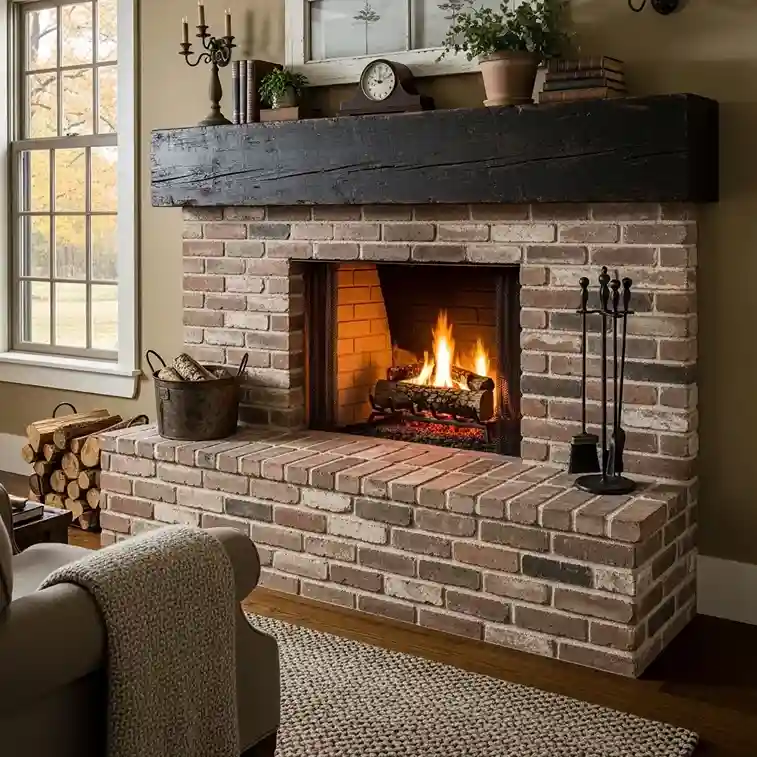
Use reclaimed Victorian or Edwardian bricks for maximum authentic character in a period property. New handmade bricks with subtle color variation and texture suit farmhouse and cottage-style homes beautifully.
Lay bricks in a herringbone pattern for a more decorative effect, or in a simple running bond for clean traditional simplicity.
Porcelain and Tile Hearth: Affordable and Versatile
Porcelain and ceramic tile hearths offer the widest possible range of design options at the most accessible price point.
Large-format porcelain tiles in marble, slate, or concrete looks create high-end visual effects at a fraction of natural stone costs. Patterned encaustic cement tiles create beautiful decorative hearths with rich color and pattern.
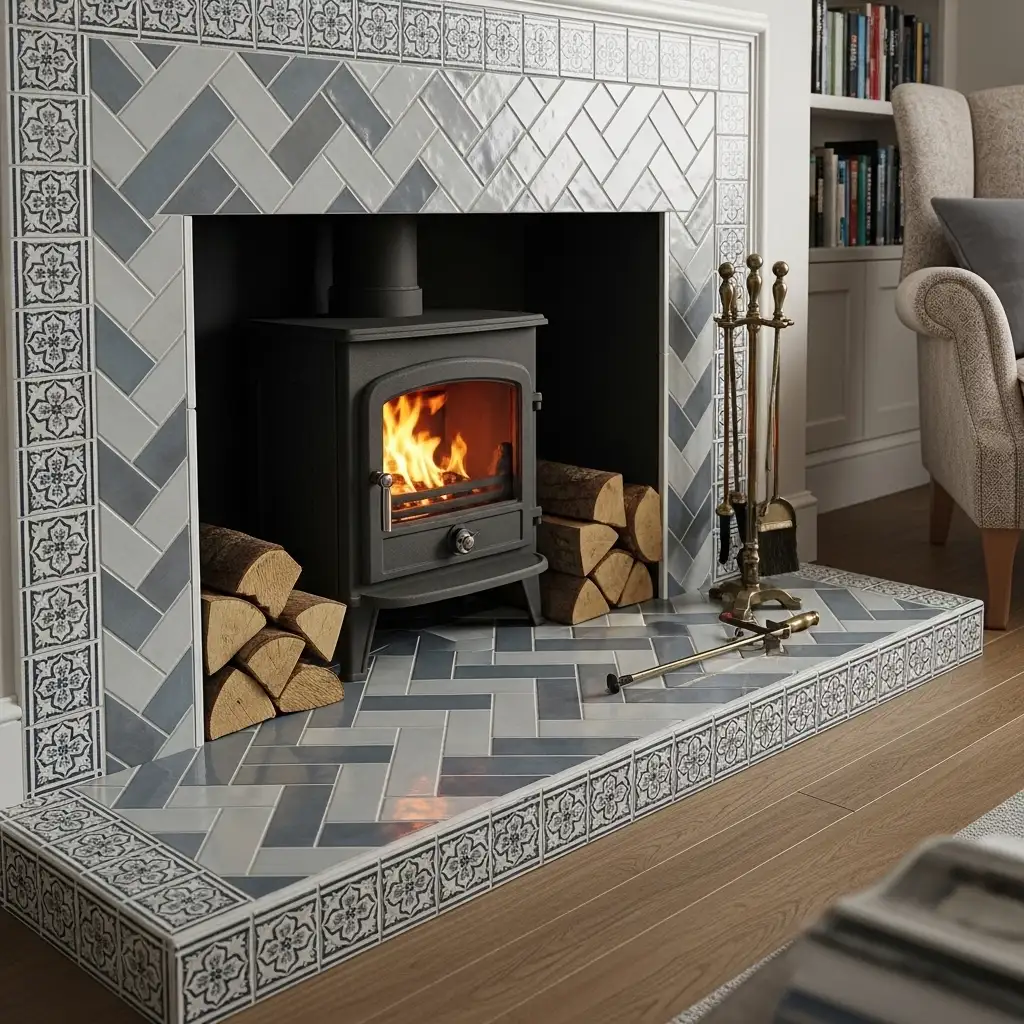
Talavera-style decorative tiles create a vibrant, characterful hearth with deep cultural warmth, connecting the fireplace to the rich tradition of Mexican home decor where hand-painted ceramic tiles are one of the most beloved and most beautiful decorative elements in any interior space.
Raised Hearth vs. Flush Hearth: Which One Wins?
One of the biggest decisions in hearth design is whether to go raised or flush. Both have real advantages. The right choice depends on your fireplace, your room, and how you live.
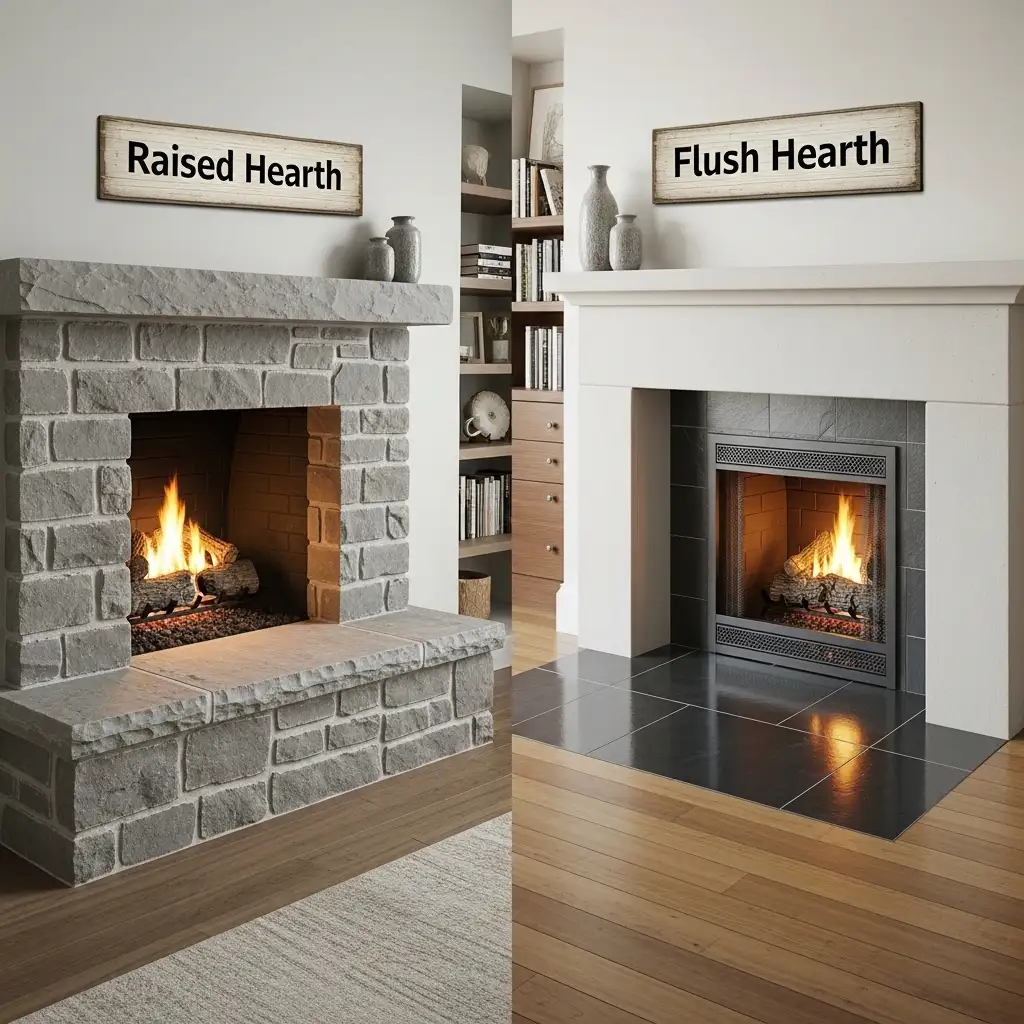
Flush hearth:
- Sits level with the floor.
- Creates the most seamless, integrated look.
- Makes the room feel more open and continuous.
Raised hearth:
- Sits above the floor on a plinth or platform. Usually one to three courses of brick or stone high.
- Makes the fireplace more visually prominent.
- Creates a display shelf at the base for logs, candles, and decor.
- Makes the fire more visible from seated positions.
The takeaway: Flush wins for a clean, open feel. Raised wins for drama, display space, and better fire views.
How to Style a Fireplace Hearth Beautifully
Styling the fireplace hearth is one of the most rewarding and most immediately impactful home decorating projects available. The hearth is a naturally beautiful display surface that can hold candles, logs, plants, sculptures, and seasonal decorative objects in a way that makes the entire fireplace come alive as a room focal point.
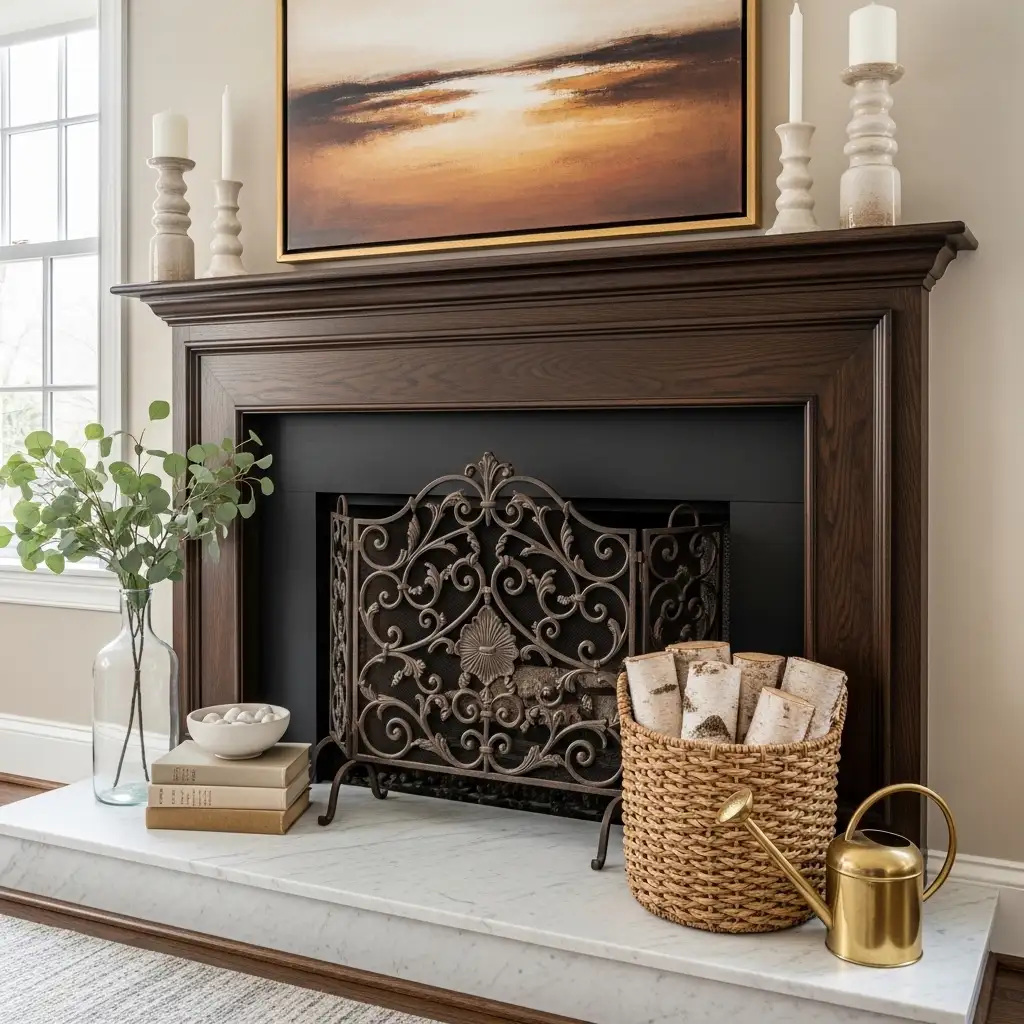
Place a row of pillar candles of varying heights directly on the hearth for a warm, intimate look when the fire is not lit. Arrange a stack of neatly split logs on one side of the hearth for rustic warmth and practical fuel storage.
Add a cast iron companion set with poker, tongs, and brush on the other side. Place a small ceramic or terracotta pot with a seasonal plant or dried botanicals in the center. A fire guard with an elegant design frames the fireplace opening and adds a safety and decorative element simultaneously.
Fireplace Hearth Surround and Mantel Design
The hearth, surround, and mantel together form a complete fireplace architectural composition. Each element must work harmoniously with the others for the overall result to feel cohesive and intentional. The surround frames the firebox opening and connects visually to the hearth below and the mantel above.
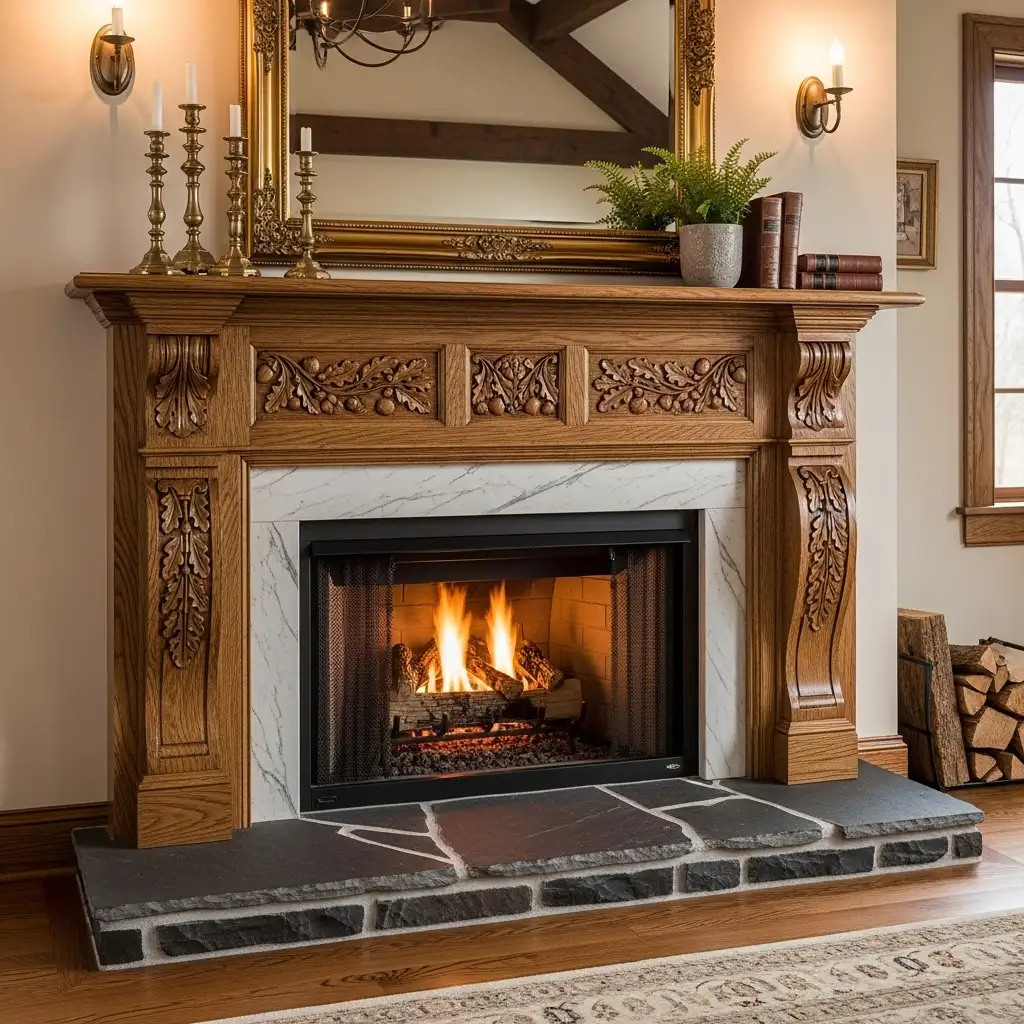
Stone surrounds in limestone or marble create the most formal and elegant fireplace compositions. Painted wooden surrounds in white or cream suit farmhouse and cottage-style fireplaces beautifully. A rough hewn timber beam mantel above a stone or brick surround creates the most dramatically rustic fireplace character.
This combination of natural materials in the fireplace is one of the defining features of a beautifully designed warm rustic living room where the fireplace serves as the true heart of the space. For additional architectural drama around the fireplace, faux wood beams installed above the mantel or across the chimney breast wall add extraordinary warmth and visual depth.
Fireplace Hearth Ideas for a Farmhouse Living Room
A farmhouse fireplace hearth should feel honest, natural, and deeply rooted in tradition. The materials should look as though they have been there for generations. The styling should feel gathered and personal rather than deliberately curated. The overall effect should be one of effortless warmth and genuine character.
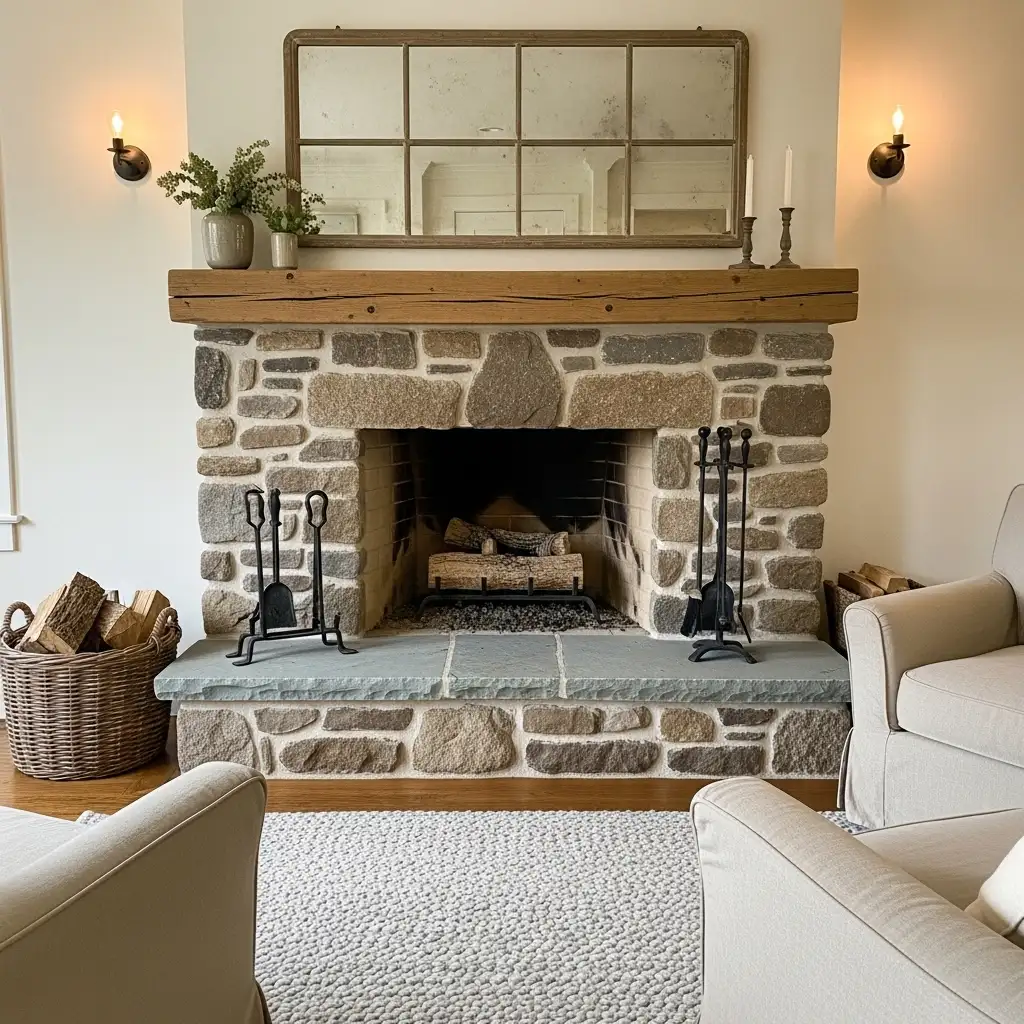
Use reclaimed brick or rough limestone as the primary hearth material. Add a simple wooden fire surround in painted cream or a natural timber finish. A cast iron grate or a small wood burning stove within the fireplace opening suits the farmhouse aesthetic perfectly.
Dress the hearth with a wicker log basket, a handmade ceramic pot, and a bunch of dried lavender or eucalyptus for fragrance and botanical warmth. The farmhouse fireplace hearth connects directly to the aesthetic principles of vintage craft room design where natural materials, handmade objects, and organic textures create spaces of genuine warmth and character.
Fireplace Hearth Ideas for a Modern Living Room
A modern fireplace hearth uses clean lines, premium materials, and a restrained palette to create a focal point that feels architecturally powerful rather than decoratively busy. The modern hearth is about quality, proportion, and the confident simplicity of doing less but doing it extremely well.
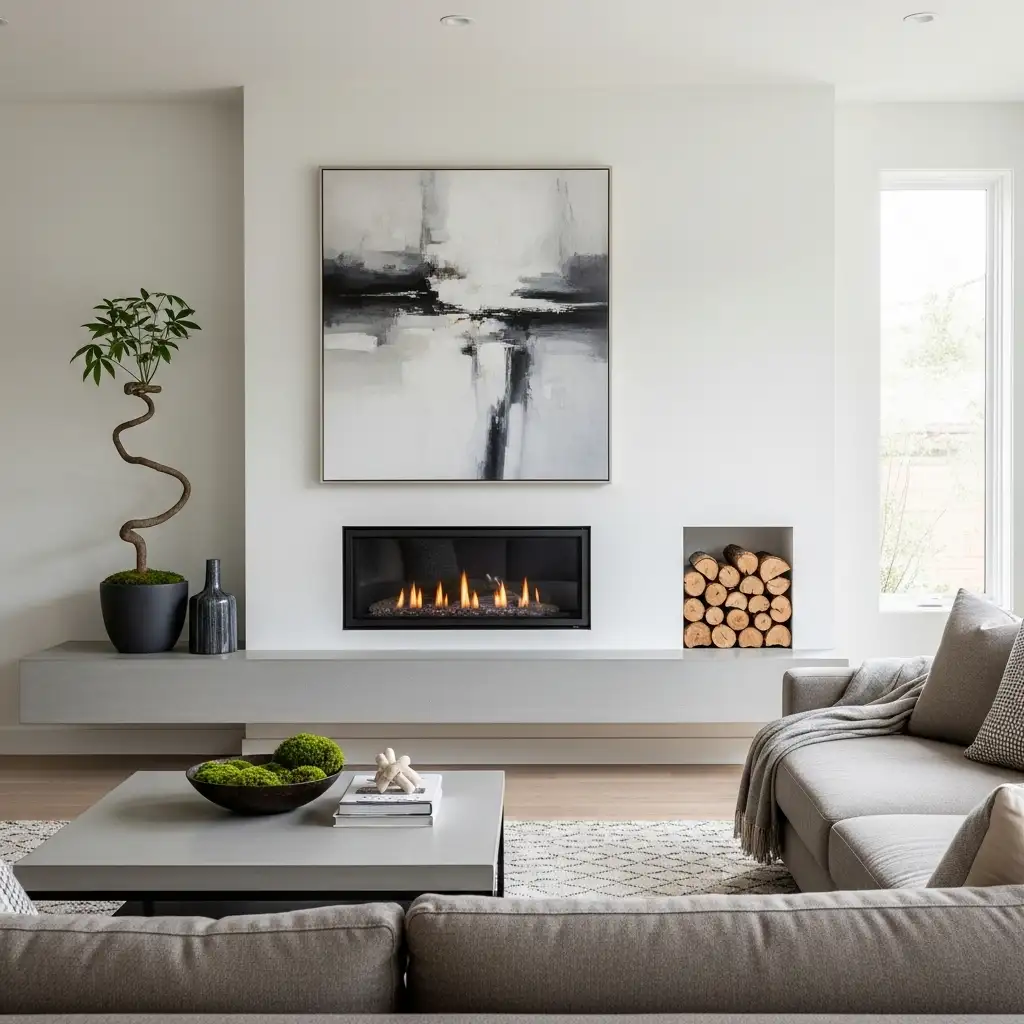
Use large format polished granite or honed stone in a single consistent color for the modern hearth. Avoid grout lines where possible by using the largest possible tile format or by choosing a continuous cast concrete or poured resin hearth.
Pair with a simple linear gas fire or a sleek contemporary wood burning stove in matte black. Keep styling on the modern hearth minimal. One plant, one sculptural object, or no styling at all allows the quality of the materials and the beauty of the fire itself to be the undisputed focus.
Fireplace Hearth for a Wood Burning Stove
A wood burning stove requires a hearth that meets specific safety dimensions but also deserves to be beautiful in its own right. The hearth for a stove must extend three hundred millimeters in front of the stove door and one hundred and fifty millimeters to either side at minimum. Getting the proportions right is as much about aesthetics as it is about safety compliance.
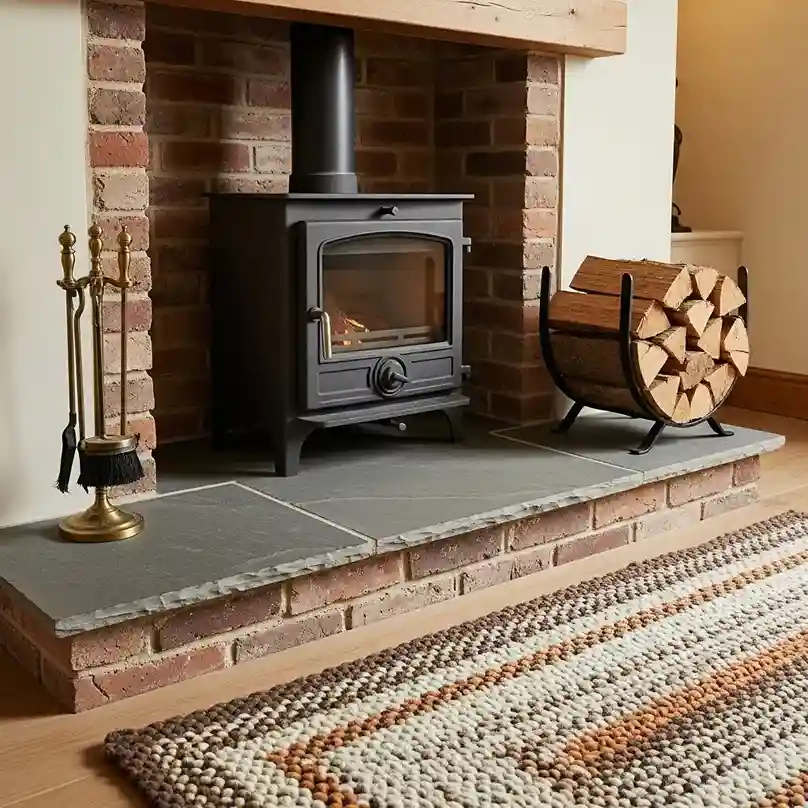
For a comprehensive guide to everything involved in choosing, installing, and designing around a wood burning stove including hearth design, flue requirements, and living room styling ideas, our detailed resource on wood burning stove living room design covers every consideration in depth.
For the hearth itself, black riven slate is the most natural and most popular choice alongside a wood burning stove. Its dark surface contrasts beautifully with the warm amber of the flames visible through the stove’s glass door. Pale limestone creates a beautiful light-against-dark contrast. The hearth and stove together become the most powerful visual element in the room.
How to Clean and Maintain a Fireplace Hearth
A fireplace hearth that is used regularly accumulates ash, soot deposits, and general grime from the fire and the surrounding activities. Regular cleaning keeps the hearth looking its best, extends the life of the material, and maintains the safety and hygiene of the fireplace area. Different hearth materials require different cleaning approaches.
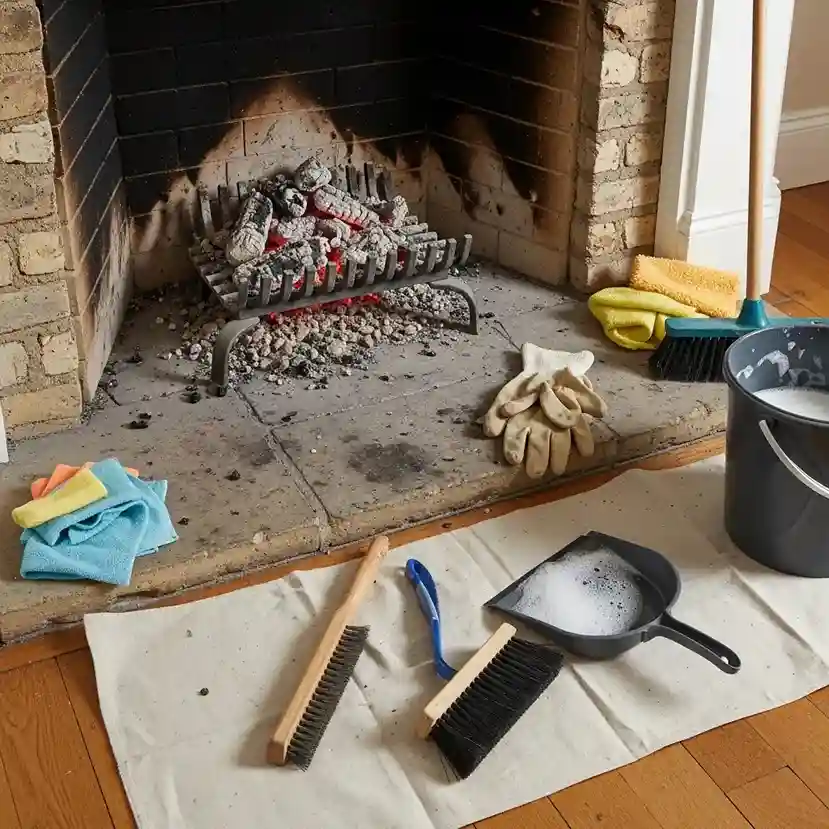
For natural stone hearths, sweep away loose ash and debris first with a soft brush. Clean the surface with a stone-specific pH-neutral cleaner and a soft cloth. Avoid all acidic cleaners on limestone and marble as they cause permanent etching damage. For slate, a mild soap and water solution works well for routine cleaning.
For brick hearths, a stiff brush with warm water removes most surface deposits. Persistent soot stains on brick respond well to a diluted white vinegar solution applied with a brush and rinsed thoroughly. Reseal all porous natural stone hearths annually.
Fireplace Hearth Decor for Every Season
One of the greatest joys of having a fireplace hearth is decorating it according to the seasons. The hearth is a natural display surface that invites seasonal botanical arrangements, candles, and decorative objects that change with the rhythms of the year. A seasonally decorated hearth keeps the fireplace feeling alive and intentional even when the fire is not burning.
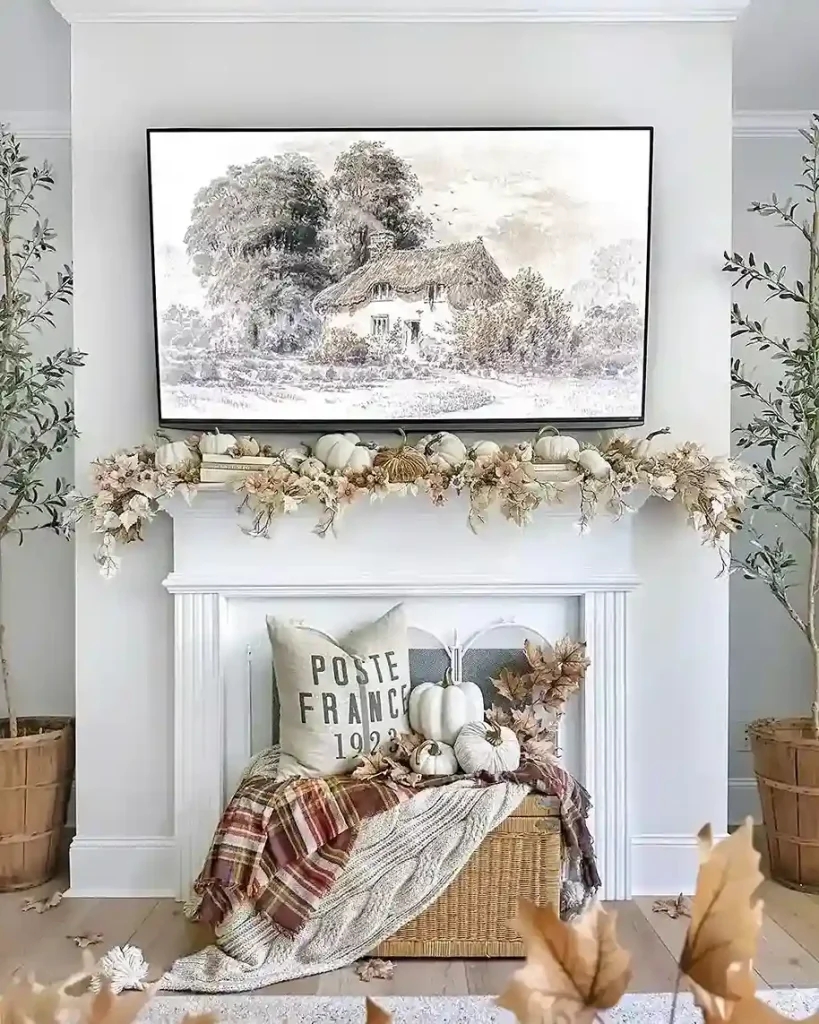
In autumn, arrange small pumpkins, dried seed heads, and a bundle of dried maple leaves on the hearth. Place amber and terracotta pillar candles in varying heights for warmth. In winter, create a festive arrangement of pine cones, holly sprigs, and white pillar candles. In spring, replace winter displays with fresh seasonal flowers, light blue and white candles, and fresh botanical branches.
In summer when the fire is not in use, fill the firebox opening itself with a large plant, a striking log stack, or a cluster of white candles to maintain the hearth as a focal point. The same seasonal decorating philosophy that animates warm rustic living rooms throughout the year applies beautifully to the fireplace hearth.
Fireplace Hearth Extension and Enlargement Ideas
If your existing hearth feels too small for the fireplace or does not provide enough display and decorating space, extending or enlarging it is a relatively straightforward renovation project. A larger hearth creates a more generous, grand fireplace presence in the room and provides significantly more styling and display space.
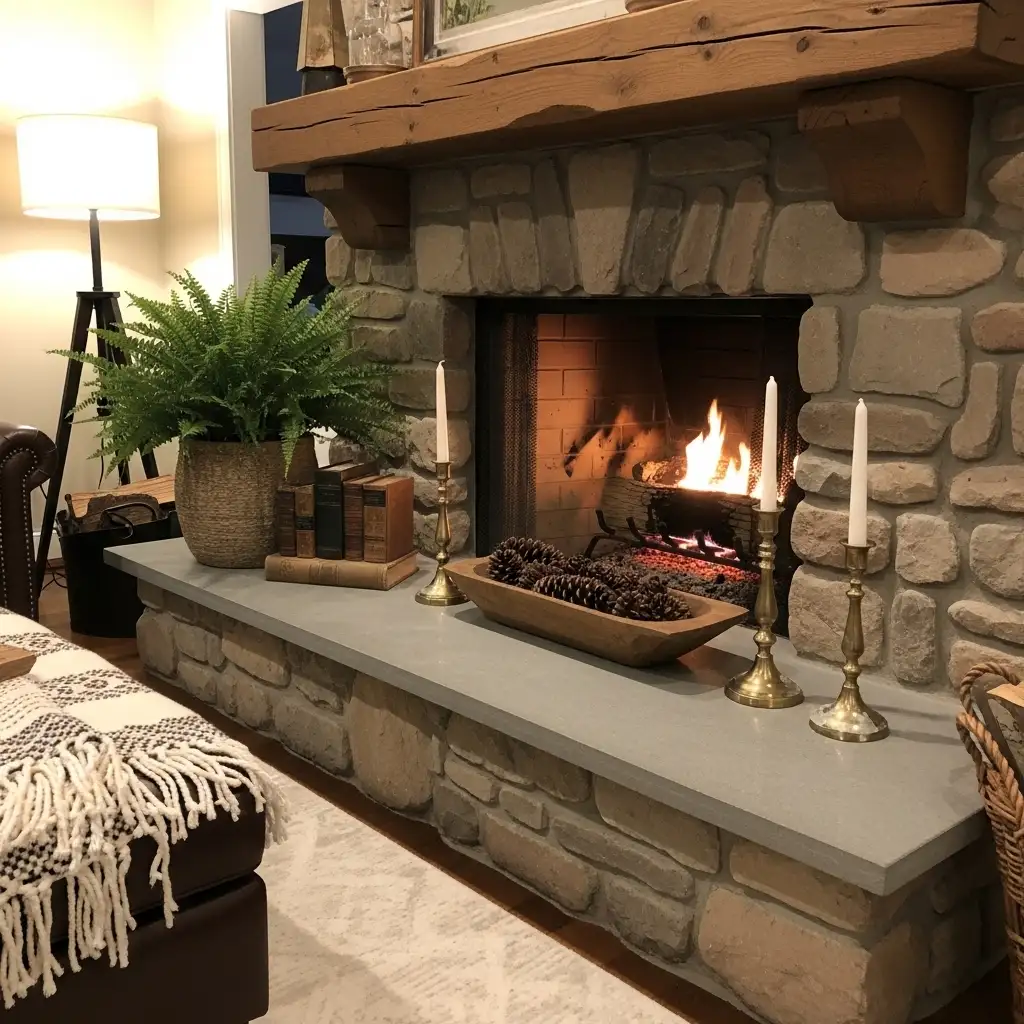
Extend the hearth outward using the same material as the existing hearth for a seamless result. Or use a contrasting material for the extension as a deliberate design choice that creates a beautiful border effect. A large extended raised hearth creates a generous display platform that can hold log baskets, companion sets, decorative objects, and seasonal arrangements simultaneously without feeling crowded. Always ensure the extended hearth still meets minimum regulatory requirements for the fuel type and fireplace design.
Reclaimed and Vintage Hearth Materials
Reclaimed and vintage hearth materials carry an authenticity and character that new materials simply cannot replicate. Salvaged Victorian encaustic tiles, reclaimed stone flags, antique terracotta pavers, and reclaimed brick all create hearths of extraordinary character that make a fireplace feel genuinely historic and deeply personal.
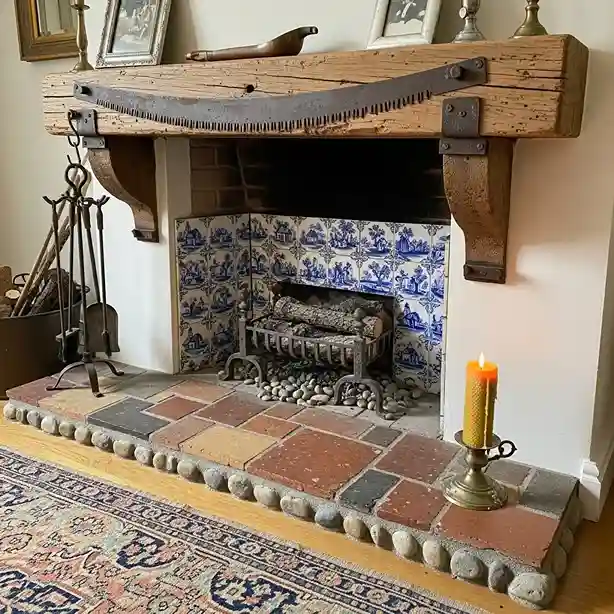
Source reclaimed materials from architectural salvage yards, estate sales, and specialist reclamation companies. Victorian encaustic floor tiles in geometric black and white or rich terracotta patterns create extraordinarily beautiful hearths. Antique stone flags with their worn, uneven surfaces tell stories of centuries of use that new materials cannot approach.
The use of reclaimed and salvaged materials in the hearth connects to a broader design philosophy of celebrating the beauty of age and history. This same ethos animates the most beautiful vintage craft room ideas where reclaimed furniture, salvaged objects, and collected antiques create spaces of genuine warmth and irreplaceable personality.
Fireplace Hearth with Shiplap or Wood Panelled Walls
Combining a beautiful fireplace hearth with shiplap or wood panelled walls behind and around the chimney breast creates one of the most complete and most cohesive fireplace compositions available. The horizontal lines of shiplap draw the eye across the full width of the chimney breast and create a beautiful textural backdrop that makes the hearth and fireplace look deliberately designed rather than assembled separately.
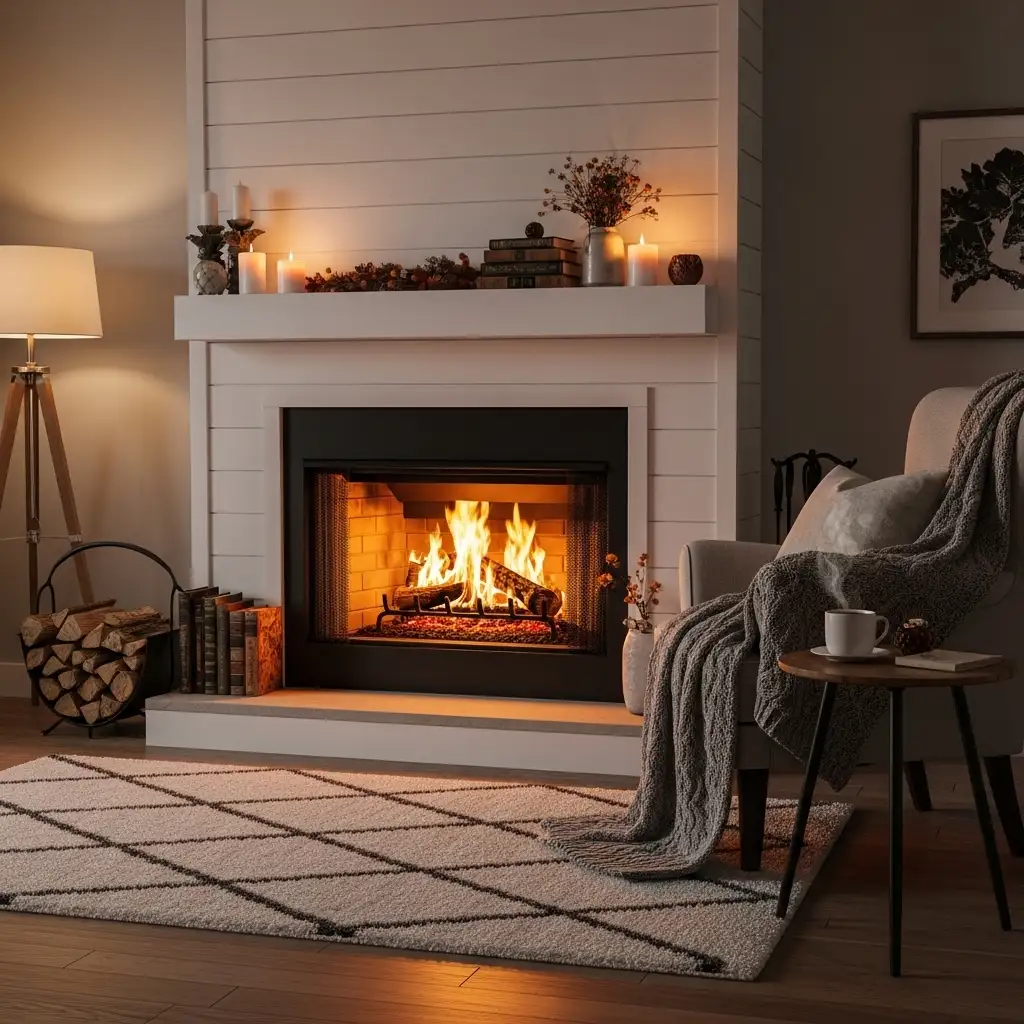
Install shiplap panelling across the full chimney breast behind and beside the fireplace from floor to ceiling or from floor to mantel height. Paint it in a complementary color to the hearth material. Black painted shiplap with a white marble hearth creates a stunning high-contrast modern farmhouse effect. White shiplap with a slate hearth creates a classic clean farmhouse combination.
Natural wood shiplap with a limestone hearth creates extraordinary organic warmth. For the full range of shiplap installation techniques, finishes, and styling ideas, our detailed guide on shiplap ceiling and wall ideas provides everything you need to execute this treatment beautifully.
Fireplace Hearth Safety: Essential Rules for Every Home
Safety around the fireplace hearth is non-negotiable and particularly important in homes with young children, pets, and elderly residents. The hearth area is one of the most potentially dangerous zones in any home when a fire is burning. Understanding and implementing basic hearth safety rules protects every member of the household.
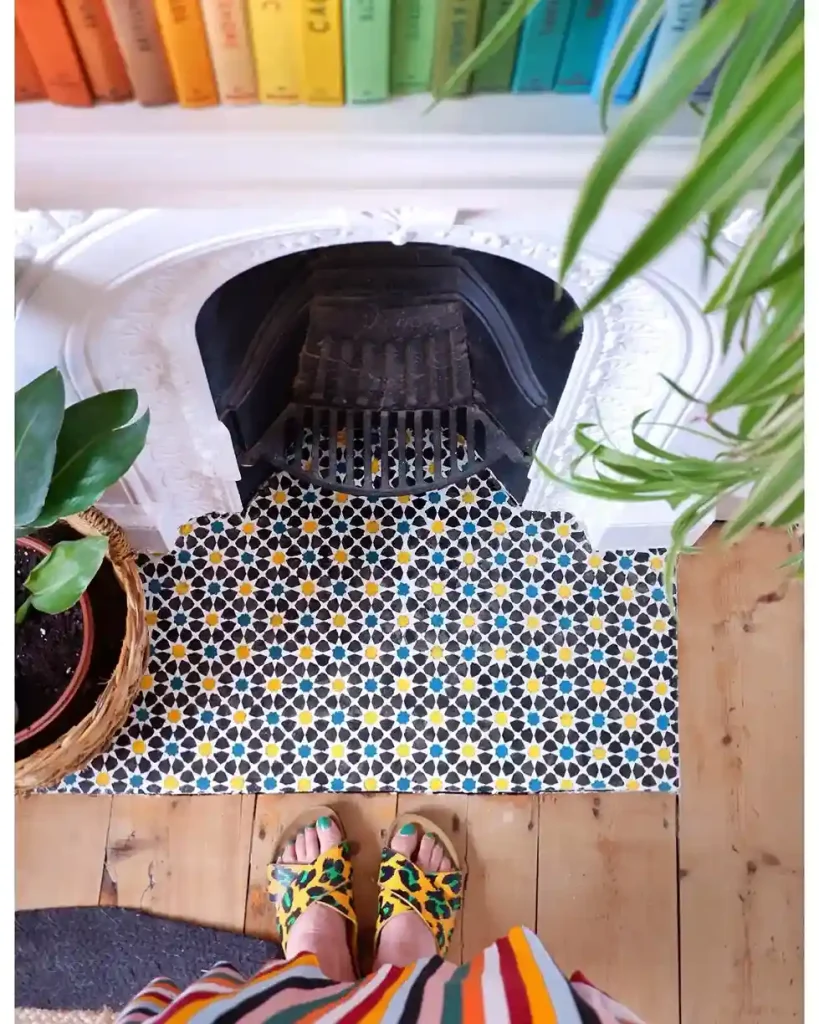
Install a fire guard that fully covers the fireplace opening whenever a fire is burning unattended or when children or pets are in the room. Never place combustible materials including rugs, cushions, log baskets, and wooden furniture within the minimum safe clearance distance from the fire. Keep the hearth and surrounding area clear of all flammable materials at all times.
Fit a carbon monoxide detector in the room and test it monthly. Teach all family members the basic rules of fire safety around the hearth. A beautiful hearth that is also a safe hearth is the most important combination of all.
Budget Fireplace Hearth Ideas That Look Expensive
A stunning fireplace hearth does not have to cost a fortune. Several affordable materials and approaches deliver beautiful visual results at a fraction of premium natural stone costs. Understanding which budget options look genuinely good versus which ones look obviously cheap is the key to making smart hearth investment decisions.
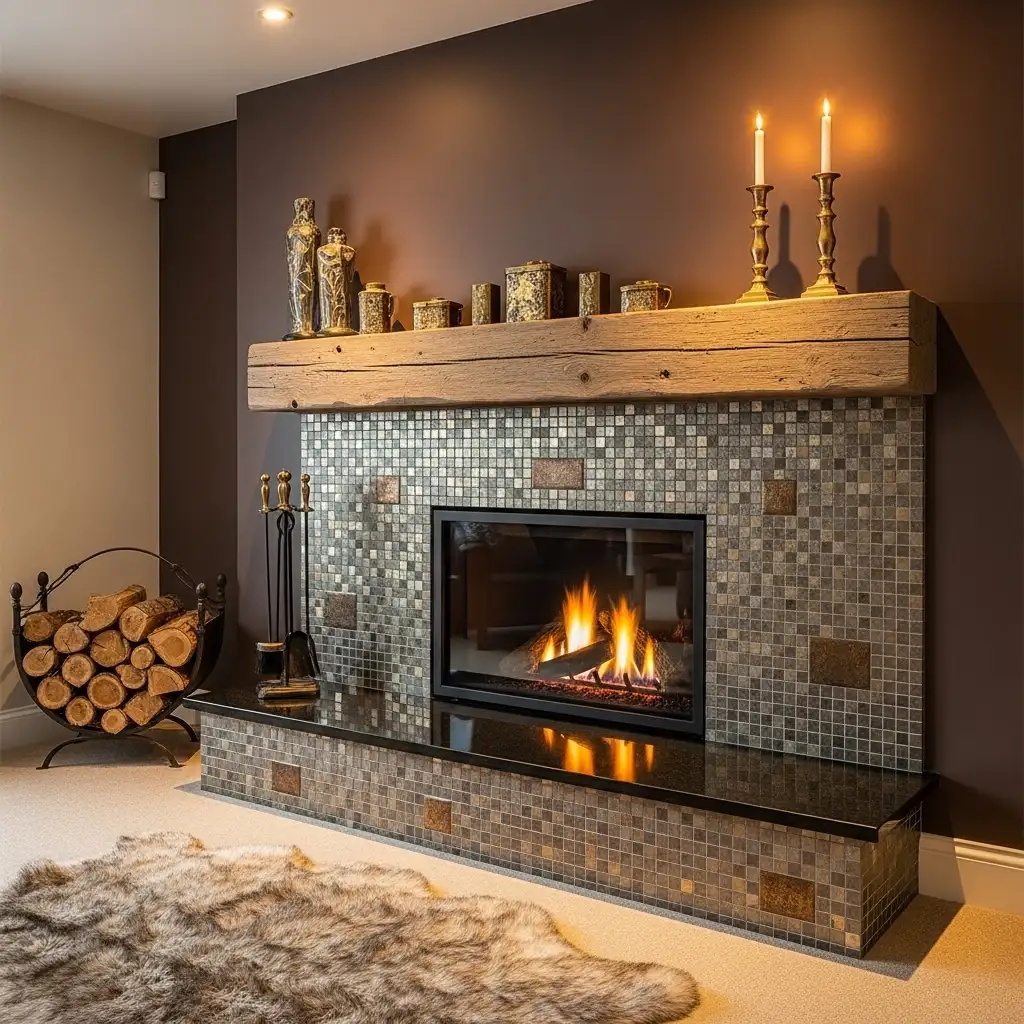
Large format porcelain tiles in marble or slate effects create a genuinely luxurious appearance at a significantly lower cost than natural stone. Painted concrete applied over an existing hearth creates a smooth, contemporary surface at minimal material cost. Reclaimed brick from a salvage yard is often less expensive than new brick and looks far more beautiful.
Patterned cement tiles cost more than plain porcelain but far less than hand-painted ceramics and create a beautiful distinctive hearth. The same principle of achieving high-impact results on a considered budget applies across all home improvement projects, from kitchen corner cabinet upgrades to laundry room renovations where smart material choices consistently deliver beautiful results at accessible price points.
Fireplace Hearth in an Open Plan Living Space
An open plan living space presents specific challenges and opportunities for fireplace hearth design. The hearth must work as a focal point that is visible and impactful from multiple viewpoints and distances within the open space. It must also connect visually with the broader material palette of the entire open plan area rather than functioning as an isolated design element.
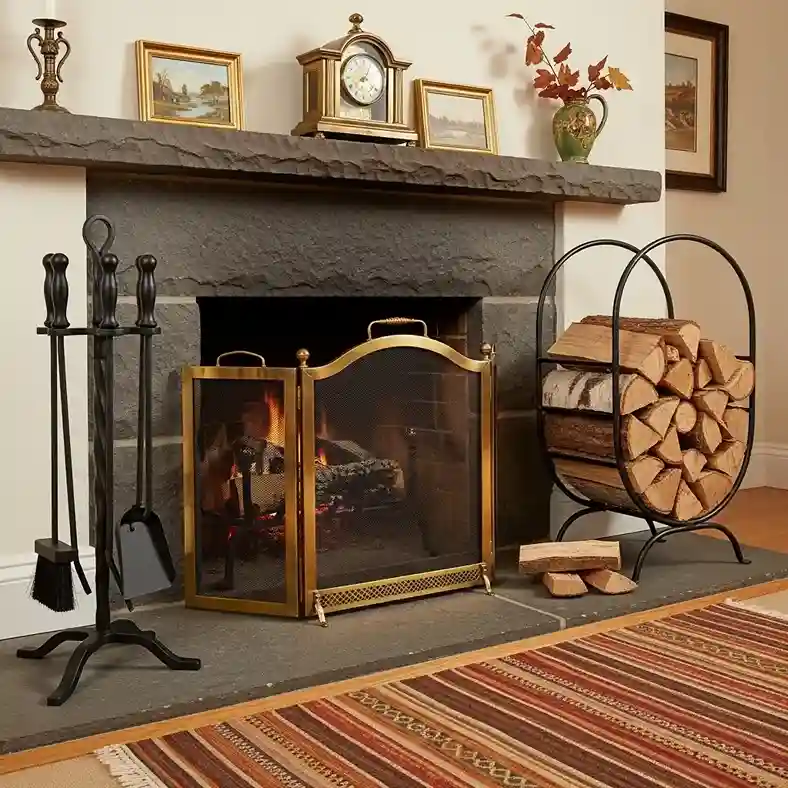
In an open plan space, a larger hearth with stronger visual presence is needed than in a conventional enclosed room. The hearth should anchor the fireplace wall confidently as the primary focal point of the living zone within the open plan. Use the same flooring material as the surrounding floor with the hearth material clearly different and elevated to mark the fireplace zone. The hearth material should connect to other material choices elsewhere in the open space for design continuity and cohesion.
Fireplace Hearth Accessories and Companion Sets
The accessories placed on and around the fireplace hearth complete the fireplace composition and provide the practical tools needed for daily fire management. A quality companion set is both a functional necessity and a significant decorative element. Choosing accessories that complement the hearth material and the room aesthetic makes a meaningful visual difference to the overall fireplace appearance.
A cast iron companion set with poker, tongs, shovel, and brush suits farmhouse and traditional fireplaces perfectly. Brushed steel tools complement contemporary and modern installations. A black powder-coated set suits almost every style from industrial to Scandinavian. A decorative log holder positioned on the hearth adds significant decorative and practical value.
The art of choosing objects that are simultaneously functional and beautiful is at the heart of great interior design in every room, from the fireplace hearth to hobby room design where tools and supplies are as much a part of the room’s character as the purely decorative elements.
Replacing or Updating an Existing Fireplace Hearth
If your existing fireplace hearth is dated, damaged, or simply no longer suits your home’s aesthetic, replacing or updating it is one of the most impactful renovation projects you can undertake. A new hearth can be installed over an existing constructional hearth in most cases without any structural work, making it a relatively accessible and affordable project.
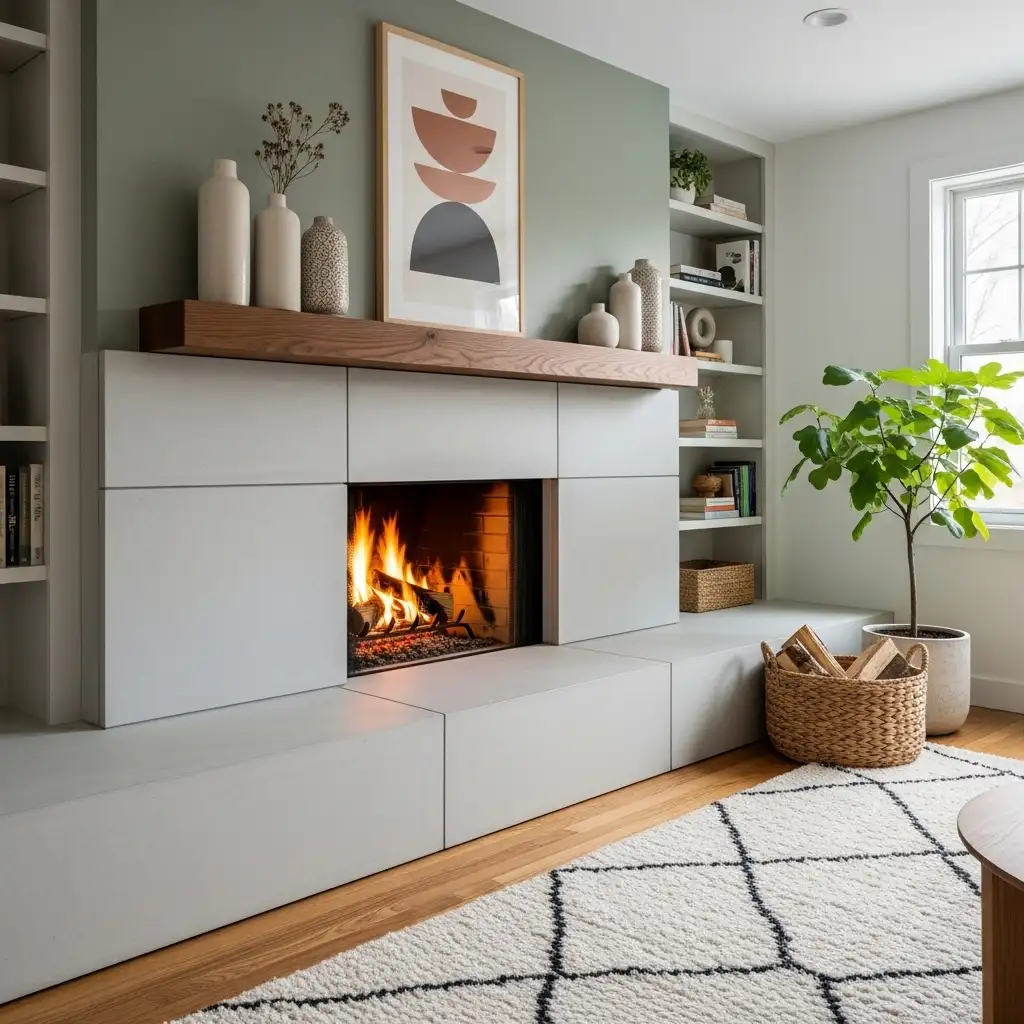
Remove the existing surface finish of the hearth carefully without disturbing the constructional base beneath. Assess the constructional hearth for any damage, cracking, or moisture issues before laying a new surface. For tile or stone hearths, use appropriate tile adhesive rated for fireplace applications and heat-resistant grout. For solid stone hearth slabs, a professional stone installer should be commissioned for lifting, cutting, and setting. The constructional hearth must remain fully intact and of adequate depth throughout the replacement process.
The Complete Fireplace Hearth: Bringing It All Together
The most beautiful and most successful fireplace hearths are those where every decision, from the material choice and dimensions to the styling, accessories, and surrounding wall treatment, works together as a single, cohesive, and deeply considered composition. No single element can carry the fireplace on its own. The magic happens when everything works in concert.
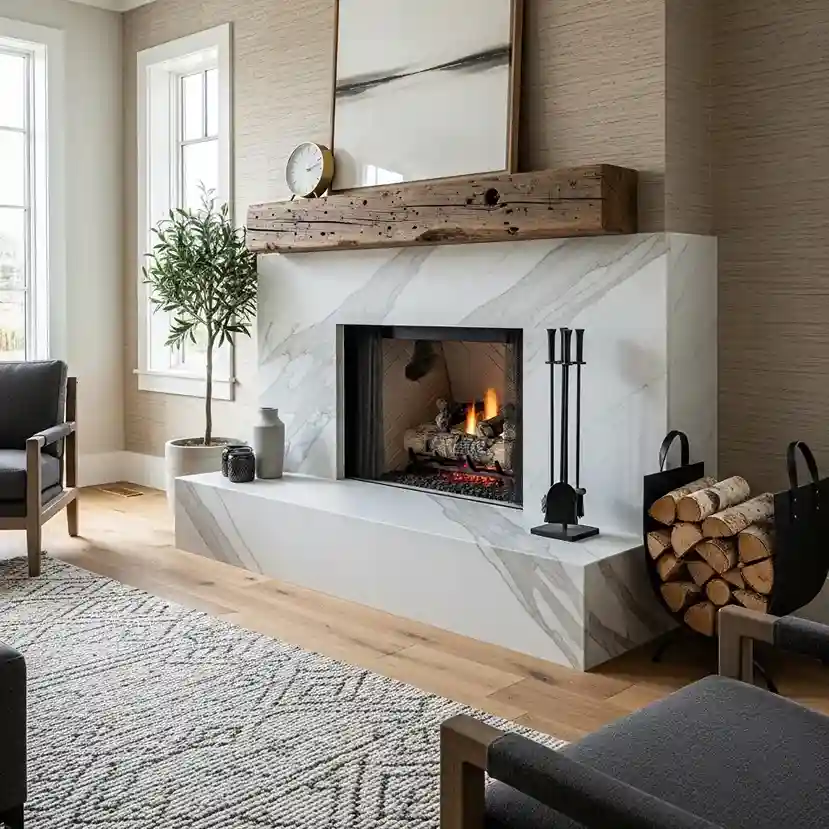
Start with the material that best suits your room’s aesthetic and your practical requirements. Choose a surround and mantel that complements the hearth material harmoniously. Select accessories that reinforce the design character rather than contradicting it. Style the hearth with seasonal and personal objects that tell the story of your home and your household.
Combine the fireplace composition with thoughtful wall treatments such as shiplap panelling or faux wood beams that extend the design conversation from the hearth outward to the entire chimney breast and beyond. Whether you are creating a warm rustic living room anchored by a cast iron stove on a slate hearth or a sleek contemporary space with a linear gas fire on polished granite, the fireplace hearth you design will become the most loved and most admired element in your home. HomeFixTrends is here to guide and inspire every step of your home improvement journey.
Frequently Asked Questions About Fireplace Hearths
Q1: What is the best material for a fireplace hearth?
The best material depends on your fireplace style, your room aesthetic, and your budget. Natural slate is the most versatile and widely beloved choice, suiting both rustic and contemporary installations with its natural texture and excellent heat resistance.
Q2: How thick does a fireplace hearth need to be?
Building regulations in the United Kingdom require a constructional hearth of at least one hundred and twenty five millimetres of solid non-combustible material beneath and in front of any open fireplace, closed appliance, or wood burning stove.
Q3: Can I tile over an existing fireplace hearth?
In most cases yes, tiling over an existing hearth is entirely possible if the constructional hearth beneath is sound, level, and of adequate thickness. Remove the existing surface finish completely if it is loose, cracked, or uneven.
Q4: How do I make a fireplace hearth look bigger?
The most effective way to make a fireplace hearth look bigger is to extend it outward into the room using the same or a complementary material.
Conclusion
A fireplace hearth is more than a safety requirement. It’s the foundation of one of the most beautiful features a home can have. When it’s designed and styled with care, the whole fireplace becomes the heart of the room. It’s where family gathers, guests linger, and memories get made on cold evenings all year long.
This guide gives you 25 ideas and principles to design, install, maintain, and style a hearth that genuinely transforms your living room.
Start here:
- Add accessories and seasonal styling to make it personal and alive.
- Pick the material that calls to you most.
- Build the surround and mantel around it.
For further living room inspiration, explore our guides on wood burning stove living rooms for the complete guide to stove installation and styling, warm rustic living room design for the full earthy and characterful interior approach, and dark brown couch living room ideas for complete living room furniture and color guidance. HomeFixTrends is here to inspire and guide every step of your home improvement journey.