This guide covers 26 she shed interior ideas organized by use and style, from cozy reading retreats and dedicated craft studios to proper backyard home offices and garden rooms.
I’ve also included the practical fundamentals: what to think about before you start decorating, how to handle lighting and insulation, and the styling decisions that separate a shed with furniture in it from a space that genuinely feels like somewhere you’d want to be.
What Is a She Shed, Really?
A she shed is a backyard outbuilding — a garden shed, a converted storage structure, a purpose-built studio, or even a small prefabricated cabin — transformed into a personal retreat. The term emerged as a counterpart to the “man cave,” but she sheds have never really been gender-specific. They’re personal-space-specific.

What separates a she shed from a garden shed with a chair in it: intentional interior design. Proper insulation and heating. Lighting that suits the purpose. Furniture chosen for how you actually use the space. Decor that reflects who you are rather than what was on sale.
In 2026, she sheds range from 50-square-foot converted wooden sheds to custom-built garden studios with polished concrete floors, vaulted ceilings, and sliding glass doors. The budget range is equally wide: a genuinely good she shed can be created from an existing structure for under $500, or purpose-built to professional studio standards for $10,000 or more.
Most of the ideas in this guide work across the full budget range. The fundamental design decisions — how you use the space, how you treat the walls and ceiling, how you handle light and storage — matter more than how much you spend.
Before You Start Decorating: Four Practical Questions
These come first because getting them wrong means redoing the decoration later.
1. How will you insulate and heat it?
An uninsulated shed is a shed for about six months of the year in most climates. If you want a she shed you can actually use year-round — which you do — insulation is the first investment, not a finishing touch.
Rigid foam insulation boards between stud walls, followed by plywood or drywall on the interior, are the most efficient approach for a small structure. For a 100-square-foot she shed, the insulation materials typically cost $200 to $400 and take a weekend to install.
Heating options for small sheds: a small electric wall heater ($50 to $150) is the simplest and safest choice. A mini split system is the premium option — it heats in winter and cools in summer and runs very efficiently in a small space. A small propane or wood stove adds atmosphere and warmth but requires proper ventilation and a clearance plan.
2. Do you have electricity?
Running electricity to a backyard shed from the main house typically costs $500 to $1,500 depending on distance and the number of circuits. For a she shed used as an office or craft studio, electricity is not optional.
If you’re not ready to run a permanent electrical line, a heavy-duty outdoor extension cord rated for the expected load is a temporary solution for modest needs. Solar panels combined with a small battery pack can power lighting and device charging in structures without grid access — the technology has improved significantly and the costs have come down.
3. What size mattress, desk, or work table will you need?
Measure before you buy anything. Small sheds have limited floor space, and standard furniture dimensions often don’t work in 8×10 or 10×12 structures without blocking the door or making movement awkward.
For a reading nook, a single armchair, a small side table, and a bookshelf can fit in 50 square feet comfortably. For a craft studio, a work table that folds against the wall when not in use recovers significant floor space. For a home office, a 24-inch deep desk along one wall leaves enough floor space for a chair without crowding in most shed widths.
4. What is your primary use?
A she shed designed for yoga looks very different from one designed for painting, which looks very different from one designed for reading and general retreat. Decide on the primary use first, then layer in secondary functions. Trying to design for all uses simultaneously usually results in a space that serves none of them well.
Part 1: The Reading Retreat
The reading retreat she shed is the simplest version and often the most beloved — because it requires the least furniture and the most comfort.
1. The Classic Cozy Reading Nook
One deep armchair or loveseat positioned to face a window, a small side table at the right height for a cup of tea, a floor lamp with warm light, a bookshelf covering one full wall, a rug underfoot, a throw blanket on the arm of the chair.
That’s the reading retreat. It doesn’t need to be more complicated than that.
The walls in a reading retreat work best in warm, quiet colors — soft cream, warm sage green, dusty blush. A color that makes the space feel enclosed and calm rather than energizing. I’d approach the color choice here exactly as I would for a bedroom: prioritize the feeling of restfulness over any trend.
For the ceiling, a light, warm white keeps the small space from feeling compressed. If you want to add a little character, a shiplap ceiling in a warm cream tone does exactly that — our guide to shiplap ceiling ideas covers everything from installation to style options if you want to explore this for your she shed.
What to add: A small electric kettle on a shelf (so you can make tea without going back to the house), a scented candle, blackout curtain panels for afternoon napping, a basket for the throws so they don’t migrate off the chair.
2. The Floor-to-Ceiling Book Room
For book lovers with a slightly larger structure, covering two or three walls entirely with bookshelves transforms a she shed into a proper library room. Built-in shelves painted the same color as the walls create a seamless, enveloping effect that a small room actually suits better than a large one.
A rolling library ladder on a rail adds visual drama and makes the upper shelves genuinely accessible. A small reading chair, a single floor lamp, and a low side table complete the room.
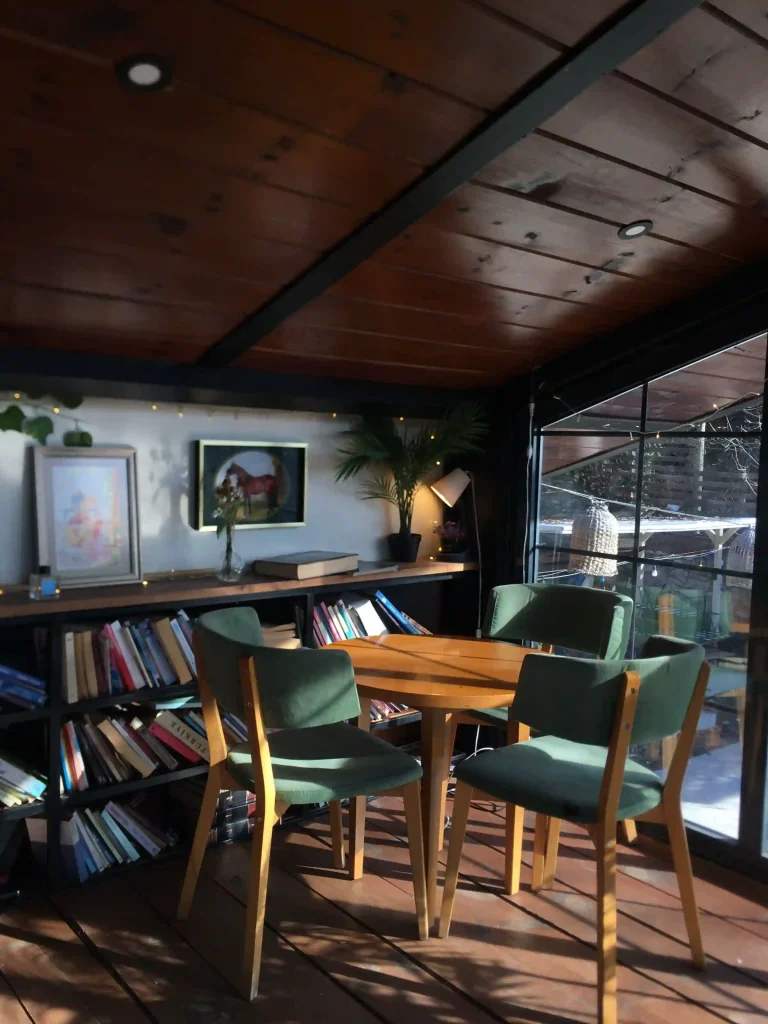
This is the version where a slightly more dramatic wall color works beautifully — a deep forest green or warm navy on the walls and shelves simultaneously creates a cozy, atmospheric quality that’s difficult to achieve with light colors in such a small space.
3. The Boho Reading Pod
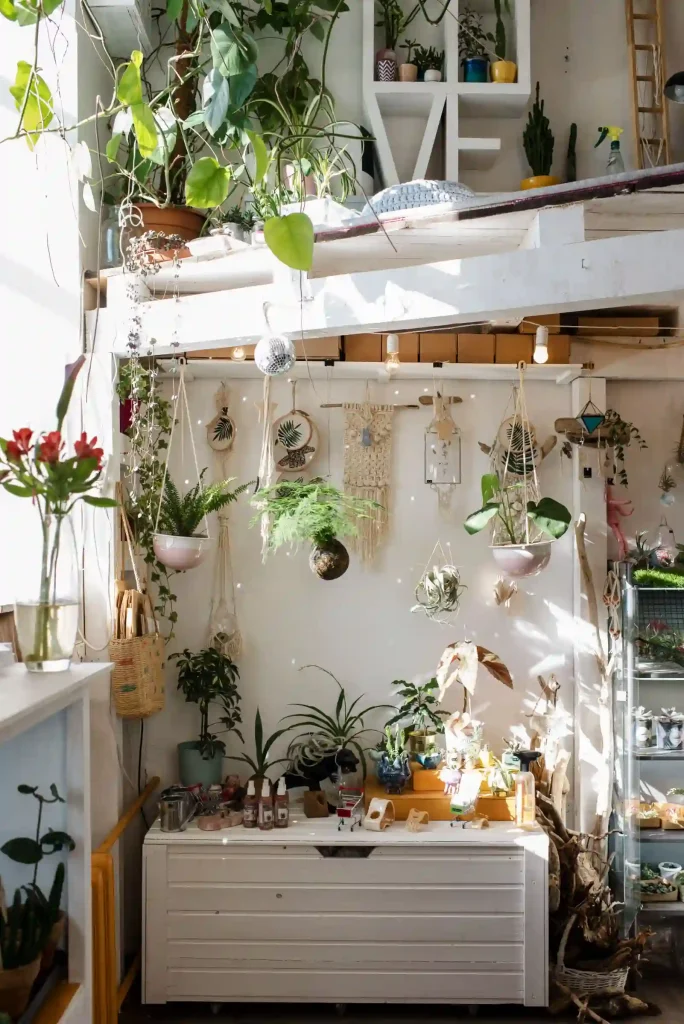
Rattan furniture, a hanging macramé chair or low floor cushions instead of an armchair, warm string lights along the ceiling perimeter, trailing plants on every available surface, a woven rug, and a low wooden shelf for books.
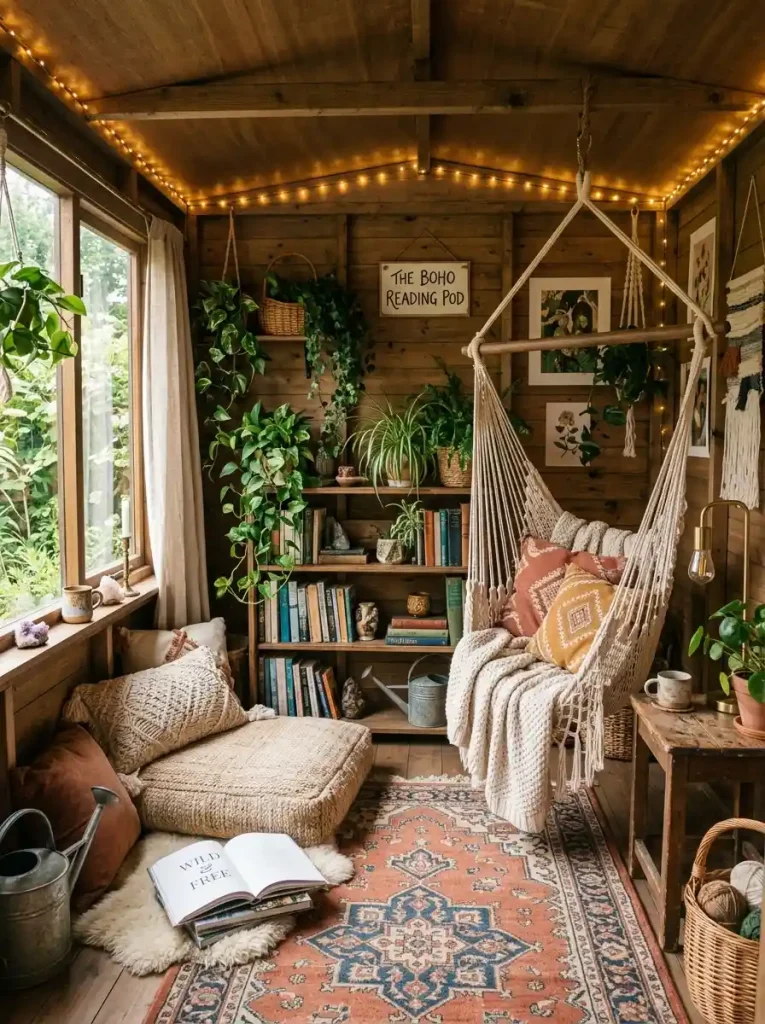
The boho reading pod is the version most associated with she sheds in social media — it photographs beautifully and creates a genuine sense of escape from the functionality of the main house. The key to making it feel considered rather than assembled from a single shopping trip: add things gradually, mix vintage finds with new pieces, and keep the color palette consistent even as the textures vary.
Part 2: The Craft Studio
The craft studio she shed is the original she shed — the private workspace that keeps creative mess out of the living room and gives the maker a dedicated space where projects can be left mid-work without having to clear the kitchen table.
4. The Light-Filled Art Studio
Natural light is the non-negotiable for any visual art practice. If your existing shed has limited windows, adding a skylight or replacing a section of the roof with a clear polycarbonate panel dramatically increases the quality of light without structural changes to the walls.
For an art studio she shed, the floor needs to be easy to clean — painted concrete, vinyl plank, or sealed plywood work better than carpet. The walls should be covered in something that takes paint splatters or tape without complaint — plywood painted white is both inexpensive and practical.
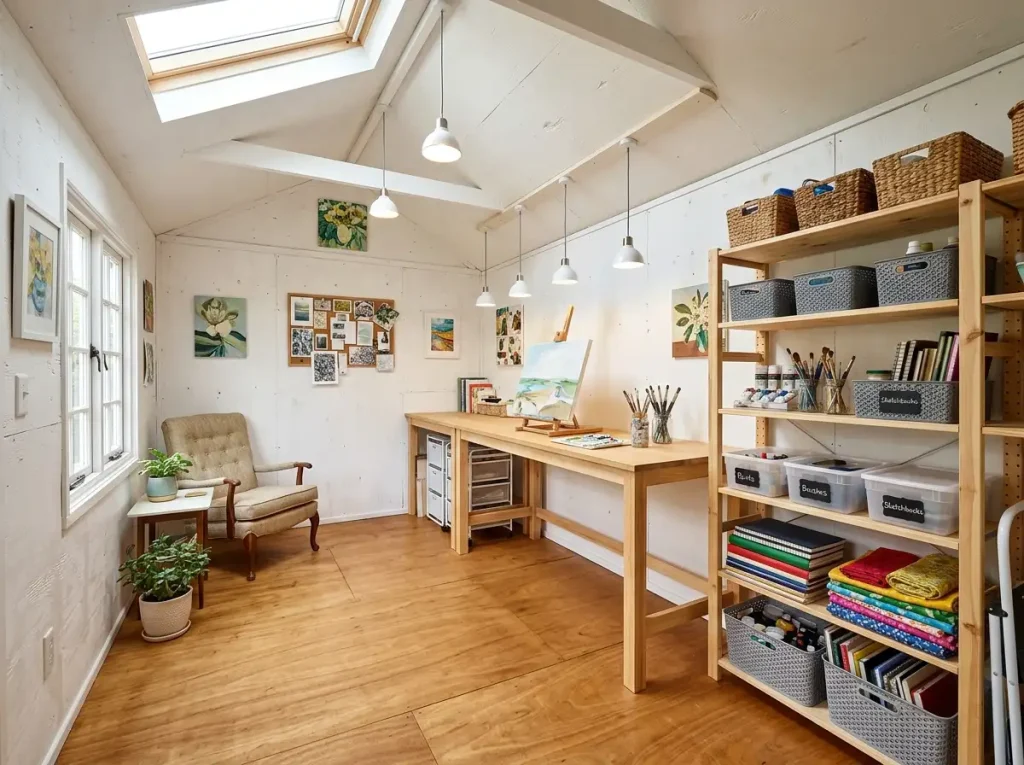
A large work table at standing height along the main wall, open shelving for supplies, and good task lighting above the work surface are the functional essentials. Storage organization is the detail that separates an art studio that functions from one that gradually fills with chaos.
For inspiration on keeping a creative workspace genuinely organized, our craft room storage ideas guide covers 30 storage solutions that apply directly to she shed studios — pegboard systems, open shelving, container organization, and vertical storage approaches that work in small spaces.
5. The Sewing and Textile Studio
Sewing and textile work has specific requirements that differ from general crafting: a dedicated cutting table at standing height (different from a sewing machine table), good task lighting at the machine, and substantial thread and fabric storage.
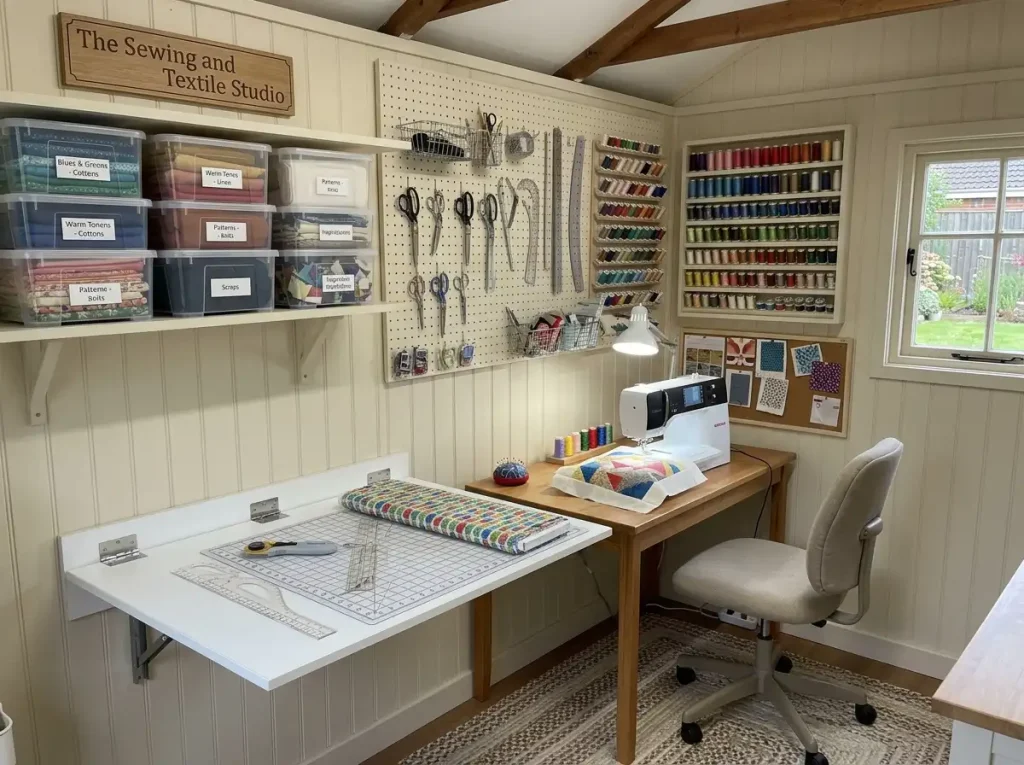
A fold-down cutting table mounted to the wall on piano hinges is the small-space solution that professional seamstresses consistently recommend — it drops down to full size when in use and folds flush against the wall when not. The floor space recovered by this one decision makes a significant difference in a 100-square-foot studio.
For the walls, pegboard painted to match the room color holds scissors, rulers, and smaller notions in plain sight and reach. Clear bins on open shelving organize fabric by color and type. A dedicated thread cabinet keeps colors organized and visible.
6. The Shabby Chic Craft Cottage
Vintage florals, distressed white furniture, soft pastel walls, antique drawer units for supply storage, a mason jar with brushes on the windowsill, mismatched botanical prints in white frames. This is the she shed aesthetic most associated with the term — feminine, nostalgic, deliberately pretty.
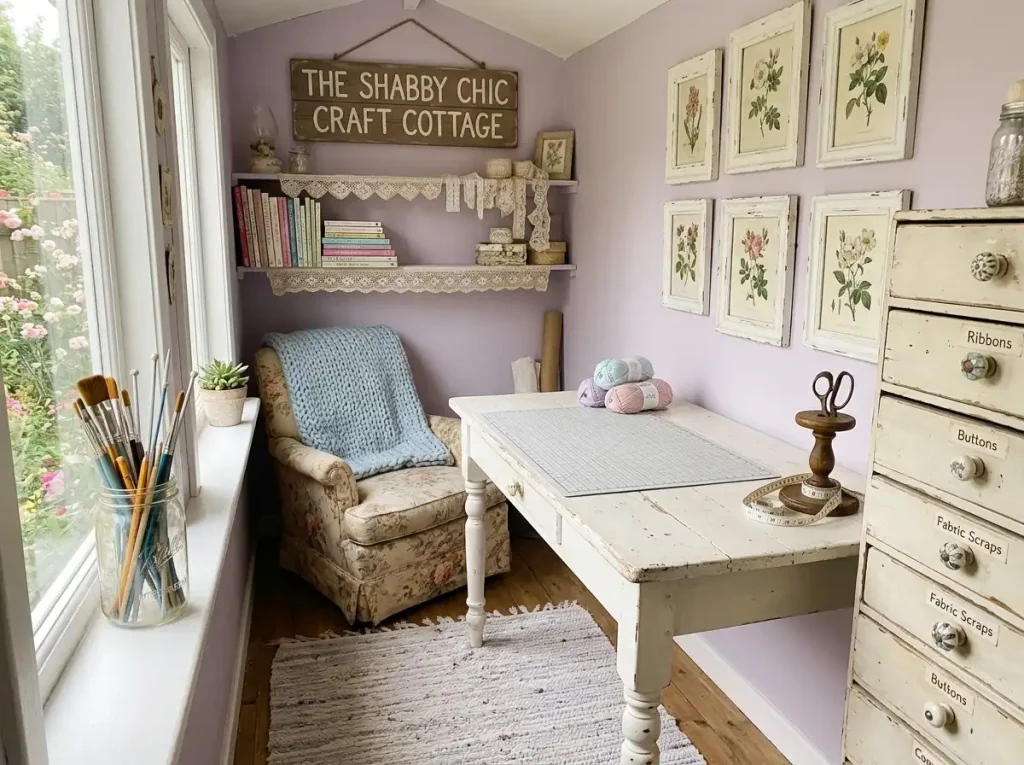
It works because craft spaces benefit from beauty. A studio that you find visually pleasing is a studio you want to spend time in. The practical challenge is keeping the decoration from interfering with the work — too many decorative objects on the work surface create clutter that makes the studio less functional as actual projects accumulate.
The solution: decorative elements on shelves and walls, work surfaces kept clear for actual work. The beauty is in what surrounds the work area, not in what competes with it.
7. The Minimalist Maker Studio
Clean white walls, one large work table in natural oak or white laminate, open metal shelving for supplies, a single task lamp, a concrete floor. No decoration that doesn’t serve the work.
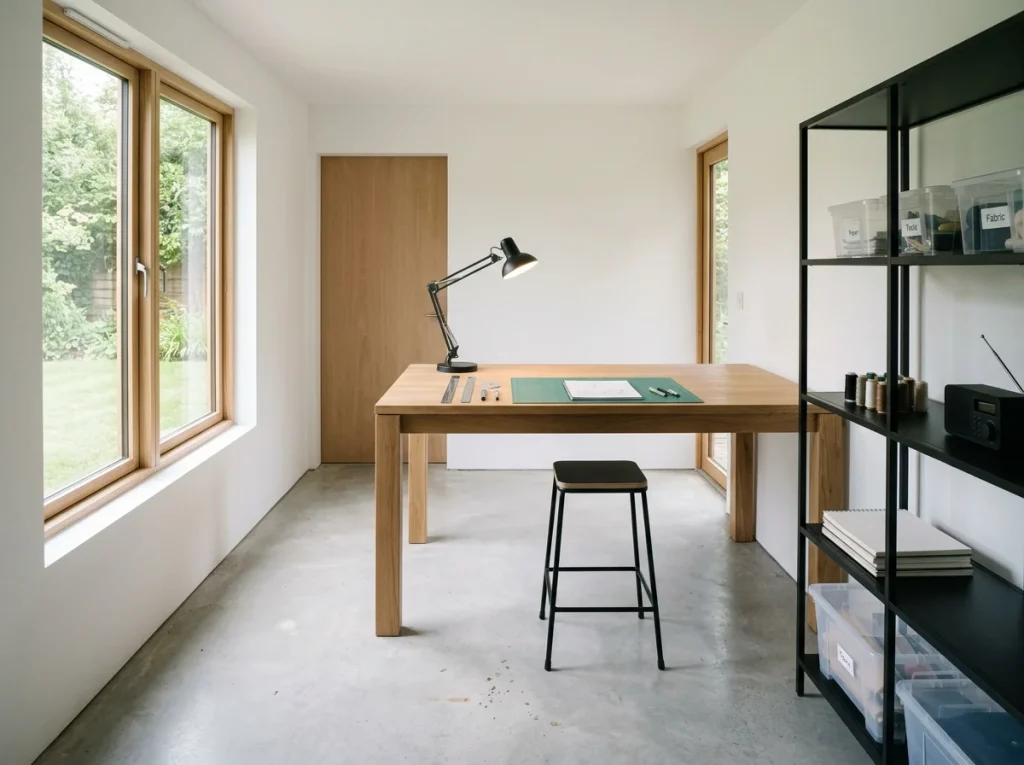
The minimalist maker studio is the she shed version for people who find visual complexity distracting when they’re working. The discipline of keeping the space simple means that every addition — a plant, a print, a new tool — gets considered rather than accumulated.
Part 3: The Home Office
The backyard home office is one of the fastest-growing uses for she sheds, driven partly by remote work and partly by the genuine realization that working from a dedicated outbuilding — separate from household noise, visible from the garden, with a door that closes — is meaningfully different from working at the kitchen table.
8. The Dedicated Remote Work Office
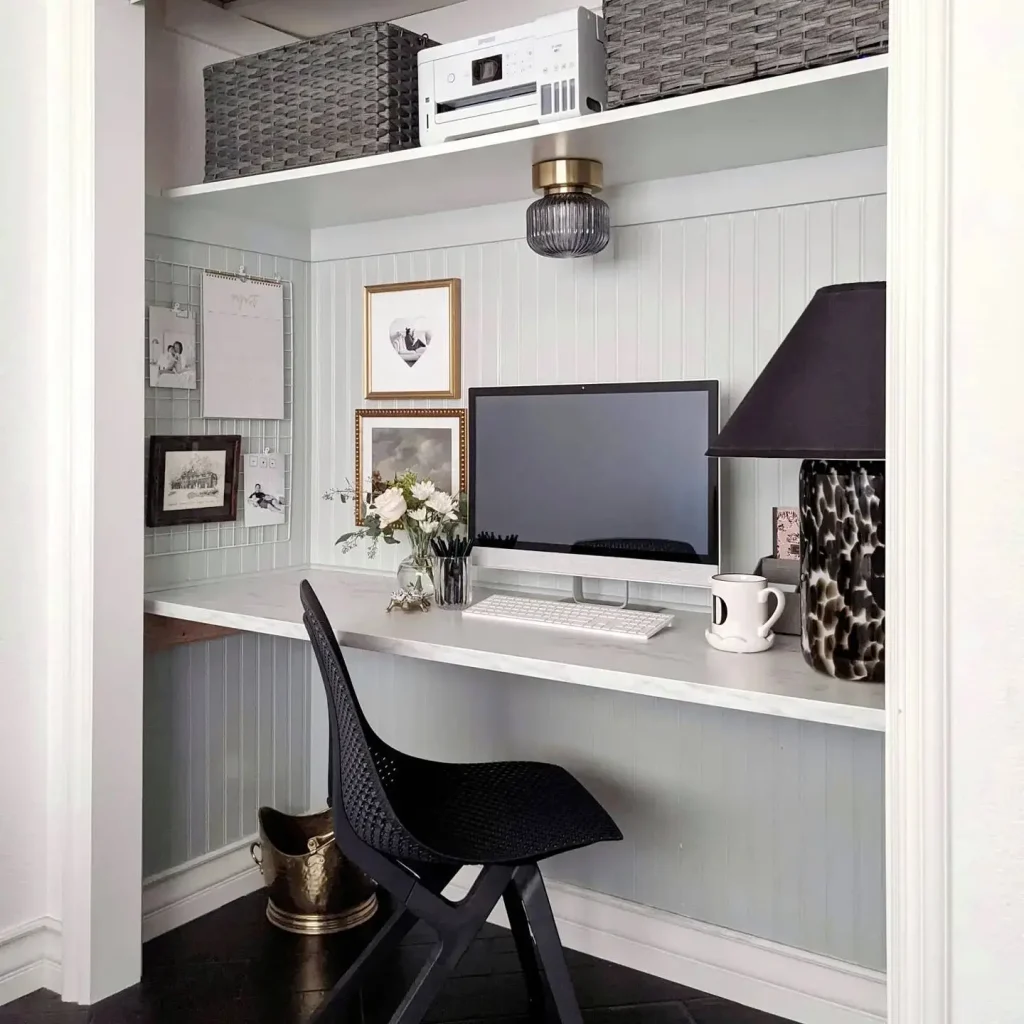
A proper desk, a proper chair, proper lighting, a stable internet connection, and a door that closes. These are the functional minimum for a she shed home office that actually improves productivity.
Beyond the functional minimum: blackout curtains or blinds to manage screen glare, good cable management to prevent the visual chaos that undermines the calm of a dedicated space, a small bookshelf for reference materials, and something on the wall that makes the space feel like somewhere you chose to be rather than just a place you have to work.
Credits: @thehomebodyhouse
For the desk, a wall-mounted floating desk is the best small-space option — it takes up zero floor space when you’re not working, and the right height can be customized exactly to your needs. For a more substantial workspace, a corner desk that wraps around two walls of the she shed creates significant surface area without using the center of the room.
Cubicle decor might not be the first thing that comes to mind for a she shed office, but the strategies in our cubicle decor ideas guide — motivational display, desk organization, vertical space use, and lighting — apply directly to a small backyard office and are worth reading before you finalize the layout.
9. The Creative Agency Studio
For designers, writers, photographers, or anyone who works creatively and needs a portfolio or reference materials nearby: large-format prints of your own work on the walls, a mood board wall (cork or magnetic board painted the wall color), a large monitor on an adjustable arm, and high-quality task lighting.
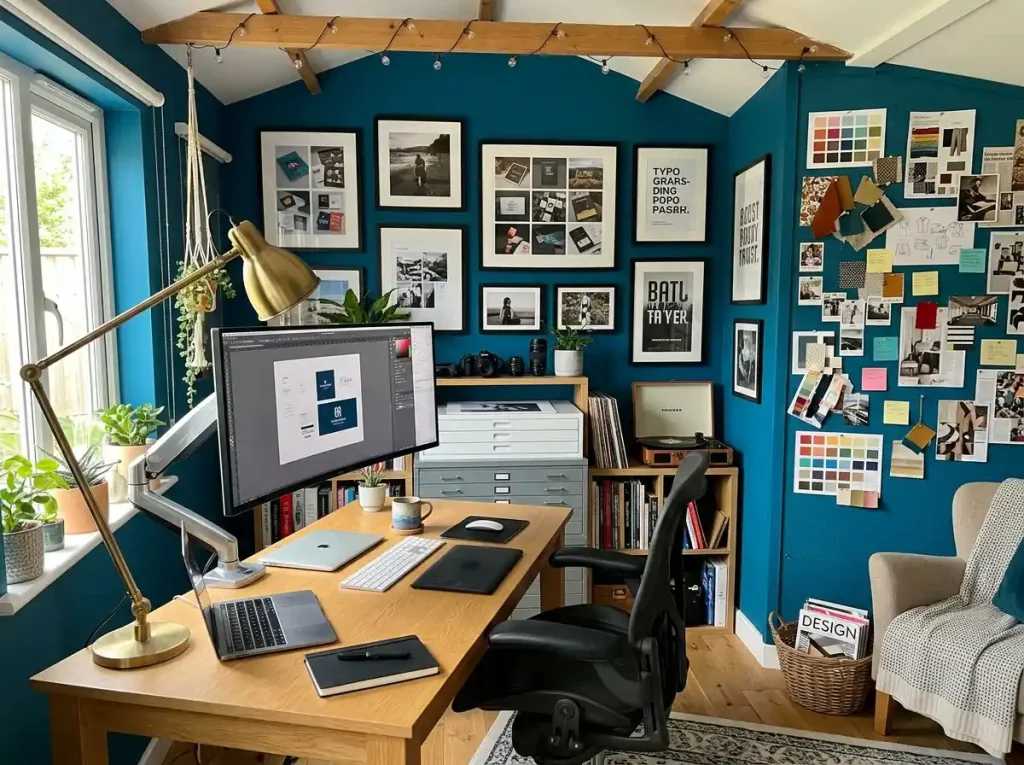
The she shed home office can be the most personalizable workspace you’ll ever design because it answers to nobody’s preferences but yours. Use that. Paint the walls a color that makes you feel genuinely creative. Hang the art that inspires you. Play the music you can’t play in an open office. The ability to make the workspace completely your own is a significant part of what makes the backyard studio so effective.
10. The She Shed Library-Office
Half dedicated bookshelf, half proper desk. The room of one’s own that Virginia Woolf was talking about, made practical for 2026.
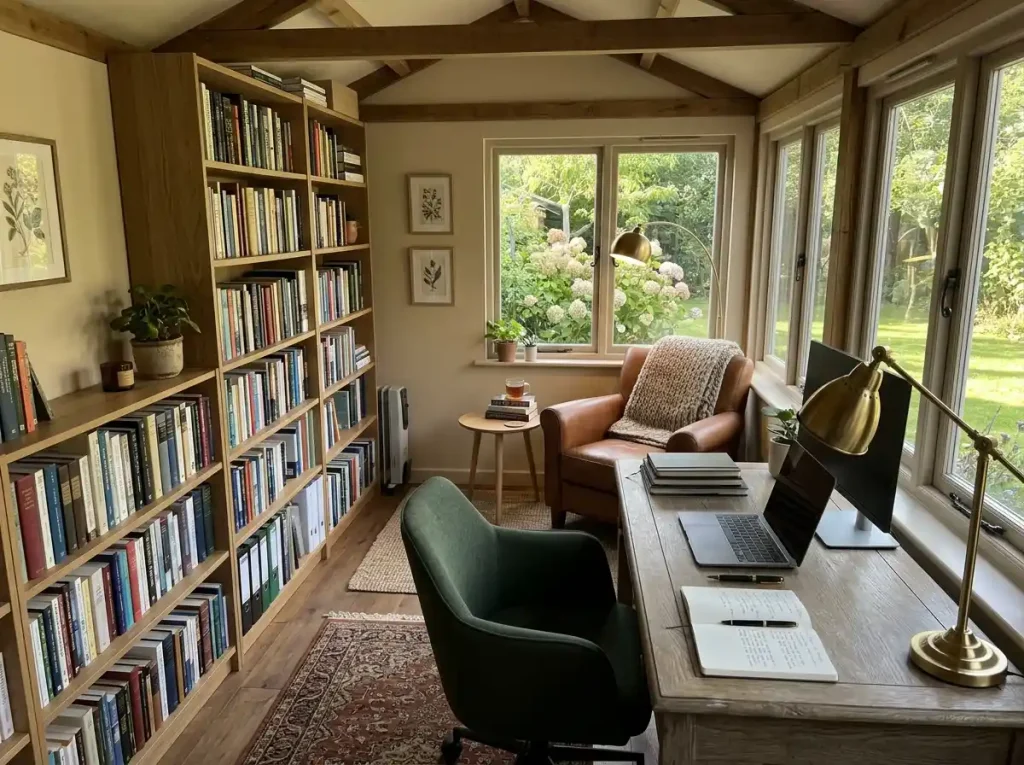
Bookshelves covering two walls, a substantial writing desk facing a window, warm task lighting, a proper reading chair in the corner for the thinking-not-typing parts of knowledge work. This is the shed layout for writers, academics, researchers, and anyone whose work requires both a screen and a physical archive.
The wall treatment matters here — shelves covering most of the wall surface mean the remaining painted areas are accents rather than the main event. A warm, sophisticated neutral on any visible wall area keeps the focus on the books.
Part 4: The Wellness and Rest Retreat
11. The Meditation and Yoga Studio
Cleared floor space is the primary requirement for a yoga she shed. No furniture that can’t be moved to the walls. A large, comfortable mat with room to move through a full practice. Good natural light.
Beyond those essentials: a small speaker system for music or guided practice, a shelf for a candle and a few meaningful objects, a mirror on one wall if alignment checking is part of your practice, and warm-toned lighting that can be dimmed for restorative practice.

The walls and ceiling in a meditation she shed benefit from genuinely calming treatment. A soft, muted sage green, pale blue-gray, or warm cream does the job. The ceiling, because you’ll spend time looking at it in savasana, is worth considering specifically — a clean warm white or a very soft tint of the wall color works better than a contrasting ceiling color.
12. The Garden View Reading Nook with Daybed
A daybed or narrow twin platform in the she shed, positioned to face a window or glass door with a garden view, creates the she shed version of the most comfortable room in the house. Reading, napping, watching birds, existing without agenda.
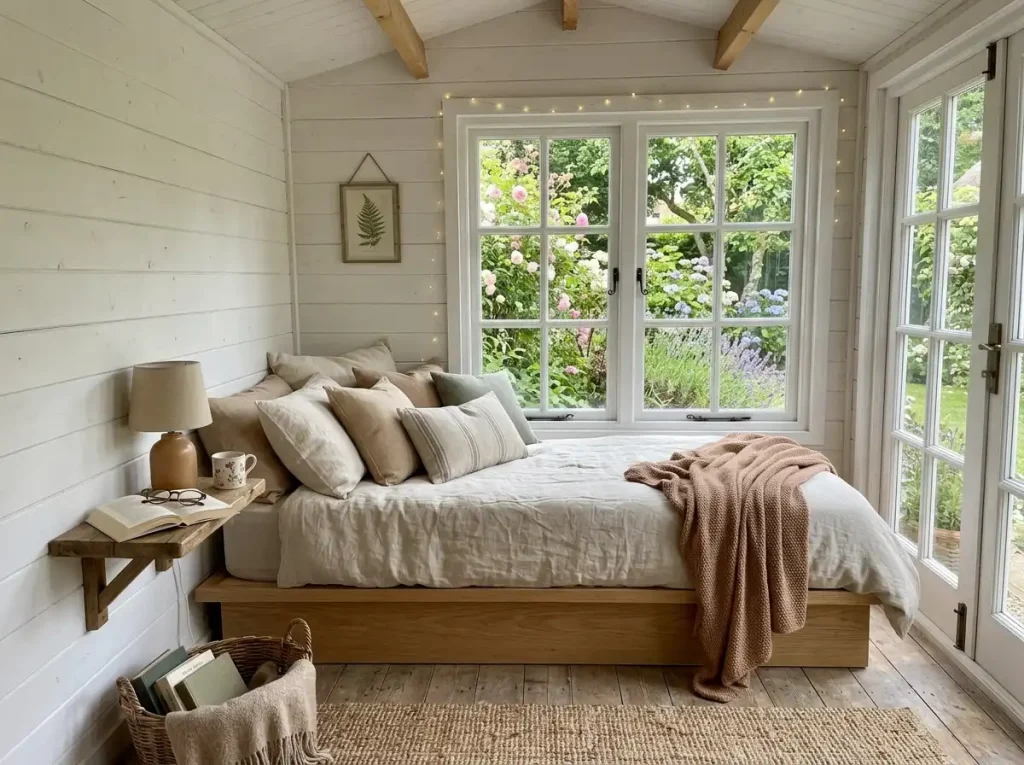
For the daybed, a simple wooden platform with a quality mattress topper beats a purpose-made daybed in most cases — it’s lower, simpler, and works better with an assortment of pillows and throws than a frame with arms. Linen pillowcovers in warm neutrals, a throw blanket at the foot, a small shelf beside it for a lamp and a book.
The garden view she shed benefits from the least decoration of any type. The garden provides the visual interest. The interior should feel quiet and restful by comparison.
13. The Self-Care Sanctuary
The she shed version of a spa: a comfortable chair or daybed, good lighting for skincare and grooming, warm textures everywhere — linen, cotton, woven — essential oil diffuser, a small shelf with carefully chosen candles and care products, a warm rug, and complete quiet.
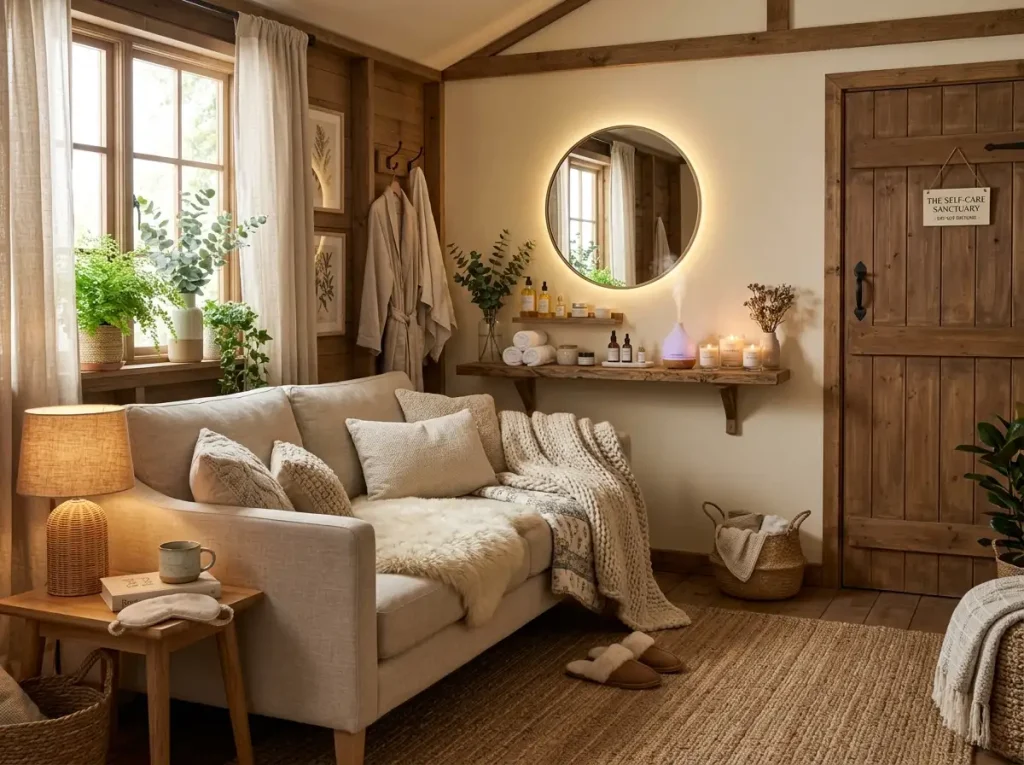
This is the she shed whose door exists specifically to be closed when you’re in it.
Part 5: Specific Interior Design Ideas
14. Shiplap Walls Done Right
Shiplap inside a she shed immediately elevates the interior from “shed with furniture” to “intentional space.” The rough-hewn texture of natural shiplap adds character that smooth plywood or drywall can’t achieve, and the variety of finishes — painted white, painted cream, stained warm honey, painted a bold color — makes it adaptable to any she shed style.
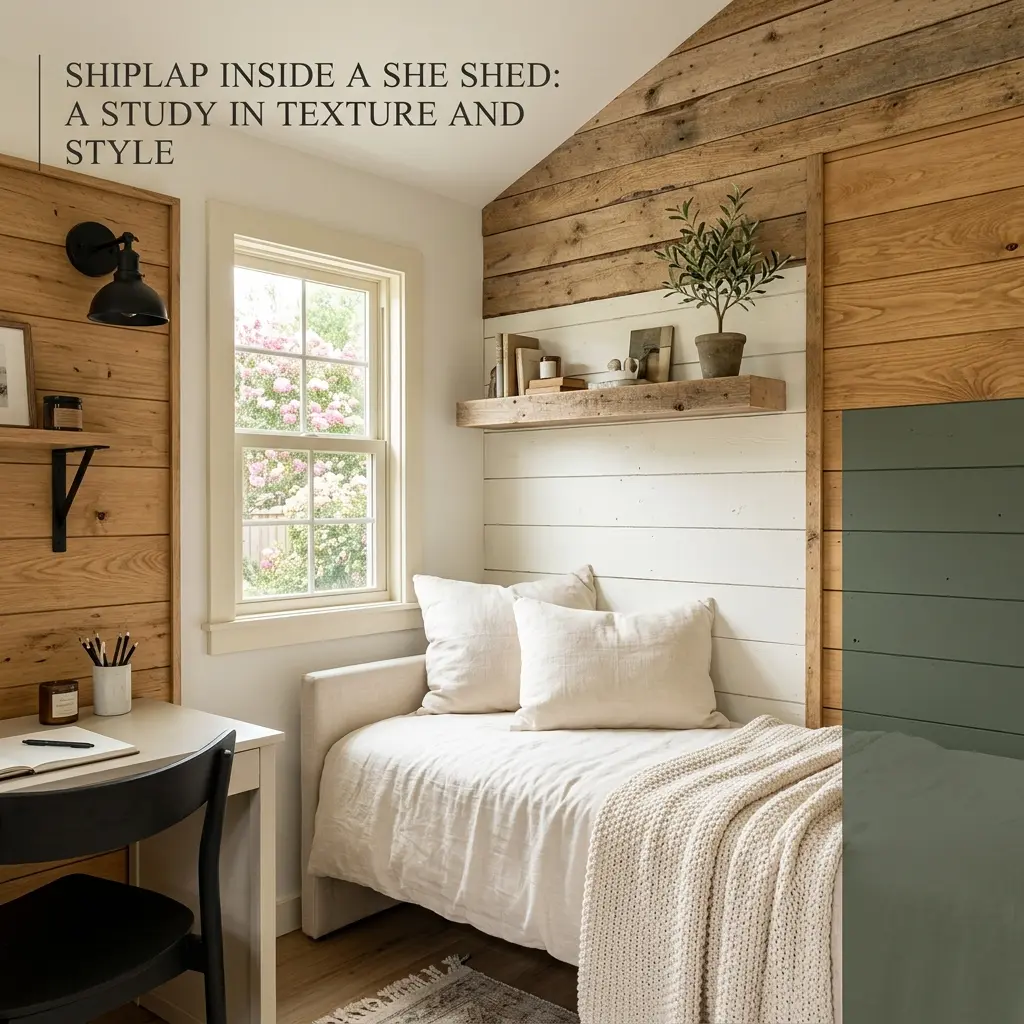
For a she shed, shiplap is particularly effective on one accent wall rather than all four — behind a daybed, behind a desk, or on the wall facing the door. Our shiplap ceiling guide covers installation in detail, and the same techniques apply to walls.
If you’re aiming for the farmhouse cottage look, white shiplap walls with warm wood accents and soft linen textiles create exactly the right atmosphere. For a more contemporary look, natural-stained shiplap with matte black hardware reads as warm and modern simultaneously.
15. Painted Exposed Ceiling
In a she shed with exposed roof structure — visible rafters, purlins, or joists — painting the entire ceiling a single color turns the structural elements into a deliberate design feature.
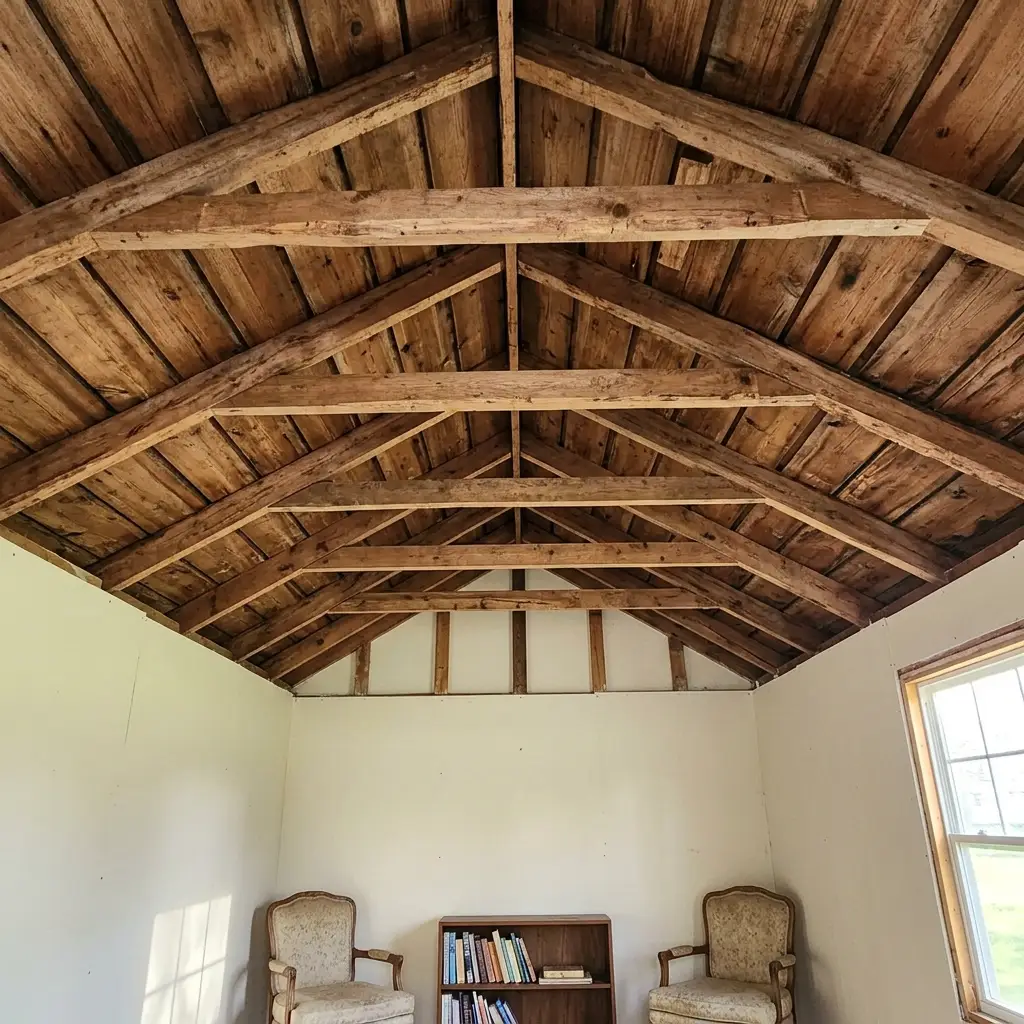
Matte white is the most common choice and works in any she shed style. It bounces light downward and makes the small space feel larger. Dark paint on the ceiling — matte black, deep charcoal, navy — creates a cozy, intimate atmosphere that suits reading nooks and creative studios that lean toward drama.
Our painted exposed basement ceiling guide covers the exact techniques — prep, paint selection, brush versus roller, and color considerations — that translate directly to she shed ceilings with exposed structure.
16. Feature Wall Wallpaper
The boldest use you’ll ever find for a wallpaper you love but wouldn’t dare put in the main house. A she shed is a room where you answer to no one’s preferences but your own, which makes it the correct location for the bold botanical print, the hand-painted chinoiserie, the graphic geometric, the maximalist floral.
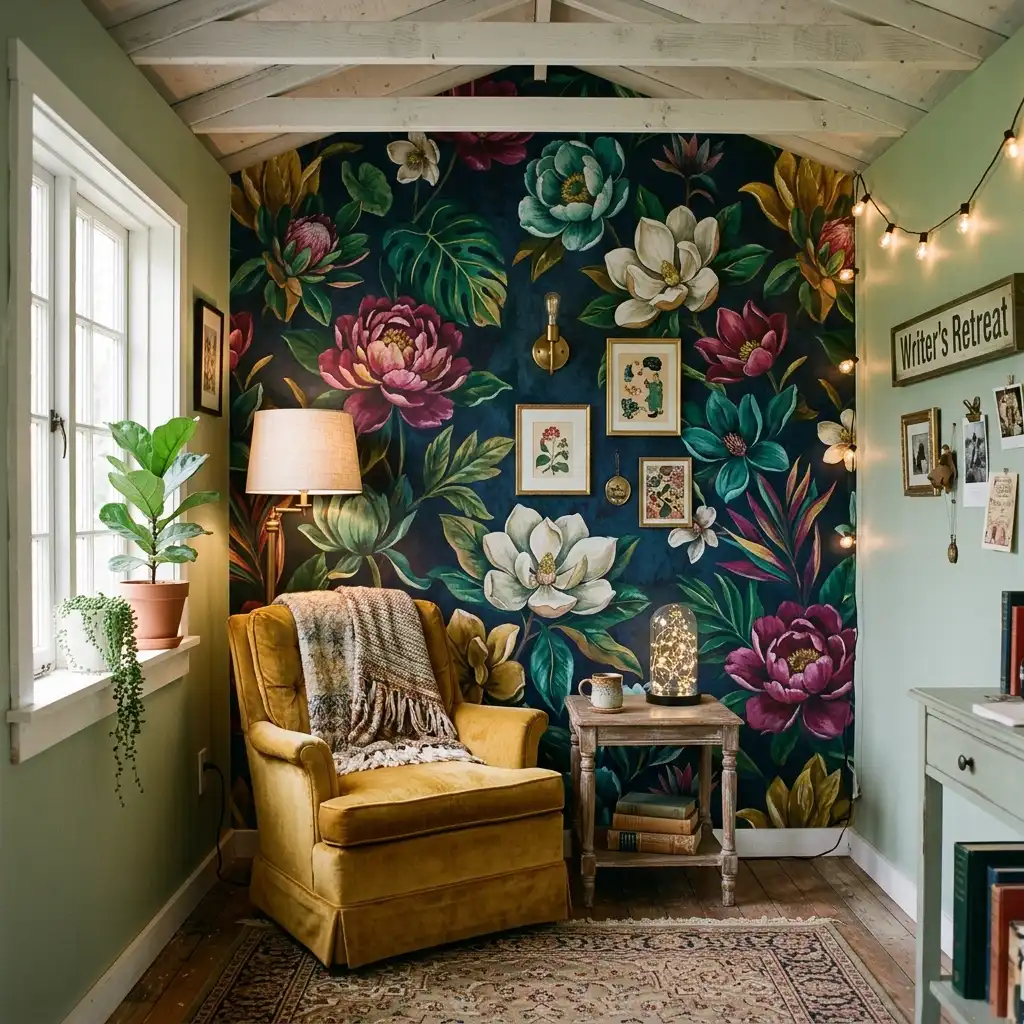
One feature wall behind the main furniture in a she shed — covered in wallpaper you genuinely love — creates a room that feels curated and personal immediately. The small scale of a she shed makes bold wallpaper more manageable than in a large room: you need far less of it, and the enclosed space amplifies the effect.
Peel-and-stick wallpaper is particularly practical in a she shed because the walls are often not perfectly smooth or plumb. It’s also fully reversible if your tastes change.
17. Painted Concrete or Vinyl Plank Floors
The floor in a she shed often arrives in poor condition — bare concrete, rough plywood, or worn original flooring. Both options are worth knowing.
Painted concrete is the most durable and easiest to clean — good for craft studios where materials get dropped and spilled. A concrete floor paint in warm gray or terracotta changes the feeling of the entire room for about $40 in materials. For added comfort, a large area rug on top of painted concrete combines practicality with warmth.
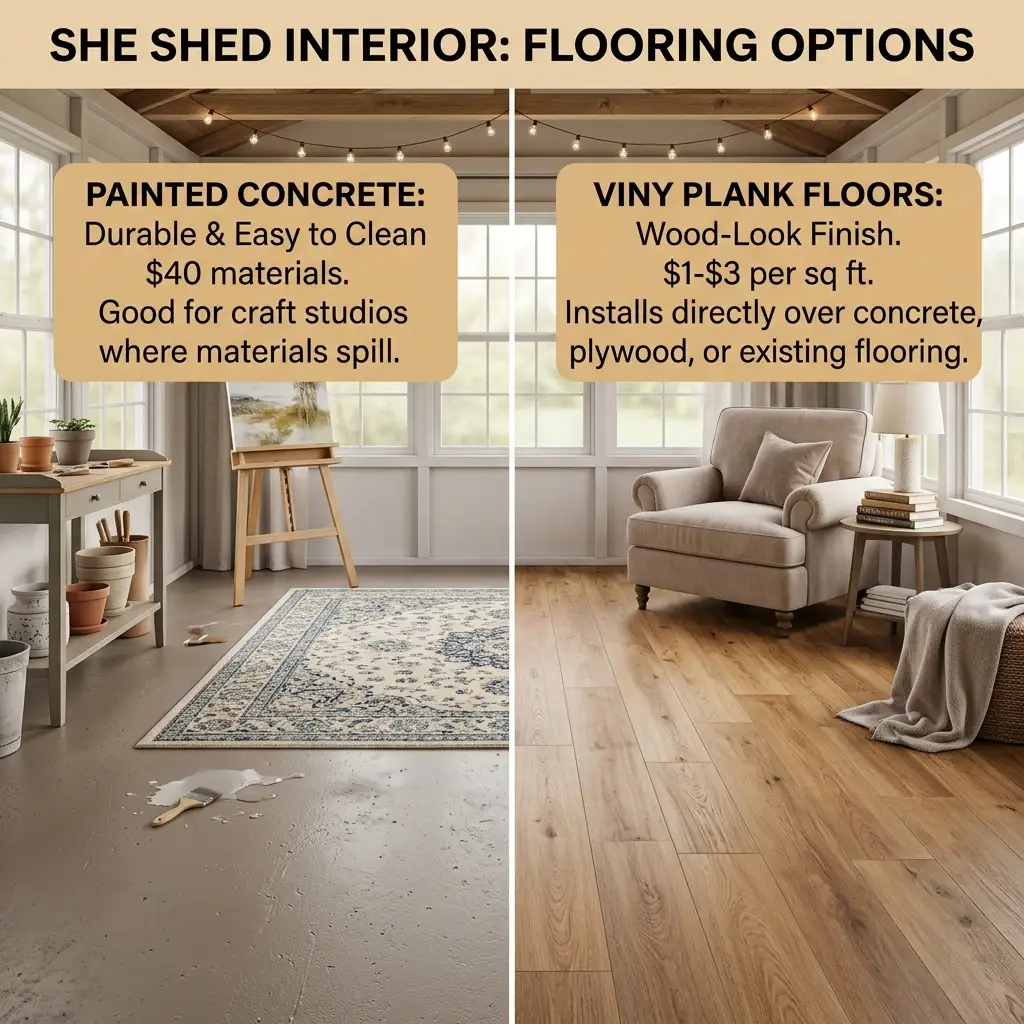
Vinyl plank flooring in a wood-look finish installs directly over concrete, plywood, or existing flooring without adhesive in most cases. The result looks like hardwood, insulates slightly better than concrete, and costs $1 to $3 per square foot for a she shed’s worth of materials.
18. French Doors or a Large Window
Natural light is the most transformative upgrade available in a she shed, and it’s one of the first things to consider if you’re modifying the structure. A standard shed with one small window is a darker, less pleasant space than the same shed with French doors that open to the garden or a large picture window on the primary wall.
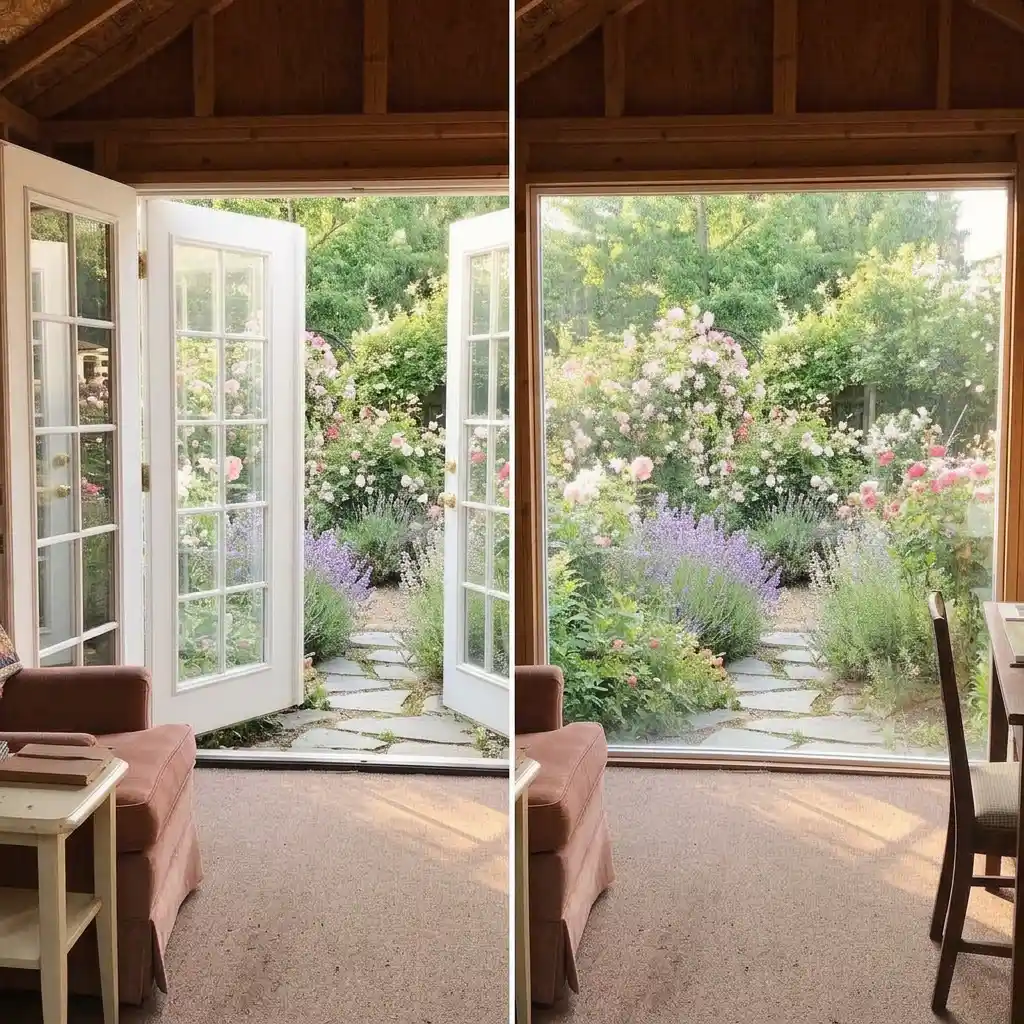
French doors in particular do two important things: they flood the interior with light when open, and they create a visual connection to the garden that makes the she shed feel like it belongs to the outdoor space rather than just sitting in it. Standing inside a she shed with French doors open to a garden is genuinely different from standing inside the same shed with a single door.
19. String Lights and Layered Lighting
The lighting in a she shed matters more than in most rooms because the space is small enough that a single overhead light produces either too much harsh brightness or too little useful illumination.
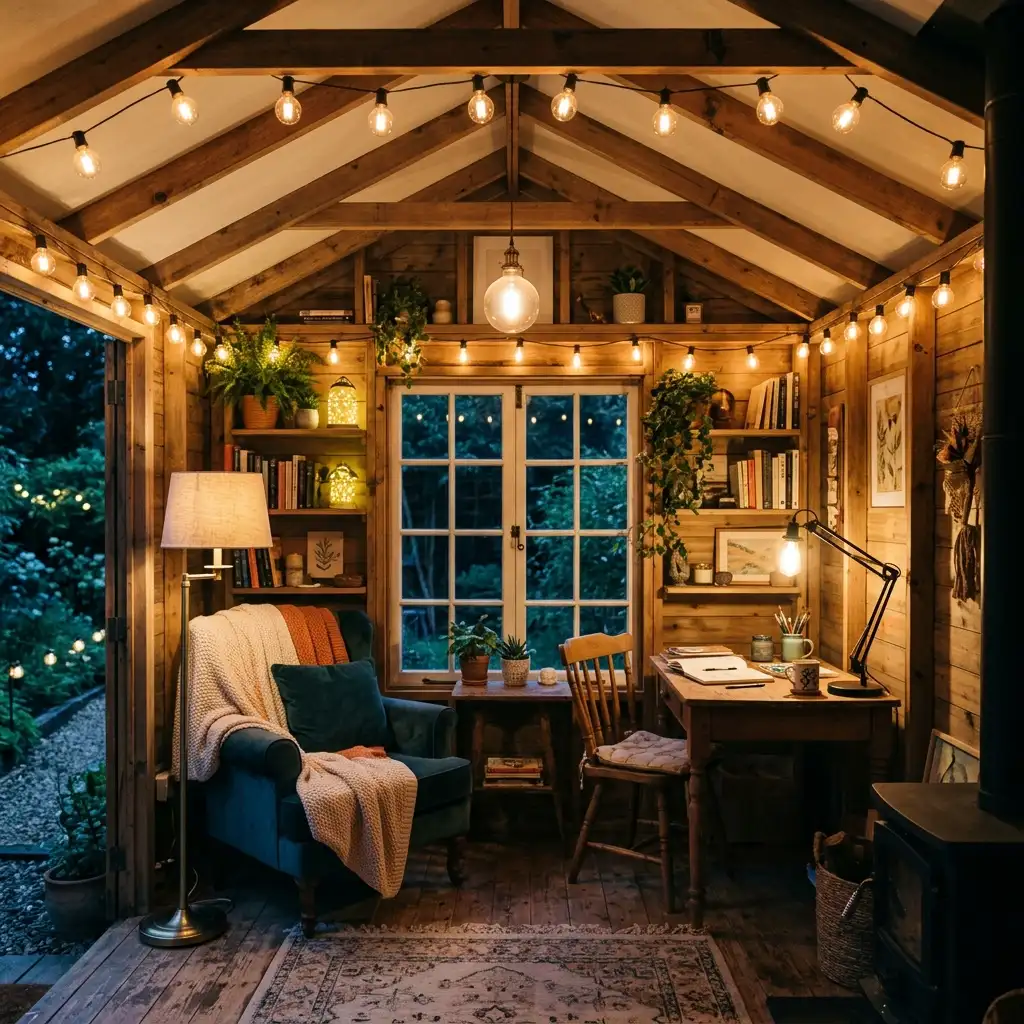
Layered lighting is the solution: overhead ambient light for general illumination, a task lamp directed at the work surface or reading chair, and warm string lights along the ceiling perimeter or woven through shelving for atmospheric evening light.
Edison bulb string lights along the interior ceiling perimeter are the most popular choice and the most effective — they produce warm, gentle ambient light that makes the she shed feel cozy and inviting at night without the harshness of overhead fixtures. They’re also inexpensive ($15 to $30) and require no installation beyond a few hooks and a power outlet.
20. The Pegboard Wall
A pegboard wall in a she shed craft studio is the single most versatile storage investment in any creative workspace. One full wall of pegboard — painted the same color as the room for a seamless look — holds tools, supplies, scissors, spools, jars, small shelves, and anything else that benefits from being visible and immediately accessible.
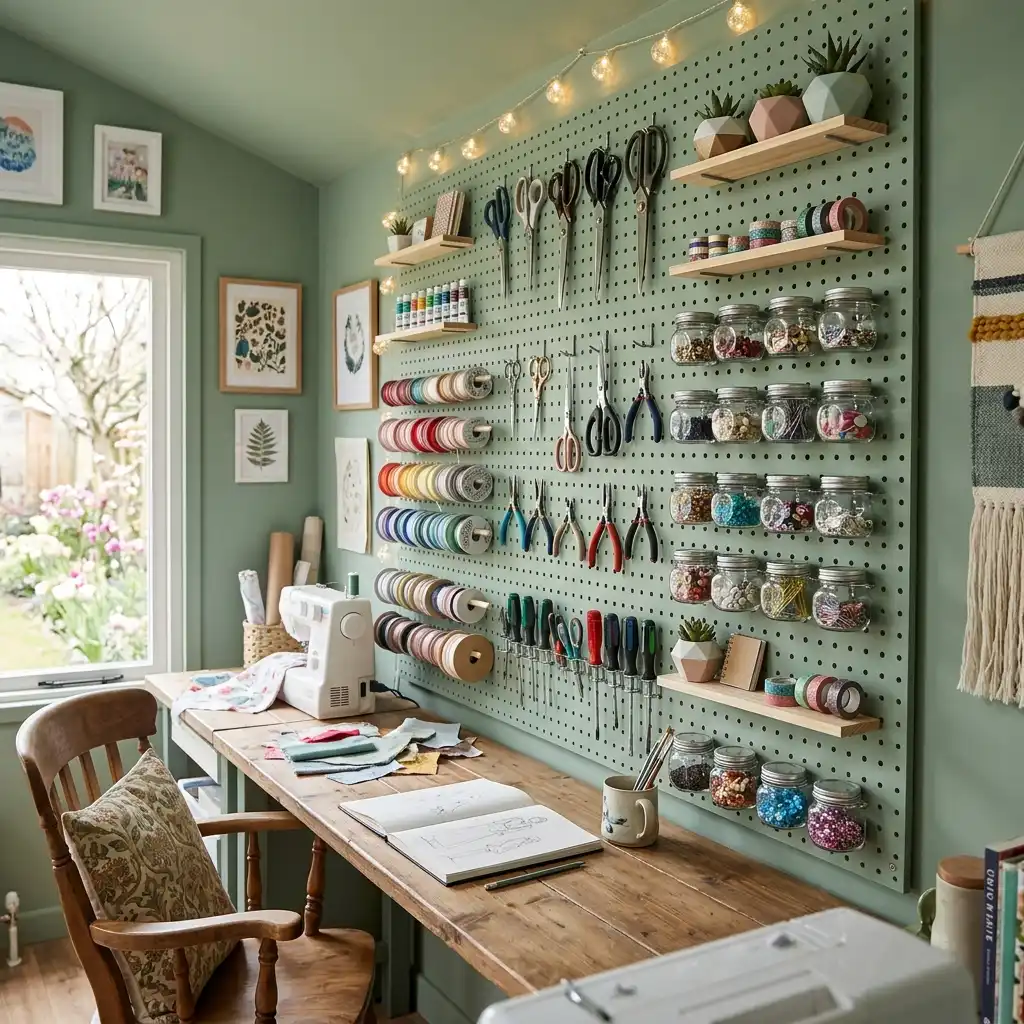
The advantage over shelving: pegboard is infinitely rearrangeable as your needs change. The configuration that works today can be completely redesigned next month without touching the wall. For a she shed where your creative practice evolves, this flexibility is significant.
For detailed pegboard setup guidance, storage container choices, and the specific hook and shelf configurations that work best in creative studios, our craft room storage ideas guide covers the pegboard approach in depth.
21. Window Boxes and Exterior Plantings
The she shed’s exterior is part of the experience — because you see it from the garden, you approach it through the yard, and the transition from garden to interior is part of what makes arriving at the she shed feel like arriving somewhere special.
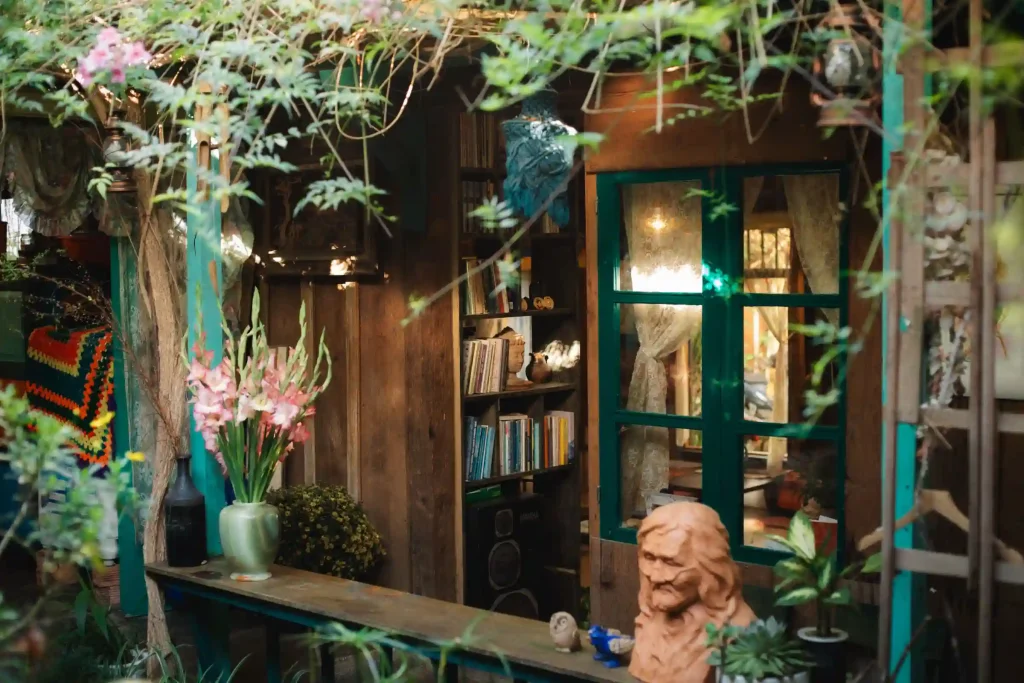
Window boxes with seasonal flowers, climbing roses or jasmine on a simple trellis against the shed wall, a small path of stepping stones from the house to the door, a potted plant on either side of the entrance. These additions take the she shed from a structure in the yard to a destination in the garden.
Lavender planted along the path to a she shed used as a reading retreat or meditation space adds a sensory layer that reinforces the transition from the busyness of the house to the calm of the retreat.
22. Vintage and Thrift Store Furniture
The she shed is the room in which thrift store furniture makes the most sense — because the space is small enough that single pieces read as features rather than as compromises, because the she shed aesthetic generally embraces pieces with history, and because the financial investment in a secondhand armchair or vintage dresser used as a supply cabinet is low enough to be genuinely risk-free.
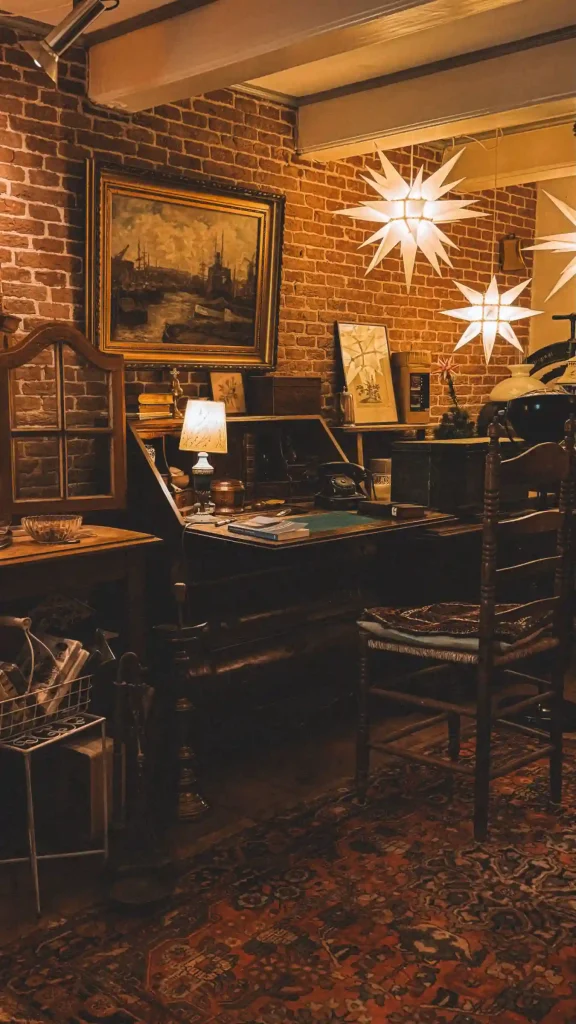
The vintage dresser-as-storage-unit is a particularly she shed-appropriate move: drawers for small supplies, the top surface for display, and the inherent character of old painted wood adding warmth that flat-pack furniture rarely achieves.
Look at estate sales, Facebook Marketplace, and charity shops for: armchairs with interesting bones that can be recovered, dressers with interesting hardware, small side tables with character, vintage mirrors, and old picture frames for groupings.
23. The Moody Dark Interior
Not every she shed needs to be white and light and airy. Some of the most atmospheric she sheds are painted dark — deep navy, forest green, charcoal, or dusty plum — with warm lighting that makes the small space feel intentional and enveloping rather than cramped.
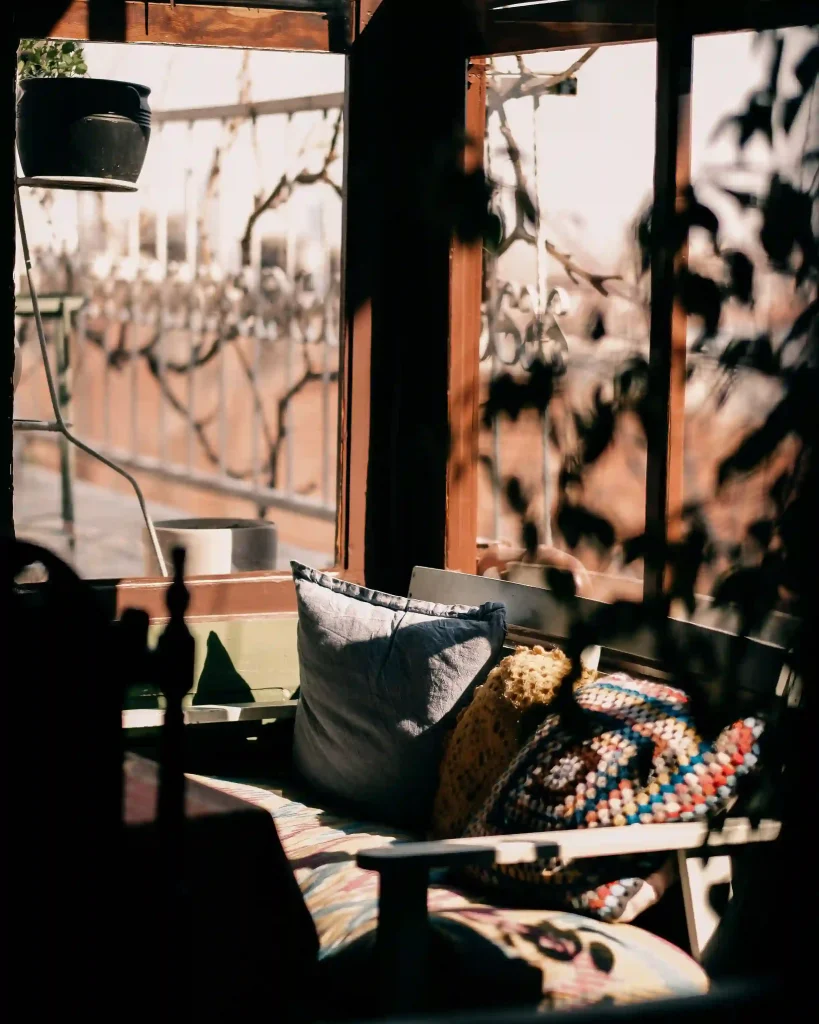
The dark-painted she shed works particularly well as a reading retreat or a creative studio where a focused, contained atmosphere is an asset. The darkness encourages concentration. The warm lighting makes it feel cozy rather than oppressive.
If you want to explore how dark wall colors work in practice before committing your she shed walls, our bedroom accent wall ideas guide covers dark colors extensively — the same principles of finish, undertone, and lighting apply directly.
24. The Greenhouse She Shed
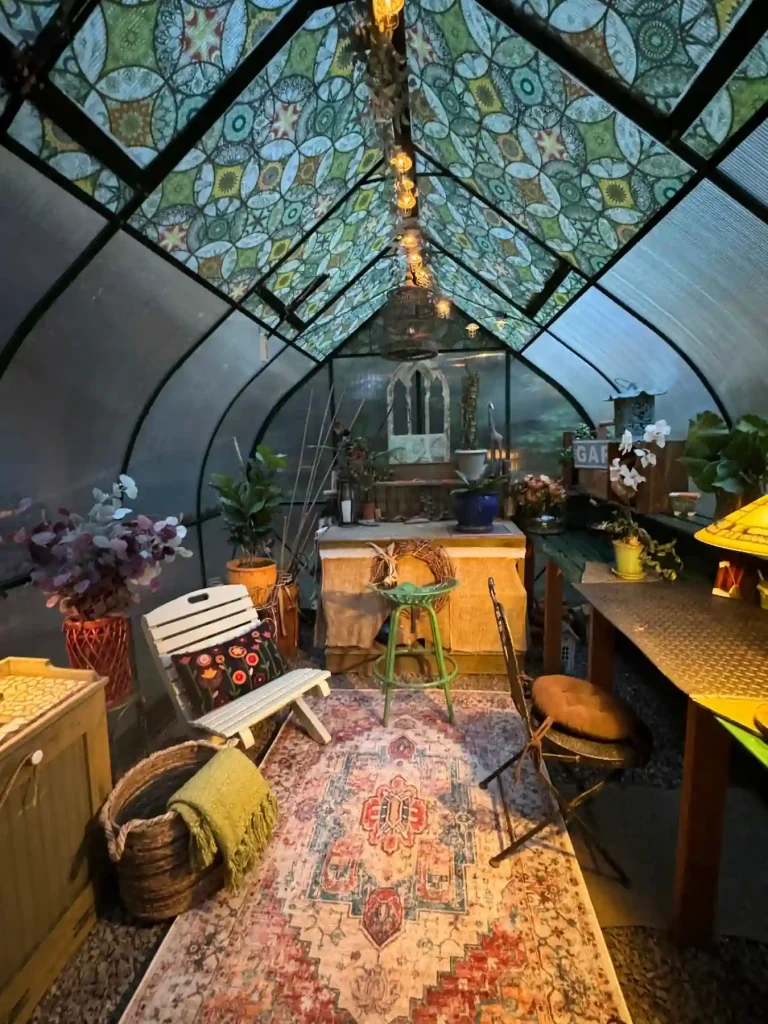
A greenhouse she shed — with clear or translucent roof panels, plant shelving along every wall, a potting bench, and growing trays on the floor — is the she shed for gardeners. It serves dual purpose: a productive growing space and a genuinely beautiful room to spend time in, surrounded by living things.
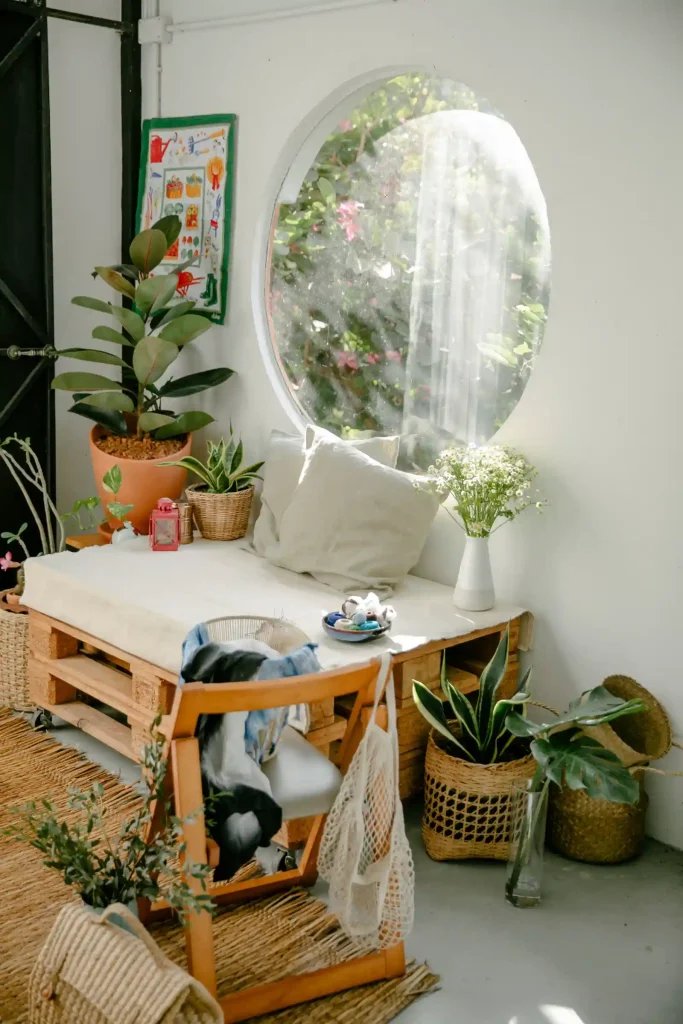
The structure needs to maximize light: clear polycarbonate roof panels are the most practical, as they’re lighter and less fragile than glass. South-facing orientation captures the most winter light. Opening vents or windows on the roof prevent overheating in summer.
Inside, cedar shelving resists moisture better than other woods. A concrete or gravel floor drains water and cleans easily. The warmth of a functioning greenhouse in winter — warmer than the garden, filled with green, fragrant with soil — makes it one of the most pleasant she shed environments regardless of the season outside.
25. The She Shed Bar and Social Space
A she shed configured as an entertaining space — bar cart or small built-in bar along one wall, a bistro table for two or three, comfortable seating, good lighting, a Bluetooth speaker, and the decoration that reflects the owner’s personality without compromise — is the version you use with friends rather than alone.
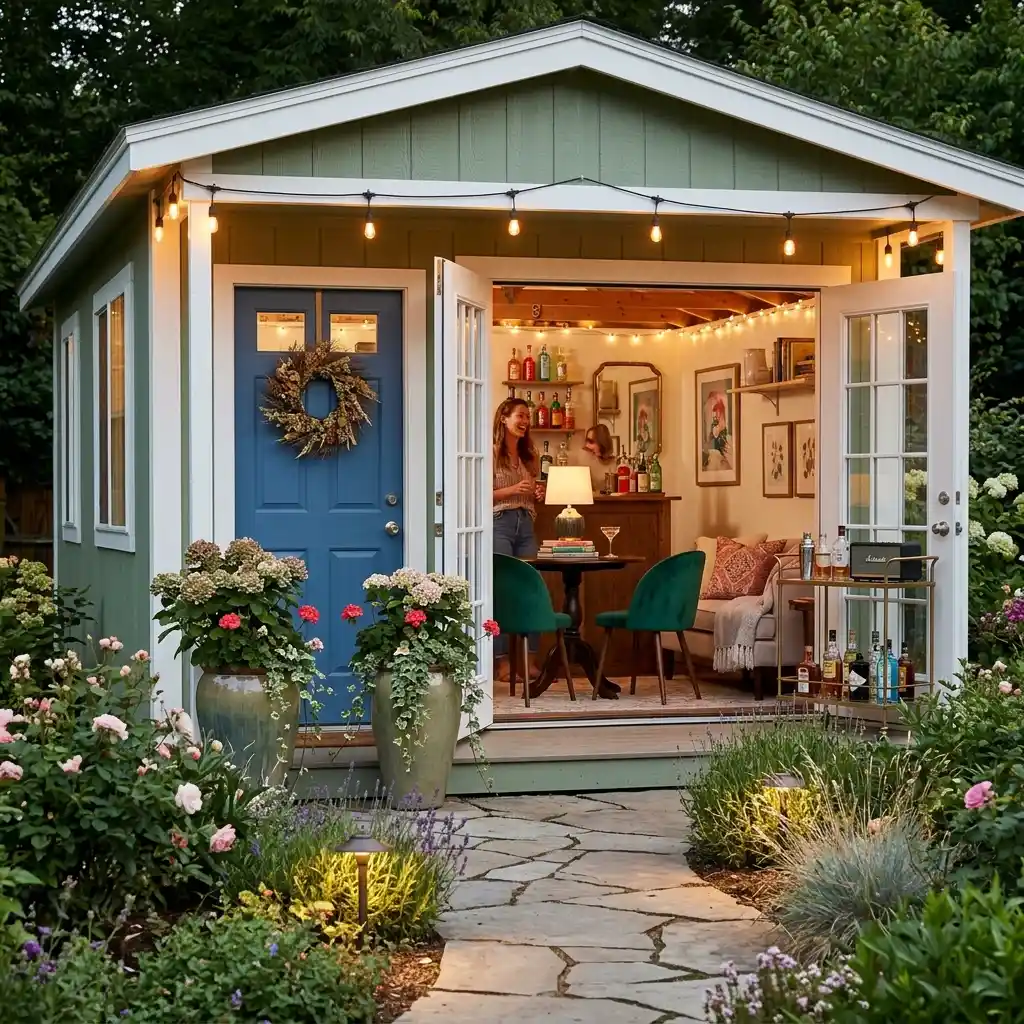
The social she shed benefits from a slightly more intentional exterior, because guests will arrive through the garden and the approach matters. A lit pathway, a welcoming door with a wreath or planters, and visible warm light through the windows create an arrival experience that makes the space feel special before anyone steps inside.
26. The She Shed for Kids (That Grows Up With Them)
A she shed sized for children — a small playhouse in the garden, genuinely decorated and furnished at child scale — that is designed to evolve as they age is an investment in outdoor childhood that lasts longer than any toy. A reading nook at 5, a craft studio at 10, a teenage retreat at 14, returned to the parent at 18 as the she shed it was always going to become.

The design principle that allows this evolution: invest in the structure and the light, keep the decoration and furniture simple and replaceable, and let the occupant guide what it becomes.
Styling Details That Make the Difference
Curtains or blinds, not bare windows. A she shed with uncovered windows feels unfinished regardless of how carefully everything else is designed. Simple linen curtains on a tension rod cost very little and change the quality of the interior completely.
One good rug. A she shed without a rug feels cold and temporary. A she shed with a good rug — even a modest one — feels like a room. Place it large enough to anchor the main furniture area.
A candle or diffuser. The scent of a space is part of how it feels. A she shed that smells good — warm wax, light florals, cedar, whatever suits you — creates a sensory signal that you’ve arrived somewhere specific.
Something personal on the walls. Art you love, photographs, a piece of work you made, a map of somewhere meaningful. The she shed is the room where the walls should tell your actual story rather than the story a staged home would tell.
A place for the kettle. The ability to make a cup of tea or coffee without returning to the house is one of the small pleasures that makes a she shed feel genuinely self-contained. A small shelf with a kettle, a few mugs, and a canister of tea is all it takes.
Budget Guide: What She Sheds Actually Cost
Converting an existing shed: $200 to $2,000 Depending on whether you need electrical, insulation, new flooring, and how much furniture you add. The most common she shed transformation — clean out, insulate, paint, add furniture — costs $400 to $800 for a modest but genuinely comfortable result.
Ready-made prefabricated she shed (structure only): $1,500 to $8,000 Garden studios, she shed kits, and prefabricated backyard structures range widely in quality and finish level. At the lower end, basic wooden shed kits need insulation and interior finishing. At the upper end, finished garden studios arrive ready to use.
Custom built garden studio: $10,000 to $40,000+ Professional garden rooms with full insulation, plumbing, electrics, underfloor heating, and polished interiors. This is the permanent addition to a property — one that adds real value and functions as a proper room.
She shed furniture and decor budget: A comfortable, functional, well-styled she shed interior can be achieved for $300 to $800 in furniture and decor — armchair ($150 to $300 secondhand or new), rug ($50 to $150), shelving ($50 to $150 DIY), lighting ($30 to $80), curtains ($20 to $60), accessories ($30 to $100).
Frequently Asked Questions
What is the difference between a she shed and a garden room?
Effectively, budget and permanence. A she shed is typically a converted or decorated outbuilding, often with basic insulation and minimal utility connections. A garden room is usually a purpose-built, fully insulated structure with full electrical connection, sometimes plumbing, and construction quality comparable to an addition to the main house. The design principles overlap significantly.
Do I need planning permission for a she shed?
In the United States, most residential outbuildings under a certain size threshold don’t require a building permit, but this varies by jurisdiction. Check with your local authority before building anything new. Converting an existing shed typically doesn’t require permits. Adding electrical connection usually does require a licensed electrician and a permit.
How do I make a she shed warm in winter?
Insulation first — rigid foam between stud walls is the most effective approach in a small structure. A small electric wall heater handles the remaining heating need for a well-insulated she shed. A mini split handles both heating and cooling for year-round use. A small propane or wood stove adds atmosphere but requires proper ventilation.
What size shed do I need for a she shed?
For a reading nook: 6×8 feet is comfortable for a single person. For a craft studio: 10×10 feet is the practical minimum for a work table plus storage. For a home office with a proper desk: 8×10 feet works well. For a social space: 12×16 feet or larger gives room for seating and movement.
Can I build a she shed myself?
Yes — many she shed conversions are straightforward DIY projects. Insulating and drywalling a shed interior, installing a floating floor, painting, and adding lighting are all achievable for anyone comfortable with basic tools. Running electrical cable from the main house should be done by a licensed electrician in most jurisdictions.
What should I put in my she shed if I don’t have a specific hobby?
Start with what you want to feel rather than what you want to do. If you want to feel calm, design a simple retreat with a comfortable chair and good light. If you want to feel creative, give the space a work surface and wall storage for materials. If you want to feel social, make it a beautiful room for two or three people to gather. The she shed works backward from a feeling — once you know what you want to feel in the space, the furniture and design follow naturally.
The Part I Actually Believe
The she shed idea resonates with so many people because most of us have never had a room that was entirely our own.
Not shared with a partner or children or roommates. Not a compromise between our taste and someone else’s. Not a room that has to function as a bedroom and a study and a place to fold laundry simultaneously.
The she shed offers something that’s rare in most homes: specificity. A room that exists for one purpose, designed for one person, decorated to please exactly that person and no one else.
That’s worth whatever you spend on it.
Related articles on HomefixTrends: