
I did not expect a book about tidying to make me cry.
But there I was, sitting on my kitchen floor surrounded by everything I owned, holding a spatula I had not used in four years and genuinely asking myself whether it sparked joy. And it did not. And I put it in the donation pile. And something shifted.
That was my introduction to Japanese organization philosophy and it happened the way most people encounter it — through Marie Kondo and her KonMari method. But what I have learned since is that KonMari is only one expression of a much deeper, much older Japanese cultural relationship with objects, space, and the home.
Japan is a country where living spaces are often extraordinarily small by Western standards. Tokyo apartments that house entire families would be considered impossibly cramped in most of North America or Europe. Yet Japanese homes are consistently cited as among the most serene, most functional, and most beautiful in the world. There is something happening there that goes beyond clever storage products.
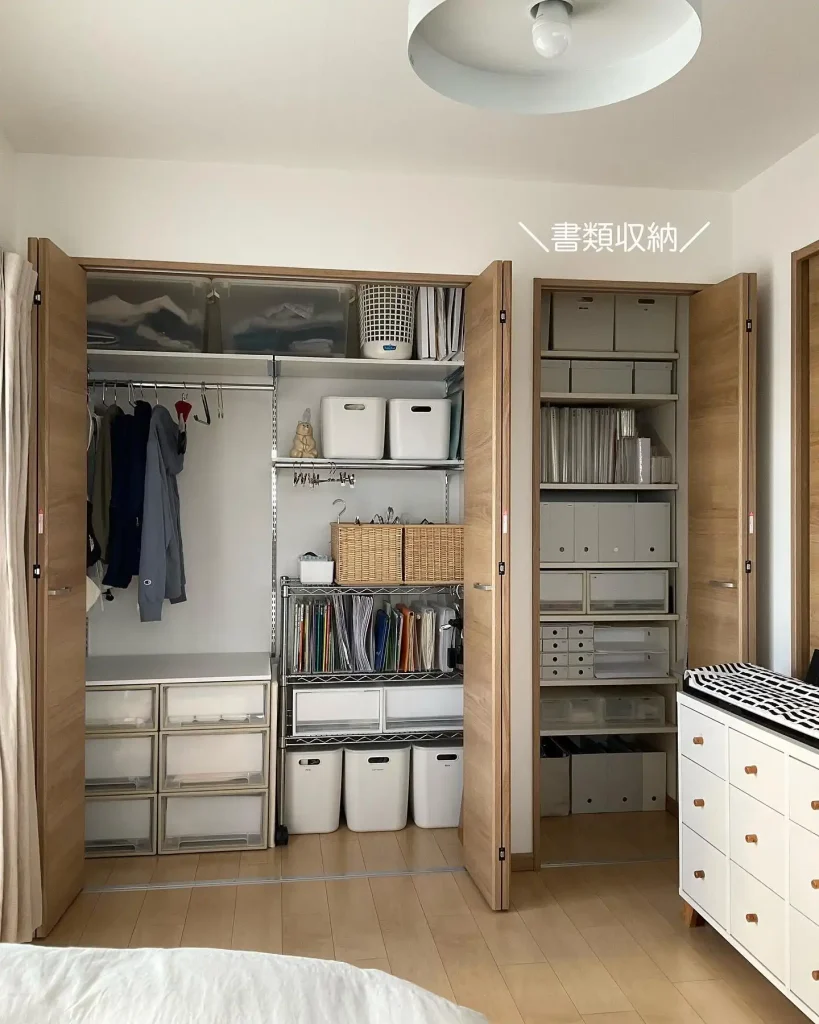
This article is about those principles — the philosophy behind the hacks — and then the actual practical hacks that bring those principles into your real home.
Start Here: The Philosophy That Makes the Hacks Actually Work
Most organization advice fails because it addresses symptoms rather than causes. Buy these bins. Install these shelves. Use these labels. And then six months later the bins are full of stuff that should not exist, the shelves are overcrowded, and the labels are peeling.
Japanese organization philosophy starts somewhere entirely different. It starts with your relationship with objects themselves.
There are several concepts worth understanding before anything else.
Ma — The Value of Empty Space
Ma is a Japanese concept that translates roughly as “negative space” or “pause” — the space between things. In Western design, empty space is often treated as space that has not been filled yet. In Japanese design philosophy, empty space is intentional and valued. It is not absence — it is presence of a different kind.
In practical terms, this means that a shelf that is two-thirds full is not a shelf that needs more things. It is a shelf that is working correctly. The empty space is doing something. It is giving the eye somewhere to rest. It is giving the objects room to be seen as individual things rather than as undifferentiated mass.
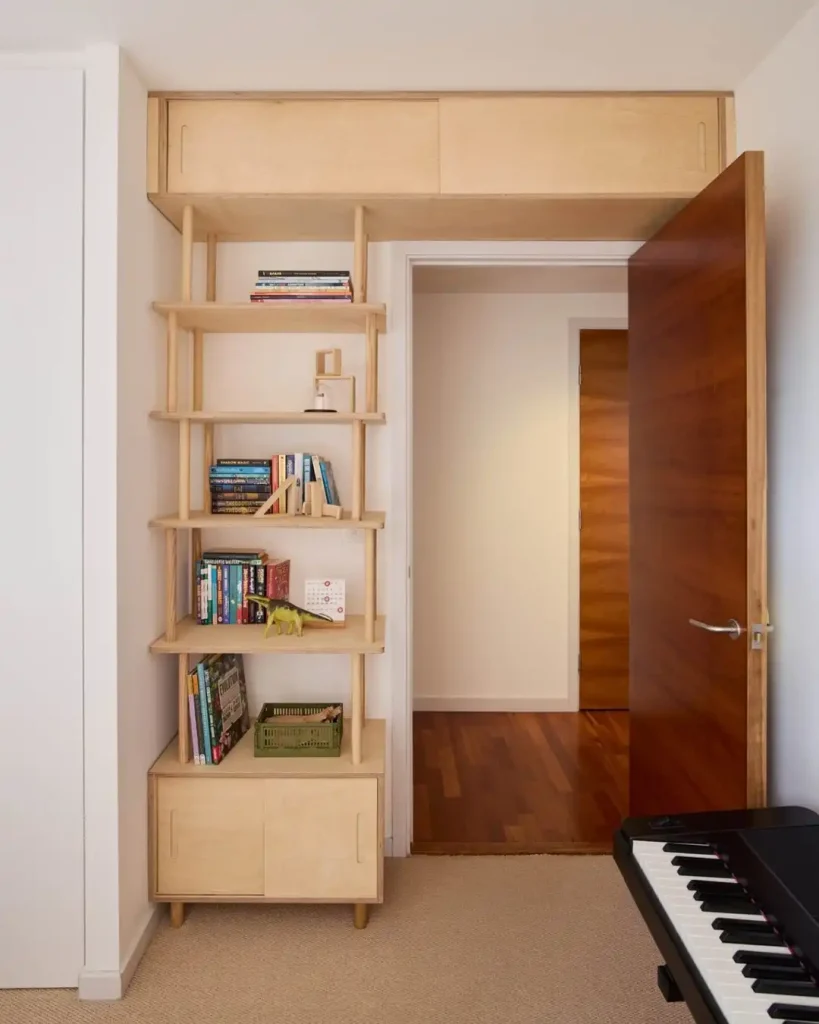
Bringing ma into your home means resisting the urge to fill every surface, every shelf, and every corner. Some of those spaces are supposed to be empty.
Wabi-Sabi — The Beauty of Imperfect and Impermanent Things
Wabi-sabi is the Japanese aesthetic philosophy that finds beauty in imperfection, incompleteness, and impermanence. A chipped ceramic bowl is beautiful. A worn wooden surface is beautiful. Things that show their age and use are beautiful.
The organization implication is significant. Western organization culture is often obsessed with uniformity — matching containers, identical labels, perfect rows. This aesthetic is lovely but it creates a system that feels like failure the moment anything deviates from the ideal. Wabi-sabi offers permission to let things be a little imperfect and still be beautiful.
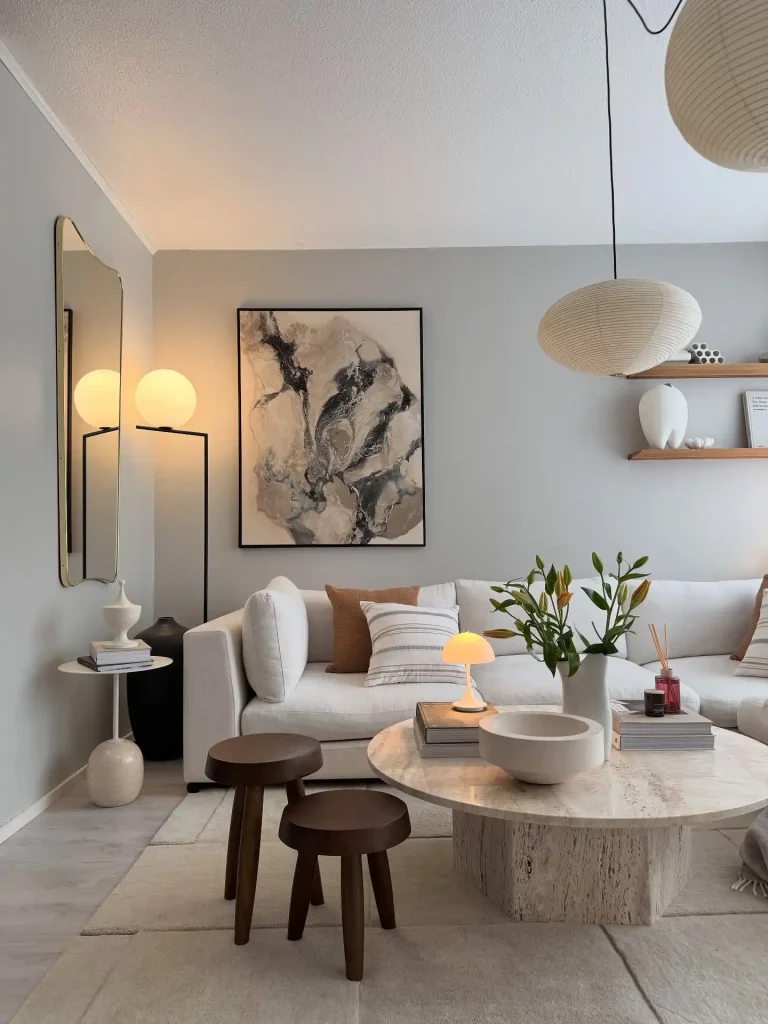
It also reframes your relationship with worn, aged, and imperfect possessions. An object that shows the marks of genuine use has a beauty that a pristine unused object lacks.
Omoiyari — Consideration for Others
Omoiyari means consideration for others — anticipating needs and acting on them without being asked. In the context of home organization, this means designing your systems not just for yourself but for everyone who shares your space.
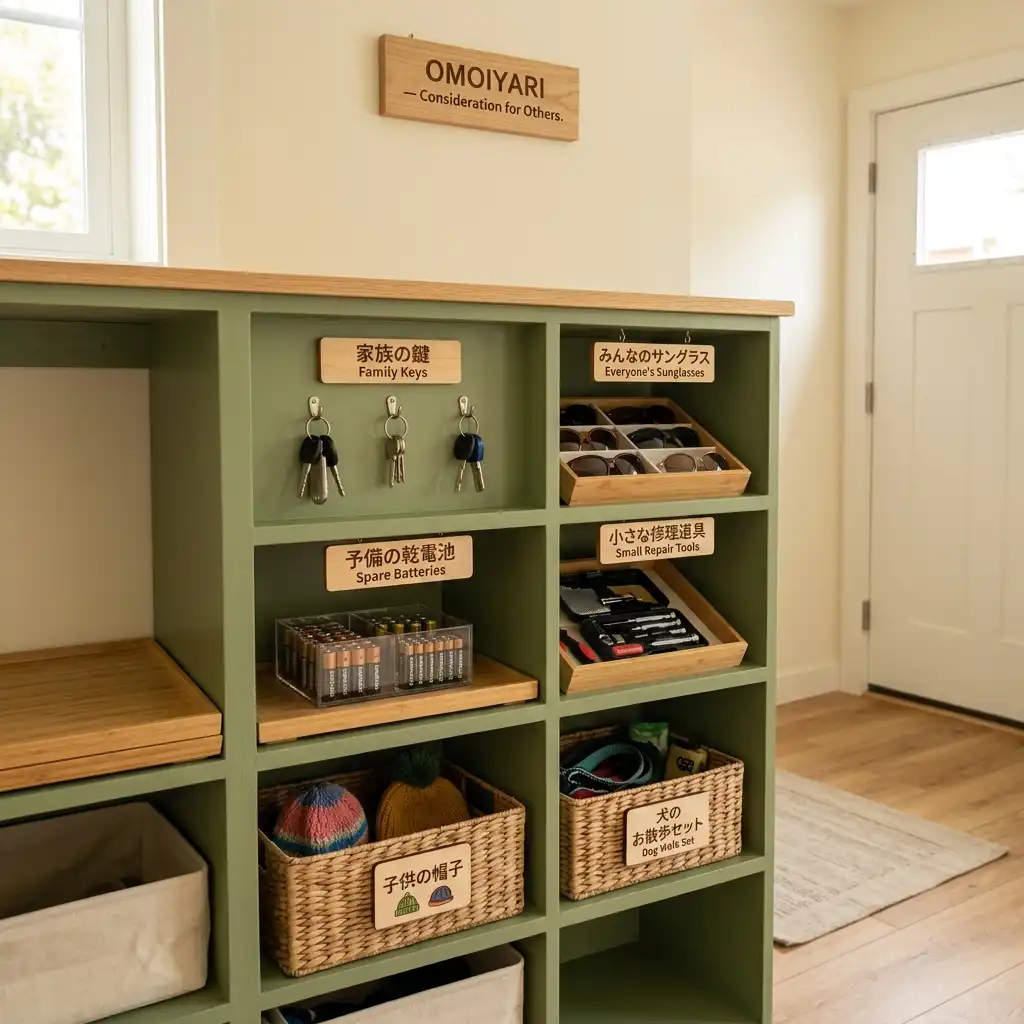
The junk drawer that only you can navigate is not organized — it is organized for you and inaccessible to everyone else. A truly organized home has systems that every household member can understand and use independently. Children can find their own things. Partners can locate items without asking. Guests can use the bathroom cabinet without feeling like they are invading a mystery.
Monozukuri — Craft and Making
Monozukuri refers to the Japanese cultural value of craft, manufacturing, and making things with genuine care and skill. Applied to home organization, it suggests that the act of organizing is itself a craft worthy of attention and care — not something to rush through and be done with, but something to do thoughtfully, taking satisfaction in the process as much as the result.
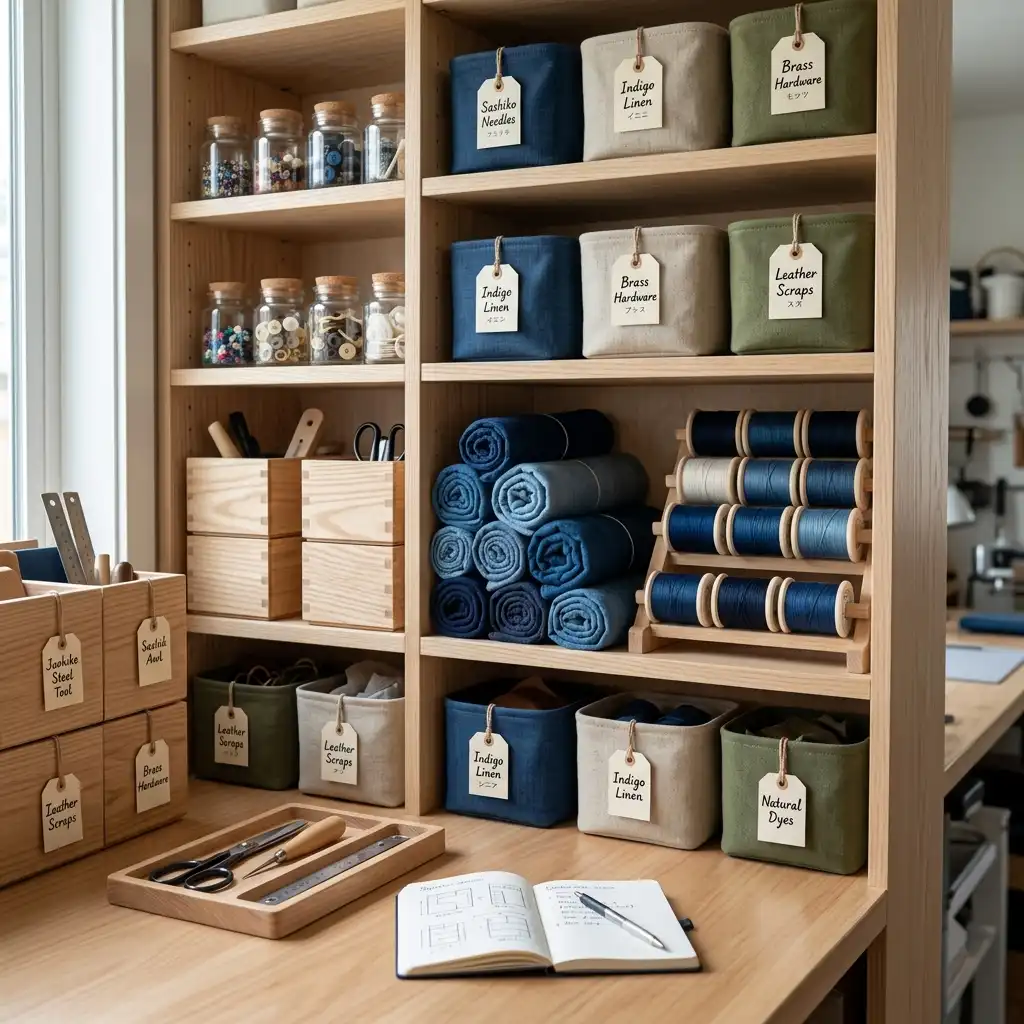
The KonMari Method: What It Actually Says vs. What People Think It Says
KonMari deserves a proper explanation because it is so widely discussed and so widely misunderstood.
Marie Kondo’s method has two central ideas that most summaries miss or understate.
First: Organize by category, not by room.
Almost everyone organizes room by room — the bedroom, then the kitchen, then the living room. KonMari says this is why organizing rarely produces lasting results. You end up with things of the same category distributed throughout the house and you never see the full volume of what you own, so you never make genuinely decisive choices about it.
The KonMari sequence is: clothes, then books, then papers, then komono (miscellaneous), then sentimental items. You gather every item in the category from every location in the house, put it in one pile, see the full volume, and then make decisions.
The experience of seeing every piece of clothing you own in one pile — and for many people, this pile is quite astonishing in its size — creates a different quality of decision than holding individual items in their storage location. The pile makes the scale of what you own undeniable.
Second: Keep what sparks joy, not what you might need someday.
This is the part most people know but most people apply backwards. KonMari does not say get rid of everything that does not spark joy as though the default should be discarding. It says the criterion for keeping something is whether it genuinely brings you joy or serves you well — and that this criterion is worth taking seriously.
The “spark joy” language is easy to mock and hard to argue with when you actually apply it. Hold the spatula. Does it do anything for you? Does it feel good to hold? Do you like it? If yes — keep it. If you feel nothing or you feel the mild anxiety of obligation — why do you still own this thing — let it go.
The sentimental category comes last in the KonMari sequence deliberately. Sentimental items are the hardest to make decisions about. Doing them after everything else means your decision-making muscles are stronger and you have already experienced the clarity that comes from having made hundreds of decisions about easier things.
5S: The Japanese Workplace System That Works Brilliantly at Home
5S is a Japanese workplace organization methodology developed in manufacturing contexts — Toyota’s production system being the most famous application — that translates with surprising effectiveness into household organization.
The five S’s are Seiri, Seiton, Seiso, Seiketsu, and Shitsuke. In English, they are often translated as Sort, Set in Order, Shine, Standardize, and Sustain.
Seiri — Sort
Remove everything from the space and sort into categories: keep, discard, relocate, and needs decision. Nothing goes back into the space that has not passed through this sorting process. This is equivalent to the KonMari pile — make the full volume visible before making any decisions.
Seiton — Set in Order
Everything that remains has a specific, defined home. Not “somewhere in the kitchen.” Not “in this general area.” A specific place. The organizing principle is that everything should be findable in 30 seconds or less by anyone who lives in or regularly uses the home. If that standard is not met, the item does not have a proper home yet.
This is where the Japanese concept of ichi-go ichi-e (one place, one location) becomes practical. Every object lives in one place. When you use it, you return it to that one place. The system works because the return location is always the same — there is no decision to make about where to put something back.
Seiso — Shine
In a manufacturing context, Seiso means keeping the workspace clean as a matter of daily discipline — not doing a deep clean once a month but keeping things in order continuously. In a home context, this translates to the discipline of resetting — returning things to their designated places at the end of each day or each use rather than letting accumulation build until it requires a major effort.
The Japanese cleaning discipline of osoji — a thorough end-of-year cleaning performed in December — reflects this same respect for the home as a space worthy of genuine care and attention.
Seiketsu — Standardize
Create consistent systems across similar areas of the home. If you fold towels one way in the main bathroom, fold them the same way in the guest bathroom. If you store cleaning products in one type of container under the kitchen sink, use the same container type in the bathroom. Standardization reduces the cognitive load of organizing across multiple spaces because the same logic applies everywhere.
Shitsuke — Sustain
This is the one that separates functional organization from organizing that lasts a weekend and then gradually deteriorates. Sustain means making the habits of the first four S’s automatic — not through willpower but through system design. Make it easier to return things to their homes than to leave them out. Design systems that reset with minimal effort. Build organization into the daily routine rather than treating it as a periodic intervention.
The Practical Hacks: Room by Room
Now the actual actionable stuff. These are specific Japanese-inspired organization practices that you can implement without any new products, without a weekend-long reorganization project, without — actually — anything except a change in how you think about what you are doing.
In the Kitchen
The “Everything Has One Home” Rule Applied to Cooking
Japanese kitchens are frequently small — genuinely small, not just modestly sized by American standards. The organization solutions that emerge from that constraint are worth borrowing regardless of your kitchen size.
Every tool has one location and lives there. The knife goes back on the magnetic strip, not in the drawer, not on the counter, not rinsed and left by the sink. The spatula goes in the utensil crock. The cutting board goes in its slot. When every tool has one home and returns to it after use, the kitchen resets to functional between every cooking session rather than gradually accumulating clutter that requires a periodic major tidy.
The Pantry Practice of Ichiju Sansai
Ichiju sansai — literally “one soup, three sides” — is the traditional Japanese meal structure. It is relevant to pantry organization because it is a framework that naturally limits the complexity of what your pantry needs to hold. A pantry organized around a consistent meal framework has different contents than a pantry that is trying to accommodate every possible cuisine and cooking style simultaneously.
This is not about forcing a Japanese diet. It is about the underlying principle: if you have a consistent repertoire of meals, you can organize your pantry around what you actually cook rather than what you theoretically might cook. The hypothetical ingredients for the recipe you bookmarked in 2019 and have never made do not need prime pantry real estate.
The Empty Counter Philosophy
Japanese kitchen design prioritizes clear counter surfaces to a degree that can feel extreme by Western standards. The reason is functional: a clear counter is a working counter. A counter covered with appliances, mail, random objects, and yesterday’s coffee cup is a surface where cooking happens reluctantly and with difficulty.
Start by removing every single thing from one counter section — even the things that “live” there. Live with that clear counter for a week. Notice how it gets used. Notice whether the things you removed actually need to come back. Many will not. The toaster can live in the cabinet and come out when needed. The knife block can move to the wall. The mail can go immediately to its proper home rather than the counter.
Refrigerator Organization: The Front-of-Shelf Discipline
Japanese organization applies the concept of first-in, first-out inventory management — the same principle used in grocery stores — to the refrigerator. When new items come in, older items of the same type move to the front. Newer items go to the back.
This prevents the discovery of expired items at the back of the refrigerator that you did not know you had. It reduces food waste, which Japanese culture views as genuinely disrespectful to the food, to the people who produced it, and to the resources that went into it. It also makes the refrigerator faster to navigate because you always know that the item nearest the front is the one to use next.
In the Bedroom
Clothing Folding: The KonMari Vertical Method
This is one of the most immediately practical and most dramatically effective Japanese organization hacks available. Instead of stacking folded clothes horizontally in a pile where you can only see the top item, fold clothes into small rectangles and stand them vertically in the drawer like files in a filing cabinet.
The result is that you can see every item in the drawer at a glance. Nothing gets buried. You stop buying duplicates of things you forgot you owned. You stop wearing only the items from the top of the pile because those are the ones you can actually find.
The folding technique itself — the standard KonMari fold — involves folding items into thirds lengthwise and then into a small rectangle that stands on its own. It takes slightly longer than a basic fold but produces a rectangle stable enough to stand vertically. The stability is the key: if the fold collapses when you stand it up, it needs to be a smaller, tighter rectangle.
The categories that benefit most from vertical folding: t-shirts, jeans, underwear, socks, shorts, and any lightweight knitwear. Very bulky knitwear and structured items like blazers hang or are stored differently.
The One-In One-Out Clothing Practice
Japanese minimalism around clothing is partly cultural — the traditional Japanese wardrobe was physically small, consisting of the kimono and its associated items, with very little in terms of the variety we consider normal today — and partly spatial, driven by genuinely limited wardrobe space.
The practical household application is the one-in one-out rule applied specifically to clothing. Every new item of clothing that enters the wardrobe displaces one item of the same general type. New sweater comes in, an existing sweater goes to donation. New pair of jeans, an existing pair leaves.
This rule sounds obvious and is rarely practiced. The result of practicing it is a wardrobe that stays at a manageable size rather than gradually expanding until the wardrobe is full and getting dressed becomes a frustrating archaeological exercise.
The Bedside Table: Maximum Three Items
Japanese bedroom philosophy treats the sleeping space as genuinely sacred — a place for rest and nothing else. The bedside table, in particular, should be simple enough to promote rest rather than stimulate thought.
Try limiting your bedside table to three items: a lamp, a book (one, currently reading), and a glass of water. Everything else — the phone, the charger, the half-read magazines, the hand cream, the notebook and two pens, the receipt you need to do something with — either has a home elsewhere or does not belong in the bedroom.
In the Bathroom
The Countertop Rule
Japanese bathroom design often favors completely clear countertops with everything stored in cabinets or drawers. The visual calm of a clear bathroom counter transforms how the bathroom feels — it becomes a place of genuine restfulness rather than a busy surface covered in the evidence of morning routines.
Try it for a week: everything off the counter except soap. One bar of soap or one dispenser. Nothing else. See how the bathroom feels. See what you actually reach for versus what simply accumulated there. Then add back only the things that genuinely need to be on the counter rather than everything that had been there by default.
Decant and Simplify
Japanese organization consistently decants products from their original packaging into simple, matching containers. Shampoo in a simple white dispenser. Cotton rounds in a clear jar. Q-tips in a small ceramic dish. Body wash in a matching dispenser set.
The reason this works is not purely aesthetic — though the aesthetic improvement is significant. It is that original product packaging is designed to sell the product on a shelf, not to work well in your bathroom. It is brightly colored, inconsistently sized, and designed to take up visual space. Decanting into simple matching containers creates a bathroom that feels considered rather than like a product display.
The Bathroom Reset
The Japanese domestic discipline of returning the bathroom to a baseline state after each use — wiping the sink, hanging the towel properly, replacing the cap on the toothpaste — prevents the slow accumulation that turns a clean bathroom into a messy one without any single significant event causing it.
This sounds like an enormous amount of effort until you realize the reset takes approximately ninety seconds. It is the difference between a bathroom that needs a major clean once a week and one that needs a light clean once a week because it has never gotten significantly below baseline.
In Living Spaces
The Tray as Organization Tool
In Japanese design, trays are used extensively to create defined areas for related objects on otherwise clear surfaces. A tray on the coffee table groups remote controls, coasters, and one decorative object as a single unit rather than scattered items. A tray on the entryway console holds keys, a small plant, and a candle as a deliberate composition rather than random accumulation.
The tray’s organizing logic is both visual and practical. Visually, a tray creates a contained zone that reads as organized even when the items within it are somewhat varied. Practically, the tray creates a defined home for categories of objects that would otherwise drift across every available surface.
The Weekly Reset Ritual
Japanese domestic tradition includes the concept of a weekly reset — returning the home to a clear, ordered baseline before the week begins. This is not a deep clean. It is a ten to fifteen minute walk through the home returning objects to their homes, clearing surfaces, and addressing any accumulation before it compounds.
The reset works because it is regular enough that accumulation never reaches a point of requiring significant effort to reverse. The gap between the current state and the baseline state is never large enough to feel overwhelming.
The Guest Room Philosophy
In Japanese homes, the spare room — often the tatami room — serves multiple purposes and is reset to a clear, versatile state when not in active use. Guest bedding is stored neatly, not left on the bed. The room functions as a meditation space, a play space, or a work space when not needed for guests.
The underlying principle is that every room should have a clear primary state that it returns to. A guest room’s primary state is not “guest room in permanent standby mode with a made bed and nothing else happening.” It is “clear, versatile room that can accommodate a guest when needed and functions as something useful the rest of the time.”
Specific Japanese Products Worth Knowing About
Japanese home organization culture has produced some genuinely excellent products that are widely available and worth using.
Bento box organization logic — the bento box, the quintessential Japanese lunch container, applies a principle worth borrowing: divide a container into sections and assign each section a specific content. This same logic applied to kitchen drawers, bathroom cabinets, and desk drawers produces the divided container organization that many Japanese-inspired products offer.
Furoshiki — traditional Japanese wrapping cloth that can wrap, carry, and store items of almost any shape. A single large square of fabric becomes a bag, a gift wrap, a produce storage cloth, or a container cover. The adaptability is remarkable and the storage footprint is essentially zero — the cloth folds flat.
Noren — fabric dividers hung in doorways that create visual separation between spaces without the permanence of walls or doors. Useful for separating a storage area from a living area, for covering the front of an open shelving unit, or for creating privacy in an open-plan space without installation.
Tenugui — thin Japanese cotton towels that dry faster than Western terry towels, take up less space in storage, and are extremely versatile. Used in Japanese households as hand towels, dishcloths, sweat towels, wrapping cloths, and decorative items.
The Mindset Shift That Makes All of This Stick
Here is the thing that I have come to believe after years of genuinely trying to apply these principles and sometimes succeeding and sometimes failing: the specific hacks are less important than the underlying mindset shift.
Japanese organization philosophy asks you to treat your home, your objects, and the act of maintaining them as worthy of genuine care and attention. Not as chores to minimize and get through and resent. Not as an ongoing battle against entropy that you are gradually losing. But as a genuine expression of respect — for your space, for your possessions, for the people who share the home with you, and for yourself.
Kintsugi — the Japanese art of repairing broken pottery with gold — suggests that something can be more beautiful for having been broken and repaired than if it had never broken at all. The repair is not hidden. It is highlighted. The history of the object is part of its value.
There is something in that for how we think about our homes. The organized home is not a home that achieved perfection once and maintained it flawlessly. It is a home that broke a little, got reorganized, broke a little differently, got reorganized again, and gradually — through genuine ongoing attention — became more functional, more serene, and more genuinely yours than it was before you started paying attention.
That spatula I mentioned putting in the donation pile four years ago? I have not thought about it since.
I have thought a great deal about everything else that followed.
Frequently Asked Questions
What is the Japanese method of organizing called?
The most widely known Japanese organizing method is the KonMari Method, developed by Marie Kondo, which organizes by category rather than room and uses the “spark joy” criterion for deciding what to keep. Other Japanese organizing concepts include the 5S methodology (Sort, Set in Order, Shine, Standardize, Sustain) from Japanese manufacturing culture, and broader philosophical principles including ma (negative space), wabi-sabi (beauty in imperfection), and the general cultural emphasis on simplicity and intentionality in the home.
Does the KonMari method actually work long-term?
It works for people who genuinely engage with both parts of the method — the initial category-based declutter and the habit of returning things to their defined homes afterward. It does not work as a one-time declutter without the habit component. Many people do the initial KonMari process and find it transformative, then gradually reaccumulate possessions without noticing until the problem is significant again. The method itself anticipates this: Kondo writes that doing the process properly once should last a lifetime, but this requires genuinely engaging with the underlying philosophy rather than treating it as a cleaning technique.
How do Japanese people live in such small spaces?
Several factors contribute. Cultural acceptance that smaller spaces can be beautiful and functional rather than deficient. Strong norms around not accumulating unnecessary possessions. Design traditions — particularly around multi-purpose rooms and furniture, like the tatami room that serves as bedroom, living room, and dining room by rearranging furniture and bedding — that maximize functional versatility within small footprints. And a food culture that emphasizes freshness rather than pantry stockpiling, which reduces the storage demand of the kitchen significantly.
What is the Japanese concept of having a place for everything?
The principle is sometimes expressed as ichi-go ichi-e applied to objects — each object has one specific place it belongs. In the 5S methodology this is the Seiton (Set in Order) step: every object has a specific defined home that anyone in the household can identify. The organizing criterion is whether any household member can find any item within 30 seconds. If not, the item does not have a proper home yet and the system is incomplete.
Is Japanese minimalism realistic for families with children?
Yes, though it requires adaptation. The key principles — defining a specific home for every object, maintaining clear surfaces, regular resets, storing at the point of use — all apply in family homes with children and arguably matter more in those contexts because the volume of objects and the number of people using them are both higher. The most important adaptation for family homes is ensuring that organization systems are designed for the whole household including children: storage at child height, labels that pre-readers can understand, systems simple enough for everyone to use independently.
Organization is one of my genuine passions and if you have caught the organization bug, our complete guide to linen closet organization and our small kitchen organization piece both go deep on systems that actually hold up in real daily life.