Does your kitchen feels cold, modern, and completely lacking in character? Every surface looks like it belongs in a showroom rather than a real, lived-in home. Do you want a kitchen that feels warm, extraordinary, and genuinely timeless?
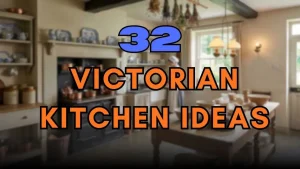
A Victorian kitchen combines ornate detail, rich materials, and warm craftsmanship into a space unlike anything else. It celebrates cooking as a ritual and the kitchen as the heart of the home.
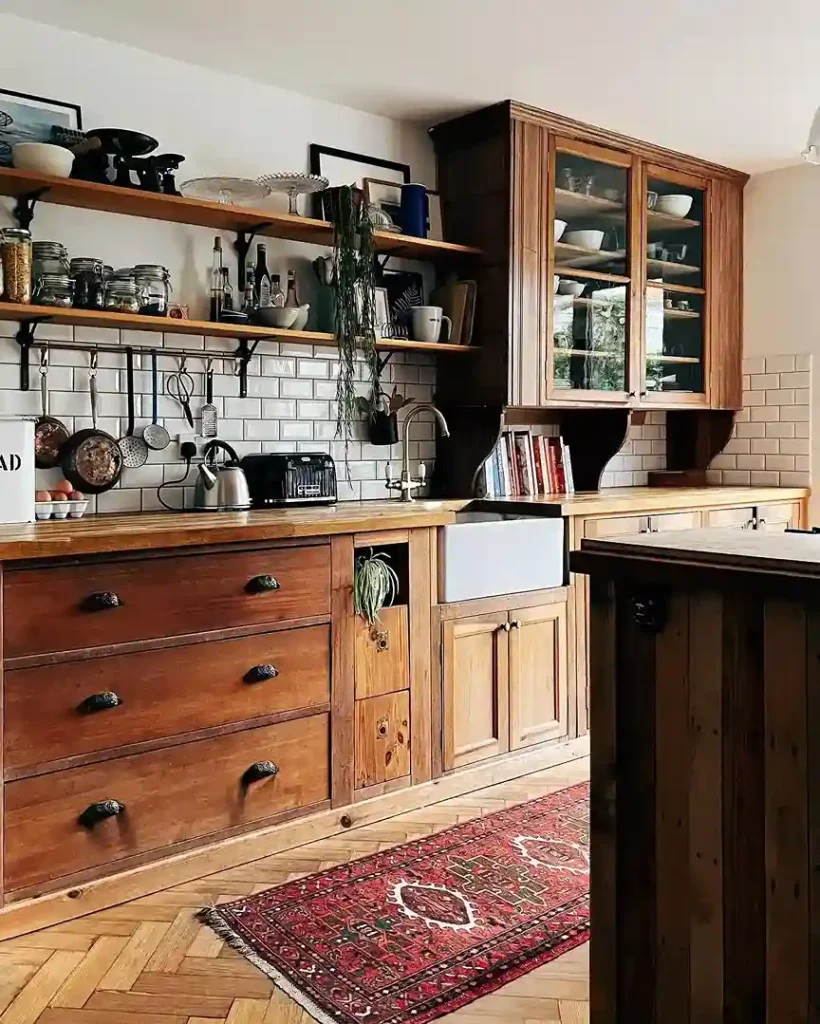
These 32 ideas will transform your kitchen into a breathtaking Victorian-inspired space you will love every single day.
1. Start With the Quintessential Victorian Color Palette
Color is the foundation of every successful Victorian kitchen design. The Victorians used color boldly, confidently, and with enormous sophistication. Getting the palette right makes every subsequent design decision fall naturally into place.
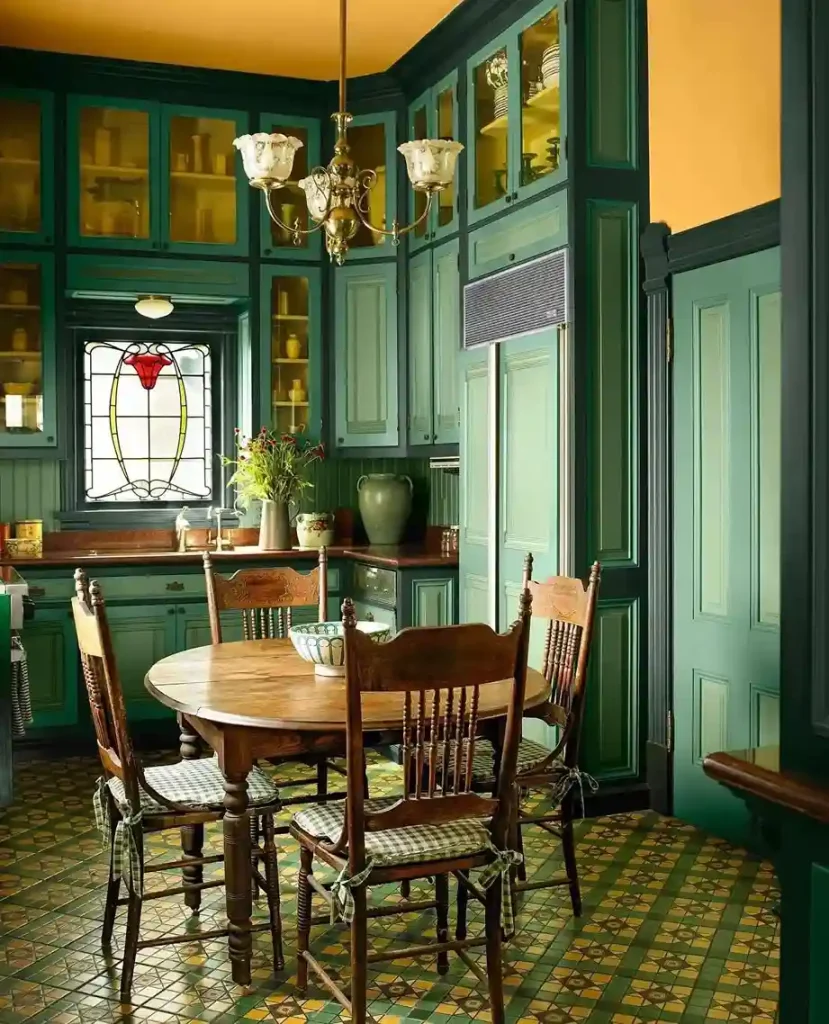
Deep forest green, navy blue, burgundy, and warm cream are the most authentically Victorian kitchen colors. Dark lower cabinets with cream or white upper cabinets create the classic Victorian two-tone kitchen look. Add black accents in hardware and fixtures to ground the palette with depth and definition.
| Victorian Kitchen Color | Best Application |
|---|---|
| Deep forest green | Lower cabinets, accent wall |
| Navy blue | Island, lower cabinetry |
| Warm cream or ivory | Upper cabinets, walls |
| Matte black | Hardware, fixtures, faucets |
2. Choose Shaker-Style Cabinets as the Victorian Foundation
Shaker cabinets are the most authentic and versatile cabinet choice for a Victorian kitchen. Their simple recessed panel design was prevalent throughout the Victorian era in working kitchens. They provide the clean architectural framework that Victorian decorative details build upon.
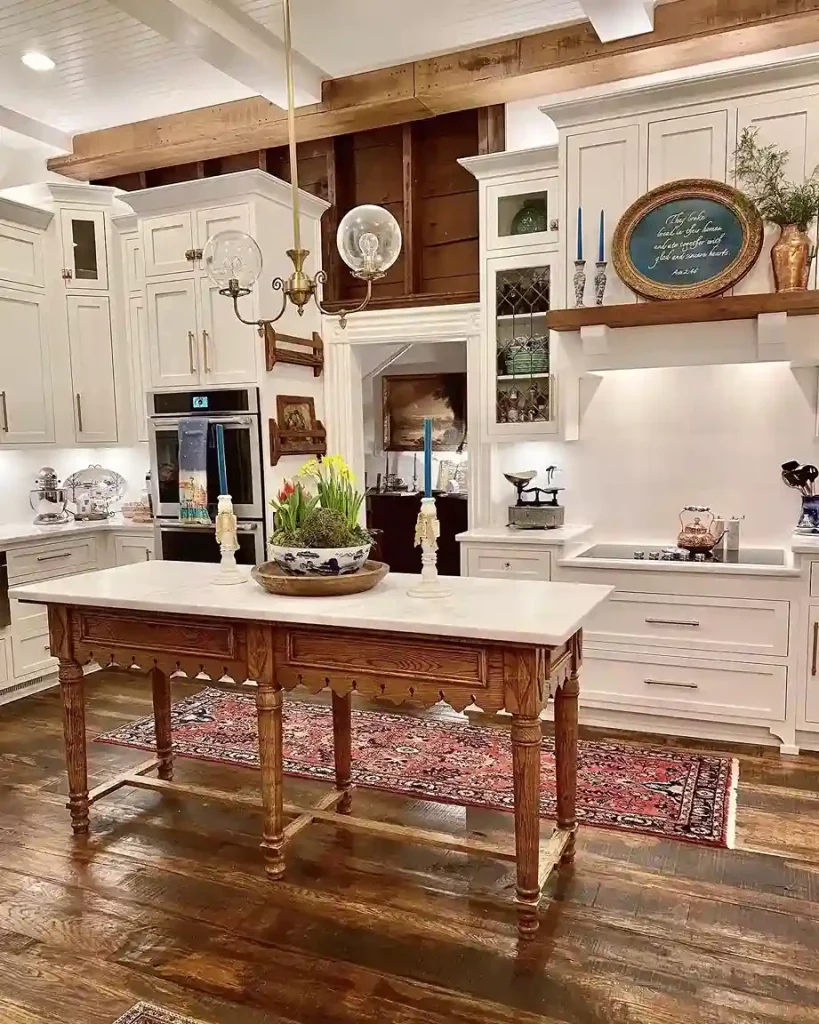
Choose solid wood shaker cabinets rather than MDF for the most authentic period quality. Paint them in deep Victorian tones for maximum character and period atmosphere. Add decorative molding to the top of upper cabinets to create a furniture-like, built-in appearance.
| Shaker Cabinet Style | Victorian Effect |
|---|---|
| Dark painted lower cabinets | Dramatic, grounding, rich |
| Cream upper cabinets | Light, balanced, traditional |
| All one deep color | Bold, immersive, statement |
| Natural wood shaker | Warm, honest, craftsman quality |
3. Install a Victorian-Style Range Cooker as the Centerpiece
A range cooker is the undisputed centerpiece of any Victorian kitchen. The Victorians cooked on large cast iron ranges that dominated the kitchen and defined the room. A beautiful range cooker today carries the same commanding presence and visual authority.
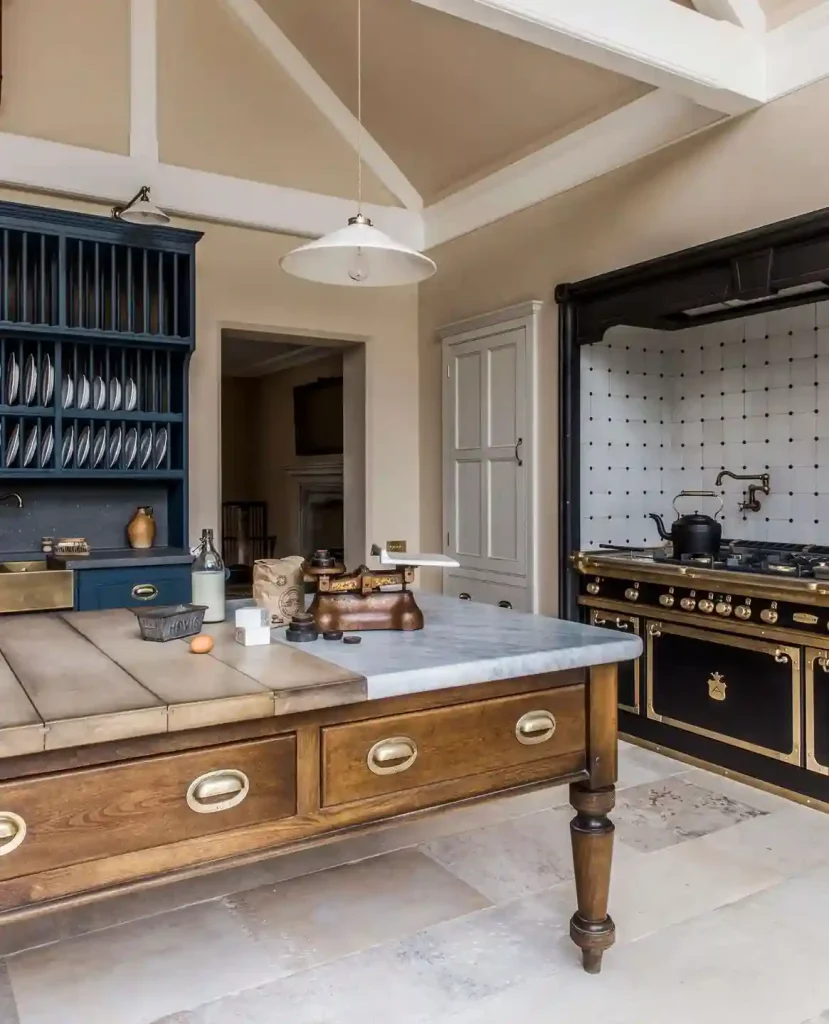
Choose a range cooker in a deep color like forest green, midnight blue, or burgundy red. Position it in a chimney breast alcove for the most authentic, architectural period effect. Add a decorative range hood above in a matching or complementary finish for a complete look.
| Range Cooker Color | Kitchen Atmosphere |
|---|---|
| British racing green | Classic, refined, distinguished |
| Midnight blue | Rich, sophisticated, dramatic |
| Cream or ivory | Soft, traditional, timeless |
| Burgundy red | Bold, passionate, warm |
4. Use Decorative Tile as a Victorian Kitchen Backsplash
Tile in a Victorian kitchen is an opportunity for pattern, color, and genuine period character. The Victorians embraced decorative tilework throughout their homes including kitchens enthusiastically. A beautiful tile backsplash immediately establishes the period atmosphere.
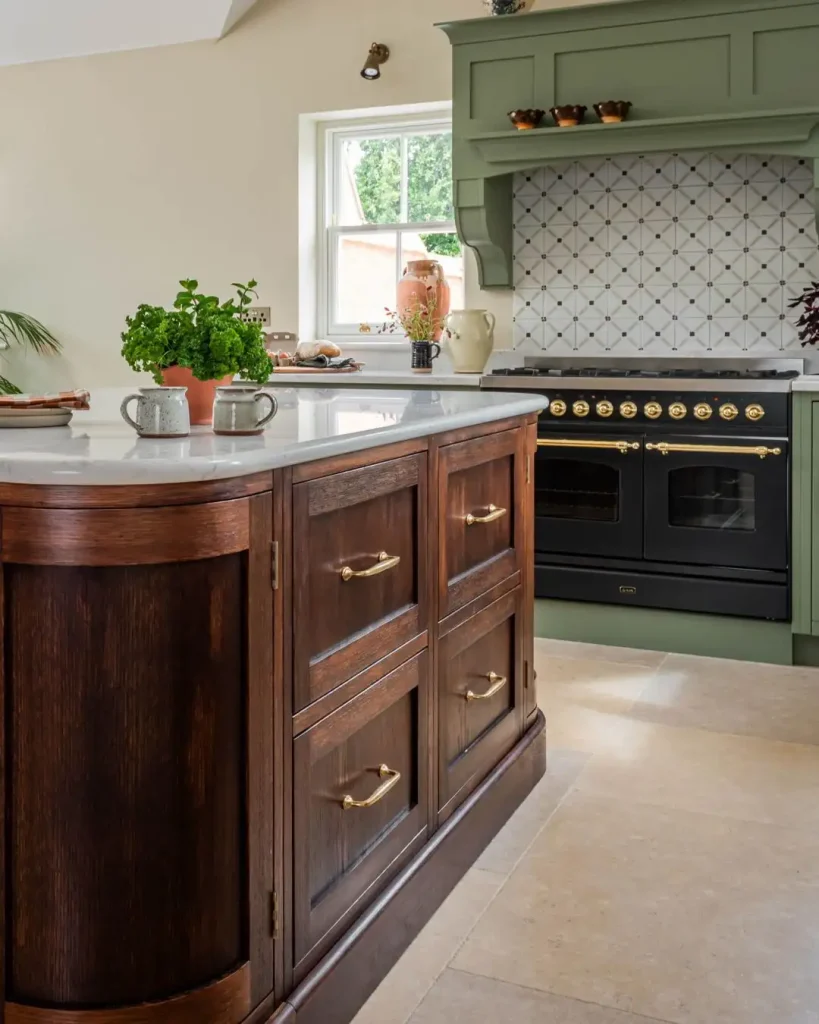
Use classic white subway tiles with dark grout for the most recognizable Victorian kitchen backsplash. Encaustic cement tiles in geometric or floral patterns add extraordinary Victorian character. Extend the tile from the countertop to the underside of the upper cabinets for maximum impact.
| Victorian Backsplash Tile | Design Character |
|---|---|
| White subway with dark grout | Classic, timeless, universally Victorian |
| Encaustic geometric tiles | Artisan, bold, period-authentic |
| Blue and white Delft tiles | Dutch-inspired, charming, traditional |
| Victorian floral pressed tiles | Ornate, decorative, period-perfect |
5. Add Open Shelving for a Victorian Butler’s Pantry Feel
Open shelving was a defining feature of the Victorian kitchen and butler’s pantry. It displayed beautiful everyday crockery and kept frequently used items instantly accessible. Styled correctly, open shelving transforms a Victorian kitchen from functional to genuinely beautiful.
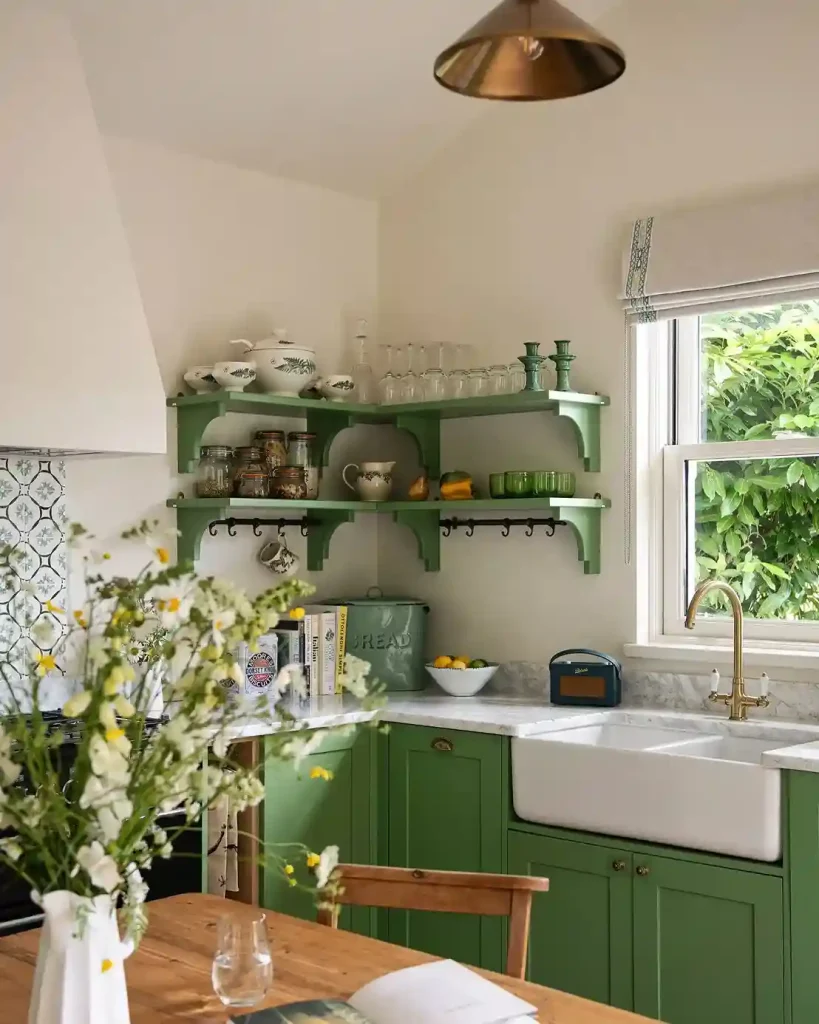
Install simple wooden shelves with decorative bracket supports on one kitchen wall. Display white ironstone plates, vintage crockery, and glass jars in a collected, curated arrangement. Add hooks below the shelves for hanging cups, measuring spoons, and small utensils.
Get complete open shelving inspiration from kitchen counter decor ideas for styling the space beneath and around Victorian open shelves.
| Victorian Open Shelf Display | Styling Object |
|---|---|
| Back of shelf | Stacked white plates, platters |
| Middle level | Mixing bowls, crocks, jars |
| Front edge | Small plants, candles, crocks |
| Hanging hooks below | Cups, measuring spoons, utensils |
6. Choose a Victorian Farmhouse Apron Sink
A farmhouse apron-front sink is one of the most authentic and beloved Victorian kitchen elements. Its deep basin and exposed front apron communicate the serious working kitchen of the Victorian era. This single fixture upgrade transforms the entire character of any kitchen instantly.
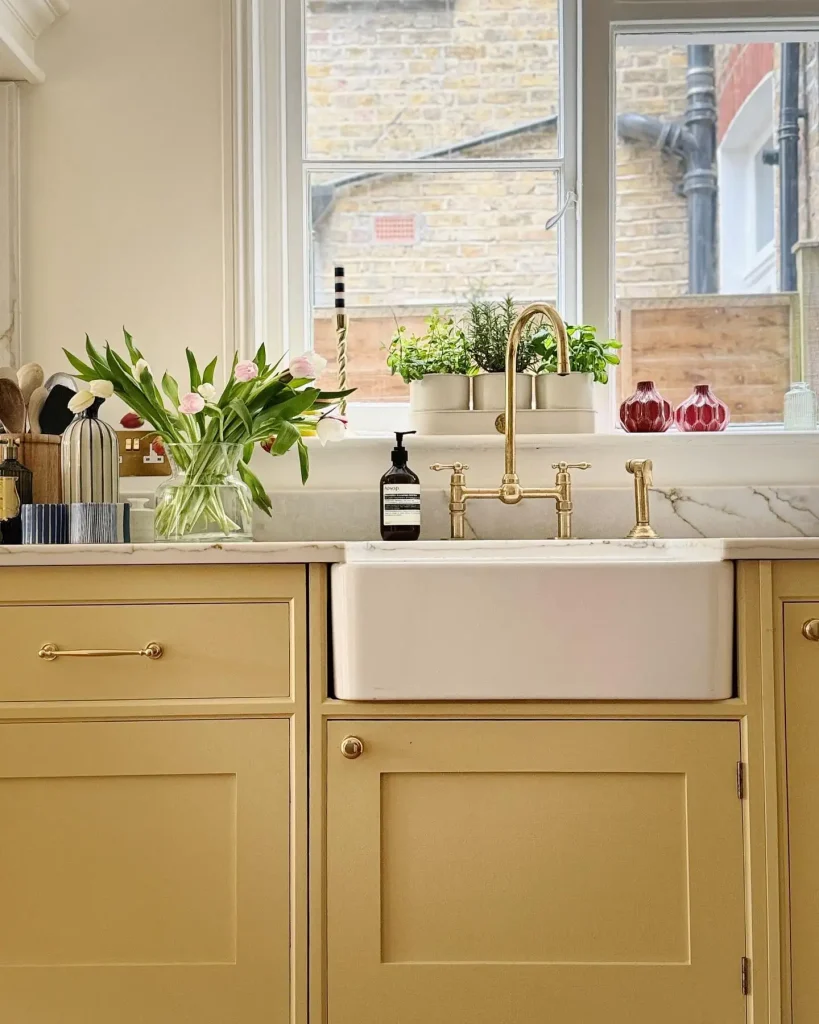
Choose a white fireclay or ceramic apron sink for the most authentic Victorian kitchen look. Pair with bridge-style faucets in an aged brass or oil-rubbed bronze finish. A double basin apron sink suits larger Victorian kitchens and provides maximum functional capacity.
| Apron Sink Material | Victorian Authenticity |
|---|---|
| White fireclay | Most authentic, durable, beautiful |
| White cast iron enamel | Traditional, heavy, period-correct |
| White ceramic | Affordable, classic, clean |
| Soapstone | Rare, sophisticated, genuine period |
7. Install Victorian-Appropriate Hardware Throughout
Hardware is the jewelry of any Victorian kitchen. The right hardware choices tie every cabinet and drawer into a cohesive, period-appropriate design story. Wrong hardware finishes immediately undermine even the most carefully chosen Victorian kitchen elements.
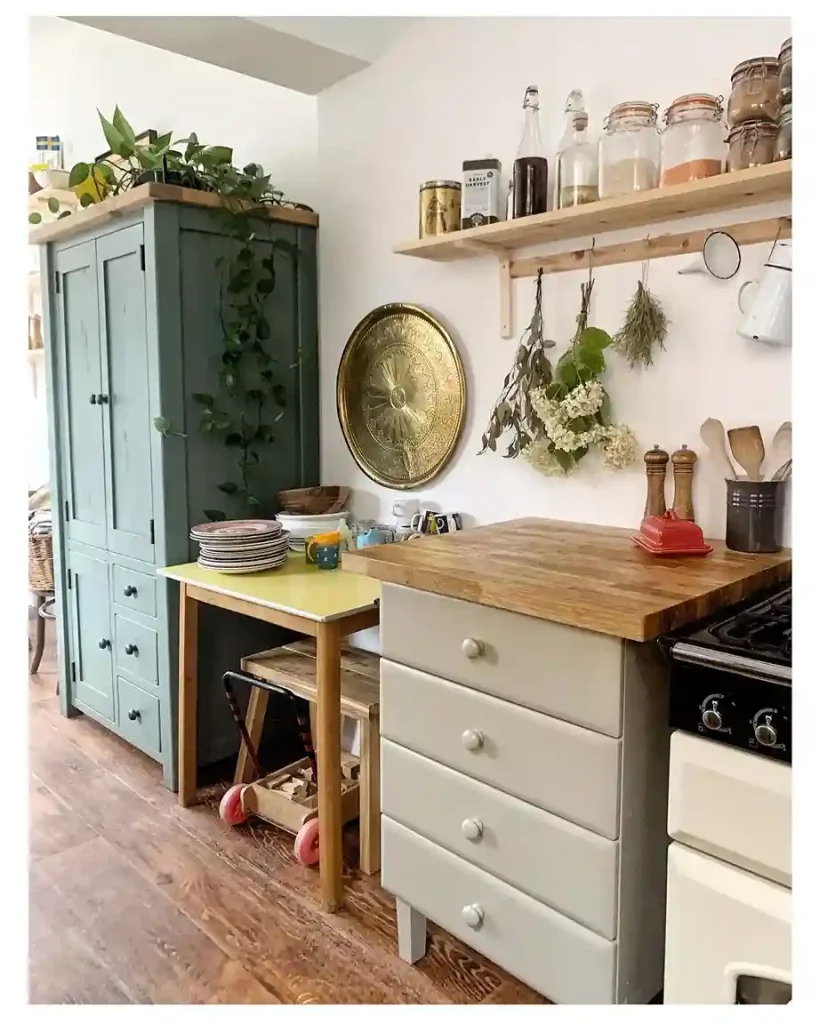
Choose cup pulls, bin pulls, and bail hardware in aged brass or oil-rubbed bronze finishes. Avoid modern bar pulls and slim contemporary hardware that read as thoroughly modern. Ornate backplate hardware with decorative detailing adds the most authentic Victorian character to cabinet doors.
| Victorian Cabinet Hardware | Finish Best Choice |
|---|---|
| Cup pull hardware | Aged brass or oil-rubbed bronze |
| Bin pull hardware | Oil-rubbed bronze, most traditional |
| Bail hardware | Brass, most period-authentic |
| Ornate backplate hardware | Aged brass, maximum Victorian detail |
8. Add a Victorian Kitchen Island With Character
A kitchen island in a Victorian kitchen should look like a piece of inherited furniture rather than a built-in unit. The Victorian kitchen island has legs, varied heights, and a furniture-like quality. This approach creates the most authentic and beautiful Victorian kitchen centerpiece.
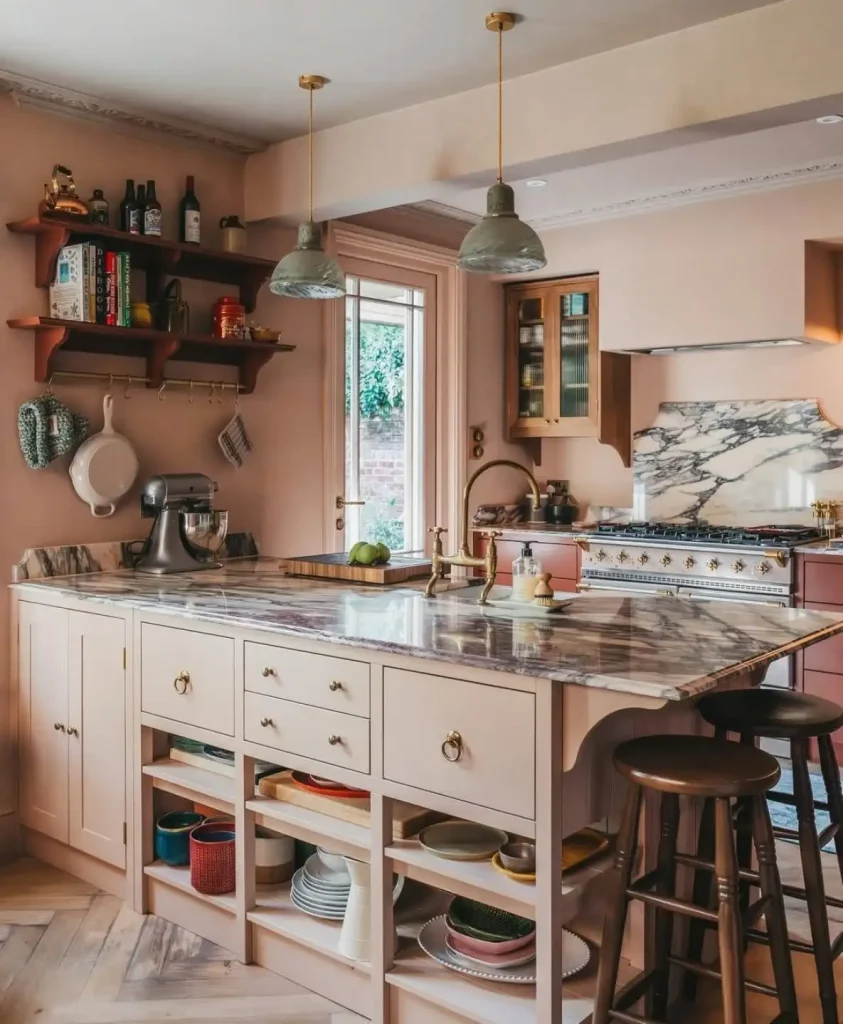
Choose an island with turned or tapered legs and a butcher block or marble countertop. Paint the island in a contrasting color to the surrounding cabinetry for a furniture-like appearance. Add decorative molding to the island sides and a pot rail above for period authenticity.
| Victorian Island Style | Countertop Choice |
|---|---|
| Turned leg island | Butcher block, warm and natural |
| Furniture-leg island | Marble top, elegant and luxurious |
| Painted contrasting island | Soapstone, traditional and durable |
| Distressed painted island | White tile top, period-appropriate |
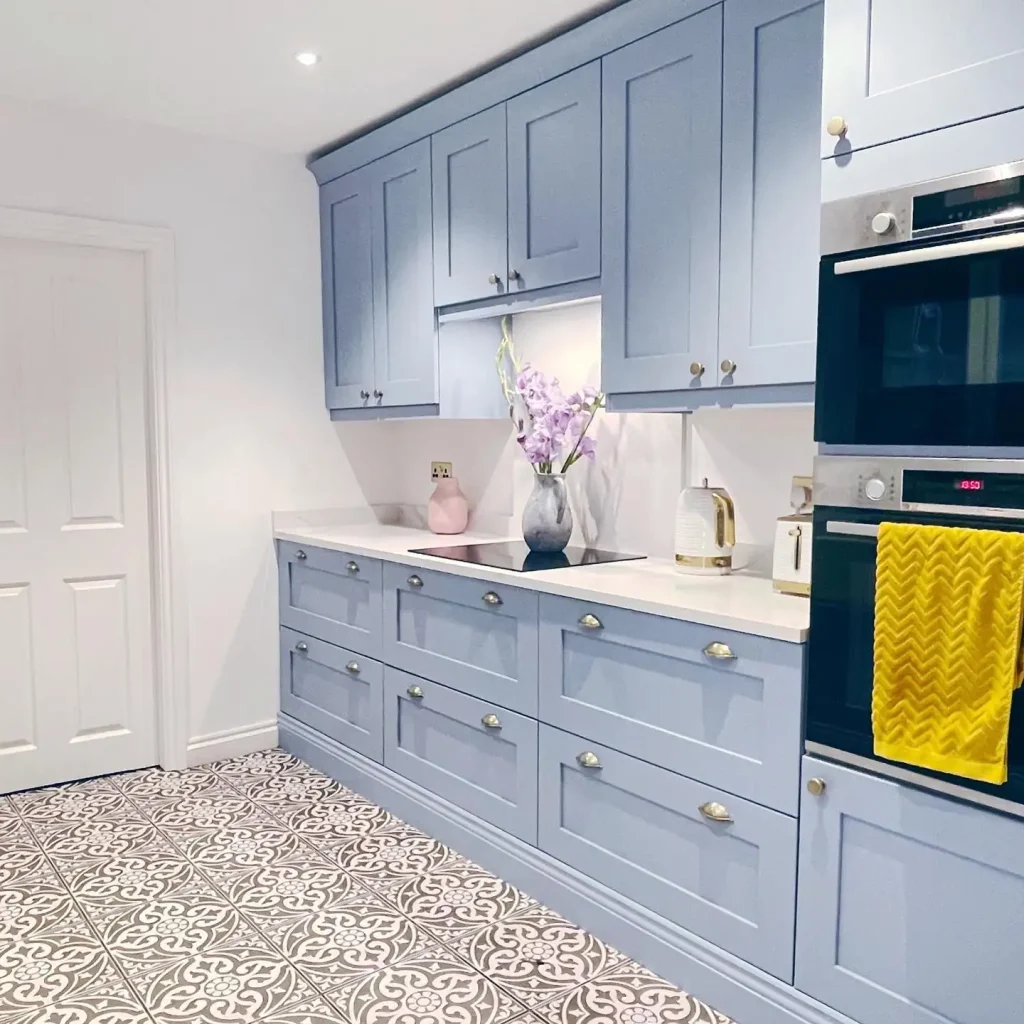
9. Use Victorian Flooring to Anchor the Kitchen
The kitchen floor in a Victorian home was both practical and beautifully designed. Victorian flooring choices communicate period authenticity from the very first step inside. The right floor grounds the entire kitchen design and ties every other element together.
source
Use black and white encaustic or porcelain checkerboard tiles for the most iconic Victorian kitchen floor. Original or reproduction quarry tiles in red or buff tones are equally authentic choices. Wide plank hardwood floors in dark oak or pine suit a Victorian kitchen beautifully in less formal applications.
| Victorian Kitchen Floor | Authenticity Level |
|---|---|
| Black and white checkerboard | Iconic, immediately recognizable |
| Red quarry tiles | Traditional, working kitchen feel |
| Encaustic patterned tiles | Decorative, artisan, period-perfect |
| Wide dark oak planks | Warm, traditional, less formal |
10. Install Decorative Crown Molding and Cornice Details
Crown molding and decorative cornice details are the architectural finishing touches that complete any Victorian kitchen. Without them, even perfectly chosen cabinets and tiles feel unfinished and flat. These details signal craftsmanship and genuine period sensibility.
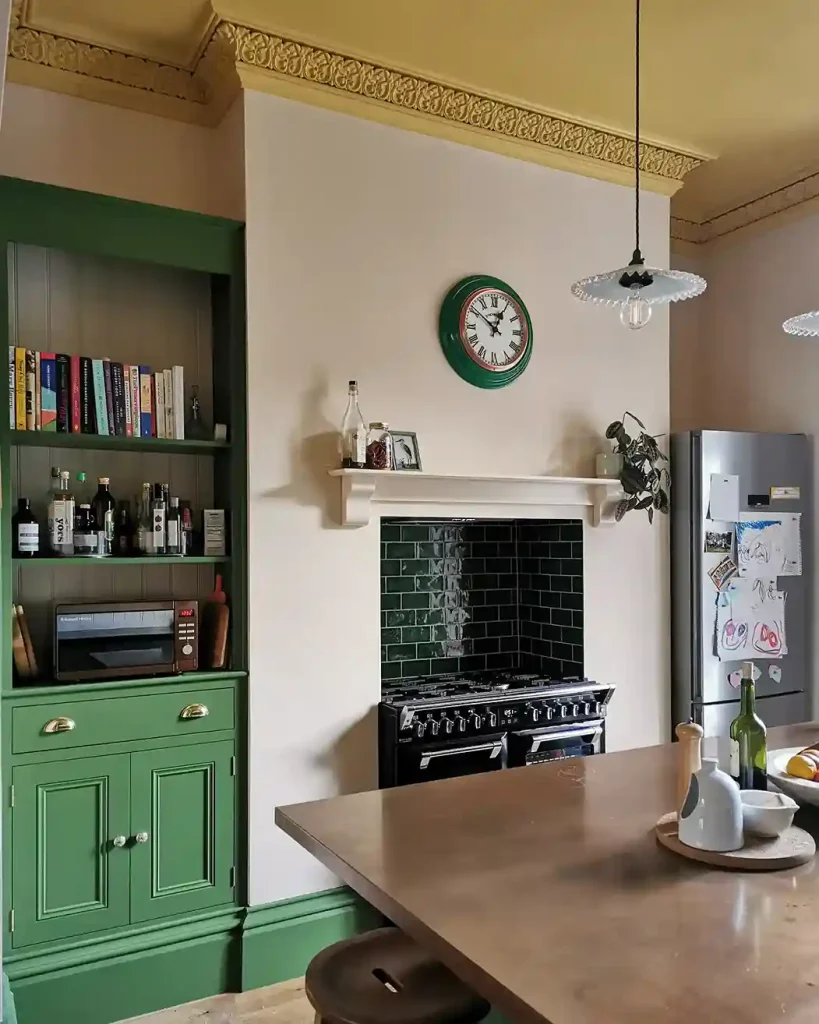
Install decorative crown molding at the top of all upper kitchen cabinets. Add cornice molding at the ceiling line around the perimeter of the entire kitchen. Use dentil molding or egg-and-dart details for the most authentically Victorian decorative character.
| Victorian Kitchen Molding | Installation Location |
|---|---|
| Crown molding | Top of upper cabinets |
| Cornice molding | Ceiling and wall junction |
| Dentil molding | Most formal Victorian detail |
| Plate rail molding | Upper wall, displays plates |
11. Add a Victorian Plate Rail for Display and Character
A plate rail is one of the most charming and authentically Victorian kitchen details possible. It runs along the upper wall and displays decorative plates, platters, and serving pieces. This simple addition adds enormous period character at a very modest cost.
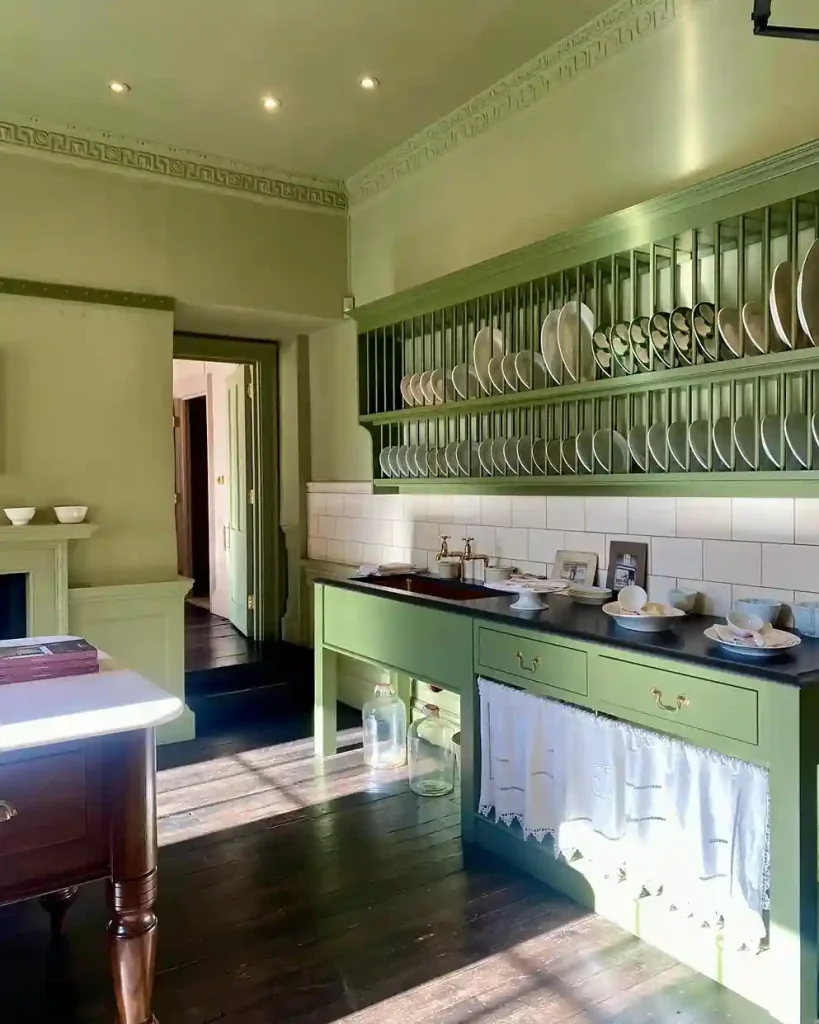
Install a simple wooden plate rail with a groove cut into the front edge to hold plates securely. Position it approximately 12 inches below the ceiling for proper proportion and visibility. Style with a mix of blue and white china, ironstone, and decorative Victorian-pattern plates.
| Plate Rail Display Style | Crockery to Display |
|---|---|
| All white ironstone | Clean, unified, classic Victorian |
| Blue and white china mix | Delft-inspired, charming, traditional |
| Mixed patterns and sizes | Eclectic, collected, personal |
| Single pattern throughout | Formal, cohesive, considered |
12. Choose Victorian-Appropriate Kitchen Lighting
Lighting in a Victorian kitchen should feel warm, atmospheric, and period-appropriate. Harsh modern recessed lighting completely undermines the Victorian atmosphere. Every lighting choice should reinforce the warmth and craftsmanship of the period design.
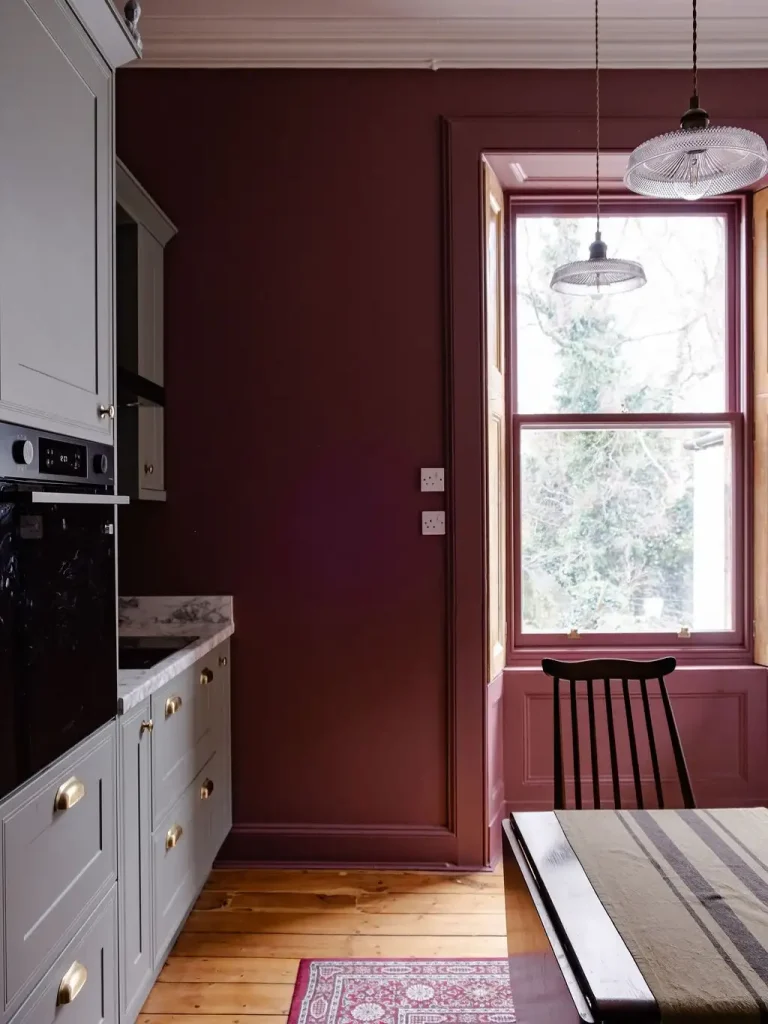
Hang pendant lights with aged brass or oil-rubbed bronze fittings above the island and sink. Choose glass globe pendants or lantern-style pendants for the most authentic Victorian effect. Install a decorative ceiling rose around any ceiling-mounted light fixture throughout the kitchen.
| Victorian Kitchen Lighting | Best Placement |
|---|---|
| Globe pendant lights | Above kitchen island |
| Lantern pendant | Above sink area |
| Wall sconces | Either side of range cooker |
| Under-cabinet warm LED | Practical, period-neutral |
13. Install a Traditional Victorian Range Hood
The range hood in a Victorian kitchen is a major design statement rather than a purely functional element. A beautifully designed range hood frames the range cooker and creates a complete chimney breast focal point. This is one of the most impactful design elements in the entire Victorian kitchen.
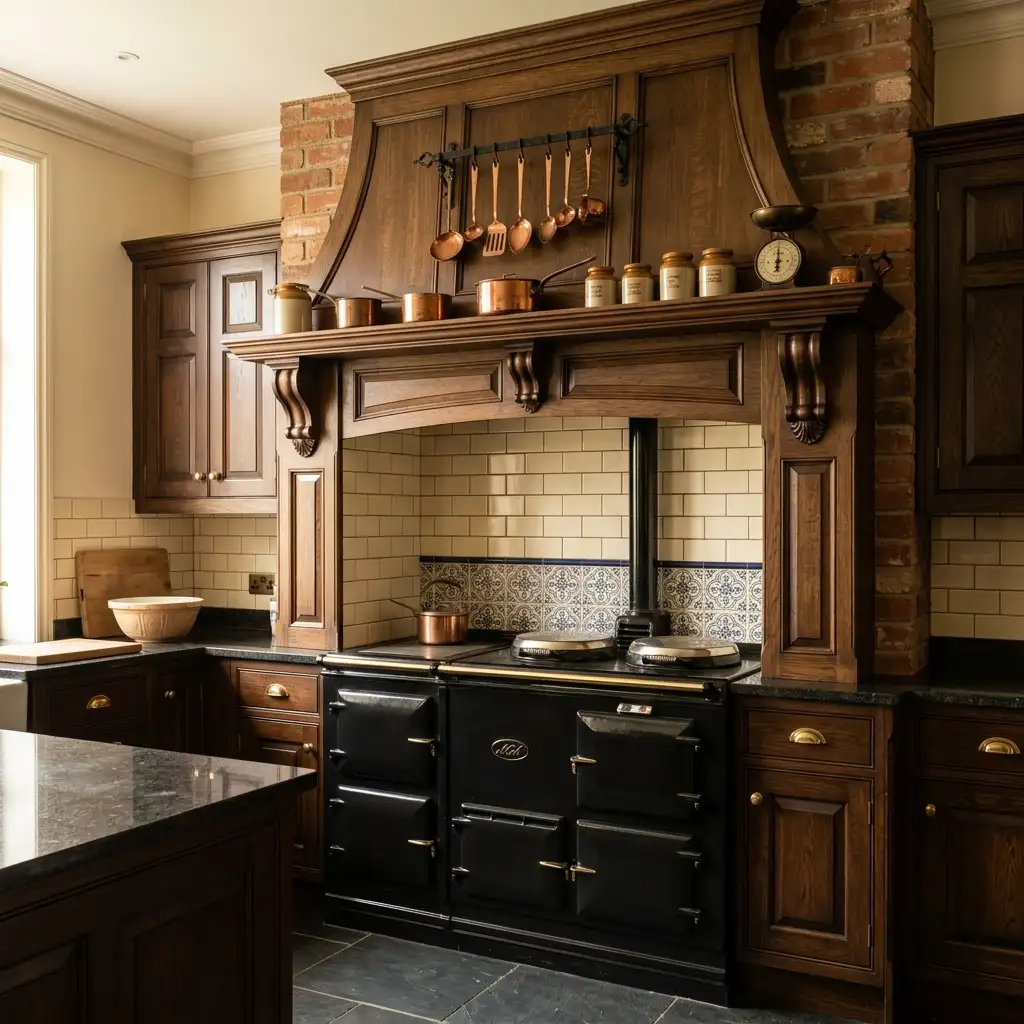
Choose a range hood in a classic arch or box shape with decorative molding details. Paint it in the same color as the cabinetry or as a contrasting accent for visual interest. Add corbel brackets on either side of the hood for maximum Victorian architectural character.
| Victorian Range Hood Style | Decorative Detail |
|---|---|
| Arch-shaped hood | Softer, more traditional look |
| Box shape with molding | Formal, architectural, grand |
| Hood with corbel brackets | Maximum Victorian character |
| Painted contrasting color | Bold focal point, design statement |
14. Add a Victorian Dresser or Welsh Dresser
A Welsh dresser or Victorian kitchen dresser is one of the most authentic period kitchen furniture pieces. It serves as both storage and display in a way that is completely native to the Victorian kitchen. A beautiful dresser adds warmth and a deeply personal, collected quality instantly.
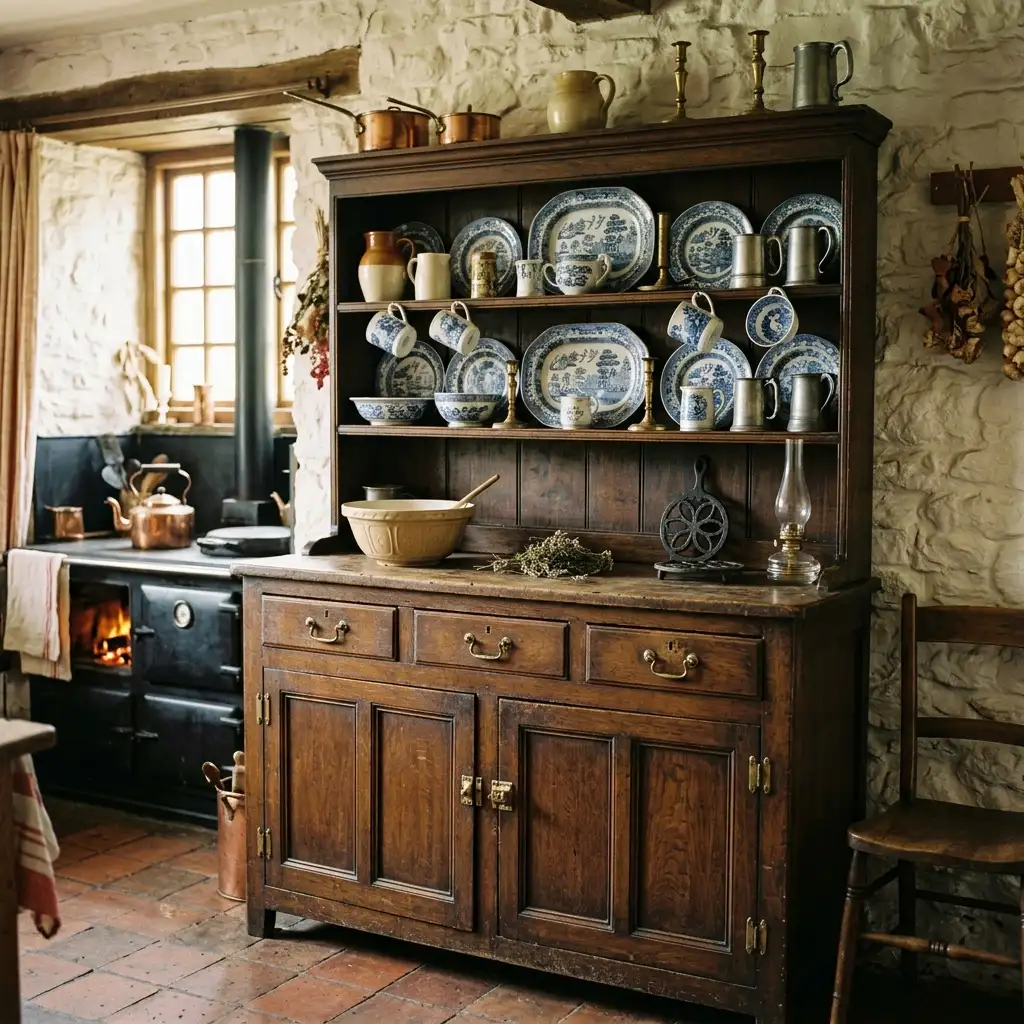
Position a large Welsh dresser against one kitchen wall as a freestanding furniture statement. Style the upper open shelves with matching crockery, glass, and vintage kitchen accessories. Use the lower cabinets for concealed storage of bulkier kitchen items and appliances.
| Victorian Dresser Style | Display Use |
|---|---|
| Traditional Welsh dresser | Crockery display, full kitchen storage |
| Painted dresser, two tone | Upper display, lower closed storage |
| Pine dresser natural finish | Warm, rustic, cottage Victorian |
| Dark painted dresser | Dramatic, sophisticated, formal |
15. Use Butcher Block Countertops for Authentic Warmth
Butcher block countertops connect the Victorian kitchen to its working heritage authentically. Wood countertops were the standard in Victorian kitchens and are both beautiful and practical. The warmth of natural wood contrasts beautifully with dark painted cabinets throughout.
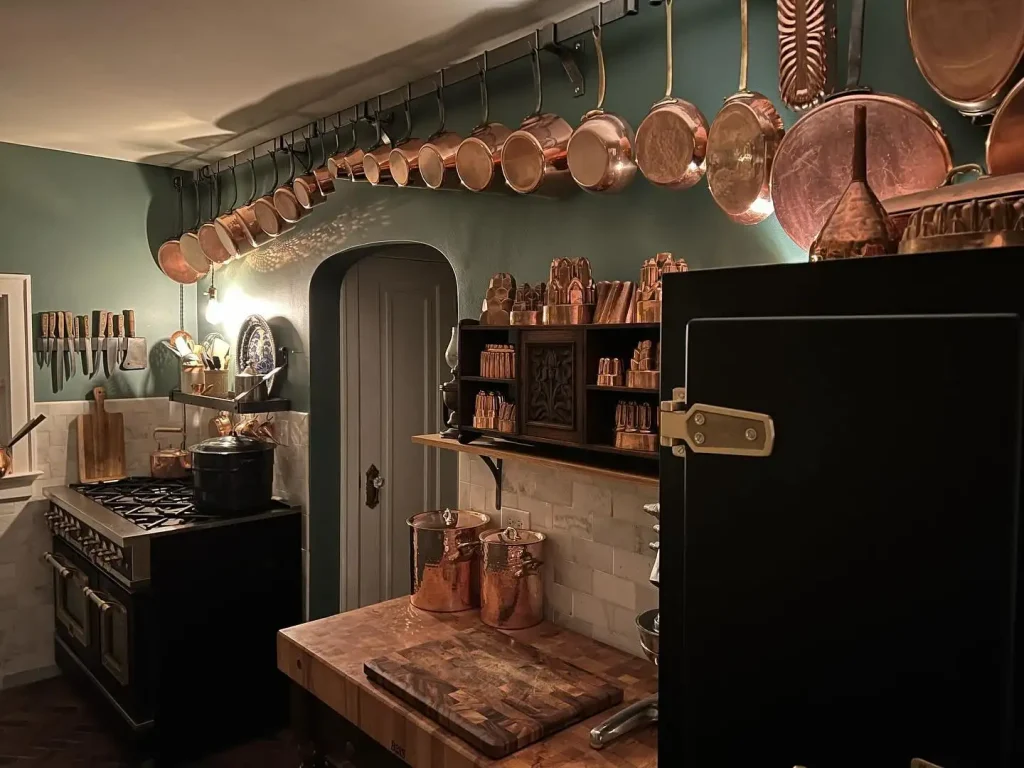
Choose a thick solid wood butcher block in oak, walnut, or maple for the most beautiful result. Oil regularly with food-safe mineral oil to maintain and protect the wood surface. Use butcher block on the island and a harder material like marble at the sink area.
| Butcher Block Wood Species | Character Added |
|---|---|
| Oak butcher block | Classic, warm, traditional |
| Walnut butcher block | Rich, dark, sophisticated |
| Maple butcher block | Light, clean, versatile |
| Reclaimed wood block | Storied, unique, sustainable |
16. Add Marble Countertops for Victorian Elegance
Marble countertops were the most prestigious and beautiful Victorian kitchen surface. They were used by Victorians for pastry work and food preparation throughout. Today marble remains the most luxurious and authentically Victorian countertop material available.
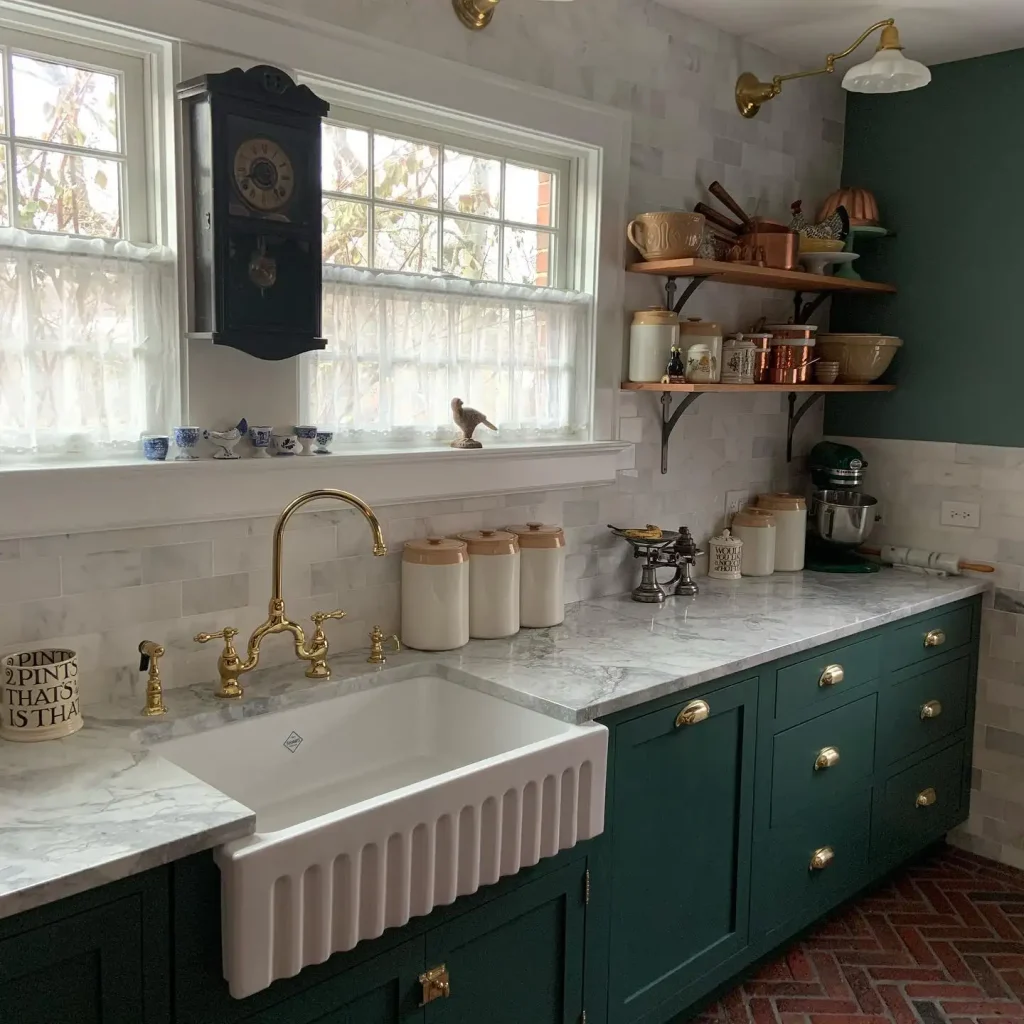
Choose Carrara white marble with grey veining for the most classic Victorian kitchen look. Use marble on the perimeter countertops and pair with butcher block on the island. Seal marble annually to protect against staining from everyday kitchen use.
| Marble Type | Victorian Kitchen Feel |
|---|---|
| Carrara white marble | Classic, timeless, elegant |
| Calacatta gold marble | Luxurious, warm, high-end |
| Black marble | Dramatic, bold, sophisticated |
| Honed marble finish | Matte, period-appropriate surface |
17. Incorporate Victorian Stained Glass Details
Stained glass was a beloved Victorian decorative element used throughout the home. In the kitchen, it appears in cabinet door inserts, window panels, and transom windows. Even a small stained glass detail adds an extraordinary level of period authenticity and beauty.
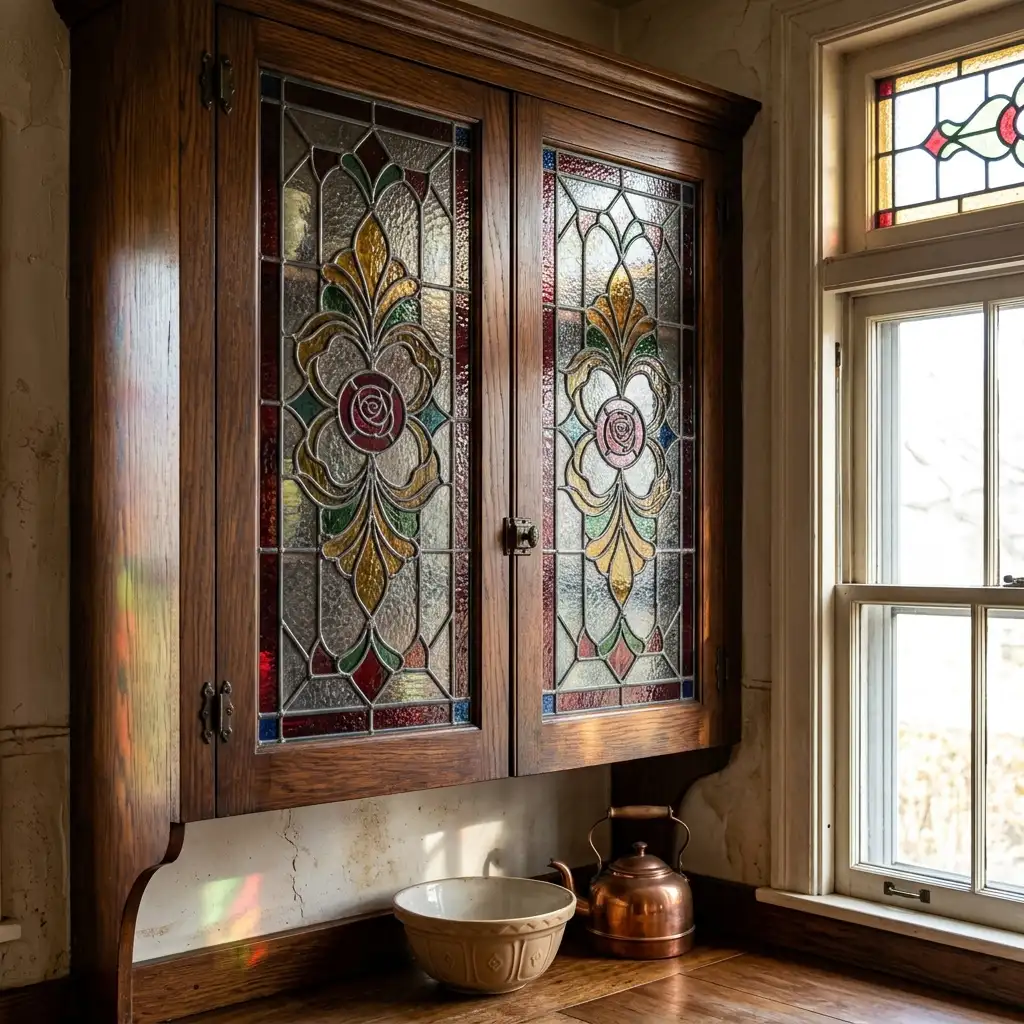
Add stained glass panels to upper cabinet doors for a beautiful display and light effect. Install a stained glass window above the sink for natural colored light during daytime cooking. Choose botanical or geometric patterns that are consistent with authentic Victorian stained glass design.
| Stained Glass Application | Victorian Effect |
|---|---|
| Upper cabinet door panels | Beautiful colored light inside cabinets |
| Above sink window | Colorful natural light, privacy |
| Transom window | Architectural period detail |
| Cabinet display inserts | Ornate, decorative, authentic |
18. Display Victorian Copper Cookware
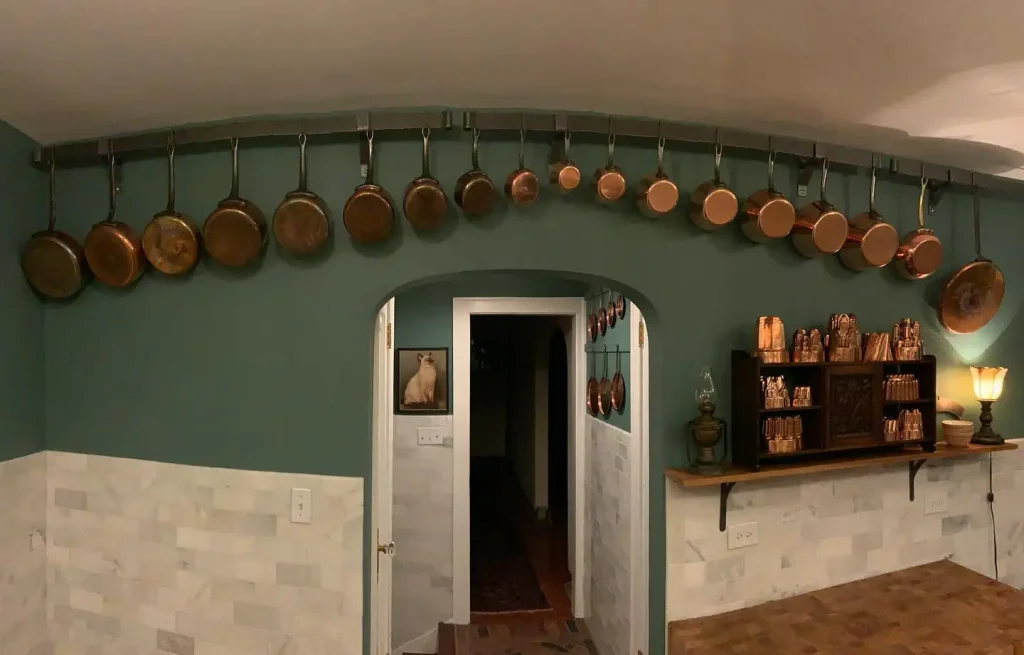
Copper cookware is deeply associated with the Victorian kitchen and its serious approach to cooking. A display of copper pots, pans, and moulds adds warmth, richness, and an authentic working kitchen quality. This display is both decorative and genuinely functional in any kitchen.
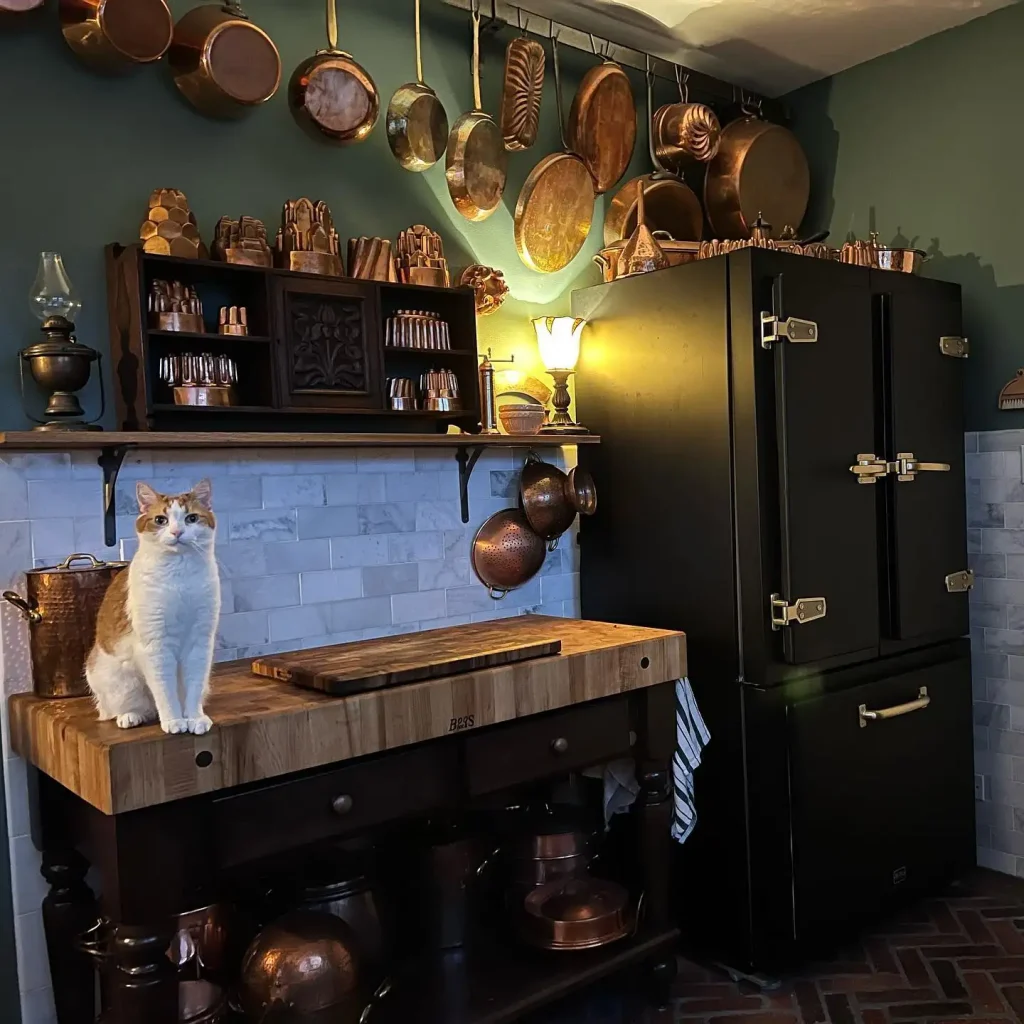
Hang copper pots from a ceiling pot rack above the island for dramatic kitchen impact. Display copper jelly moulds on open shelving as a collection of beautiful kitchen objects. The warm glow of copper against dark painted cabinets creates an extraordinary visual contrast.
| Copper Kitchen Display | Best Location |
|---|---|
| Hanging pot rack | Above kitchen island |
| Open shelf arrangement | Wall shelving, graduated display |
| Copper jelly moulds | Shelf or wall-mounted display |
| Copper utensil crock | On countertop beside range |
19. Add a Victorian Pantry or Larder
A dedicated pantry or larder was an essential component of every Victorian kitchen. It provided cool, organized storage for food and kitchen supplies adjacent to the main cooking area. Recreating this dedicated food storage area adds enormous functionality and period authenticity.
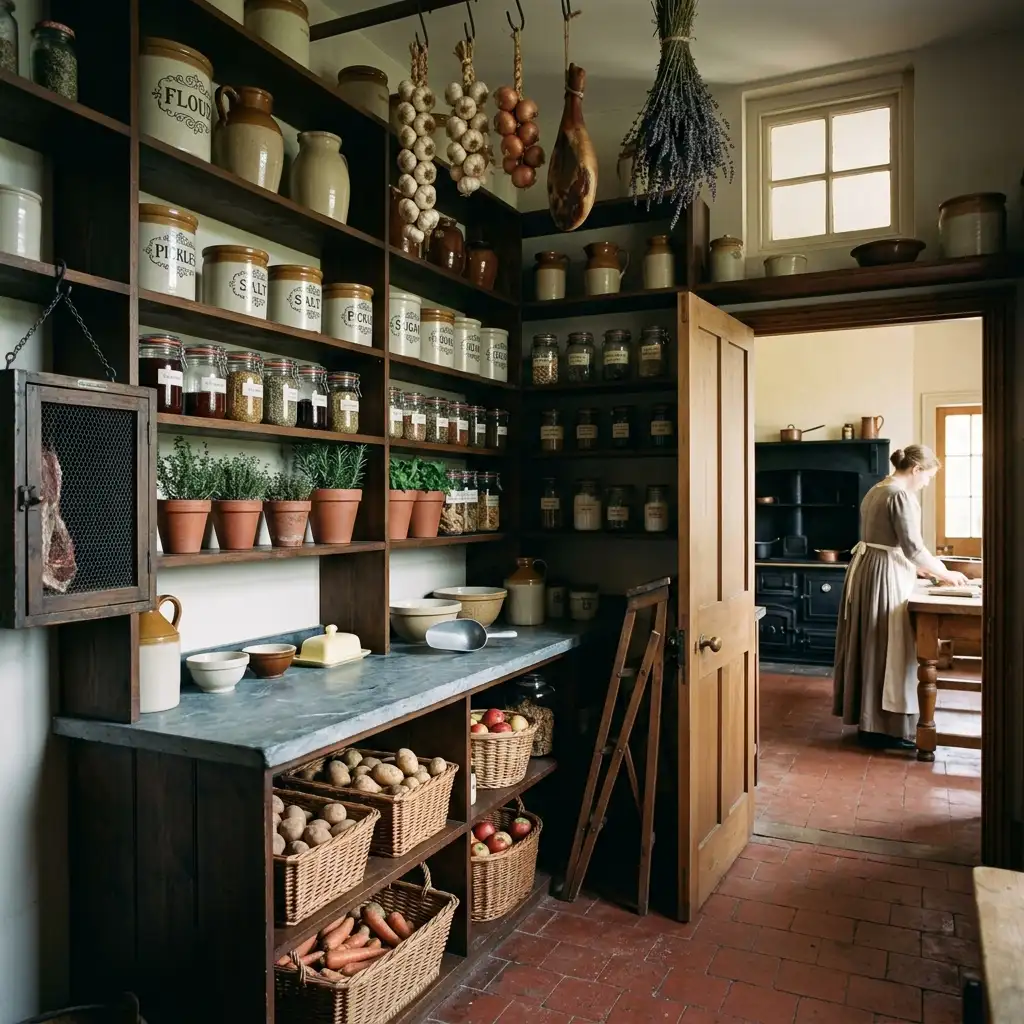
Create a pantry in an adjacent room, a deep closet, or within the kitchen using floor-to-ceiling cabinetry. Style pantry shelves with matching glass jars, vintage crockery, and beautiful labeled containers.
Add a wooden pantry door with a frosted glass panel for a beautifully period-appropriate entrance. Organize the pantry beautifully using small kitchen organization strategies that suit a Victorian pantry aesthetic perfectly.
| Victorian Pantry Feature | Design Detail |
|---|---|
| Floor-to-ceiling shelving | Maximum storage, period look |
| Glass jar organization | Beautiful, functional, Victorian |
| Frosted glass pantry door | Privacy, light, period character |
| Marble shelf for cold storage | Traditional, practical, beautiful |
20. Use Victorian-Style Kitchen Faucets
The kitchen faucet is a small detail that has an outsized impact on the overall Victorian aesthetic. A beautiful period-style faucet above the apron sink completes the Victorian kitchen sink area. Modern chrome faucets look completely wrong in a Victorian kitchen context.
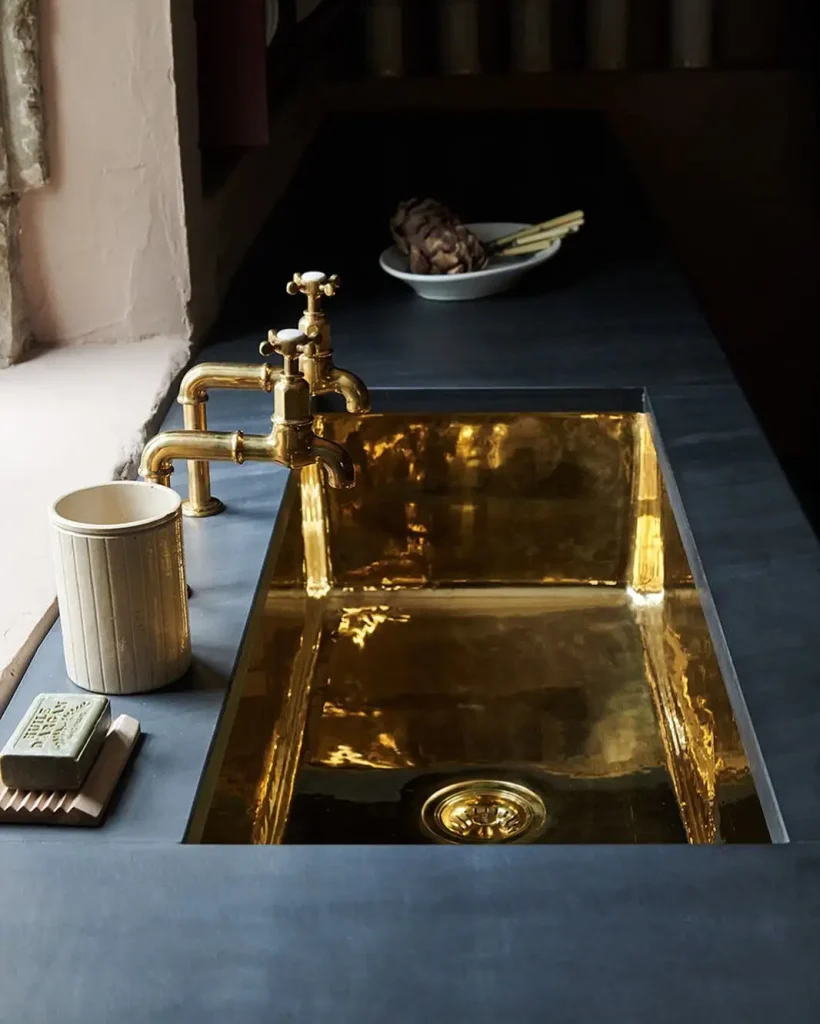
Choose a bridge-style kitchen faucet with two separate handles in an aged brass finish. A wall-mounted faucet above the apron sink is another beautifully authentic Victorian kitchen choice. Pair with a matching soap dispenser and sponge holder in the same hardware finish throughout.
| Victorian Kitchen Faucet Style | Finish Recommendation |
|---|---|
| Bridge faucet two-handle | Aged brass, most authentic |
| Wall-mounted faucet | Oil-rubbed bronze, dramatic |
| Single tall Victorian faucet | Antique nickel, refined |
| Goose-neck with lever handles | Aged brass, practical elegance |
21. Incorporate a Victorian Dresser Cabinet With Glass Doors
Glass-fronted cabinet doors on upper kitchen cabinets create an instant dresser-style effect. They display beautiful dishes and glassware while keeping them dust-free. This detail suits Victorian kitchens with beautiful crockery collections worth displaying proudly.
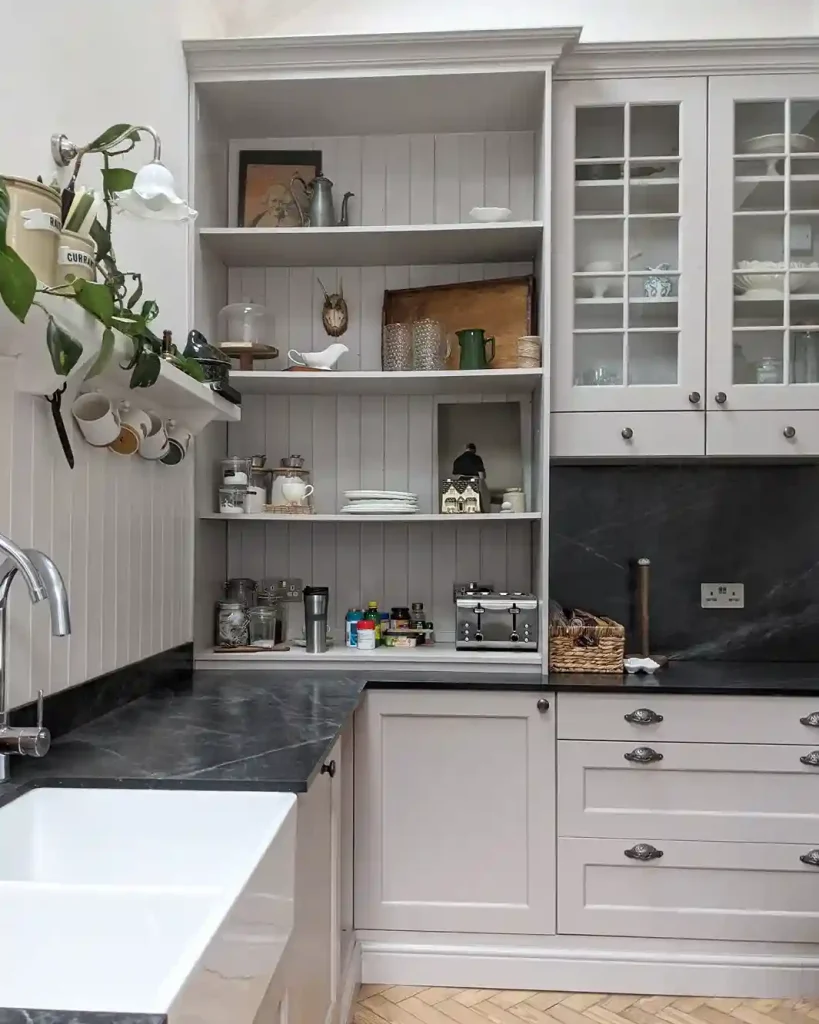
Replace solid upper cabinet doors with glass panel inserts for a simple, affordable upgrade. Choose clear, reeded, or seeded glass for different levels of display visibility and character. Style the interior of glass-fronted cabinets as carefully as any other visible display area.
| Glass Cabinet Door Style | Visibility Level |
|---|---|
| Clear flat glass | Full visibility, clean display |
| Seeded glass | Soft blur, textural interest |
| Reeded or fluted glass | Modern Victorian compromise |
| Diamond-pane glass | Most period-authentic style |
22. Add Decorative Brackets and Corbels Throughout
Decorative brackets and corbels add the ornate, hand-crafted quality that defines Victorian design. They support open shelves, frame the range hood, and add detail to cabinet transitions. These small elements collectively create an enormous amount of period atmosphere.
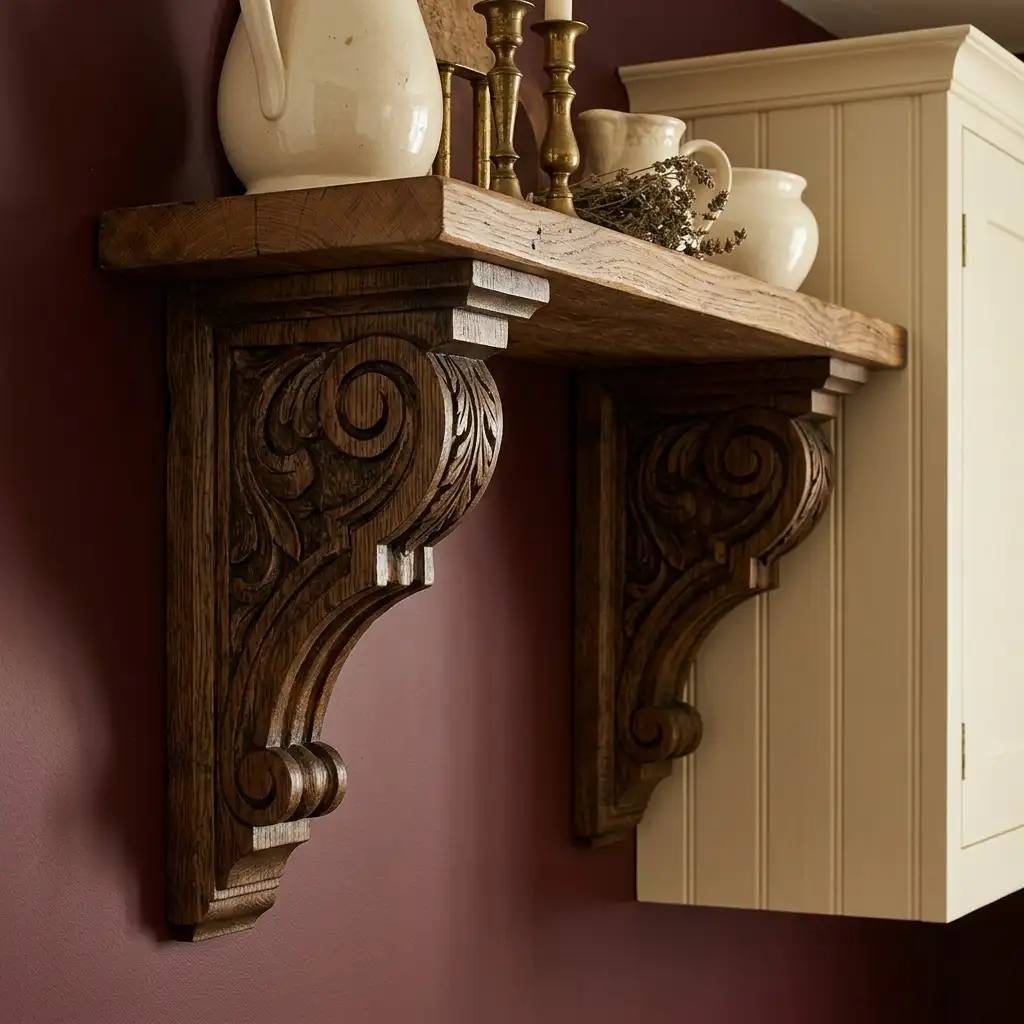
Use carved wooden corbels to support open shelf ends and the underside of upper cabinet corners. Add decorative bracket supports beneath any wall-mounted shelving throughout the kitchen. Paint corbels and brackets in the same color as the surrounding cabinets for a seamless, built-in appearance.
| Victorian Bracket Use | Location |
|---|---|
| Open shelf supports | Under wall-mounted shelves |
| Hood corbel brackets | Either side of range hood |
| Cabinet transition brackets | Where cabinets meet ceiling |
| Island overhang supports | Under island countertop overhang |
23. Create a Victorian Kitchen With Dark and Moody Atmosphere
A dark and moody Victorian kitchen creates an extraordinary, dramatic atmosphere. Deep colors make the kitchen feel intimate, warm, and incredibly atmospheric. This approach is particularly beautiful in kitchens with good natural light to balance the depth.
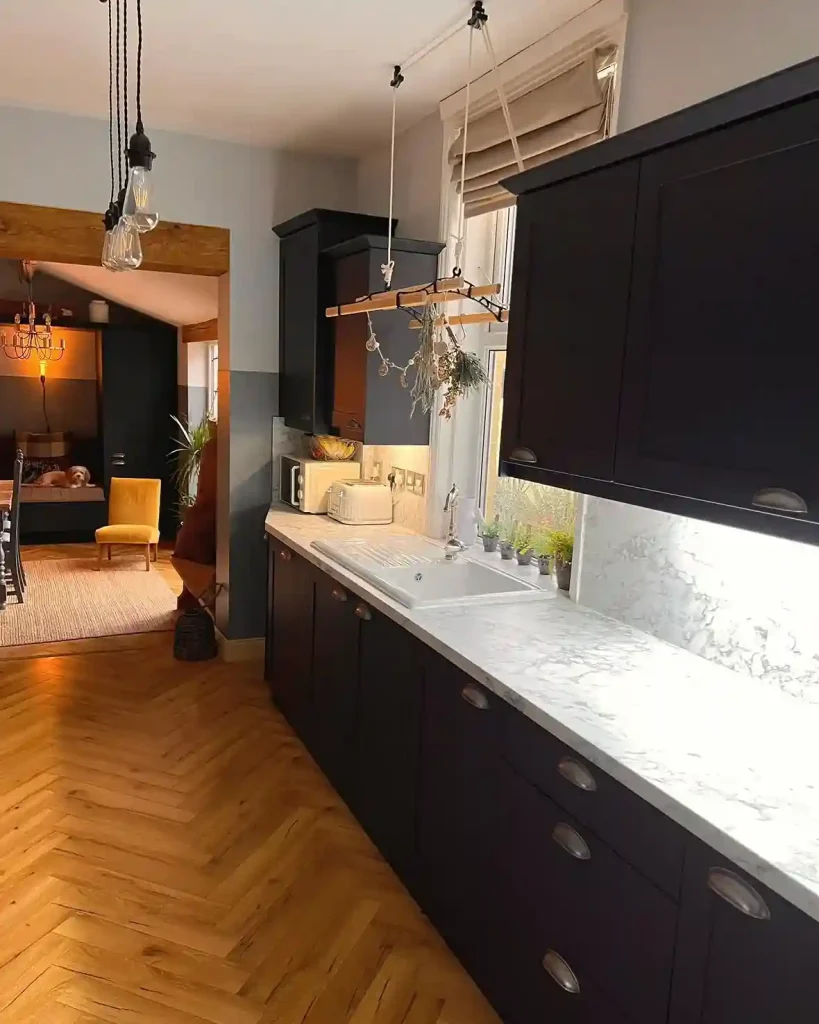
Paint all cabinets in a deep, saturated color like charcoal, midnight navy, or dark olive green. Use warm ambient lighting with Edison bulb pendants to bring the dark kitchen alive. Add brass hardware, marble countertops, and copper accents to warm up the dark palette beautifully.
| Dark Victorian Kitchen Combo | Warming Element |
|---|---|
| Charcoal cabinets | Brass hardware, marble counters |
| Midnight navy cabinets | Aged brass, butcher block |
| Dark olive green cabinets | Copper pots, warm wood floors |
| Black cabinets | Gold hardware, white marble |
24. Add Plants and Botanicals for Victorian Authenticity
The Victorians had an extraordinary passion for botany, plants, and natural specimens. A Victorian kitchen with abundant plants feels genuinely authentic to the period passion for nature. The combination of rich colors, warm materials, and lush greenery is deeply Victorian in spirit.
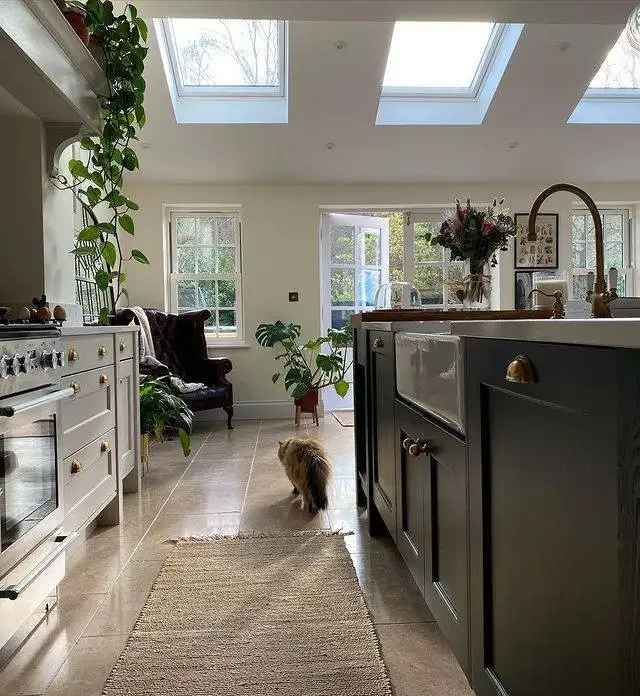
Place a large potted fern or aspidistra in the kitchen corner for dramatic botanical presence. Add small herb pots on the windowsill for fragrance, beauty, and practical cooking use. Hang dried herb bundles from ceiling hooks or a pot rack for fragrance and period character.
Find the best indoor plants for kitchen conditions from bathroom plants for varieties that thrive equally well in kitchen light and humidity.
| Victorian Kitchen Plant | Display Location |
|---|---|
| Large potted fern | Kitchen corner, plant stand |
| Fresh herbs in terracotta | Windowsill, natural light |
| Dried herb bundles | Hanging from ceiling hooks |
| Trailing ivy | High shelf, cascading down |
25. Use Vintage and Antique Kitchen Accessories
Genuine vintage and antique accessories elevate a Victorian kitchen from inspired to genuinely authentic. Objects that actually come from the Victorian period carry an irreplaceable quality. These pieces add depth, history, and a completely uncopyable character to the kitchen.
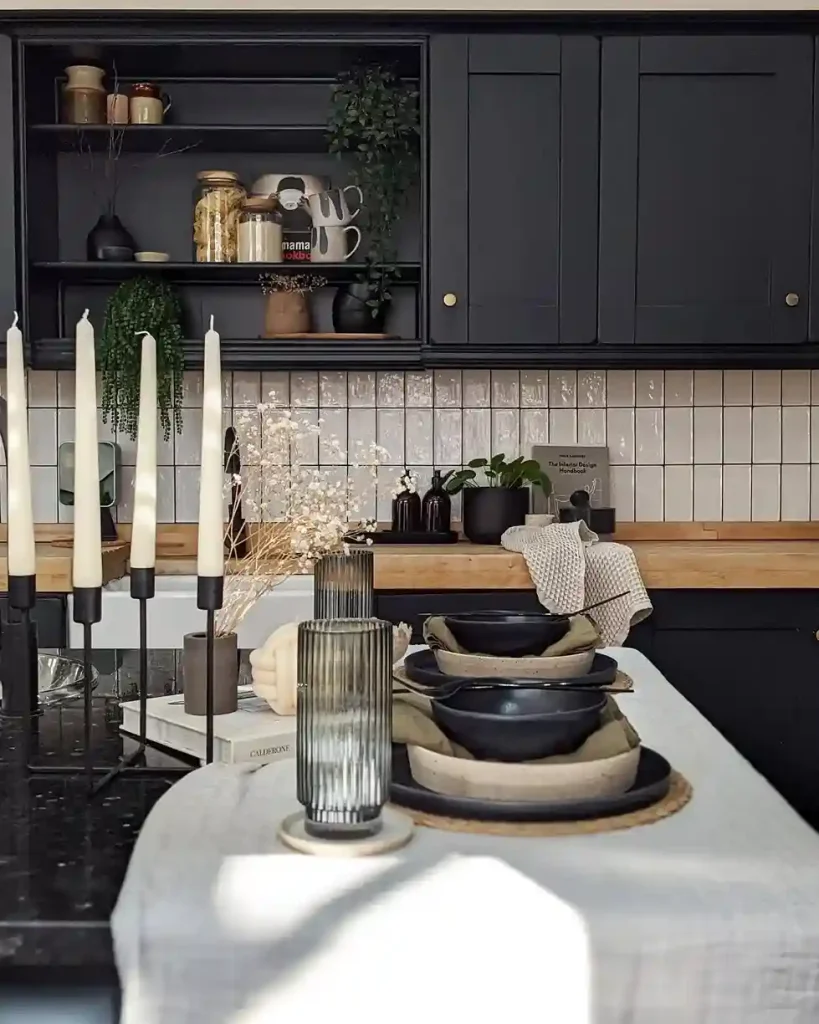
Source original Victorian kitchen accessories from antique markets, estate sales, and online auctions. Look for original ceramic storage jars, vintage kitchen scales, and antique bread boxes. A collection of original Victorian recipe books displayed on open shelving adds a wonderfully personal and period-authentic detail.
| Vintage Kitchen Accessory | Best Source |
|---|---|
| Victorian kitchen scales | Estate sales, antique dealers |
| Original ceramic storage jars | Antique shops, online auctions |
| Antique bread box | Flea markets, estate sales |
| Cast iron trivets and racks | Salvage yards, antique markets |
26. Style a Victorian Kitchen Windowsill
The kitchen windowsill is one of the most charming and versatile display spaces in any Victorian kitchen. It sits at natural light level and provides the perfect home for plants, glass, and small objects. A beautifully styled windowsill adds warmth and personality to the cooking space.
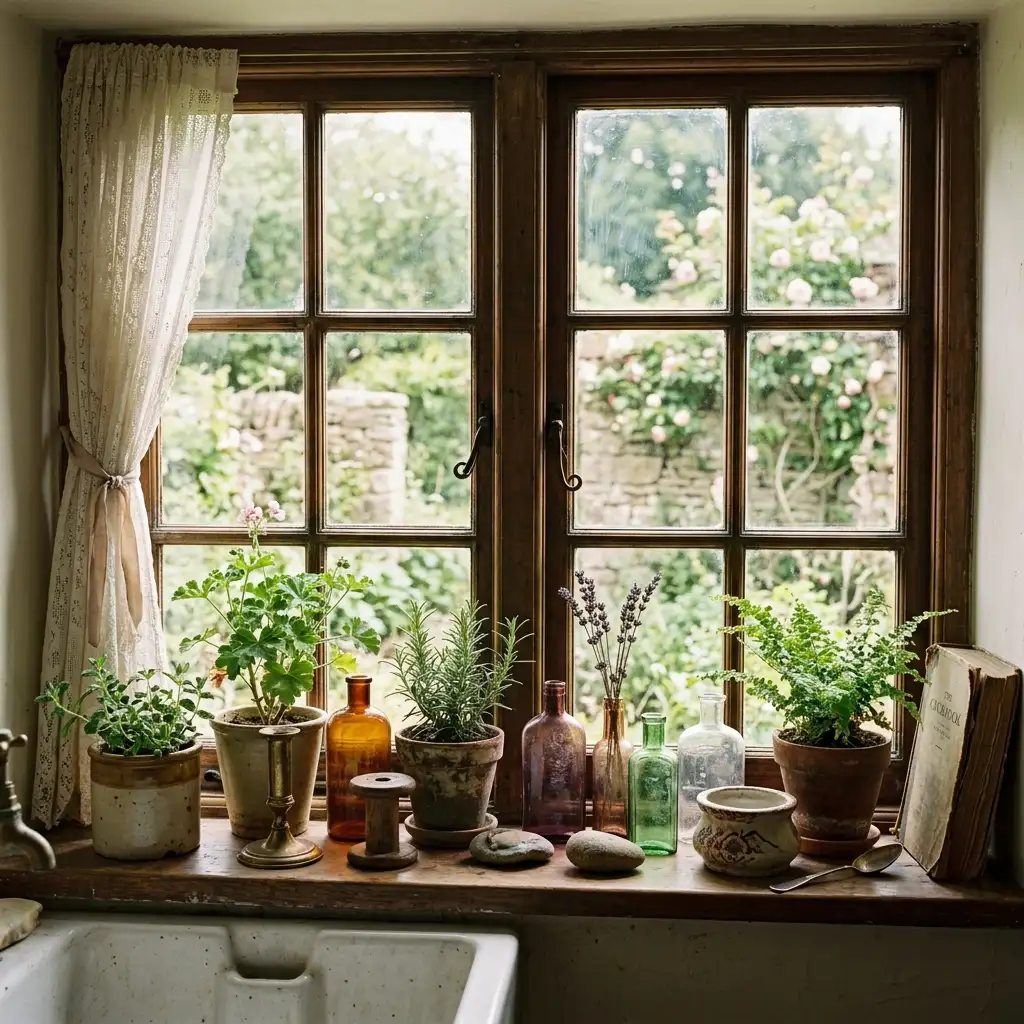
Place a row of fresh herb pots in matching terracotta along the windowsill for beauty and function. Add one or two glass bottles or small vintage jars to catch and refract the natural light. Keep the windowsill styling simple — two or three intentional objects are always better than many crowded ones.
| Victorian Windowsill Element | Visual Effect |
|---|---|
| Fresh herb terracotta pots | Natural, practical, fragrant |
| Colored glass bottles | Light refraction, colorful beauty |
| Small vintage ceramic piece | Period character, personal warmth |
| Simple linen half curtain | Privacy, soft light filtering |
27. Create a Victorian Kitchen With Vintage Textiles
Textiles add softness, color, and warmth to any Victorian kitchen. They prevent the hard surfaces of tile, stone, and wood from feeling cold or clinical. Choosing the right Victorian-appropriate textiles completes the period atmosphere in a deeply sensory way.
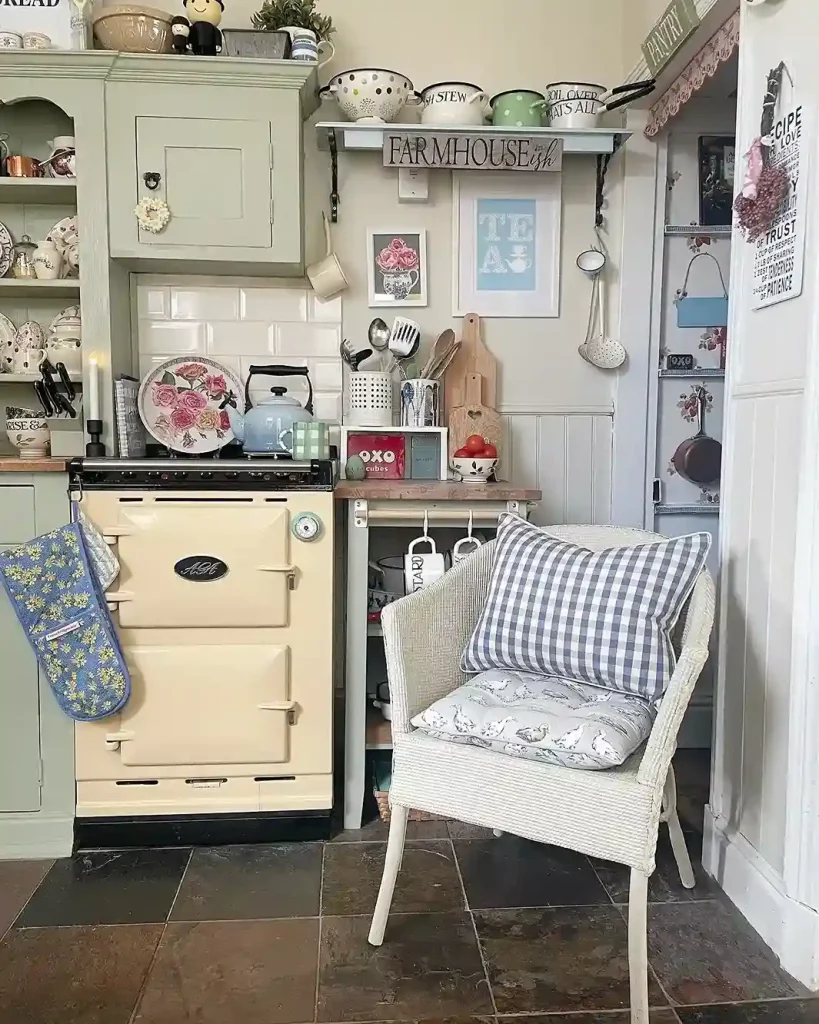
Use linen or cotton dish towels in classic stripes or checks hanging from an oven rail. Add a deep-colored or patterned curtain on the kitchen window in a heavy fabric like velvet or cotton. Choose a kitchen runner rug in a traditional Victorian pattern for the area in front of the sink.
| Victorian Kitchen Textile | Material Choice |
|---|---|
| Dish towels | Striped linen or cotton |
| Window curtain | Heavy cotton, velvet, or lace |
| Kitchen runner rug | Kilim, floral, or traditional pattern |
| Seat cushion if applicable | Toile or botanical print fabric |
28. Add a Victorian-Style Pot Rack Above the Island
A ceiling-mounted pot rack above the kitchen island is both supremely practical and extraordinarily beautiful. It keeps cookware accessible and eliminates the need for deep, hard-to-access pot storage inside cabinets. A beautiful pot rack filled with copper or cast iron cookware is a visual statement in itself.
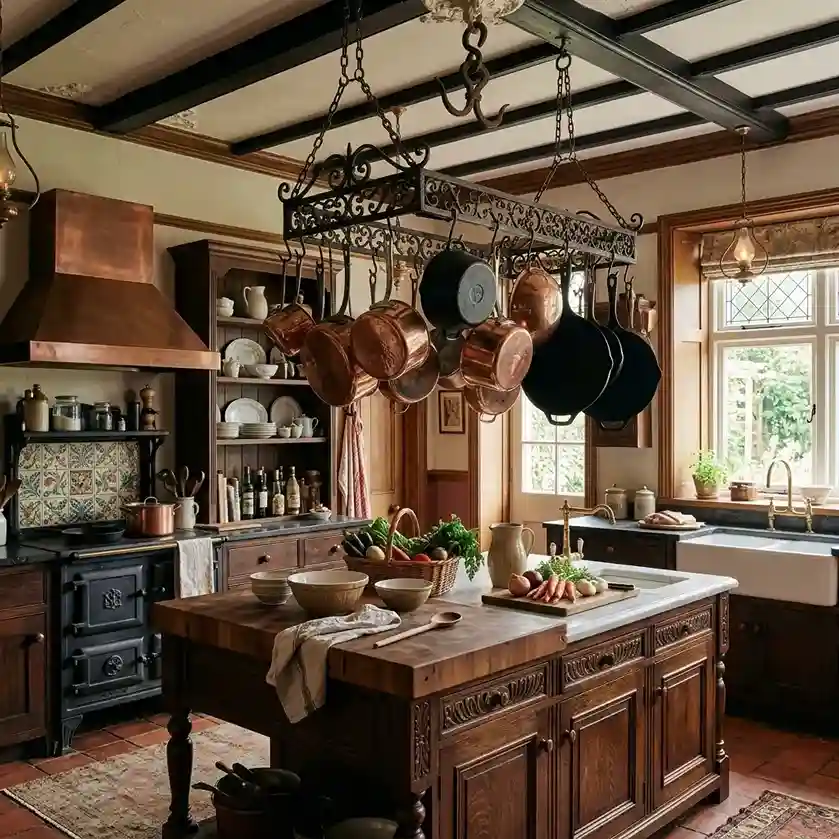
Choose a rectangular or oval pot rack in wrought iron or aged brass for the most Victorian aesthetic. Mount it at a height that provides comfortable access without obstructing the line of sight across the kitchen. Style with a mix of copper pots, cast iron skillets, and hanging bunches of dried herbs for full Victorian kitchen character.
| Pot Rack Style | Best Cookware to Display |
|---|---|
| Wrought iron rectangular | Copper pots, cast iron, heavy pans |
| Aged brass oval | Copper pots, stainless, lighter pans |
| Wooden beam with hooks | Any cookware, rustic warmth |
| Ceiling grid with hooks | Maximum flexibility and capacity |
29. Design a Victorian Kitchen for a Small Space
A small kitchen can be fully Victorian in character without compromising on period authenticity. The Victorian style actually suits small kitchens because the rich details fill the space beautifully. Strategic choices maximize functionality while maintaining the complete Victorian atmosphere.
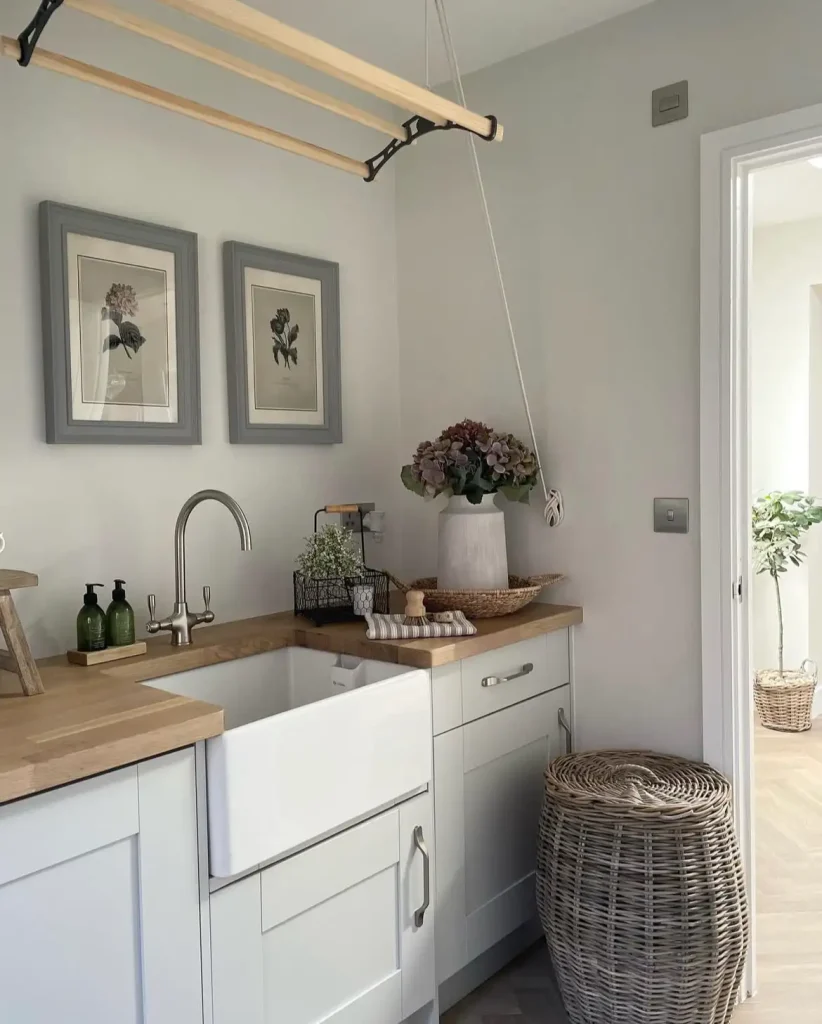
Use full-height cabinetry from floor to ceiling to maximize storage in a small Victorian kitchen. Choose one dramatic design element — a beautiful range cooker or patterned tile — and build around it. Keep the color palette consistent and avoid mixing too many competing pattern scales in a small space.
Find space-saving organization strategies from hidden storage ideas that integrate seamlessly into a small Victorian kitchen design.
| Small Victorian Kitchen Strategy | Space Benefit |
|---|---|
| Floor-to-ceiling cabinetry | Maximizes vertical storage |
| One hero design element | Focused, not overwhelming |
| Consistent color palette | Visual calm in small space |
| Apron sink as centerpiece | Major impact, no extra floor space |
30. Use Vintage Crockery as Kitchen Decoration
Vintage crockery displayed in a Victorian kitchen transforms functional objects into beautiful decorative elements. The Victorians displayed their best china proudly on plate rails, dressers, and open shelving. A curated collection of beautiful vintage crockery adds an irreplaceable warmth and personality.
Collect blue and white transfer-ware, ironstone, and Victorian-pattern china from antique sources. Display the most beautiful pieces on plate rails, open shelves, and the top of the Welsh dresser. Mix genuine antique pieces with affordable reproduction Victorian pattern crockery for a full, abundant display.
| Vintage Crockery Style | Display Location |
|---|---|
| Blue and white transferware | Plate rail, open shelves |
| White ironstone collection | Welsh dresser, open shelving |
| Victorian pattern bone china | Glass-fronted upper cabinets |
| Mixed antique crockery | Top of dresser, open shelves |
31. Add a Victorian Kitchen Scullery or Utility Area
A Victorian scullery was the hardworking utility room adjacent to the main kitchen. Recreating even a small scullery area within the kitchen brings the Victorian layout to life. This dedicated utility zone keeps messy work separate from the main cooking and entertaining space.
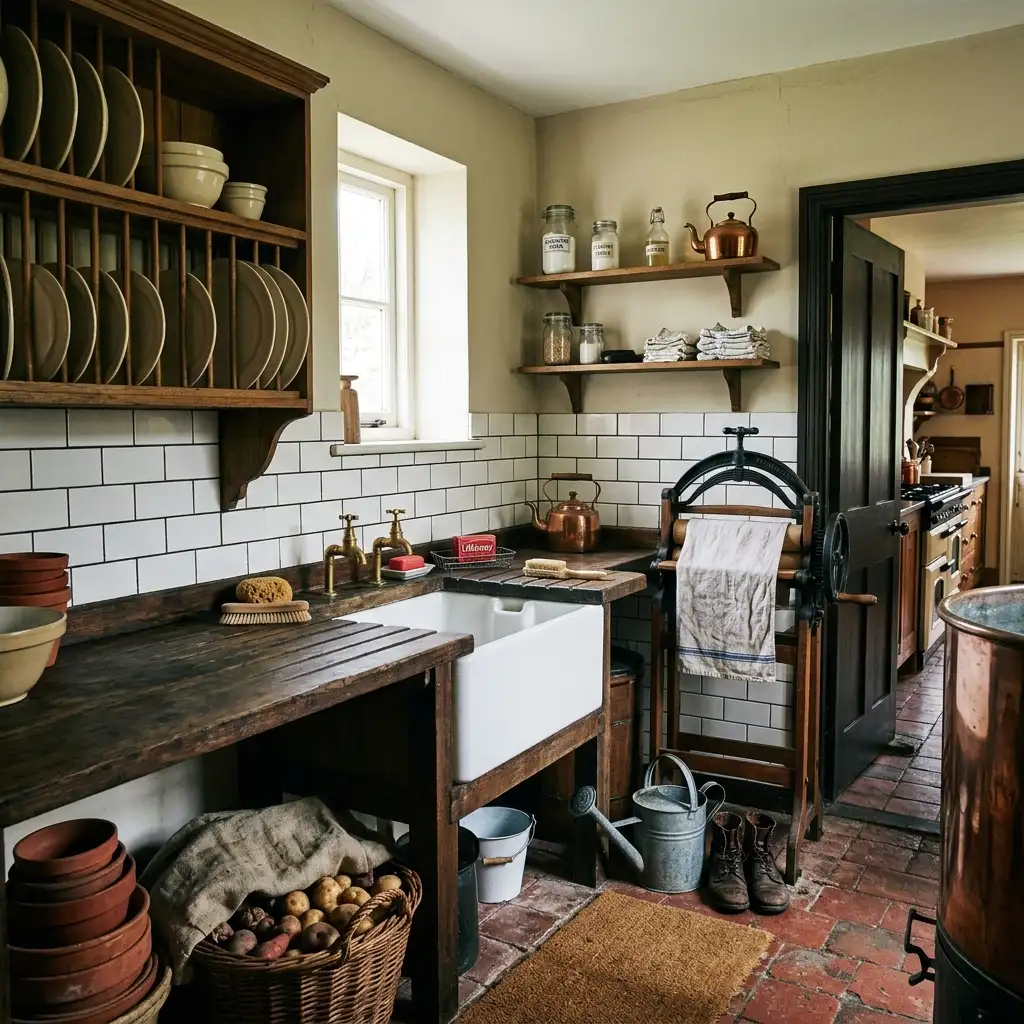
Create a scullery zone in one corner of a larger kitchen or in an adjacent utility room. Install a deep ceramic utility sink for heavy washing and food preparation work. Add open wooden shelving for cleaning supplies and a large pot storage above the utility sink.
| Victorian Scullery Element | Practical Function |
|---|---|
| Deep ceramic utility sink | Heavy duty washing, prep work |
| Open wooden shelving | Cleaning supplies, extra storage |
| Wooden draining board | Traditional drying surface |
| Stone or tile floor | Practical, easy to clean surface |
32. Finish the Victorian Kitchen With Thoughtful Styling Details
The final layer of any Victorian kitchen design is the thoughtful styling of every surface and display area. These small details collectively create the warm, personal, deeply lived-in quality that defines authentic Victorian design. Each styling choice should feel collected and meaningful rather than mass-produced or generic.
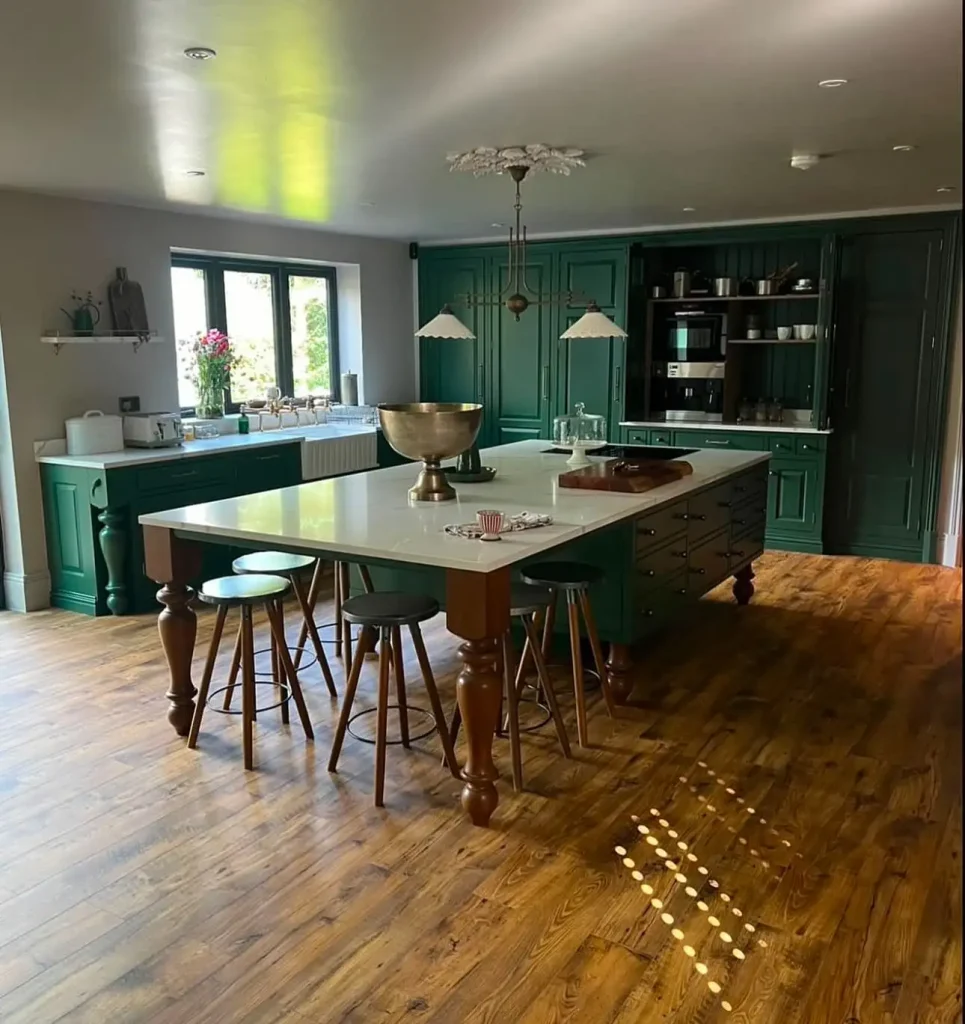
Display a collection of vintage recipe books on open shelves alongside beautiful crockery. Place a large glass dome over a cake stand on the countertop for a classic Victorian kitchen detail. Add a vase of fresh flowers or a bunch of dried lavender on the kitchen table or windowsill for fragrant, living beauty.
Complete the Victorian kitchen story with inspiration from French country decor ideas for layering European period influences that complement the Victorian kitchen aesthetic naturally.
| Victorian Kitchen Styling Detail | Location |
|---|---|
| Vintage recipe books | Open kitchen shelves |
| Cake stand under glass dome | Kitchen counter or dresser |
| Fresh flowers or dried herbs | Kitchen table, windowsill |
| Antique kitchen clock | Wall above dresser or range |
Frequently Asked Questions
What makes a kitchen look Victorian?
A Victorian kitchen is defined by dark painted shaker cabinets, a farmhouse apron sink, aged brass or oil-rubbed bronze hardware, black and white checkerboard or encaustic tile floors, white subway tile backsplash, and open shelving displaying beautiful crockery. A range cooker, plate rail, and copper pot display complete the most authentic Victorian kitchen look.
What colors are used in a Victorian kitchen?
Deep forest green, navy blue, burgundy, and dark charcoal are the most authentically Victorian kitchen colors for cabinetry. Warm cream and ivory serve as the backdrop and upper cabinet colors. Black and white tile, aged brass hardware, and copper accents complete the Victorian color story beautifully.
Can I create a Victorian kitchen on a budget?
Yes absolutely. Start by painting existing cabinets in a deep Victorian color and replacing hardware with aged brass or oil-rubbed bronze. Add a plate rail for displaying crockery and install a white subway tile backsplash yourself. Source vintage accessories and crockery from antique markets for authentic period pieces at affordable prices.
What flooring suits a Victorian kitchen best?
Black and white checkerboard tile is the most iconic and recognizable Victorian kitchen floor choice. Red quarry tiles and encaustic patterned cement tiles are equally authentic Victorian flooring options. Wide plank dark oak or pine hardwood floors suit a Victorian kitchen beautifully for a warmer, less formal period look.
What countertop material is most Victorian?
Butcher block and marble are the two most authentically Victorian countertop materials. The Victorians used marble for pastry work and butcher block for food preparation throughout. Combining both materials — marble on perimeter counters and butcher block on the island — creates the most authentic and beautiful Victorian kitchen surface combination.
Conclusion
A Victorian kitchen is one of the most rewarding and beautiful kitchen transformations possible. Every element from the range cooker to the copper pot rack to the encaustic tile floor contributes to a space that feels genuinely extraordinary and deeply personal. This is a kitchen design that improves with age, grows more beautiful with use, and never follows or falls victim to passing trends.
Choose the ideas that excite you most and build your Victorian kitchen one layer at a time. Start with the cabinets, the floor tile, and the range cooker and add character and detail from there. Your Victorian kitchen will become the room that guests admire, family gathers in, and you are genuinely proud of every single day. You’ll also love to learn about designs of Victorian bathroom in detail.