Decorating a home can feel overwhelming if you try to tackle everything at once.
The secret is to move through the space methodically, room by room, from the first thing a visitor sees to the last private corner of the house.
Either you are starting fresh in a new home or refreshing a space you have lived in for years, this step-by-step guide walks you through every room with practical advice you can apply today.
1. Entry foyer
2. Living room
3. Study or reading nook
4. Dining area
5. Kitchen
6. Bedrooms
7. Closet
8. Bathrooms
Step 1: Start at the Front Door
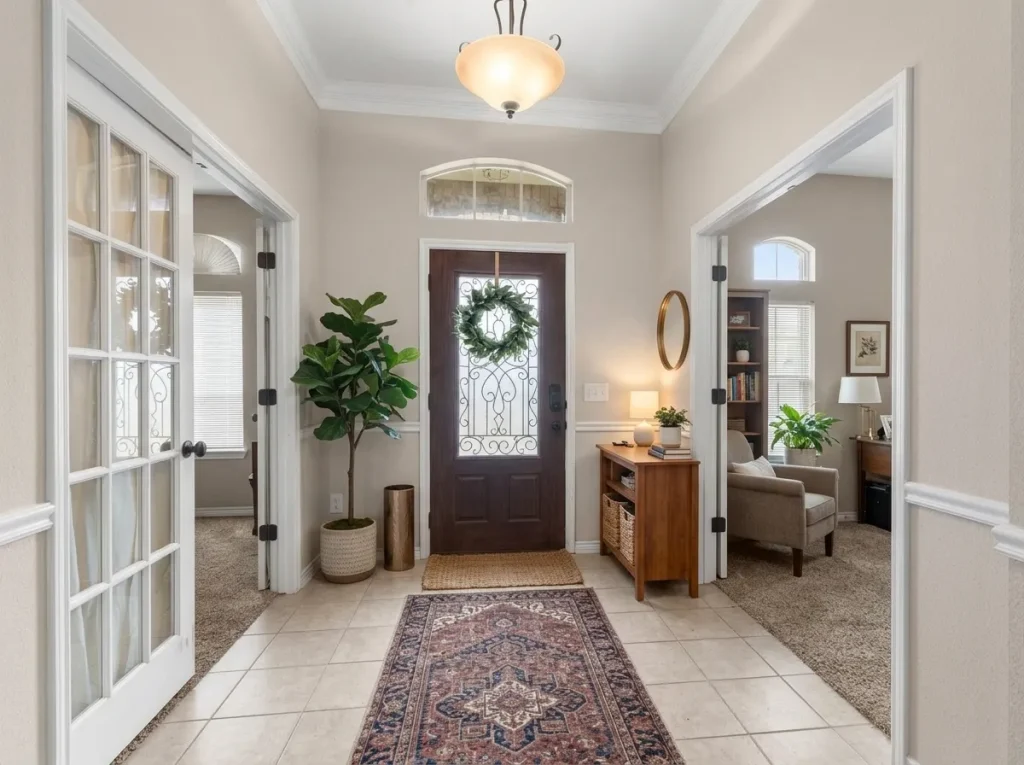
The entry foyer is the first impression your home makes, and it sets the tone for everything that follows. Start with the door itself.
A dark wood front door with decorative glass anchors the space and gives it weight. A green wreath at eye level adds a simple seasonal touch that signals warmth before anyone steps inside.
On the floor, a vintage Persian runner in deep jewel tones defines the path through the entry. A tall plant in a textured pot adds height and life.
A slim console table on one wall holds a small plant, a stack of books, and a table lamp. Crown molding and a chair rail add architectural detail without costing much.
💡 Quick Tip
Keep foyer furniture narrow and vertical. The goal is to welcome, not obstruct. One plant, one light source, and one surface for keys and mail is all you need.
Step 2: Arrange Your Living Room Around a Focal Point
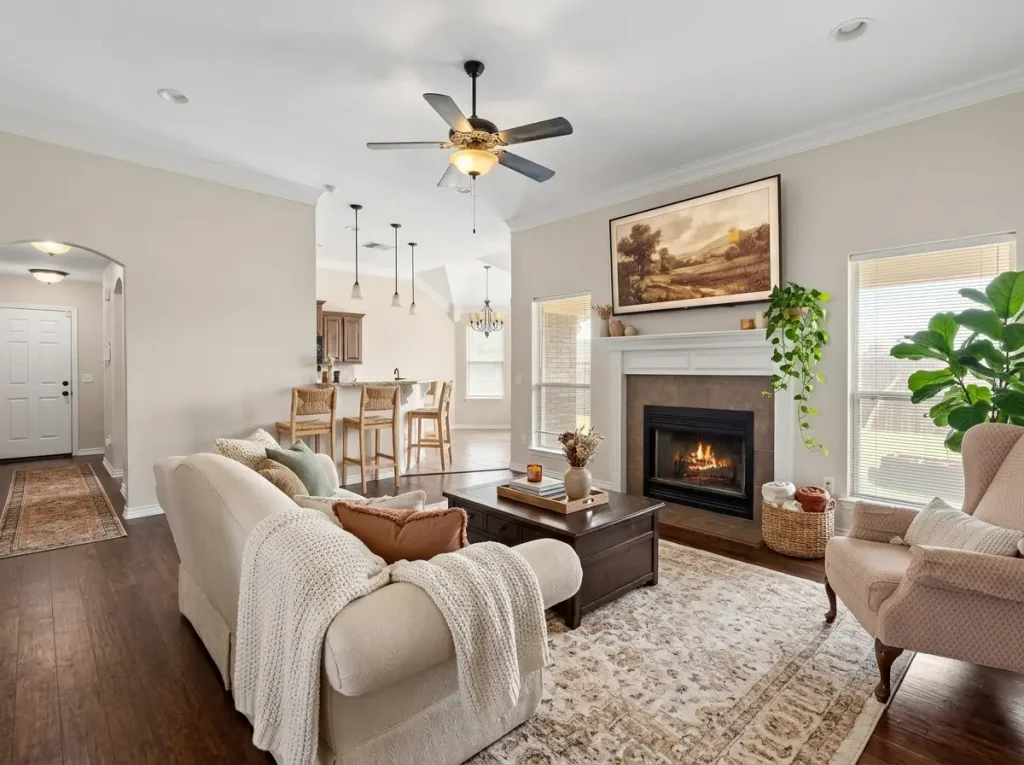
The living room is where people gather, so the furniture arrangement matters more than the individual pieces. Every living room needs one clear focal point.
A fireplace, a feature wall, or a large piece of art all work. Arrange the seating so it faces or relates to that point.
Pull the sofa and chairs inward rather than pushing them against the walls.
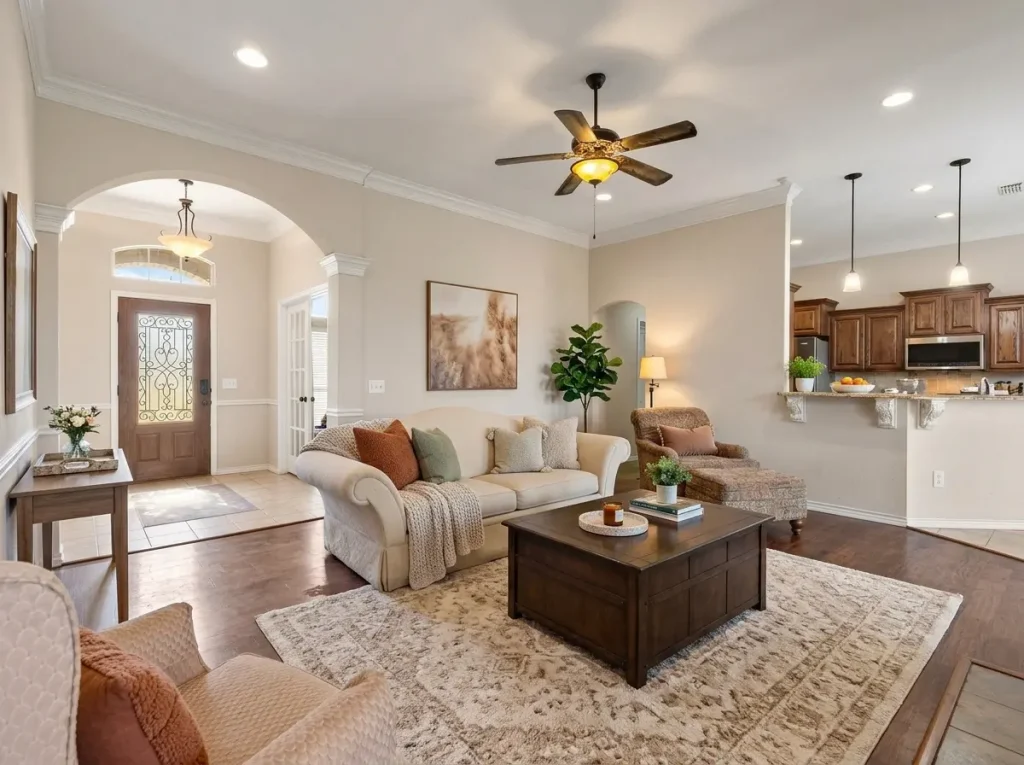
Grouping furniture in the middle of the room creates a more intimate, intentional feel. A rug that fits the whole seating group ties everything together.
Style the coffee table with a tray, a candle, and a small stack of books, and leave some open space so it does not look cluttered.
Face the seating toward one clear focal point.
Pushing every piece of furniture flat against the walls.
Step 3: Create a Reading or Study Nook
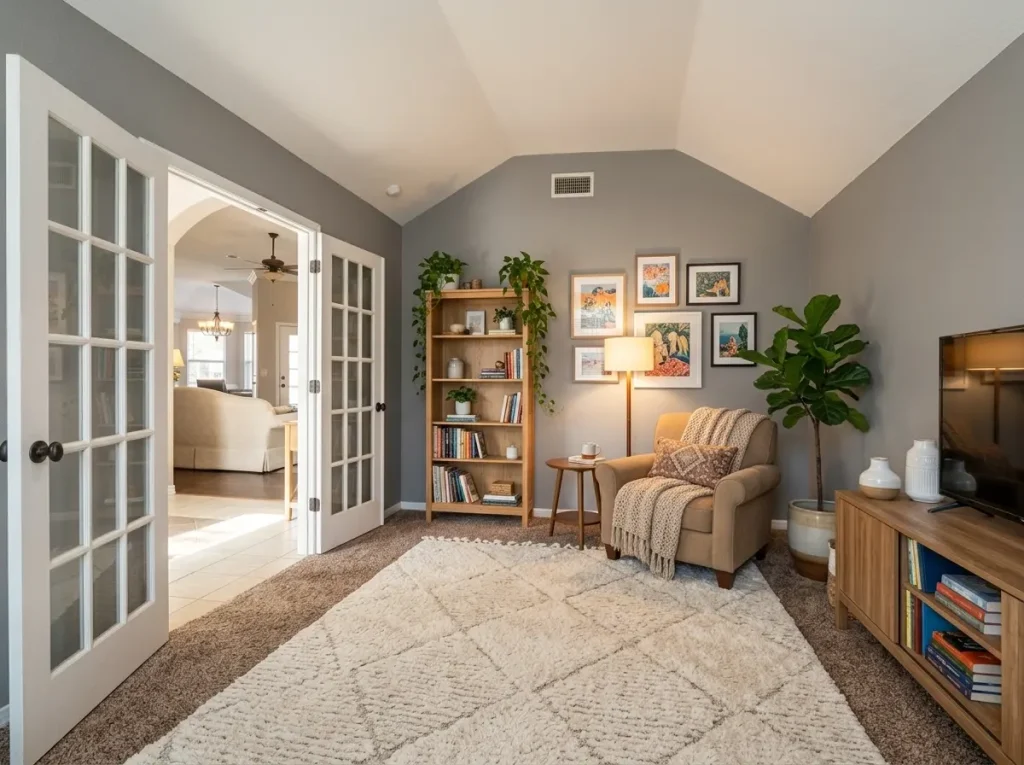
A reading nook is one of the most rewarding spaces to carve out because it serves a single purpose. It does not need much. Comfortable seating, good light, and shelving for books are the only requirements.
Use an armchair in a warm neutral tone and a small side table for a mug. A floor lamp with a linen shade gives soft light for the evening. Open shelves can hold books, plants, and a few decorative objects.
A gallery wall of framed prints above the chair adds visual interest without crowding the space. Keep the color palette calm and let the art and the books provide the energy. You’ll also love to read about cottage home decor with cozy touch.
Step 4: Decorate Your Dining Area Around the Table
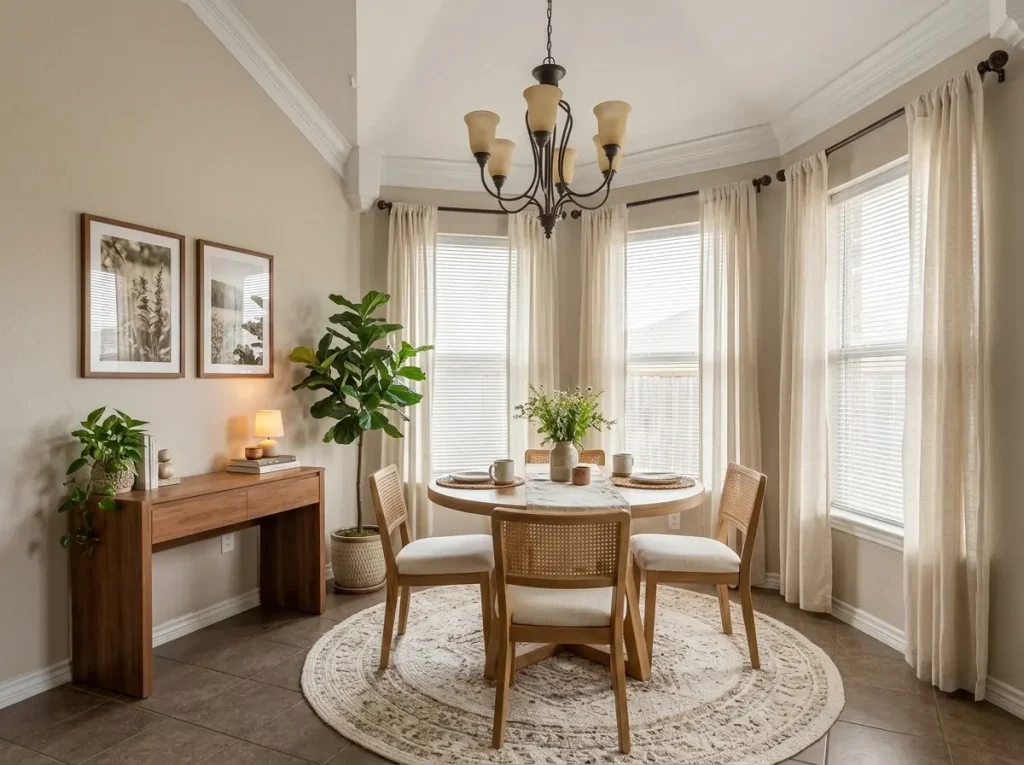
In a dining area, the table is the anchor, and everything else relates to it. A round table works well in a bay window or a corner because it has no sharp edges and fits a small footprint. Pair it with a round rug that echoes the shape of the table. This is a classic design move because the two shapes reinforce each other.
Hang a pendant or chandelier directly above the table center, around 30 to 36 inches above the tabletop. This creates an intimate scale for conversation and dining.
Sheer curtains at the windows soften the light and add height. A console table against one wall holds a lamp, a few books, and two potted plants at different heights, which creates a layered vignette. Two framed prints above the console complete the wall without overwhelming it.
Step 5: Decorate Your Kitchen with Functional Beauty
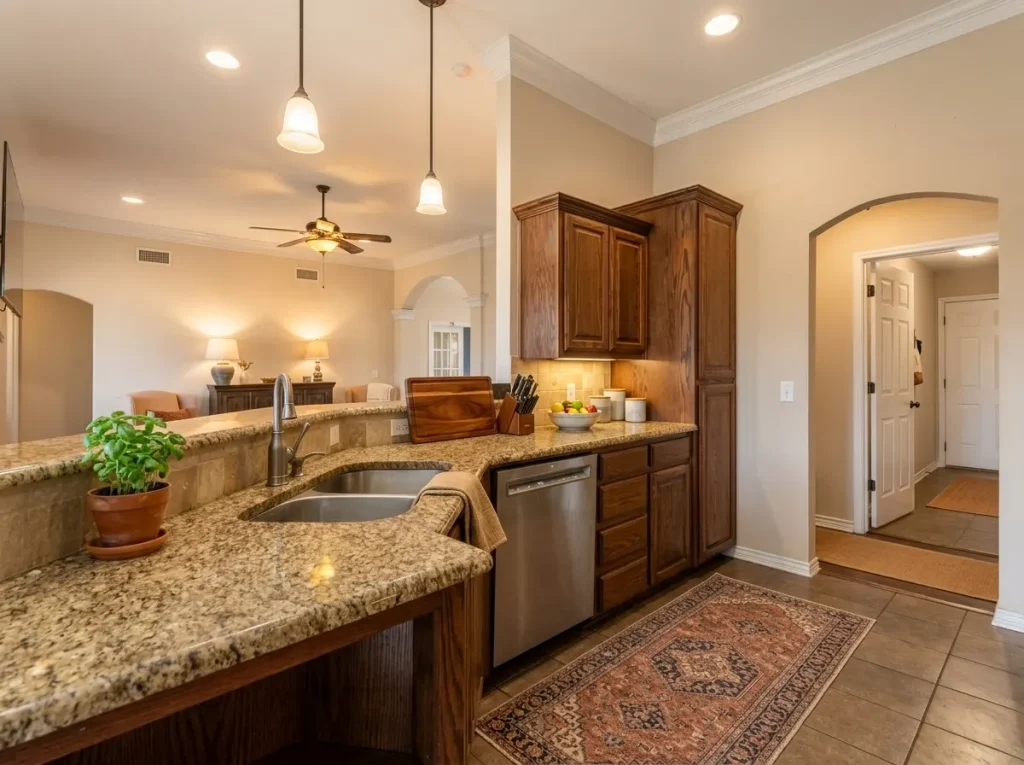
A kitchen can be both highly functional and beautiful without a full renovation. Start with the lighting. Pendant lights over an island or a sink give task light and also serve as decorative elements.
Keep the countertop styling simple. A wooden cutting board, a bowl of fruit, a small potted herb, and a row of ceramic canisters are enough. The goal is to leave at least a third of the counter space completely clear. Nothing should be on the counter unless it belongs there.
A rug on the tile floor near the work zone adds warmth and color to a space that is otherwise hard and cold. Crown molding along the top of the cabinets ties the kitchen and the living areas together visually.
📌 Good To Know
The rule of three applies to kitchen counters too. Group objects in odd numbers, vary their heights, and keep a third of the counter clear.
Step 6: Decorate the Bedroom for Rest and Calm
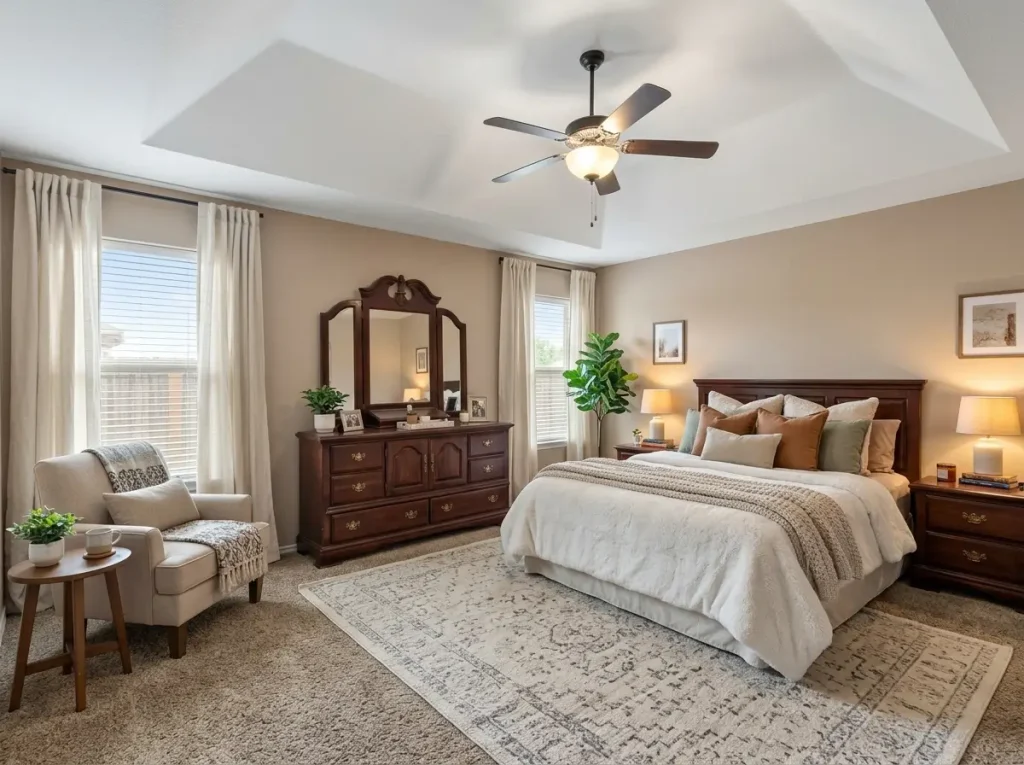
The most important decorating decision in a bedroom is the bedding. Invest in quality and layer generously. A fitted sheet, a duvet or quilt, decorative pillows at the back, and a throw blanket at the foot create the luxurious, hotel-like look that makes a bedroom feel finished.
Warm the light. A ceramic table lamp on each nightstand is better than a single overhead fixture, because it creates pools of warm light at eye level. Add a reading chair near the window with a patterned throw pillow and a draped blanket.
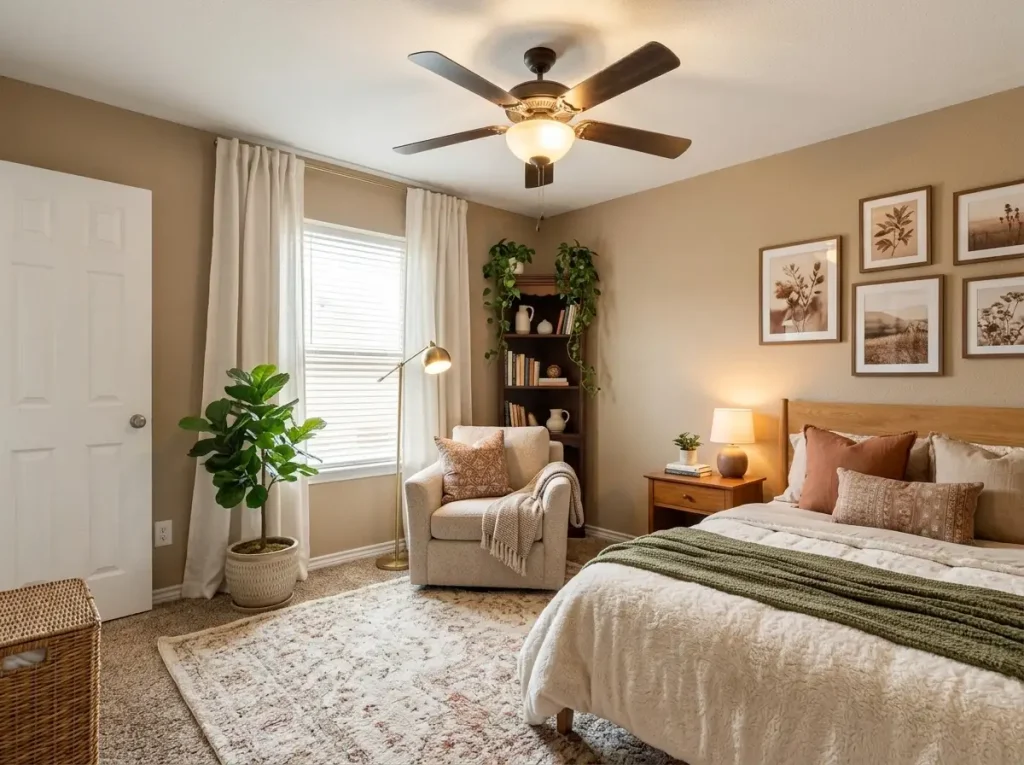
Keep the wall color calm, either a warm neutral or a deeper, richer tone. A gallery of four botanical or landscape prints in matching wood frames creates a collected, personal feel. A large plant in the corner adds life.
Step 7: Organize and Decorate Your Closet
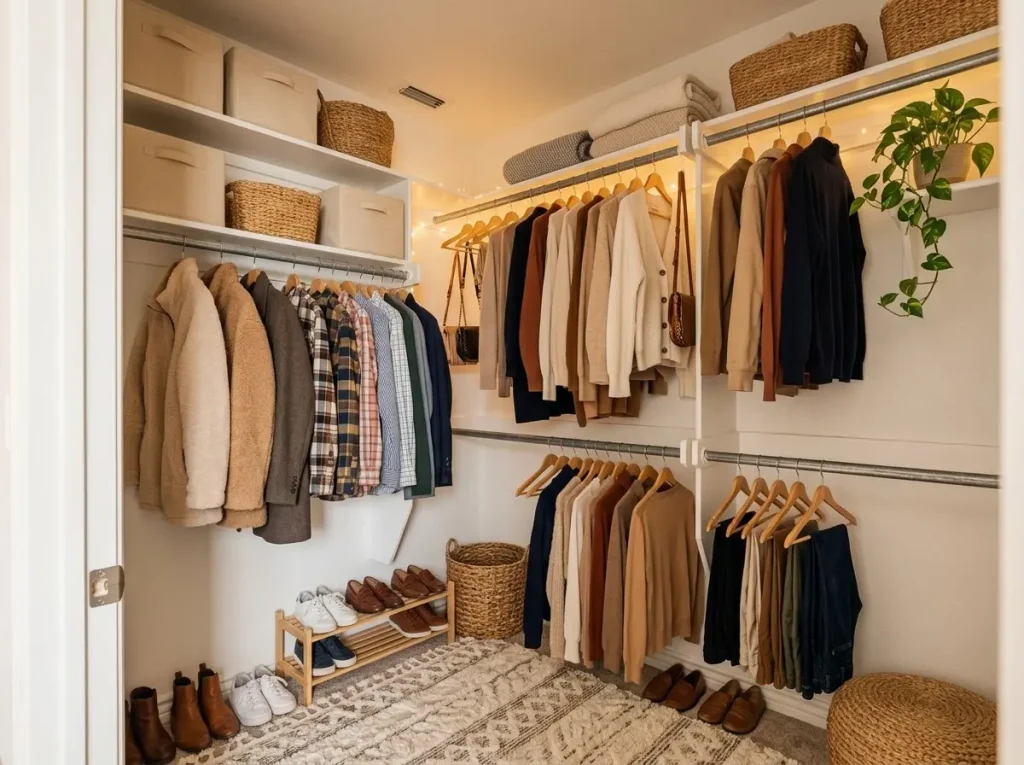
A closet feels decorated rather than just organized when it uses consistent containers, warm lighting, and at least one living or natural element. Group clothes by type and arrange them by color so the closet reads as visually calm even when it is fully stocked.
Use matching hangers throughout. This is one of the biggest visual differences you can make for almost no cost. Woven baskets on the upper shelves store folded items and seasonal accessories. A small wooden shoe rack keeps everyday footwear neat.
Warm fairy lights strung along the upper shelving rod cast a soft amber glow that makes a practical space feel cozy. A trailing plant on the top shelf adds a touch of green.
Step 8: Decorate Your Bathrooms Last
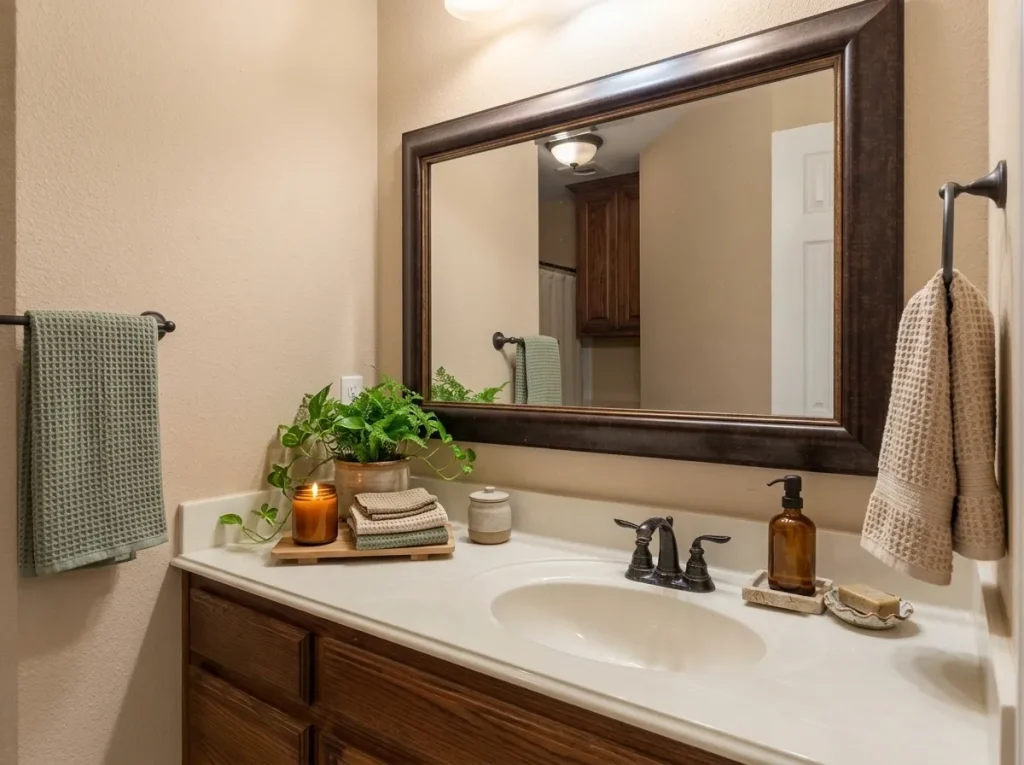
Bathrooms deserve the same thoughtful attention as any other room, and a few well-chosen accessories can transform a purely functional space into a genuine sanctuary.
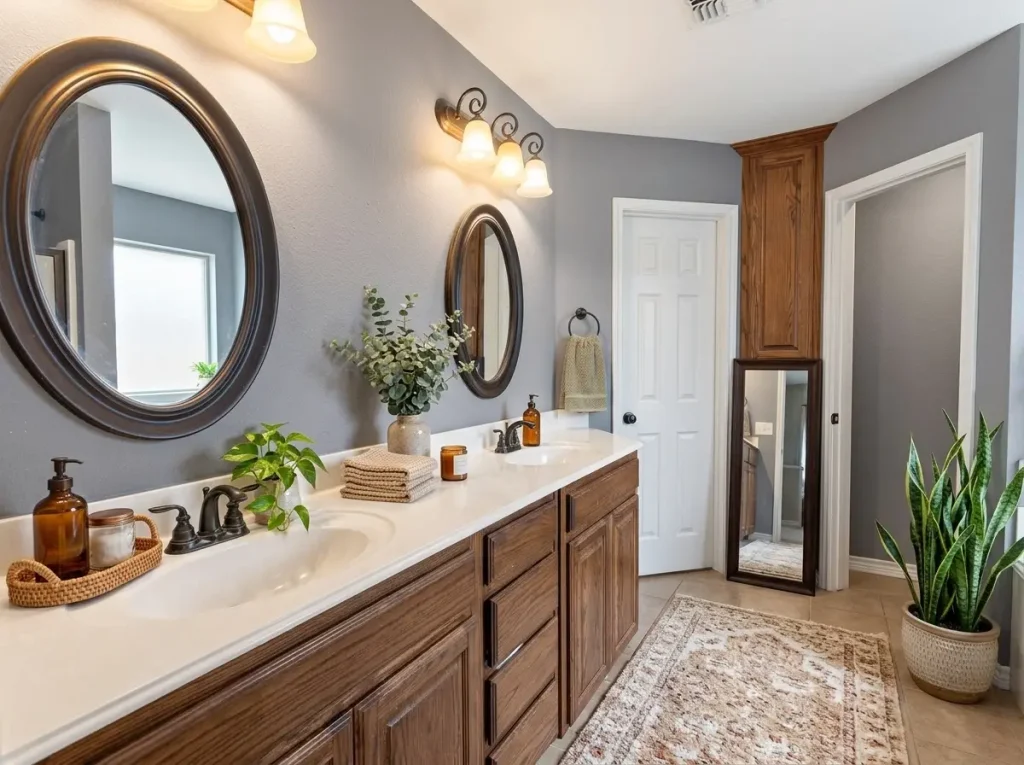
In a double vanity bathroom, two matching mirrors above the sinks give each person their own zone. Amber glass soap dispensers and a woven tray organize the counter. A small pothos plant and a candle add life and scent. A snake plant in a textured pot stands tall on the floor as a vertical accent.
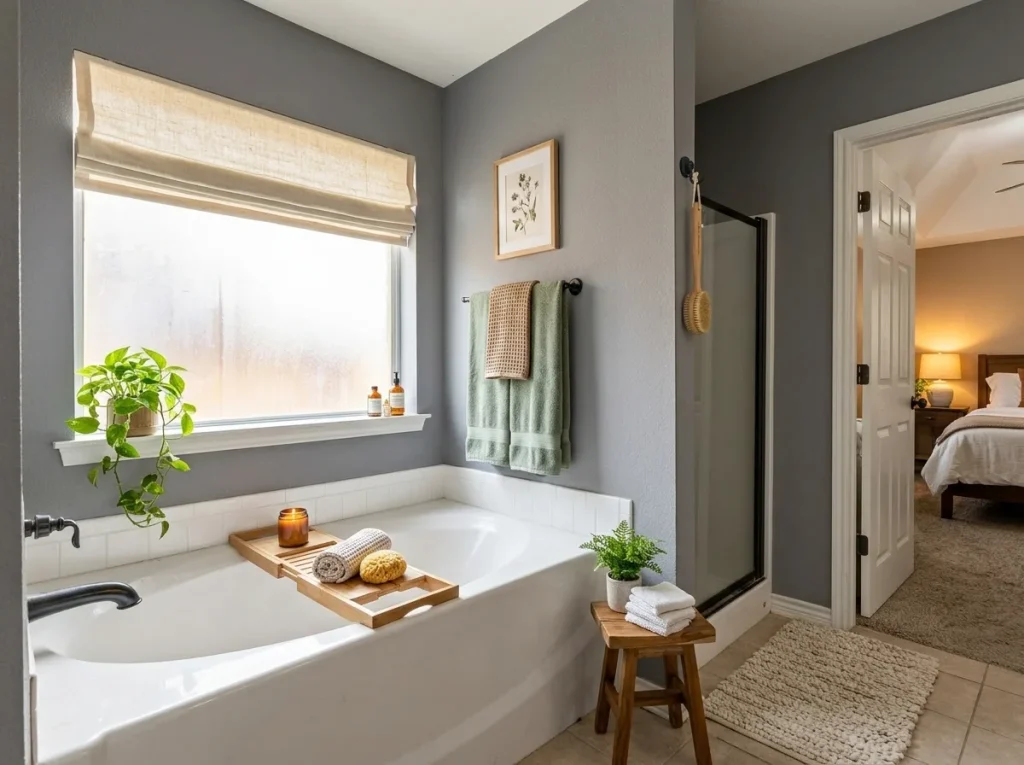
In a bathroom with a soaking tub, a bamboo bath tray across the width of the tub holds a rolled hand towel, a bath brush, a candle, and a small sponge. Green towels hang on a black iron bar. A framed botanical print above the towels ties the whole look together.
💡 Quick Tip
In a bathroom, group three to five objects maximum on a small tray. Keep the palette warm and earthy, and always include one living plant. Pothos, ferns, and snake plants all tolerate low light and humidity well.
The Common Thread Running Through Every Room
Looking at all eight steps together, one design philosophy connects every space: warmth, nature, and intentional simplicity. Every room uses a warm neutral wall color as a foundation. Every room includes at least one living plant. Every room layers textures through rugs, throw blankets, woven baskets, and mixed wood tones. And in every room, lighting is layered. Overhead fixtures are supplemented by table lamps, floor lamps, or candles that create pools of warm, intimate light.
Decorating your home does not require a large budget or a professional designer. It requires patience, a consistent eye, and a willingness to work room by room, starting at the front door and working your way through every space until the whole home tells one coherent story.
Frequently Asked Questions
Where should I start when decorating a home?
Start at the front door. The entry sets the tone for everything else, and it is the smallest space to finish. Once you have a clear entry, move to the room you use most, which is usually the living room. Finishing one room completely gives you momentum for the next.
How do I make a small room feel bigger?
Use a consistent, light palette for walls and large furniture. Keep the floor visible by choosing furniture with raised legs. Hang curtains high and wide to draw the eye upward. Use a mirror to reflect light. And limit the number of objects on every surface so the room does not feel cluttered.
Do I need to hire a designer to decorate my home?
No. A consistent color palette, a clear focal point in every room, layered lighting, and at least one living plant in each space will get you most of the way there. Designers are helpful for major renovations or when you have a specific structural problem, but most rooms can be decorated well with patience and a clear plan.