A cluttered kitchen is rarely a space problem. Most of the time it’s a system problem.
Things land where there’s room rather than where they belong, cabinets fill up with items that haven’t been touched in months, and the counter becomes a catch-all for everything that doesn’t have a proper home.
Good kitchen storage ideas fix the system, not just the surface.
The ideas in this list cover every part of the kitchen, from the deep corner cabinet no one wants to deal with, to the narrow gap beside the fridge that’s been collecting dust for years.

Some take an afternoon and cost almost nothing, like a tension rod under the sink or a lazy Susan in a corner cabinet.
Others are bigger commitments, like a floor-to-ceiling pantry or pull-out drawer units, but they pay off every single day. A few ideas work for renters with no drilling allowed. Others suit a full kitchen renovation.
Whatever your kitchen looks like right now, there’s something here that will make it work harder for you.
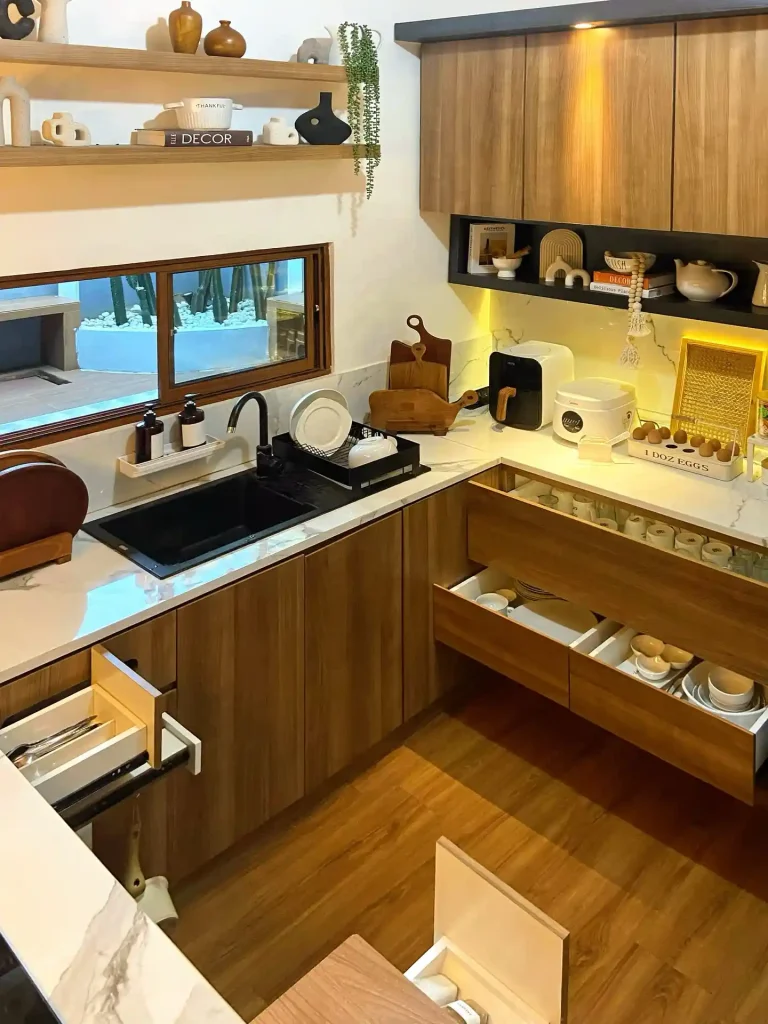
1. Store Dishes in Deep Drawers Instead of Cabinets for Easier Daily Access
Most kitchens stack dishes in upper cabinets, which means reaching up every single time. This warm wood kitchen flips that by using wide, deep lower drawers for plates, bowls, and mugs.
credits: @rtb_woodworks
The top drawer holds cutlery, the middle drawer shows stacked mugs and small bowls, and the lower drawer holds larger plates and serving pieces, all visible and reachable without opening a single cabinet door.
A glass-front upper section above the counter holds mugs on display rather than hidden away. The under-cabinet LED strip running along the upper cabinets adds a warm amber glow that makes the whole counter zone feel intentional rather than cluttered.
The real payoff: unloading the dishwasher takes half the time when everything slides straight into a drawer at counter height.
Dishes stacked in upper cabinets, requiring two hands and a stretch every time you unload the dishwasher.
Deep lower drawers put every plate and bowl at counter height, visible and reachable in one motion.
2. Mount a Magnetic Knife Strip on the Backsplash to Free Up an Entire Drawer

Knife blocks sit on the counter and take up more space than most people realize.
A magnetic strip mounted on the backsplash or wall keeps every knife visible, dry, and off the counter entirely. Blades are easier to grab, easier to put back, and the strip itself becomes a subtle design detail rather than a storage afterthought.
Mount it at a comfortable reach height, ideally just below eye level, and keep it positioned away from the cooktop where steam and grease collect.
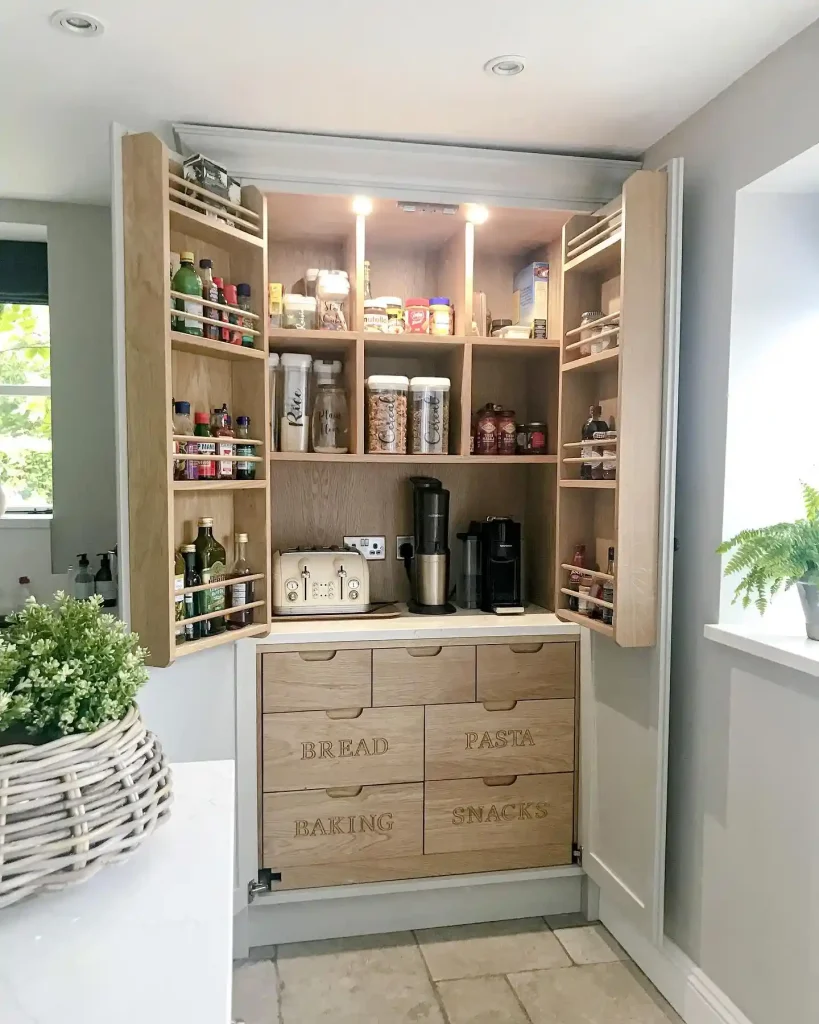
3. Build a Floor-to-Ceiling Pantry Cabinet
credits: @the_decor_addict
Floor space is limited but ceiling height rarely is. This built-in pantry runs all the way to the ceiling and packs an enormous amount of storage into one footprint.
The upper section holds labeled clear canisters for dry goods like rice, flour, and cereal in individual cubby sections, so nothing gets buried behind anything else.
Both doors open to reveal full-height spice racks fitted directly onto the interior panels, holding bottles of oil, vinegar, sauces, and condiments without taking up a single shelf inside.
The mid-section serves as a countertop landing zone for small appliances like a toaster and coffee machine, with a power outlet built in directly behind them.
Below, chunky wooden drawers are engraved with category names: Bread, Pasta, Baking, Snacks. No labels to peel off or rewrite. The category is part of the drawer itself.
How to zone a tall pantry cabinet
4. Add Open Shelving Above the Counter for Everyday Items You Reach for Constantly
Closed upper cabinets make sense for rarely-used items but slow you down for things you grab multiple times a day. Replacing one or two cabinet runs with open shelving keeps oils, vinegars, frequently-used jars, and a few mugs right at hand without opening a door each time.
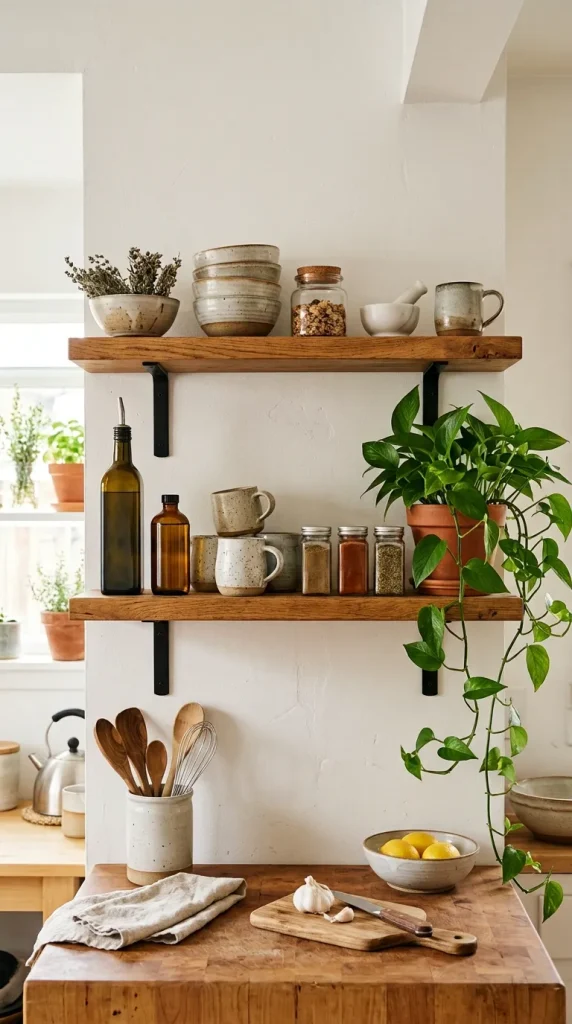
The key is editing ruthlessly. Open shelves only work when they hold items you actually use, not overflow from overcrowded cabinets.
- Keep one shelf for daily cooking staples: oil, salt, a small jar of spices you reach for constantly.
- A second shelf works well for mugs and glasses you use every morning.
- Add a trailing plant at one end to keep the shelf from looking too utilitarian.
⚠️ Watch Out
Open shelves near a cooktop collect grease quickly. Wipe them down weekly and keep anything decorative at least one shelf away from the hob.
5. Hang a Pegboard on an Empty Kitchen Wall for Pots, Pans, and Tools
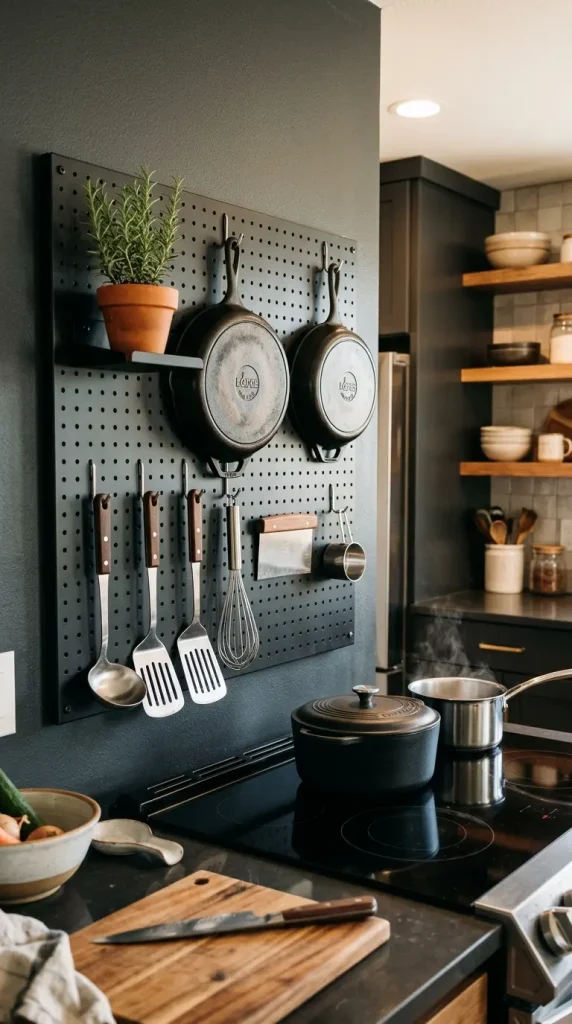
A section of empty wall beside or behind the cooktop is prime real estate.
A pegboard fitted with a mix of hooks, small shelves, and rail inserts turns it into a full storage zone for pots, pans, ladles, spatulas, and small tools. Everything hangs in plain sight and comes down in one motion while you’re cooking.
The layout is completely flexible. Rearrange the hooks whenever the collection changes, add a small shelf for a spice tin or herb pot, or swap in a rail for hanging bags and dish towels.
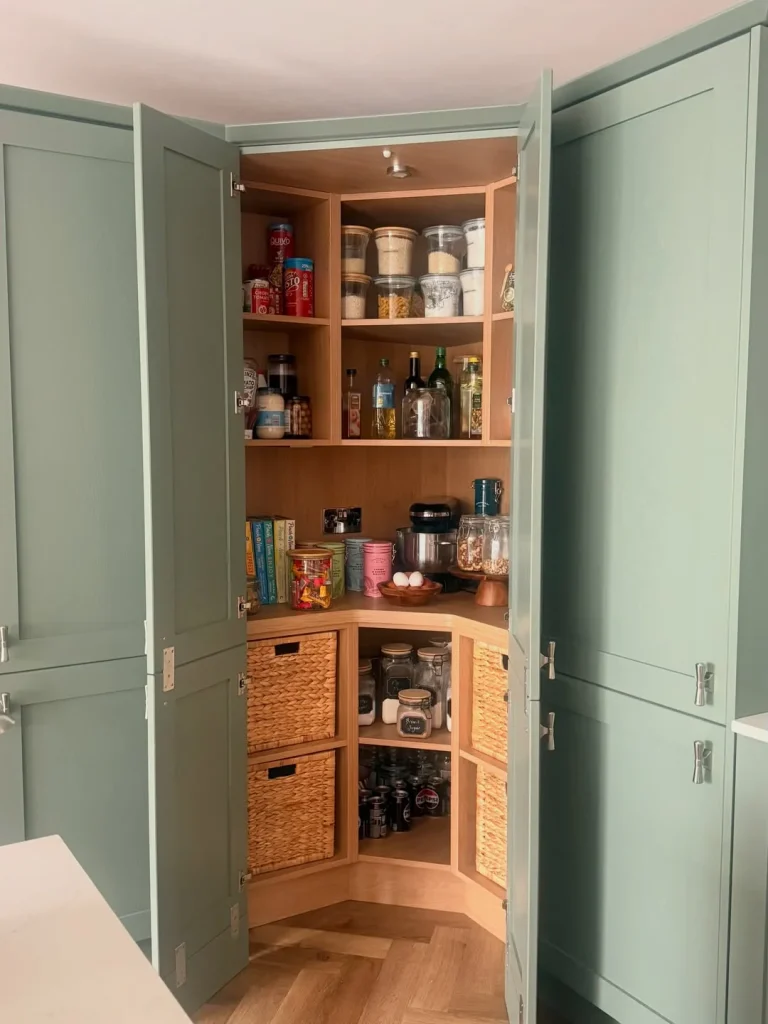
6. Use a Corner Pantry With Curved Shelving to Reclaim the Most Wasted Kitchen Space
credits: @our_kentish_barn
Corner cabinets are the most awkward spot in any kitchen. Shallow items get pushed to the back and forgotten, and deep corners are impossible to reach into without practically climbing inside.
This sage green corner pantry solves it with curved shelving that follows the shape of the corner, so every inch of the back wall is usable and visible when the doors swing open.
The upper shelves hold clear jars and containers for dry goods, bottles grouped by type, and everyday pantry staples.
The lower section uses large wicker baskets on the floor of the corner for bulkier items, with smaller jars on the shelves alongside them. A small recessed spotlight at the top illuminates the entire interior so nothing hides in shadow.
The sage green shaker-style doors keep the pantry looking like a furniture piece rather than a utility closet.
7. Stack Baking Trays and Cutting Boards Vertically in a Dedicated Divider Section
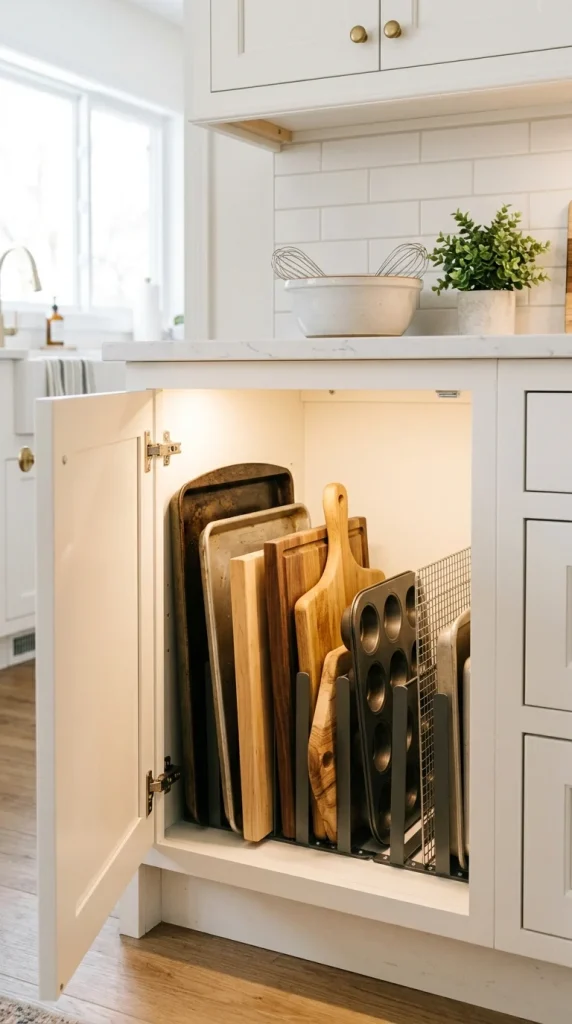
Baking sheets and cutting boards are among the hardest things to store well. Flat-stacked, they slide around and scratch each other.
Leaned against a cabinet wall, they topple every time you pull one out. A vertical divider insert fitted inside a lower cabinet or a tall narrow cabinet keeps each tray and board standing upright in its own slot, easy to pull out without disturbing anything next to it.
Divide by type: sheet pans together, chopping boards together, muffin tins in their own slot.
8. Use the Inside of Cabinet Doors for Measuring Cups, Lids, and Slim Items

Cabinet door interiors are almost always blank and wasted. Fitting the inside of a lower cabinet door with a few small hooks, a slim rail, or an adhesive organizer adds a surprising amount of storage for flat or lightweight items. Measuring cups and spoons hang from hooks so they’re found instantly.
Pot lids stand in a rail rather than rattling around in a drawer. Plastic wrap and foil boxes clip onto a slim mounted holder.
None of these need a large footprint. The door is the footprint.
Every cabinet door you use for storage is one more drawer you free up for something else.
9. Dedicate an Under-Sink Cabinet Entirely to Cleaning Supplies With a Tension Rod

The cabinet under the kitchen sink is one of the most disorganized spots in any home.
Bottles tip over, sponges get lost, and the whole thing gets pulled apart every time you need something from the back.
A tension rod stretched across the upper section of the cabinet lets spray bottles hang by their triggers, keeping them upright and grouped. Below the rod, a small caddy or shallow bin holds sponges, scrub brushes, and dish soap.
Everything stays visible and the floor of the cabinet stays clear.
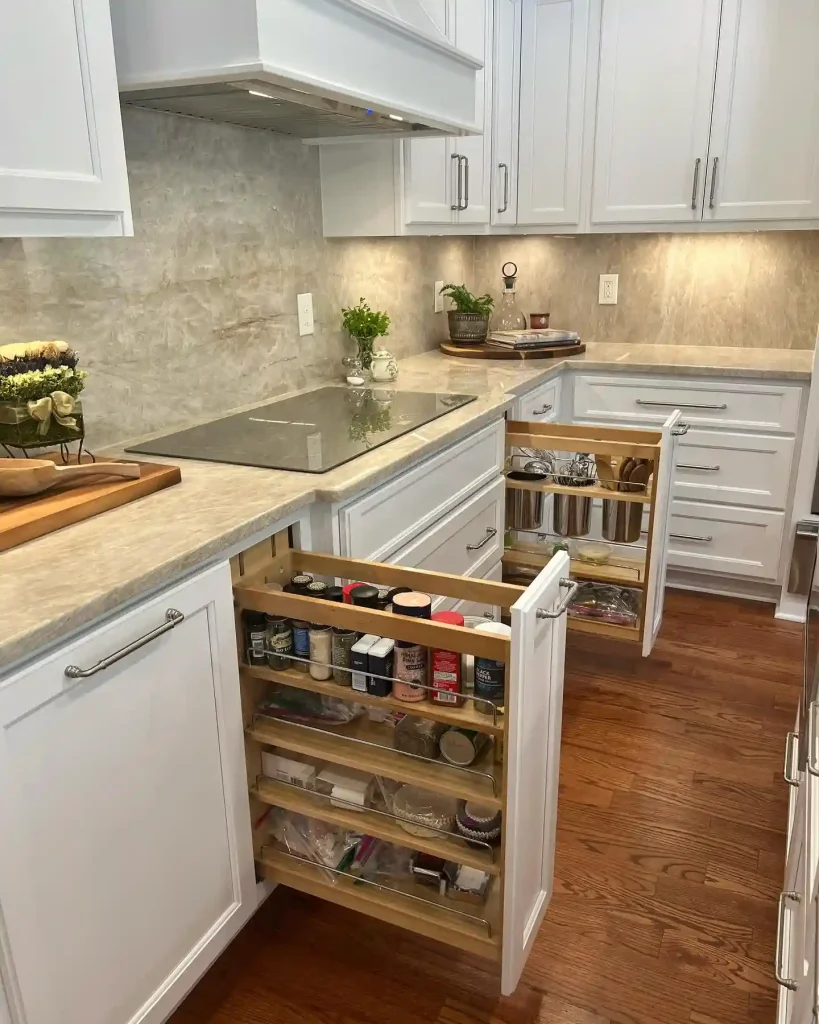
10. Install Pull-Out Cabinet Drawers Between Base Units for Spices and Slim Items
credits: @casanelly.ana
The narrow gaps between base cabinets are almost always wasted. This white kitchen puts two of those gaps to work with tall pull-out drawer units that slide out on a track.
The first holds spices, small seasoning bottles, baking supplies, and packets standing upright across four tiered shelves so every label faces forward. The second unit visible in the background holds utensils and kitchen tools standing vertically in divided sections.
Both units sit flush with the cabinet fronts when closed and look like standard cabinet panels. Open them and the entire contents come out toward you rather than requiring any reaching or digging.
This is one of the most practical kitchen storage ideas for anyone who cooks regularly and constantly loses spices to the back of a deep cabinet shelf.
Stand spice bottles upright with labels facing out so you read the name at a glance without picking anything up.
Use one pull-out for spices and a separate one for utensils so neither gets overcrowded.
Don’t mix spices and baking tools in the same pull-out. The sizes clash and the unit gets hard to navigate fast.
Avoid overloading the shelves. Pull-out units work best when items stand freely and don’t lean on each other.
11. Line Drawer Bases With Inserts to Keep Utensils, Cutlery, and Small Tools Sorted
An unsorted kitchen drawer becomes unusable within a week.
Cutlery gets mixed with tools, small gadgets pile up, and finding a teaspoon means digging through everything.
A set of modular drawer inserts, sized to fit the drawer exactly, gives every category its own lane. Forks in one slot, spoons in another, small tools in a separate section, and nothing migrates.
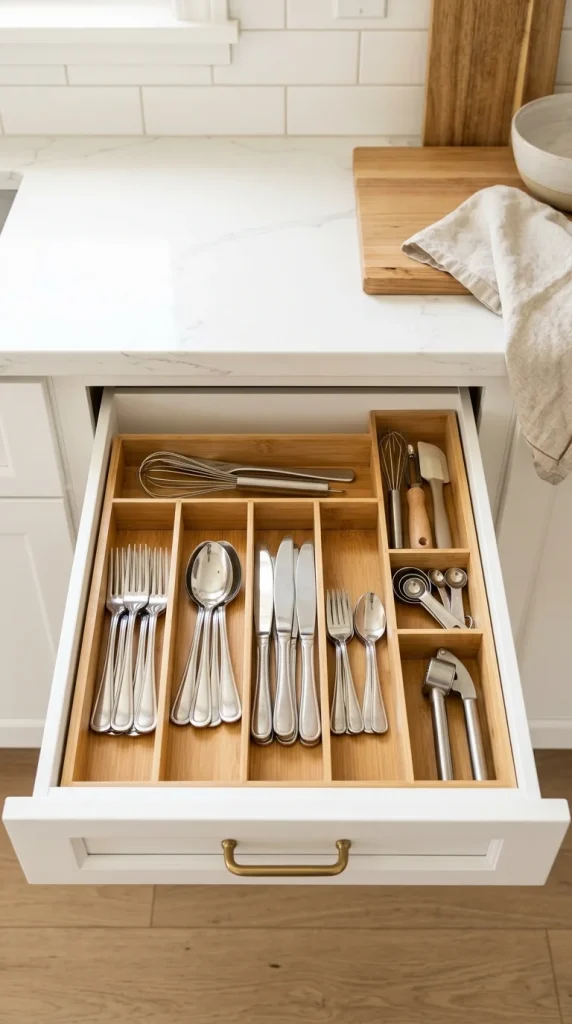
Bamboo, plastic, and expandable versions all work well. The key is measuring the drawer before buying so the insert sits flush rather than sliding around.
12. Create a Coffee and Breakfast Station in One Cabinet
Morning counter chaos usually comes from the same handful of items: the coffee maker, mugs, pods or grounds, sugar, and a few breakfast staples all spread across the counter with no real home. Dedicating one cabinet section and a small counter zone entirely to the morning routine keeps everything in one contained area.
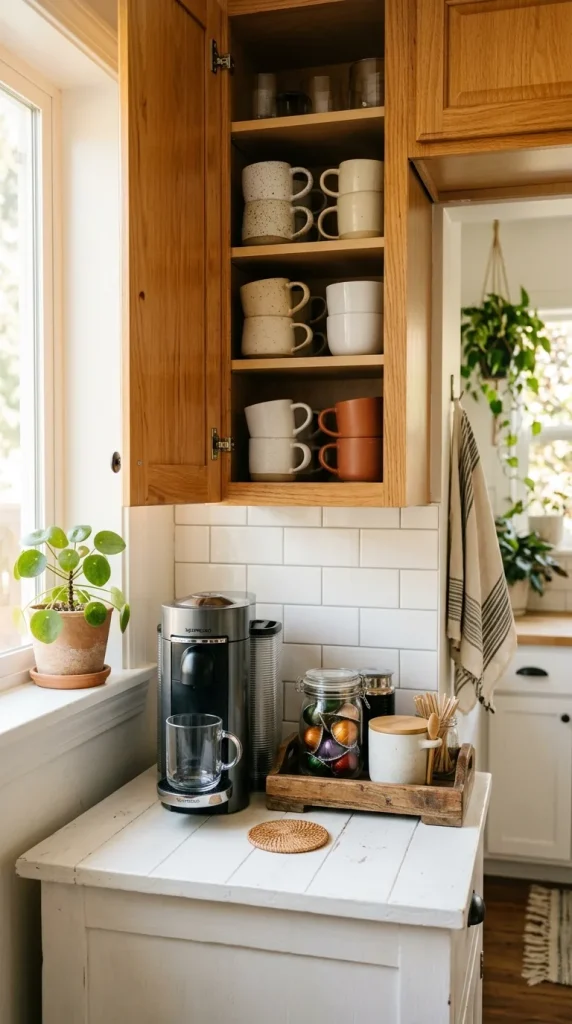
A shelf inside the cabinet holds mugs. A small tray on the counter corrals pods, a sugar jar, and a spoon rest. The machine sits on the counter directly below.
When everything belongs to one zone, the rest of the kitchen counter stays clear.
💡 Quick Tip
Install a power outlet inside the cabinet above the coffee station so the machine cord runs neatly up and out of sight rather than trailing across the counter.
13. Use Stackable Clear Canisters for Dry Goods So You Can See Exactly What You Have
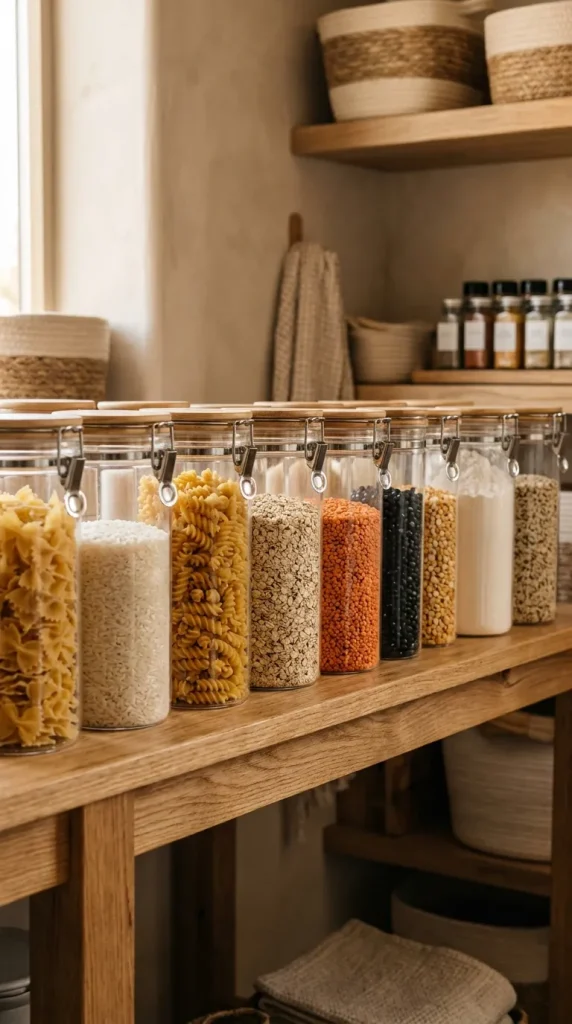
Dry goods in their original packaging take up inconsistent space, tip over, and make it impossible to see at a glance how much is left. Transferring rice, pasta, lentils, flour, oats, and similar staples into uniform clear canisters with airtight lids changes the whole feel of a pantry shelf. Every container is the same height and width, so they stack or line up without wasted gaps.
The practical bonus is that you can see the level of each ingredient without opening anything, which makes grocery shopping faster and waste less common.
Half-open bags of pasta and rice taking up three times their actual volume and falling over constantly.
Matching clear canisters lined up in a row, every ingredient visible and the shelf looking clean between grocery shops.
14. Mount Floating Shelves in a Narrow Kitchen Gap
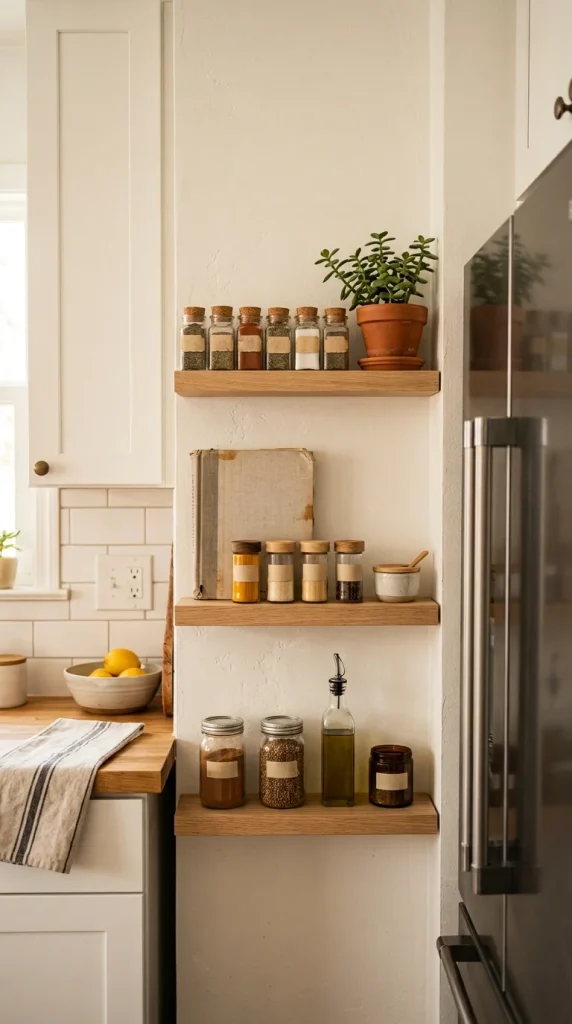
Narrow gaps between appliances, beside the fridge, or at the end of a cabinet run are easy to overlook. A set of slim floating shelves fitted into that space adds real storage without requiring a renovation.
The shelves can hold cookbooks, a small collection of spice jars, a fruit bowl, or a row of oils and vinegars that would otherwise sit on the counter.
Aim for shelves no deeper than 6 to 8 inches in a narrow gap so items stay visible and reachable rather than getting buried.
Shallow shelves in a tight gap hold more than you expect and keep everything at arm’s reach without adding bulk to the kitchen.
15. Install a Lazy Susan in a Deep Corner Cabinet
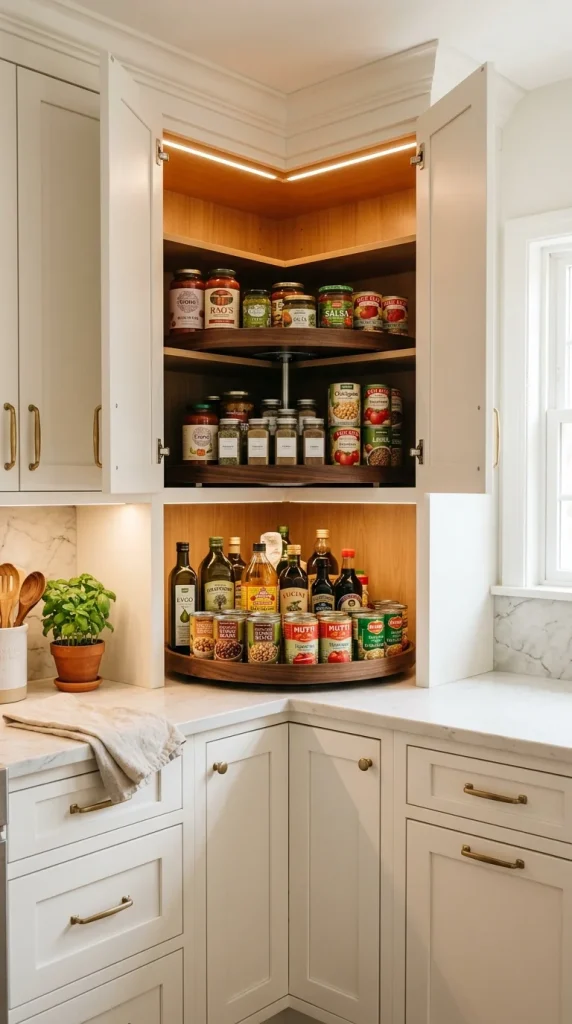
Deep corner cabinets swallow things whole. A lazy Susan turntable fitted inside spins the entire contents toward you so nothing stays permanently buried at the back. One full rotation brings every jar, bottle, and container into view and within reach without pulling anything out first.
Use one tier for oils and sauces, a second for canned goods, and keep the front section of each tier for the items you grab most often. The turntable does the work.
16. Add a Slim Rolling Cart Between the Fridge and Wall
The gap beside a fridge is almost always exactly wide enough to be useless for anything except dust. A slim rolling cart sized to fit that gap turns it into a full extra column of pantry storage. Pull it out when you need something, slide it back flush when you don’t.
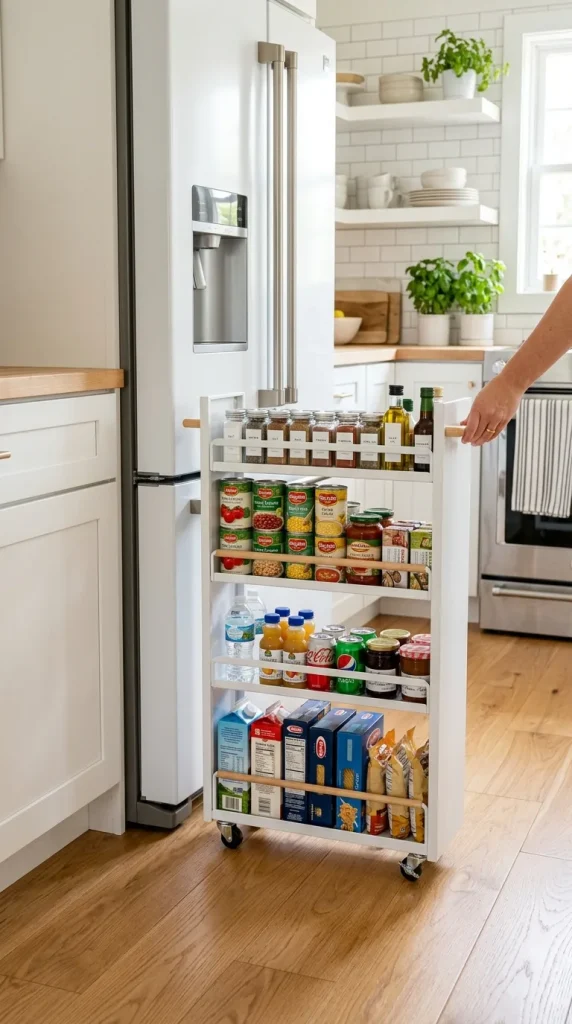
Narrow carts with multiple tiers work best for canned goods, bottled drinks, snack packets, and overflow pantry items that don’t fit on the main shelves. The rolling base means you access everything from the front rather than reaching into a fixed gap.
17. Hang a Wall-Mounted Fruit and Vegetable Basket

A bowl of fruit on the counter is fine until it takes up the one spot you need for prep.
Wall-mounted tiered wire or woven baskets hold fruit, onions, garlic, and root vegetables off the counter entirely while keeping them in the open air they need to stay fresh. Three stacked tiers handle more produce than most countertop bowls and take up zero counter space.
Mount it on a wall near a window if possible since natural light and airflow keep produce fresher longer.
18. Use a Drawer Dedicated Entirely to Wraps, Foils, and Bag Storage
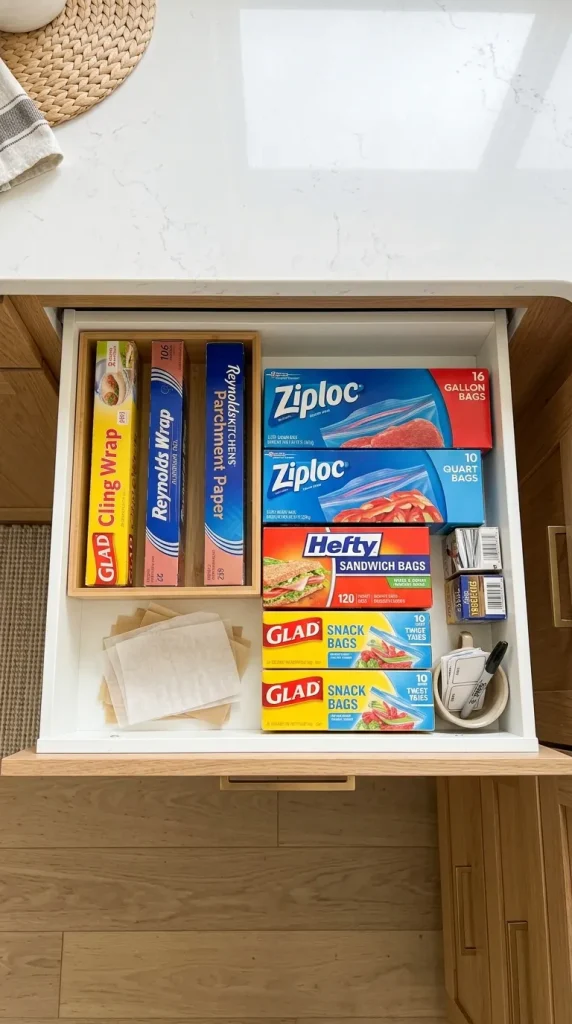
Plastic wrap, foil, parchment paper, zip bags, and sandwich bags are a mess in any cabinet. They fall sideways, unroll, and multiply until no one can find what they need.
One shallow drawer dedicated entirely to these items, with each roll and box standing on its end or laid flat in a single layer, solves the problem completely.
A simple divider bar across the middle of the drawer keeps rolls from sliding into box territory. The whole system resets in under a minute after grocery day.
19. Label Pantry Zones With Simple Tags
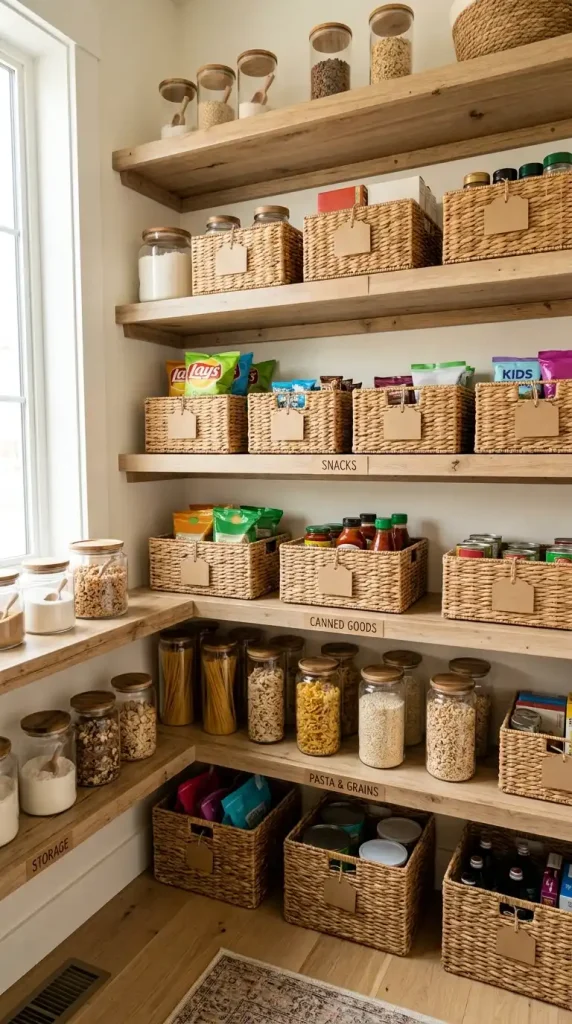
A well-organized kitchen pantry only stays that way if everyone who uses it understands where things go. Simple labels on shelves, baskets, and zones do most of the work.
When the snack basket is labeled, snacks go in the snack basket. When the baking shelf is marked, flour and sugar land there after grocery shopping rather than wherever there’s a gap.
Labels don’t need to be elaborate. A label maker, handwritten kraft paper tags, or even a strip of washi tape with a written category is enough to keep a shared kitchen running smoothly.
20. Mount an Overhead Pot Rack Above the Island
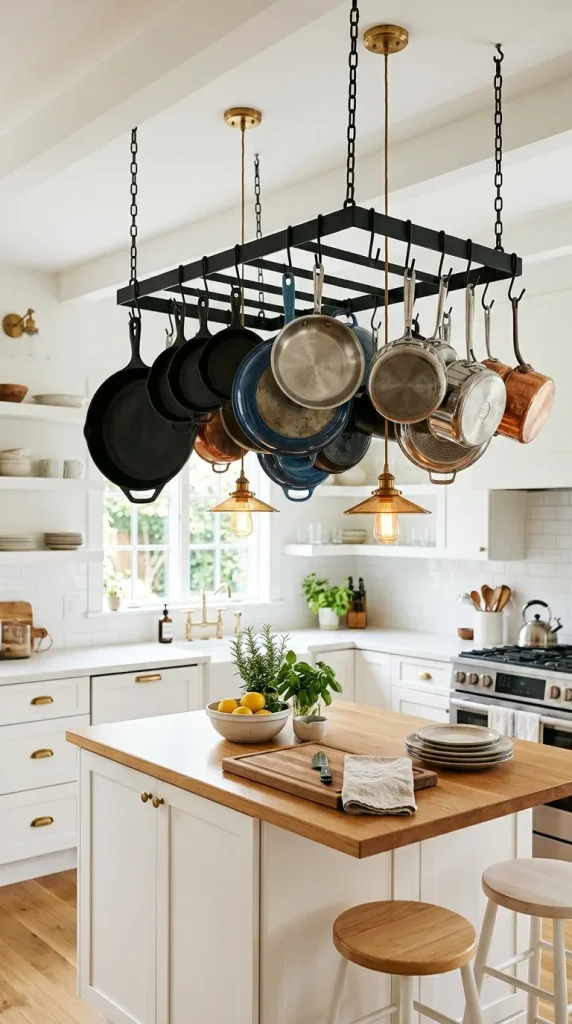
An island or peninsula with good ceiling height above it is the right spot for a hanging pot rack.
Pots and pans suspend from hooks on a ceiling-mounted rail or grid, keeping them completely off the counter and out of the cabinets. The rack becomes a visual feature in the kitchen rather than purely a storage solution.
Keep the most-used pans at the front and center where they’re easiest to grab. Hang lids separately on a wall-mounted lid rack nearby so they don’t clatter around on the hooks.
21. Fit a Spice Drawer Next to the Cooktop With Jars Lying Flat and Labels Facing Up
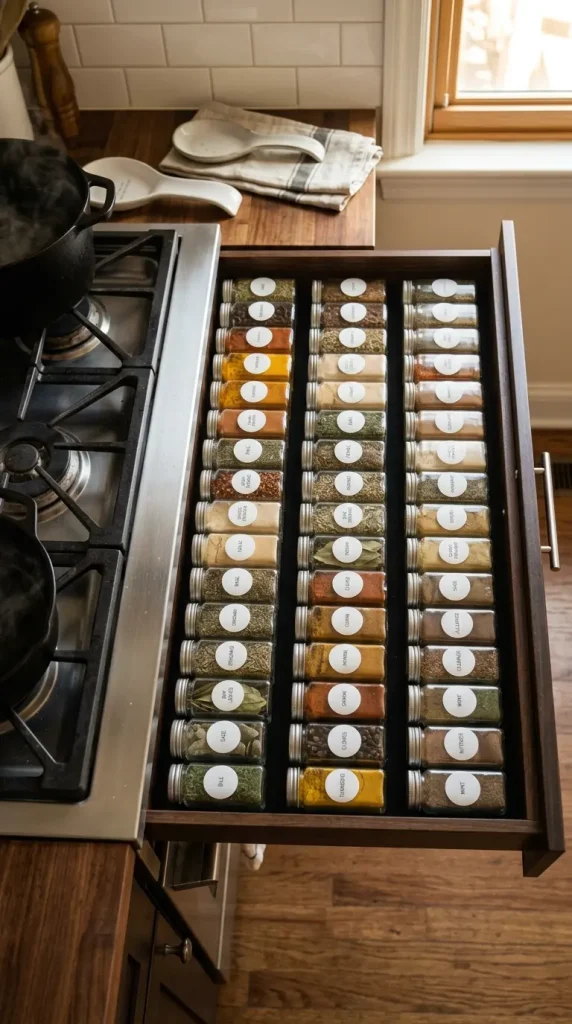
A dedicated spice drawer positioned right next to the cooktop is one of the most practical kitchen storage ideas for anyone who cooks from scratch.
Jars lie flat in a single layer with labels facing up so you read every name at a glance when the drawer opens. No picking up jars, no turning bottles around, no hunting through a crowded rack.
Arrange alphabetically or by cuisine style, whichever makes more sense for how you actually cook. Either way, reaching for cumin mid-recipe takes two seconds instead of twenty.
22. Store Pot Lids Vertically in a Narrow Cabinet

Pot lids are the most awkward thing to store in any kitchen. Stack them and they slide. Lean them and they fall. A tension rod or two stretched vertically inside a narrow cabinet creates a simple divider that holds each lid upright in its own slot. Pull the lid you need without touching any of the others.
This works inside a standard base cabinet, a tall narrow cabinet beside the oven, or even the inside of a lower cabinet door fitted with a rail. No drilling required for the tension rod version.
23. Use Tiered Shelf Risers Inside Cabinets
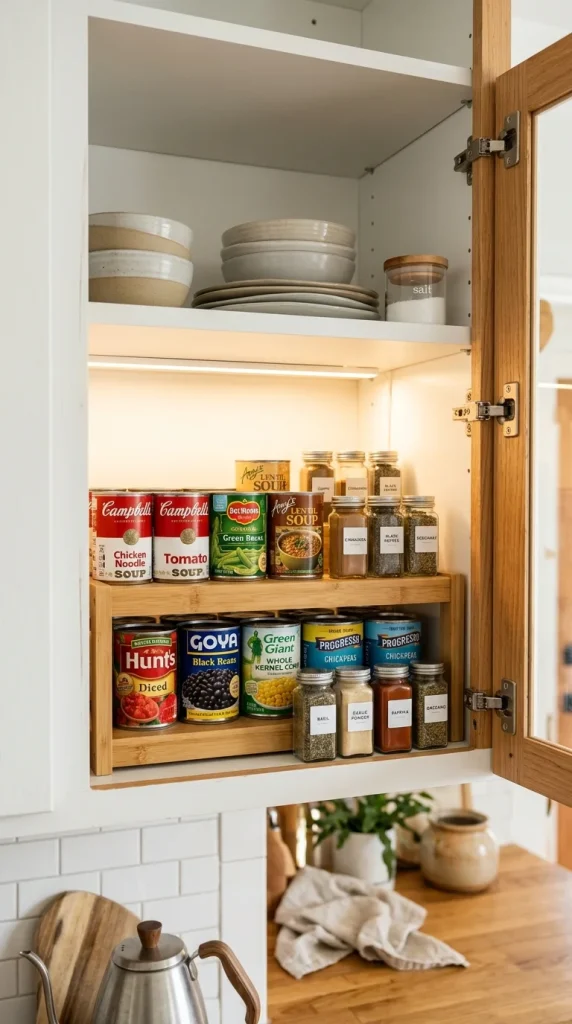
A single flat shelf inside a cabinet hides everything behind the front row.
A tiered riser placed on that shelf lifts the back row up so both rows are visible at once. This works especially well for canned goods, small jars, spice bottles, and mugs. The items at the back are suddenly as easy to see and grab as the ones at the front.
Risers are inexpensive, require no installation, and move easily between cabinets when the layout changes.
24. Create a Baking Zone Drawer
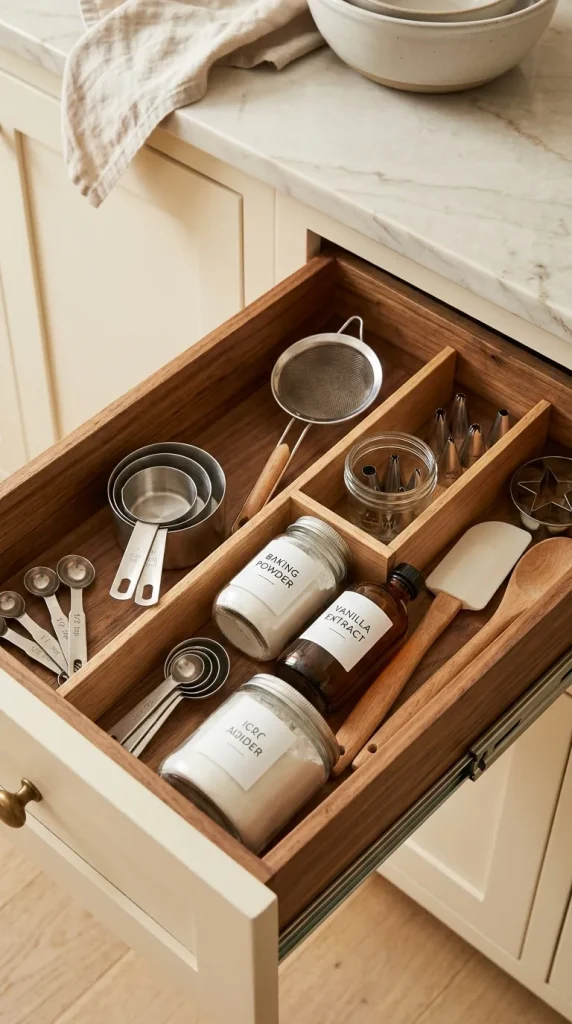
Gathering baking supplies from four different cabinets and two drawers before you even start is one of those small frustrations that adds up.
One deep drawer dedicated to baking essentials keeps measuring cups, spoons, a sifter, vanilla, baking powder, food coloring, and small tools all in one spot. Open the drawer, take out what you need, and get started.
The drawer works best positioned near the oven or beside the counter where you actually bake, so the whole workflow stays in one area of the kitchen.
Frequently Asked Questions
What is the best kitchen storage idea for a small kitchen?
The biggest wins in a small kitchen come from using vertical space and hidden surfaces. Open shelving above the counter, pull-out slim drawers in cabinet gaps, cabinet door organizers, and wall-mounted magnetic knife strips all add storage without taking up any floor space. A rolling slim cart beside the fridge is another small kitchen move that delivers a surprising amount of extra room.
How do I organize a kitchen with very little cabinet space?
Start by moving things out of cabinets that don’t need to be there. Pots and pans can hang on a pegboard or overhead rack. Knives go on a magnetic strip. Dry goods transfer to clear canisters on open shelves. Once the cabinets hold only what genuinely belongs inside them, the space stretches much further than it seemed.
What should go in deep kitchen drawers?
Deep drawers are best used for dishes, bowls, and pots rather than upper cabinet storage. Plates and bowls stored flat in a deep drawer are easier to access and faster to unload from the dishwasher than items stacked in an upper cabinet. You can also use deep drawers for folded dish towels, larger cooking tools, or pantry staples in a kitchen without a dedicated pantry.
Conclusion
A kitchen that works well doesn’t happen by accident. It comes from small, deliberate decisions about where things live and how easy they are to put back.
Start with the area that frustrates you most, whether that’s a chaotic spice situation, a counter that’s never clear, or a pantry you avoid opening. Fix that one zone first, and the motivation to tackle the next one tends to follow naturally.
Save this list so you can come back to it one idea at a time.