Let me tell you what I have learned from helping three different people — my niece, my best friend’s teenage son, and myself, quietly, in a corner of my home office — create Harry Potter themed spaces.
The ones that look incredible have something in common. The ones that look like someone emptied a Hot Topic onto the walls have something in common too.
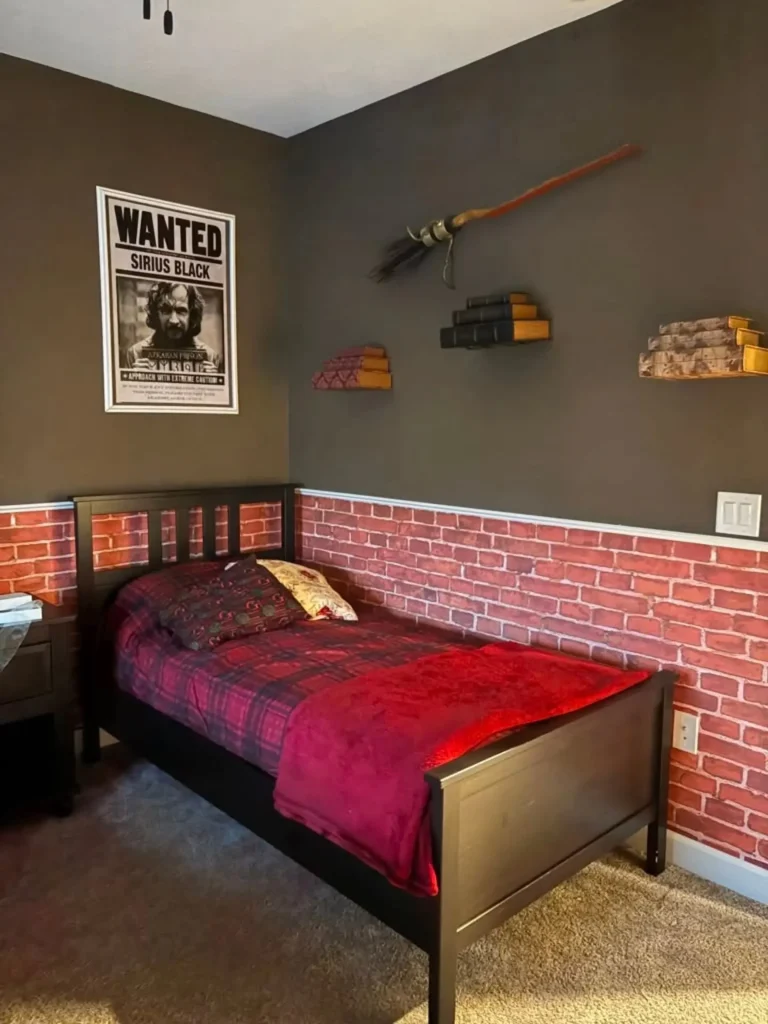
The difference is not how much you love Harry Potter. It is how you translate that love into a space that is genuinely beautiful rather than just enthusiastically themed.
This is the guide I wish I had before I bought seventeen things off Amazon that are now in a drawer.
The Most Important Thing Before You Buy Anything
Here is the question that determines everything else: are you decorating for a child, a teenager, or an adult?
This sounds obvious but most Harry Potter decor guides treat all three audiences as if they want the same thing. They do not.
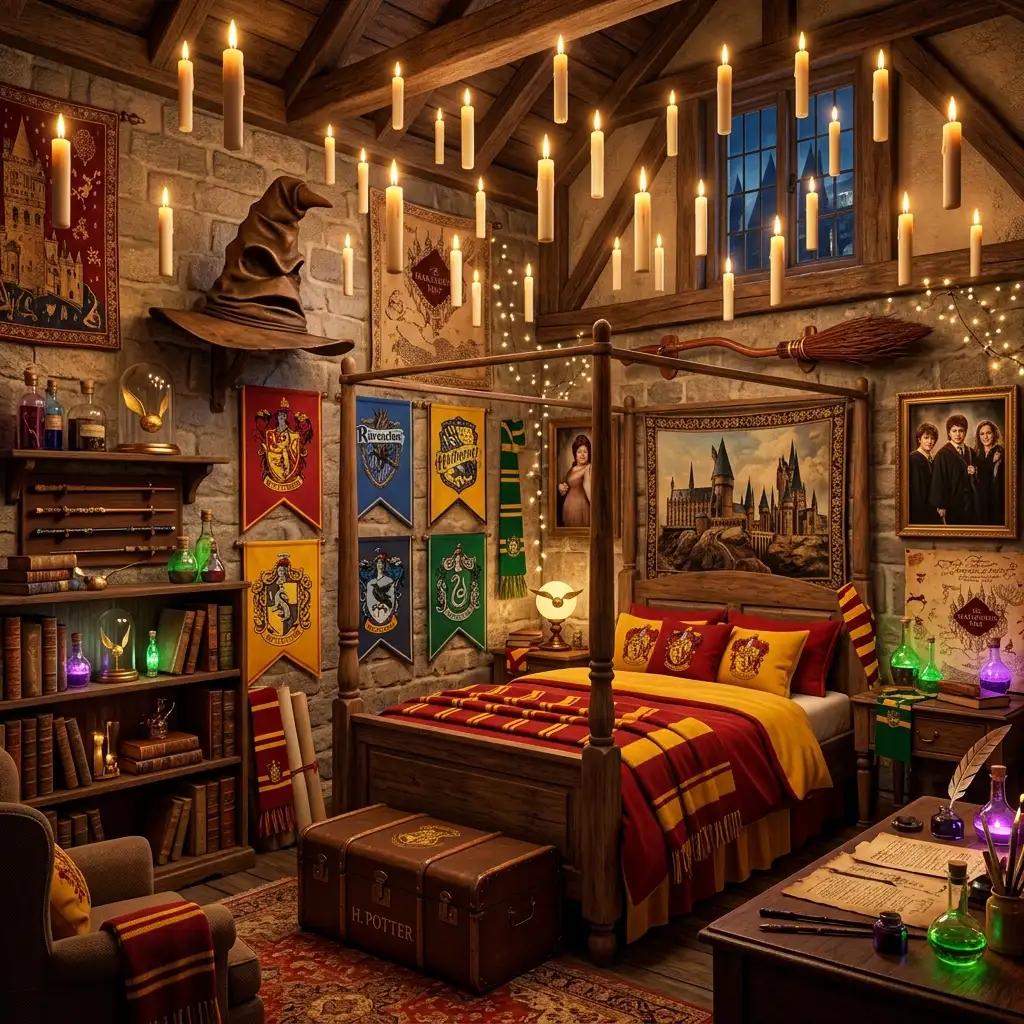
A seven-year-old who loves Harry Potter wants the magic to be visible and immediate and recognizable. Floating candles, house colors everywhere, maybe a sorting hat on the wall. The wonder of the world is the point.
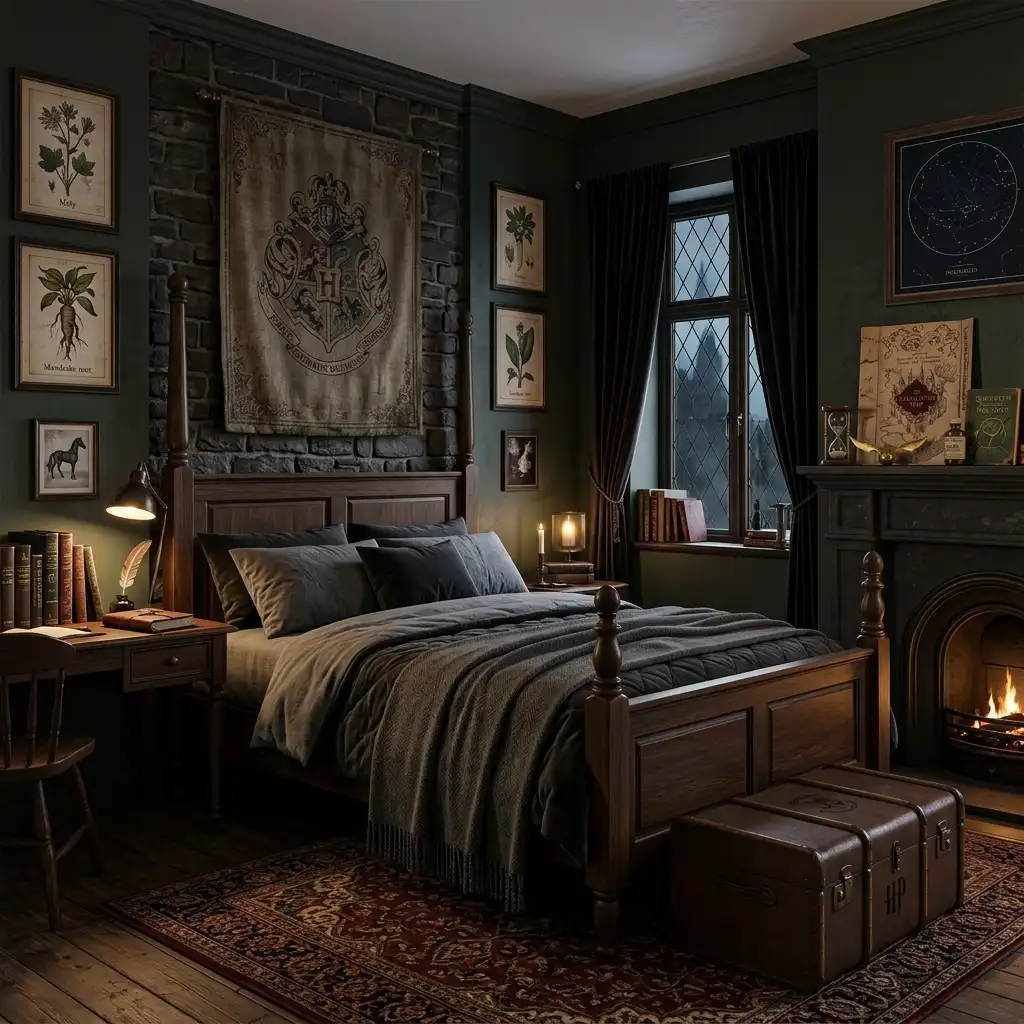
A fourteen-year-old who loves Harry Potter wants the references to be there but wants the room to feel cool and not childish. Dark Hogwarts aesthetic, moodier colors, the kind of references that only someone who has read the books three times would catch. Sophistication matters. You’ll also love to see teen bedroom ideas for better upgrade.
An adult who loves Harry Potter — and there are a lot of us, we are just quiet about it — wants something that reads as beautiful and considered before it reads as themed. The decor tells the story for those who know it without announcing itself loudly to those who do not. A leather-bound book with a wax seal sits on the shelf. A brass telescope catches the light. The label on the tea tin is from Honeydukes. You see it if you know it.
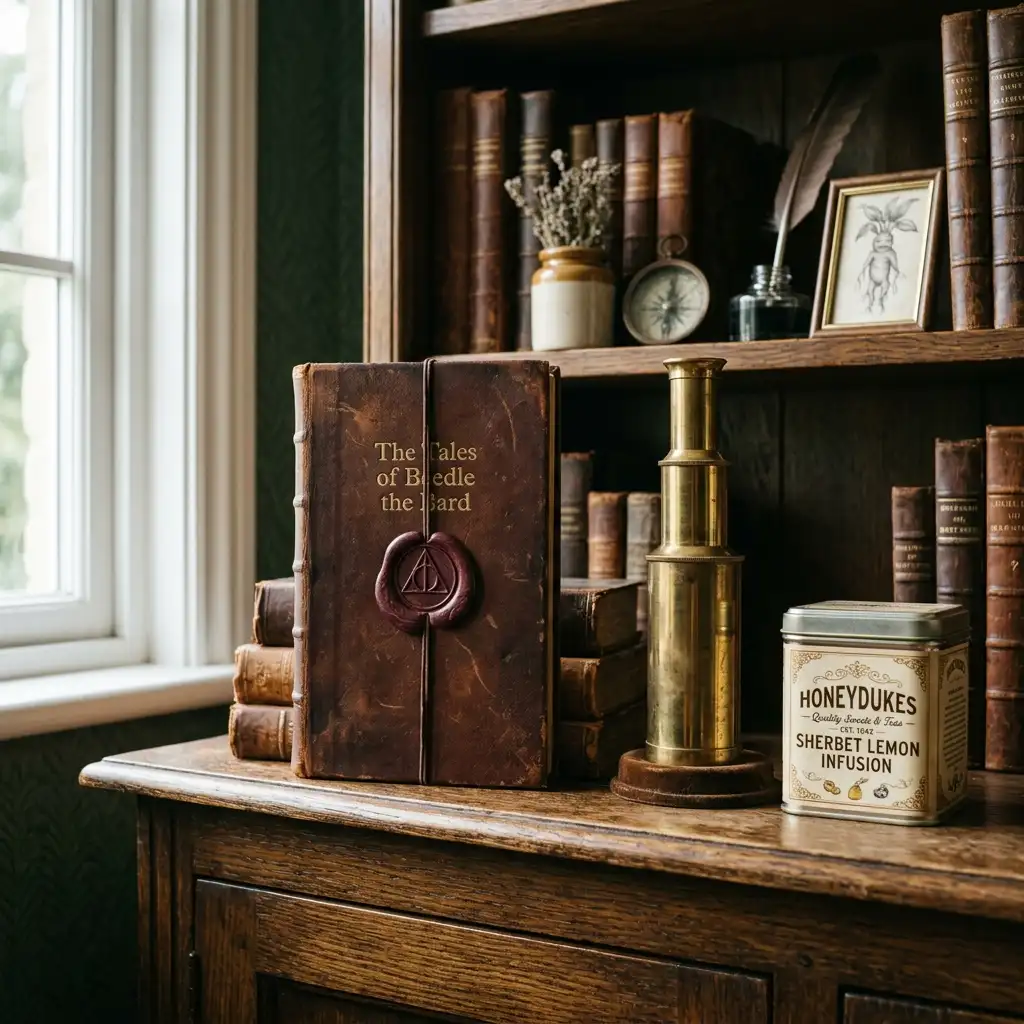
Know which version you are creating before you buy a single thing. It genuinely changes every decision.
The Color Palette Question
Most people default to their Hogwarts house colors and stop there. Which is fine. But worth thinking through a little more than that.
If you are going full Hogwarts house:
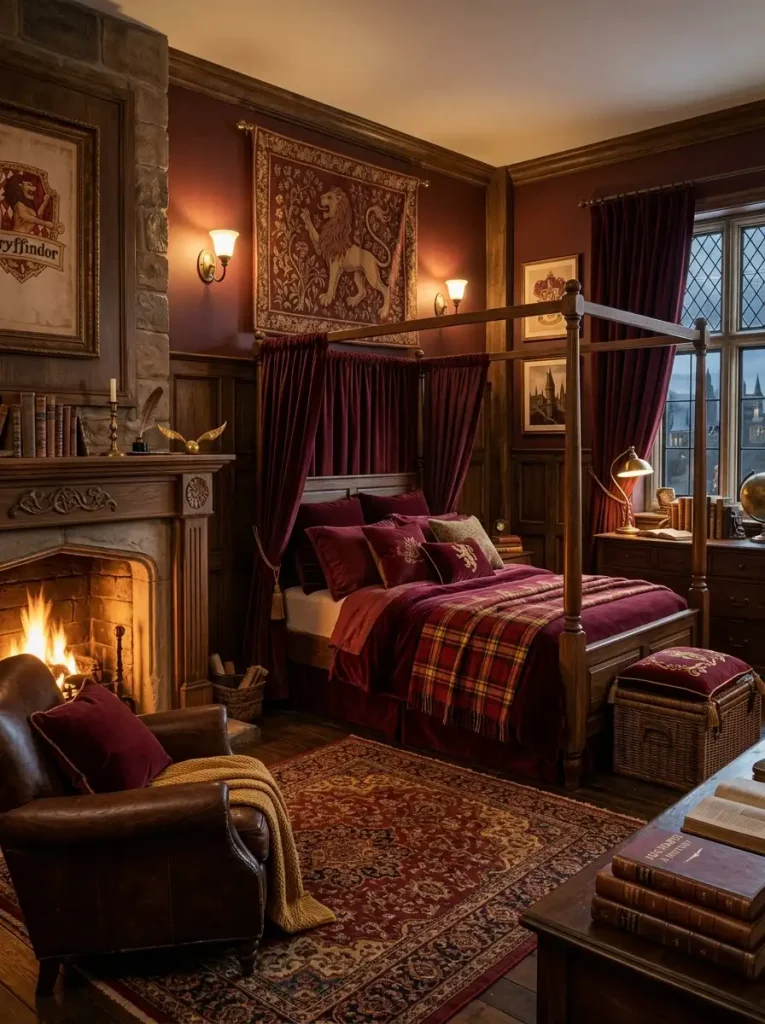
Gryffindor — scarlet and gold — is warm and rich and actually quite beautiful as a room palette when treated with some restraint. Think burgundy and gold rather than fire-engine red and bright yellow. Think velvet textures and warm wooden furniture. The common room vibe rather than the Gryffindor banner vibe.
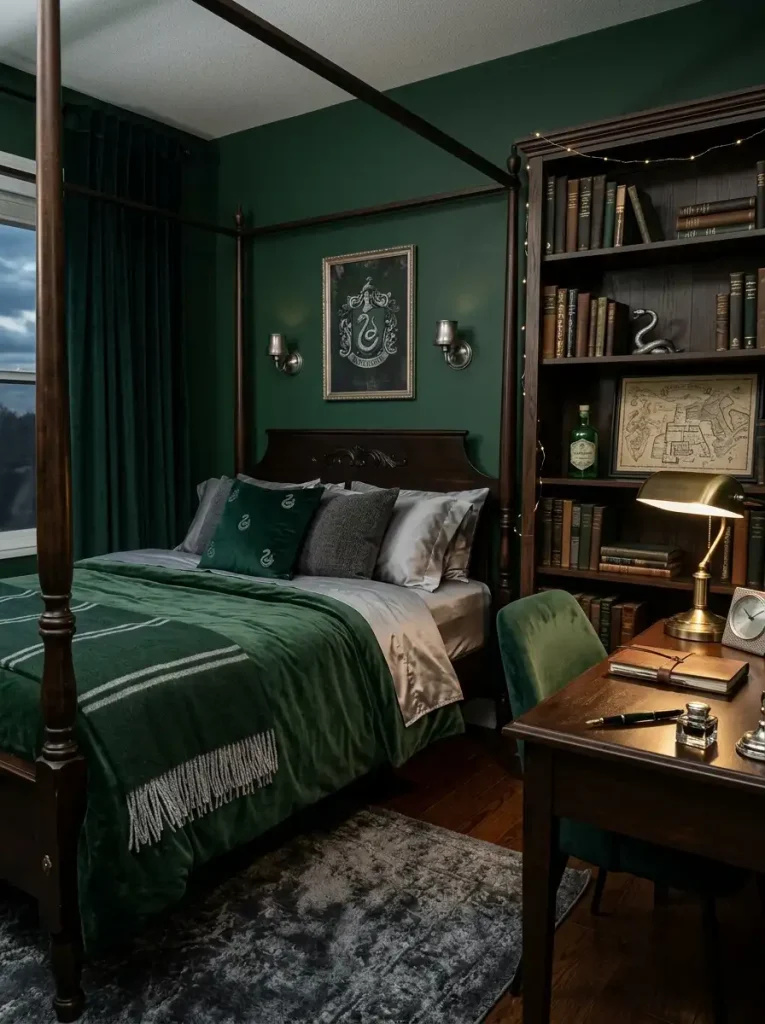
Slytherin — green and silver — might be the most genuinely beautiful house palette to work with in a room. Emerald and dark green are incredibly sophisticated interior design colors right now. Silver accents, dark wood, moody atmospheric lighting. A Slytherin room can look like something out of an expensive interior design magazine without announcing that it is a Harry Potter room at all.
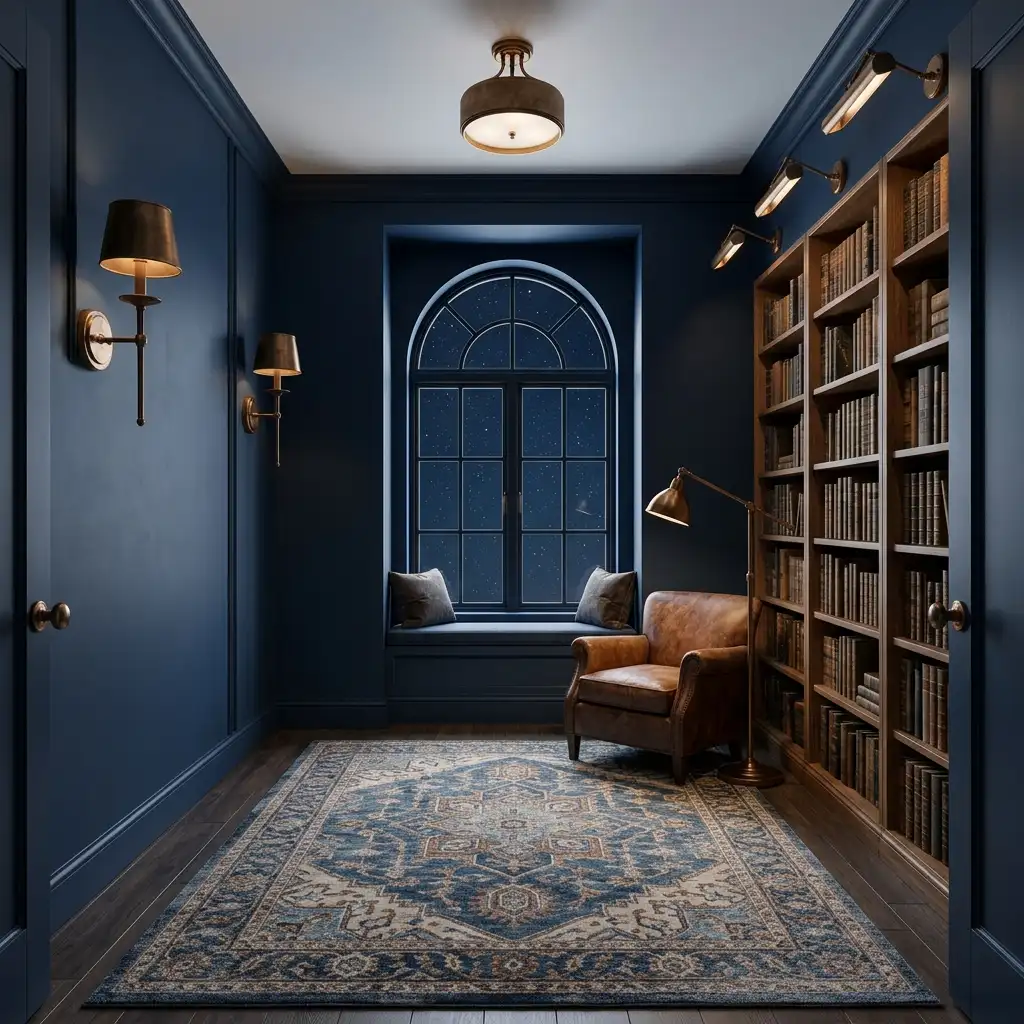
Ravenclaw — blue and bronze — is underrated as a room palette. Navy and bronze is a genuinely lovely combination that reads as intelligent and considered. The Ravenclaw aesthetic — books everywhere, celestial motifs, a certain thoughtful elegance — translates beautifully into a real bedroom or study.
Hufflepuff — yellow and black — is the hardest to work with as a room palette if you are trying to avoid it looking aggressively themed. The key is to lean into the warmth and the coziness of Hufflepuff rather than the literal yellow and black. Think honey tones, natural textures, lots of plants, a warm and welcoming quality. The essence of Hufflepuff rather than the literal colors.
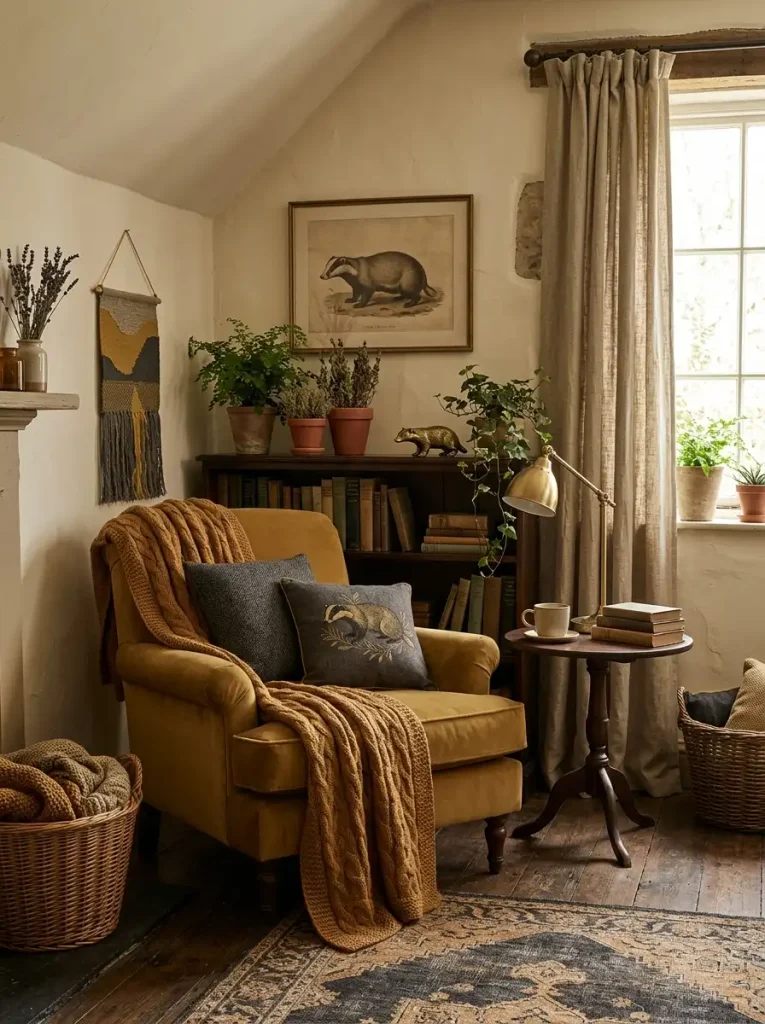
If you want a broader Hogwarts aesthetic without committing to a single house:
Deep burgundy, warm gold, aged wood tones, and dark green work together to create a Hogwarts library aesthetic that is genuinely beautiful and not overwhelmingly branded. Think of the colors in old photographs of Hogwarts interiors — all dark wood, warm stone, candlelight, aged leather. That palette exists entirely in the real world and is simply lovely without reading as costume.
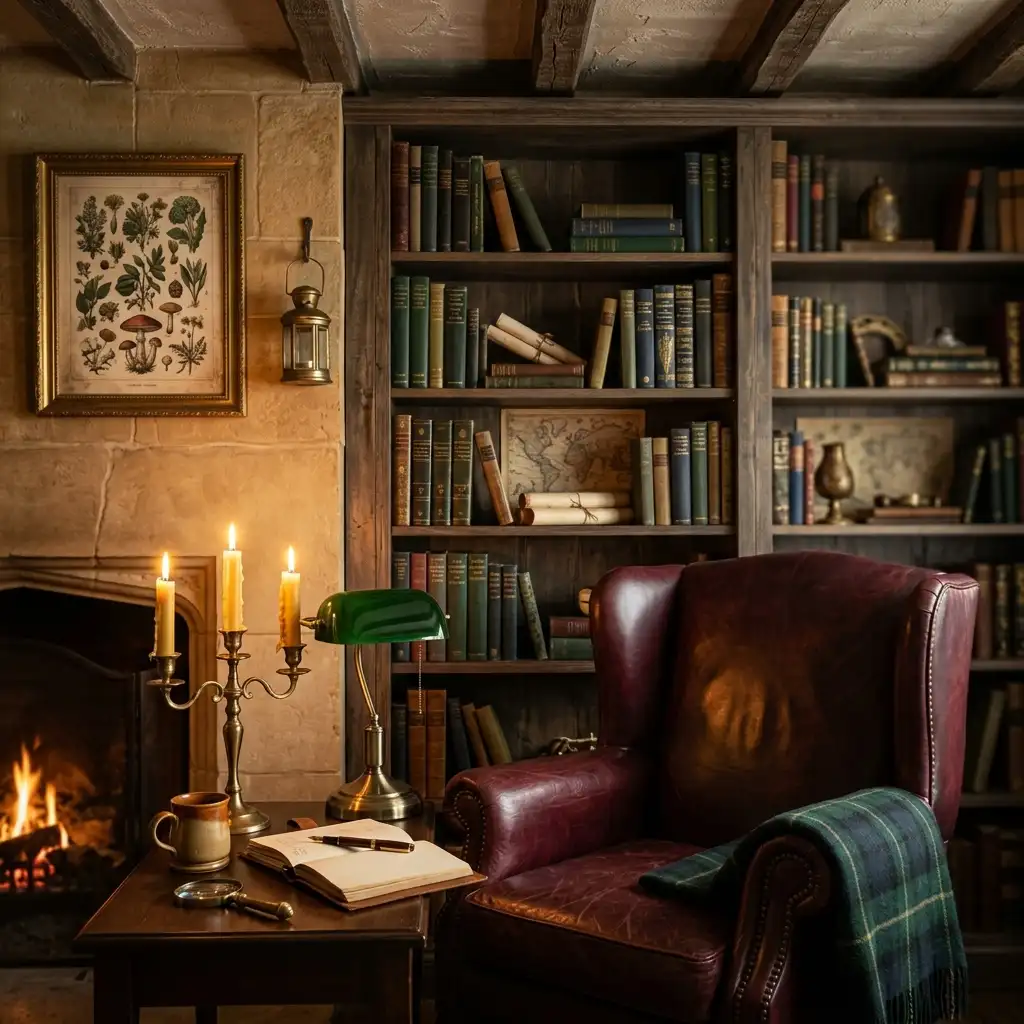
The Elements That Create the Magic Without Screaming Harry Potter
This is the heart of what separates a great Harry Potter room from a themed room that is exhausting to look at after an hour.
Books. Real ones.
I know this sounds like it goes without saying. But the number of Harry Potter rooms I have seen that have zero actual books in them is genuinely surprising. A room full of books IS the Hogwarts aesthetic. A shelf lined with actual beloved books — not just Harry Potter, any books you love — does more atmospheric work than almost any piece of purchased decor.
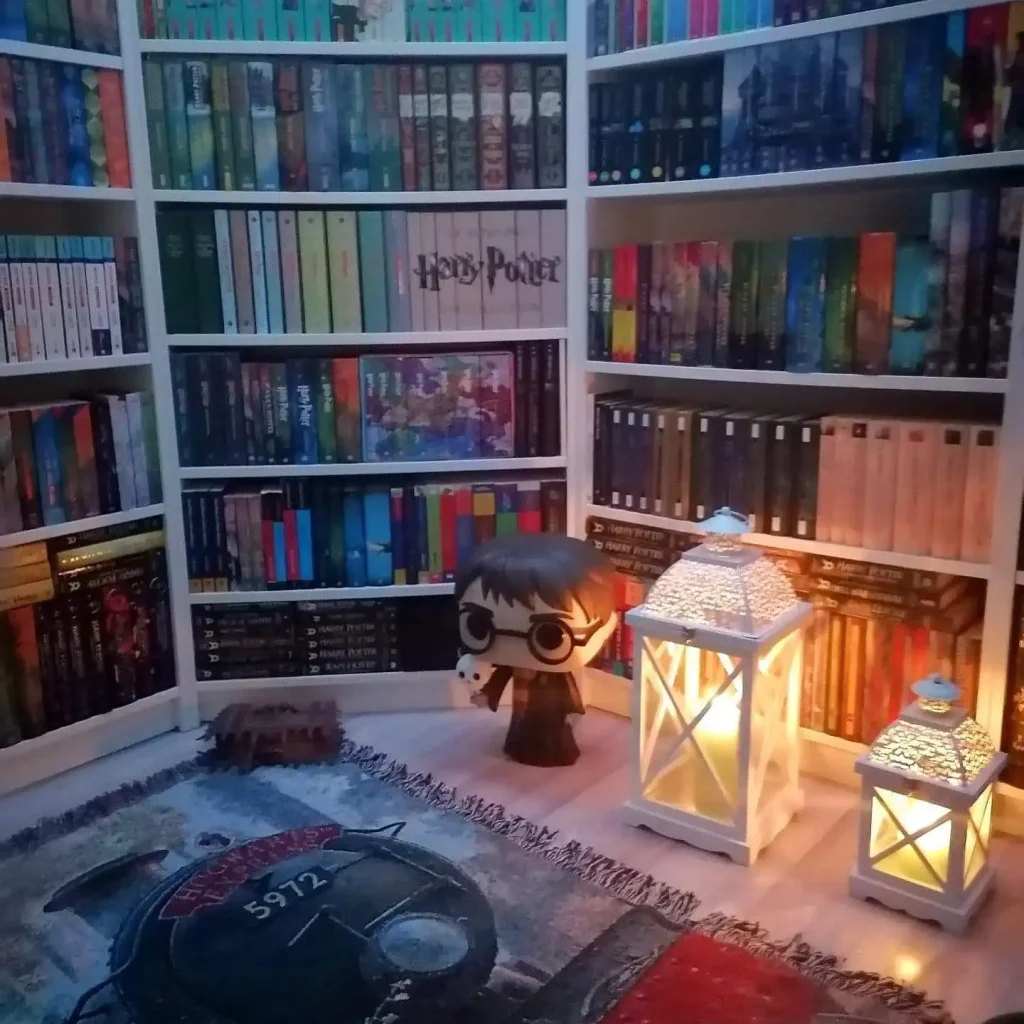
Display them thoughtfully. Mix in some leather-bound vintage books from thrift stores or estate sales. Face a few outward on a ledge rather than shelving all of them spine-out. A stack of books on a bedside table with a candle beside them is pure Hogwarts common room energy at essentially zero cost.
Candles and candlelight
The Great Hall. The common rooms. Dumbledore’s office. Every beloved Harry Potter interior is lit by candles. This is not a coincidence — candlelight creates the specific quality of warm, flickering, slightly magical atmosphere that defines the aesthetic of the wizarding world.
Real candles where safe and appropriate. Battery-operated ones that flicker where real ones are not sensible. Candle holders in brass and iron and aged silver. A candlestick that has dripped wax down the side and dried there. A lantern. A hurricane glass with a pillar candle inside.
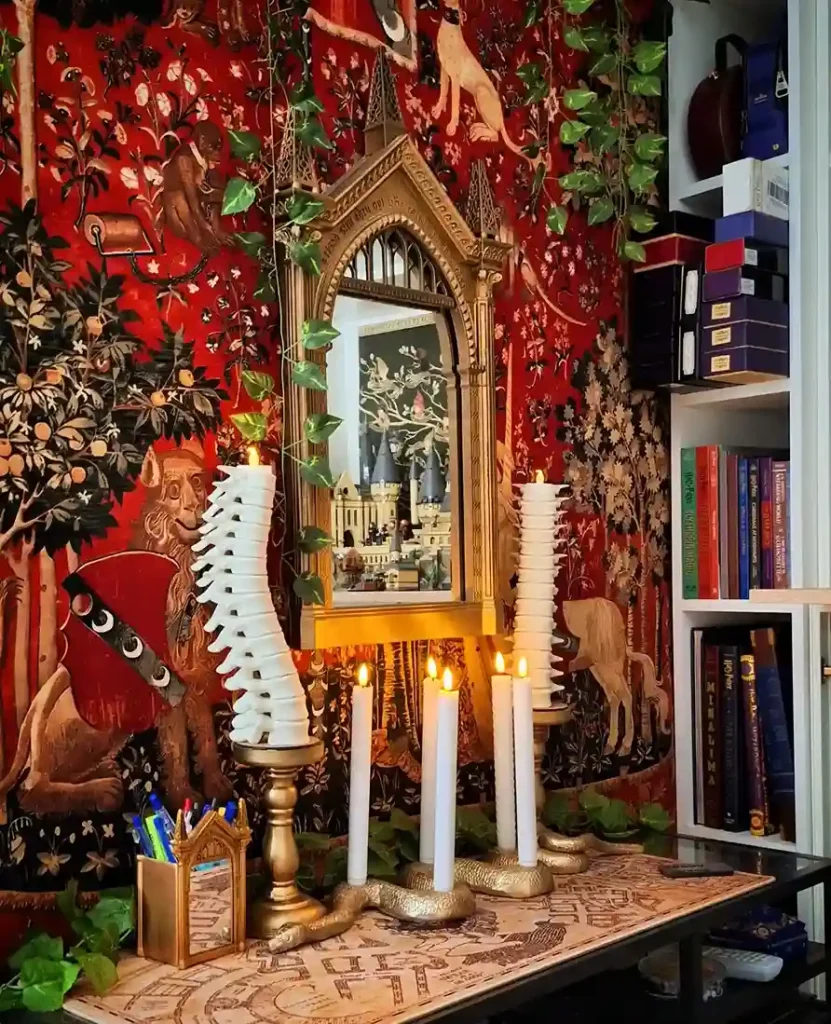
The goal is warm, amber, slightly flickering light. The opposite of bright white overhead LED lighting. If you can dim the primary light source and supplement with warm lamp and candle light in the evening, the room transforms.
Aged and antique things
The wizarding world is old. Centuries old. Hogwarts has been there for a thousand years. The decor that communicates this is not shiny and new — it is worn, patinated, slightly mysterious. A brass compass. An old pocket watch. A magnifying glass with a wooden handle. A glass bottle with a cork stopper. An inkwell. A quill pen in a holder.
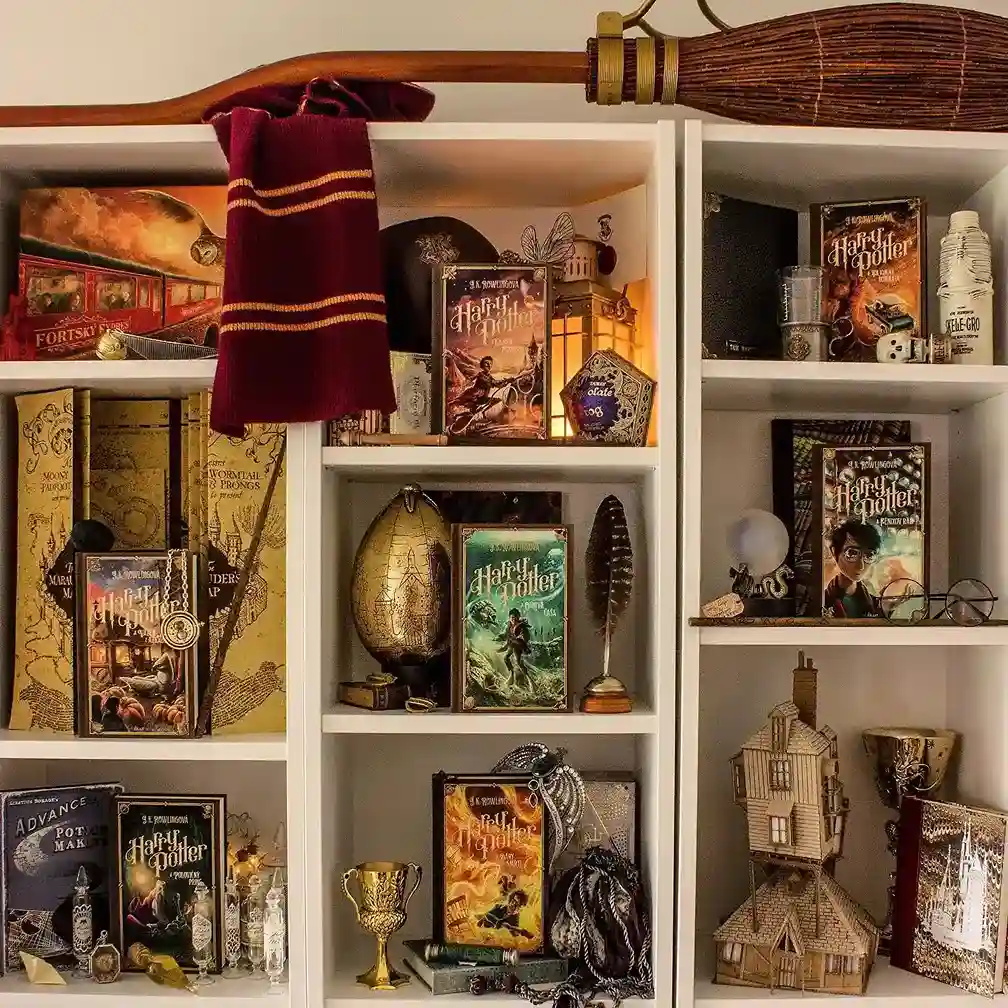
None of these things need to be Harry Potter branded. They just need to feel like they might belong in a wizard’s study.
Estate sales and thrift stores are genuinely magical for this category of object. Old science equipment. Vintage globes. Antique compasses and telescopes. Small leather-bound books with faded gilt titles. Glass specimen jars. None of these cost much and all of them do the atmospheric work beautifully.
Maps and celestial elements
The Marauder’s Map. Astronomy lessons. The ceiling of the Great Hall. Stars and maps and the cosmos are deeply woven into the Harry Potter world.
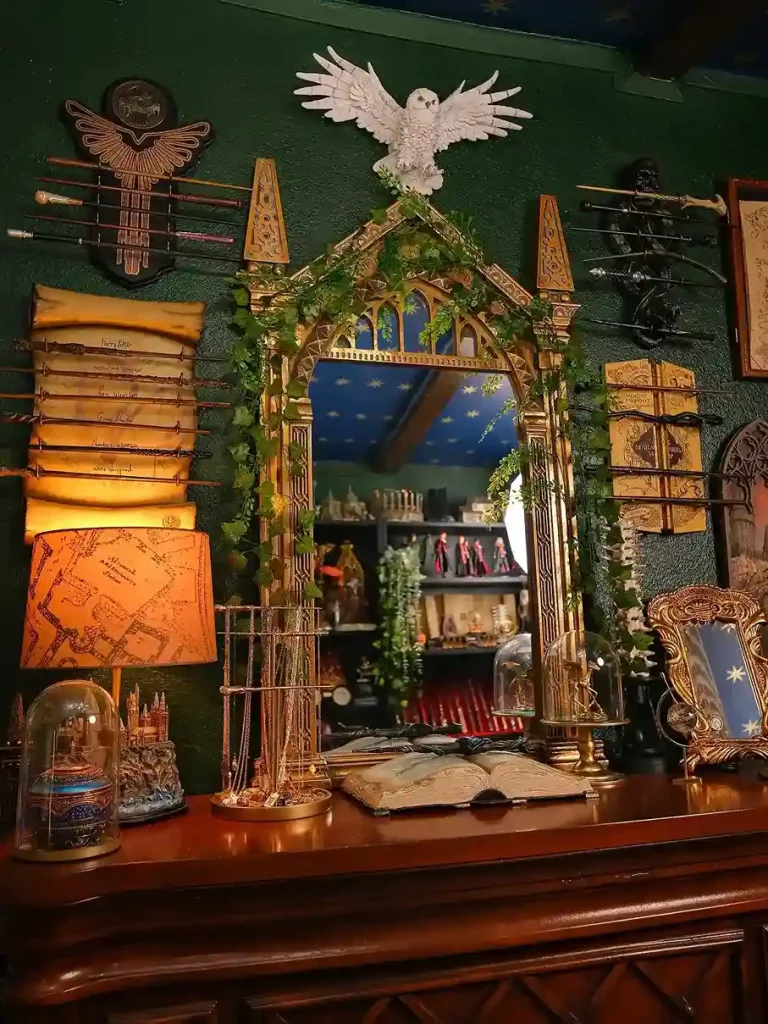
A large vintage-style world map. Star maps and constellation prints. A celestial globe. A lunar phase print. These feel elegant and sophisticated in any room and read as authentically Hogwarts to anyone who knows the world.
Owls, but tastefully
I say this gently: one owl is a beautiful reference. Five owls is a pattern. Ten owls is a theme park.
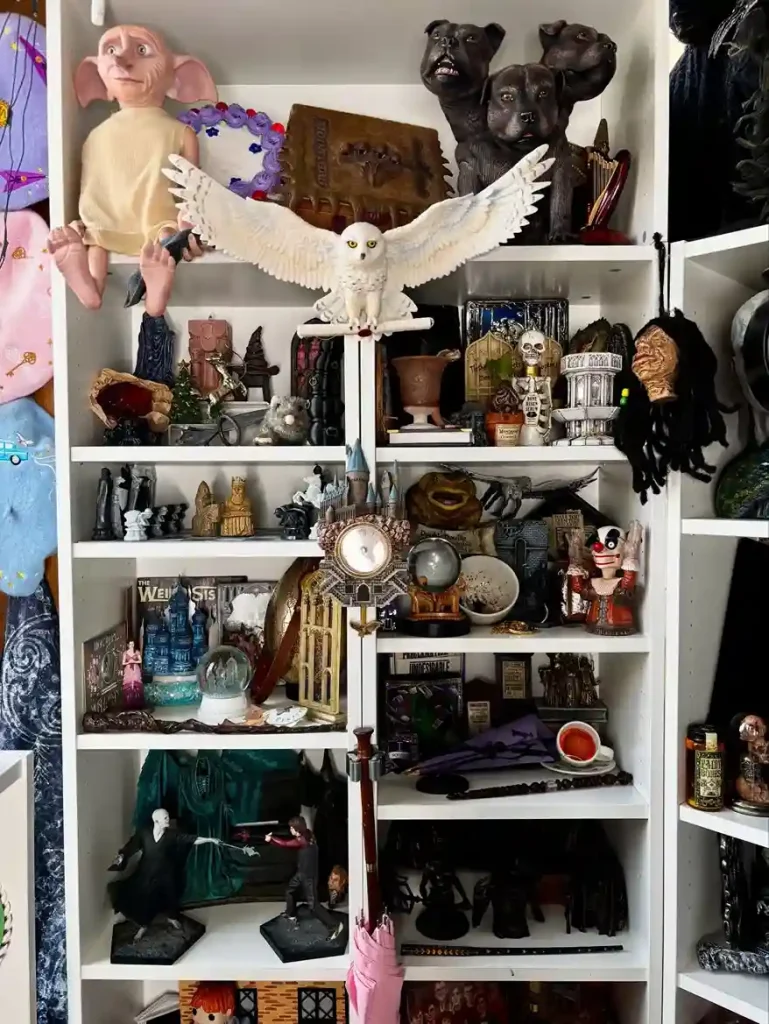
An owl illustration in a beautiful frame. A small ceramic owl on a shelf. An owl bookend. One. Maybe two. No more.
Room-by-Room: Making It Actually Work
The Bedroom
The bedroom is where most people attempt a Harry Potter room and where most go slightly wrong. Here is what actually works.
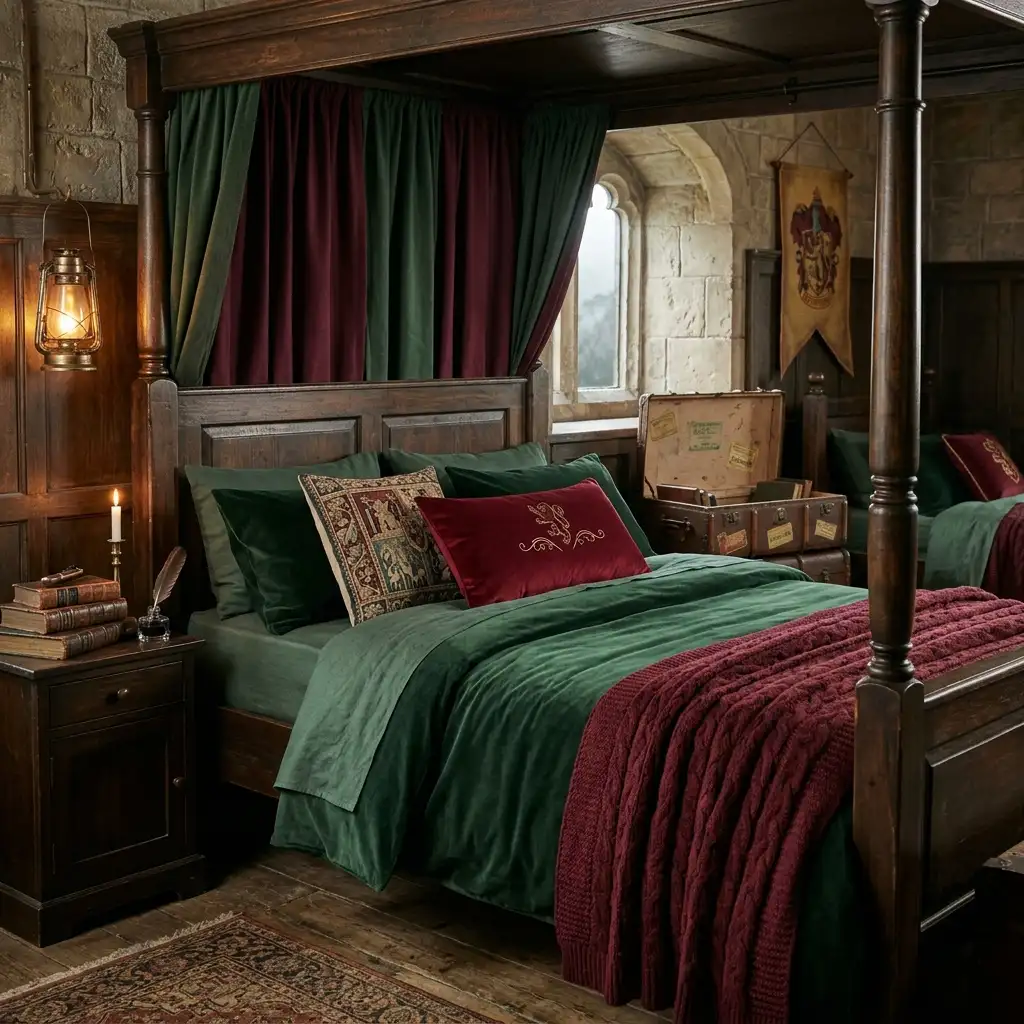
The bed is the anchor. A four-poster style bed — or any bed with a tall headboard — immediately evokes the Hogwarts dormitory aesthetic. If you already have a standard platform or divan bed, a canopy above the headboard using simple curtain panels achieves something similar. Deep-colored bedding in velvet or linen — burgundy, deep green, navy — feels right. Layering matters. Add a chunky throw at the foot in your house color. A tapestry-style throw pillow. A cushion with a subtle house crest rather than a giant branded logo.
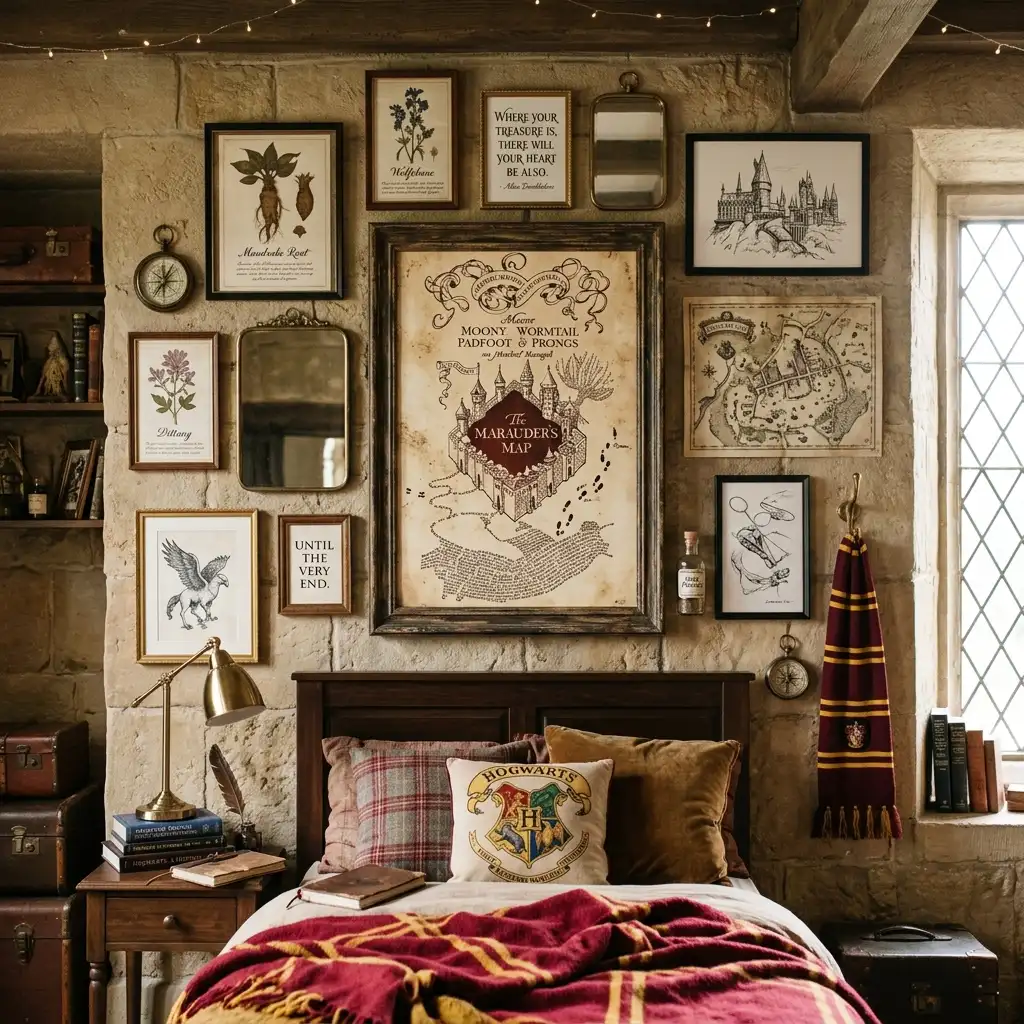
The wall behind the bed. Rather than covering it in posters, consider what a dormitory wall might actually have on it. A gallery arrangement of things the character who lives there loves — maps, illustrations, pressed botanical specimens, a small mirror in a dark frame, one or two framed quotes. Frame a Marauder’s Map print (there are beautiful ones available from independent artists that are not the licensed mass-market version) as the centerpiece of a gallery arrangement.
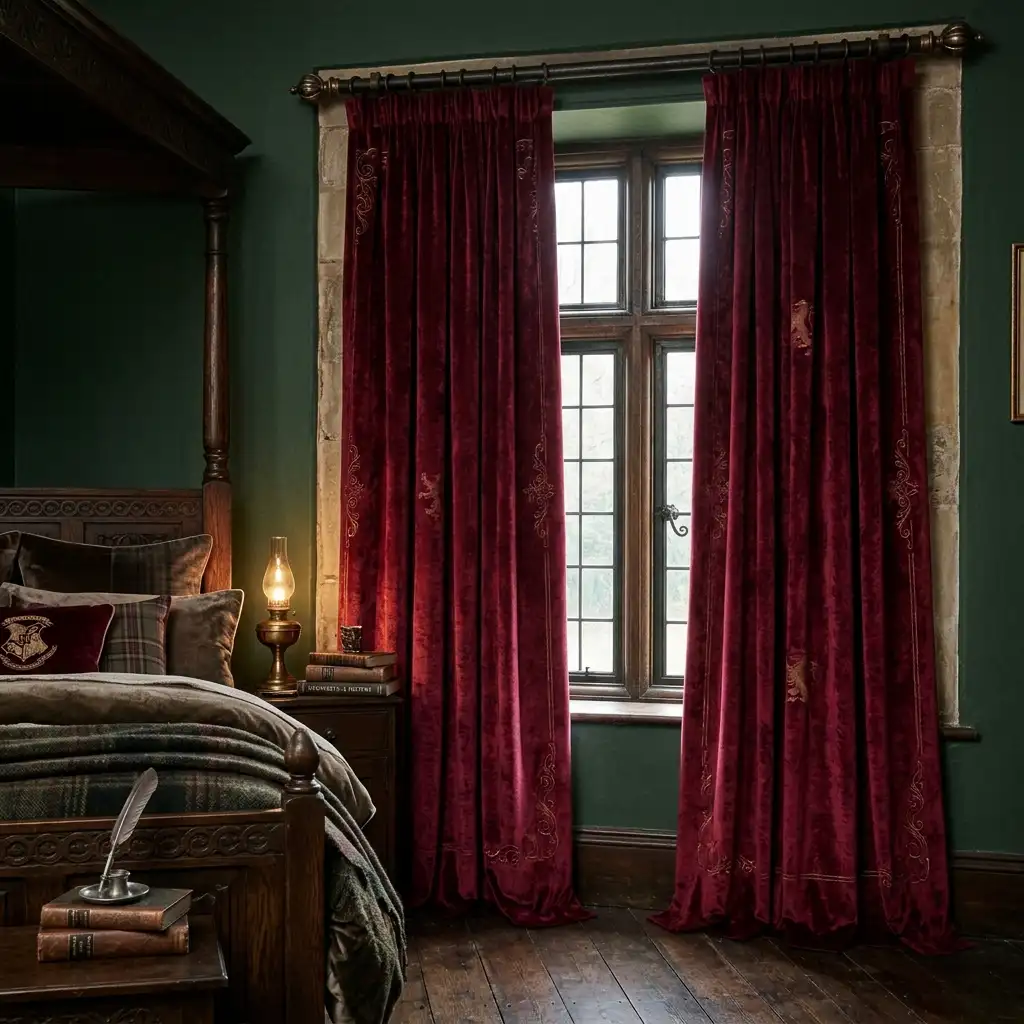
The curtains. Long curtains in a deep color — velvet if you can, linen if you cannot — do enormous atmospheric work in a bedroom. The heavier and more dramatic the better. This is not a room for sheer white curtains. This is a room for something that looks like it belongs in a castle.
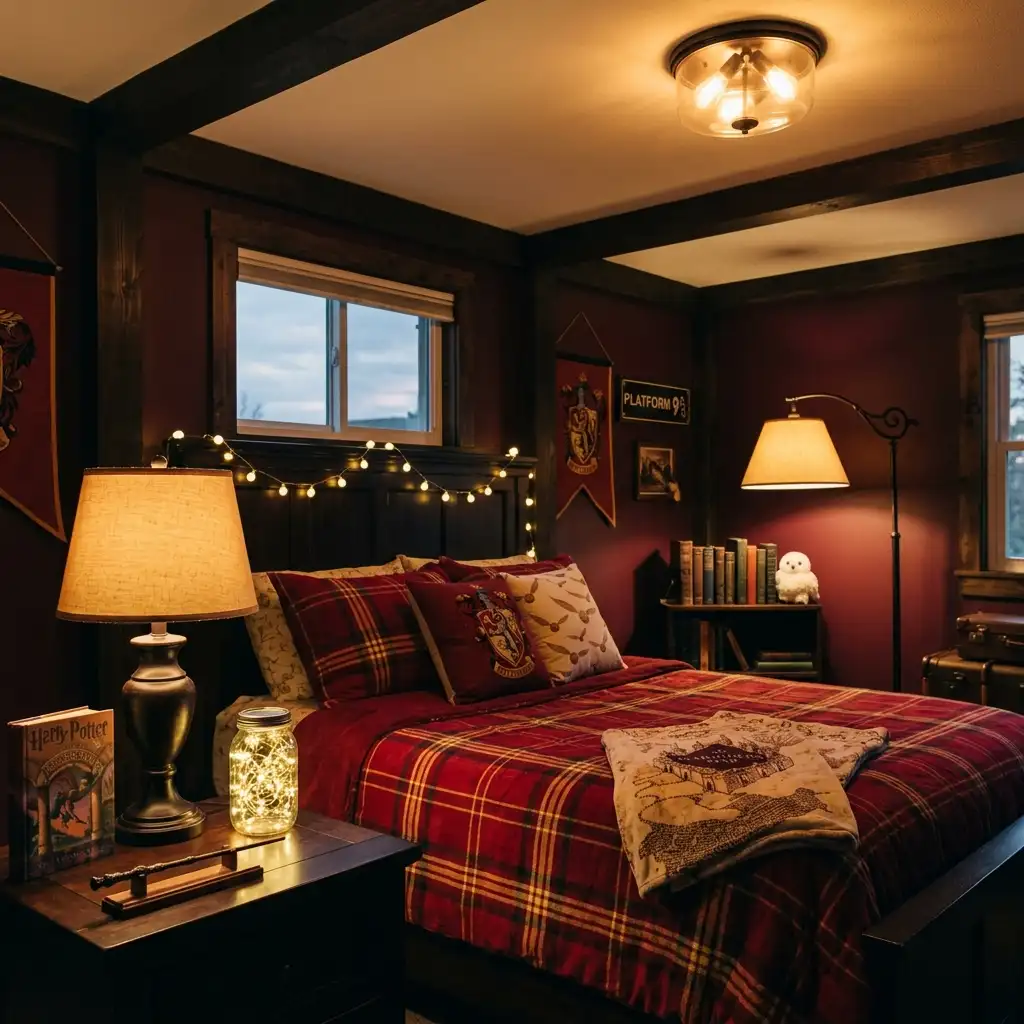
The lighting. Replace the overhead light with a warm bulb if you have not already. Add a bedside lamp with a warm tone. Consider a floor lamp in a dark finish with a warm fabric shade in one corner. Battery-operated fairy lights inside a glass jar on the bedside table costs almost nothing and looks genuinely magical.
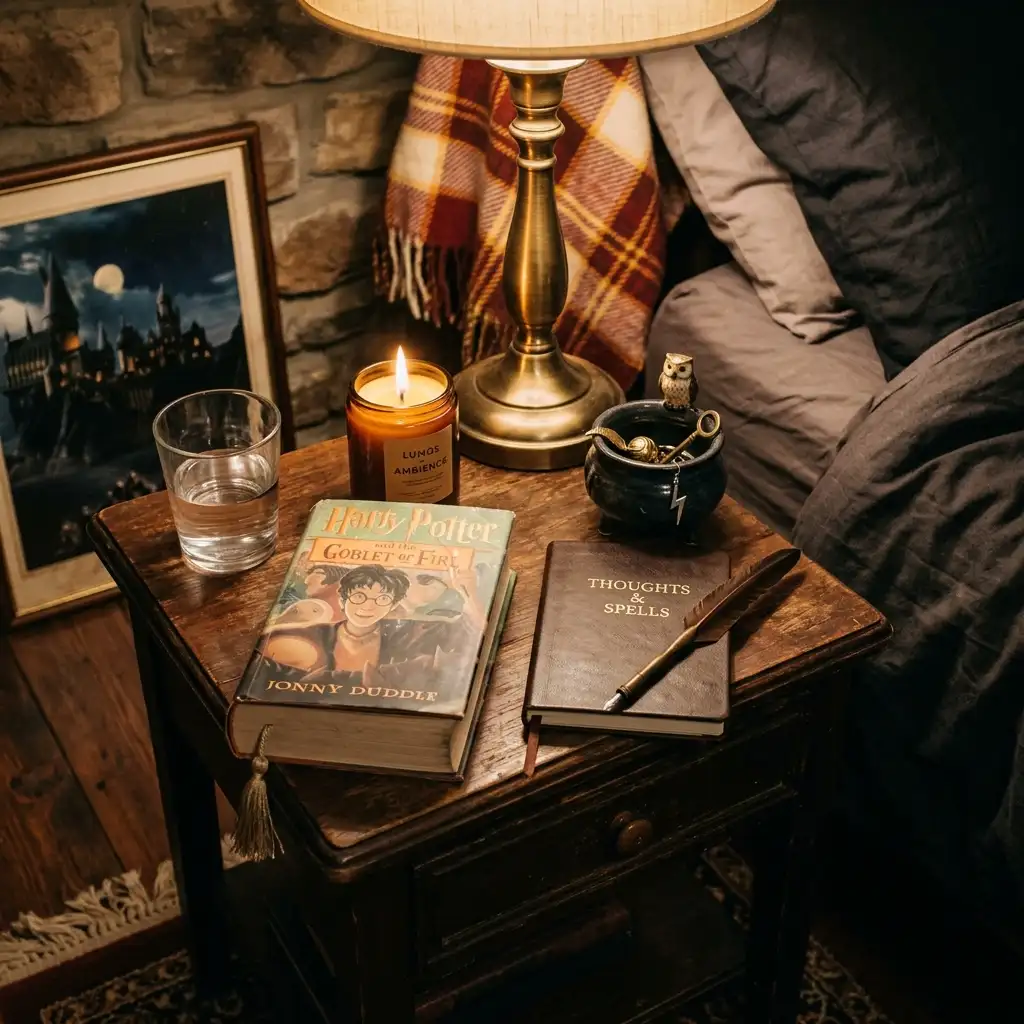
The nightstand or bedside table. This is where the small details live. A glass of water and a candle. The book you are currently reading. A small notebook for middle-of-the-night thoughts. Maybe a small ceramic object — an owl, a moon phase, a small cauldron as a catchall for rings and earrings. Keep it to four or five things maximum.
The Study or Home Office
This is where the adult Harry Potter aesthetic lives most comfortably. A wizarding study is one of the most achievable and most beautiful room aesthetics available precisely because it is built on things that are inherently beautiful: books, aged objects, warm lighting, natural materials.
The desk. If you can, choose a desk with some sense of age or weight to it — solid wood, dark finish, something that could plausibly belong in Dumbledore’s office. Keep the desk surface clear except for working essentials and one or two carefully chosen objects. An inkwell (even as pure decoration). A small wooden box for pens and pencils. A brass letter opener. A compass.
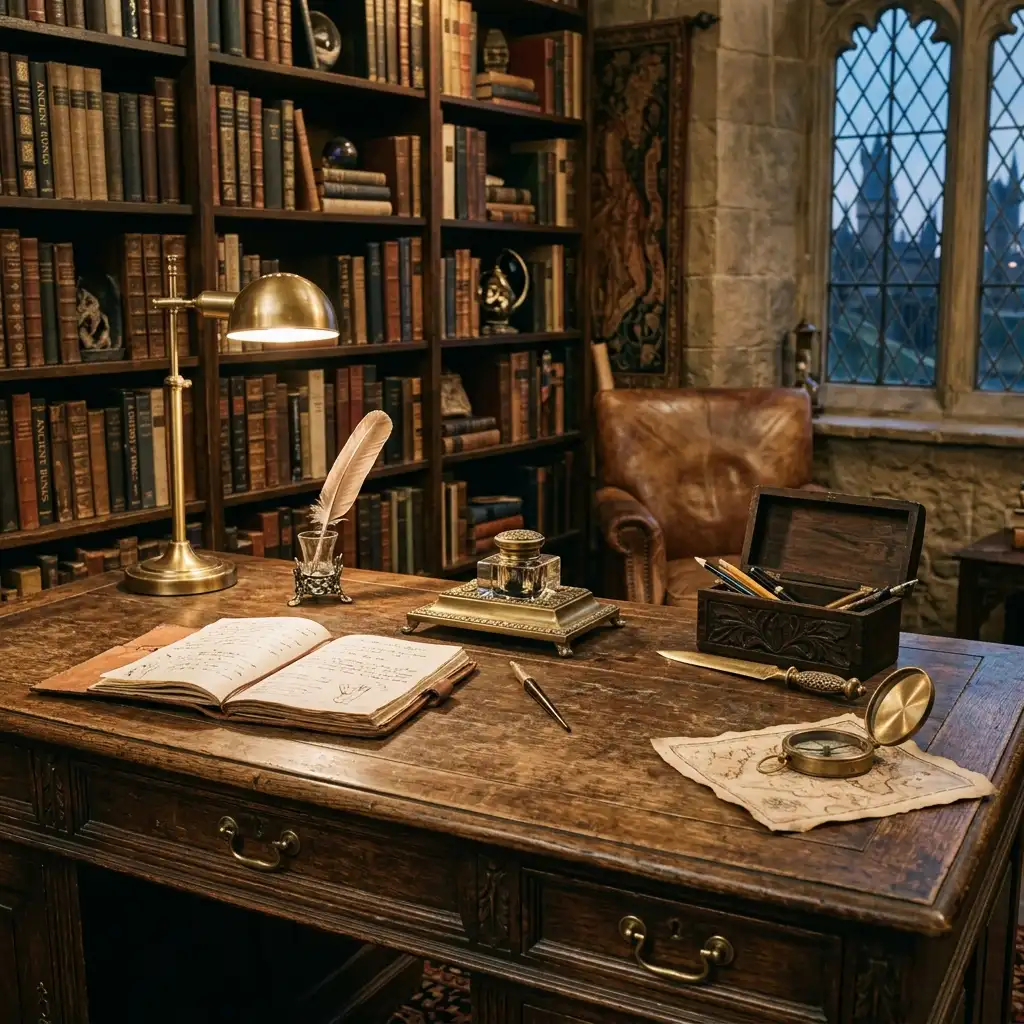
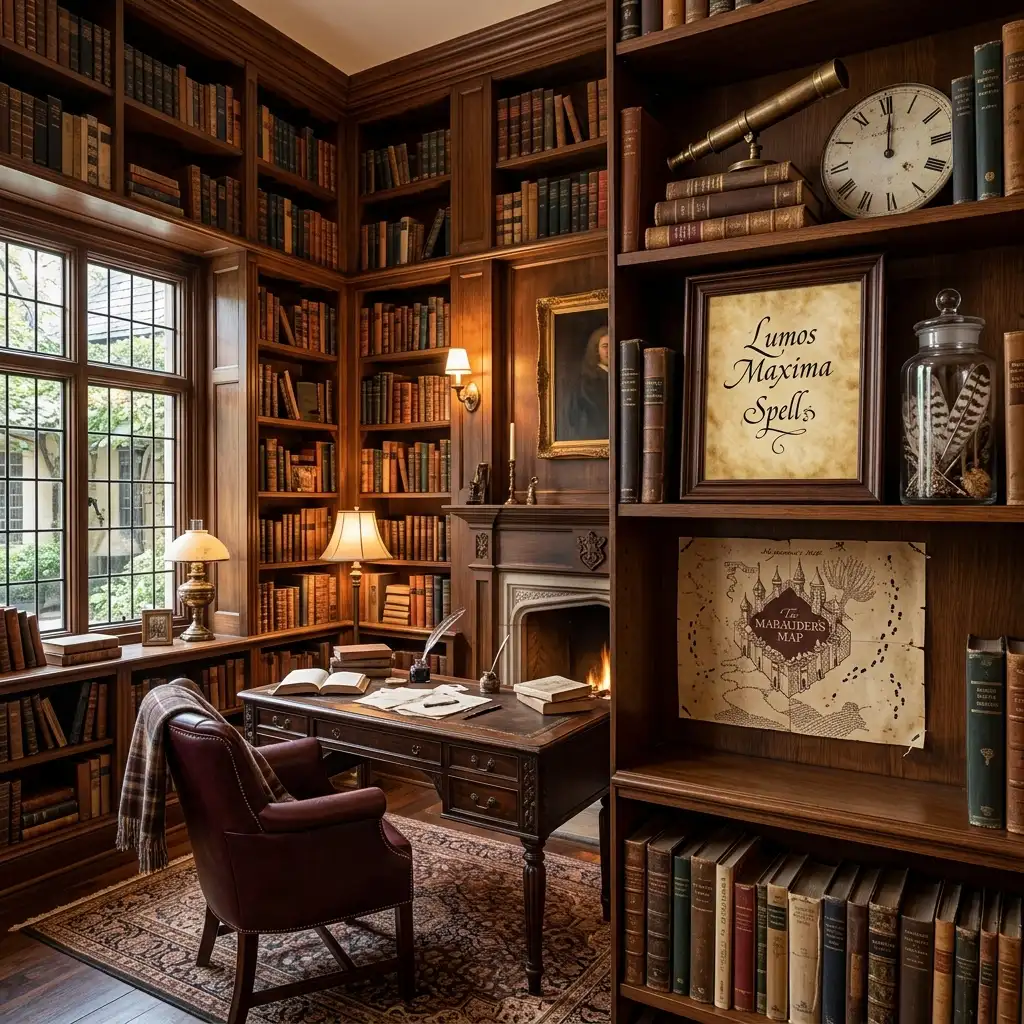
The walls. Floor-to-ceiling bookshelves are the goal. If that is not possible, as much shelving as you can manage. Fill the shelves with real books and intersperse with objects — a small brass telescope, a vintage clock face, a glass jar of feathers or dried botanicals. A framed piece of parchment-looking paper with a spell written on it in calligraphy. A map.
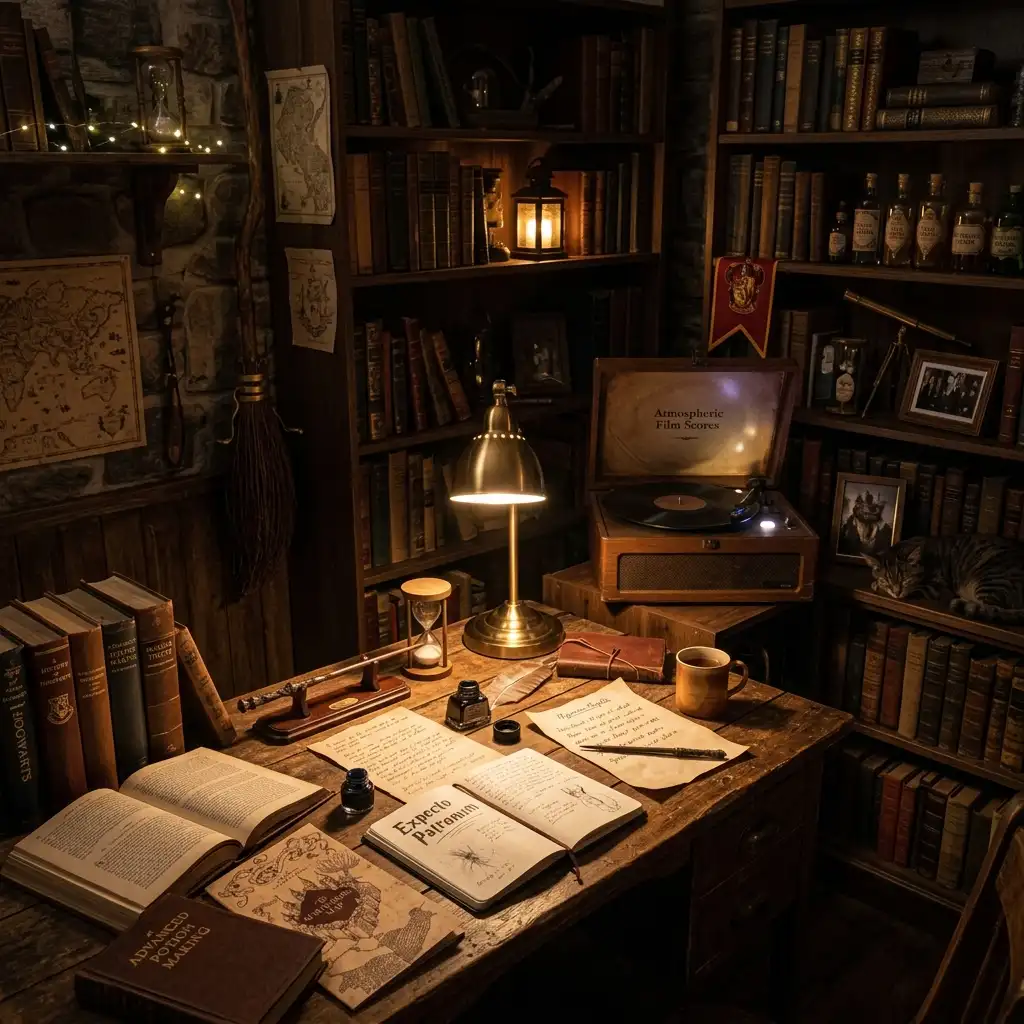
The atmosphere. A small record player in the corner playing something appropriately atmospheric — classical, film scores, whatever creates the right feeling for you. A desk lamp with a warm bulb, the only light on in the room while you work. The sense of being in a room where something important is being studied or created.
A Child’s Bedroom
For a younger child, the magic can be more explicit and more colorful because delight is the primary goal and sophistication can wait.
The house colors on the bedding are absolutely fine here. A Hogwarts house flag on the wall is completely appropriate. A bookshelf shaped like Platform 9¾. Illustrated maps of Diagon Alley and Hogsmeade.
But even in a child’s room, a few principles apply. Keep the ceiling or one wall slightly simpler than you think it needs to be — visual rest matters in sleeping spaces even for seven-year-olds. Let the child have genuine input on which elements matter most to them personally — what does their character love about the books? That is what the room should express, not a survey of every possible reference.
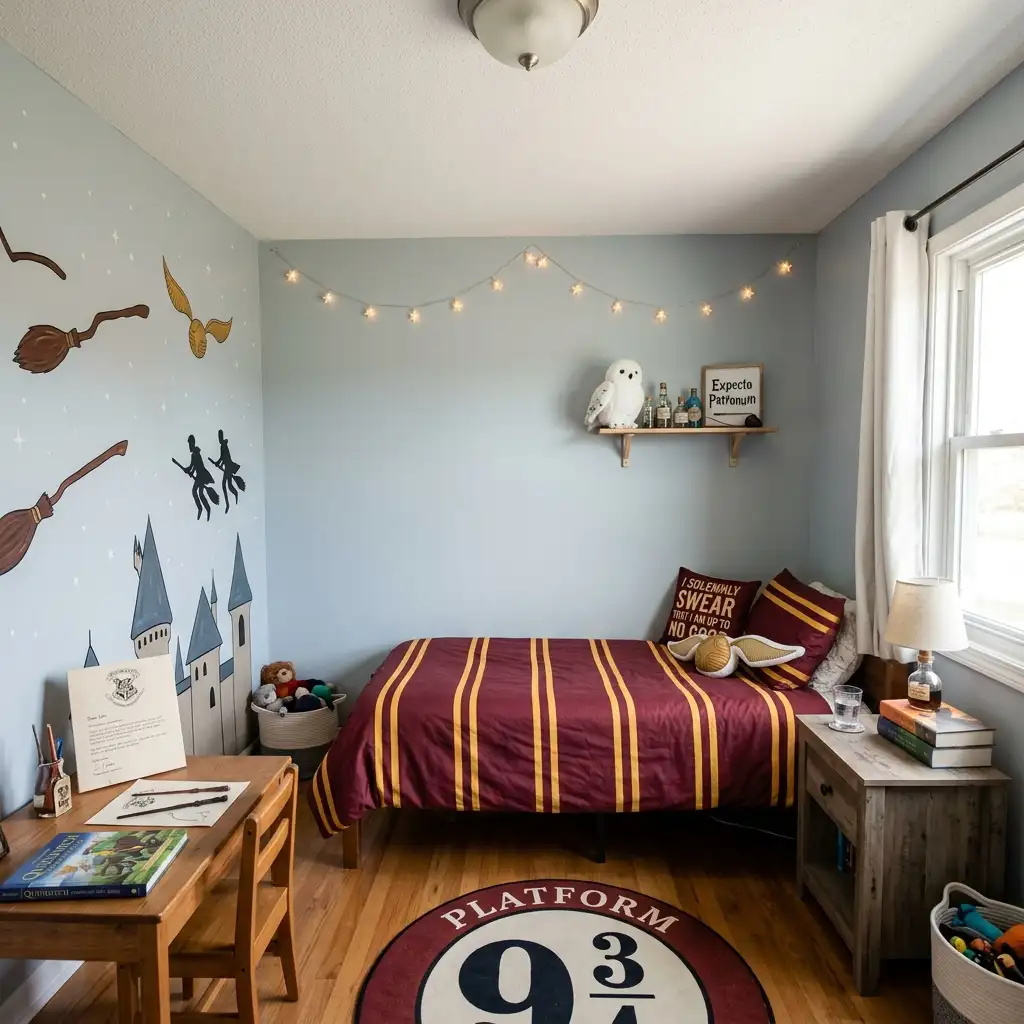
A Sorting Hat on a shelf. Their house scarf draped over the back of a chair. A collection of small magical-looking objects in a shadow box — a golden snitch, a tiny owl, a wand they were given as a gift. These feel personal and genuine rather than mass-produced.
The Decor That Reads as Thoughtful vs. the Decor That Reads as Purchased
Here is the honest distinction.
Thoughtful Harry Potter decor tells a story about the character who lives there. A collection of old keys hung on a wall because of the winged keys in the first book and because the character who lives there loves old locks and mysteries. A shelf of astronomy books because the character is drawn to Ravenclaw and stargazing. An old leather trunk at the foot of the bed because it suggests travel and magic and things packed carefully for a school that exists somewhere they are not quite ready to leave.
Purchased Harry Potter decor tells the story of the merchandise. A wall covered in licensed posters. Every item with a Hogwarts crest and a font the brand owns. Shelves of branded collectibles in their original packaging. It says I love Harry Potter. But it does not say anything about the person who lives there.
The best Harry Potter rooms do both. They reference the world unmistakably for those who know it. But they also say something true about the person who lives in them.
That is the difference worth chasing.
What to Actually Buy (And What to Skip)
Worth buying:
A good set of the books, hardcover if you can. Even if you own paperbacks already, a hardcover set displayed on a prominent shelf does more decorative work than almost anything you can buy for a Harry Potter room.
Independent artist prints from Etsy rather than licensed mass-market posters. The quality is usually better, the interpretations are more interesting, and your money goes to an actual human who loves the same thing you do.
Brass and dark metal hardware, hooks, and accessories from general home stores. They do not know they are going into a Harry Potter room. They just look right.
A good quality wax seal kit if you like writing letters or journaling. Wax seals on notebook pages or shelf labels or small cards tucked into books are a detail so subtle and so lovely that almost no one would identify it as Harry Potter decor. You would know.
Glass apothecary jars, specimen bottles, and cork-topped bottles from kitchen stores and antique markets. Fill them with dried herbs, colored sand, rolled scrolls, small stones, whatever feels right to you. Label them with things that sound vaguely magical. They are beautiful and they cost almost nothing.
Worth skipping:
Anything with a font you recognize as the Hogwarts branding that you would be embarrassed to have in your home if you did not love Harry Potter.
Anything that requires explanation to be appreciated as decor rather than merchandise.
Anything made of cheap materials that will look tired within a year.
The very large Hogwarts crest wall decal. I know. I know it is tempting. But a 90-centimeter decal of any logo on any wall rarely reads as decor. It reads as merchandise installed on a wall.
Finishing Touches That Cost Almost Nothing
Wrap a few books on your shelf in brown paper or aged-looking kraft paper and write the titles on the spine in your best handwriting. They look like old, mysterious volumes.
Print a few pages of Latin text or old English text (available freely online) and roll into scrolls. Tie with twine. Lean in a vase or a ceramic crock. They look like they were pulled from a trunk.
Write out a spell or a quote from the books in your best handwriting on a piece of parchment-toned paper (tea-staining plain paper creates a beautiful aged effect) and frame it simply.
Collect small natural objects — pinecones, smooth stones, dried seed pods, small bones if that feels right to you — in glass jars on your shelves.
Gather candles of different heights and cluster them in one corner of the room. Different sizes, different holders, some with dried wax drips. Light them on evenings when the room needs to feel the most like itself.
Frequently Asked Questions
How do I make my room look like Hogwarts?
Focus on three things: warm candlelight or lamp lighting (no bright overhead lights in the evening), as many books as you can display openly on shelves, and a collection of aged, antique-feeling objects like brass compasses, old telescopes, glass bottles, and maps. These three elements create the Hogwarts atmosphere more convincingly than any branded product. Then layer in specific Harry Potter references through art prints, textiles in house colors, and subtle personal references that matter to you.
What colors should a Harry Potter bedroom be?
Deep, rich, warm tones work best. Burgundy, dark green, navy, warm gold, and deep brown are the colors of the wizarding world’s most beloved interiors. Warm white or cream for walls if you want light, dark jewel tones if you want atmosphere. Avoid bright primary versions of house colors — deep scarlet rather than bright red for Gryffindor, emerald rather than lime for Slytherin. The depth and richness of color is what creates the magical atmosphere.
How do I make a Harry Potter room that does not look childish for a teenager?
Lean into the dark, atmospheric, library aesthetic. Skip the branded merchandise and character posters in favor of independent artist prints, illustrated maps, constellation prints, and gallery arrangements. Use the house color palette but in sophisticated applications — velvet throw in deep green, linen bedding in warm burgundy, curtains in navy. Fill shelves with real books. Add aged and antique objects. The Hogwarts aesthetic is inherently sophisticated when separated from its merchandise — it is about a world of ancient magic, enormous libraries, and things older than memory.
What are good Harry Potter room accessories that are not obviously branded?
Brass compasses, telescopes, and hourglasses. Glass apothecary bottles and specimen jars. Vintage maps and star charts. Owl illustrations and celestial prints. Candles in iron and brass holders. Old leather-bound books. Wooden wand displays. Pressed botanical specimens in frames. Quill pens and inkwells. Leather journals and notebooks. A golden or brass key displayed on a small hook. Any object that feels like it belongs in a wizard’s study without having a Hogwarts crest on it.
How much does it cost to decorate a Harry Potter room?
A genuinely beautiful Harry Potter inspired room can be created for very little money when you prioritize atmospheric elements over branded merchandise. Books you already own, candles from any home store, thrift store finds of old maps and antique-looking objects, printed art from Etsy sellers in simple frames — these cost very little and do most of the atmospheric work. The mistake most people make is spending money on licensed merchandise rather than on the elements that actually create the magic.
The thing about a Harry Potter room is that the source material is so rich, so specific, so full of lovingly described interiors and objects and atmospheres that the real design work is actually quite simple: create a space that feels like the books feel.
Old. Warm. Full of knowledge and mystery. A little bit magical in a way you cannot quite name. A place where something wonderful might happen.
That is achievable in any room, at any budget, for any age. The only requirement is that you love the world enough to pay attention to what specifically about it you love.
Everything follows from that.