Does your basement sits empty, dark, and completely wasted while your kids take over every room upstairs? Toys are everywhere, noise carries through the whole house, and nobody has their own space? Something has to change!
A basement playroom solves every one of these problems at once. It gives children a dedicated space to play, create, and be loud without disrupting the rest of the home.

These 32 ideas will help you transform your basement into the most loved room in your entire house.
1. Start With Bright, Cheerful Wall Paint
The right wall paint color is the most impactful and affordable basement playroom upgrade possible. Dark basements feel unwelcoming and uninspiring for children and parents alike. Bright, cheerful colors instantly communicate that this space was designed with joy and play in mind.

Choose soft yellow, sky blue, fresh mint, or warm white for the most universally loved playroom palette. Avoid overly saturated neon colors that become visually overwhelming after long periods of play. Paint all four walls and the ceiling in light tones to maximize the brightness of a naturally dark space.
| Playroom Wall Color | Mood Created |
|---|---|
| Soft yellow | Happy, energetic, sunny |
| Sky blue | Calm, dreamy, imaginative |
| Fresh mint green | Fresh, playful, cheerful |
| Warm white | Bright, versatile, timeless |
2. Install Durable, Kid-Friendly Flooring
Basement playroom flooring takes an extraordinary amount of daily abuse. It needs to handle spills, dropped toys, rough play, and endless foot traffic without deteriorating. Choosing the right flooring from the start saves years of frustration and expensive replacements.

Foam interlocking tiles are the most affordable, comfortable, and child-safe playroom floor option. Luxury vinyl plank flooring is more permanent, extremely durable, and looks beautiful while being easy to clean. Carpet tiles in a playroom offer warmth and softness but require more maintenance than hard surface options.
| Playroom Flooring Option | Best For |
|---|---|
| Foam interlocking tiles | Soft play, budget-friendly |
| Luxury vinyl plank | Durability, easy cleaning |
| Carpet tiles | Warmth, sound absorption |
| Painted concrete with rug | Budget, industrial playroom |
3. Create a Dedicated Reading Nook Corner
A reading nook transforms one basement corner into a magical private retreat for children. Even reluctant readers spend hours in a cozy, comfortable nook designed just for them. This dedicated space communicates that reading is a special, valued, and enjoyable activity.

Build a simple bench or add a teepee tent in one corner with plenty of cushions and pillows. Install a small bookshelf beside the nook within easy reach of a child sitting comfortably inside. Add warm, soft lighting overhead and a small basket of favorite books for a completely irresistible reading corner.
| Reading Nook Style | Materials Needed |
|---|---|
| Teepee tent nook | Teepee, floor cushions, fairy lights |
| Built-in window seat | Bench with cushion, shelves beside |
| Curtained alcove | Tension rod, curtain, cushions |
| Bean bag corner | Large bean bag, floor lamp, bookshelf |
4. Add a Chalkboard or Whiteboard Wall
A chalkboard or whiteboard wall is one of the most loved features in any basement playroom. It gives children an enormous creative canvas for drawing, writing, and playing school. This single addition provides hours of entertainment and creative engagement without any ongoing cost.

Paint one full wall with chalkboard paint for a dramatic, floor-to-ceiling creative surface. Alternatively, mount a large whiteboard panel for easy erasing without chalk dust. Add a small ledge at the bottom to hold chalk, markers, and erasers neatly and accessibly.
| Creative Wall Option | Best Age Group |
|---|---|
| Chalkboard paint wall | All ages, most authentic |
| Whiteboard panel | School-age children |
| Magnetic chalkboard | Toddlers and early childhood |
| Dry-erase contact paper | Budget-friendly rental option |
5. Build a Simple Stage or Performance Area
Children who love performing need a dedicated stage area more than almost any other playroom feature. A simple raised platform instantly transforms imaginative play into dramatic theatrical productions. This feature encourages confidence, creativity, and hours of independent play.

Build a simple wooden platform that is 6 to 8 inches high using basic lumber and plywood. Add a curtain rod above with a simple curtain for the most authentic stage experience. Install a small spotlight or colored LED light above the stage for maximum theatrical atmosphere.
| Simple Stage Feature | DIY Difficulty |
|---|---|
| Raised wooden platform | Moderate, basic lumber skills |
| Curtain backdrop | Easy, tension rod and curtain |
| Stage spotlight | Easy, clip-on LED light |
| Costume storage beside stage | Very easy, open hooks and bins |
6. Design a Sensory Play Zone for Young Children
Young children need sensory play experiences that stimulate all their developing senses. A dedicated sensory zone in the basement playroom is both developmentally valuable and endlessly engaging. This zone can be contained and cleaned easily without disrupting the rest of the playroom.

Use a large plastic tray or a sensory table for water, sand, kinetic sand, and rice activities. Line the floor beneath the sensory area with a washable mat for easy cleanup after messy play. Store sensory materials in labeled, sealed containers on a low shelf within child reach at all times.
| Sensory Play Material | Developmental Benefit |
|---|---|
| Kinetic sand | Fine motor, creativity, calm |
| Water beads | Tactile exploration, calm |
| Foam and bubble play | Tactile, cause and effect |
| Rice and bean bin | Sensory, sorting, counting |
7. Install Built-In Storage Shelving Along the Walls
Built-in storage shelving transforms the organization of any basement playroom dramatically. Wall-mounted shelves use vertical space efficiently and keep the floor clear for active play. A well-organized playroom stays organized far longer than one with inadequate or poorly planned storage.

Install simple MDF or pine floating shelves along one or two playroom walls at accessible child heights. Use open bins and baskets on each shelf level labeled by toy category for independent tidy-up. Adjust shelf heights as children grow so storage always suits the current age and toy collection.
Get complete shelving installation inspiration from closet shelving ideas for building sturdy, well-designed playroom storage shelving.
| Built-In Shelf Level | Contents |
|---|---|
| Lowest level (child height) | Daily play toys, accessible bins |
| Mid level | Books, puzzles, art supplies |
| Upper level | Less-used items, overflow storage |
| Top level | Parent-only items, out of reach |
8. Create an Art and Craft Station
A dedicated art station in the basement playroom gives children a proper place to create without taking over the kitchen table. It contains mess, organizes supplies, and communicates that creativity is celebrated and supported. Children with a dedicated art station create more frequently and more confidently.
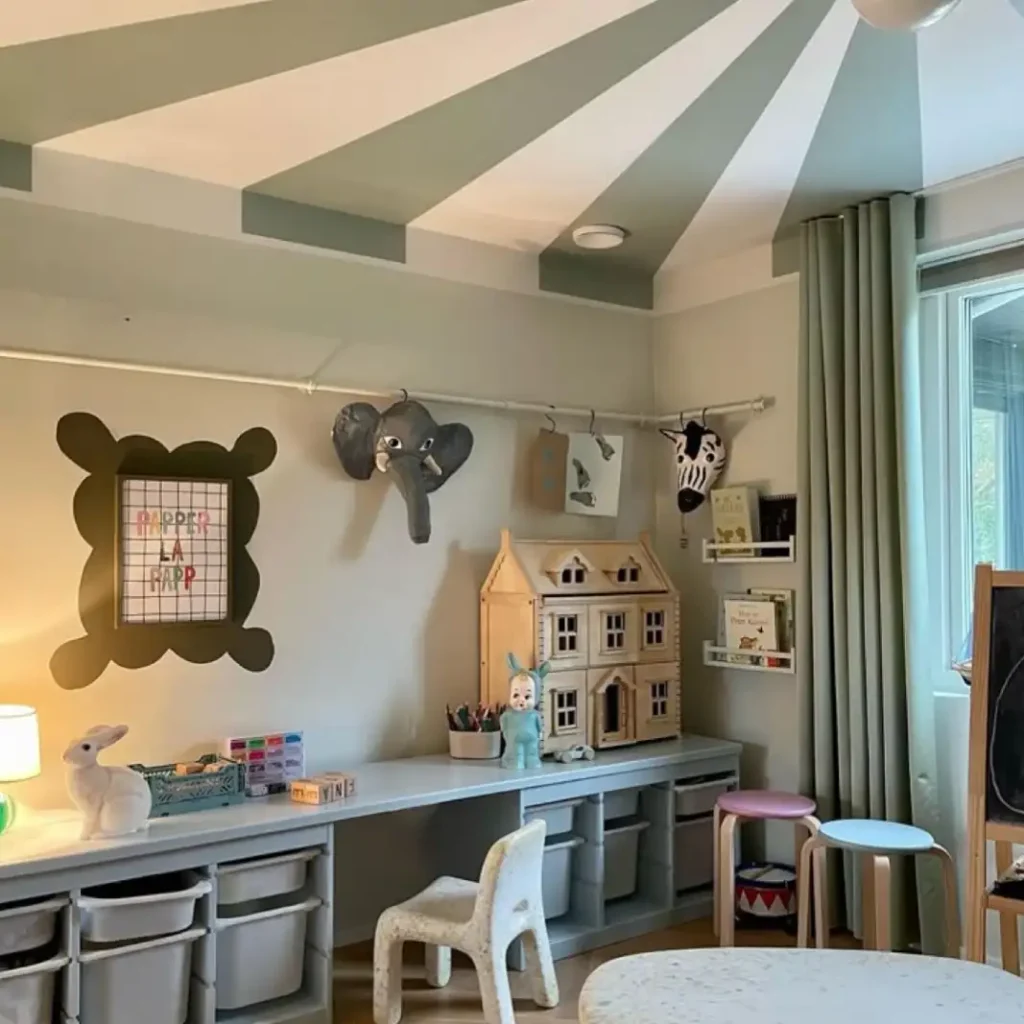
Set up a child-height table with proper art chairs or stools in a designated corner of the playroom. Mount a pegboard above the art table for organized supply storage within easy reach. Cover the art zone floor with a washable mat or vinyl flooring for completely stress-free cleanup.
Find complete art station organization inspiration from craft room ideas for supply organization ideas that work brilliantly in a children’s art corner.
| Art Station Essential | Child-Appropriate Choice |
|---|---|
| Art table | Adjustable height, easy clean |
| Supply storage | Clear labeled bins on shelves |
| Paper storage | Vertical file holder by color |
| Drying rack | Simple wall-mounted drying rack |
9. Add a Slide or Climbing Wall for Active Play
Bringing outdoor play equipment indoors is one of the most exciting and unexpected basement playroom ideas. A small indoor slide or a climbing wall panel keeps active children engaged and physically challenged. These features support healthy physical development during weather that prevents outdoor play.

Install a climbing wall panel on one basement wall using textured plywood and climbing holds. Add a small plastic indoor slide beside the climbing wall for a complete mini adventure course. Ensure adequate floor padding beneath climbing features for safety during use by energetic children.
| Indoor Active Play Feature | Space Required |
|---|---|
| Climbing wall panel | 4×6 feet of wall space |
| Indoor slide | 6×4 feet of floor clearance |
| Balance beam | 6 feet length of floor space |
| Small trampoline | 10×10 feet minimum clearance |
10. Use Colorful Open Bins for Easy Toy Organization
Open bins in bright colors are the most child-friendly toy organization solution ever created. Children who cannot read can sort toys by color-coded bin independently. Open bins encourage independent tidy-up in a way that closed cabinets and drawers never achieve.

Use one color per toy category consistently throughout the entire playroom storage system. Red for cars and vehicles, blue for blocks, yellow for art supplies, green for outdoor toys. Label each bin with both a word and a picture so early readers and pre-readers can both use the system.
| Bin Color System | Toy Category |
|---|---|
| Red bins | Vehicles and cars |
| Blue bins | Blocks and construction |
| Yellow bins | Art and craft supplies |
| Green bins | Outdoor and active toys |
11. Install Proper Lighting Throughout the Space
Basement lighting is one of the most critical and most overlooked elements of playroom design. A dark, poorly lit basement feels uninviting and even anxiety-inducing for young children. Proper layered lighting transforms the entire atmosphere of the basement playroom.
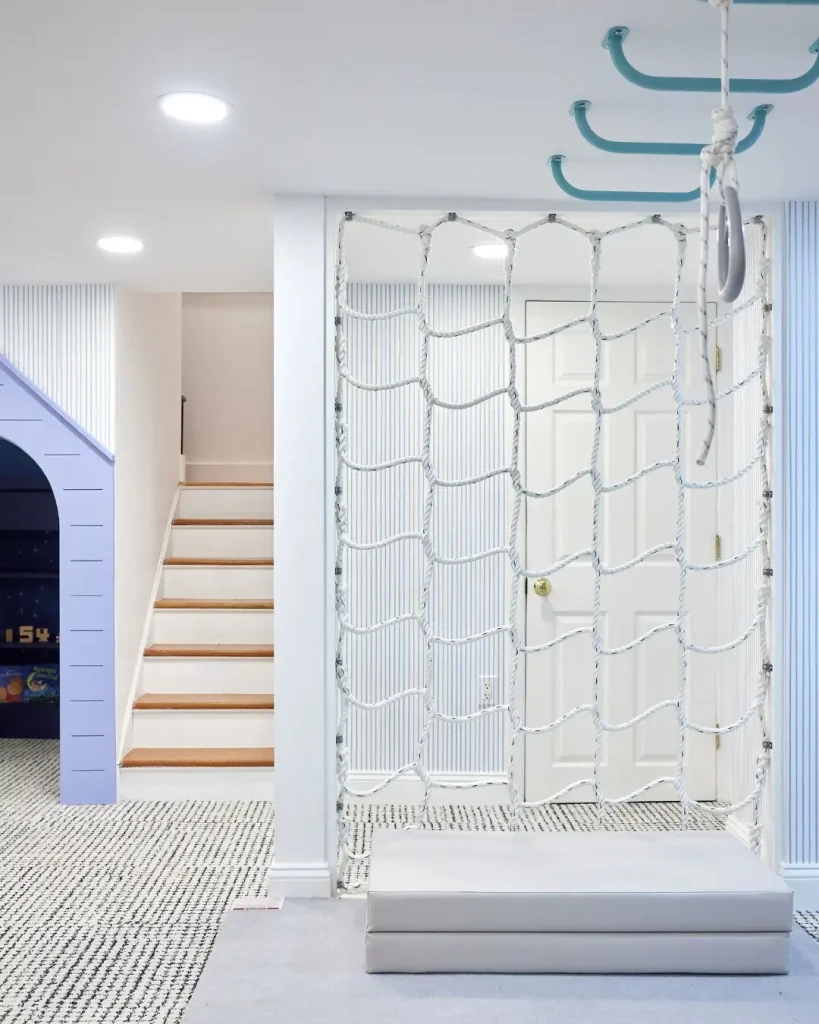
Add recessed LED ceiling lights throughout the playroom for bright, even general illumination. Include a fun pendant light or colorful lamp above the art station for task lighting. Add a nightlight or soft floor lamp in the reading nook for cozy, calm evening lighting.
| Playroom Lighting Type | Placement |
|---|---|
| Recessed LED ceiling lights | Even coverage throughout |
| Fun pendant or statement light | Above play table or art station |
| Floor or table lamp | Reading nook corner |
| LED strip lights | Under shelves, behind furniture |
12. Create a Costume and Dress-Up Corner
A dedicated dress-up corner is one of the most used and most loved features in any playroom. Children who can easily access and display costumes engage in imaginative dramatic play far more frequently. A properly organized costume corner encourages independence and creative storytelling daily.

Install a low child-height clothing rod for hanging costumes and dress-up clothes. Add open hooks below the rod for accessories like crowns, wands, and bags. Mount a child-height mirror beside the costume corner so characters can admire their complete transformation.
| Dress-Up Corner Element | Best Storage Solution |
|---|---|
| Costumes | Low hanging rod, child height |
| Shoes and boots | Open bin below rod |
| Accessories | Open hooks or small cubbies |
| Mirror | Full-length, safely mounted |
13. Build a Playhouse or Castle Structure
An indoor playhouse or castle structure in the basement creates a permanent magical space within a space. Children return to playhouses day after day because they offer privacy, ownership, and endless imaginative possibilities. A simple structure creates years of incredible play value.

Build a simple wooden frame playhouse using basic timber and plywood panels. Add windows, a small door, and a simple roof for maximum playhouse authenticity. Paint the interior and exterior in bright colors and add curtains, a small mailbox, and a nameplate for personalization.
| Indoor Playhouse Style | Age Range |
|---|---|
| Simple wooden frame | 3–10 years old |
| Castle with turrets | 4–12 years old |
| Fabric tent playhouse | 2–8 years old |
| Under-stair playhouse | 3–10 years old |
14. Add a Homework and Study Zone
Older children need a quiet, focused study area within the playroom to transition from play to learning mode. A dedicated homework zone keeps school work contained and separated from the play areas. This boundary between play and study actually improves both the play quality and the study quality.
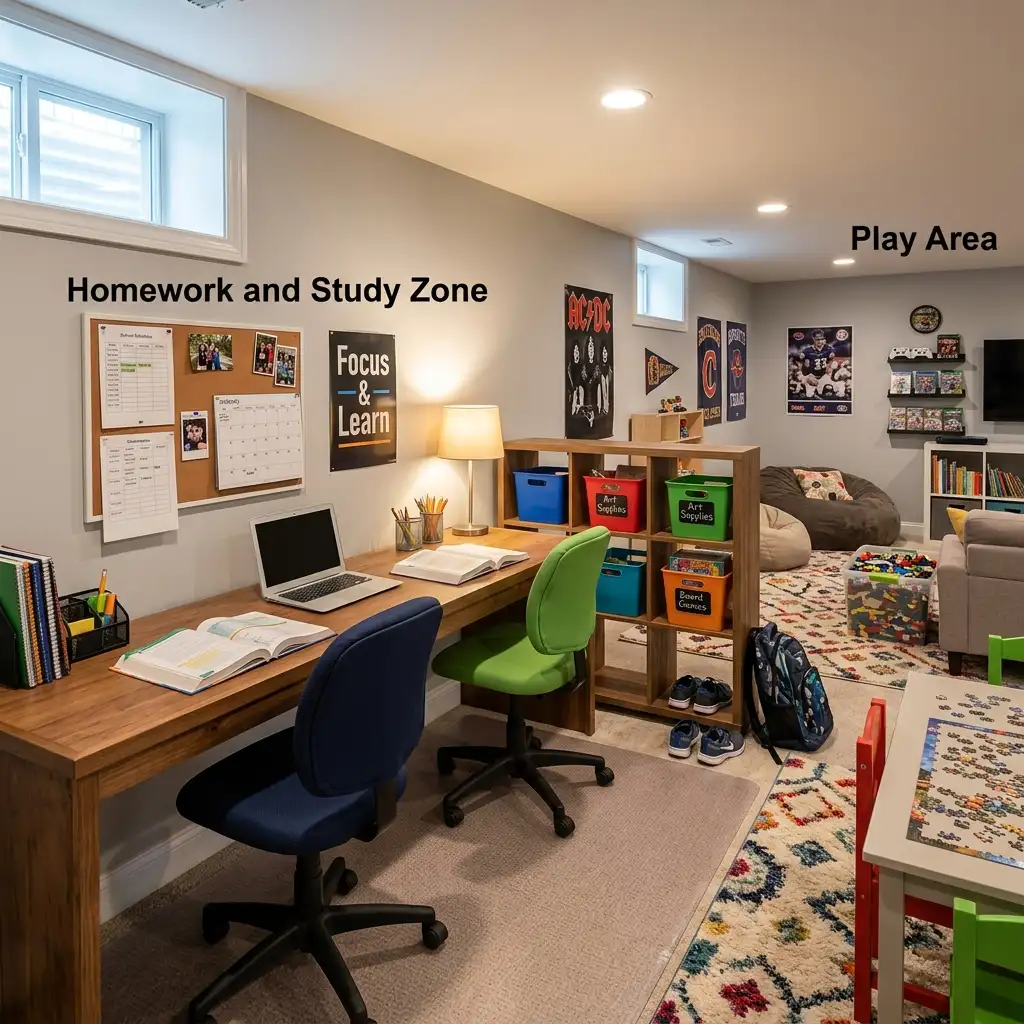
Set up a simple desk and ergonomic chair in one corner of the basement away from the noisiest play areas. Install a bookshelf above the desk for school supplies, textbooks, and stationery organization. Add a dedicated desk lamp for proper task lighting during homework and study sessions.
| Homework Zone Element | Child Ergonomic Standard |
|---|---|
| Desk height | Elbows at 90 degrees when seated |
| Chair height | Feet flat on floor comfortably |
| Monitor height (if applicable) | Eye level to top of screen |
| Lighting | No screen glare, no shadows |
15. Design a Music and Movement Area
Children who love music and movement need a designated space for dancing, singing, and making noise. A music corner in the basement keeps the sound contained away from the rest of the house. This feature supports emotional expression, physical development, and pure joyful fun daily.
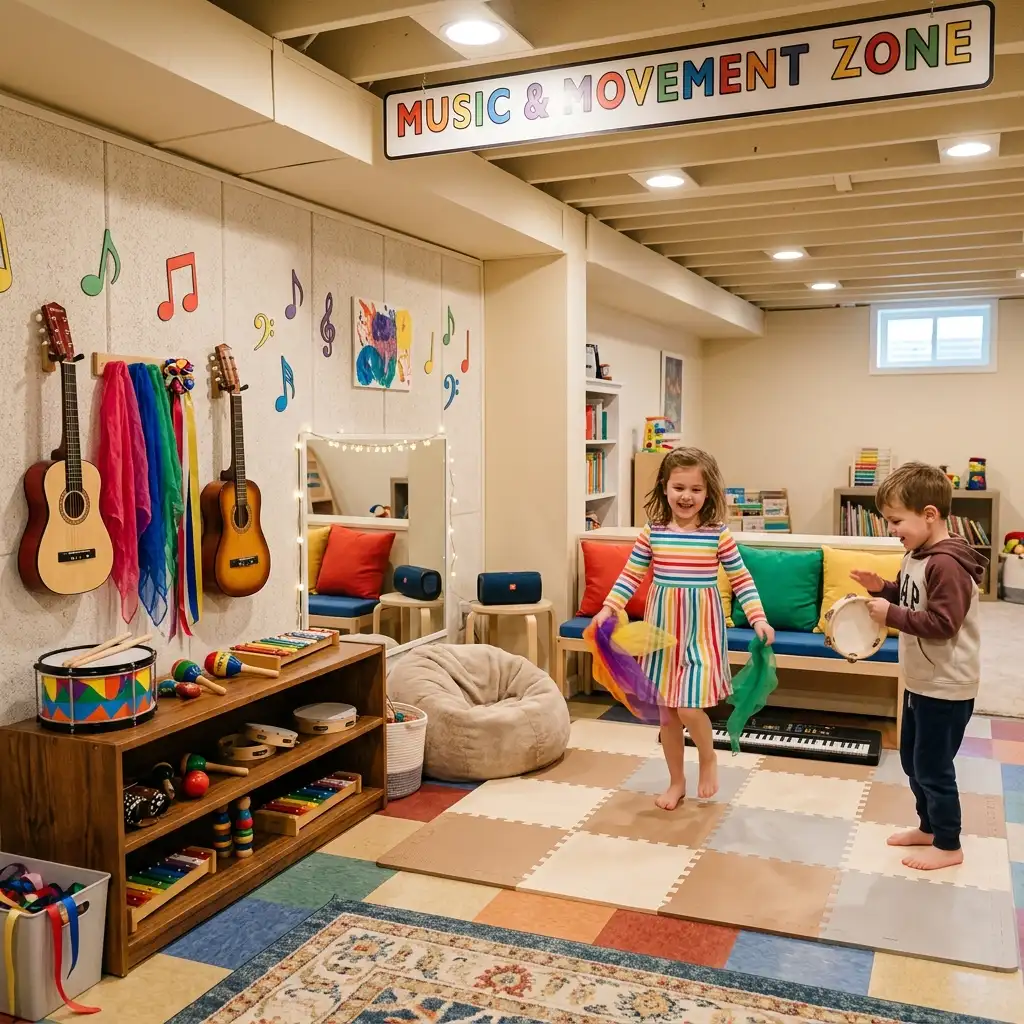
Create a cleared open floor area with durable, easy-clean flooring for free movement and dancing. Mount a small speaker on the wall connected to a parent-controlled music source nearby. Add a mirror along one wall so dancers can watch themselves and develop body awareness through movement.
| Music Zone Feature | Developmental Benefit |
|---|---|
| Open dance floor | Physical development, expression |
| Wall mirror | Body awareness, confidence |
| Simple instruments | Creative expression, listening skills |
| Speaker and music source | Auditory development, rhythm |
16. Use Rugs to Define Play Zones
Area rugs are one of the most affordable and effective tools for defining different play zones within one open basement space. Each rug signals to children which activity happens in that particular area. The visual separation that rugs create makes a large open basement feel organized and intentional.

Use a road map or city rug in the vehicle and block play zone for natural, immersive play integration. Place a soft, plush rug in the reading nook for maximum comfort and coziness. Add a washable rug under the art station to protect flooring and simplify cleanup enormously.
| Rug Type | Play Zone It Defines |
|---|---|
| Road map rug | Vehicle and construction zone |
| Soft plush rug | Reading nook, quiet zone |
| Washable printed rug | Art station area |
| Foam puzzle rug | Sensory and toddler zone |
17. Add a Snack Station for Independent Eating
A small, accessible snack station in the basement playroom is a brilliant addition for any family. Children can access approved snacks independently without interrupting adult tasks upstairs. This feature reduces kitchen traffic and gives children a healthy sense of independence and responsibility.

Set up a small table or a low cart with a mini refrigerator for drinks and fresh snacks. Add a small basket of individually packaged snacks that children can access freely and independently. Include a small trash bin and napkin holder at child height to encourage clean-up habits after snacking.
| Snack Station Element | Child Independence Benefit |
|---|---|
| Mini refrigerator | Cold drinks without adult help |
| Snack basket | Self-serve approved snacks |
| Small trash bin | Encourages independent cleanup |
| Napkin holder | Promotes self-care habits |
18. Install a Projector for Movie Nights
A basement projector setup creates an incredible family movie night experience and doubles as a gaming display. The large projected image makes watching movies feel like a genuine cinema experience. This versatile addition is enjoyed by children of all ages and adults equally.

Mount a short-throw projector on the ceiling for a clean, cable-free setup above the play area. Paint one wall with projector screen paint or mount a pull-down projector screen for the best image quality. Add a comfortable arrangement of cushions, beanbags, and blankets in front of the screen for cozy viewing.
| Projector Setup Component | Installation Tip |
|---|---|
| Short-throw projector | Ceiling mount for clean look |
| Screen wall or panel | White projector paint for budget |
| Comfortable seating | Beanbags, cushions, blankets |
| Sound system | Simple Bluetooth speaker minimum |
19. Create a STEM and Science Exploration Zone
A dedicated STEM zone in the basement playroom encourages curiosity, critical thinking, and problem-solving. Children with access to building sets, science kits, and engineering materials engage in deeper, more sustained play. This zone adds genuine educational value to the playroom without feeling like school.
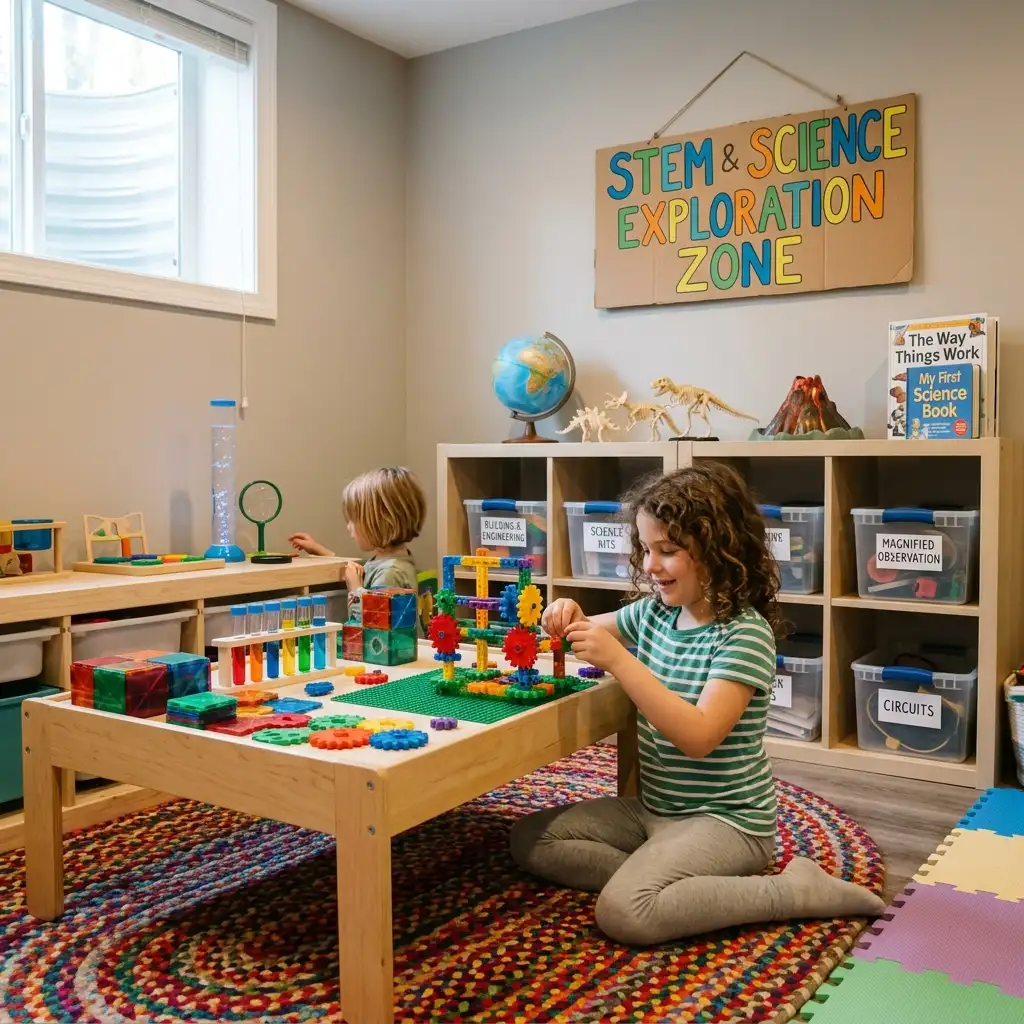
Set up a table specifically for STEM building sets, puzzles, and experiment materials. Store LEGO, magnetic tiles, circuit sets, and science kits in clearly labeled bins on adjacent shelving. Add a pegboard above the STEM table for hanging reference charts, periodic tables, and project instruction cards.
| STEM Zone Supply | Age-Appropriate Version |
|---|---|
| Building sets | DUPLO (2–5), LEGO (6+) |
| Magnetic tiles | All ages, 18 months and up |
| Science experiment kits | Age 5 and up with supervision |
| Coding toys and robots | Age 4 and up, various levels |
20. Add a Giant Floor Puzzle and Game Zone
A dedicated game and puzzle zone gives family game nights a proper, permanent home in the basement. Children who have a designated game space develop patience, strategy, and social skills through regular play. Board games and puzzles become more accessible and more frequently used when properly stored and displayed.

Install open shelving specifically for board games organized by size and age group. Add a large, smooth table in the game zone for comfortable puzzle and board game play. Use vertical game box storage with spines facing outward so every game is visible and easily selected.
| Game Zone Storage Solution | Organization Method |
|---|---|
| Board games | Vertical storage, spines outward |
| Card games | Small labeled bins or pouches |
| Puzzles | Vertical in labeled bags or boxes |
| Game accessories | Small divided containers |
21. Use Ceiling Height Creatively With Loft or Elevated Spaces
Basements often have enough ceiling height to create an elevated loft or raised play platform. A loft platform accessed by a simple ladder creates an exciting, private elevated space children absolutely adore. This feature uses vertical space brilliantly and makes the basement playroom feel like an adventure.

Build a simple elevated platform at one end of the basement using lumber and safe, sturdy construction. Add a proper ladder or climbing steps for safe access to the elevated area. Use the space beneath the loft for storage, a reading den, or a small puppet theater.
| Loft Platform Use | Beneath Loft Space Use |
|---|---|
| Elevated reading area | Storage and organization |
| Cozy sleeping spot for sleepovers | Reading nook or den |
| Creative art or building space | Puppet theater or store |
| Teen hangout zone | Media or gaming area |
22. Add Wall Murals for Imagination and Visual Excitement
A wall mural in the basement playroom creates an instant sense of wonder and visual excitement. Children with an immersive mural on their playroom wall engage in dramatically richer imaginative play. The mural gives the basement a unique personality that no other design element can replicate.

Commission a local artist or use removable wall mural wallpaper for the most impactful result. Choose a theme that reflects your children’s current deepest passions and creative interests. Underwater worlds, outer space, jungle adventures, and magical forests are perennially beloved by children.
| Wall Mural Theme | Best Age Appeal |
|---|---|
| Underwater ocean world | Toddlers through age 10 |
| Outer space and planets | Ages 4–12, STEM lovers |
| Jungle and safari animals | Toddlers through age 8 |
| Magical forest or fairy tale | Ages 3–10, imaginative children |
23. Install Pegboards for Toy and Supply Organization
Pegboards are as useful in a basement playroom as they are in a garage or craft room. They provide flexible, visible organization for toys, tools, art supplies, and accessories. The ability to see everything on the pegboard reduces searching, arguing, and toy-related frustration dramatically.

Mount a brightly painted pegboard on one playroom wall at child-accessible height. Use colorful hooks, bins, and shelves to organize the most frequently used playroom supplies. Add a pegboard in the art station area specifically for art tools and supply organization.
| Playroom Pegboard Zone | Items to Organize |
|---|---|
| Art station pegboard | Scissors, rulers, brushes, tools |
| General playroom pegboard | Bags, sports equipment, helmets |
| Costume corner pegboard | Accessories, crowns, wands |
| STEM zone pegboard | Instructions, charts, tools |
24. Create a Nature and Discovery Zone
A nature discovery zone in the basement playroom connects children to the natural world even while playing indoors. Collections of rocks, shells, feathers, and natural specimens encourage scientific curiosity and observation. This zone is particularly wonderful for children who love the outdoors and wildlife.

Set up a low table with magnifying glasses, specimen trays, and field guide books for nature exploration. Display rock collections, shells, and natural objects in labeled, accessible containers at child height. Add a small plant or terrarium to the nature zone for a living element that children can observe and care for.
| Nature Zone Element | Educational Value |
|---|---|
| Rock and mineral collection | Geology, classification, patience |
| Shell and ocean specimen tray | Marine biology, geography |
| Magnifying glass station | Scientific observation skills |
| Small plant or terrarium | Responsibility, biology, care |
25. Design the Basement Playroom for Multiple Age Groups
Most families have children of different ages who need to share the same basement playroom. Designing for multiple age groups requires thoughtful zone planning and appropriate storage solutions for each age. A well-designed multi-age playroom works for a toddler and a ten-year-old simultaneously without either feeling uncomfortable.

Separate the playroom into distinct age-appropriate zones using rugs, low shelving units, and furniture as dividers. Keep toddler-safe toys low and accessible while storing older children’s small-piece sets at upper heights. Create at least one zone where different ages can play together such as a building or art area.
| Age Group Zone | Key Design Requirement |
|---|---|
| Toddler zone | Soft surfaces, large safe toys |
| Preschool zone | Imaginative play, dress-up |
| School-age zone | STEM, games, art, reading |
| Teen zone | Gaming, media, hangout |
26. Add Window Wells and Lighting for a Brighter Basement
Natural light is one of the most challenging aspects of basement playroom design. A dark, windowless basement can feel depressing and uninspiring for children spending hours there. Improving natural and artificial light is one of the highest-impact investments for any basement playroom.
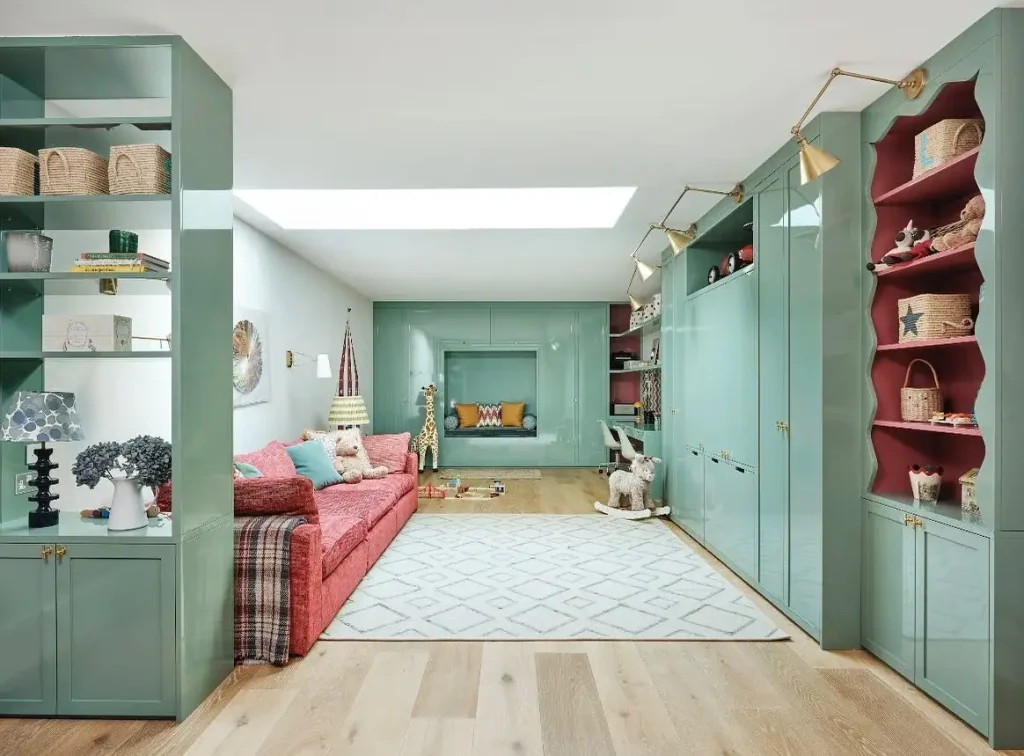
Install window well covers with clear polycarbonate panels to maximize any existing basement window light. Add a sun tunnel or solar tube to bring natural light from the roof into the windowless basement. Supplement with full-spectrum LED lighting that mimics natural daylight for the healthiest indoor play environment.
| Basement Light Improvement | Natural Light Gained |
|---|---|
| Clear window well cover | Maximum existing window light |
| Solar tube installation | Natural light with no window |
| Full-spectrum LED lights | Mimics natural daylight indoors |
| Reflective white walls | Bounces and multiplies light |
27. Create a Sports and Active Play Zone
Active children need space to move, jump, and play physically even when the weather prevents outdoor play. A dedicated active play zone in the basement provides safe, designated space for physical activity. This zone reduces accidents by giving energetic children an appropriate outlet for their physical energy.

Install a small indoor basketball hoop on the wall at an adjustable child-appropriate height. Add a foam tumbling mat for gymnastics, wrestling, and rolling play on the floor. Include a small indoor putting green, a mini bowling set, or a dartboard for structured physical games.
| Active Play Feature | Space Required |
|---|---|
| Indoor basketball hoop | 8×8 feet minimum clearance |
| Foam tumbling mat | 4×8 feet, rollable |
| Indoor putting green | 6×3 feet minimum |
| Balance board or beam | 6×3 feet of floor space |
28. Use the Space Under the Stairs for Creative Storage
The space under basement stairs is premium storage and play real estate. Most basements have this space completely unused or filled with random junk. Transforming it into a deliberate playroom feature adds both function and magic to the entire space.

Build simple shelving inside the under-stair space for toy bins and seasonal item storage. Or transform it into a cozy child-sized reading den with a curtain, cushions, and fairy lights. A small puppet theater built into the under-stair opening is one of the most charming and beloved playroom features possible.
| Under-Stair Transformation | Best Age Group |
|---|---|
| Cozy reading den | 3–10 years old |
| Puppet theater opening | 3–8 years old |
| Toy storage shelving | All ages |
| Secret hideaway playhouse | 4–12 years old |
29. Add a Foam Pit or Ball Pit for Toddlers
A foam pit or ball pit is the ultimate toddler and young child basement playroom feature. It provides safe, sensory-rich play that children return to hundreds of times. Parents love it because it contains active play in one defined, safe, and easily supervised area.
Build a simple wooden frame for the pit using lumber and plywood for a permanent installation. Fill with foam blocks for a foam pit or plastic balls for a classic ball pit experience. Ensure the pit depth is no more than 24 inches for younger children and that the sides are secure.
| Pit Play Feature | Recommended Age |
|---|---|
| Foam block pit | 18 months to 8 years |
| Ball pit | 1 year to 6 years |
| Combined foam and ball pit | 18 months to 6 years |
| Deep foam pit for jumping | 5 years and up with supervision |
30. Install Sound-Absorbing Materials to Reduce Noise
Basements can become incredibly noisy because hard surfaces bounce sound in every direction. Sound-absorbing materials make the playroom more comfortable and reduce the noise transmitted to the rest of the house. This practical consideration makes the basement playroom better for children and parents simultaneously.

Add foam or fabric acoustic panels to ceiling and upper walls for maximum sound absorption. Use thick area rugs throughout the playroom to absorb floor-level sound effectively. Upholstered furniture, curtains, and fabric storage bins all contribute meaningfully to sound reduction in the space.
Get soft ceiling treatment inspiration from soft ceiling fabric ideas for beautiful acoustic ceiling solutions that suit a basement playroom.
| Sound Absorption Material | Sound Reduction Level |
|---|---|
| Acoustic foam panels | Very high, professional-grade |
| Thick area rugs | High, especially on hard floors |
| Fabric curtains | Moderate, especially for echo |
| Upholstered furniture | Low-moderate, helpful addition |
31. Create a Seasonal Rotation System for Toys
Too many toys available at once overwhelm children and reduce the quality of their play. A seasonal rotation system keeps the playroom fresh, manageable, and genuinely exciting for children. When toys rotate back after storage, children play with them with the same enthusiasm as new purchases.

Store half of all toys in labeled bins in a separate storage area or in exterior basement storage. Rotate the stored toys into the playroom every three months for a completely fresh play experience. This system dramatically reduces clutter, maintains excitement, and extends the effective life of every toy purchased.
Find toy storage and organization inspiration from hidden storage ideas for creating smart toy rotation storage systems within the basement.
| Rotation Bin Label | Contents |
|---|---|
| Spring rotation | Outdoor prep toys, spring themes |
| Summer rotation | Water play, active outdoor toys |
| Fall rotation | Building sets, creative supplies |
| Winter rotation | Cozy indoor, puzzle and game sets |
32. Add Personal Touches That Reflect Your Children’s Personalities
The most magical basement playrooms are deeply personal to the children who use them. A playroom that reflects a child’s specific passions, interests, and personality is far more loved than a generic one. Personal touches communicate to children that this space was made specifically for them.

Display your child’s artwork on the walls in simple frames or on a dedicated art display wire. Add their name in large colorful letters above their personal storage cubby or locker. Include elements related to their specific interests — space, dinosaurs, sports, art, or animals — in the decor and organization.
| Personal Touch Idea | Implementation |
|---|---|
| Child’s artwork display | Wire clips, gallery wall |
| Name in large letters | Wall decals, wooden letters |
| Interest-specific decor | Themed area or accent elements |
| Achievement display board | Ribbons, certificates, photos |
Frequently Asked Questions
How do I turn my basement into a playroom on a budget?
Start with paint — bright, light colors transform the basement atmosphere at minimal cost. Add foam interlocking floor tiles for comfortable, safe flooring without expensive installation. Source open storage bins, shelving, and furniture secondhand and use chalkboard paint for a low-cost creative wall that children love.
What flooring is best for a basement playroom?
Foam interlocking puzzle tiles are the most affordable, comfortable, and child-safe basement playroom flooring. Luxury vinyl plank is the best permanent flooring for durability and ease of cleaning. Always check for moisture in the basement before installing any flooring to prevent mold and damage beneath the surface.
How do I keep a basement playroom organized with kids?
Use open, labeled bins in bright colors that correspond to specific toy categories. Implement a one-in one-out rule for all new toy purchases. Schedule a weekly fifteen-minute tidy-up session with children where everyone participates in returning toys to their correct labeled homes.
Is a basement safe for a children’s playroom?
Yes, with proper preparation. Check for moisture, mold, and radon before converting any basement to a children’s space. Ensure proper ventilation, adequate lighting, and safe egress windows or doors. Install carbon monoxide detectors and ensure all electrical work meets current safety codes before children use the space.
How do I brighten a dark basement playroom?
Paint all walls and the ceiling in bright, light colors to maximize light reflection. Install full-spectrum LED lighting at multiple levels for even, daylight-mimicking illumination. Add mirrors strategically to reflect light throughout the space and clear window well covers to maximize any natural light from existing basement windows.
Conclusion
A basement playroom is one of the most transformative investments a family can make in their home and their children’s development. It creates dedicated space for imagination, learning, physical activity, and creative expression all in one place. The benefits extend far beyond the basement — a well-designed playroom reduces stress throughout the entire house for every family member.
Choose the ideas that best suit your children’s ages, interests, and your family’s specific needs. Build the playroom in stages if the full transformation feels overwhelming all at once. Every single improvement you make to that basement space is an investment in your children’s happiness, creativity, and development that pays dividends every single day.