
Does your bathroom feel cold, generic, and completely soulless? Every fixture and tile looks like it came from a big-box store catalog. You want a bathroom that feels genuinely extraordinary and deeply personal.
A Victorian bathroom is the most timeless, beautiful, and character-filled bathroom style available. It combines ornate details, rich colors, and elegant fixtures into a space that feels like pure luxury.

These 30 practical steps will guide you through creating a breathtaking Victorian bathroom from scratch.
1. How to Understand the Core Elements of Victorian Bathroom Design
Victorian bathroom design is rooted in the design philosophy of the Victorian era from 1837 to 1901. It celebrates craftsmanship, ornamentation, rich materials, and an unapologetic love of beauty. Understanding these principles helps every design decision fall naturally into place.

The Victorian style values pattern on pattern, rich color combinations, and luxurious materials. Functionality and beauty were considered equally important in every Victorian room. A genuine Victorian bathroom never feels minimal or restrained in any element.
| Victorian Core Element | How It Applies to Bathrooms |
|---|---|
| Ornate craftsmanship | Carved fixtures, detailed tilework |
| Rich color palette | Deep jewel tones, warm neutrals |
| Pattern layering | Tile patterns, wallpaper, textiles |
| Quality materials | Porcelain, cast iron, brass, marble |
2. How to Choose the Right Color Palette for a Victorian Bathroom
The Victorian color palette is rich, warm, and deeply saturated. It moves far beyond the safe neutrals of modern bathroom design. Choosing the right colors is the single most transformative decision in creating an authentic Victorian bathroom.

Deep jewel tones like forest green, burgundy, navy, and plum are quintessentially Victorian. Warm cream and ivory serve as the perfect backdrop for richer accent colors. Black and white combinations in tile work are equally iconic in Victorian bathroom design throughout.
| Victorian Color Category | Best Color Choices |
|---|---|
| Deep wall color | Forest green, navy, burgundy, plum |
| Light backdrop color | Warm cream, ivory, soft white |
| Tile accent color | Black, white, terracotta, sage |
| Metallic accent | Aged brass, oil-rubbed bronze, antique gold |
3. How to Select the Perfect Victorian Bathtub
The bathtub is the undisputed centerpiece of any Victorian bathroom. A freestanding clawfoot tub communicates the Victorian aesthetic instantly and unmistakably. No other single piece of bathroom furniture has the same transformative visual power.

Choose a traditional oval clawfoot tub with decorative feet in a metallic finish. Slipper tubs with one raised end provide added comfort and an elegant silhouette. A double-ended slipper tub is the most formal and luxurious Victorian bathtub choice available.
| Victorian Bathtub Style | Best Bathroom Size |
|---|---|
| Oval clawfoot tub | Standard bathroom 60+ sq ft |
| Single slipper tub | Medium to large bathroom |
| Double-ended slipper tub | Large, grand bathroom |
| Roll-top clawfoot tub | Any size, most traditional look |
4. How to Choose Victorian Bathroom Fixtures and Finishes
Fixture finish is one of the most critical decisions in any Victorian bathroom design. The wrong finish instantly undermines the period aesthetic no matter how carefully chosen everything else is. Victorian fixtures should feel aged, warm, and slightly ornate rather than sleek and modern.

Oil-rubbed bronze and aged brass are the two most authentic Victorian fixture finishes. Antique nickel and polished nickel also suit Victorian bathrooms beautifully. Avoid chrome and brushed stainless steel as these finishes read as thoroughly modern and out of place.
| Victorian Fixture Finish | Authenticity Level |
|---|---|
| Aged brass | Most authentic, warm, period-perfect |
| Oil-rubbed bronze | Classic, dark, deeply Victorian |
| Antique nickel | Refined, slightly cooler tone |
| Polished nickel | Elegant, slightly more formal |
5. How to Install the Iconic Victorian Clawfoot Tub Faucet
A clawfoot tub faucet is completely different from a standard wall-mounted or deck-mounted faucet. It mounts directly to the tub deck or freestanding floor for a fully authentic period look. Choosing and installing the right faucet completes the clawfoot tub perfectly.

Choose a deck-mounted faucet with a handheld shower attachment for maximum functionality. A floor-mounted freestanding tub filler makes the most dramatic and authentic Victorian statement. Ensure the faucet finish matches all other hardware in the bathroom precisely and consistently.
| Clawfoot Tub Faucet Type | Installation Location |
|---|---|
| Deck-mounted faucet | Drills through tub deck |
| Freestanding tub filler | Mounted to bathroom floor |
| Wall-mounted faucet | Mounts to wall beside tub |
| Bridge faucet | Classic two-handle Victorian style |
6. How to Choose and Install Victorian Floor Tile
Victorian floor tile is one of the most distinctive and beautiful elements of the entire style. The classic black and white hexagon or checkerboard tile pattern is universally recognized. Getting the floor tile right sets the authentic Victorian foundation for everything above it.

Use small format encaustic cement tiles or porcelain tiles in a geometric pattern. Black and white hexagon mosaic tiles are the most iconic and recognizable Victorian floor choice. Terracotta and geometric multicolor encaustic tiles also suit Victorian bathrooms beautifully. Pair with bathroom counter decor ideas that complement your chosen Victorian tile beautifully.
| Victorian Floor Tile Pattern | Tile Size |
|---|---|
| Black and white hexagon | 1-inch or 2-inch hexagons |
| Checkerboard black and white | 4-inch or 6-inch squares |
| Geometric encaustic multicolor | 4-inch or 8-inch tiles |
| Penny round mosaic | 3/4 inch rounds, classic look |
7. How to Choose Wall Tiles for an Authentic Victorian Look
Victorian bathroom walls feature the same attention to detail and craftsmanship as every other surface. White subway tiles remain the most recognizable Victorian wall tile choice. Their clean, reflective surface contrasts beautifully with darker floor tiles and rich wall colors.

Use classic white subway tiles with a contrasting grout color for maximum visual definition. Beveled subway tiles add an extra dimension of refinement and period authenticity. Extend subway tiles from the floor up to dado height or full wall height for different effects.
| Victorian Wall Tile Approach | Grout Color Pairing |
|---|---|
| White subway to dado height | Dark charcoal or black grout |
| White subway full wall height | White grout for clean look |
| Beveled subway tiles | Dark grout, more dramatic effect |
| Victorian pressed tin tiles | Painted or metallic finish |
8. How to Select a Victorian Pedestal Sink or Washstand
The sink in a Victorian bathroom should feel like a piece of furniture rather than a simple fixture. A pedestal sink with ornate detailing communicates Victorian craftsmanship beautifully. A vintage-style washstand with a ceramic bowl top is equally authentic and deeply charming.

Choose a pedestal sink with a fluted or column-style base for the most elegant period look. Pair with cross-handle or lever-style faucets in a matching aged brass or bronze finish. A marble-top washstand with antique-style legs offers the most furniture-like, Victorian bathroom feel.
| Victorian Sink Style | Room Scale Suited |
|---|---|
| Fluted column pedestal | Any sized Victorian bathroom |
| Corner pedestal sink | Small Victorian bathroom |
| Marble-top washstand | Medium to large bathroom |
| Vanity with ornate mirror | Larger, grander Victorian bathroom |
9. How to Add Victorian Wainscoting and Dado Rail
Wainscoting and a dado rail are defining architectural elements of authentic Victorian interior design. They divide the wall into distinct zones which is a fundamental Victorian design principle. This detail makes any bathroom feel genuinely period-appropriate and architecturally considered.

Install beadboard or raised panel wainscoting on the lower third to half of all bathroom walls. Mount a painted wooden dado rail at the top of the wainscoting for proper definition. Paint the wainscoting white or cream and the upper wall in your chosen Victorian jewel tone. Get wainscoting installation inspiration from sloped ceiling ideas for handling awkward architectural spaces in Victorian bathrooms.
| Wainscoting Style | Victorian Character |
|---|---|
| Beadboard wainscoting | Classic, cottage Victorian |
| Raised panel wainscoting | Formal, grand Victorian |
| Tongue and groove | Traditional, refined Victorian |
| Flat panel with dado rail | Transitional, elegant Victorian |
10. How to Choose the Right Victorian Toilet
The toilet in a Victorian bathroom deserves as much design attention as any other fixture. A high-tank pull-chain toilet is the most dramatically authentic Victorian toilet design. Even a modern toilet can be made to look Victorian with the right styling choices surrounding it.

A high-level cistern mounted on the wall with a pull chain is the ultimate Victorian bathroom statement. Choose a white porcelain model with a dark wooden seat for the most authentic period detail. If budget limits a high-tank design, a close-coupled Victorian-style toilet with period detailing works beautifully.
| Victorian Toilet Style | Authenticity Level |
|---|---|
| High-level cistern pull chain | Most authentic, dramatic |
| Low-level cistern Victorian style | Traditional look, modern function |
| Close-coupled period toilet | Compromise of style and budget |
| Modern toilet with period seat | Budget-friendly option |
11. How to Design Victorian Bathroom Storage
Victorian bathrooms were not without storage solutions even in the period itself. Furniture-style storage suits the Victorian aesthetic far better than built-in modern cabinetry. The key is choosing storage that looks like collected, characterful furniture rather than flat-pack units.

Use a freestanding linen press or armoire for towel and supply storage. Add a wooden ladder shelf in aged paint for smaller items and toiletries display. A vintage apothecary cabinet or antique medicine chest adds extraordinary Victorian character. Find storage organization ideas from linen closet organization that work beautifully within a Victorian bathroom storage approach.
| Victorian Storage Piece | What It Stores |
|---|---|
| Linen press or armoire | Towels, robes, spare supplies |
| Ladder shelf | Toiletries, small plants, towels |
| Apothecary cabinet | Small items, medicine, supplies |
| Wicker laundry basket | Laundry, concealed and stylish |
12. How to Choose Victorian Bathroom Lighting
Victorian bathroom lighting should feel warm, atmospheric, and gently theatrical. Harsh modern bathroom lighting strips away the moody, romantic quality that Victorian design depends upon. Every lighting choice should prioritize warmth and period authenticity.

Use wall-mounted globe lights with Edison-style bulbs beside or above the mirror. A ceiling rose with a period-appropriate pendant light adds authentic Victorian overhead drama. Choose fixtures in aged brass, antique bronze, or oil-rubbed finishes consistently throughout.
| Victorian Lighting Style | Placement |
|---|---|
| Globe wall sconces | Flanking the bathroom mirror |
| Ceiling rose with pendant | Center of bathroom ceiling |
| Clawfoot tub chandelier | Above freestanding bathtub |
| Cabinet or vanity lighting | Above or beside bathroom mirror |
13. How to Select the Perfect Victorian Bathroom Mirror
The bathroom mirror in a Victorian space should feel ornate, considered, and beautifully framed. A simple frameless mirror is entirely wrong for this design context. The mirror frame is an opportunity to add architectural detail and period character to the bathroom.

Choose an ornately carved wood or gilded frame mirror for maximum Victorian grandeur. An oval mirror with a dark wood or antique gold frame suits the Victorian style authentically. A large beveled mirror in a period frame above a washstand looks extraordinarily beautiful.
| Victorian Mirror Frame Style | Room Impact |
|---|---|
| Ornate carved gilt frame | Maximum Victorian grandeur |
| Dark mahogany wood frame | Rich, traditional, formal |
| Antique gold oval frame | Romantic, feminine, elegant |
| Simple beaded frame | Subtle, versatile Victorian detail |
14. How to Use Victorian Wallpaper to Transform Your Bathroom
Victorian wallpaper is bold, beautiful, and completely transforms any bathroom interior. The Victorians embraced pattern enthusiastically in every room including bathrooms. Using authentic or reproduction Victorian wallpaper immediately establishes the period atmosphere.

Choose botanical prints, damask patterns, or William Morris-inspired designs for the most authentic look. Use wallpaper on the upper wall above the dado rail only for a balanced approach. A full wallpapered bathroom without any painted surfaces creates a maximally immersive Victorian effect.
| Victorian Wallpaper Pattern | Design Mood |
|---|---|
| William Morris botanical | Authentic, artistic, period-perfect |
| Damask pattern | Formal, grand, luxurious |
| Striped Victorian paper | Structured, classic, elegant |
| Floral all-over print | Romantic, feminine, rich |
15. How to Add Decorative Molding and Ceiling Rose
Decorative molding and a ceiling rose are the architectural finishing touches that separate an authentic Victorian bathroom from a mere imitation. These details communicate craftsmanship and attention to period accuracy. Even simple molding dramatically increases the Victorian character of any bathroom.

Install a ceiling rose in the center of the bathroom ceiling before fitting the light fixture. Add coving or crown molding at the ceiling line throughout the entire bathroom. Include picture rail molding just below the coving for hanging art and small mirrors authentically.
| Victorian Molding Detail | Installation Location |
|---|---|
| Ceiling rose | Center of ceiling, around light |
| Crown or cove molding | Ceiling and wall junction |
| Picture rail | 12 inches below crown molding |
| Dado rail | Top of wainscoting, mid-wall |
16. How to Choose Victorian Bathroom Accessories
Bathroom accessories in a Victorian space should feel collected, aged, and beautifully crafted. Modern plastic accessories in chrome destroy the Victorian atmosphere immediately. Every accessory is an opportunity to reinforce the period character of the bathroom.

Choose soap dishes, towel rings, and toilet roll holders in aged brass or oil-rubbed bronze. Look for accessories with ornate detailing, decorative edges, and period-appropriate styling. A crystal or cut glass soap dish and a brass toothbrush holder add authentic Victorian luxury details.
| Victorian Bathroom Accessory | Finish Recommendation |
|---|---|
| Soap dish and dispenser | Aged brass, crystal, ceramic |
| Towel rail and rings | Oil-rubbed bronze or aged brass |
| Toilet roll holder | Matching hardware finish throughout |
| Robe hooks | Ornate brass, cast iron |
17. How to Style a Victorian Bathroom Vanity Area
The Victorian vanity area was a place of ritual, beauty, and personal indulgence. Styling it thoughtfully creates a private dressing room atmosphere within the bathroom. This approach makes getting ready feel like a luxurious, enjoyable daily experience.

Place a silver or crystal tray on the vanity surface to contain perfumes and daily toiletries. Display crystal perfume bottles, a silver hairbrush set, and small ceramic pots beautifully. Add a small floral arrangement or a potted plant in a decorative pot to the vanity display. Style the surface using bathroom counter decor ideas specifically suited to a Victorian vanity aesthetic.
| Victorian Vanity Styling Element | Visual Role |
|---|---|
| Silver or crystal tray | Contains and organizes display |
| Crystal perfume bottles | Luxurious, refractive beauty |
| Silver hairbrush set | Period-authentic personal items |
| Small floral arrangement | Romantic, feminine softness |
18. How to Incorporate Plants Into a Victorian Bathroom
The Victorians had an obsessive love of botany, ferns, and exotic plants. A Victorian bathroom with lush plants feels genuinely authentic to the period. The combination of rich tiles, warm fixtures, and abundant greenery is deeply Victorian in character.

Display a lush Boston fern in a hanging basket or on a tall plant stand. Place a small potted orchid or trailing plant on the vanity or windowsill. Use Victorian-style jardinieres or ornate ceramic plant stands for displaying larger plants. Find the best bathroom plants from bathroom plants for varieties that thrive in Victorian bathroom humidity and light conditions.
| Victorian Bathroom Plant | Display Method |
|---|---|
| Boston fern | Hanging basket or pedestal |
| Aspidistra | Tall Victorian plant stand |
| Orchid | Vanity or windowsill display |
| Trailing pothos | High shelf, cascading down |
19. How to Choose Victorian Bathroom Textiles and Towels
Textiles in a Victorian bathroom add softness, color, and a sense of comfort and luxury. The Victorians used textiles generously in every room including the bathroom. Choosing the right towels, bath mats, and window treatments is essential to the complete Victorian look.

Use thick, white Egyptian cotton towels monogrammed or with simple embroidery for period authenticity. Add a velvet or brocade curtain on the window for a rich, theatrical Victorian window treatment. A plush bath mat in a deep jewel tone or period pattern ties the textile story together beautifully.
| Victorian Bathroom Textile | Material and Style |
|---|---|
| Bath towels | Thick white cotton, monogrammed |
| Bath mat | Deep jewel tone, plush pile |
| Window curtain | Velvet, brocade, or lace panel |
| Bathrobe | White waffle or thick cotton |
20. How to Add a Victorian Shower Area
Many Victorian bathrooms need a functional shower alongside the beautiful clawfoot tub. Adding a shower without compromising the Victorian aesthetic requires careful planning. Several period-appropriate solutions keep the shower both functional and beautifully designed.
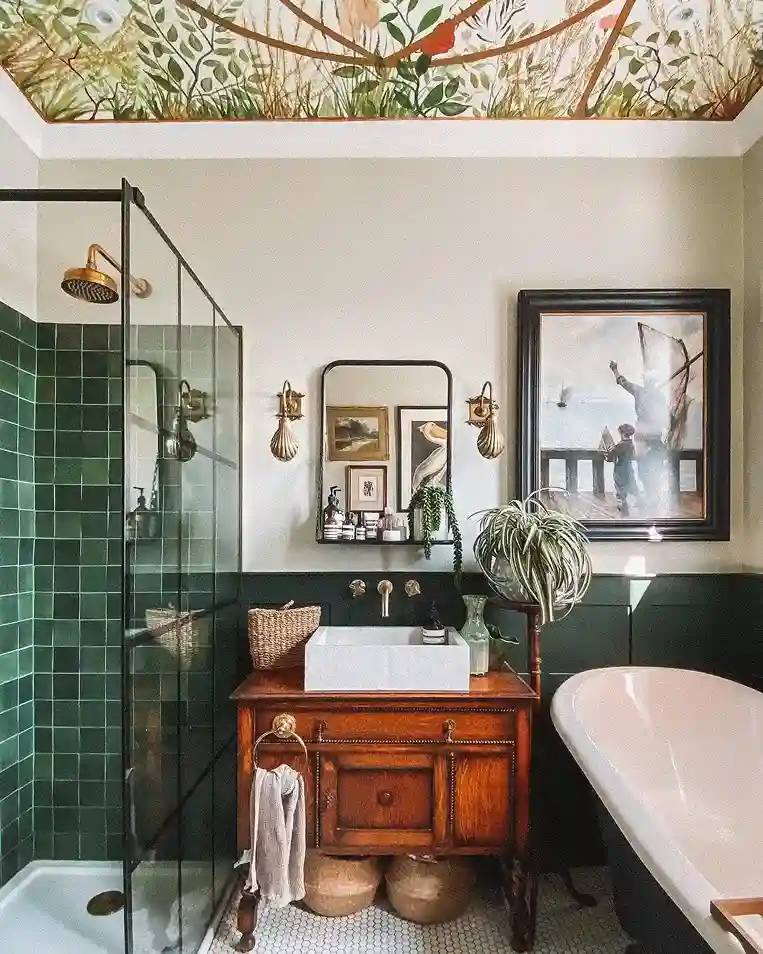
Install a clawfoot tub shower conversion with a circular curtain ring suspended from the ceiling. This ring allows a shower curtain to surround the entire tub for complete water containment. Choose a shower curtain in a striped, botanical, or period-appropriate fabric for full Victorian character.
| Victorian Shower Solution | Victorian Aesthetic Preserved |
|---|---|
| Clawfoot tub circular ring | Fully Victorian, most authentic |
| Separate shower with period tile | Victorian tile makes it period |
| Rainfall shower with bronze finish | Modern function, Victorian finish |
| Walk-in with subway tile | Classic Victorian tile choice |
21. How to Install Victorian-Appropriate Window Treatments
Windows in a Victorian bathroom require treatments that balance privacy with the rich, layered look of the period. Bare windows are entirely wrong in a Victorian space regardless of their size or position. The right window treatment adds enormous atmosphere and period character.

Use a simple lace café curtain on the lower half of the window for privacy with light. Add a full-length velvet or brocade drape on one side for a dramatic framing effect. A roman blind in a period fabric provides a cleaner, more practical Victorian window solution.
| Victorian Window Treatment | Light and Privacy Balance |
|---|---|
| Lace café curtain | Privacy below, light above |
| Full velvet drape | Dramatic, rich, theatrical |
| Roman blind in period fabric | Clean, practical, period-correct |
| Etched or frosted glass | No treatment needed, permanent |
22. How to Create a Victorian Bathroom on a Budget
A full Victorian bathroom transformation does not require an unlimited budget. Strategic investments in the most visible elements deliver the maximum Victorian impact. Smart shopping and DIY skills make this beautiful style accessible at any price point.

Prioritize the bathtub and floor tile as the two most impactful budget investments. Paint walls and add wainscoting yourself to save significant professional labor costs. Source vintage accessories, mirrors, and hardware from antique markets and online auction sites for authentic pieces at fraction of retail cost.
| Budget Victorian Priority | Cost-Saving Approach |
|---|---|
| Clawfoot tub | Buy refinished vintage, not new |
| Victorian floor tile | DIY installation saves labor cost |
| Period accessories | Antique markets, estate sales |
| Wainscoting | DIY beadboard, paint yourself |
23. How to Choose Victorian-Appropriate Artwork for the Bathroom
Artwork in a Victorian bathroom adds the personal, collected quality that defines the style. The Victorians hung art in every room of the home including bathrooms enthusiastically. Choosing the right art reinforces the period character and adds visual richness.
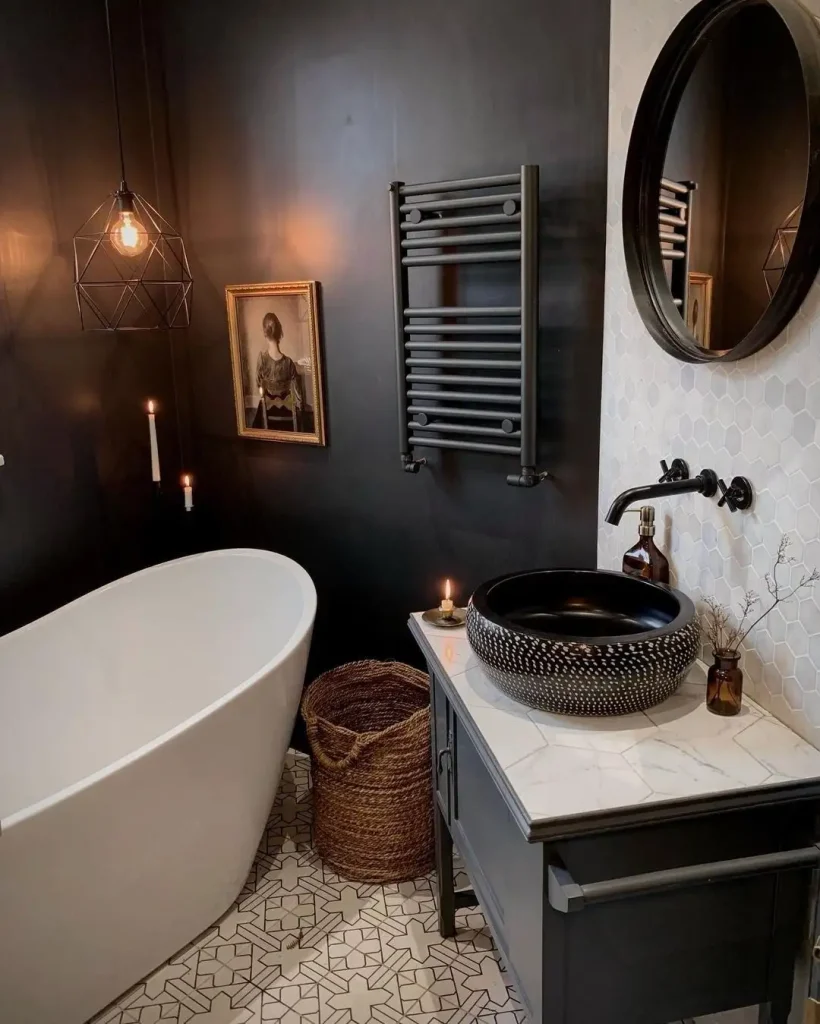
Choose botanical prints, portrait miniatures, and Victorian-era illustrations for the most authentic choices. Frame artwork in ornate gilded or dark wood frames consistent with the bathroom’s hardware finishes. Hang art above the bath, beside the mirror, and on any available wall space for a fully collected effect.
| Victorian Bathroom Artwork | Frame Style |
|---|---|
| Botanical illustrations | Gilt or dark wood ornate frame |
| Portrait miniatures | Small oval gilt frames |
| Victorian-era advertisements | Mahogany or black frames |
| Landscape prints | Large gilt frames, dramatic scale |
24. How to Add a Victorian-Style Heated Towel Rail
A heated towel rail combines modern comfort with period-appropriate bathroom styling. Victorian-style heated towel rails are available in designs that are virtually indistinguishable from authentic period pieces. This practical addition adds luxury and ensures towels are always warm and dry.

Choose a towel rail in a traditional ladder design in oil-rubbed bronze or aged brass finish. Mount at a height that allows full-length bath towels to hang without touching the floor. A wider towel rail accommodates multiple towels simultaneously which is both practical and visually generous.
| Victorian Towel Rail Style | Finish Choice |
|---|---|
| Traditional ladder style | Oil-rubbed bronze or aged brass |
| Ornate curved rail | Polished brass, most decorative |
| Simple bar rail | Antique nickel, understated |
| Wall-mounted vintage style | Any period finish, space-saving |
25. How to Design a Small Victorian Bathroom
A small bathroom can be fully Victorian without feeling cramped or compromised. The Victorian aesthetic actually suits small spaces because the rich details fill the room beautifully. Strategic choices maximize both floor space and the period atmosphere simultaneously.

Use a corner clawfoot tub or a smaller slipper tub to maximize usable floor space. Choose a corner pedestal sink to free up the wall space for furniture and storage. Use full-height wallpaper and dramatic tile to make the small space feel intentional and immersive.
| Small Victorian Bathroom Strategy | Space Saved |
|---|---|
| Corner clawfoot tub | Significant floor space saved |
| Corner pedestal sink | Wall space preserved for storage |
| Full-height Victorian tile | No space lost, maximum impact |
| Vertical storage furniture | Floor space preserved |
26. How to Use Antique and Vintage Finds in a Victorian Bathroom
Genuine antique and vintage pieces elevate a Victorian bathroom from inspired to truly authentic. Nothing achieves period accuracy like objects that actually come from the period itself. These finds add depth, history, and a genuinely uncopyable quality to the bathroom design.

Source original Victorian bathroom accessories from antique dealers and estate sales consistently. Look for original ceramic soap dishes, towel rails, and mirror frames from the Victorian period. A genuine antique medicine cabinet or shaving mirror adds irreplaceable period character to any Victorian bathroom.
| Antique Victorian Find | Best Source |
|---|---|
| Original Victorian soap dish | Antique shops, estate sales |
| Period towel rail or bar | Architectural salvage yards |
| Antique medicine cabinet | Online auctions, antique dealers |
| Victorian mirror frame | Antique markets, estate sales |
27. How to Add a Victorian Clawfoot Tub Shower Curtain
A clawfoot tub shower curtain is both functional and a significant decorative element. The curtain and its ring are highly visible from every point in the bathroom. Choosing the right fabric, color, and ring style completes the clawfoot tub as a fully Victorian centerpiece.

Use a circular or oval shower curtain ring suspended from the ceiling above the tub. Choose a curtain in a period-appropriate fabric such as a botanical linen or a classic stripe. The curtain rings should match the bathroom hardware finish for a cohesive, designed appearance.
| Shower Curtain Fabric | Victorian Character |
|---|---|
| White cotton with embroidery | Classic, clean, elegant |
| Botanical linen print | Victorian botanical enthusiasm |
| Classic ticking stripe | Understated, traditional |
| Waffle weave white | Textural, timeless, luxurious |
28. How to Style the Space Around a Clawfoot Tub
The area surrounding a clawfoot tub deserves as much attention as the tub itself. Thoughtful styling around the tub creates a complete bathing vignette rather than an isolated fixture. Every object placed near the tub should enhance the Victorian bathing ritual experience.

Add a freestanding tub caddy in aged brass or oil-rubbed bronze across the tub opening. Place a Victorian-style plant stand with a lush fern beside the tub end. Add a small side table with a candle, a book, and a rolled towel for complete bathing luxury.
| Clawfoot Tub Surrounding Element | Placement |
|---|---|
| Aged brass tub caddy | Across tub opening |
| Victorian plant stand with fern | At one end of the tub |
| Small side table | Beside tub, within reach |
| Rolled white towels | On stand or side table |
29. How to Finish the Victorian Bathroom With Scent and Atmosphere
A Victorian bathroom experience goes beyond the visual to include scent, sound, and atmosphere. The Victorians valued the bath as a ritual of restoration and indulgence. Creating the right sensory atmosphere completes the Victorian bathroom design at its deepest level.

Use lavender, rose, and cedar scented products in period-appropriate glass or ceramic containers. Place beeswax or soy candles in brass or crystal holders around the tub area. Add a small botanical arrangement of dried lavender, eucalyptus, or fresh flowers on the vanity area.
| Victorian Bathroom Scent | Atmospheric Effect |
|---|---|
| Lavender | Calming, classic Victorian |
| Rose water | Feminine, period-perfect |
| Cedar and sandalwood | Warm, rich, grounding |
| Fresh eucalyptus | Clean, aromatic, botanical |
30. How to Maintain and Care for a Victorian Bathroom
A Victorian bathroom contains many materials and fixtures that require specific care. Proper maintenance preserves the beauty, authenticity, and value of every period element. A well-maintained Victorian bathroom becomes more beautiful and characterful with every passing year.

Clean cast iron clawfoot tubs with non-abrasive cleaners only to preserve the enamel surface. Polish aged brass fixtures with specialist brass polish to maintain their warm patina. Clean encaustic and Victorian tile floors with a pH-neutral cleaner to protect the tile surface and grout.
| Victorian Bathroom Material | Care Method |
|---|---|
| Cast iron clawfoot tub | Non-abrasive cleaner, avoid scouring |
| Aged brass fixtures | Specialist brass polish, dry thoroughly |
| Encaustic tile floor | pH-neutral cleaner, seal annually |
| Painted wainscoting | Wipe with damp cloth, repaint as needed |
Frequently Asked Questions
What makes a bathroom Victorian style?
A Victorian bathroom is defined by its clawfoot or freestanding tub, ornate fixtures in aged brass or bronze, black and white geometric floor tile, white subway wall tiles, beadboard or raised panel wainscoting, and a bold jewel-toned color palette. Period-appropriate accessories, decorative molding, and botanical plants complete the authentic Victorian look.
How much does a Victorian bathroom renovation cost?
A Victorian bathroom renovation ranges from $5,000 for a budget-focused approach to $30,000 or more for a fully authentic high-end transformation. The clawfoot tub and floor tile represent the largest costs. Budget-conscious approaches source vintage fixtures and DIY the wainscoting and tile installation to reduce costs significantly.
Can I add Victorian style to a modern bathroom?
Yes absolutely. Swap modern chrome fixtures for aged brass or oil-rubbed bronze throughout. Add a clawfoot tub if space allows or a pedestal sink as a simpler change. Install black and white hexagon floor tile and white subway wall tile. Add wainscoting, a period mirror, and botanical prints to complete the transformation.
What color should Victorian bathroom walls be?
Victorian bathroom walls look most authentic in deep jewel tones above the dado rail. Forest green, navy, burgundy, and plum are the most period-appropriate choices. Warm cream and ivory suit smaller Victorian bathrooms where a deep color might feel too heavy and overwhelming.
What floor tile is most authentic for a Victorian bathroom?
Black and white hexagon mosaic tile is the single most recognizable and authentic Victorian floor tile pattern. Geometric encaustic cement tiles in multicolor patterns are equally authentic. Classic black and white checkerboard in 4 to 6 inch squares is the third most authentic Victorian floor tile choice available.
Conclusion
A Victorian bathroom is one of the most rewarding and beautiful home transformations possible. Every element from the clawfoot tub to the hexagon floor tile to the ornate mirror contributes to a space that feels genuinely extraordinary. This is a bathroom design that never dates, never feels tired, and grows more beautiful with every passing year.
Work through these 30 steps at your own pace and according to your budget priorities. Start with the most impactful elements — the tub, the tile, and the fixtures — and build the layers from there. Your Victorian bathroom will become the room in your home that guests talk about long after their visit is over.