
Before picking up a saw or ordering supplies, estimating your exact material needs is the key to avoiding costly over-purchasing. Factors like your deck’s perimeter length, ground clearance, and unique obstacles like steps or corners directly dictate how many boards, sheets, or fasteners your project will require.
Using our Cheap Deck Skirting Cost Calculator & Material Estimator below, you can quickly calculate your exact square footage, outline your full supply list, and preview an itemized DIY budget tailored to your chosen material.
Deck Skirting Cost Calculator & Material Estimator
Enter your deck measurements and local store prices to get an accurate material and cost breakdown.
Deck skirting solves this instantly. It hides the underside, finishes the edges, and makes the whole deck look intentional and designed. The best part is that great-looking skirting does not require a large budget.
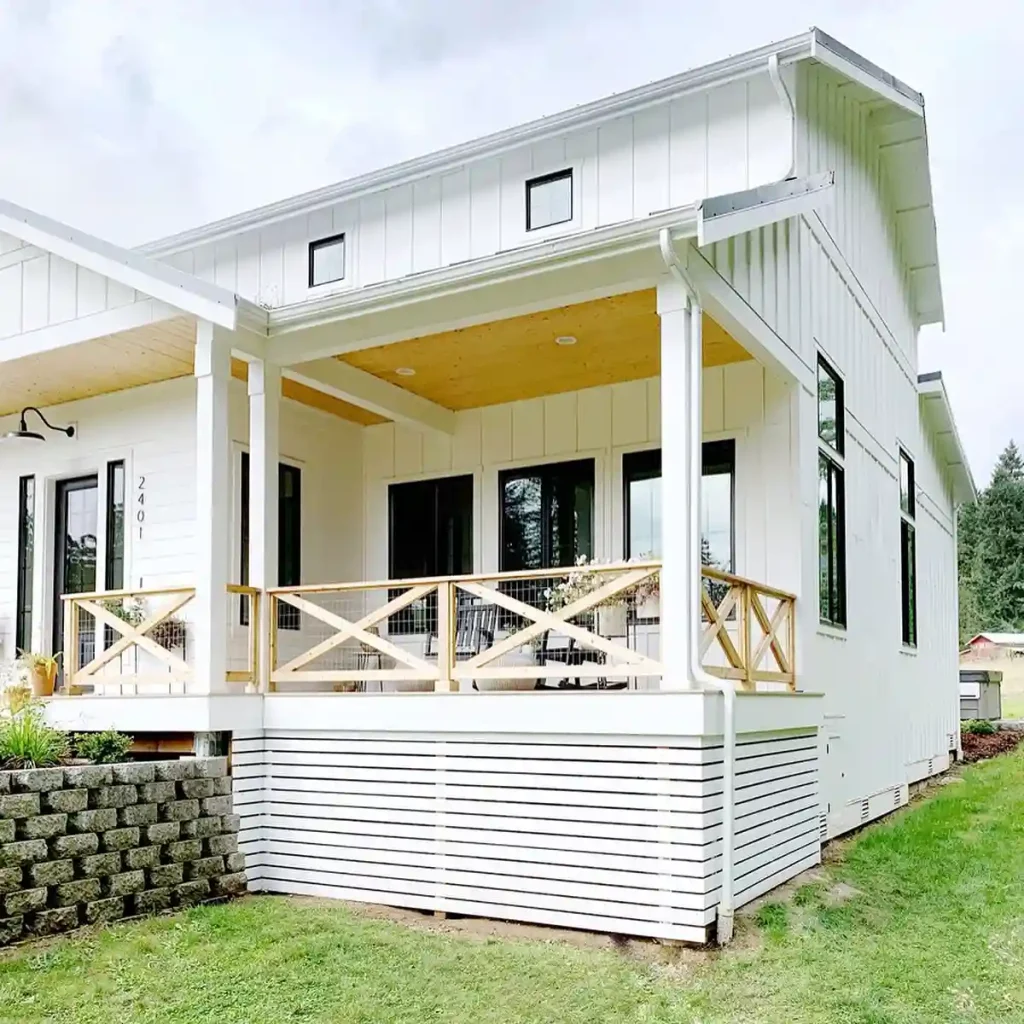
source: @kristin_kgdesigns
These 23 cheap deck skirting ideas prove that finishing your deck properly costs far less than most people assume.
1. Use Lattice Panels for a Classic Budget Solution
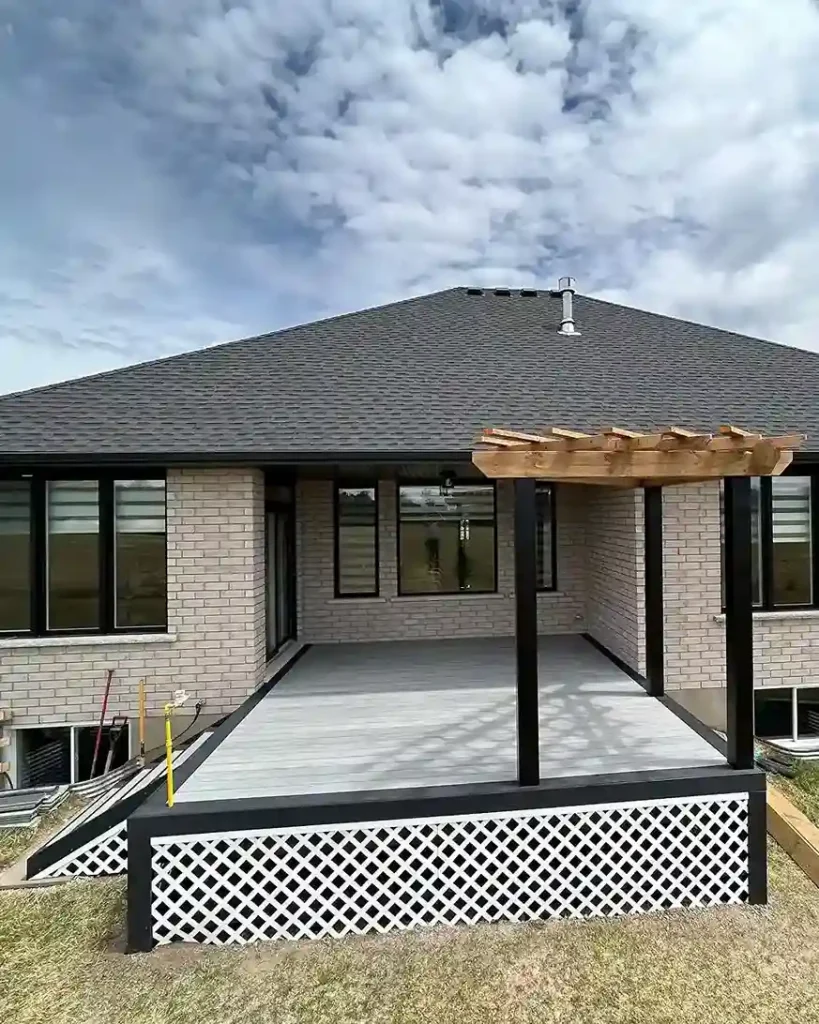
Lattice is the most popular and affordable deck skirting material available. It is widely sold at every home improvement store. The diagonal or square grid pattern allows airflow beneath the deck while blocking the view of the underside completely. It suits traditional, cottage, and farmhouse deck styles beautifully.
source: @forestcitycarpenter
Standard 4×8 foot lattice panels cut easily with a circular saw or jigsaw. They attach to a simple wood frame mounted between the deck framing and the ground. Paint or stain them to match the deck above for a cohesive, finished look. A complete lattice skirting installation for an average deck costs $100–$300 in materials. Read our guide on under budget pool decking for more learning.
| Lattice Type | Cost per Panel | Appearance | Best Deck Style |
|---|---|---|---|
| White PVC lattice | $20–$35 | Classic, clean | Traditional, coastal |
| Wood diagonal lattice | $15–$25 | Warm, cottage | Farmhouse, rustic |
| Square grid lattice | $15–$25 | Modern, geometric | Contemporary |
| Privacy lattice (small holes) | $25–$40 | Dense, more concealing | Any style |
| Decorative vinyl lattice | $25–$45 | Elegant, formal | Traditional, upscale |
2. Install Horizontal Wood Planks for a Modern Look
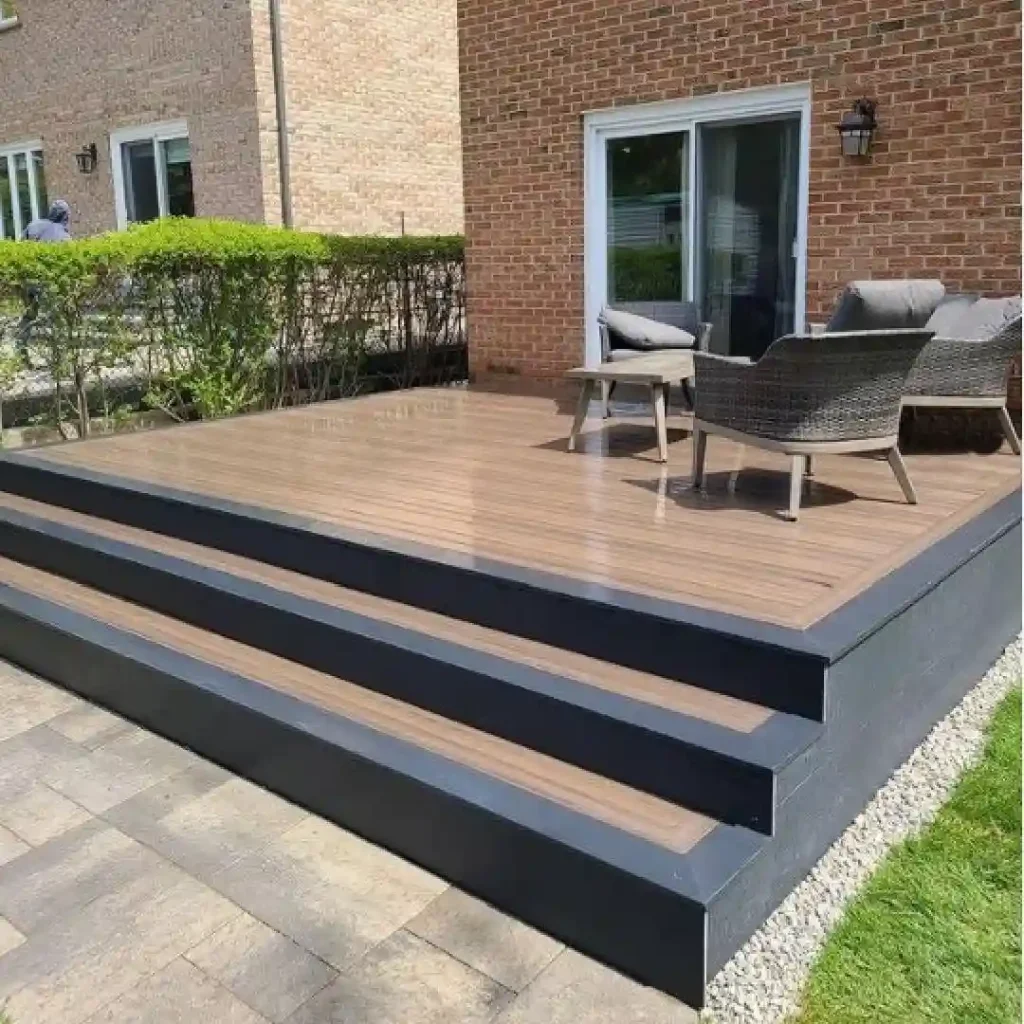
Horizontal wood planks as deck skirting create a clean, contemporary look that suits modern and transitional outdoor spaces. The horizontal lines echo the deck boards above and create a cohesive visual language from top to bottom. Cedar, pine, and composite boards all work beautifully in this application.
source: @deckorators
Space the boards with a small gap between each one. The gap allows airflow beneath the deck and prevents moisture buildup. It also reduces the amount of material needed, cutting costs further. A slightly irregular gap creates a more casual, organic look. Consistent uniform gaps create a more polished, designed result.
- Pressure-treated pine is the most affordable horizontal skirting option
- Cedar costs more but requires less maintenance and resists rot naturally
- Space boards 1/4 to 1/2 inch apart for adequate airflow beneath the deck
- Stagger board lengths slightly for a more interesting, less rigid appearance
- Pre-paint or pre-stain boards before installation for a more complete finish
3. Use Vertical Wood Boards for a Fence-Like Finish
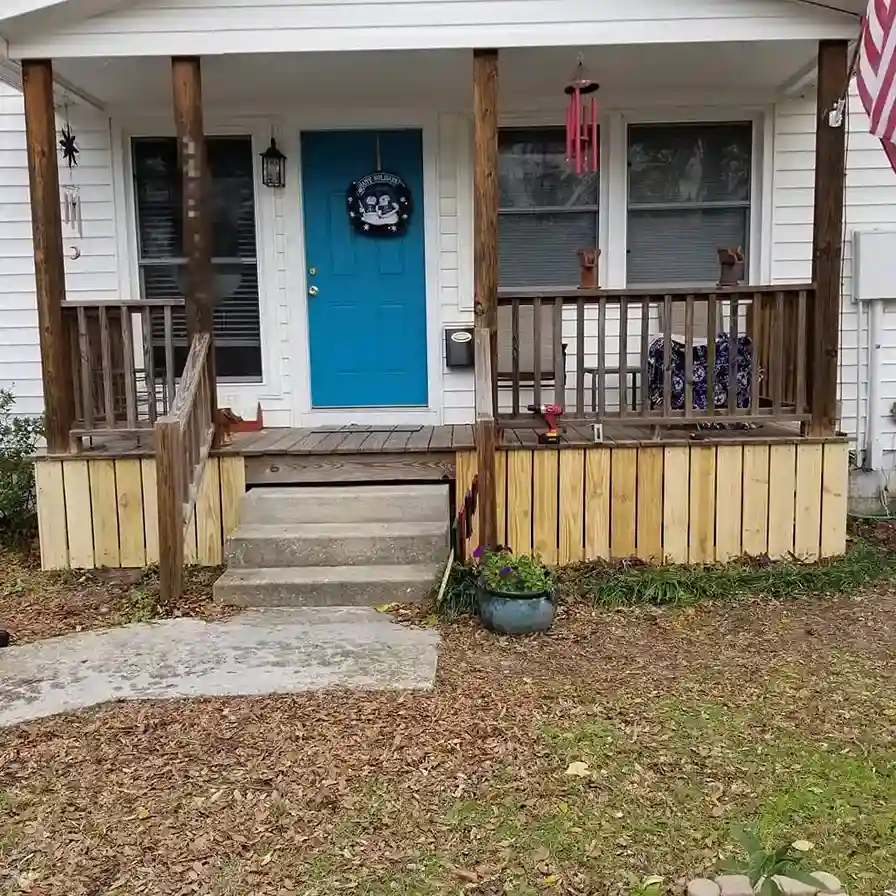
Vertical boards installed beneath the deck create a clean, fence-like skirting that suits rustic, farmhouse, and country deck styles. The boards can be spaced open like a picket fence or installed tightly together for complete concealment. Either approach creates a genuinely finished appearance at very low cost. Read our guide on under budget diy patio development for more information.
source: @shrimp_pimp1206
Rough-sawn pine boards are the most budget-friendly option. Sand them lightly and apply a coat of exterior paint or stain for protection. A simple top rail and bottom rail frame holds the vertical boards in position. The entire installation requires only basic carpentry skills. A vertical board skirting for an average deck costs $80–$200 in materials.
| Board Spacing Option | Airflow | Privacy | Best Style |
|---|---|---|---|
| Tight (no gap) | None — add vents | Maximum | Formal, cottage |
| 1/4 inch gap | Minimal | High | Traditional |
| 1 inch gap | Good | Medium | Casual, farmhouse |
| Picket spacing (2–3 inches) | Excellent | Low | Cottage, traditional |
| Wide spaced (4+ inches) | Maximum | Low | Modern, open |
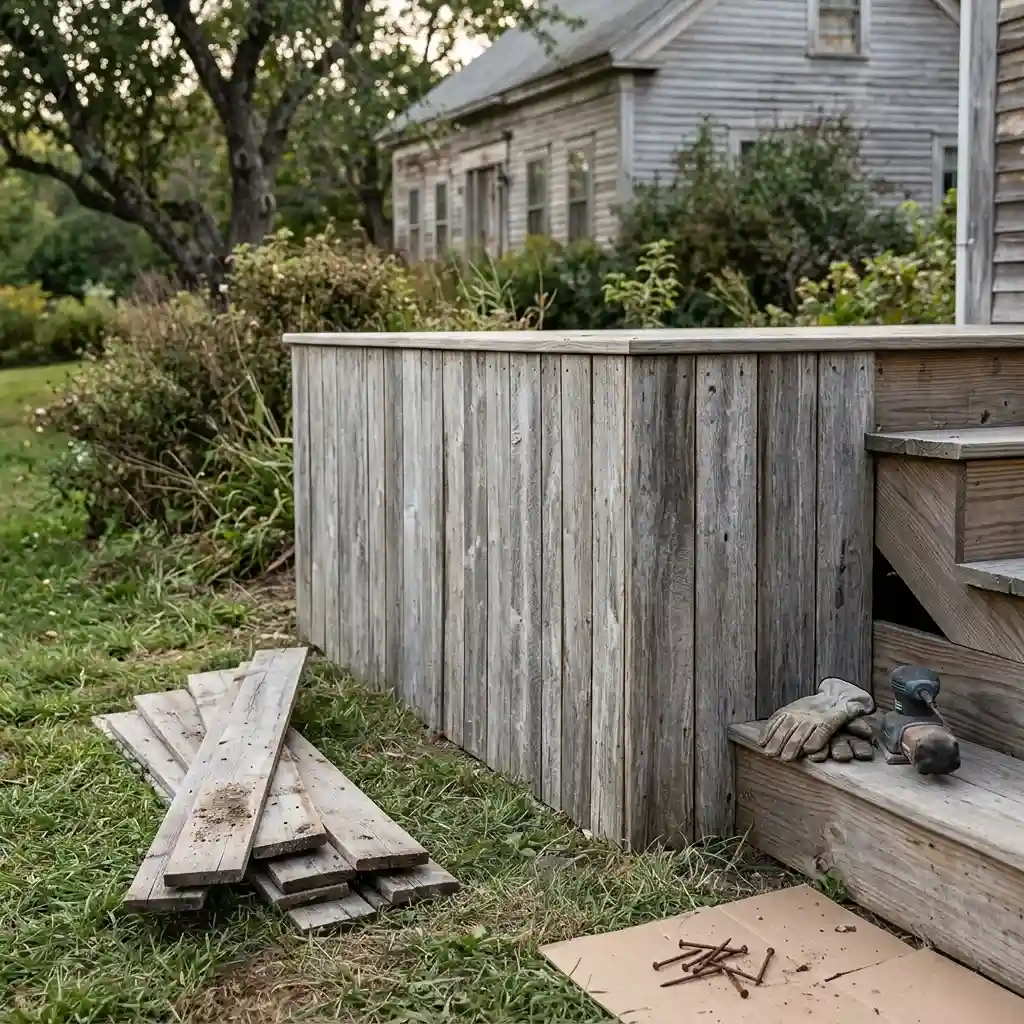
4. Repurpose Old Fence Boards for Free Skirting
Old fence boards destined for the landfill make excellent deck skirting. They are already weathered to a beautiful grey-silver tone that suits rustic and farmhouse decks perfectly. No painting or staining is needed. The reclaimed material adds genuine character that new purchased boards cannot replicate.
source: @homefixtrends
Source old fence boards from neighbors replacing fences, demolition sites, and online marketplaces where people frequently give away old fencing for free. Check all boards for structural integrity before installation. Remove any old nails and sand any dangerously rough edges. The result is a deck skirting with authentic character that cost nothing in materials.
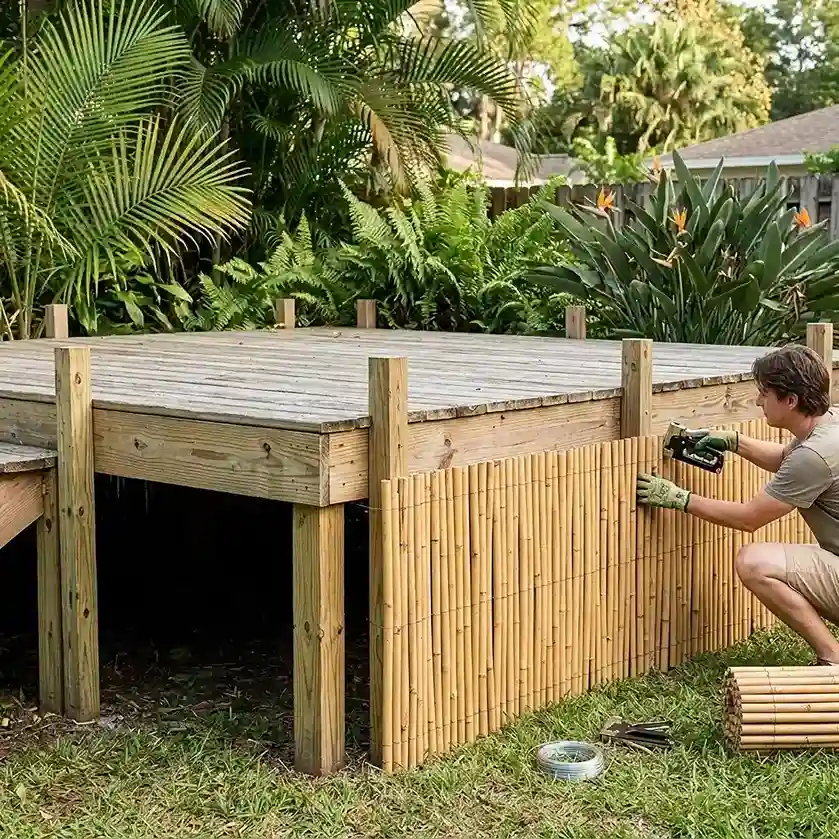
5. Try Bamboo Roll Fencing for a Tropical Budget Finish
Bamboo roll fencing is one of the cheapest and fastest deck skirting solutions available. It comes in rolls of various heights and lengths. Simply unroll it and attach it to the deck framing with wire ties or staples. The entire installation takes an hour or two with no special skills or tools required.
source: @homefixtrends
| Bamboo Roll Spec | Cost | Coverage | Durability |
|---|---|---|---|
| 4 ft tall x 8 ft roll | $15–$25 | 8 linear ft | 3–5 years |
| 6 ft tall x 8 ft roll | $20–$35 | 8 linear ft | 3–5 years |
| Natural bamboo | $15–$30 | Varies | 3–5 years |
| Treated bamboo | $25–$45 | Varies | 5–8 years |
Bamboo roll skirting is ideal for a seasonal or temporary installation. It suits tiki-bar, tropical, and casual beach-house deck aesthetics. Seal the bamboo with an outdoor wood sealer annually to extend its lifespan. Replace the roll when it begins to deteriorate — the low cost makes replacement easy and affordable.
6. Install Corrugated Metal Panels for an Industrial Edge
Corrugated metal panels beneath a deck create a bold industrial aesthetic. The rippled metal surface adds visual texture. The material is extremely durable, completely rot-proof, and requires no maintenance beyond occasional cleaning. It suits industrial, modern farmhouse, and contemporary outdoor spaces particularly well.
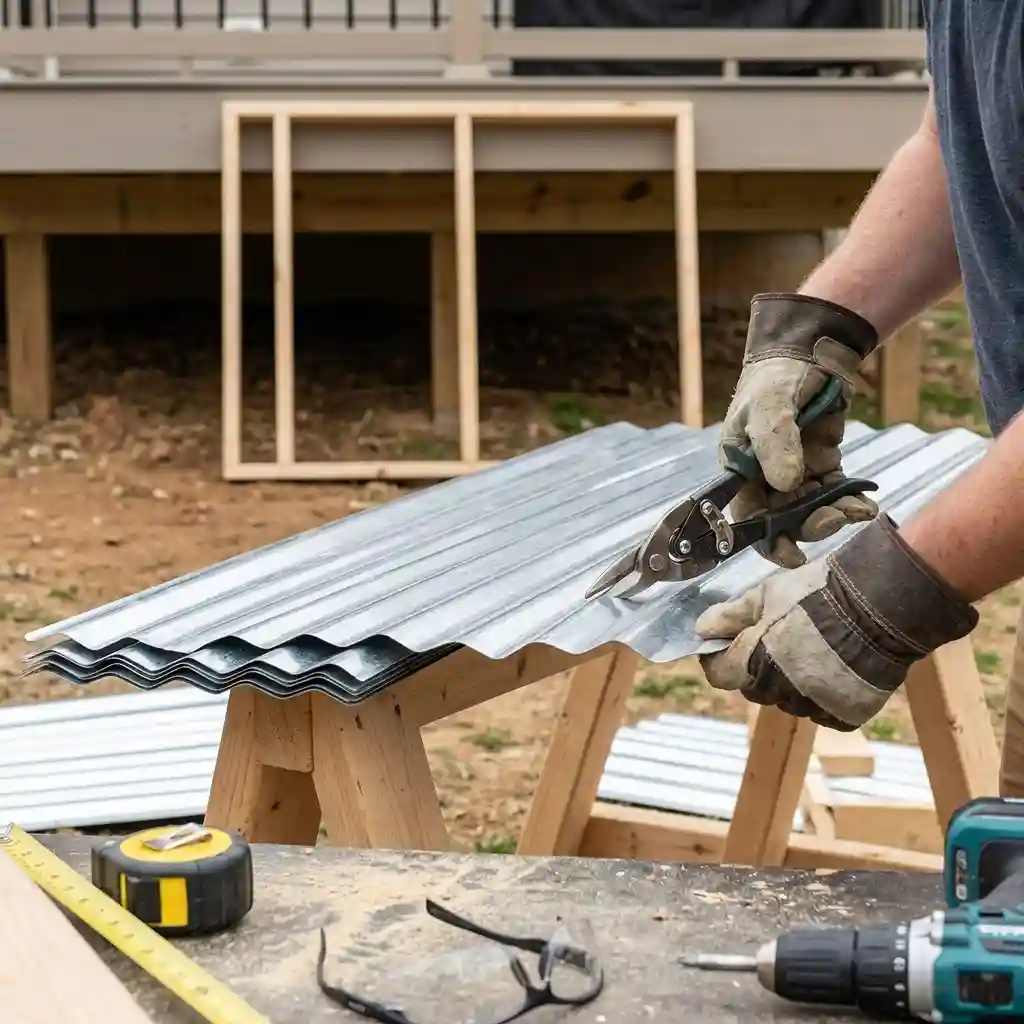
Corrugated metal roofing panels are available at most hardware stores at very low cost per sheet. They cut with metal shears or an angle grinder. Attach them to a simple wood frame using roofing screws with rubber washers. Choose galvanized metal for maximum rust resistance. A corrugated metal deck skirting costs $50–$150 in materials for an average deck.
- Galvanized steel resists rust far better than untreated metal in outdoor settings
- Pre-painted corrugated panels in black or charcoal suit modern farmhouse decks beautifully
- Wear gloves when cutting metal panels — the edges are extremely sharp
- Leave a small gap between panels and the ground to prevent ground moisture contact
- This material pairs beautifully with dark stained wood decking and black hardware
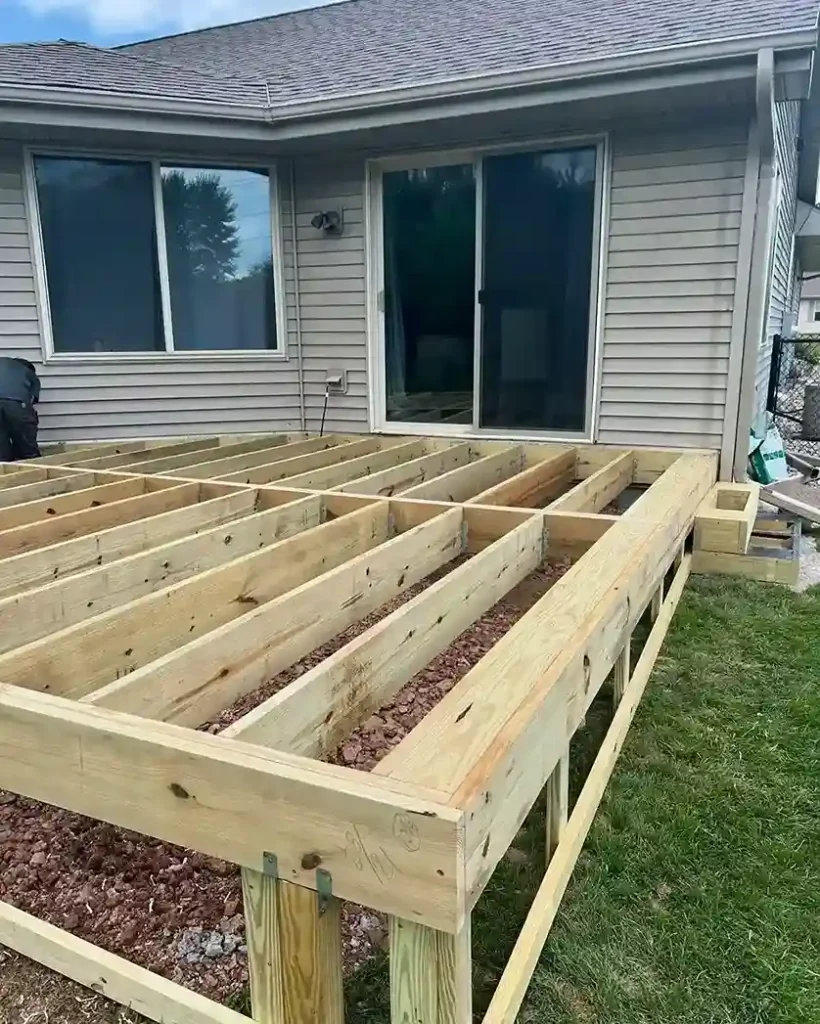
7. Use Plywood Sheets as a Cheap Base Skirting
Plywood is one of the cheapest solid deck skirting materials available. Exterior-grade plywood cut to the deck skirt height and painted creates a completely finished, smooth appearance. It conceals the underside completely and creates a blank canvas for any painted design or color treatment. One sheet of plywood covers a significant length of deck perimeter.
source: @coppenscustomsolutions
Apply a coat of exterior primer and two coats of paint in a color that matches or complements the deck. Choose a semi-gloss or exterior satin finish for maximum weather resistance. Add simple routed channels, painted trim strips, or a stenciled pattern to add visual interest to the flat plywood surface. Plywood deck skirting costs $15–$25 per 4×8 sheet — one of the lowest material costs of any skirting option.
| Plywood Finish Option | Cost to Add | Visual Effect |
|---|---|---|
| Solid paint color | $5–$10 per sheet | Clean, simple |
| Two-tone paint | $8–$15 per sheet | Detailed, designed |
| Stenciled pattern | $10–$20 total | Decorative, personal |
| Routed channel detail | $0 (skill required) | Architectural, formal |
| Applied wood trim strips | $10–$25 total | Paneled, upscale |
8. Create a Living Skirting With Plants and Shrubs
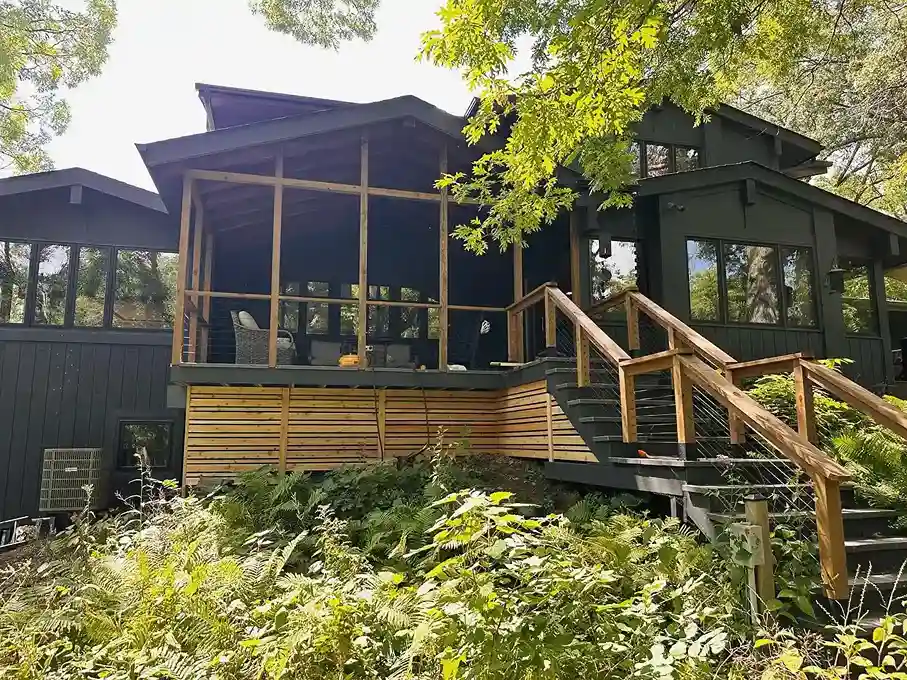
Plants used as natural deck skirting are both beautiful and completely free of manufactured materials. Low-growing shrubs, ornamental grasses, and spreading ground cover plants planted along the deck perimeter fill the gap between deck and ground naturally over time. The living skirting looks genuinely beautiful and improves with every passing season.
source: @ourhouseinthewoods_pg
Choose plants suited to the light conditions beneath and beside the deck. Low-light tolerant varieties like hostas, ferns, and sweet woodruff suit shaded areas. Lavender, rosemary, and ornamental grasses thrive in sunny exposures. Install landscape fabric beneath the plant zone to suppress weeds between plants. This is the only skirting option that gets better-looking every single year.
9. Use Concrete Blocks for a Chunky Budget Base
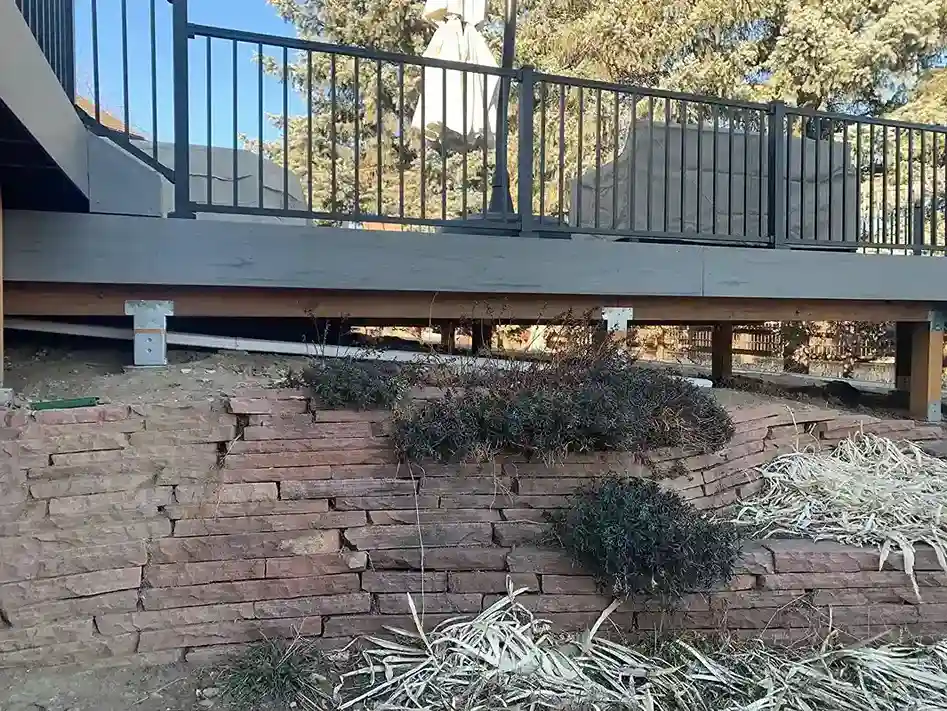
Stacked concrete blocks as deck skirting create a heavy, substantial border that keeps the deck grounded visually. Retaining wall blocks stacked one to three courses high around the deck perimeter create a defined, finished edge. The blocks are available at home improvement stores at very low cost per unit and require no mortar for a simple stacked installation.
source: @vb_decking_llc
| Concrete Block Style | Cost Each | Stacking Height | Best Deck Style |
|---|---|---|---|
| Standard grey block | $1–$2 | 2–3 courses | Industrial, modern |
| Textured retaining block | $2–$4 | 2–4 courses | Rustic, country |
| Tumbled wall stone | $3–$5 | 2–3 courses | Natural, cottage |
| Split-face block | $2–$4 | 2–4 courses | Contemporary |
10. Install Composite Skirting Boards for a Long-Lasting Finish
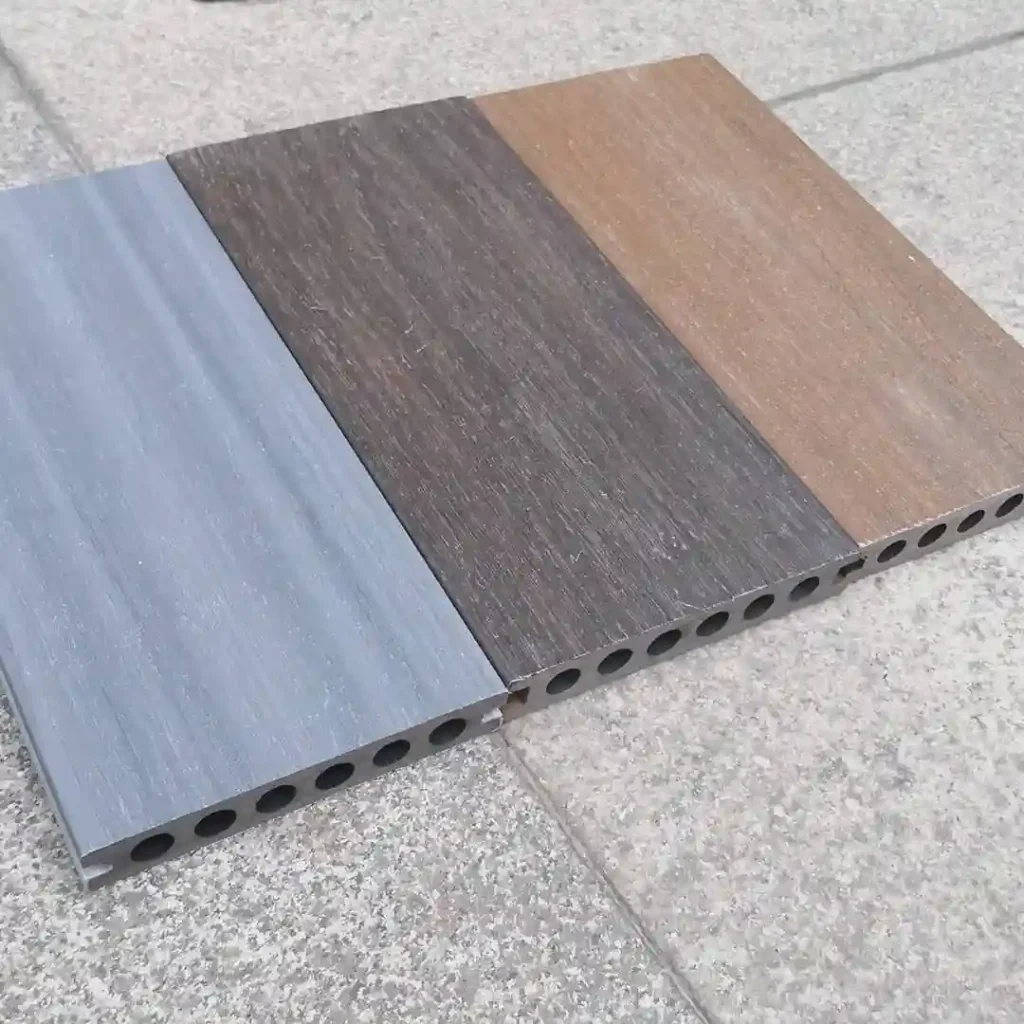
Composite boards used as deck skirting match composite decking materials almost perfectly. The color and texture consistency between the deck surface above and the skirting below creates a seamless, professional result. Composite skirting requires no painting, staining, or annual maintenance. It resists rot, moisture, and UV fading for years.
source: @decking1998
Budget composite skirting boards are available from the same manufacturers who supply composite decking. Buying both deck boards and skirting from the same product line ensures a perfect color match. Composite skirting costs more than wood options upfront but saves significant maintenance time and cost over the lifetime of the deck. For a deck intended to last decades, composite skirting is genuinely cost-effective.
- Match composite skirting to the exact deck board product line for a seamless appearance
- Install with hidden fastener clips for a completely clean, screw-free face
- Allow small expansion gaps between boards to accommodate seasonal temperature movement
- Clean composite skirting annually with a mild soap and water solution
- Budget composite skirting starts at $2–$4 per linear foot — more than wood but far less maintenance
11. Use Pallet Wood for a Free Rustic Skirting
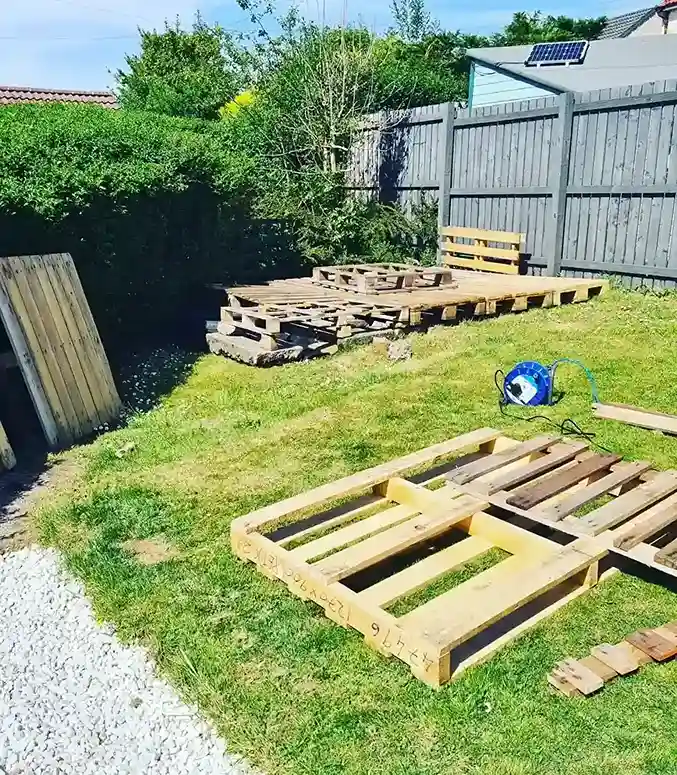
Wooden pallets are available for free or nearly free from warehouses, hardware stores, and garden centers. Disassembled pallet boards make excellent rustic deck skirting. The rough, weathered texture of pallet wood adds authentic character instantly. No staining or painting is required — the natural grey-brown tone of weathered pallet wood suits rustic decks perfectly.
source: @mssancheung
Source only clean, structurally sound pallets marked HT for heat-treated. Disassemble carefully with a pry bar and hammer. Remove all protruding nails. Sand any dangerously rough edges smooth. Install horizontally or vertically depending on the preferred aesthetic. Seal with a clear exterior wood sealer for extended longevity. The material cost is zero — just time and effort.
| Pallet Wood Layout | Look | Difficulty |
|---|---|---|
| Horizontal random lengths | Casual, organic, rustic | Easy |
| Vertical even lengths | Structured, fence-like | Easy |
| Herringbone pattern | Decorative, artisan | Moderate |
| Mixed horizontal/vertical | Eclectic, creative | Moderate |
12. Add a Chalkboard Paint Skirting Panel for Fun
A plywood skirting panel painted with chalkboard paint creates a functional and fun deck skirting feature. Children can draw on the panels around the deck. Menu boards for outdoor entertaining can be written directly on the surface. Seasonal decorations and messages chalk onto the surface and wipe off cleanly. It is a genuinely creative budget skirting approach.
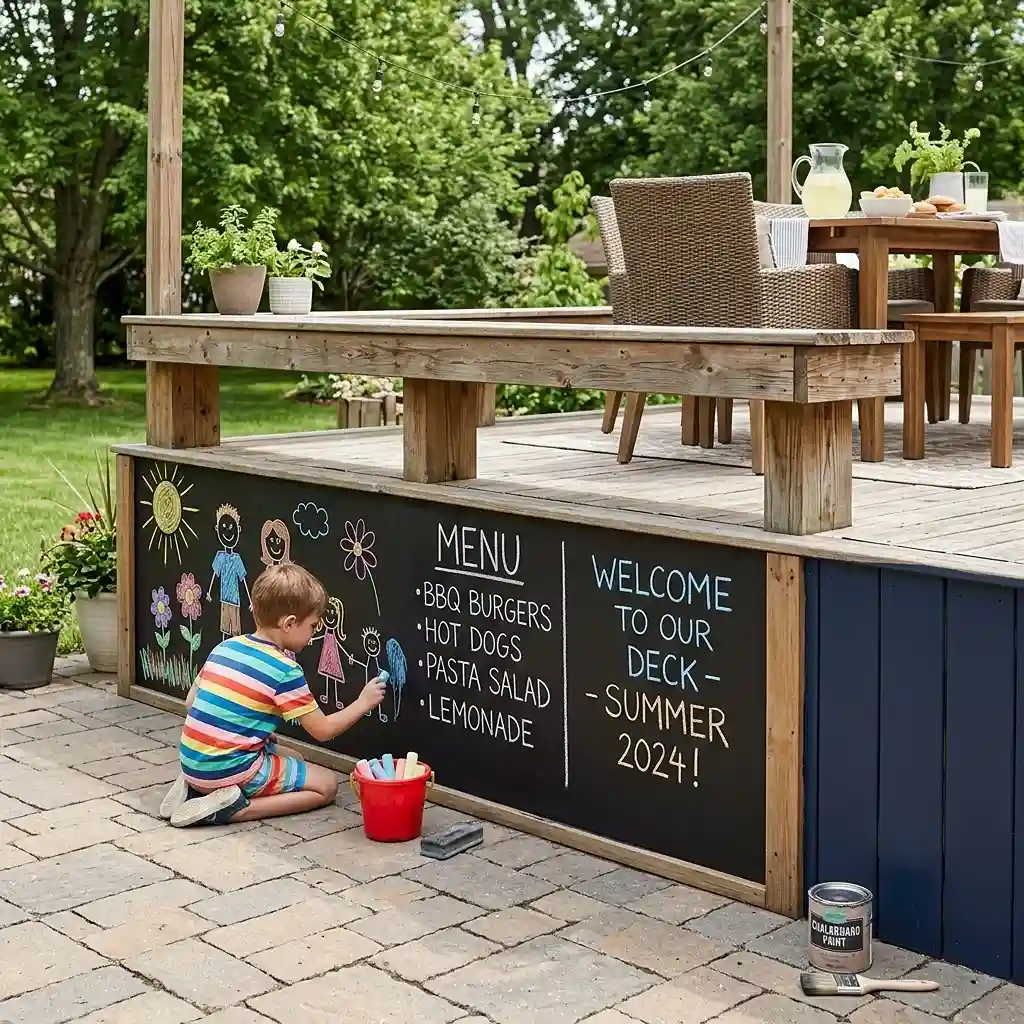
source: @homefixtrends
This works best on the most visible side of the deck facing the outdoor entertaining area. Paint the remaining sides in a coordinating exterior color. The chalkboard panel becomes a conversation piece and a functional feature that guests notice and enjoy. Chalkboard paint costs $15–$25 per can and covers a significant panel area in two coats.
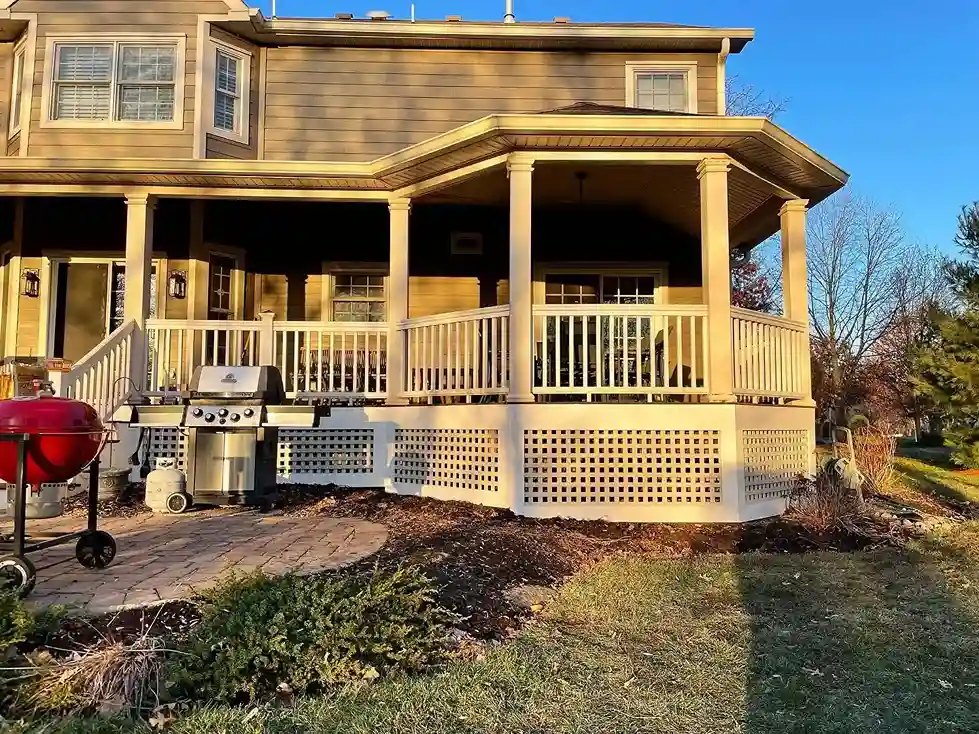
13. Use Vinyl Lattice for a Low-Maintenance Classic Option
Vinyl lattice offers all the appearance benefits of wood lattice with none of the maintenance requirements. It never rots, never warps, never needs painting, and cleans easily with a garden hose. The initial cost is slightly higher than wood lattice but the lifetime cost is significantly lower when maintenance savings are factored in.
| Vinyl vs Wood Lattice | Vinyl | Wood |
|---|---|---|
| Initial cost | Slightly higher | Lower |
| Painting required | Never | Every 3–5 years |
| Rot resistance | Excellent | Moderate |
| Warping tendency | None | Possible |
| Lifespan | 25–30 years | 10–15 years |
| Lifetime cost | Lower | Higher |
14. Install a Simple Wood Frame With Wire Mesh
A wood frame with wire mesh infill creates a clean, modern, and extremely affordable deck skirting. The mesh allows maximum airflow beneath the deck. Small animals cannot access the underside. The industrial quality of the wire mesh suits modern farmhouse and contemporary outdoor styles well.
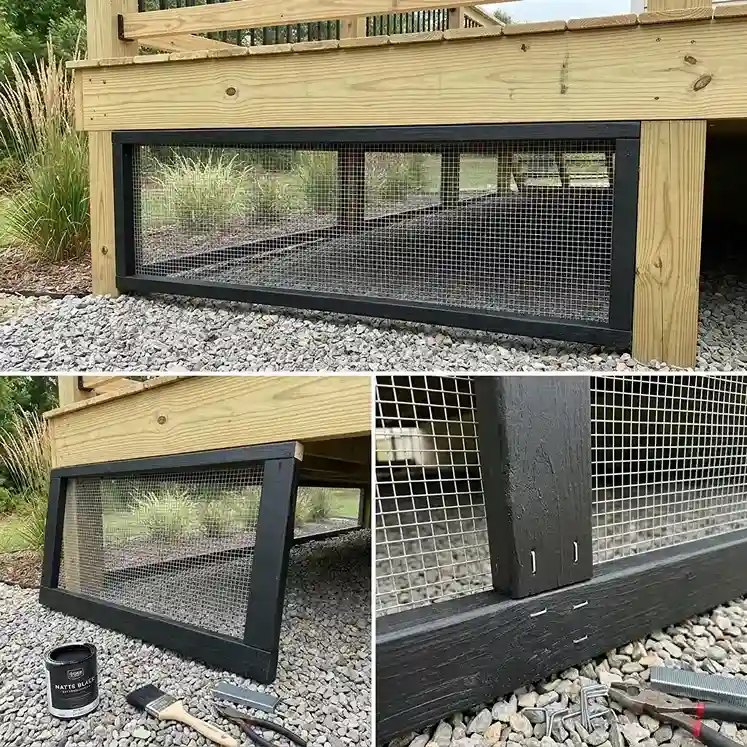
source: @homefixtrends
Build simple rectangular frames from 2×4 lumber. Staple galvanized hardware cloth or welded wire mesh across each frame. Mount the completed frames between the deck framing and the ground. Paint the wood frame and wire together in black, white, or dark grey for a cohesive result. This approach costs $50–$100 for an average deck.
- Use galvanized or PVC-coated wire mesh for maximum rust resistance outdoors
- 1/2 inch hardware cloth prevents small animals and rodents from accessing the deck underside
- Paint the wood frame and wire together in one consistent color for a finished look
- This approach works especially well combined with a simple wood frame painted in matte black
- Welded wire mesh is stiff and easy to work with compared to flexible chicken wire
15. Use Leftover Deck Boards as Matching Skirting
If you have leftover deck boards from the main deck build, using them as skirting creates a perfectly matched, seamless finish. The grain, color, and material are identical to the deck surface above. The result looks genuinely professional and intentional. The cost is zero if you planned your material quantities to include extra boards.
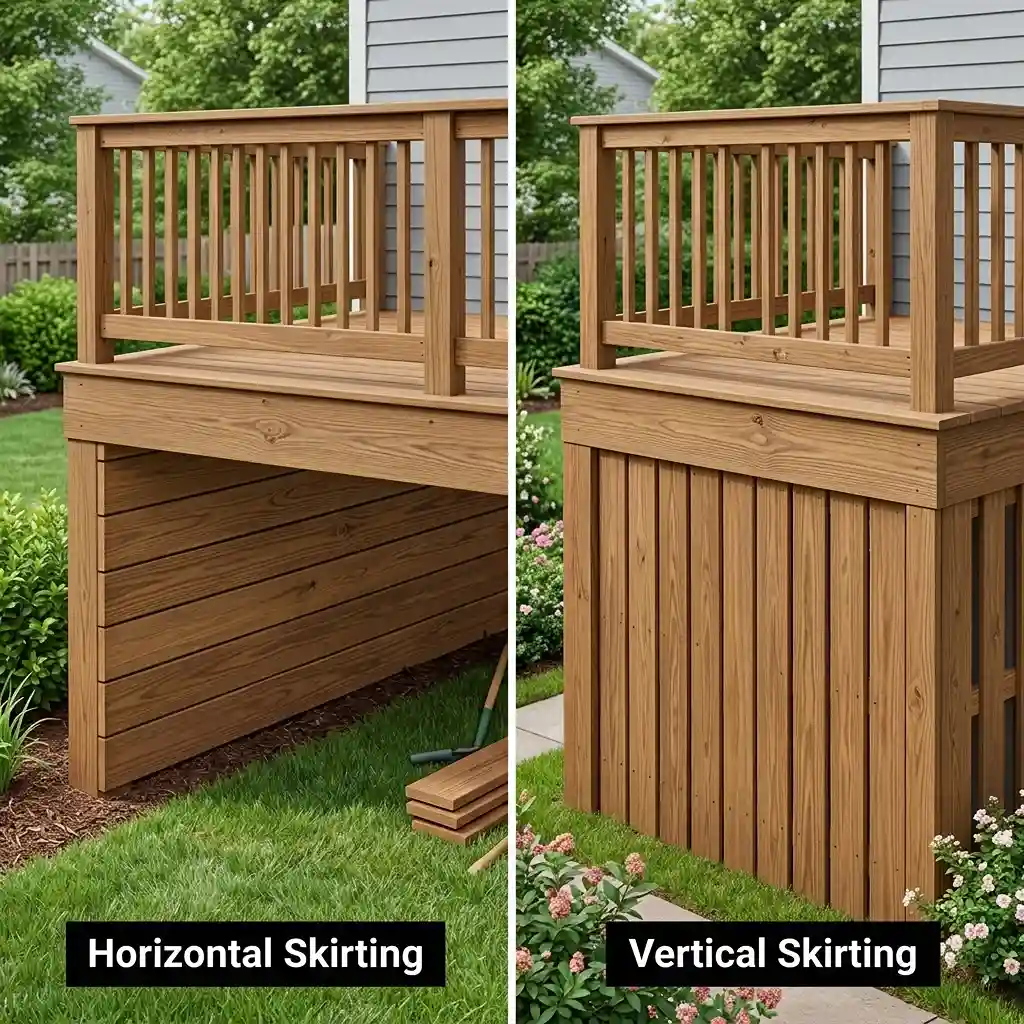
source: @homefixtrends
Install the leftover boards vertically or horizontally depending on the aesthetic you prefer. Vertical boards echo fence boards and create a solid, cottage-style skirting. Horizontal boards echo the deck surface and create a modern, wrap-around look. Either approach uses material you already paid for and delivers the most cohesive possible skirting result.
16. Create Stone Veneer Skirting for a High-End Look
Stone veneer applied over a plywood base creates a deck skirting that looks like expensive natural stone at a fraction of the cost. Faux stone veneer panels made from lightweight polyurethane or concrete composite are widely available at home improvement stores. They glue directly onto a prepared surface with construction adhesive.
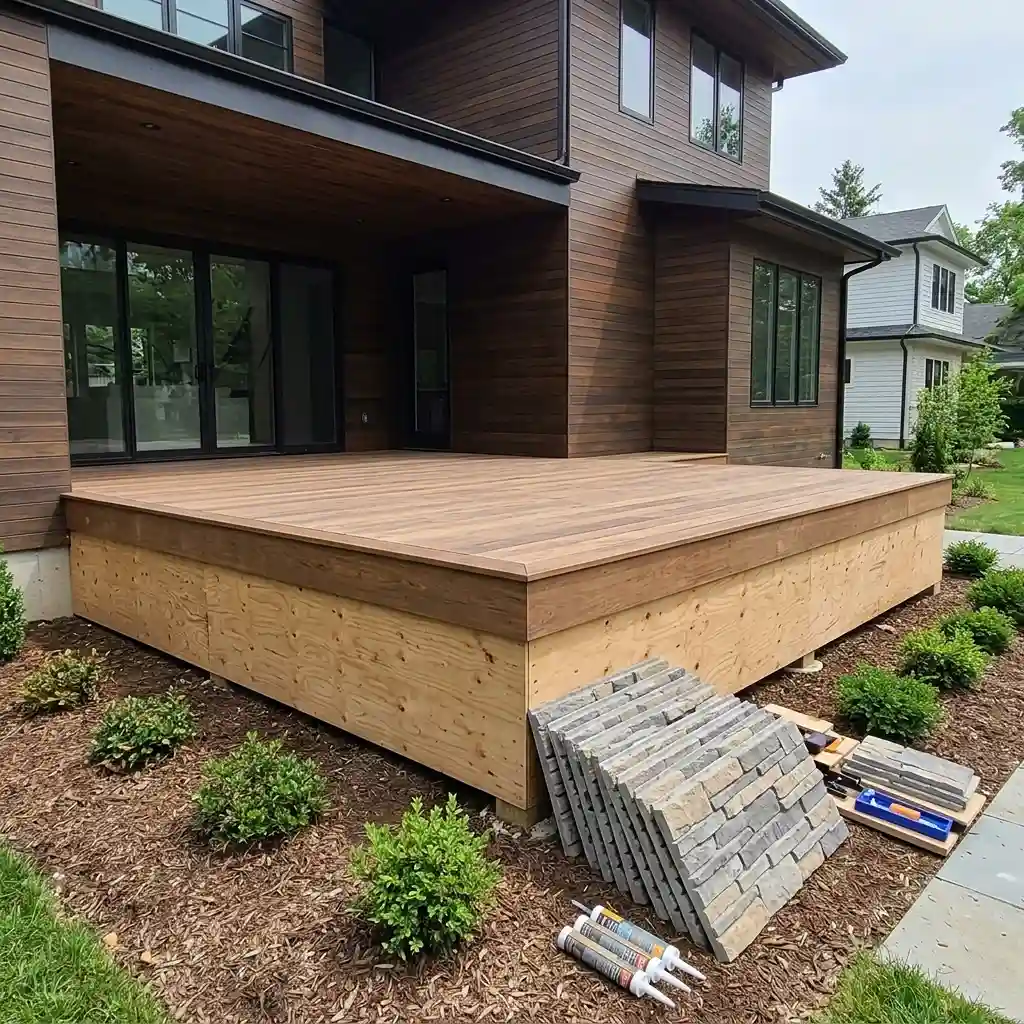
| Stone Veneer Type | Cost per sq ft | Weight | DIY Friendly |
|---|---|---|---|
| Polyurethane faux stone | $2–$5 | Very Light | Yes |
| Concrete composite panels | $4–$8 | Moderate | Yes |
| Real stacked stone veneer | $8–$15 | Heavy | Moderate |
| Peel-and-stick stone | $3–$6 | Very Light | Very Easy |
17. Use Cedar Shingles for a Cottage Charm Finish
Cedar shingles applied like roof shingles to a plywood base create a beautiful cottage or New England-style deck skirting. The overlapping shingle pattern sheds water effectively. The natural cedar tone ages to a beautiful silver-grey over time. Cedar is naturally rot-resistant and requires minimal maintenance compared to pine alternatives.
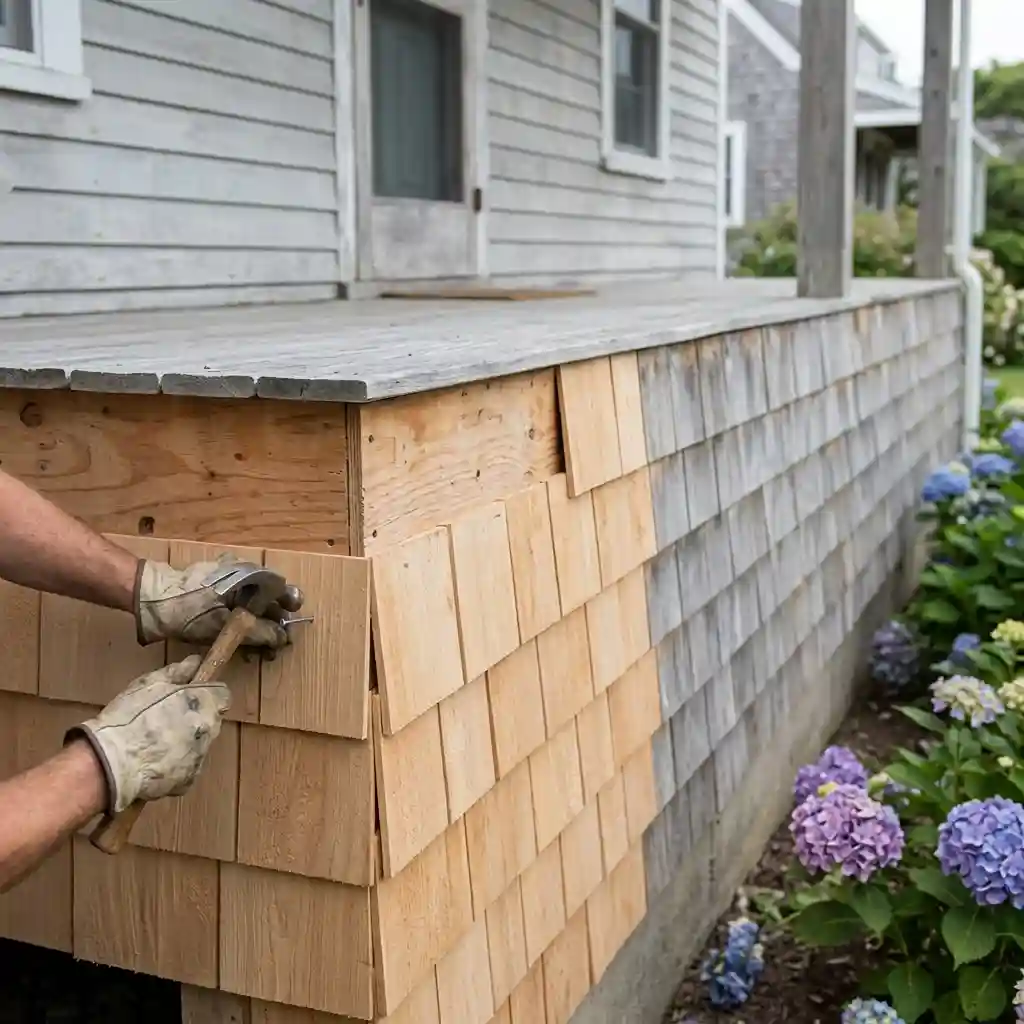
Apply shingles over a plywood backer in overlapping horizontal rows starting from the bottom. Each row overlaps the previous by at least half the shingle length. Secure with galvanized nails. Stagger the vertical joints between rows for the most authentic, waterproof result. Cedar shingle skirting costs $1.50–$3.00 per square foot of coverage — affordable and exceptionally attractive.
18. Install a Simple Painted Cinder Block Skirt
Painted cinder blocks stacked beneath a deck create a bold, creative, and extremely inexpensive skirting solution. Stack them one or two courses high around the deck perimeter. Paint them in a color that coordinates with the deck and house exterior. The large, graphic surface of the painted blocks creates a strong visual statement.
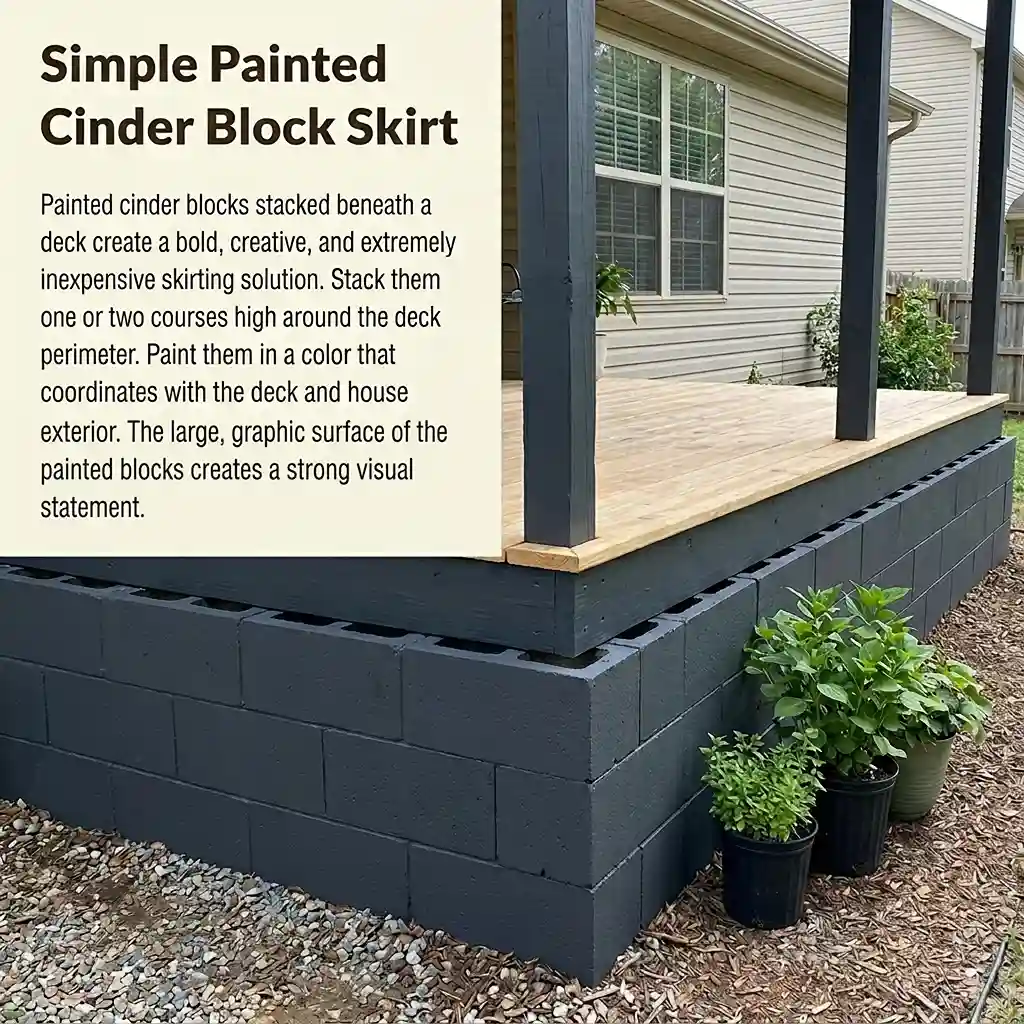
| Cinder Block Paint Color | Deck Style Pairing | Effect Created |
|---|---|---|
| Crisp white | Coastal, farmhouse | Clean, Mediterranean |
| Charcoal grey | Modern, industrial | Bold, contemporary |
| Warm terracotta | Rustic, Mexican-inspired | Earthy, warm |
| Sage green | Cottage, garden | Natural, soft |
| Classic black | Any style | Sharp, defined |
19. Use Reclaimed Brick for a Heritage Look
Reclaimed brick laid beneath a deck creates a beautiful, heritage-quality skirting that looks like it has always been there. Old brick has a depth of color and surface texture that new brick simply cannot replicate. Source reclaimed brick from demolition sites, architectural salvage yards, and online marketplaces where it is frequently available cheaply or for free.
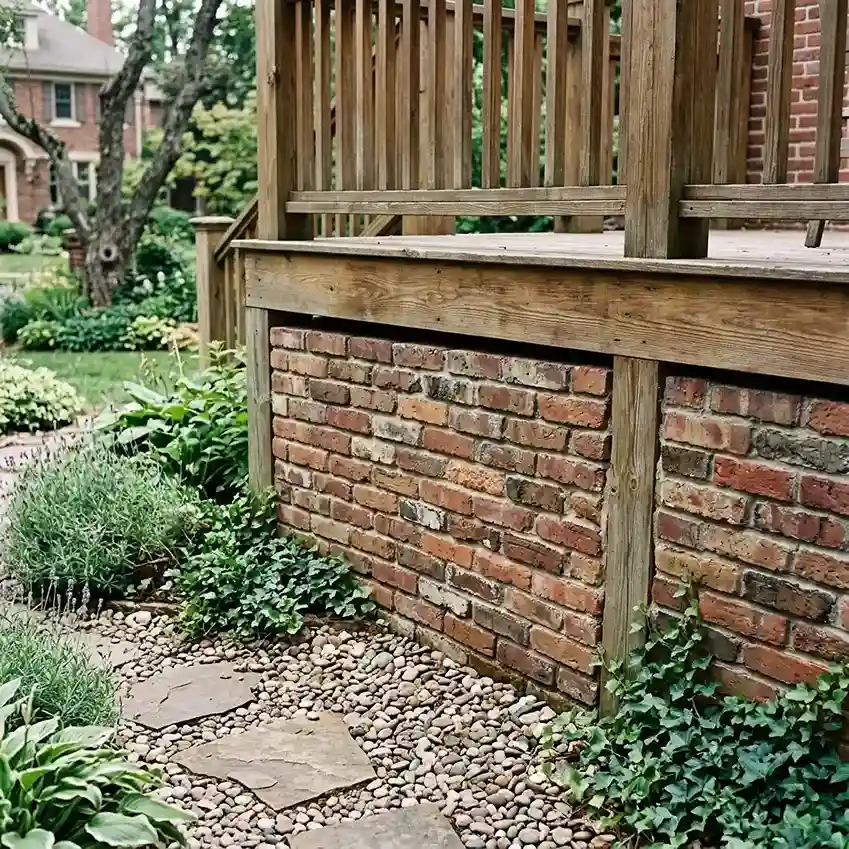
Stack the brick dry — without mortar — for a simple, removable installation. Use mortar for a permanent, weather-resistant result. Two to three courses of brick fills most deck underside gaps perfectly. The warm red and ochre tones of old brick suit farmhouse, colonial, and cottage deck aesthetics beautifully. This is one of the most attractive cheap deck skirting options in the entire guide.
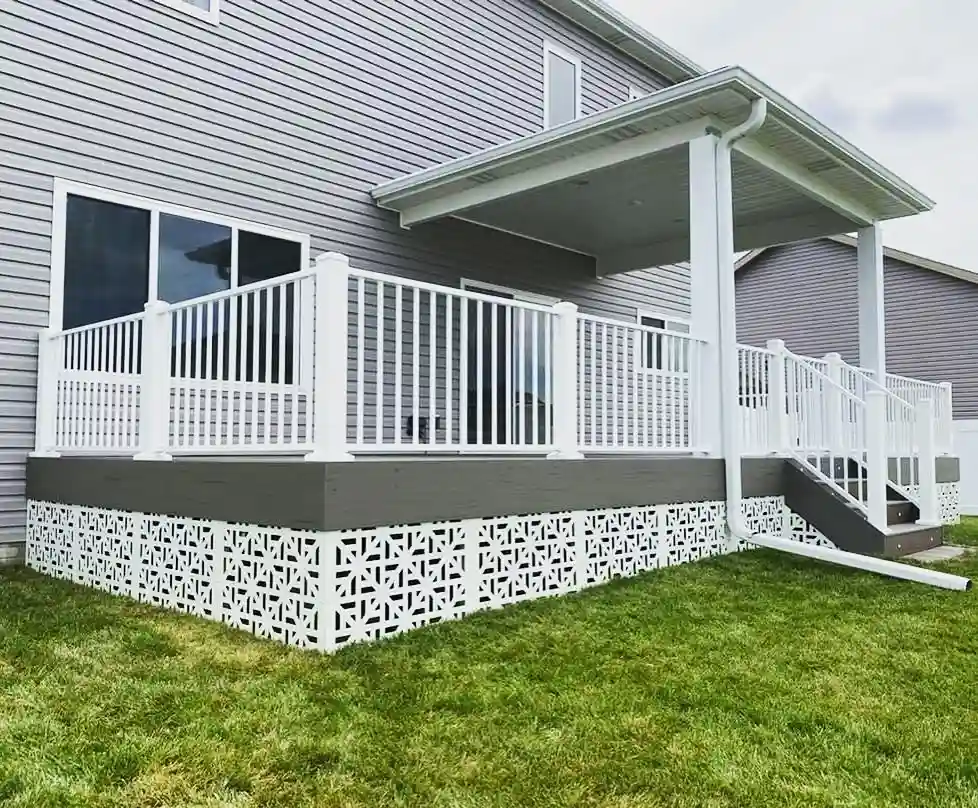
20. Add Decorative Cutout Panels for Visual Interest
Decorative cutout panels bring genuine artisan quality to deck skirting at very low cost. Simple geometric shapes — stars, diamonds, chevrons, or nature-inspired cutouts — routed or jigsaw-cut into plywood create a skirting panel that looks custom-made. The cutouts allow airflow, add visual texture, and give the deck a uniquely personal character.
source: @hideaway_inc
- Mark the cutout pattern on the plywood with a pencil before cutting anything
- Use a jigsaw for curved shapes and a circular saw for straight-edged geometric designs
- Drill a starter hole inside each cutout shape before inserting the jigsaw blade
- Sand all cut edges smooth before painting to prevent splinter risks
- Apply two coats of exterior paint in a solid color to make the cutout pattern pop cleanly
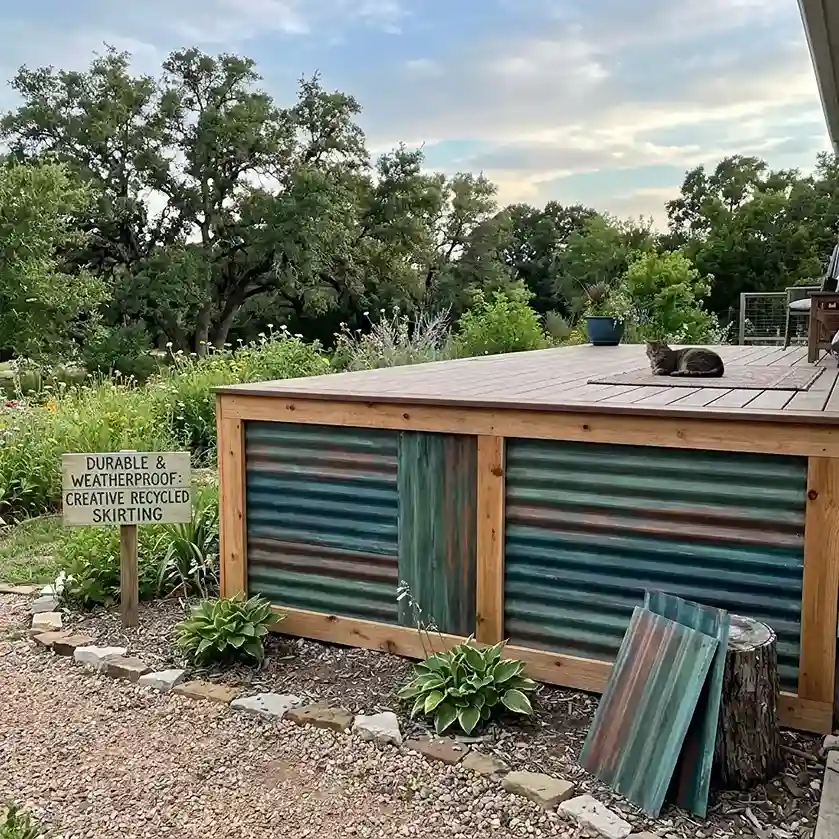
21. Use Tin or Metal Roofing Panels Painted for a Unique Finish
Leftover tin roofing panels or inexpensive metal sheets make creative and durable deck skirting. Cut to height and installed in a simple wood frame, metal panels create a skirting that is genuinely weatherproof and completely rot-proof. Paint them in any exterior color for a finished, polished appearance.
| Metal Panel Color | Deck Style | Visual Effect |
|---|---|---|
| Barn red | Rustic farmhouse | Classic, countryside |
| Galvanized grey | Industrial, modern | Raw, honest |
| Matte black | Contemporary | Bold, graphic |
| Forest green | Cottage, natural | Grounded, warm |
| Cream white | Coastal, traditional | Clean, fresh |
22. Install a Simple Gravel Skirt for a Minimal Look
A gravel border filling the gap beneath the deck is the simplest and cheapest skirting solution. It requires no framing, no cutting, and no special skills. Lay landscape fabric beneath the deck perimeter, install a simple edging border, and fill with decorative gravel. The result is clean, minimal, and completely functional.
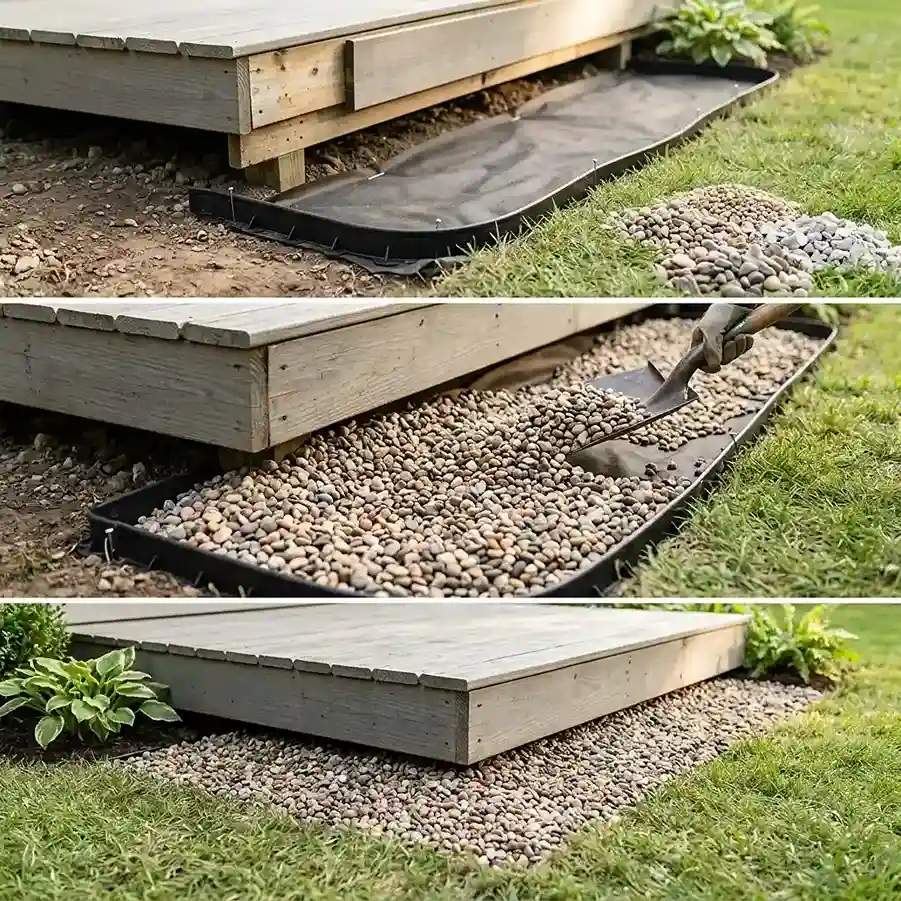
A gravel skirt drains perfectly, suppresses weeds, and looks naturally appropriate beneath any deck style. Pea gravel, river rock, and crushed limestone all work beautifully. Larger river rocks create a bolder, more dramatic border. Finer gravel creates a cleaner, more refined appearance. Total materials cost for a gravel deck skirt is typically $30–$80 for an average deck size.
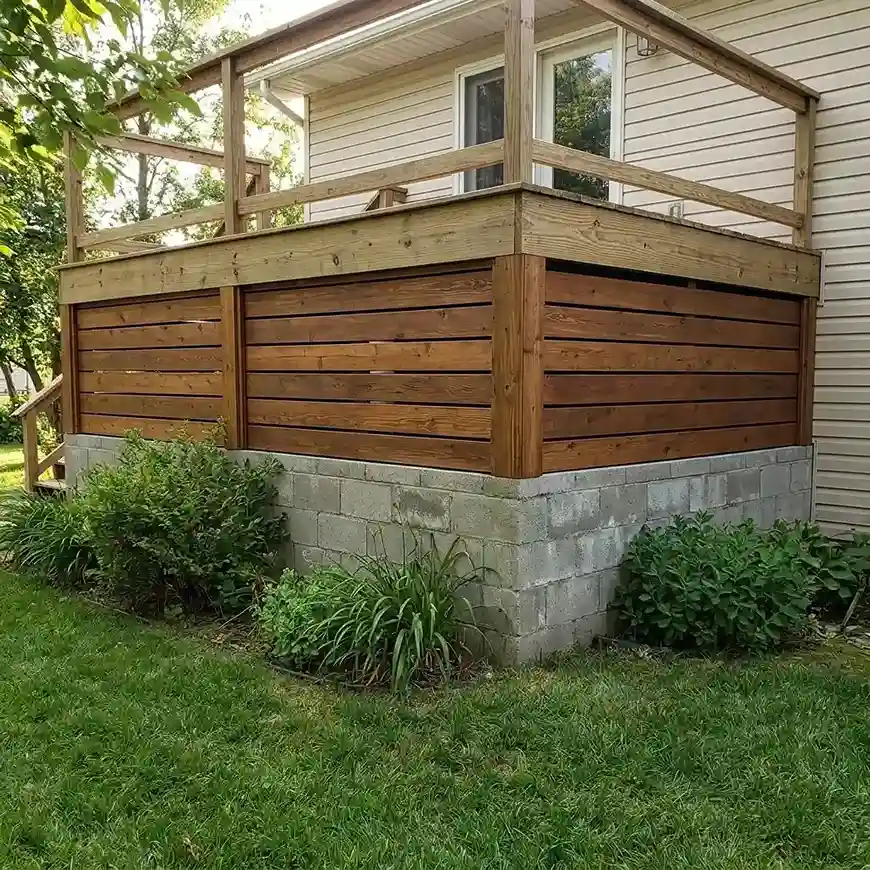
23. Combine Two Skirting Materials for a Custom Look
The most distinctive and visually interesting deck skirting combines two complementary materials. Concrete blocks on the base course with horizontal wood boards above. A wire mesh frame with a planting bed in front. Lattice on the sides with solid plywood on the most visible front panel. Mixing two materials creates a custom look that no single-material approach can achieve.
| Material Combination | Effect Created | Cost Level |
|---|---|---|
| Lattice top + solid bottom panel | Traditional with a modern base | Low |
| Metal mesh + wood frame | Industrial modern | Low |
| Stone veneer base + wood boards above | Upscale, layered | Moderate |
| Concrete block + gravel border | Minimal, architectural | Very Low |
| Reclaimed wood + wire mesh | Rustic with airflow | Very Low |
The combination approach also lets you allocate budget where it matters most. Use the most attractive material on the front-facing, most visible panel. Use cheaper materials on the sides that face fences or garden beds. This strategic thinking delivers maximum visual impact for minimum total spend. A beautifully combined two-material deck skirting can be completed for under $150 for an average deck.
Frequently Asked Questions (FAQs)
Q1: What is the cheapest deck skirting option?
Pallet wood and old fence boards are the cheapest options since both materials are often free. A gravel skirt costs $30–$80 in materials and requires no carpentry skills. Plywood painted in an exterior color is the cheapest structured skirting option at $15–$25 per sheet. Lattice panels at $15–$25 each provide the best balance of affordability, appearance, and ease of installation.
Q2: Does deck skirting need to be ventilated?
Yes. Moisture and heat must be able to escape from beneath the deck to prevent wood rot and structural damage. Lattice, spaced boards, wire mesh, and gravel all provide natural ventilation. If using a solid skirting material like plywood, install vent grilles spaced evenly around the perimeter to allow adequate airflow. Most building codes require deck underside ventilation.
Q3: Can I install deck skirting myself without professional help?
Yes. All 23 ideas in this guide are suitable for DIY installation. Lattice, horizontal boards, bamboo roll, and gravel require only basic tools and beginner-level skills. More decorative options like stone veneer, corrugated metal, and cutout panels require intermediate skills but are completely achievable with patience and basic woodworking tools.
Q4: How do I prevent animals from nesting under my deck?
Choose a skirting material with small openings — 1/2 inch hardware cloth wire mesh is the most effective animal deterrent. Bury the bottom edge of the skirting 6–12 inches into the ground to prevent digging underneath. Add a predator-scent deterrent spray around the base annually. A completely solid skirting with vent grilles is also effective but must be installed with buried edging.
Q5: How long does deck skirting last?
Vinyl lattice and composite boards last 25–30 years with minimal maintenance. Pressure-treated wood lasts 15–20 years with annual sealing. Cedar lasts 20–30 years and requires less maintenance than pine. Bamboo lasts 3–8 years depending on climate and sealing. Corrugated metal lasts 20–40 years. Pallet wood and reclaimed materials vary but typically last 5–15 years with proper sealing.
Conclusion
Cheap deck skirting is one of the highest-return improvements you can make to any outdoor space. The gap beneath your deck is a small problem that has an enormous impact on the overall look and feel of your backyard. Filling that gap with any of these 23 affordable solutions transforms your deck from unfinished to completely considered and beautifully designed.
Choose the option that fits your deck style, your skill level, and your available budget. Even the simplest solution — a gravel skirt or a bamboo roll — makes a significant and immediate difference. Your deck deserves a finished base and that base costs far less than you imagined.