
Everything you need to know about popcorn ceiling in 2026 — what it is, how to remove it, whether to paint or replace it, DIY steps, cost breakdown, and where to buy supplies across the U.S.
Popcorn ceiling, also known as acoustic ceiling or cottage cheese ceiling, was once one of the most popular finishing choices in American homes. Today, it’s one of the most googled home improvement topics from New York to Los Angeles, Phoenix to Chicago.
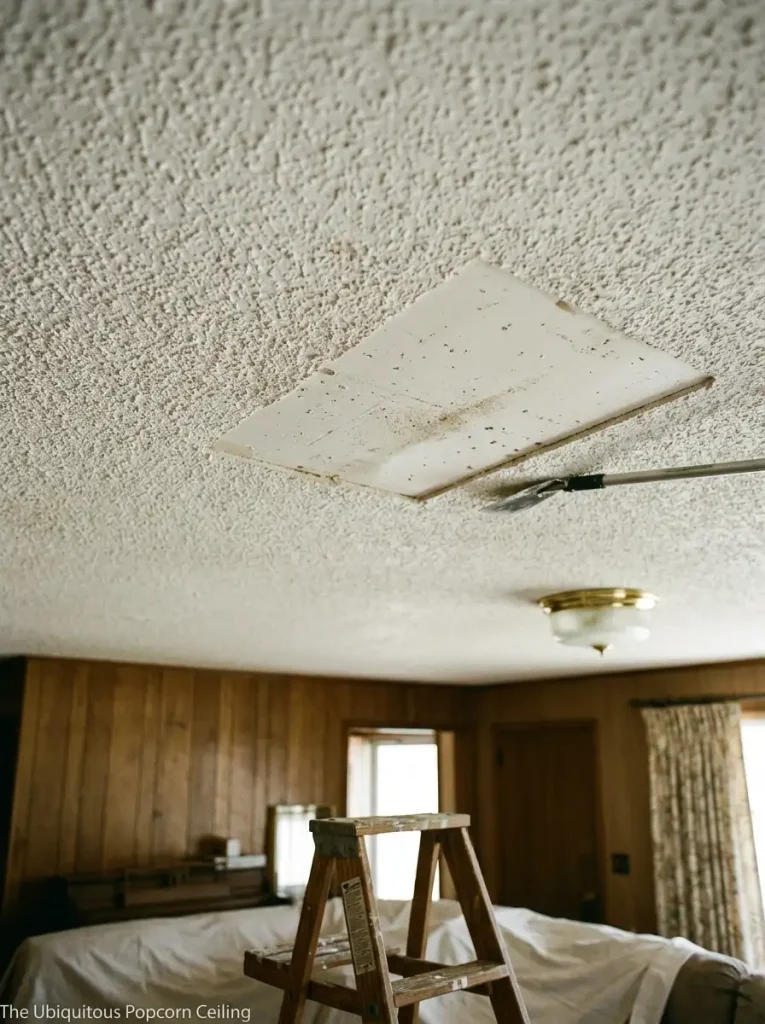
Whether you’re trying to sell your home, update your interior, or simply get rid of that outdated look, this 2026 guide covers absolutely everything you need to know — what popcorn ceiling is, why homeowners are removing it, how to do it safely, what it costs, and what your best alternatives are.
What Is Popcorn Ceiling?
Popcorn ceiling is a spray-applied textured finish that was heavily used in American residential construction from the late 1950s through the early 1990s. The texture is achieved by spraying a mixture containing materials like polystyrene or vermiculite onto a finished drywall or plaster ceiling, creating a bumpy, irregular surface that resembles — you guessed it — popcorn.
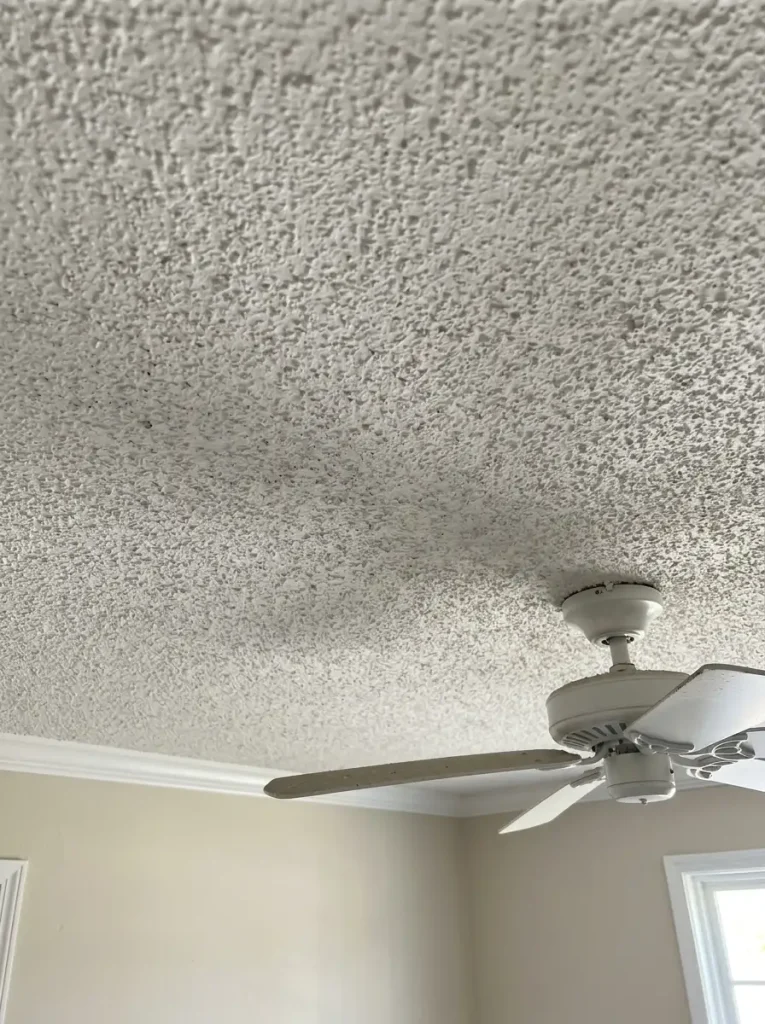
It goes by several names depending on where you live in the U.S.:
- Cottage cheese ceiling (common in the Midwest and Northeast)
- Acoustic ceiling (used in construction and contractor circles)
- Stucco ceiling (more common in the South and Southwest)
- Spray texture ceiling (used in professional remodeling)
Regardless of what it’s called in your city, the product and the challenge it presents are the same.
Why Was Popcorn Ceiling So Popular?
Understanding why popcorn ceiling became so widespread helps explain why it’s still found in tens of millions of American homes today — from older neighborhoods in Chicago and Philadelphia to sprawling ranch-style homes in Phoenix and Denver.
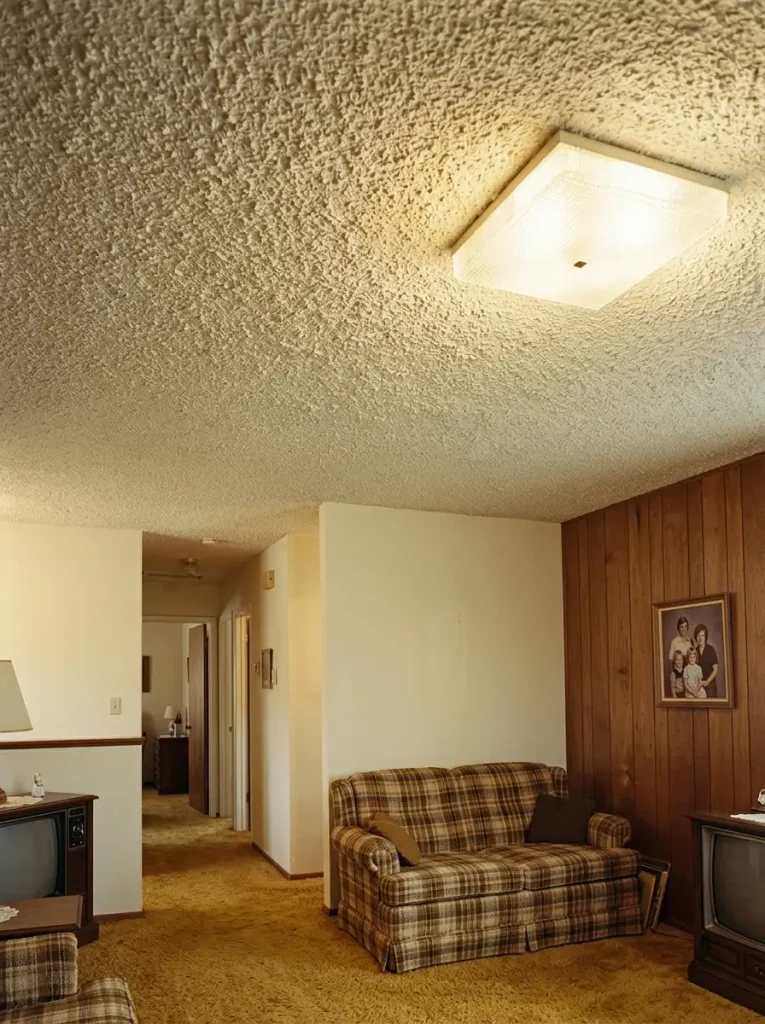
It was fast and cheap to apply. Contractors could finish an entire ceiling in a fraction of the time it takes to apply a smooth finish. Speed meant lower labor costs, and lower costs meant more affordable homes — a major selling point during the post-WWII housing boom.
It hid imperfections. Drywall finishing requires significant skill to achieve a smooth, flawless surface. The textured spray covered uneven seams, nail pops, and surface irregularities without any additional finishing work.
It had acoustic benefits. The bumpy surface does slightly reduce sound reflection, which made it appealing for bedrooms, hallways, and multi-unit buildings in urban areas like New York City and Los Angeles.
It was the style of its time. Through the 1970s and 1980s, textured ceilings were considered modern and desirable. It wasn’t until the 1990s that design preferences began shifting toward clean, smooth surfaces.
The Big Problem: Asbestos in Popcorn Ceilings
Here’s the most critical fact every American homeowner needs to know before touching a popcorn ceiling: popcorn ceiling installed before 1978 may contain asbestos.

Asbestos was commonly used as a binding agent in ceiling texture sprays throughout the 1960s and 1970s because of its fire-resistant properties. The U.S. Consumer Product Safety Commission banned the use of asbestos in ceiling products in 1977, but existing stock continued to be sold and applied until around 1978–1979.
Fact: According to the Environmental Protection Agency (EPA), asbestos exposure is the number one cause of occupational cancer in the United States, responsible for approximately 40,000 deaths annually.
If your home was built before 1980 — whether it’s in Seattle-Tacoma, San Francisco, New York, or anywhere in between — you should never attempt to remove popcorn ceiling without first having it professionally tested for asbestos. Testing kits are available at most home improvement stores for $30–$50, or you can hire a certified asbestos inspector, which typically costs $200–$500 depending on your location.
If asbestos is detected, removal must be handled by a licensed asbestos abatement contractor. This is not a DIY situation — period.
Should You Remove Your Popcorn Ceiling?
This is the question millions of American homeowners are asking right now, and the honest answer depends on several factors:
Remove it if:
- You’re preparing to sell your home and want to maximize resale value
- The ceiling is stained, cracked, or visually deteriorated
- You’re doing a full room renovation and want a modern look
- The texture is coming loose or flaking
- You tested it and confirmed it’s asbestos-free
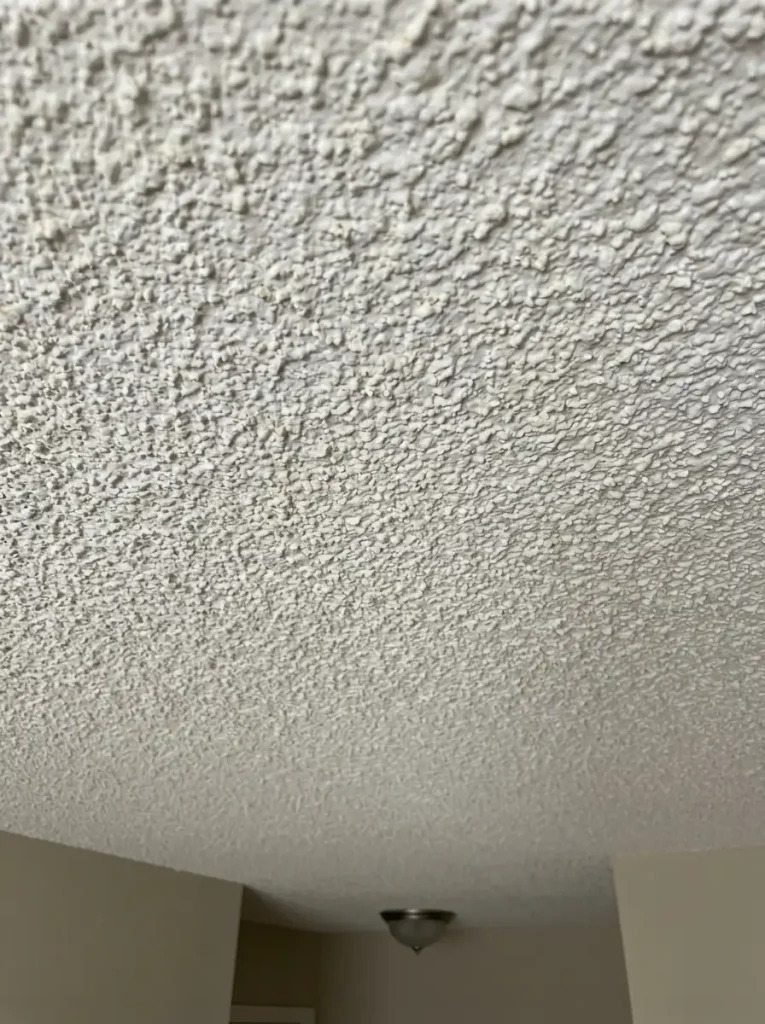
Consider keeping it or painting it if:
- You’re on a tight budget and the ceiling is in good condition
- You’re renting the property and structural changes aren’t permitted
- You want a quick cosmetic refresh without a full renovation
- The ceiling is high and removal would be particularly costly or difficult
Fact: According to Zillow’s 2024–2025 market research, homes with popcorn ceilings sell for an average of $2,000–$5,000 less than comparable homes with smooth ceilings in competitive U.S. real estate markets. In premium markets like Los Angeles and San Francisco, that gap can be even wider.
Popcorn Ceiling vs. Smooth Ceiling: Which Is Better in 2026?
The debate between popcorn ceiling and smooth ceiling comes down to four main factors: aesthetics, cost, maintenance, and market value.
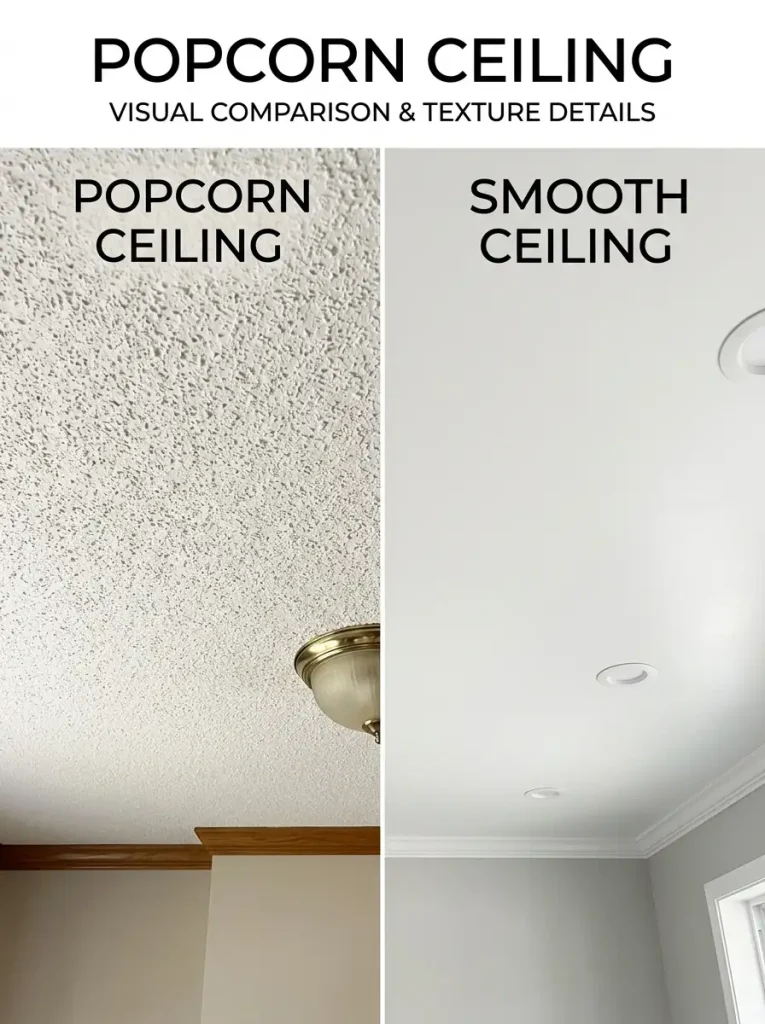
Aesthetics: Smooth ceilings are universally preferred in modern American interior design. They reflect light more evenly, pair better with contemporary and transitional design styles, and give rooms a cleaner, more polished appearance. Popcorn texture reads as dated to most buyers and design professionals in 2026.
Cost: Popcorn ceiling is significantly cheaper to apply initially. However, smooth ceiling is cheaper to maintain, repaint, and repair over time. Touching up a smooth ceiling is straightforward. Matching popcorn texture for repairs is notoriously difficult and often results in mismatched patches.
Maintenance: Popcorn ceiling collects dust, cobwebs, and moisture more readily than a smooth surface. In humid climates — think the Gulf Coast, Florida, or parts of the Southeast — popcorn ceilings are particularly prone to moisture damage, staining, and mold growth.
Market Value: In virtually every U.S. real estate market from Chicago to Denver to Phoenix, smooth ceilings are associated with updated, move-in-ready homes. Real estate agents consistently report that popcorn ceilings are a buyer objection that leads to lower offers or requests for seller concessions.
Verdict: For any homeowner planning to stay in their home long-term or sell within the next 5 years, the investment in removing popcorn ceiling and applying a smooth or subtle modern texture is almost always worth it.
How to Remove Popcorn Ceiling: Step-by-Step DIY Guide
If you’ve confirmed through professional testing that your ceiling is asbestos-free, popcorn ceiling removal is a manageable DIY project. It’s messy and time-consuming, but it doesn’t require advanced skills. Here’s exactly how to do it right:
Step 1 — Test for Asbestos First (Non-Negotiable) Before anything else, have your ceiling tested. Purchase a home asbestos test kit at Home Depot or Lowe’s ($30–$50) or hire a certified inspector. If the result is positive, stop and call a licensed abatement contractor. If it’s negative, proceed confidently.
Step 2 — Prepare and Protect the Room Completely This step is where most DIYers cut corners — and regret it. Popcorn ceiling removal is extremely messy. Remove all furniture from the room or push it to the center and cover everything with heavy plastic sheeting. Cover floors with rosin paper or thick plastic. Tape plastic over doorways to contain dust. Turn off HVAC vents in the room to prevent dust from spreading through your system.
Step 3 — Lightly Mist the Ceiling Using a garden sprayer filled with warm water, lightly mist a small section of the ceiling — no more than 4 to 5 square feet at a time. Let the water soak in for 2–3 minutes. The goal is to soften the texture, not soak the drywall underneath. Over-wetting causes the drywall paper to tear, which creates costly repairs.
Step 4 — Scrape the Texture Off Using a wide drywall scraper (10–12 inches wide is ideal), gently scrape the softened texture off the ceiling. Hold the scraper at a low angle to minimize gouging the drywall underneath. Work in small sections, re-misting as needed. Drop the scraped material directly onto your plastic-covered floor for easy cleanup.
Step 5 — Let the Ceiling Dry, Then Repair Once the texture is removed, let the ceiling dry completely — typically 24 hours. Inspect the surface carefully. You’ll likely find minor gouges, scrapes, or exposed drywall tape seams. Apply joint compound to repair any damage, feather the edges, and sand smooth once dry.
Step 6 — Prime and Paint Apply a high-quality drywall primer before painting. This is a critical step that many DIYers skip. Without primer, paint absorbs unevenly into the repaired areas and the surrounding drywall, resulting in a blotchy, inconsistent finish. After priming, apply two coats of your chosen ceiling paint for a clean, smooth final result.
How to Paint Over Popcorn Ceiling Without Removing It
If removal isn’t in the budget or you simply want a quick refresh, painting over an existing popcorn ceiling is a completely valid option — as long as the ceiling is structurally sound and free of moisture damage.

Choose the right paint. Use a flat or matte ceiling paint specifically formulated for textured surfaces. Avoid satin or eggshell finishes — they highlight the texture unevenly and create a patchy look. Bright white is the most popular choice in American homes, but warm white and soft gray are trending in 2026.
Use a thick-nap roller. A standard paint roller won’t effectively reach into the valleys of the texture. Use a 3/4-inch to 1-inch nap roller to ensure full coverage in all the bumps and crevices.
Apply two coats. One coat is almost never sufficient on popcorn texture. Plan for two coats minimum, allowing full drying time between each.
Don’t oversaturate. Applying too much paint at once adds significant weight to the texture and can cause sections to loosen and fall. Work in thin, even coats and avoid back-rolling excessively.
A fresh coat of bright white paint can dramatically refresh a tired popcorn ceiling and make a room feel cleaner and brighter — without the cost and effort of full removal. This is a particularly popular approach in rental properties across Chicago, Denver, and Phoenix, where landlords want to improve appearance without a major renovation.
Popcorn Ceiling Alternatives: Modern Options for 2026
Once the old texture is gone, you have several excellent options for what to apply instead. Here are the most popular ceiling finishes trending in American homes in 2026:
Smooth Finish — The most sought-after look in modern homes. Requires skilled drywall finishing but creates a clean, bright, contemporary result that works with any interior style.
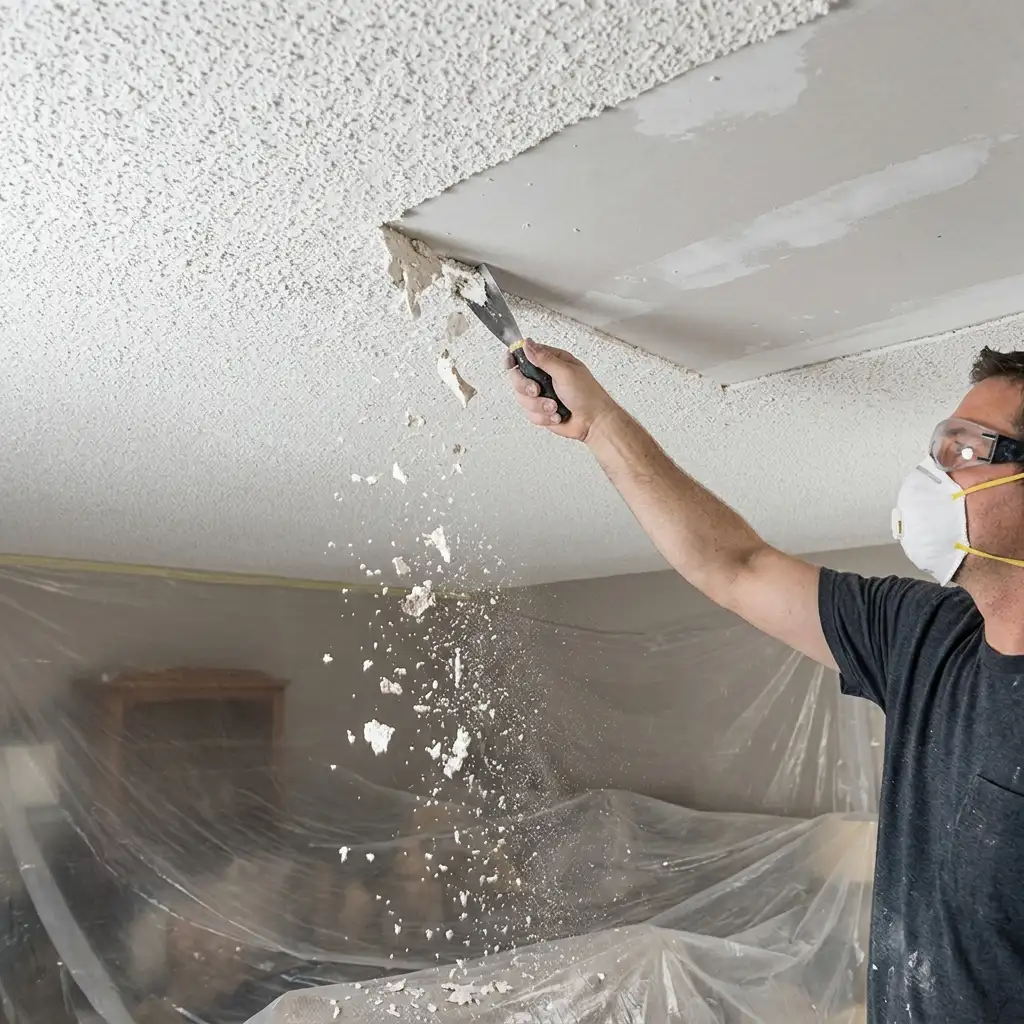
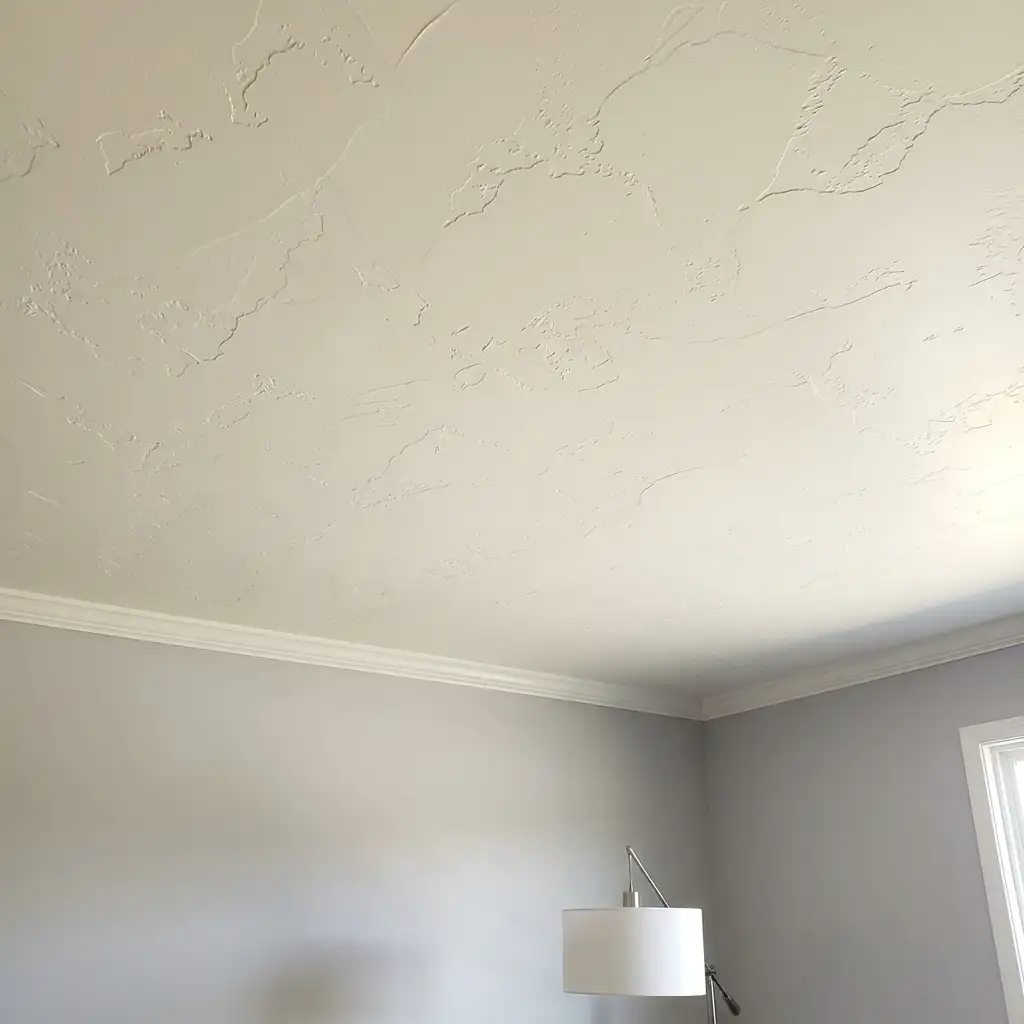
Skip Trowel Texture — A subtle, hand-applied texture that adds visual depth without the dated look of popcorn. Popular in Southwestern states like Arizona and New Mexico, and trending strongly in Denver and Los Angeles.
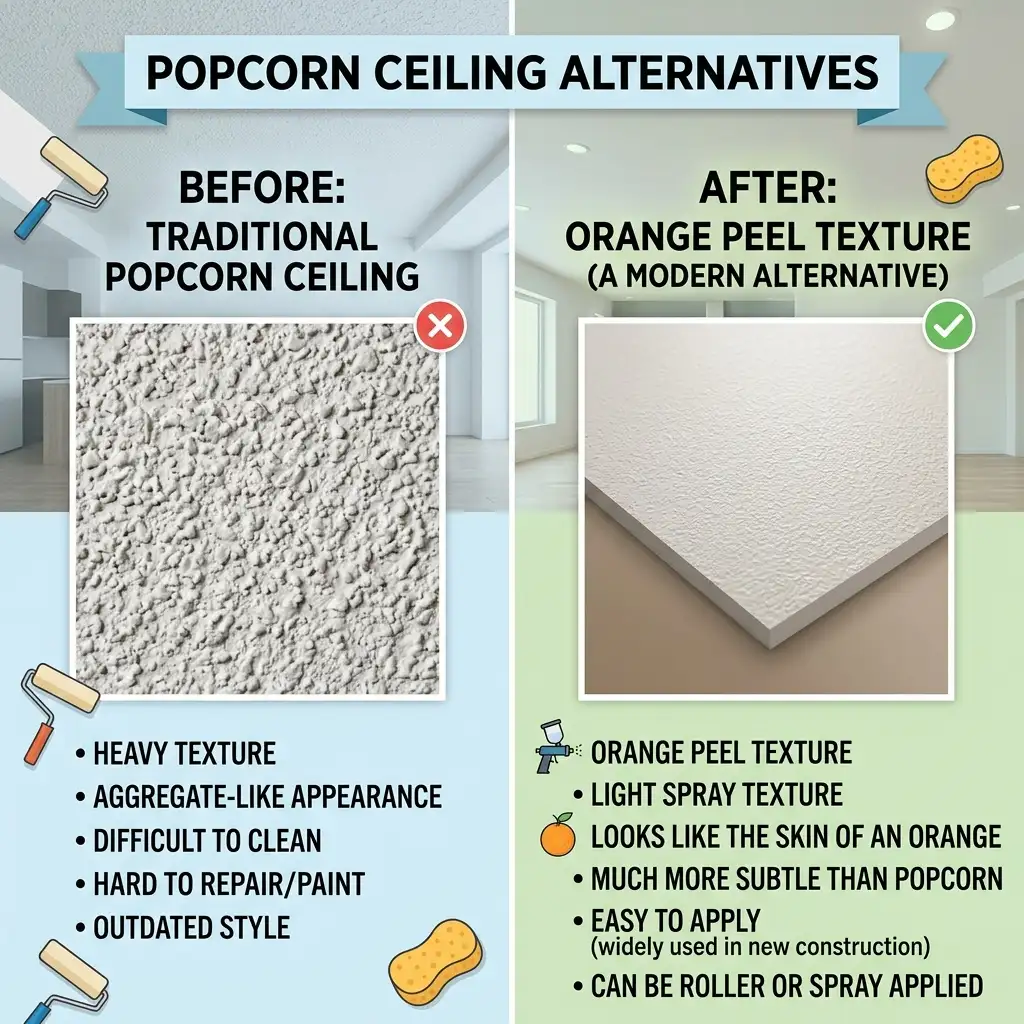
Orange Peel Texture — A light spray texture that looks like the skin of an orange. Much more subtle than popcorn, easy to apply, and widely used in new construction.
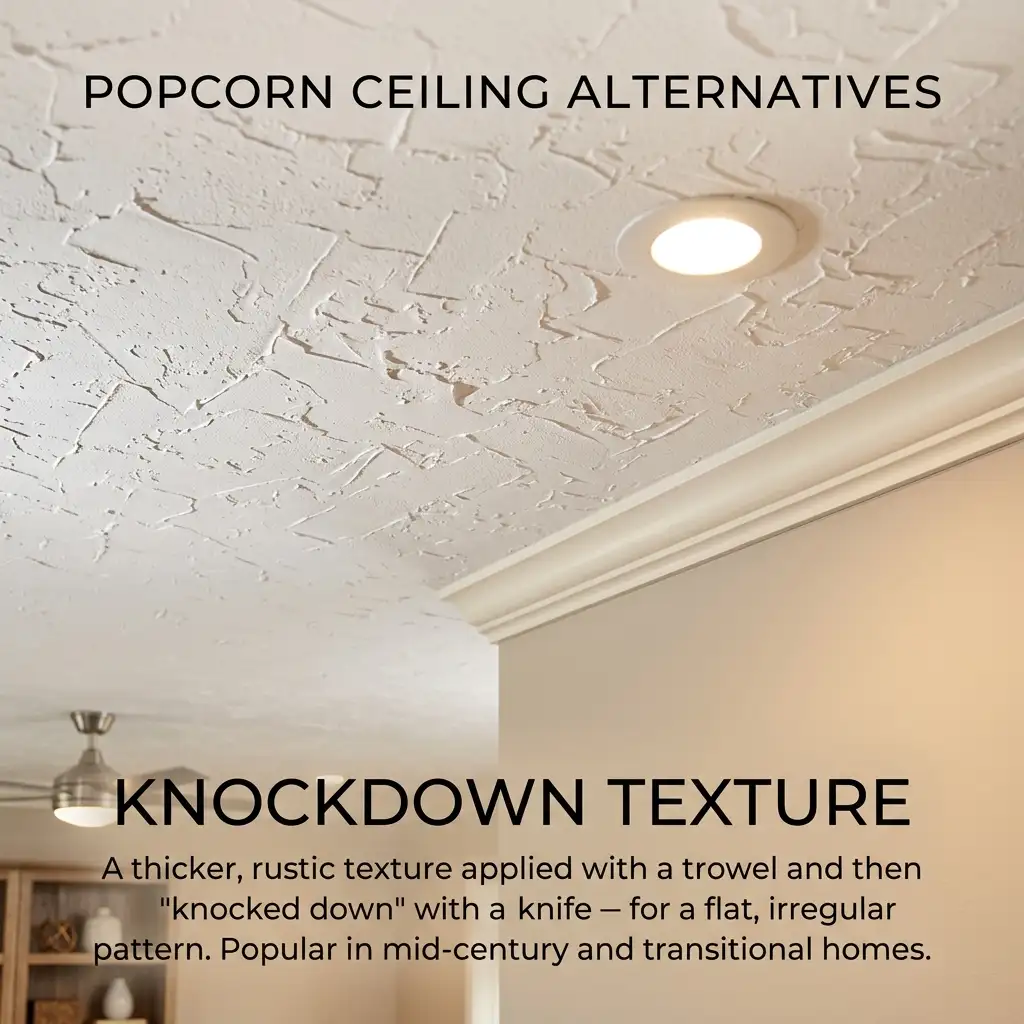
Knockdown Texture — A thicker, rustic texture applied with a trowel and then “knocked down” with a knife for a flat, irregular pattern. Popular in mid-century and transitional homes.
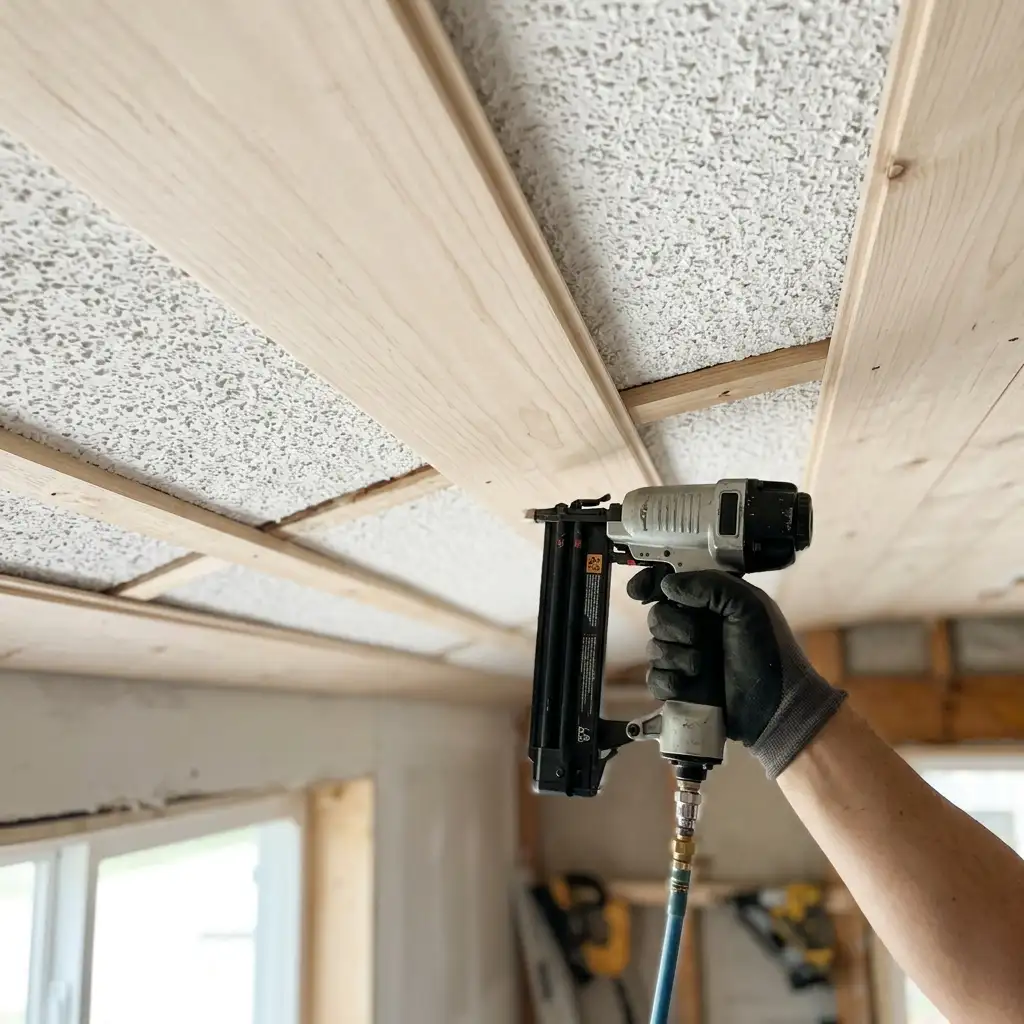
Wooden Plank Ceiling — Installing thin wood planks or shiplap on the ceiling adds warmth and character. A favorite in farmhouse and Craftsman-style homes.
Coffered or Tray Ceiling — For homeowners wanting a truly dramatic upgrade, adding architectural detail like coffered boxes or a recessed tray ceiling transforms the entire room. More expensive but a high-impact design statement.

Cost Breakdown: Popcorn Ceiling Removal in 2026
Understanding realistic costs is essential before committing to any home improvement project. Here’s what American homeowners can expect to spend in 2026:
| Service | DIY Cost | Professional Cost |
|---|---|---|
| Asbestos Testing | $30–$50 (kit) | $200–$500 |
| Asbestos Abatement | Not recommended | $1,500–$4,500+ |
| Popcorn Removal (per sq ft) | $0.10–$0.30 (materials) | $1.00–$2.50 |
| Drywall Repair | $50–$150 (materials) | $300–$800 |
| Priming and Painting | $80–$200 (materials) | $400–$1,200 |
| Full Room (avg 12×15 ft) | $150–$400 DIY | $1,500–$3,500 professional |
Budget Fact #1: According to HomeAdvisor’s 2025–2026 True Cost Guide, the national average cost for professional popcorn ceiling removal is $1.00–$2.50 per square foot, with a typical room costing between $1,000 and $2,500 including surface repair and painting.
Budget Fact #2: In high-cost metro areas like San Francisco, New York City, and Seattle-Tacoma, professional removal rates run 25–40% higher than the national average due to elevated labor costs. Homeowners in these cities should budget $2.00–$3.50 per square foot for professional work.
The best way to save money is to handle the scraping yourself and hire a professional only for the drywall repair and painting — a hybrid approach that’s increasingly popular among budget-conscious homeowners across the country.
Where to Buy Popcorn Ceiling Removal Supplies in the U.S.
All the supplies you need for a DIY popcorn ceiling removal are widely available at major home improvement retailers across the United States:
The Home Depot — Your most accessible option nationwide, with locations in every major city including Los Angeles, Chicago, Phoenix, Denver, and beyond. Stock up on asbestos test kits, drywall scrapers, joint compound, ceiling primer, and paint all in one trip. Many stores offer free project consultations.
Lowe’s — A strong competitor to Home Depot with comparable product selection. Particularly strong on paint brands and primer options. Available across all 50 states with convenient online ordering and same-day pickup.
Menards — A regional powerhouse across the Midwest, with strong presence in Chicago, Indianapolis, Minneapolis, and surrounding areas. Excellent pricing on bulk materials like joint compound and plastic sheeting.
Amazon — Ideal for specialty tools like wide drywall scrapers, pump garden sprayers, heavy-duty plastic sheeting, and safety respirators. Fast Prime shipping makes it a great option when you need supplies quickly without a store visit.
Ace Hardware — A great local option for smaller supply runs — spray bottles, sanding supplies, painter’s tape, and touch-up materials. With locations in neighborhoods across the country, Ace is convenient when you need something fast.
Safety Reminder: Always wear a NIOSH-approved N95 respirator, safety goggles, and disposable coveralls when scraping popcorn ceiling — even after confirming it’s asbestos-free. The dust is fine, irritating, and unhealthy to breathe in large quantities.
Hiring a Professional: What to Look For
If DIY isn’t your thing — or if your ceiling tests positive for asbestos — hiring the right contractor is critical. Here’s what to look for:
- Licensed and insured in your state (requirements vary by state)
- Certified asbestos abatement contractor if asbestos is present
- At least 3 written quotes before making a decision
- References and reviews on Google, Yelp, or Houzz
- Written contract that specifies scope, materials, timeline, and payment terms
In cities like New York, Chicago, and San Francisco, licensing requirements for contractors are strict. Always verify a contractor’s license through your state’s licensing board website before signing any agreement.
FAQ: Popcorn Ceiling
Is popcorn ceiling removal worth the cost and effort?
In most cases, yes — especially if you’re planning to sell your home or want to modernize your interior. Real estate professionals across the U.S. consistently report that popcorn ceilings are a buyer turnoff that can reduce offers or extend time on market. For DIY-capable homeowners, the cost of removal is relatively modest, and the visual improvement is dramatic. A smooth or lightly textured ceiling instantly makes any room feel more modern, brighter, and more spacious. The return on investment is particularly strong in competitive real estate markets like Denver, Phoenix, and the greater Los Angeles area.
Can I paint over popcorn ceiling instead of removing it?
Absolutely — and in many situations, painting is the smarter short-term choice. If your popcorn ceiling is structurally sound, free of moisture stains, and not peeling or crumbling, a fresh coat of flat white ceiling paint can significantly improve its appearance at a fraction of the removal cost. Use a thick-nap roller for even coverage, apply two coats, and avoid over-saturating the surface. This approach is especially practical for rental properties, rooms you don’t plan to renovate, or homeowners working within a tight budget. Just keep in mind that paint adds weight over time — multiple layers of paint on old popcorn texture can eventually cause sections to sag or detach.
How do I know if my popcorn ceiling contains asbestos?
The only reliable way to know is through professional testing. If your home was built before 1980, assume the ceiling may contain asbestos until proven otherwise. You can purchase a home asbestos test kit at Home Depot or Lowe’s for $30–$50 — collect a small sample following the kit instructions and mail it to the certified lab included with the kit. Results typically come back within 5–7 business days. Alternatively, hire a certified asbestos inspector (cost: $200–$500 depending on location) for a more thorough assessment. If asbestos is confirmed, contact a licensed asbestos abatement contractor in your area. Never attempt to remove asbestos-containing material yourself — the health risks are severe and the legal liability is significant.
Conclusion
Popcorn ceiling has had a long run in American homes — but in 2026, its time is clearly up. Whether you choose to remove it yourself, hire a professional, paint over it for now, or replace it with a modern texture or architectural detail, the important thing is making an informed decision that fits your budget, your timeline, and your goals.
Millions of homeowners across cities like Chicago, Phoenix, Los Angeles, Denver, and Seattle are upgrading their ceilings right now and discovering just how much of a difference this single change makes — in how their home looks, how it feels, and what it’s worth. Start with an asbestos test, set a realistic budget, and take it one step at a time. Your ceilings — and your home’s value — will thank you.