
There is something deeply satisfying about walking into a home that feels like it exhaled. No sharp edges, no cold surfaces, no sterile white walls staring back at you — just warm wood tones, soft linen, the faint smell of dried herbs, and sunlight catching dust motes above a worn-in armchair. That is the promise of earthy cottage home decor, and it is a style that more homeowners are reaching for every year.

This is not about following a trend. It is about creating a living space that feels genuinely rooted — in nature, in handcraft, in the kind of slow, intentional living that most of us are quietly craving.
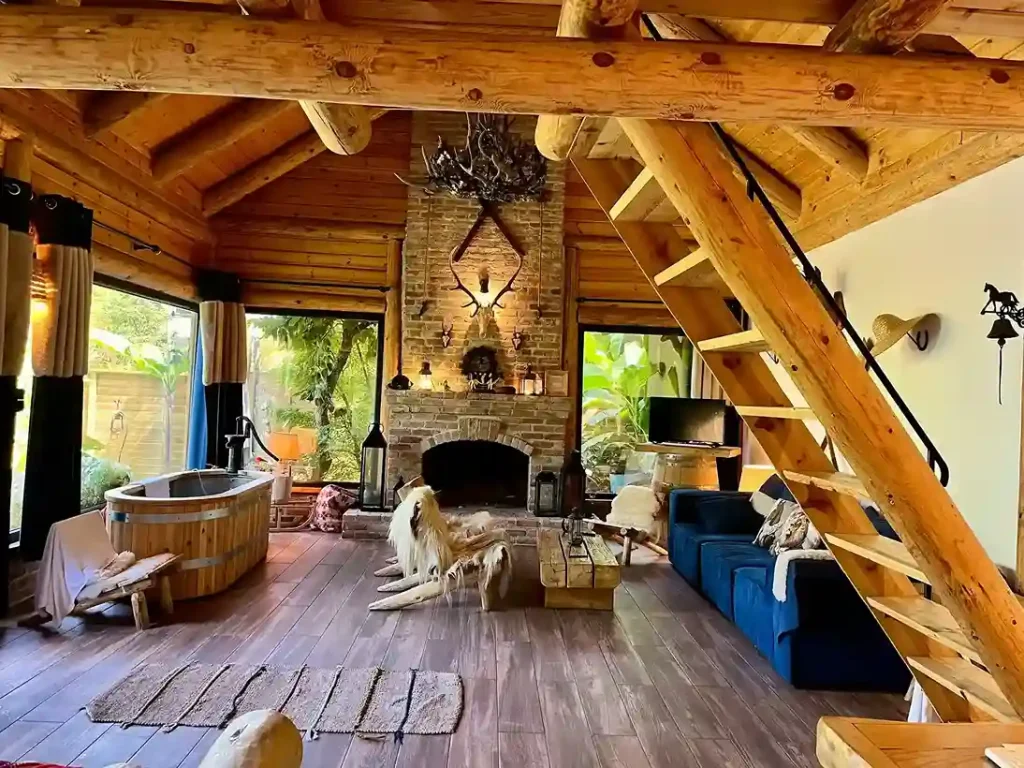
Whether you are starting from scratch or want to add character to rooms that already exist, this guide walks through every layer of earthy cottage style — colors, materials, furniture, textiles, botanicals, and the small details that make the biggest difference.
What Earthy Cottage Home Decor Actually Means
Before filling a cart or painting a wall, it helps to understand what this style is built on. Earthy cottage decor sits at the intersection of two well-loved aesthetics:
Cottage style draws from old English and American farmhouse traditions — modest proportions, mismatched charm, hand-me-down character. It values comfort over perfection and tells the story of a home that has actually been lived in. Our vintage cottage decor guide will also help you in many ways.
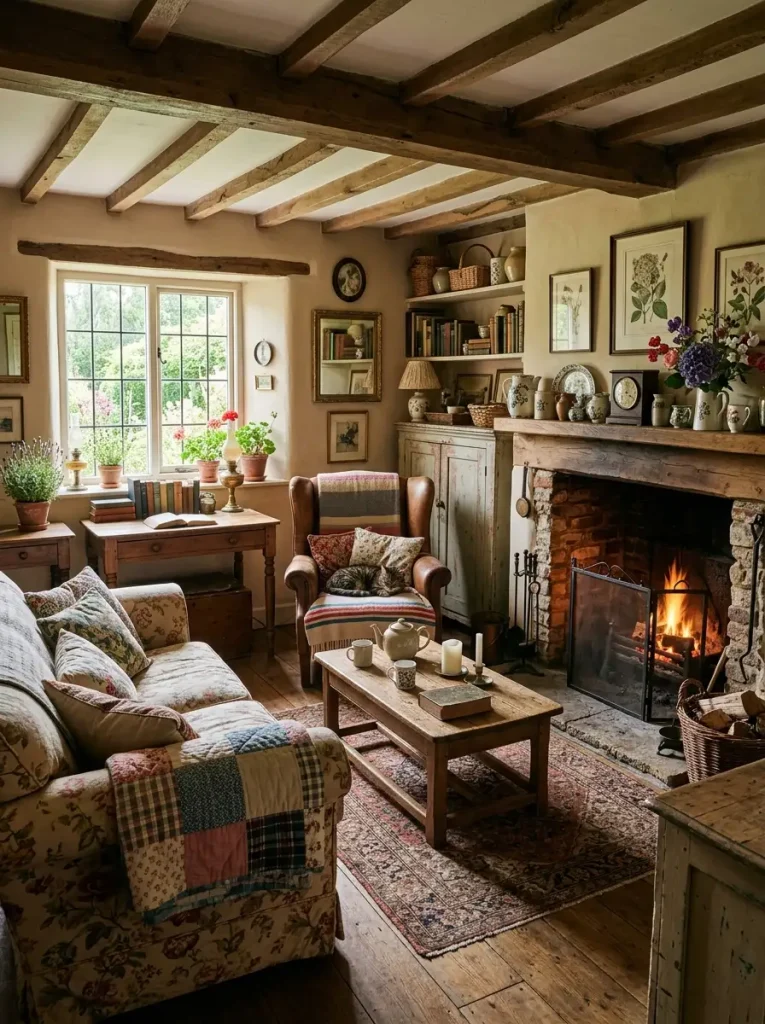
Earthy tones anchor everything to the natural world — soil, stone, bark, clay, moss, sand, and raw linen. These are not paint-chart colors chosen for trendiness. They are the pigments found in unprocessed materials.
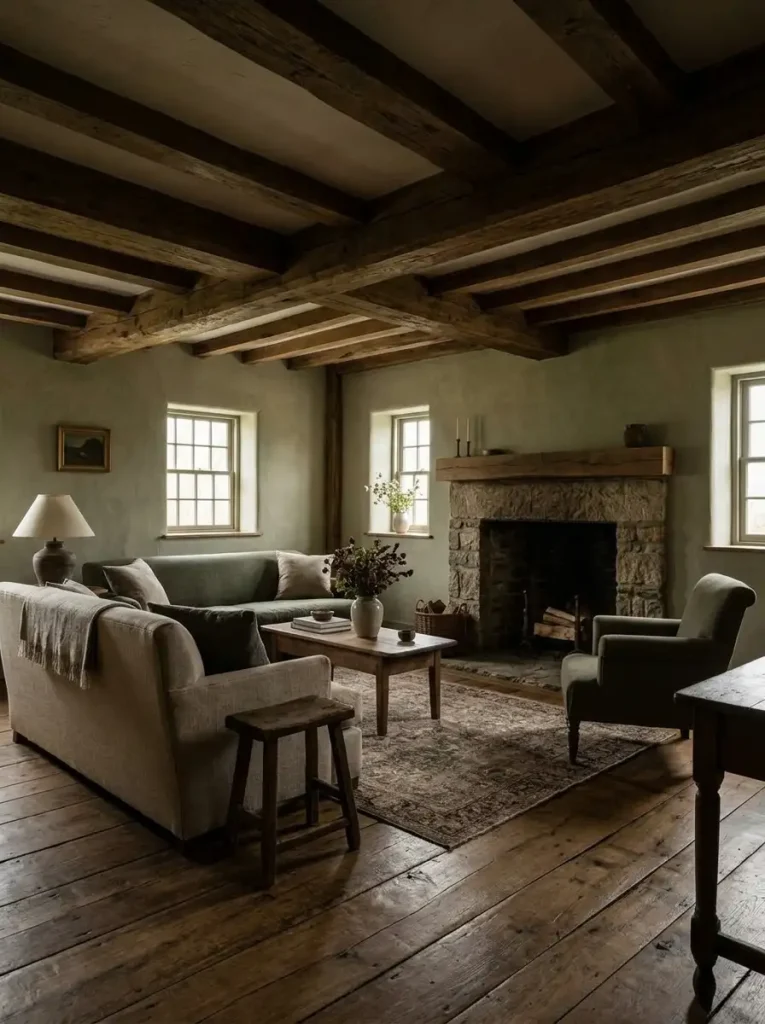
Put them together and you get something that feels both timeless and deeply personal. Think low ceilings with exposed beams, wide-plank floors that creak when you step on them, windowsills lined with terracotta pots, and walls the color of dried sage or warm oatmeal.
The Earthy Cottage Color Palette
Color is the foundation. Get this right and everything else falls into place more easily.
Ground-Level Neutrals
Start with tones pulled from the earth itself. Warm whites that lean toward cream — not the cold, antiseptic kind — work beautifully as a base for walls and ceilings. Think beeswax, aged linen, or raw wool. These shades reflect natural light softly rather than bouncing it harshly around the room.

From there, layer in:
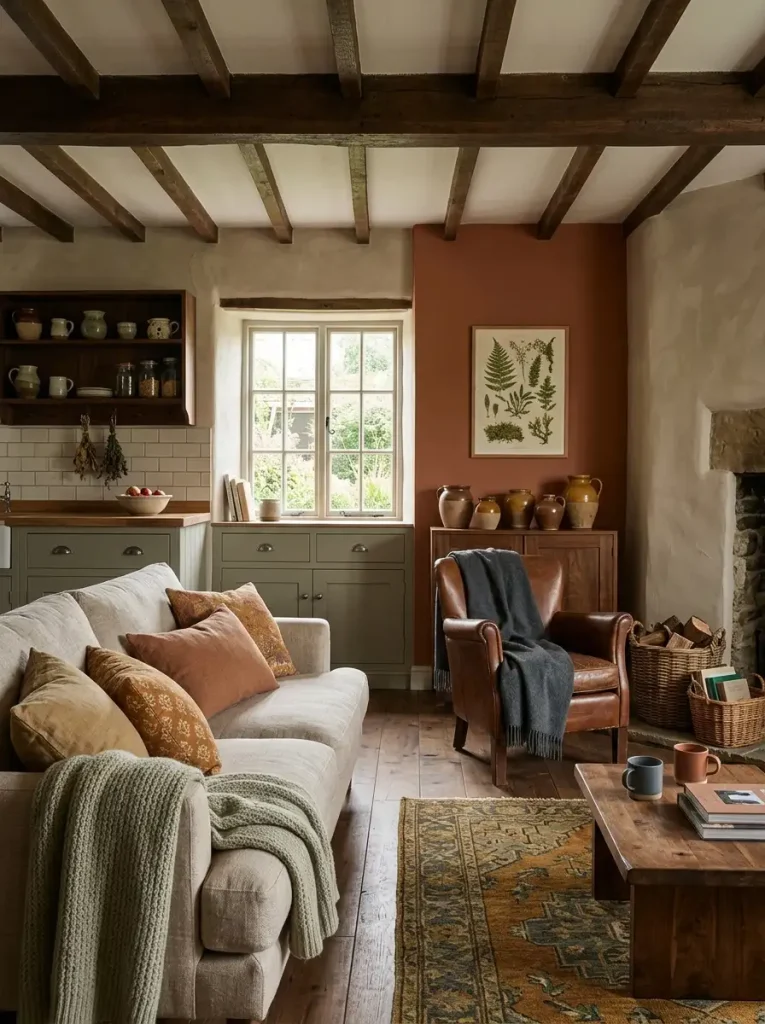
- Warm clay and terracotta — for accent walls, ceramics, and cushion tones
- Moss and sage green — works on cabinetry, botanical prints, or textile patterns
- Tobacco and walnut brown — expressed through wood furniture, leather accents, and wicker
- Dusty ochre and golden amber — in throw pillows, rugs, and pottery glazes
- Muted slate and pewter — for grounding the palette without going cold
What to Avoid
Bright whites, high-gloss finishes, and anything with a blue or gray undertone will pull you out of the earthy cottage direction quickly. The same goes for overly saturated jewel tones — they read as maximalist rather than grounded.
The goal is a palette that looks like it was sourced from a potter’s studio or an autumn forest floor, not from a color-of-the-year trend board.
Furniture That Carries Character
In earthy cottage spaces, furniture does not match — it belongs. There is a meaningful difference between those two ideas.
Prioritize Solid Wood Over Veneers
Oak, pine, ash, and elm are natural choices here. You want to see grain, knots, tool marks, and the kind of imperfection that tells you something was made by a person rather than a machine. Furniture with rounded edges, slightly tapered legs, and hand-applied finishes reads as genuinely cottage rather than imitation cottage.
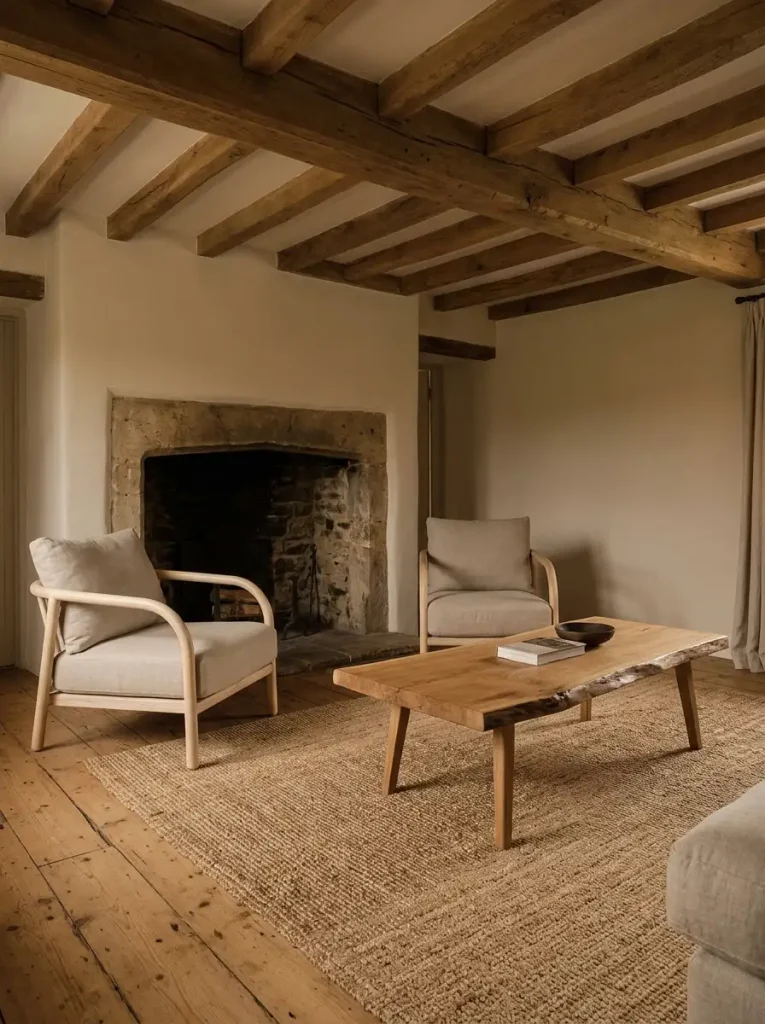
Avoid lacquered or high-gloss finishes. A matte oil or wax finish lets the wood breathe and ages beautifully over time.
Mix Eras Without Overthinking It
A Victorian side table, a 1970s rattan chair, and a recently made farmhouse bench can coexist perfectly in an earthy cottage interior. What ties them together is not the decade they came from — it is the material palette they share. Natural tones, honest construction, and a sense of settled comfort.
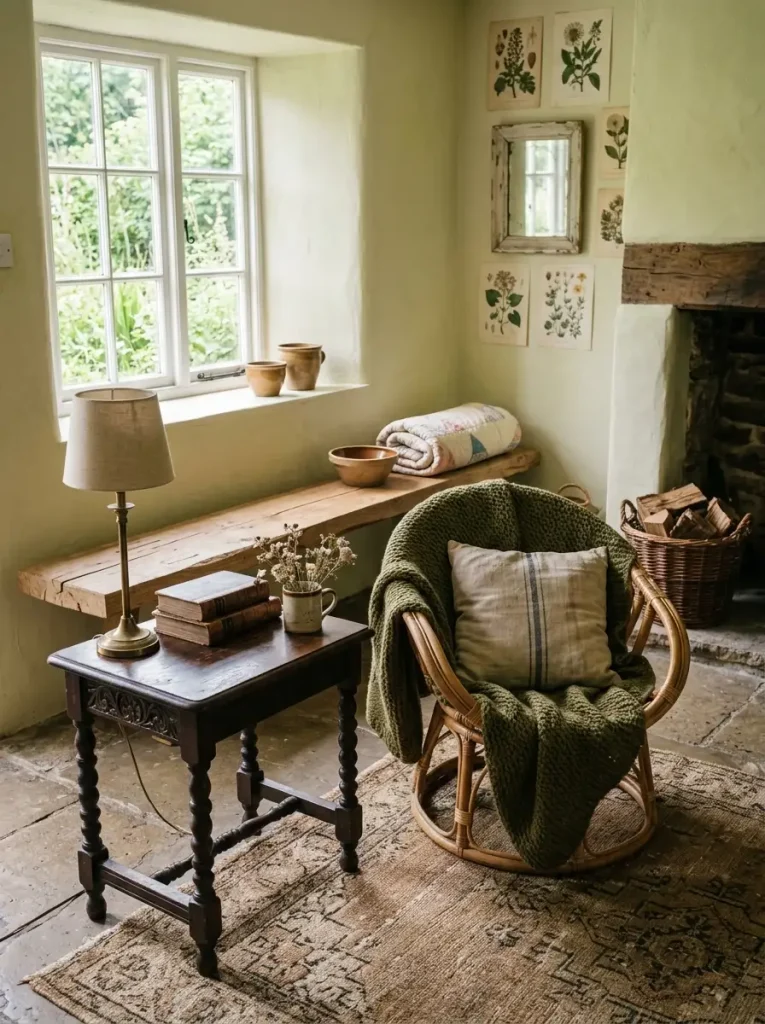
Charity shops, estate sales, and antique markets are your best allies here. A scratched-up dresser with original hardware will bring more soul to a bedroom than anything bought new and perfectly finished.
Low, Grounded Silhouettes
Cottage furniture tends to sit close to the ground — not in a mid-century modern way, but in a way that feels unpretentious. Sofas with loose cushions and slipcovers that wrinkle. Beds with chunky wooden frames. Armchairs with wide, padded arms that invite you to drape a leg over them.

Avoid anything that feels architectural or sculptural. The furniture in an earthy cottage interior is for using, not admiring from a distance.
Textiles: Where Earthy Cottage Style Truly Lives
More than any other element, fabric transforms a space from stylish to genuinely comforting. In earthy cottage decor, the textile layer is rich, varied, and always tactile.
Natural Fibers Only
Linen is the cornerstone. It wrinkles beautifully, softens with washing, and comes in every shade from bleached cream to deep oatmeal. Use it for curtains, cushion covers, tablecloths, and upholstery.

Cotton canvas, rough-woven wool, jute, and hemp all belong here too. Each one adds a slightly different texture to the room — and texture is what makes a space feel layered and lived-in rather than flat and designed.
Avoid synthetic microfibers and polyester blends. They do not drape, age, or breathe the same way, and they tend to read as inexpensive rather than intentional.
Layering Without Clutter
The art of the textile layer is stacking things at different scales:
- A chunky knit throw over the back of a sofa
- A finer woven blanket folded at the foot of a bed
- A rough jute rug anchoring a sitting area
- A softer wool rug layered over it
- Linen curtains that pool slightly on the floor
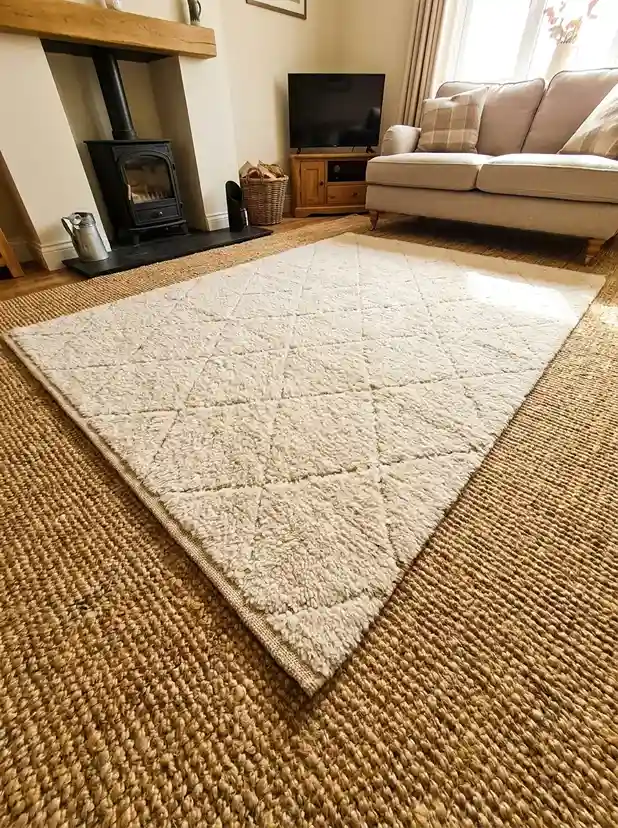
None of these elements need to match in pattern. They need to share tonal harmony — staying within your earthy palette — and a preference for natural fibers.
Ceramics, Pottery, and Handmade Objects
No earthy cottage interior is complete without objects that show the hand of the person who made them.
The Case for Imperfection
Mass-produced decorative objects, however tasteful, tend to flatten a space. A thrown pottery mug with an uneven rim, a pinch pot holding a tea light, a carved wooden bowl with chisel marks still visible — these things bring the room to life because they carry evidence of human effort.

Seek out pieces from local potters, craft fairs, and small-batch makers. Even secondhand charity shop finds often have more character than anything you will find in a high-street home store.
Grouping Objects with Intention
Rather than scattering single pieces across surfaces, group them in odd numbers and at different heights. A cluster of three terracotta pots — one tall, one short, one medium — creates a visual conversation that a single object cannot.
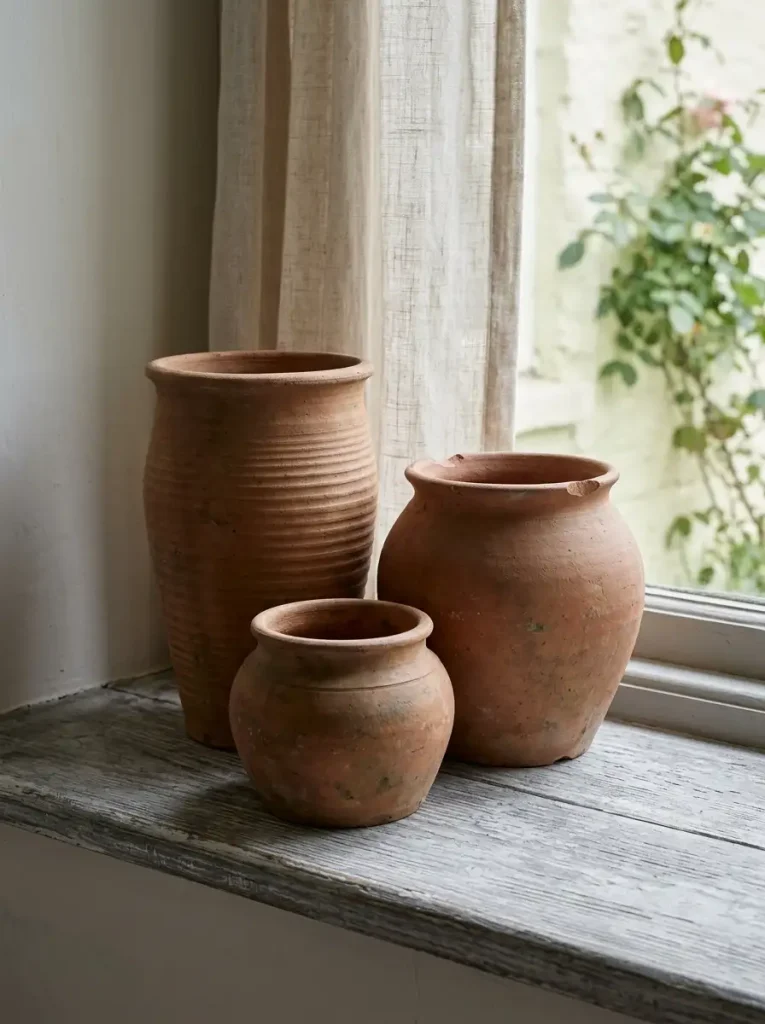
Keep the material language consistent within a group: earthy ceramics together, wooden objects together, mixed-metal pieces together in one corner rather than dotted everywhere.
Bringing the Outside In: Plants, Botanicals, and Natural Elements
Earthy cottage style is inseparable from the natural world, and that relationship should be visible inside the home.
Living Plants
Nothing does more work for this aesthetic than living greenery. The plants that suit earthy cottage spaces best are those with slightly wild, unruly shapes — trailing pothos, bushy ferns, a large fiddle-leaf fig in a terracotta pot, herbs growing on a windowsill.
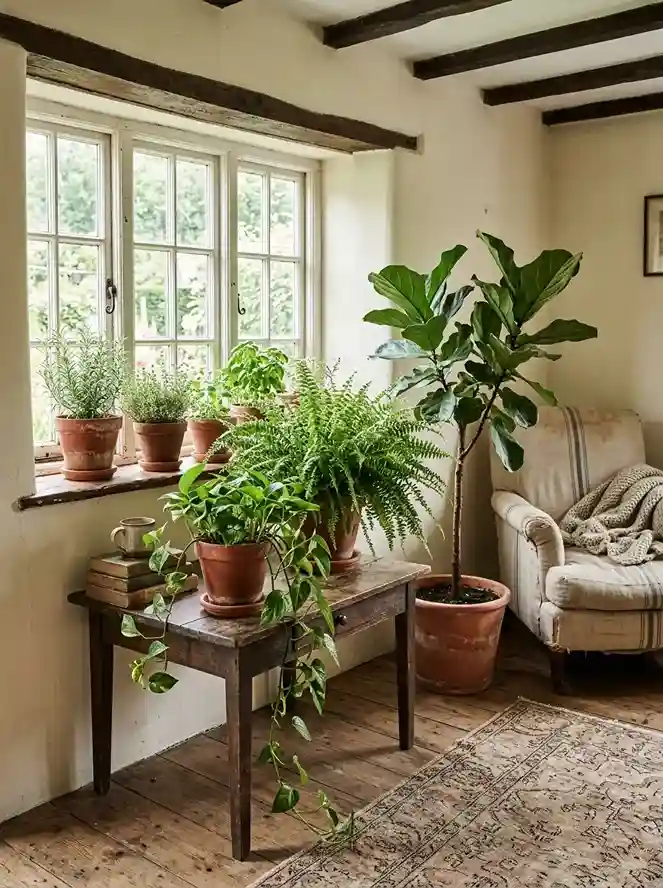
Avoid perfectly symmetrical topiary or highly structured arrangements. The cottage sensibility loves a bit of overgrowth, a stem that has reached toward the window, a pot that has been repotted twice and still shows the soil marks.
Dried and Preserved Botanicals
Dried lavender, wheat stalks, eucalyptus branches, pampas grass, and bunches of dried herbs hung from a ceiling beam or arranged in a wide-mouthed ceramic vase are deeply at home here. They add texture, scent, and a sense of seasonal rhythm without requiring ongoing maintenance.

Natural Found Objects
A bowl of smooth river stones on a coffee table. A piece of driftwood propped against a wall. A jar of pine cones collected on a walk. A branch used as a curtain rod.
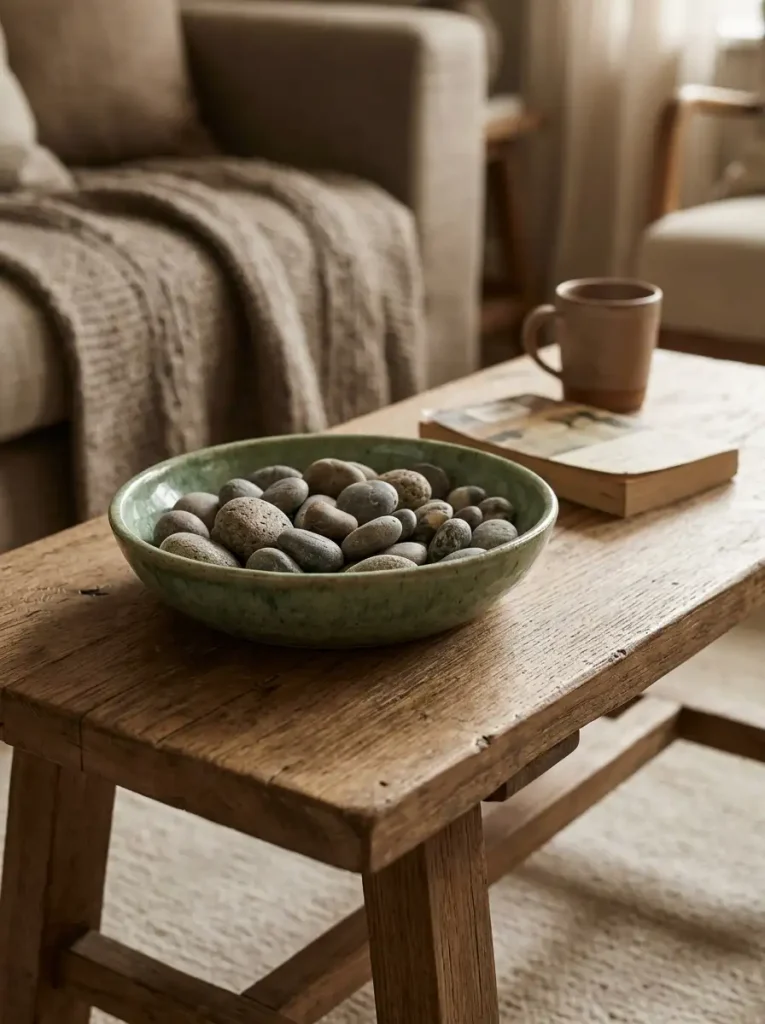
These elements cost almost nothing and do something no purchased object can fully replicate — they carry the memory of where they came from.
Lighting for an Earthy Cottage Interior
Light dramatically shapes how color and texture are perceived. In earthy cottage spaces, the goal is warmth, softness, and a layered glow that eliminates harsh overhead brightness.
Warm Bulbs as a Non-Negotiable
Replace any cool or daylight-spectrum bulbs with warm white equivalents — ideally in the 2700K range. The difference this makes to the way terracotta, cream, and wood tones appear in a room is significant. Cool light flattens earthy palettes; warm light deepens and enriches them.

Multiple Light Sources at Different Levels
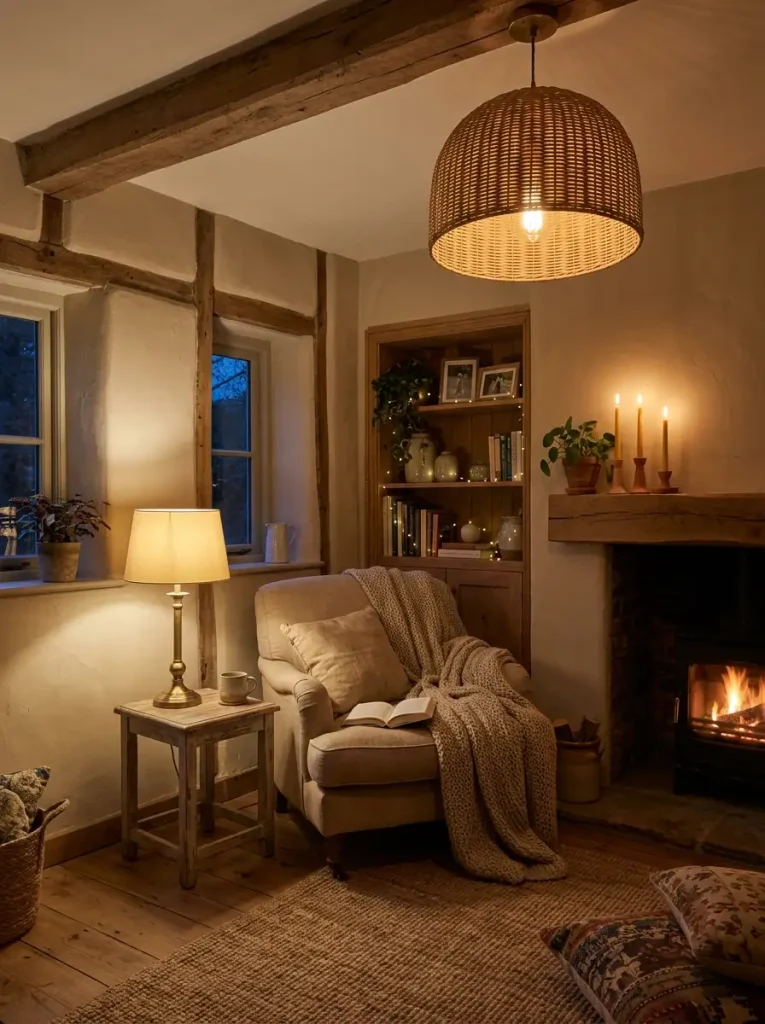
Rather than relying on a single ceiling fixture, build a lighting plan across three levels:
- Ambient — a pendant light or ceiling fixture with a rattan or linen shade
- Task — a table lamp with a warm fabric shade beside a chair or on a desk
- Accent — candles, tea lights in terracotta holders, battery-operated fairy lights tucked into a bookshelf
This creates the kind of evening atmosphere that makes a cottage feel genuinely cozy rather than just aesthetically styled.
Natural Light First
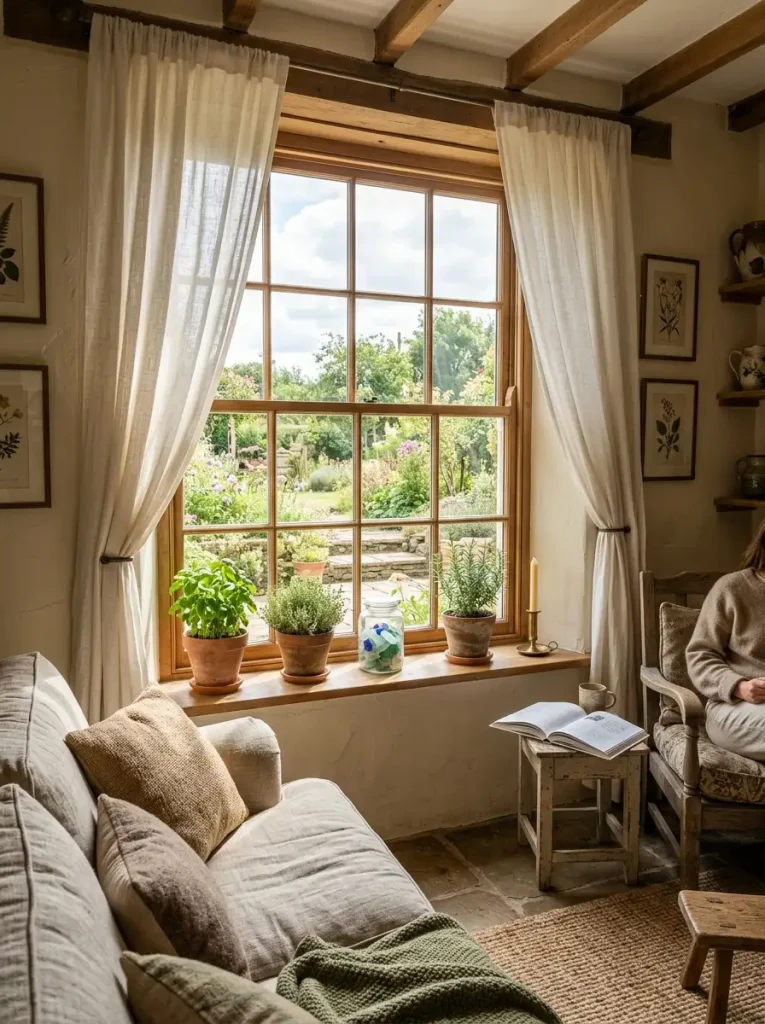
Maximize what comes through windows. Swap heavy curtains for lighter linen panels that let diffused daylight wash through. Keep windowsills uncluttered or use them deliberately — a line of small potted plants, a collection of sea glass, a single candle.
Room-by-Room Applications
Living Room
Anchor the room with a large natural-fiber rug — jute, sisal, or a flat-woven cotton in a warm tone. Choose a sofa in natural linen or stonewashed cotton with loose cushions. Add a vintage or reclaimed wood coffee table, a rattan chair as a reading spot, and floor-to-ceiling bookshelves if the space allows. Style the shelves with a mixture of books, ceramics, small plants, and personal objects.
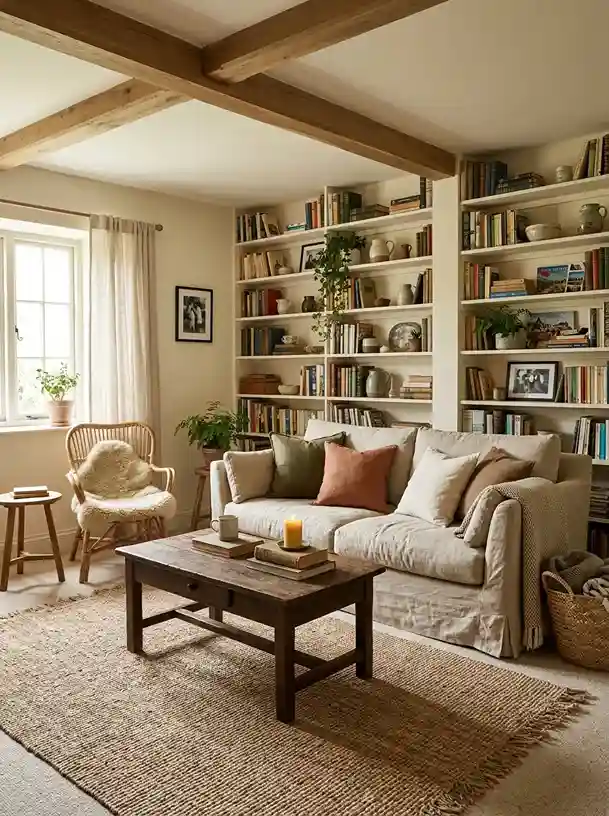
Avoid too much symmetry. Cottage living rooms are not showrooms. Move things until the room feels settled rather than staged.
Kitchen
The earthy cottage kitchen leans into open shelving, unlacquered wood, stone or concrete worktops, and a ceramic farmhouse sink if the budget allows. Display everyday objects — wooden spoons in a crock, mismatched mugs on hooks, a string of dried chillies near the window.
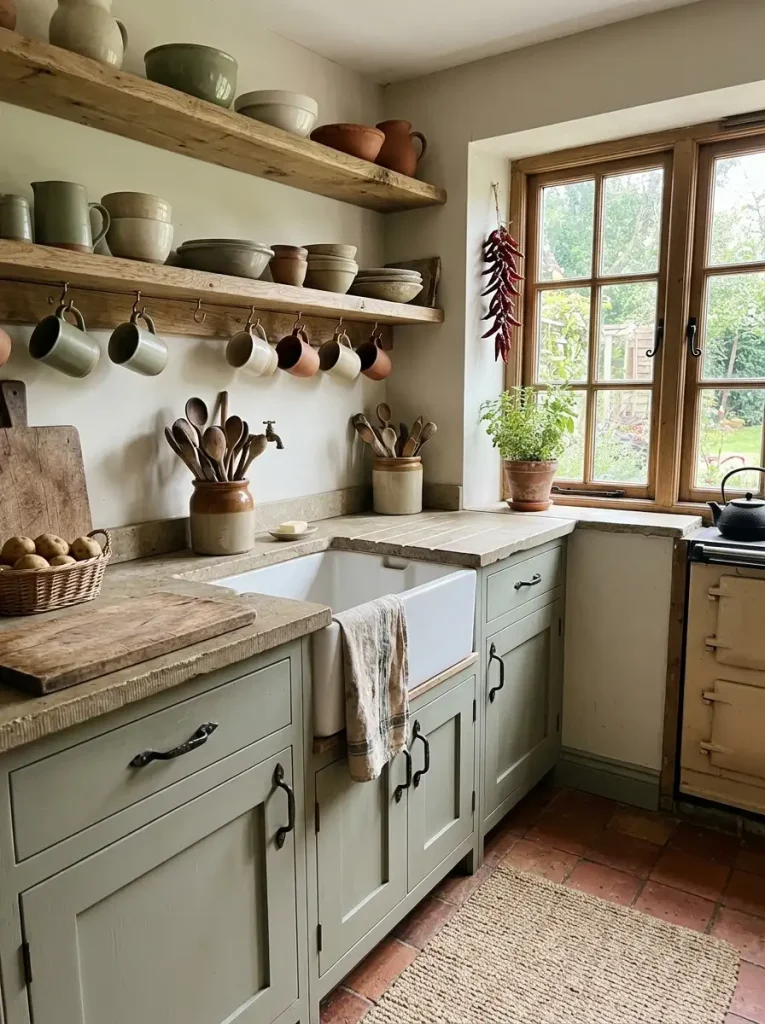
If the kitchen has modern cabinetry you cannot change, painting it in a muted sage, clay, or warm white immediately shifts the aesthetic. Swap metal hardware for brass, ceramic, or hand-forged iron.
Bedroom
This is where earthy cottage style reaches its most personal expression. Invest in good linen bedding — it is worth spending properly on this because you feel it every single night. Layer blankets, add a lumbar pillow in a contrasting texture, and keep the bedside table intentional: a good lamp, a current book, a small plant or candle.

Exposed wooden ceiling beams, whether original or added, immediately establish the cottage character. If your bedroom has a fireplace — even a non-functional one — use it as a display surface for candles and objects.
Bathroom
Earthy cottage bathrooms favor natural stone tiles, wooden accessories, linen hand towels, and open shelving with baskets for storage. A terracotta pot holding a trailing plant, a wooden-handled brush on a hook, a beeswax soap bar on a stone dish — these small decisions accumulate into something that feels genuinely considered. See relevant bathroom decor guide on farmhouse.

Common Mistakes to Avoid
Buying everything new at once. The earthy cottage aesthetic is built slowly. A room filled entirely with new purchases — however well chosen — will look assembled rather than gathered. Give it time, add pieces gradually, and let some things come from unexpected places.
Matching too precisely. If every element in a room shares the exact same undertone and material, it starts to feel like a mood board rather than a home. A little contrast — an unexpected dark piece in a light room, a rough texture among smooth ones — gives the eye somewhere to rest.
Neglecting scent. Smell is an enormous part of the cottage experience. Beeswax candles, dried herbs, essential oil diffusers with grounded scents like cedarwood, vetiver, or clary sage — these are not afterthoughts. They complete the sensory picture.
Over-decorating surfaces. Earthy cottage interiors have breathing room. Every surface does not need to be covered. A bare stretch of wall, an empty corner with one good lamp, a single object on a shelf — restraint is part of what makes the styled moments land.
Where to Shop for Earthy Cottage Decor
You do not need a large budget for this aesthetic — in fact, an unlimited budget can work against it by removing the discovery process.
Start with: charity shops and thrift stores for furniture, ceramics, and textiles. Estate sales and flea markets for larger statement pieces. Etsy for handmade ceramics, linen goods, and dried botanical arrangements from independent makers.
Supplement with: IKEA for base pieces in natural materials (the RÅGRUND bamboo range and natural linen curtains work well). H&M Home and Zara Home occasionally produce good linen and cotton textiles at reasonable prices. Local garden centers for terracotta pots and living plants.
Invest in: a quality linen duvet cover, a solid wood piece of furniture you genuinely love, and lighting — these are the elements that anchor every other decision in the room.
Final Thoughts
Earthy cottage home decor is not a style you install. It is something you build layer by layer, object by object, season by season. The homes that do this best have a quality that is hard to manufacture — they feel like they belong to someone, like they have been shaped by actual life rather than assembled from a catalogue.
Start with color. Ground it in natural materials. Add things that carry meaning — plants that grow, ceramics that were thrown by someone’s hands, wood that shows its age. Let imperfection be part of the plan.
The result will be a home that does not just look good. It will feel like somewhere you actually want to be.