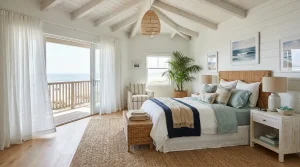
There is something about the beach that makes people breathe differently. The air feels lighter. The shoulders drop. The mind slows down.
People have chased that feeling for centuries, building homes near the water, taking vacations at the shore, and spending entire summers just sitting close to the ocean doing almost nothing at all.
You do not need to live near the water to feel that way in your bedroom. A well-styled coastal bedroom can create the same psychological effect inside four walls.

This is not just interior design talk. Research published in Discover Environment in April 2026, a peer-reviewed journal under Springer Nature, found that biophilic design is consistently associated with positive human wellbeing outcomes including stress reduction, improved mood, and better rest. The coastal aesthetic is one of the most direct and accessible expressions of biophilic design available to ordinary homeowners.
A separate study published in Frontiers in Psychology in October 2025, titled “Green Design in Living and Bedroom Spaces,” found that a biophilic approach in bedrooms enhances what researchers call perceived restorativeness, the feeling that a space is actively helping you recover from daily stress.
A coastal bedroom is, at its core, a biophilic bedroom. It draws from water, sand, sky, driftwood, shells, and natural fiber. When it is done well, it does not look like a souvenir shop. It looks like a room where the air feels easier to breathe.
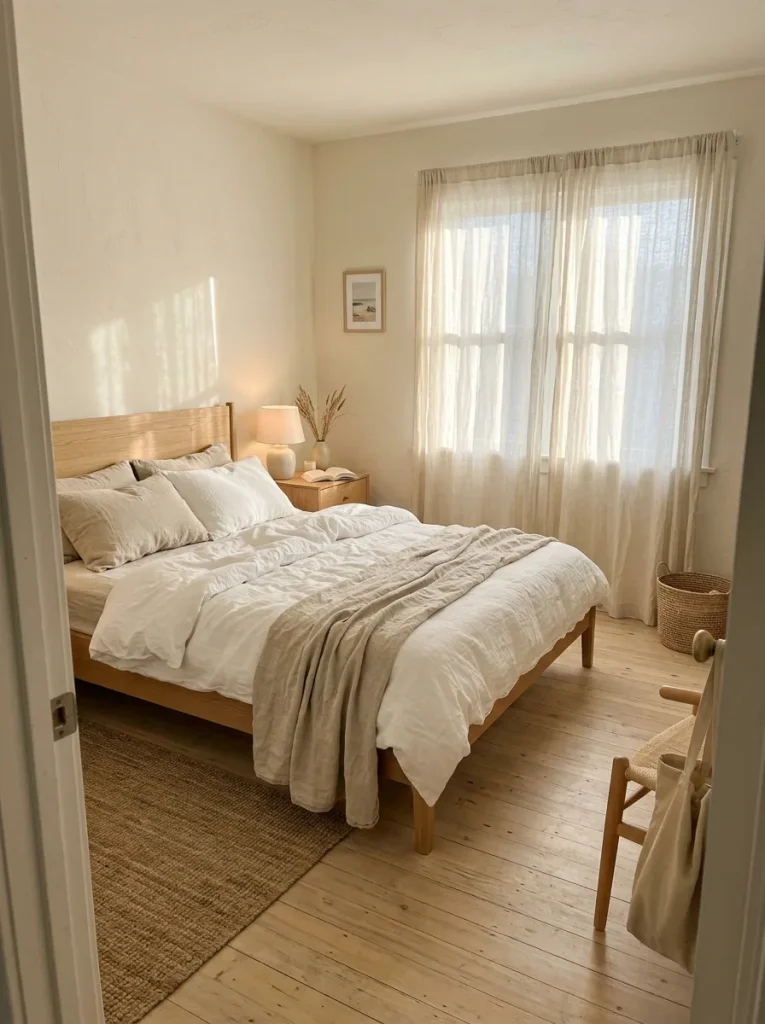
Here is how to build one.
1. Base: Soft warm whites and creams.
2. Mid layer: Muted blues and greens.
3. Accent: Sand, natural wood, and warm terra.
Start With the Color Palette
The single most important decision in any coastal bedroom design is color. Get the bedroom color palette right and everything else becomes easier. Get it wrong and no amount of rattan furniture will save it.
The Base: Soft Whites and Warm Creams
These are the walls, the ceiling, and often the large furniture pieces. Not bright, stark white. That reads as clinical rather than coastal.
The whites you want have warmth in them. Think of sea foam drying on sand, the inside of a seashell, or bleached driftwood in afternoon light. Paint companies call these linen white, antique white, oyster, or warm ivory. They reflect light beautifully and make a room feel open without feeling cold.
The Mid Layer: Blues and Greens
This is where the coastal color really lives. The range runs from pale sky blue through seafoam green through sage through dusty teal through navy.
The key word across all of them is muted. A saturated, electric turquoise looks tropical and fun, but it does not create the calm, restful atmosphere that makes a coastal bedroom work as a sleeping space.
The versions you want are softer and more complex. Dusty teal, faded denim blue, sage green with a gray undertone, or a blue that sits between sky and sea.
The Accent Layer: Sand, Natural Wood, and Warm Terra
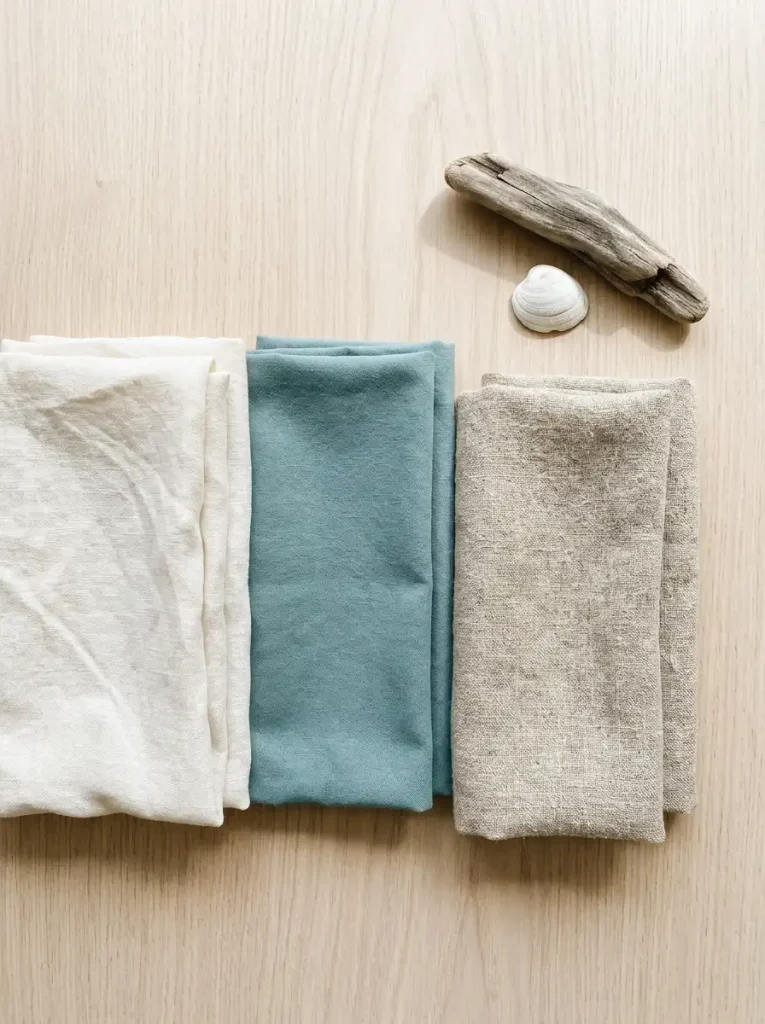
This is what stops a coastal bedroom from looking cold or sterile. Sandy beige, warm tan, the color of natural linen, the tone of unvarnished oak or weathered teak.
These warm, earthy accents are the sand in the palette. They show up in rugs, throw pillows, wooden furniture, woven baskets, and bedside accessories.
Without this layer, a blue and white coastal bedroom can feel like a bathroom. With it, the room feels genuinely like the beach.
See how to further organize your bedroom for better sleep.
💡 Quick Tip
Test your blue or green on a large wall sample before you commit. Coastal colors shift dramatically between morning light, afternoon sun, and warm evening lamps.
Coastal Bedroom Furniture
Coastal furniture does not mean buying things shaped like anchors. It is about material, finish, and scale rather than novelty.
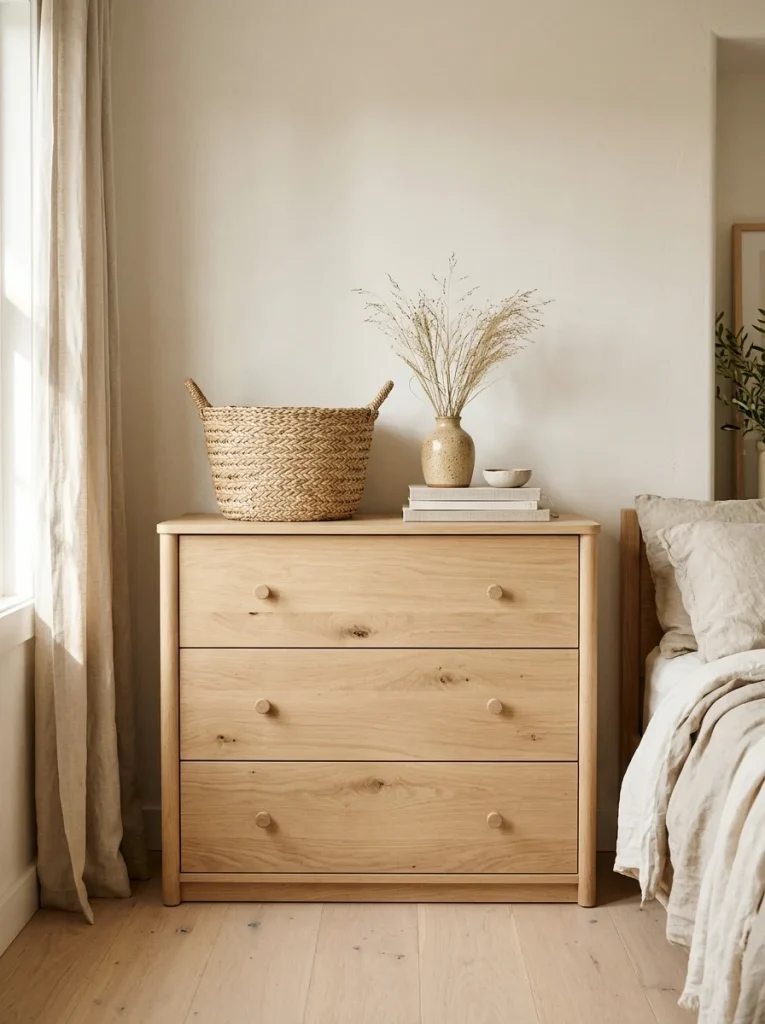
Natural Wood With a Light Finish
The wood tones that feel most authentic are either very light, like blonde oak, whitewashed pine, or natural ash, or slightly weathered, like teak that has silvered.
Both read as driftwood-adjacent. Dark, lacquered, or heavily stained wood feels heavy and inland. A bed frame, dresser, and nightstands in light natural wood immediately set the right tone.
Rattan, Cane, and Wicker
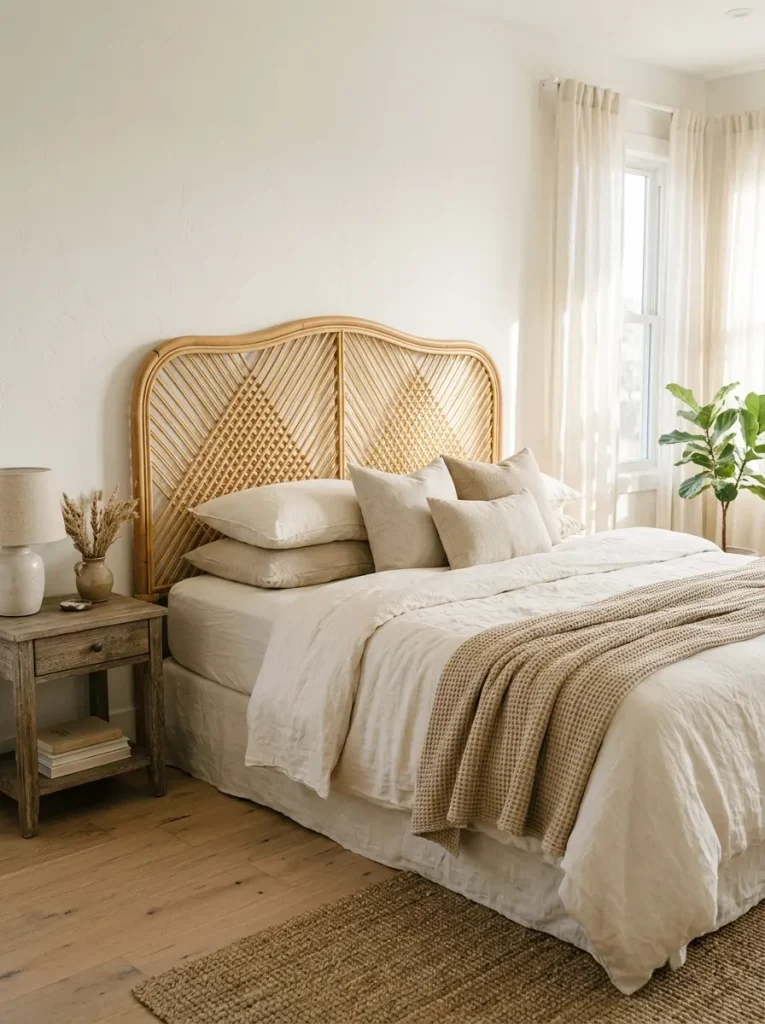
These woven materials are the most direct shortcut to coastal feeling. A rattan headboard is one of the easiest and most affordable ways to transform a coastal bed from ordinary to genuinely beachy.
Cane-front dresser drawers, a wicker side table, or a rattan mirror frame all bring in the organic, handmade quality that the coastal aesthetic is built on.
Upholstered Pieces in Natural Linen or Cotton
If you want an upholstered headboard or a bedroom chair, choose natural linen, cotton canvas, or a slubby textured fabric in a soft neutral.
Avoid velvet, silk, or synthetic fabrics with a sheen. The coastal bedroom is about texture that looks like it belongs in nature, not texture that signals formality.
What to Skip in Coastal Furniture
Dark carved wood furniture
High-gloss and mirrored finishes
Elaborate metal frames
Light or weathered natural wood
Rattan, cane, and wicker
Linen and cotton upholstery
Beach Inspired Bedding
The bed is the most visible surface in any bedroom, which makes bedding one of the highest-impact decisions in the room. A coastal bed dressed beautifully can make an ordinary room look like a boutique hotel on the shore.
Choose Linen for the Duvet
For a beach themed bedroom, linen is the ideal duvet cover material. Real linen has a natural, slightly rumpled texture that looks effortless rather than stiff. It breathes well, softens with washing, and has an organic quality that synthetics can never replicate.
Colors for the main duvet cover should stay in the soft whites, warm creams, or very pale blues. The bed’s dominant color should be light and calm.
Build the Layers
The layered look that defines a well-styled coastal bed comes from mixing textures and tones within a tight palette.
- A white linen duvet as the base layer.
- A lightweight waffle-weave blanket in sandy beige folded across the foot.
- A quilted cotton coverlet in soft blue or sage.
- Throw pillows in cream, dusty teal, natural linen, and one woven rattan cover.
- A chunky cotton or jute knit throw draped over one corner.
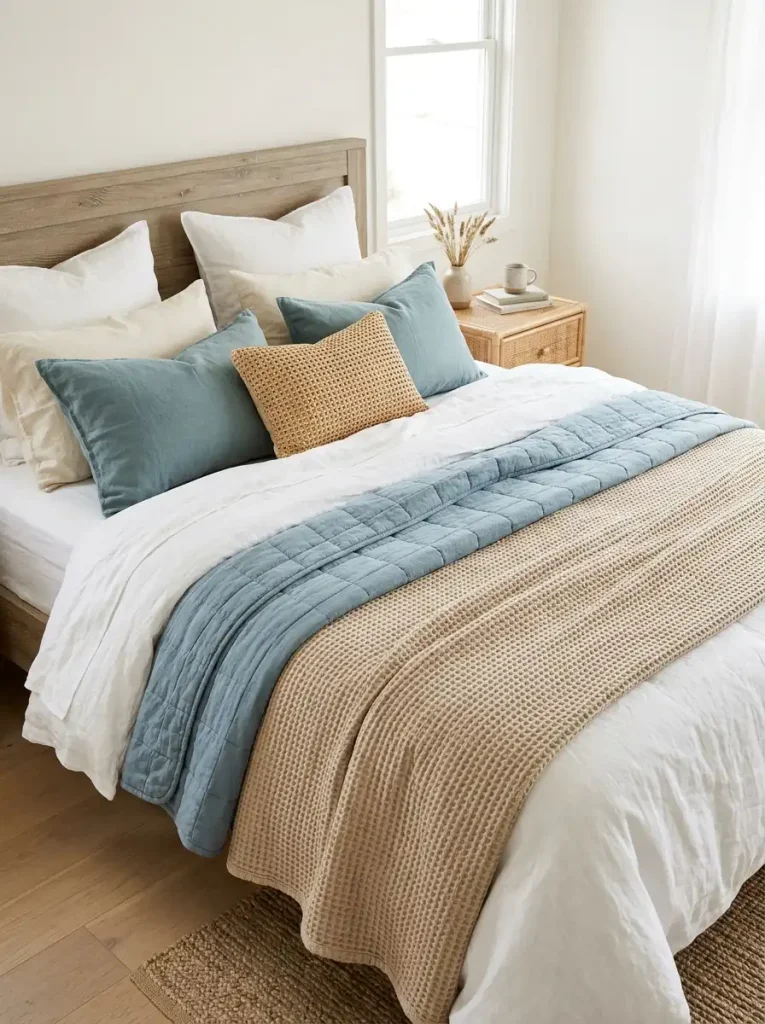
The key is that nothing should look too perfect or too matched. A coastal bed looks better with slight variation in texture across the layers. It should look like the sheets were washed in sea air and thrown back on the bed with casual confidence.
What Makes a Bed Look Coastal Versus Just Blue
The difference is almost always the natural fiber content. Natural linen, cotton muslin, waffle weave, and chunky knits all have an organic quality that signals the beach. Smooth polyester in the same blue color does not.
Walls, Floor, and Light
Walls
In a coastal bedroom, the walls should feel like the sky or the sand, depending on which direction you take the palette.
Soft white walls with blue and green accents give the room a bright, airy quality, like standing outside on a clear day near the water. Walls painted in a muted dusty blue or sage green give the room a more enveloping quality, like being inside a beach cottage in the late afternoon.
Avoid wallpaper with obvious nautical motifs. Sailboats, anchors, and lighthouse patterns date quickly and tip the room from coastal into themed, which is a different thing entirely.
Flooring
Light wood floors are the most natural companion. Pale oak, bleached hardwood, or white-washed boards all feel immediately right.
If you have darker flooring, a large area rug in natural jute, seagrass, or flat-weave cotton in sandy tones can shift the whole feeling of the floor underfoot. A jute rug is one of the best-value investments in coastal design. It is inexpensive, durable, natural in look, and it brings the texture of woven beach grass into the room.
Light
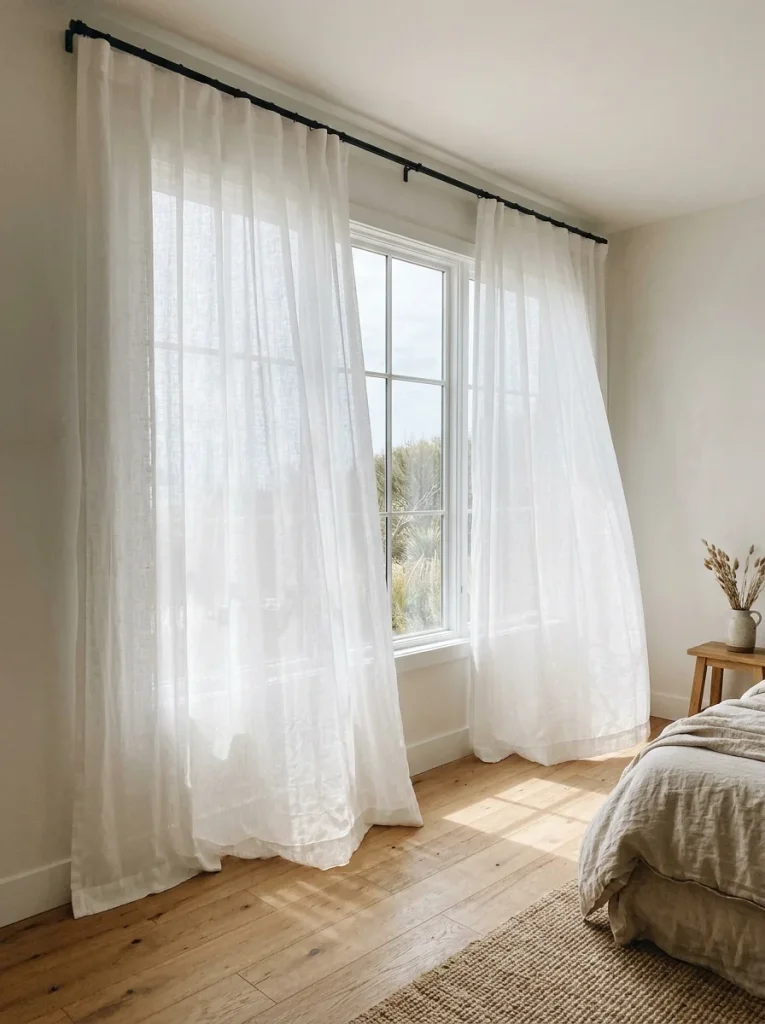
Natural light is non-negotiable. Use sheer white linen curtains rather than heavy drapes, and hang them high and wide so they frame the window generously without blocking daylight.
The goal is the quality of light you get near water. Diffused, soft, and slightly luminous.
At night, warm amber light from table lamps creates the feeling of candlelight or early evening on a beach. Avoid cool white overhead lighting in a coastal bedroom. It destroys the atmosphere completely.
Coastal Room Element Checklist
Beach Decor Room Accessories
The accessories are where most people make mistakes in both directions. Either the room ends up with too many obvious nautical objects, or it ends up so restrained that it feels like a hospital room.
The right approach is to choose accessories that reference nature without illustrating it literally.
Organic Objects
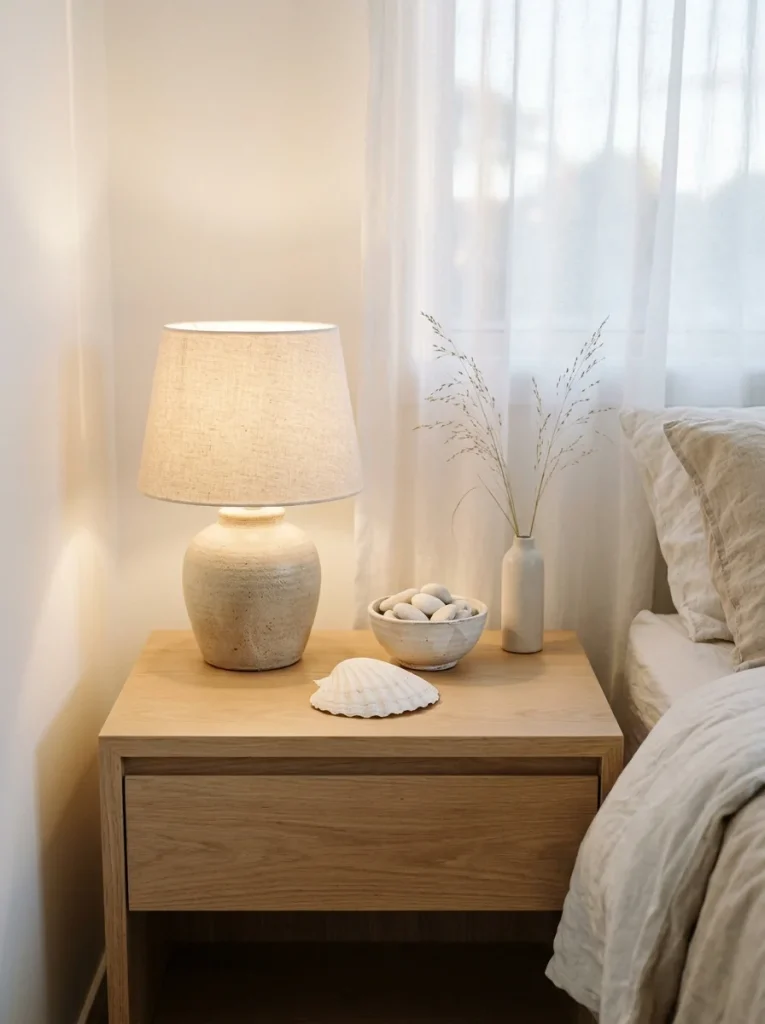
A bowl of smooth white stones on a nightstand. A piece of driftwood on a shelf. A few large white shells in a glass hurricane lamp. Dried sea grass in a ceramic vase.
These are genuinely from nature, or look like they are, and they bring the sensory reality of the beach into the room without announcing it loudly.
Woven Baskets and Natural Fiber Storage
Seagrass baskets, jute-wrapped boxes, and rattan trays serve double duty. They are functional storage and they add the handwoven texture that is central to the aesthetic. A stack of two or three different-sized woven baskets in a corner looks organized and beautifully coastal.
Plants
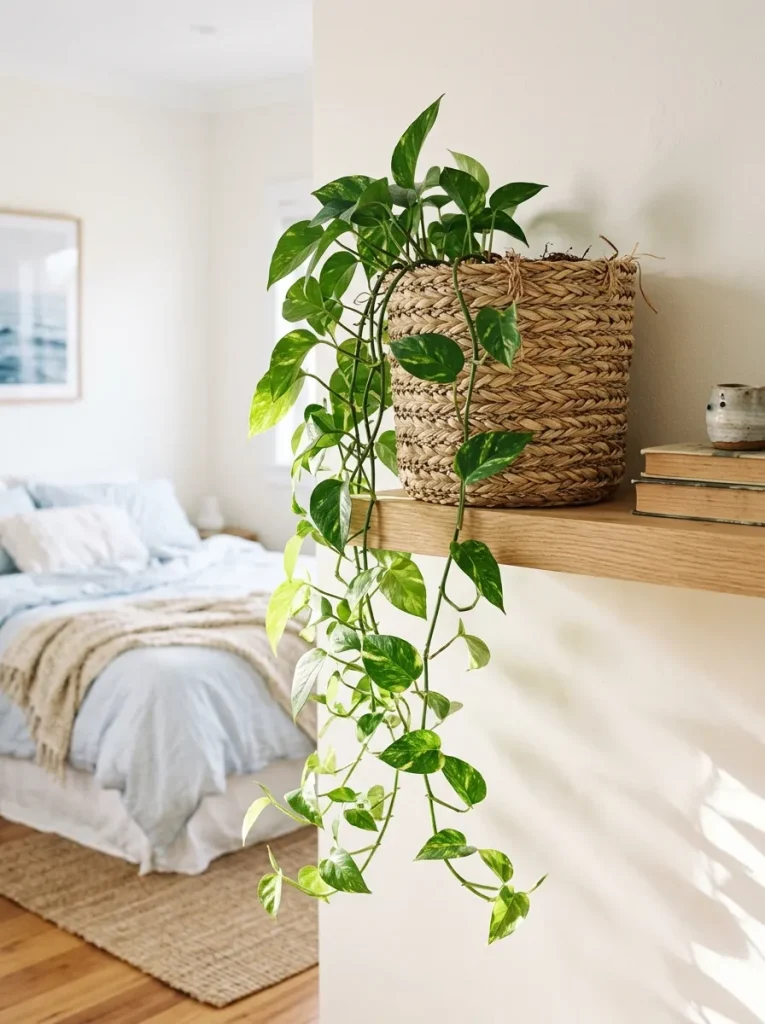
Real plants belong in a coastal bedroom. The 2026 Springer Nature review found that living plants indoors are among the most effective individual biophilic design interventions for wellbeing.
Plants that feel appropriate include trailing pothos, broad-leafed plants like bird of paradise, succulents in sandy soil, or simple green stems in a ceramic vase.
Avoid very dark, dramatic plants like deep burgundy rubber trees. They pull against the light, airy quality the room needs.
Art
Abstract art in coastal colors works better than literal seascape photography or beach illustrations. An abstract painting with the colors of tide water, or a simple line drawing of waves, gives the room a grown-up sophistication while still referencing the sea.
Large-scale photography of empty beaches can also work, particularly in black and white or with a soft, faded print quality rather than vivid travel-poster brightness.
The Small Details That Separate a Good Coastal Bedroom From a Great One
The difference between a bedroom that looks genuinely beautiful and one that looks like it tried too hard comes down to a handful of small decisions.
Match the Bedside Lamps
Symmetry on either side of the bed creates calm. The lamp bases should be ceramic, natural stone, or woven rattan. Not metal or glass, which feel too contemporary for the aesthetic.
Edit the Nightstand Surfaces
A lamp, a book, a small plant or organic object, and a glass of water. That is enough. The coastal aesthetic depends on a sense of openness. A crowded nightstand undermines it.
Add a Bench at the Foot of the Bed
A bench in natural linen or woven seagrass grounds the bed visually, adds storage space, and gives the room a finished look that most bedrooms are missing.
Let Some Things Be Imperfect
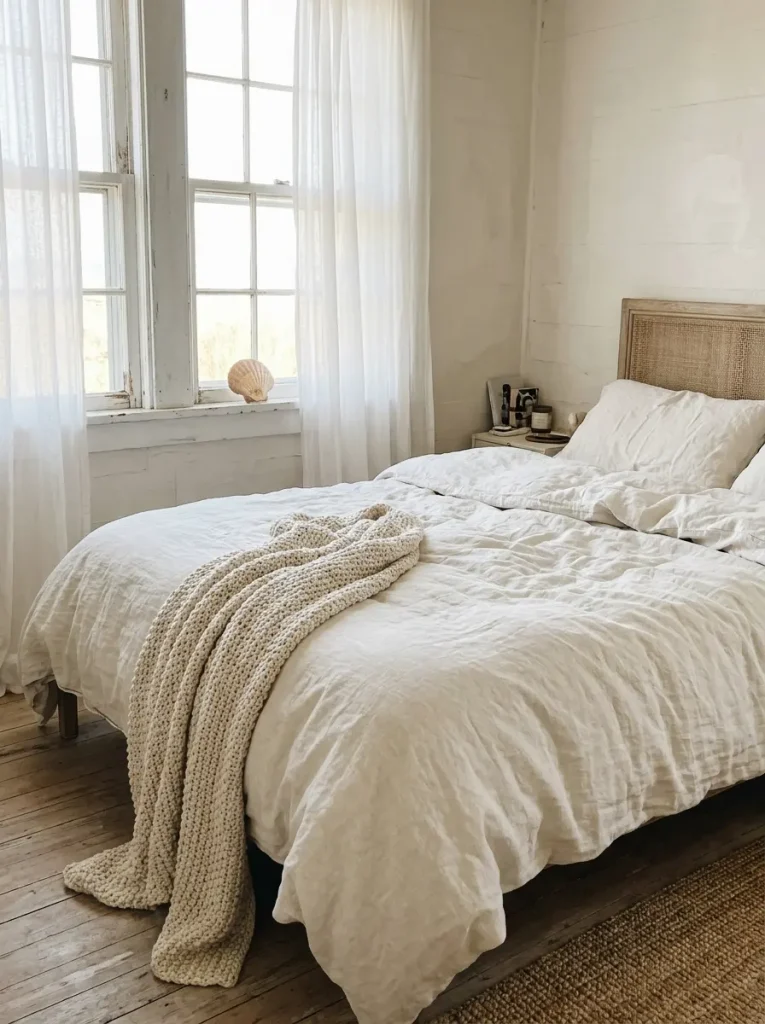
The linen duvet slightly rumpled. The throw draped casually rather than folded precisely. A single shell sitting on its own on a windowsill.
The coastal aesthetic is not about perfection. It is about the ease and naturalness of a life lived close to the water. The rooms that feel most authentically coastal are the ones that look like someone genuinely lives in them and genuinely loves the sea.
💡 Quick Tip
If your coastal bedroom still feels flat after adding bedding and furniture, check the lighting first. Swapping cool bulbs for warm ones is the cheapest fix in the whole room.
Frequently Asked Questions
What are the best colors for a coastal bedroom?
Soft warm whites for the base, muted blues and greens for the middle layer, and sandy beige or natural wood for the accents. Avoid saturated turquoise, which reads as tropical rather than coastal.
Does a coastal bedroom need to be near the water?
No. The style works in any location because it is built on color and natural texture rather than a view. A well-styled coastal bedroom creates the same feeling of calm in a city apartment as it does in a beach house.
How do I keep a coastal bedroom from looking like a souvenir shop?
Choose accessories that reference nature without illustrating it. A piece of driftwood and a bowl of stones work. Anchor hooks, starfish on every surface, and lighthouse figurines do not.
Final Thoughts
A coastal bedroom is not about buying beach-themed objects. It is about building a room from three things: a muted color palette, natural materials, and warm, diffused light.
Get those three right and everything else follows. The rattan headboard, the rumpled linen duvet, the bowl of white stones, and the sheer curtains all start to feel like part of one idea instead of a collection of beach decorations.
And the research supports what you already sense when you walk into a well-designed coastal room. A space built from natural references genuinely helps the people inside it feel calmer and sleep better.