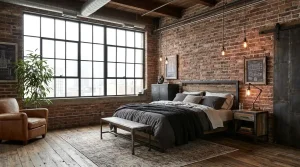
Most basements hide their structure behind drywall. But what if you didn’t?
An exposed basement ceiling turns joists, pipes, and ducts into a design feature instead of something to cover up.
It’s honest, full of character, and saves thousands of dollars you can spend on the things that actually make a room feel great.
It also keeps every inch of ceiling height, which matters a lot in a basement. And with proper prep, the right paint, and smart lighting, it looks deliberately designed, not unfinished.
Basement Ceiling Transformation Planner
Plan your exposed ceiling project step-by-step. Calculate accurate material quantities, lighting, timelines, and visual expectations based on your basement dimensions.
You want to finish the basement properly but the cost of a traditional drywall ceiling feels enormous. And all those mechanical systems running overhead make a conventional ceiling feel almost impossible anyway!
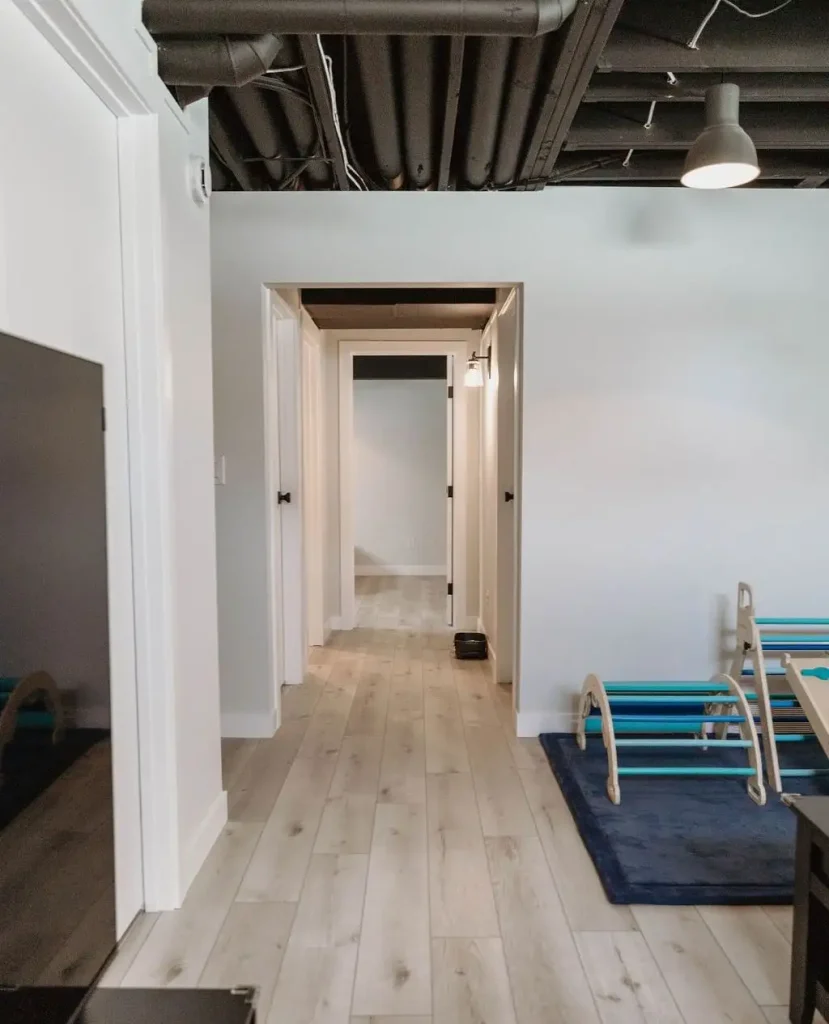
An exposed basement ceiling is the answer you have been looking for. Instead of hiding everything above, you embrace it. You clean it up, paint it, light it beautifully, and turn what was a liability into one of the most striking and characterful design features your home can have.
Exposed ceilings look deliberate, industrial, and genuinely cool. They are also significantly cheaper than traditional ceiling options.
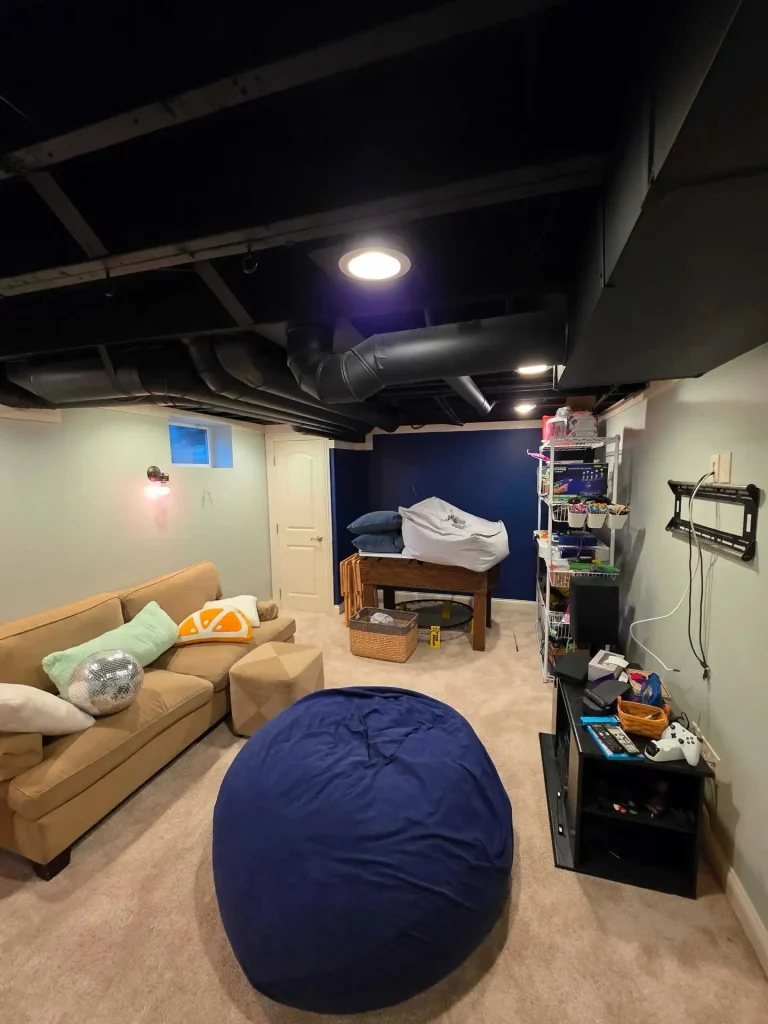
This complete guide covers everything you need to know about creating a stunning exposed basement ceiling that makes the whole space feel larger, better lit, and completely transformed.
What Is an Exposed Basement Ceiling?
An exposed basement ceiling leaves the structural elements of the floor above fully visible rather than concealing them behind drywall or drop ceiling tiles.
The joists, beams, subfloor boards, pipes, electrical conduits, and ductwork all remain visible as deliberate design elements rather than hidden necessities. For more interesting ideas see our guide on shiplap ceiling, you can try in your basement as well.
What an Exposed Basement Ceiling Looks Like Before You Do Anything
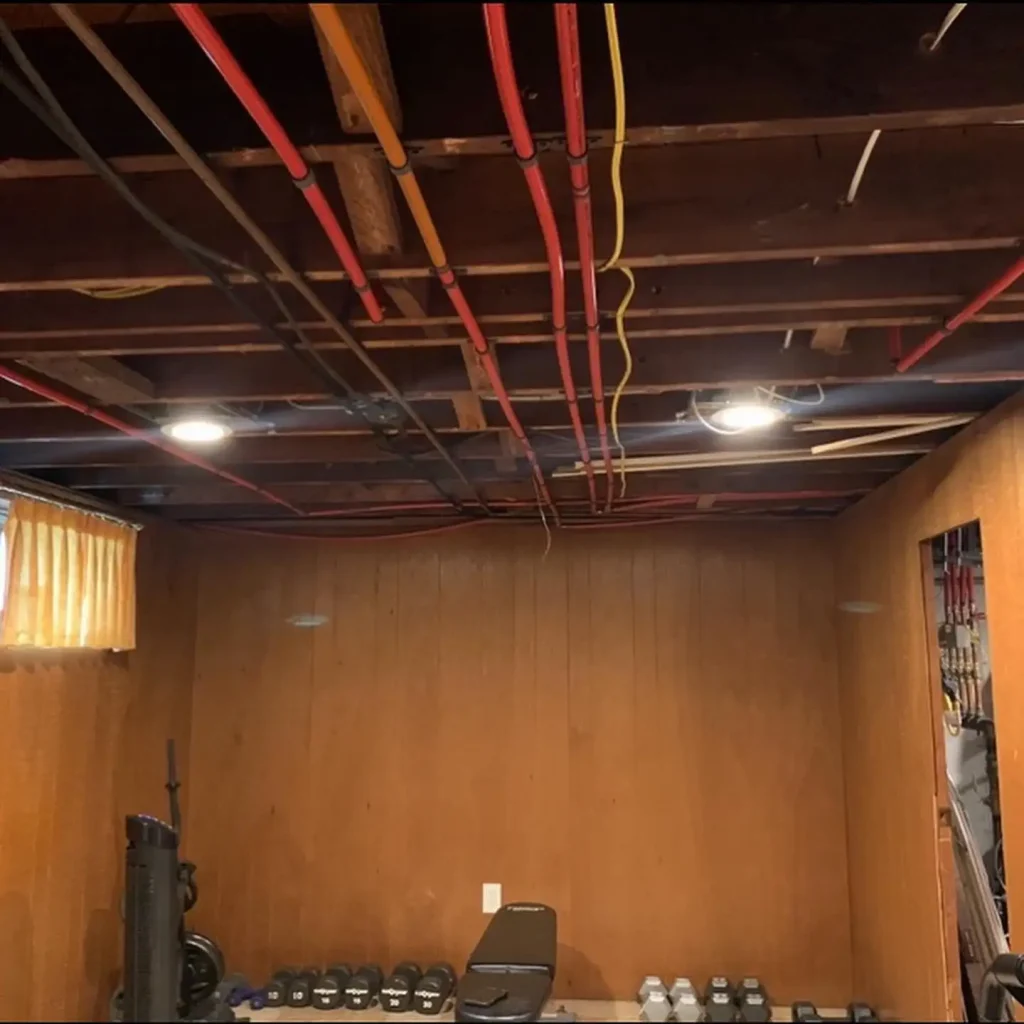
Most people see their raw basement ceiling and feel stuck.
This image shows exactly why: exposed joists in a dark wood tone, a tangle of colorful pipes running in every direction, rough wood subfloor visible between the framing, and a couple of recessed puck lights already wired in. The space is being used as a home gym, with dumbbells and a workout bench below.
The good news? This ceiling is already further along than it looks.
- The recessed lights are in place, which is the hardest part
- The joists have a consistent depth, so paint will unify them fast
- The pipes, while colorful, run in roughly parallel lines
The main job here is not construction. It is paint and a decision about whether to embrace the pipes as part of the look or box them in first.
Raw joists, visible subfloor, multi-colored pipes running in all directions, no cohesive look.
One coat of dark paint across joists, pipes, and subfloor above pulls the whole ceiling into one unified, intentional surface.
This approach originated in industrial and commercial spaces like warehouses and factories where ceilings were never intended to be finished.
The look migrated into residential design through loft conversions and urban apartments where the industrial aesthetic became fashionable.
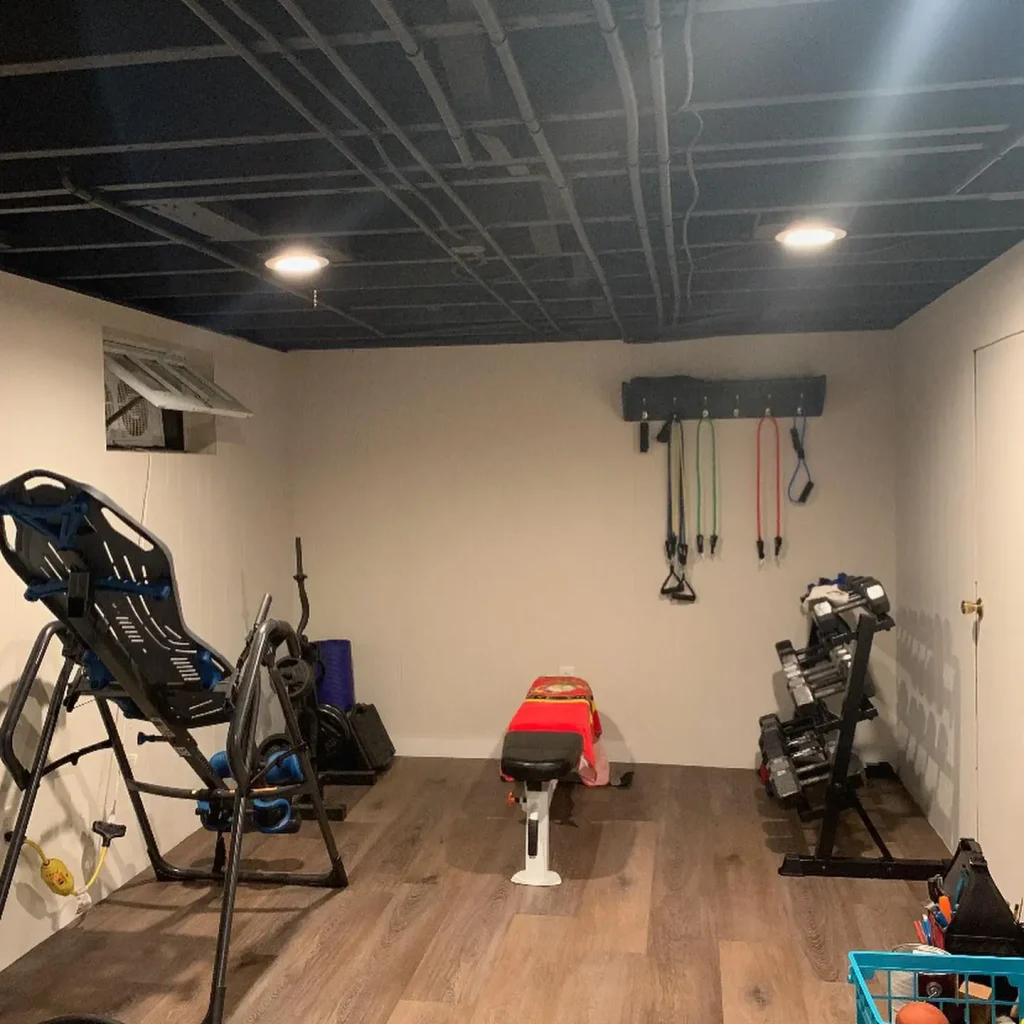
Paint everything black and suddenly all those pipes and wires stop looking like a problem.
This finished home gym shows that approach in full.
Every joist, pipe, wire, and structural element has been painted the same deep matte black, making the ceiling read as one cohesive surface overhead. Recessed can lights punch through cleanly, and the warm-toned wood floor below gives the room enough light to feel energetic rather than cave-like.
The walls are kept bright white, which does a lot of the work here. That contrast is the reason the black ceiling looks sharp instead of heavy.
Why Choose an Exposed Basement Ceiling?
An exposed basement ceiling offers multiple advantages that make it one of the smartest choices for basement finishing projects. The first and most immediately compelling advantage is cost.
Eliminating the ceiling finishing entirely removes a significant portion of the basement renovation budget. No drywall, no ceiling tiles, no ceiling grid, no additional framing and no finishing labor translates directly into thousands of dollars saved.
White-Painted Exposed Ceiling with a Natural Wood Beam Accent
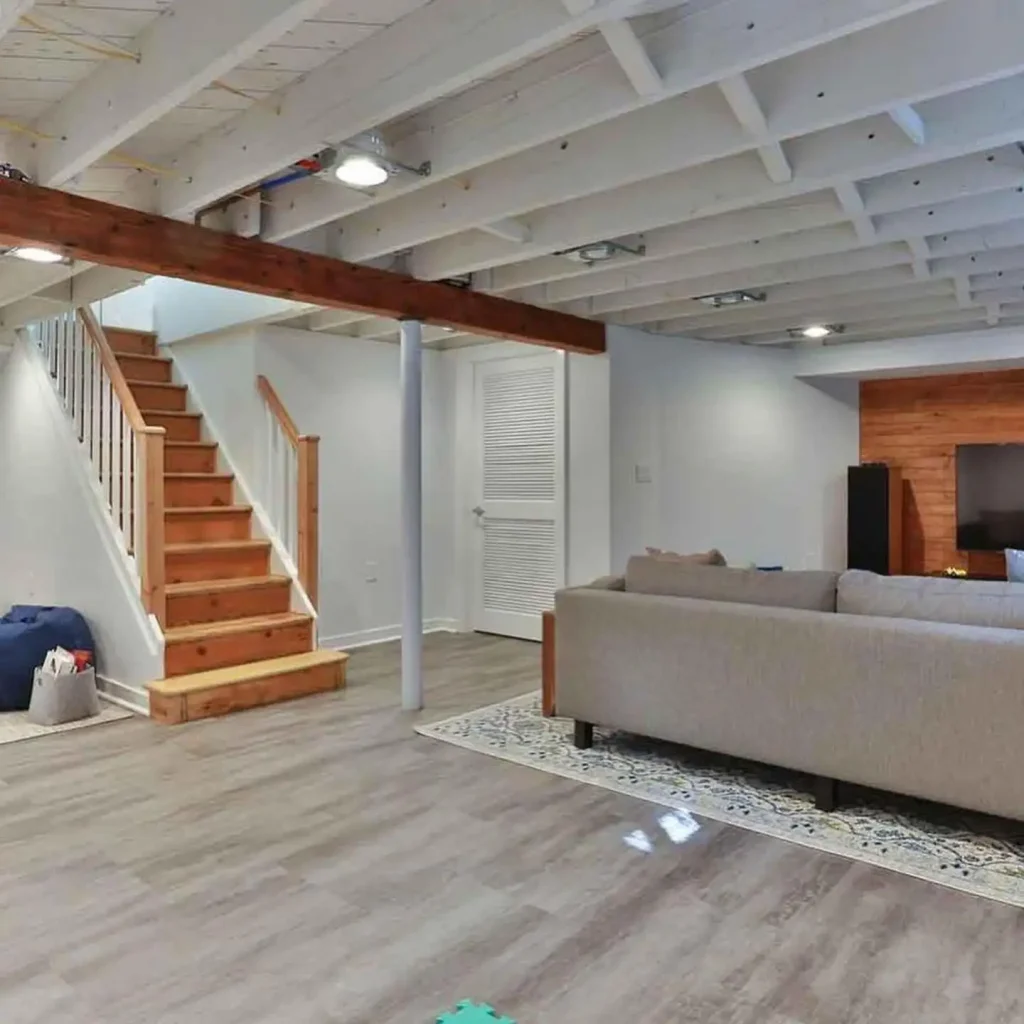
Not every exposed basement ceiling needs to go dark. This finished basement living space proves the opposite works just as well.
The joists, subfloor above, and all the structural framing have been painted a clean white, while a single natural wood beam runs diagonally across the space, left in its warm brown tone.
The result reads bright and airy rather than unfinished, and recessed lights tucked between the joists keep it feeling like a real room.
A wood accent wall section behind the TV ties the wood tones together throughout the space.
The key move here: paint the joists the same white as the walls and ceiling. When everything is one color, the structure stops being a distraction and starts looking deliberate.
How to recreate this look
Is an Exposed Basement Ceiling Right for Your Space?
An exposed basement ceiling suits some spaces and some homeowners much better than others.
Before committing to this approach, honestly assess your basement’s specific conditions and your own tolerance for the industrial aesthetic.
Not every basement is an equally good candidate for an exposed ceiling.
| Basement Use | Exposed Ceiling Suitability |
| Recreation room or den | Excellent, industrial suits casual use |
| Home gym or fitness space | Excellent, tough look matches purpose |
| Home theater or media room | Very good with proper painting |
| Home bar and entertainment | Excellent, urban industrial character |
| Formal bedroom or living room | Less ideal, consider finished ceiling |
White-Painted Exposed Ceiling in a Home Gym with LED Shop Lights
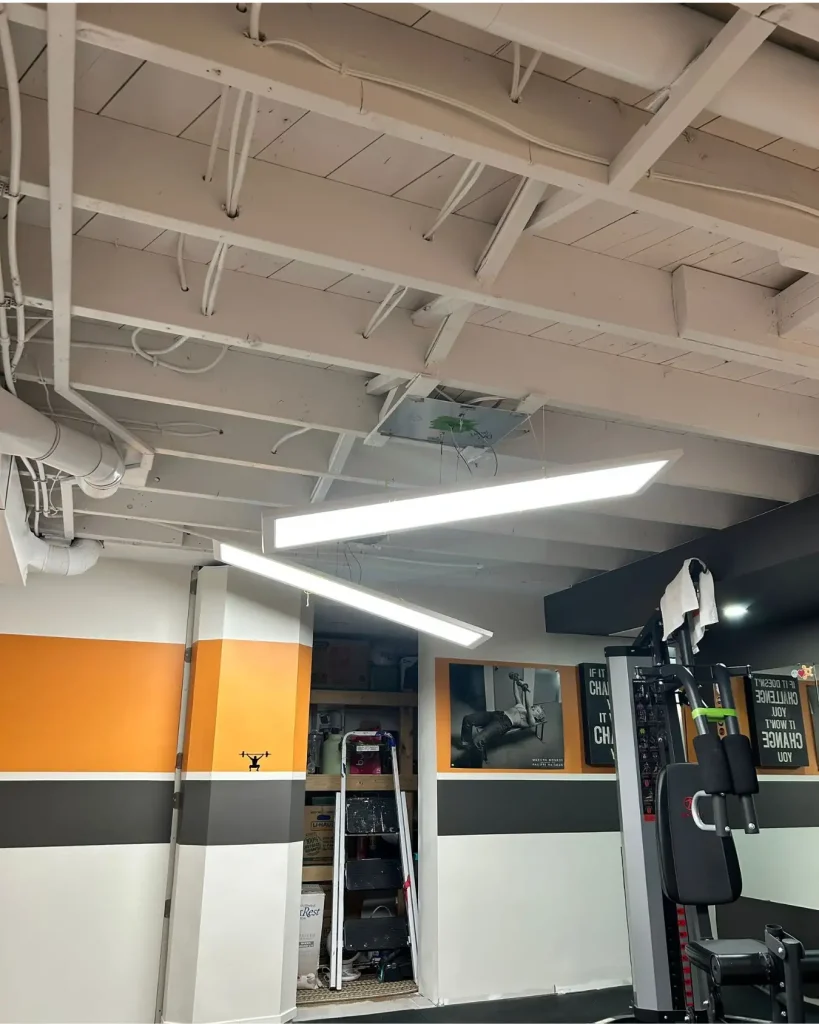
Flat panel LED shop lights are one of the most practical choices for an exposed basement ceiling, and this home gym image shows exactly why.
The joists and pipes have all been painted white, and two long LED panel lights hang between the framing on simple mounts, throwing even, shadow-free light across the whole room. Bold orange, gray, and white striped walls add personality below the ceiling.
The shop light approach works especially well when:
- You need bright, even light for workouts or a workspace
- The ceiling height is low and recessed cans are not practical
- You want to keep costs down without sacrificing function
One note: flush LED panels look cleanest when the wiring is tucked and painted to match the ceiling color.
What to Check Before You Commit to an Exposed Basement Ceiling
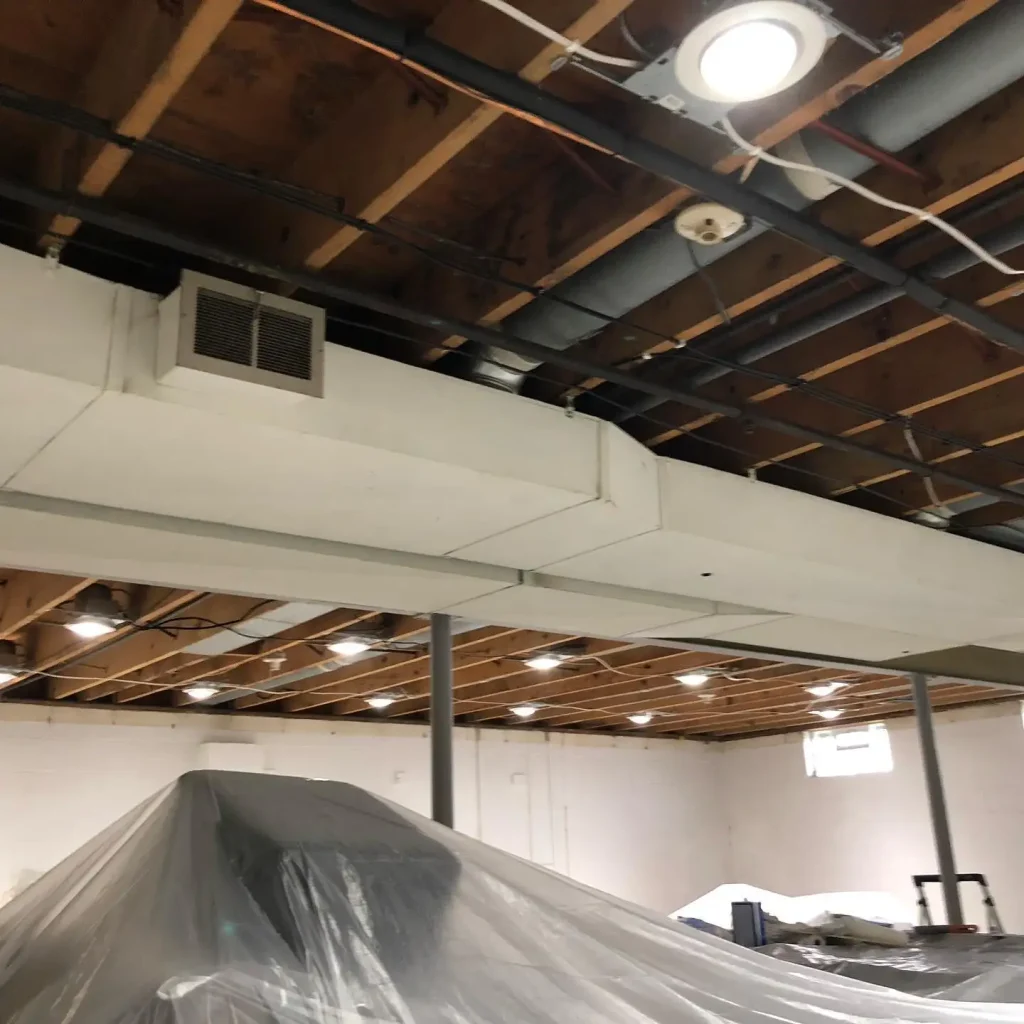
This mid-renovation image is one of the most useful reference shots you will find.
It shows a wide basement space where part of the ceiling has been opened up and fitted with recessed puck lights, while a bulky HVAC duct has been cleanly boxed in with white framing and given its own vent cover. Plastic sheeting protects the floor during work.
Before you decide to leave your basement ceiling exposed, check these things first:
Look for any oversized duct runs or plumbing stacks that sit too low. These may need to be boxed in separately, which affects your finished ceiling height.
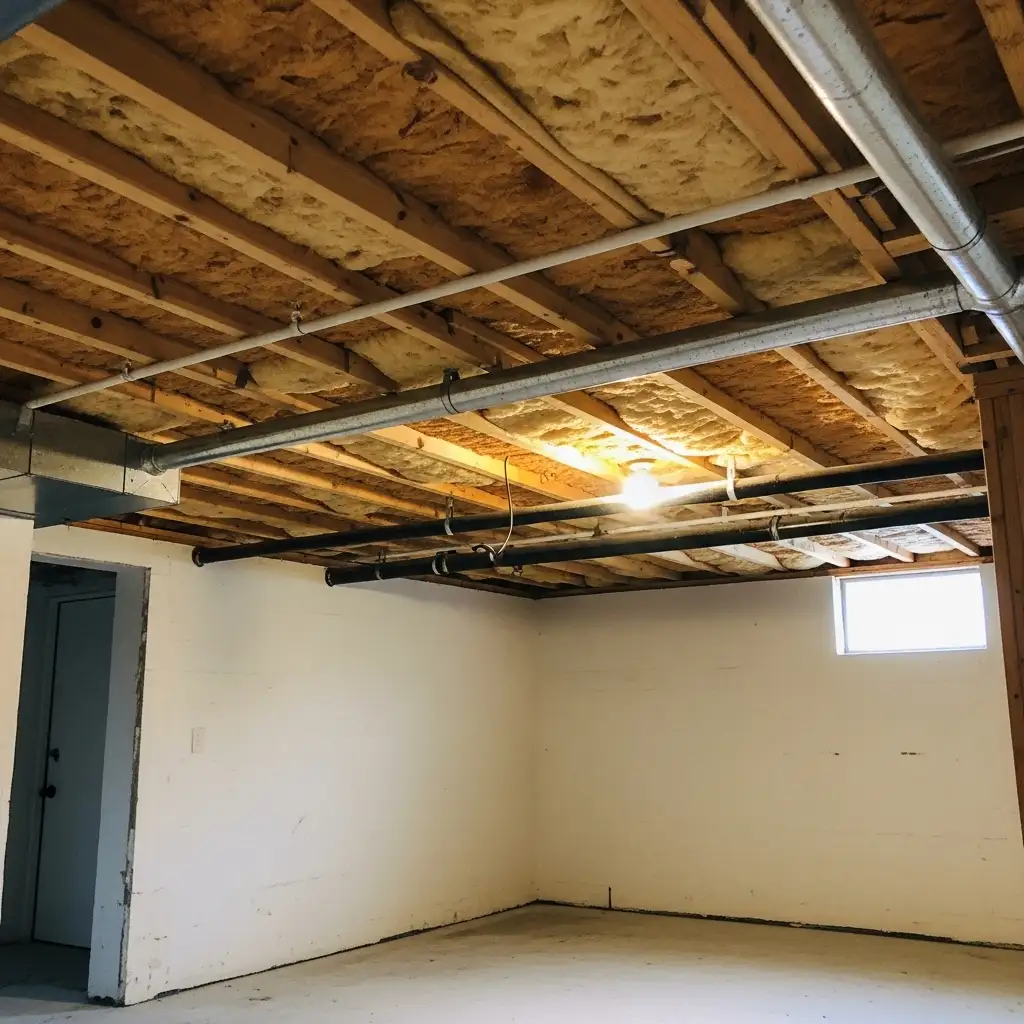
Check for any insulation batts tucked between joists. If your basement is conditioned space, you may need to remove or reposition them before painting.
Confirm the electrical wiring runs are already in conduit or that exposed wiring complies with your local code before leaving it visible.
Plan your lighting placement before you paint. Retrofitting lights after painting the ceiling is a messier job than getting them in first.
Painting an Exposed Basement Ceiling: The Complete Method
Painting the exposed basement ceiling is the single most transformative step in the entire process.
It is what turns a messy jumble of pipes and joists into a deliberate, cohesive, and genuinely beautiful design statement. The right paint color and the right application method make an enormous difference to the final result.
Gray-Painted Exposed Ceiling in a Basement Being Finished
Gray is an underrated middle ground between the drama of black and the brightness of white.
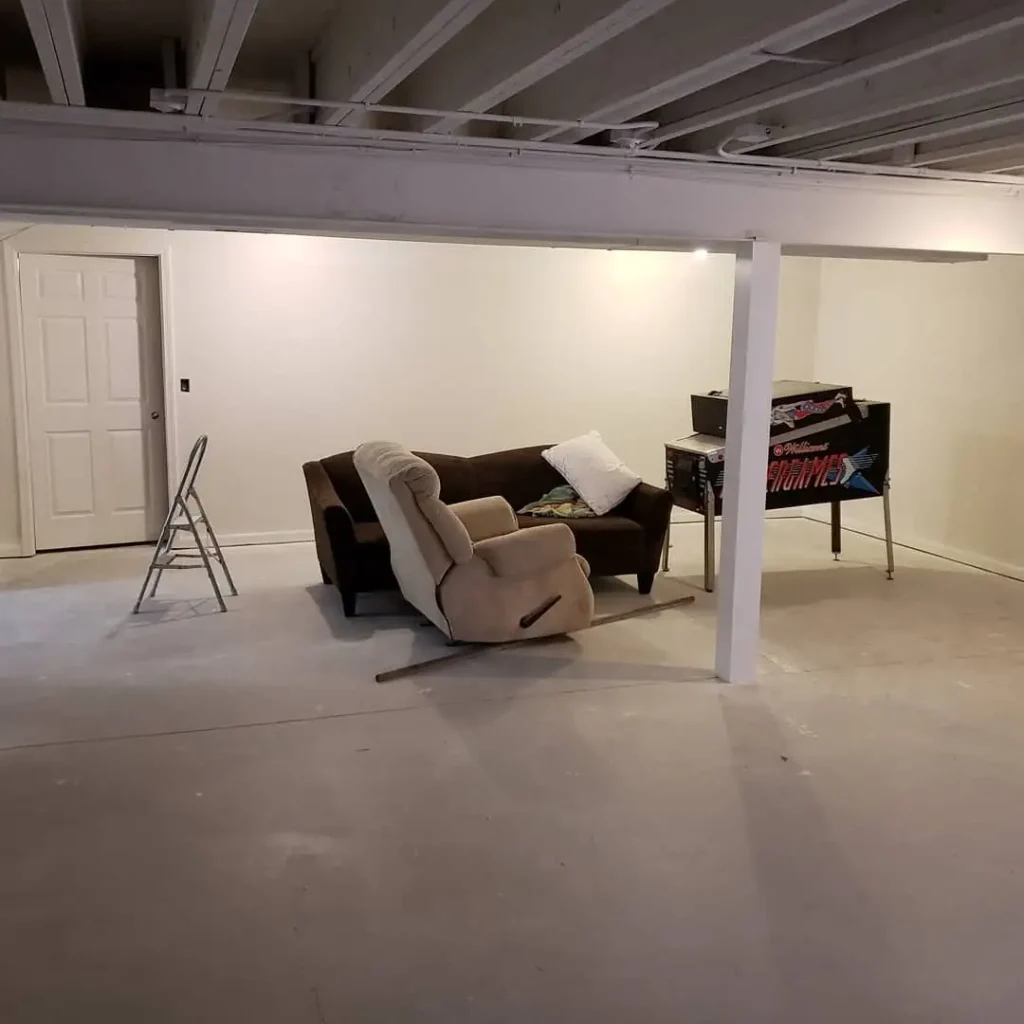
This image shows a basement mid-renovation where all the framing, joists, and pipes have been painted in a cool, medium gray.
The walls are cream, and the ceiling’s uniform gray tone makes the whole overhead structure read as settled and calm, not chaotic. A flush light fixture is already installed, and the room still shows a step ladder and other prep gear.
The gray ceiling does something neither black nor white quite manages: it reads as neutral. Your eye does not fight the ceiling, but it also does not disappear into it.
A medium gray ceiling lets the joists blend in without the starkness of white or the weight of black. It is the most forgiving color if your pipes and wiring are not perfectly tidy.
Best Paint Colors for an Exposed Basement Ceiling
The color you choose for the exposed basement ceiling dramatically affects the atmosphere and perceived height of the entire basement space. Different colors create fundamentally different effects and suit different basement uses and aesthetics. Understanding what each color does to the space helps you choose the right one for your specific situation.
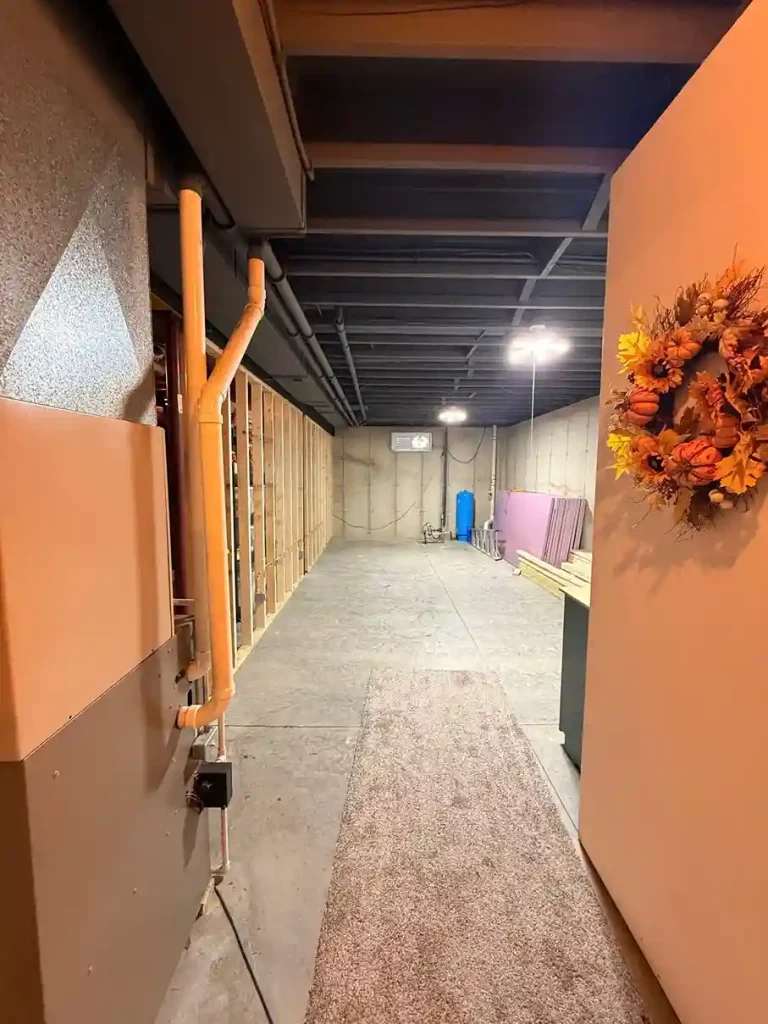
Matte black is the most popular and most dramatic choice. It creates a sky-like depth overhead that makes the ceiling seem to recede into darkness. When the elements are painted black they become less individually visible and the ceiling reads as a unified dark surface with interesting texture rather than a jumble of separate mechanical components.
White creates brightness and maximizes light reflection. Gray is sophisticated and works beautifully in modern and contemporary basements. Navy blue adds deep drama. All colors should be applied in a flat or matte finish which hides imperfections and reads as most intentional.
Why Matte Black Is the Most Popular Exposed Ceiling Choice
Matte black deserves its own dedicated discussion because it is so consistently the most successful and most requested exposed basement ceiling color. Understanding why it works so well helps you commit to it confidently rather than defaulting to white out of uncertainty.
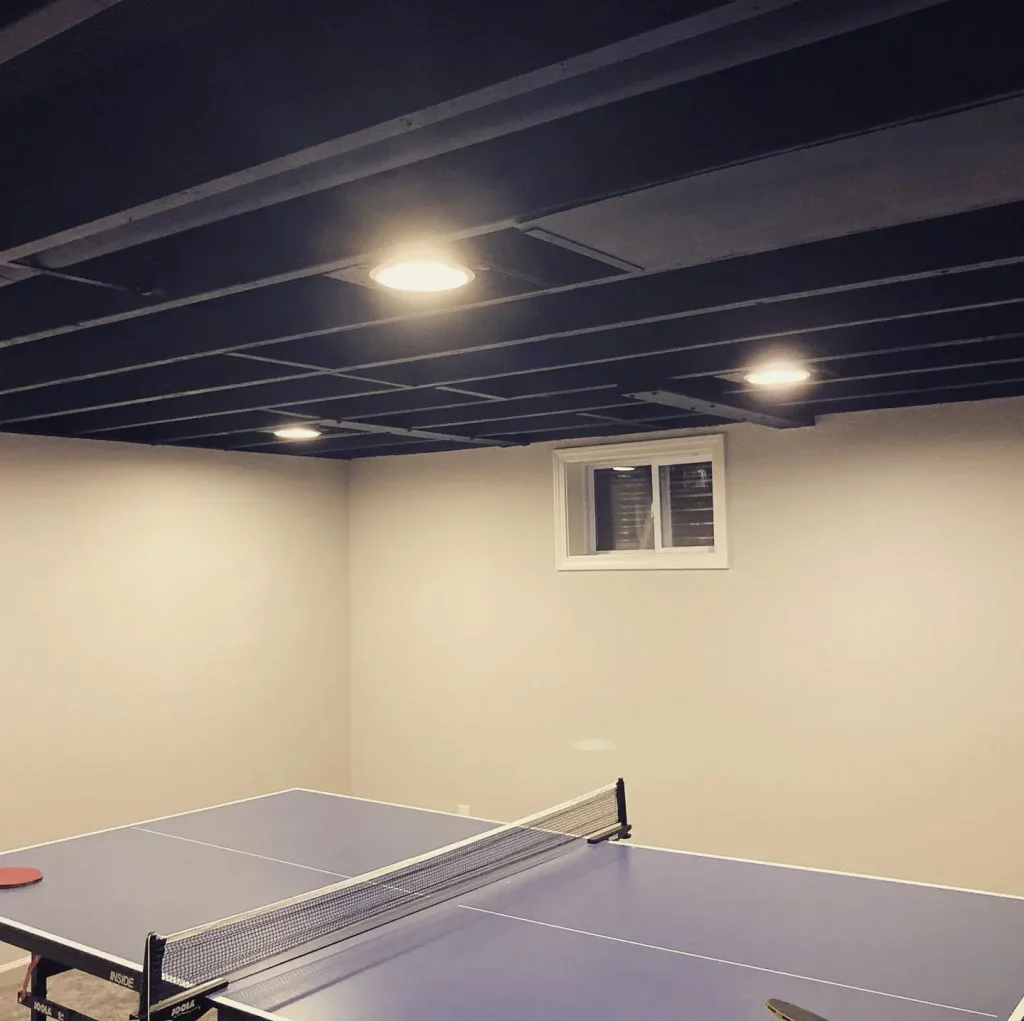
Black paint on an exposed ceiling does something remarkable. It makes every individual element, the joists, pipes, conduit, and ducts, visually recede into a unified dark mass. Rather than seeing a jumble of competing elements in different colors and materials, the eye sees a single dark textured ceiling with interesting variation.
The mechanical systems stop fighting for individual attention and become part of a cohesive architectural composition. Additionally, black overhead mirrors the effect of a night sky and makes the space feel significantly taller because the eye reads the dark overhead as depth rather than as a physical boundary.
Lighting an Exposed Basement Ceiling Beautifully
Lighting is the element that transforms a painted exposed basement ceiling from an interesting raw space into a genuinely beautiful, atmospheric, and functional room. The right lighting works with the exposed ceiling rather than fighting against it. It highlights the industrial character while providing the practical illumination the space needs for whatever activities happen below.
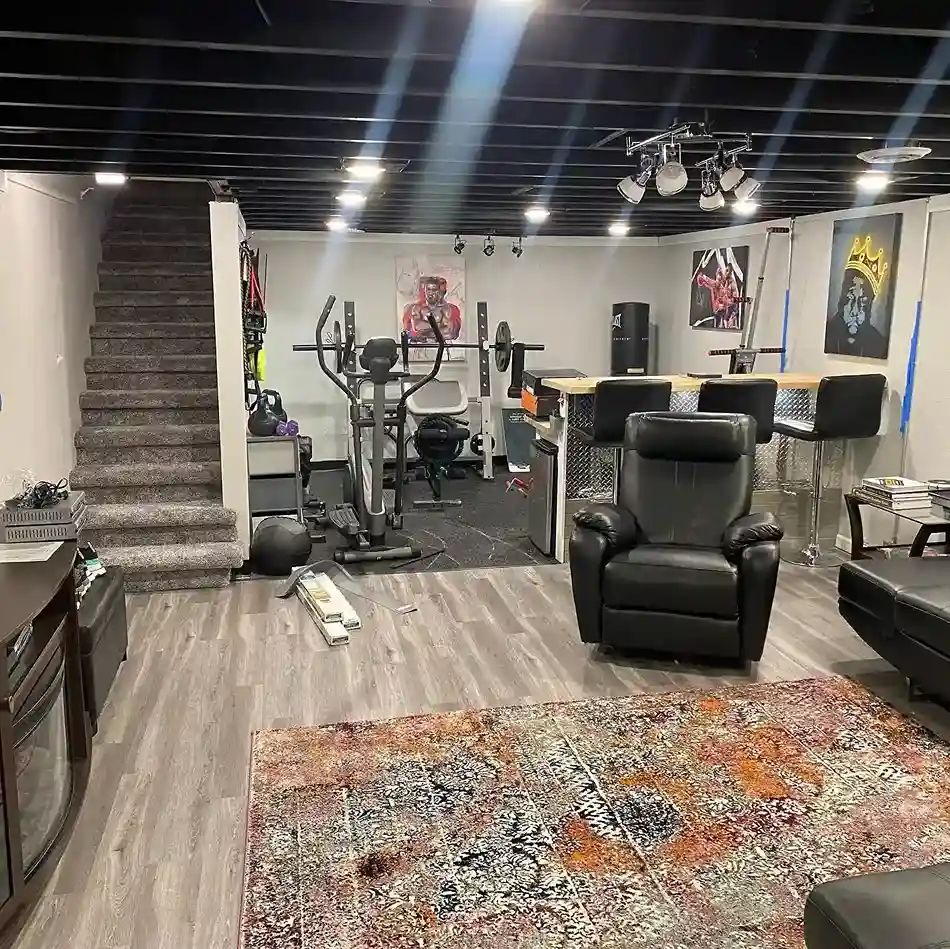
Track lighting is one of the most practical and attractive choices for exposed basement ceilings. Mount the track directly to the joists and position the individual heads to illuminate the room as needed. Track lighting is also completely flexible.
You can reposition the heads without any new wiring whenever the room’s layout or function changes. Pendant lights hung at varying heights from the joists create a beautifully layered visual effect. Edison bulb pendants suit the industrial aesthetic perfectly and add warm amber glow that complements the rawness of the exposed structure above.
How to Handle Ductwork in an Exposed Basement Ceiling
HVAC ductwork is often the most visually dominant element in an exposed basement ceiling. Large rectangular or round metal ducts run across the ceiling in bold, graphic forms that immediately draw the eye. How you handle the ductwork visually makes a significant difference to the overall success of the exposed ceiling design.
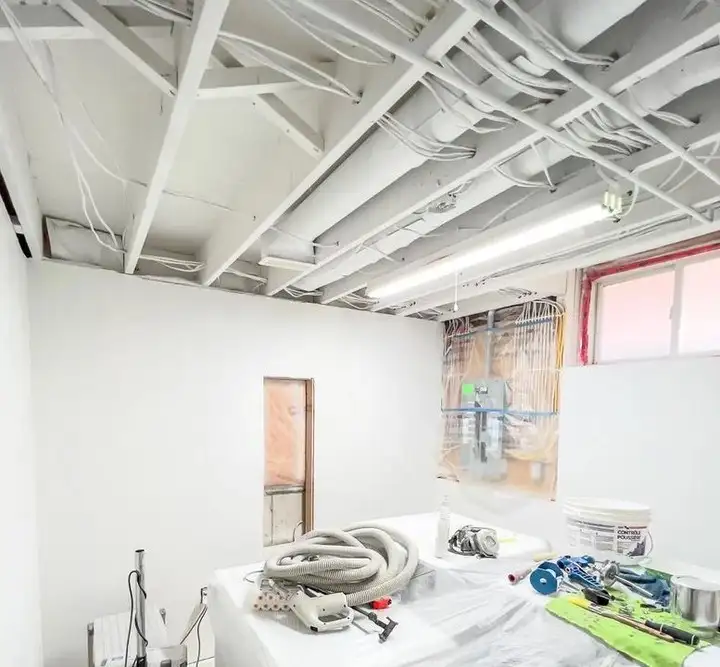
The simplest and most effective approach is to paint all ductwork the same color as everything else. When everything overhead is matte black, the ductwork becomes part of the unified composition rather than an eyesore.
Some homeowners choose to highlight ductwork by painting it a contrasting color to make it a deliberately bold graphic feature. Polished or brushed silver duct paint creates a steampunk-inspired industrial look that suits creative and eclectic basement spaces beautifully.
Managing Pipes and Plumbing in the Exposed Ceiling
Plumbing pipes in a basement ceiling come in many forms. Cast iron drain pipes are large and imposing. Copper supply lines are relatively slim and often beautiful in their own right. PVC pipes in white or gray are functional and simple. Each type requires slightly different treatment to look its best in an exposed ceiling composition.
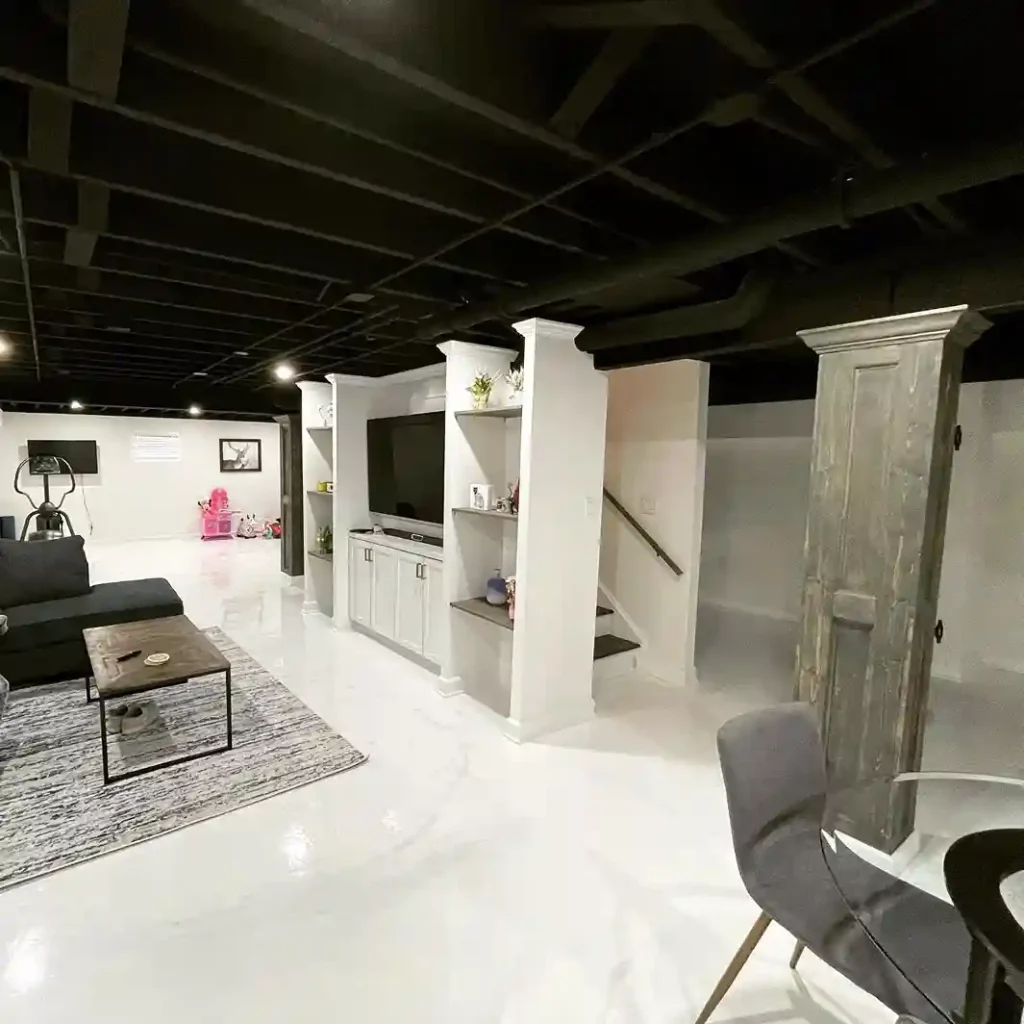
The most important step before painting is to organize loose pipes neatly and secure them properly to the joists with appropriate hangers and clips.
Pipes that run at odd angles or that appear to go nowhere in particular should be traced back and either properly secured or, where possible, rerouted to run more cleanly.
Once organized and painted a consistent color, even complex pipe runs look intentional and characterful rather than chaotic and haphazard.
Organizing Electrical Wiring for a Clean Exposed Ceiling
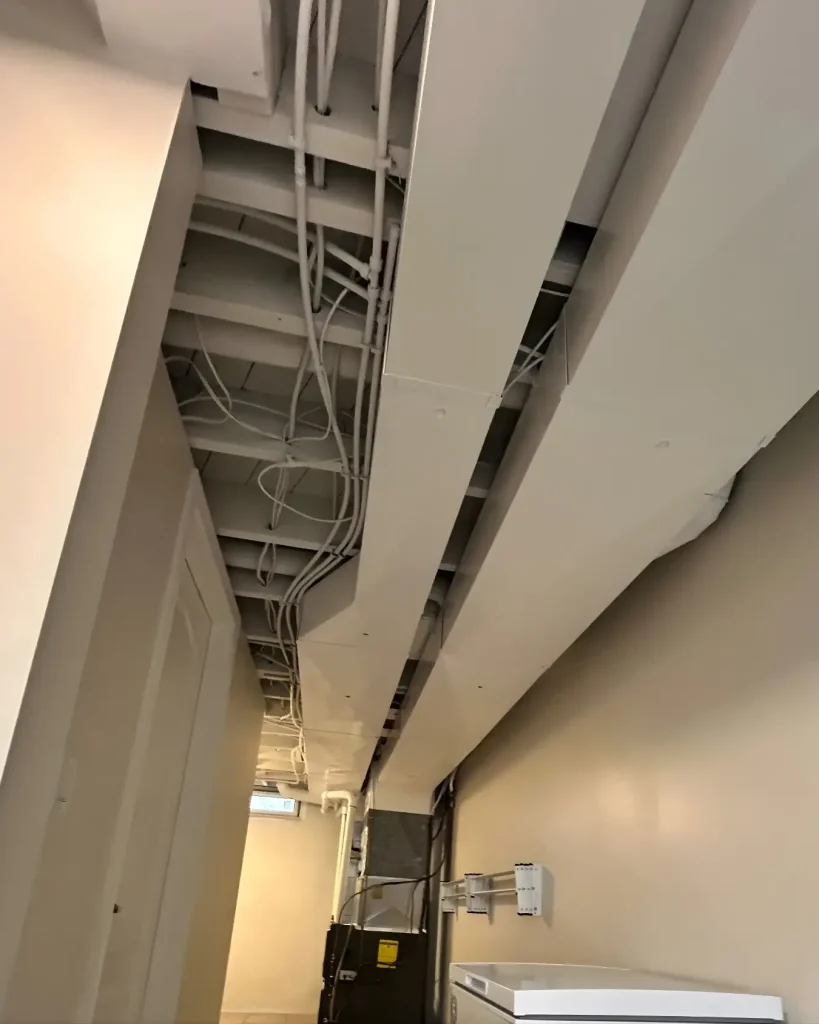
Electrical wiring is often the most visually chaotic element in an exposed basement ceiling.
Decades of added circuits, old wiring alongside new, and multiple trades installing their own runs independently creates a tangled visual mess overhead.
Organizing wiring before painting is one of the most important and most often neglected preparation steps.
Insulation Considerations for an Exposed Basement Ceiling
One of the common concerns about exposing a basement ceiling is what to do with insulation. In a traditional basement ceiling finish, insulation batts are placed between the joists before the drywall or tiles go up. An exposed ceiling eliminates this option and raises questions about thermal performance and sound transmission.
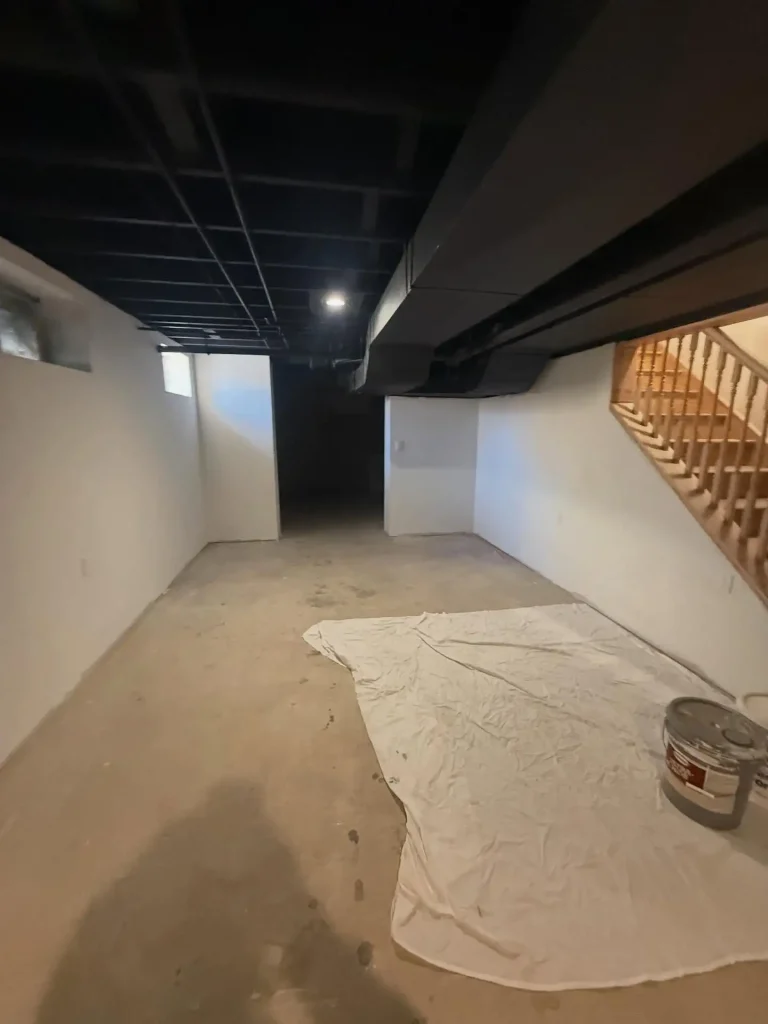
In mild and moderate climates, the insulation between the first floor joists may not be essential from a thermal perspective, particularly in a heated and conditioned basement. Removing it gives a cleaner exposed ceiling. In cold climates where the insulation is genuinely needed for thermal comfort, consider rigid foam insulation installed flat against the subfloor above, between the joists, where it is less visible from below.
For sound insulation between the basement and the floor above, resilient channels and mass-loaded vinyl are more effective solutions that can be incorporated without ruining the exposed look.
Exposed Basement Ceiling for a Home Theater
A home theater in the basement is one of the most popular basement uses and one where the exposed ceiling can be used to particularly dramatic and functional effect. The dark environment required for good movie watching aligns perfectly with the matte black ceiling that makes exposed ceilings look their best.
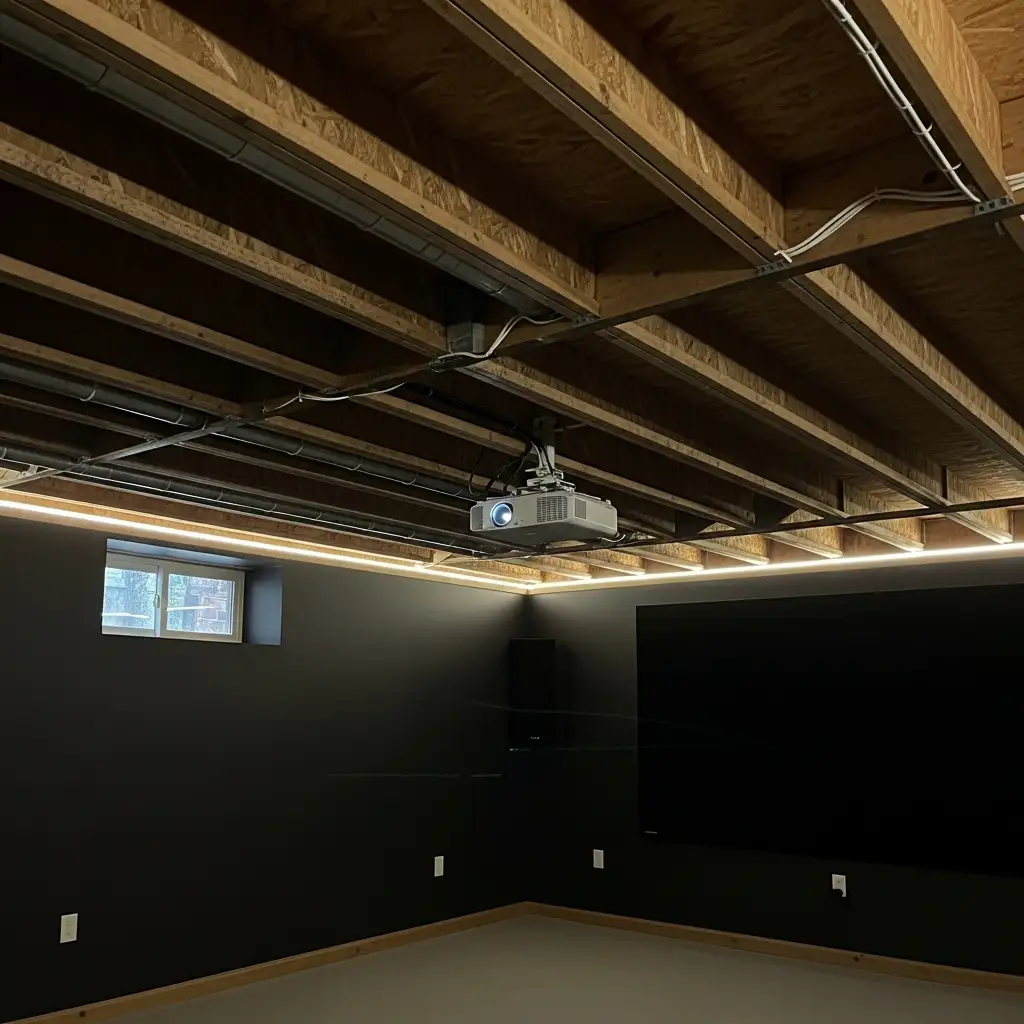
Paint everything overhead matte black for maximum light absorption and the most immersive cinema atmosphere. Mount a projector directly to the joist structure overhead for a clean, stable installation without a separate projector mount on the wall.
Route speaker wiring through the exposed ceiling structure in a clean organized manner before painting so all cables disappear into the black composition overhead. Add dimmable LED strip lights along the joist lines at the perimeter of the room for controllable ambient lighting that does not interfere with projection quality during viewing.
Exposed Basement Ceiling for a Home Gym
A home gym basement is one of the best possible uses for an exposed ceiling treatment. The industrial rawness of the exposed structure matches the functional, no-nonsense character of a serious workout space perfectly. Nothing about a home gym benefits from a polished, finished ceiling overhead.
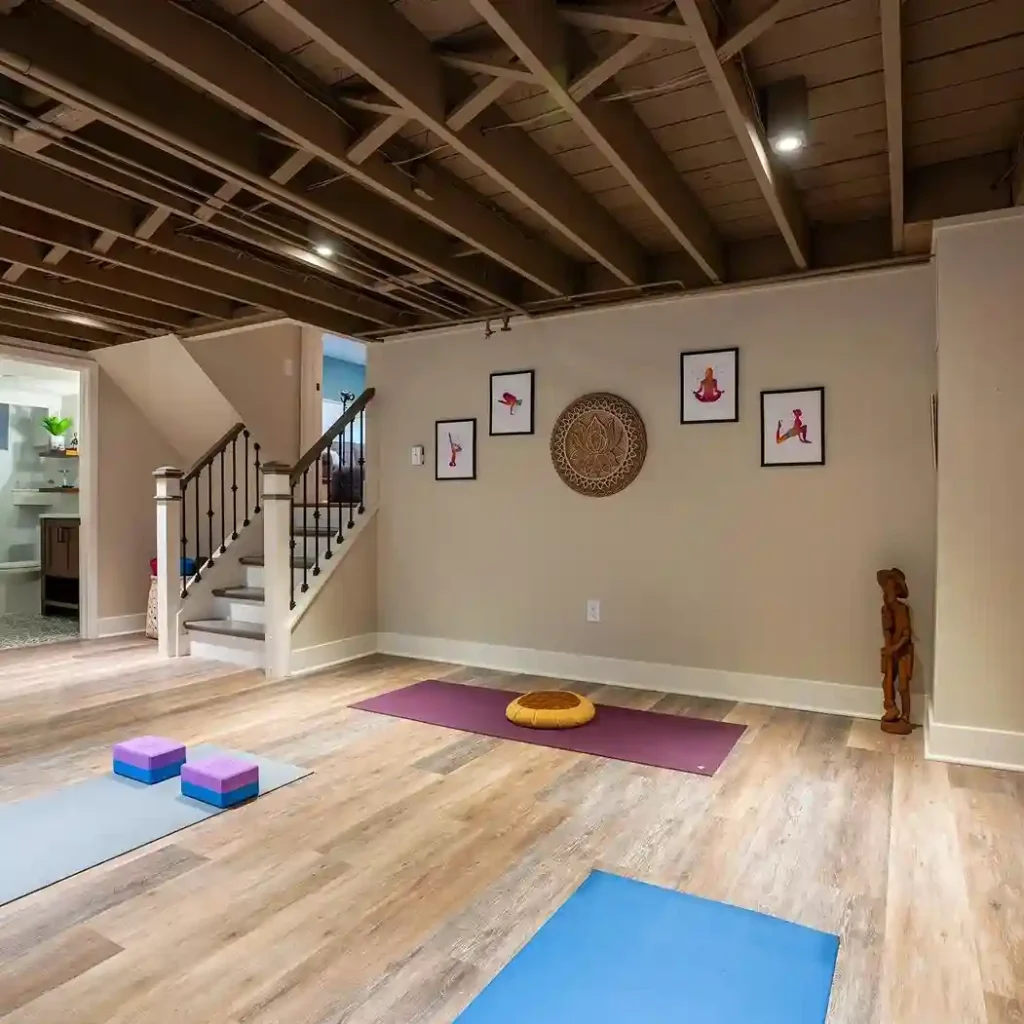
Paint the exposed ceiling in a color that energizes. Matte black is popular for its focused, serious atmosphere. Bright white maximizes the light reflected by the gym lighting.
Some gym owners paint the ceiling a bold accent color that matches their gym equipment or motivational color scheme. Mount heavy-duty ceiling hooks directly into the joists for battle ropes, suspension trainers, and hanging punching bags. Install high-output LED shop lights between the joists for bright, even, shadow-free illumination across the entire workout floor.
Exposed Basement Ceiling for a Home Bar and Entertainment Space
A home bar and entertainment basement is perhaps the most naturally suited space for an exposed ceiling treatment. The urban bar and restaurant aesthetic that has made exposed ceilings famous in hospitality design translates directly and beautifully into a residential home bar. The industrial exposed ceiling instantly gives the space the authentic character of a cool downtown bar.
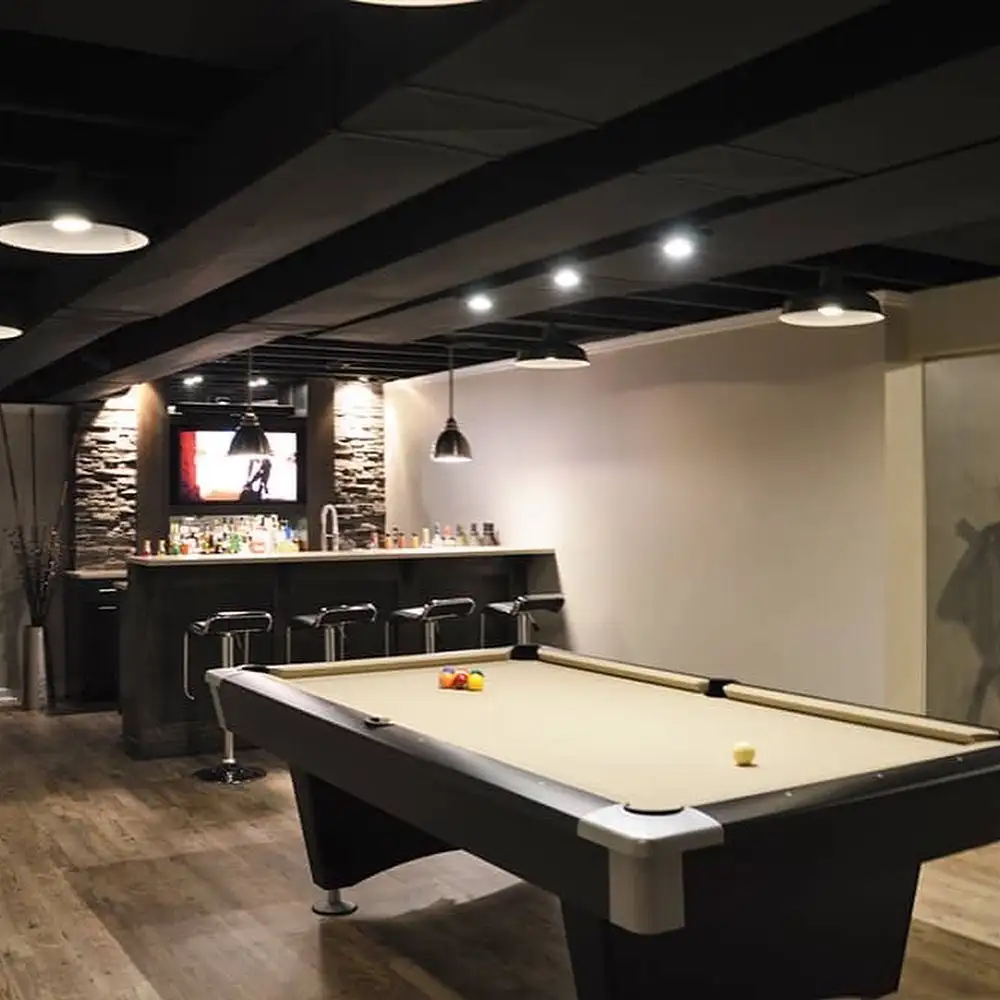
String Edison bulb lights between the joists for a warm, festive, and instantly social atmosphere. Mount bottle storage racks directly to the exposed joist structure for additional character and practical storage. Install a central pendant light fixture above the bar counter as the main focal point.
Route all bar lighting on a separate dimmer circuit so the lighting atmosphere can be adjusted from bright and functional to intimate and atmospheric at any time. The exposed ceiling makes the home bar feel like a proper hospitality venue rather than a suburban basement.
Exposed Basement Ceiling Cost Compared to Other Options
One of the most compelling reasons to choose an exposed basement ceiling is the significant cost saving compared to every alternative finishing method.
Understanding exactly how much you save helps you make a fully informed decision and often reveals that the money saved can be invested in higher-quality flooring, lighting, or furnishings that elevate the finished space far more than a ceiling tile would.
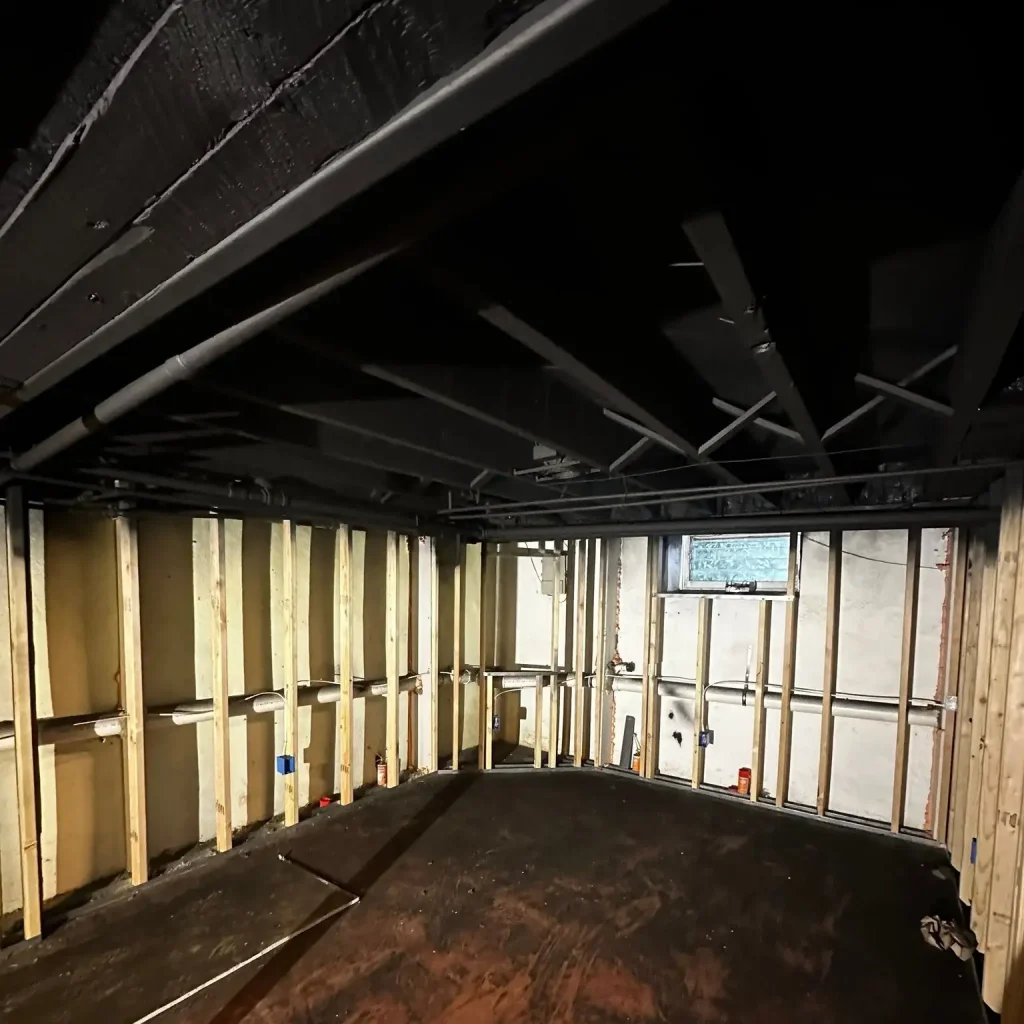
A traditional drop ceiling grid and tile system costs between three and six dollars per square foot for materials alone. Professional installation adds another two to four dollars per square foot. A drywall ceiling adds framing, drywall, taping, mudding, sanding, and painting costs that total eight to fifteen dollars per square foot installed.
An exposed ceiling treatment costs primarily the price of paint and the labor to apply it. For a typical basement of one thousand square feet, the saving over a drop ceiling is typically three thousand to six thousand dollars. Over a drywall ceiling the saving is eight thousand to fifteen thousand dollars.
Adding Wood Elements to an Exposed Basement Ceiling
Raw painted joists and pipes create an undeniably industrial look. But not every homeowner wants pure industrial in their basement.
Adding wood elements to the exposed ceiling introduces warmth, organic character, and a softer aesthetic that bridges the gap between raw industrial and rustic or Scandinavian warmth. The result is an exposed ceiling that feels intentional and warm rather than unfinished.
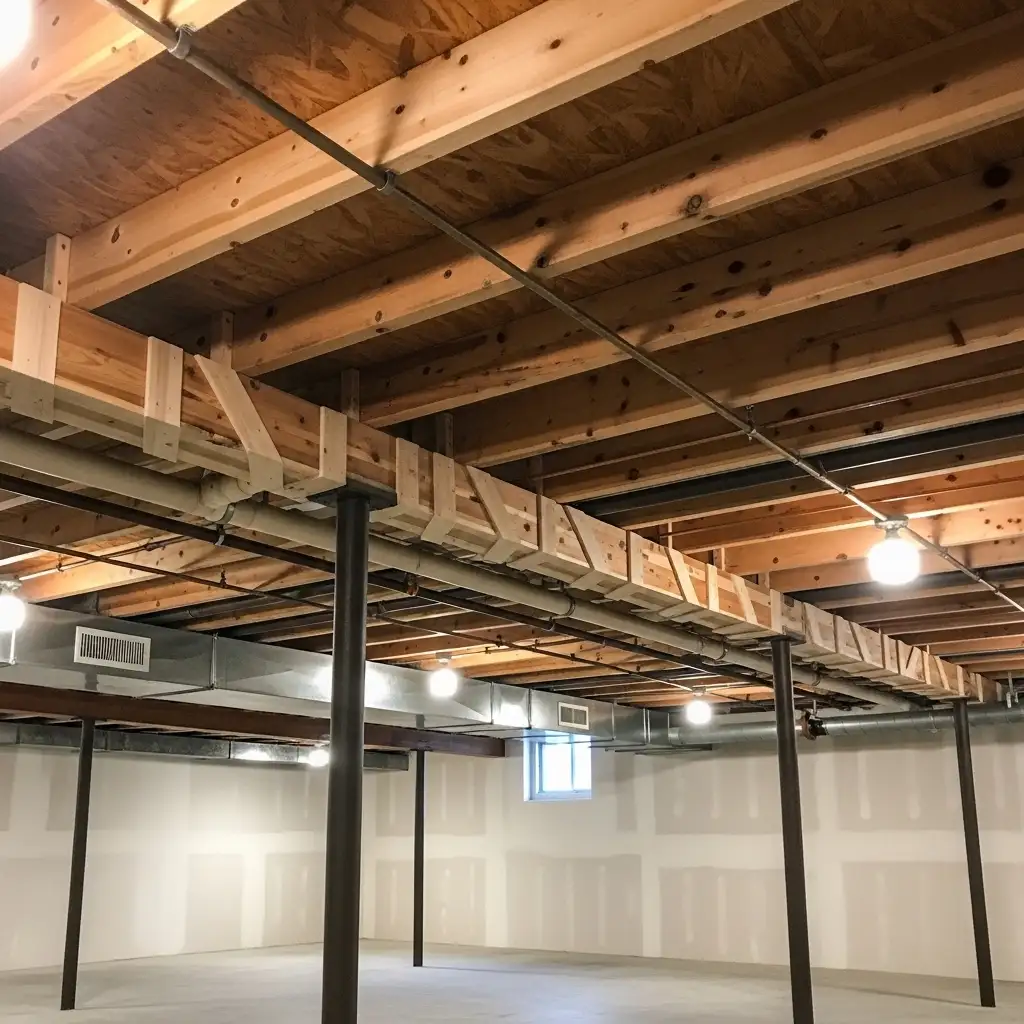
Wrap exposed steel beams or large ductwork in thin wood planks for a dramatic contrast between industrial and natural. Install tongue and groove wood paneling flat against the subfloor above, between the painted joists, to create a beautiful alternating pattern of dark painted joists and warm wood panels.
Add a wood stain to the natural wood elements of the joists themselves if they are in good condition. Even a single reclaimed wood beam added decoratively across the ceiling creates a warm focal element against the black painted composition.
Exposed Basement Ceiling in a Modern Industrial Style
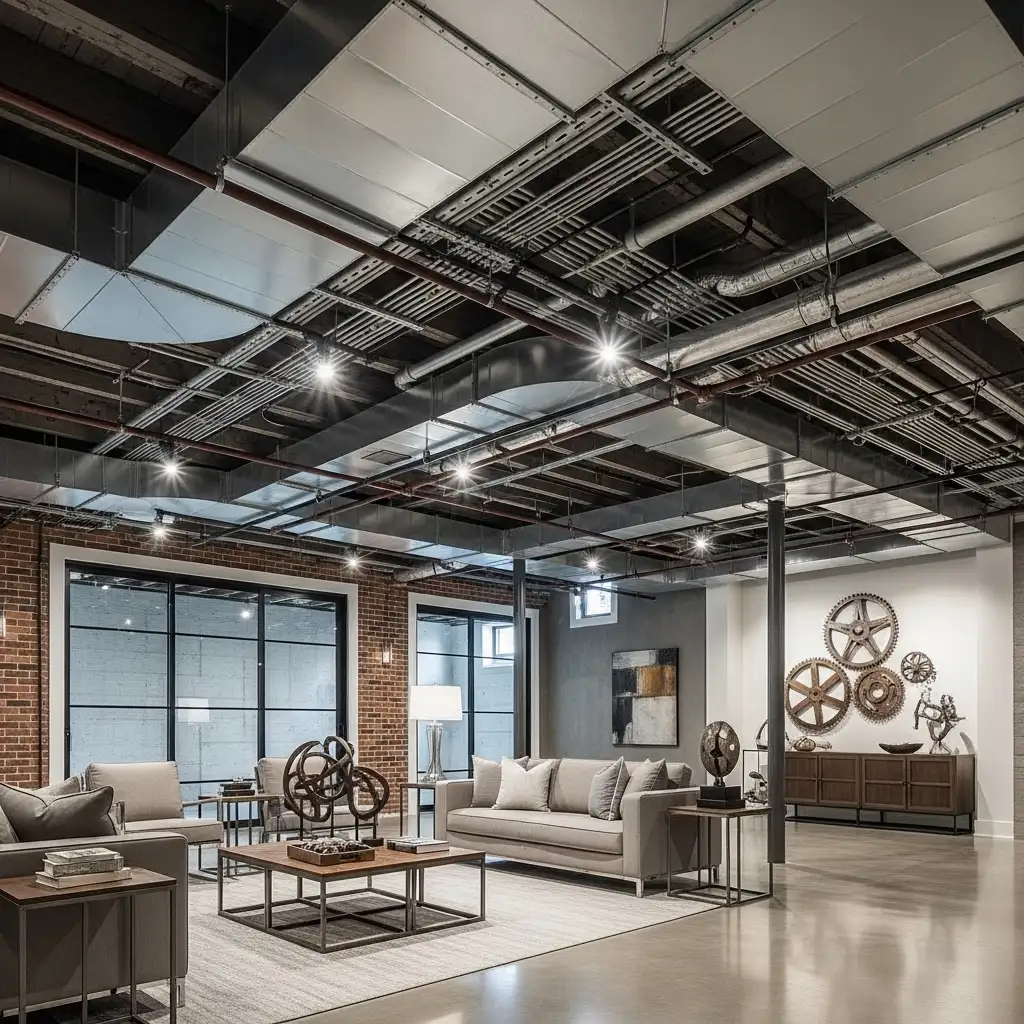
Modern industrial style takes the raw look of exposed ceilings and pairs it with clean, contemporary furniture, polished concrete floors, and a refined material palette. The result feels deliberately designed, not unfinished. It’s the most sophisticated version of the exposed basement ceiling look.
How to pull it off:
- Ceiling: Paint it matte black or dark charcoal as your bold base.
- Floors: Pair with polished concrete or large-format gray tile for a continuous industrial feel.
- Furniture: Choose black metal frames with leather or linen upholstery.
- Lighting: Add industrial pendants and track lighting in matte black or brushed steel.
- Decor: Keep it minimal. Let the quality of materials and the drama of the raw ceiling do the talking.
The takeaway: Modern industrial design is about confident restraint and material authenticity.
Exposed Basement Ceiling in a Rustic Style
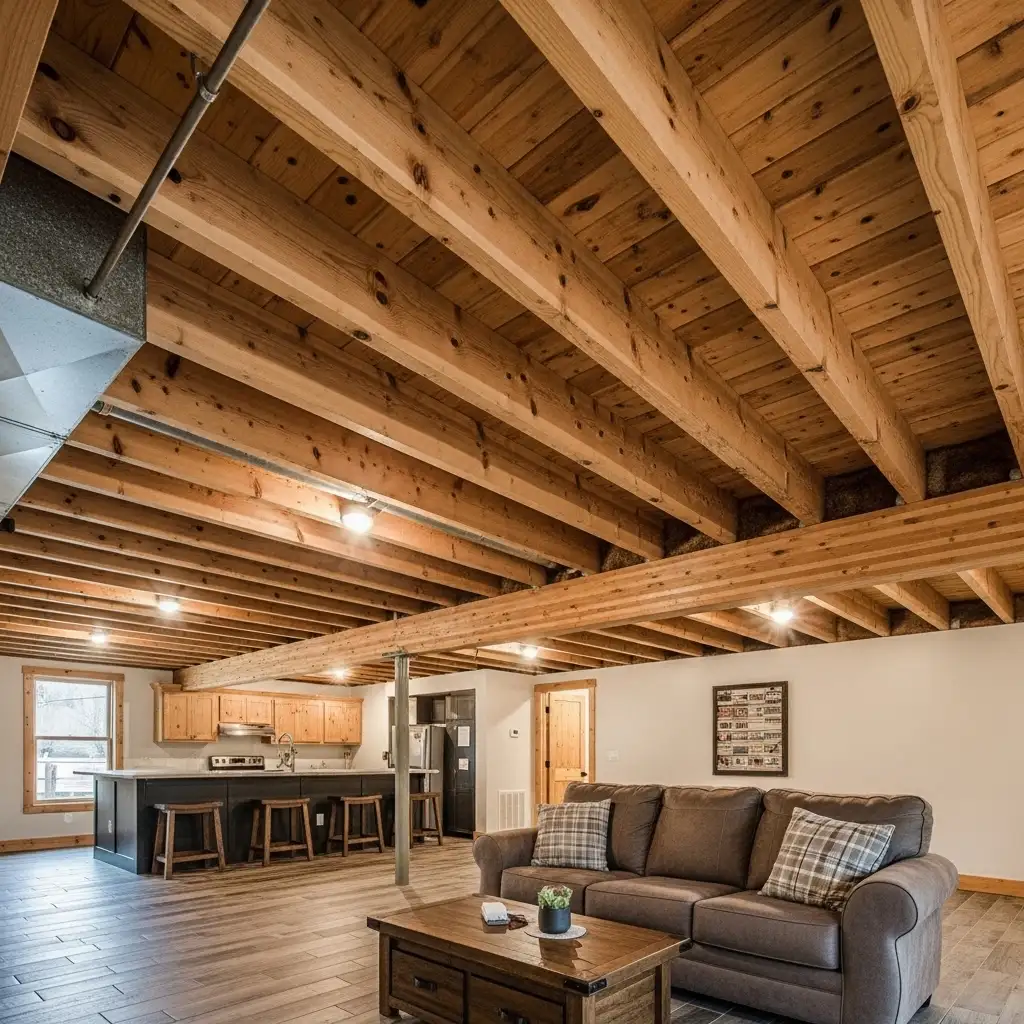
Got exposed joists in your basement? Don’t paint them black. Lean rustic instead. That natural wood already has character. Work with it, not against it.
Here’s the game plan:
- Joists: Leave them natural or stain them a warm honey tone.
- Between the joists: Add reclaimed wood planking. Now you’ve got a full wood ceiling with the joists forming a grid. Beautiful.
- Pipes and ducts: Paint them matte black or dark brown. They’ll fade into the wood above.
- Lighting: Wrought iron fixtures and vintage Edison bulbs. Instant cabin vibe.
- Bonus touches: Rope-wrapped pipes and iron hardware add extra rustic charm.
Bottom line: Celebrate the wood. You’ll end up with a ceiling that feels warm, authentic, and impossible to ignore.
Sound and Acoustics in a Room with an Exposed Ceiling
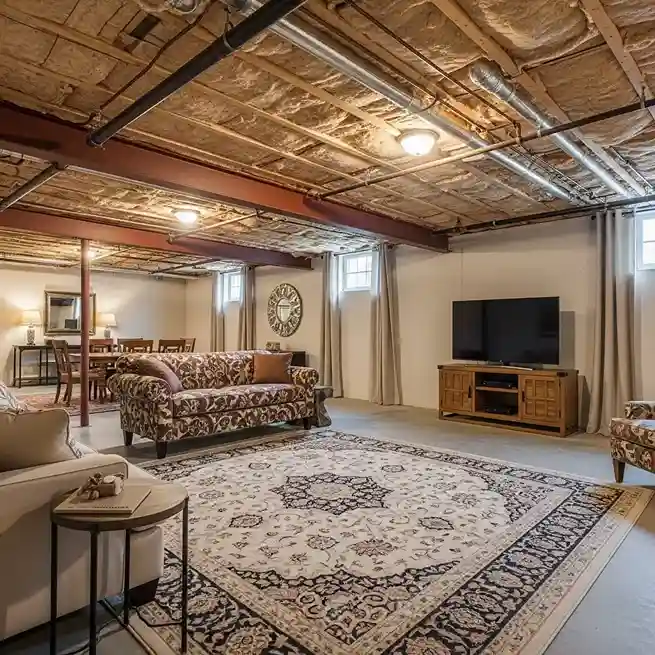
Exposed basement ceilings have one real downside: sound. A finished ceiling with drywall and insulation soaks up noise and kills echoes. An exposed ceiling with hard joists, pipes, and subfloor bounces sound around. That echoey feel can be annoying in rooms used for talking, music, or TV.
Fix the sound without covering the ceiling:
- Rugs: Large area rugs soak up a lot of sound energy.
- Soft furnishings: Upholstered furniture, heavy curtains, and throw pillows all reduce echo.
- Acoustic panels: Mount them on walls, or suspend them from the joists and paint them to match the ceiling. You solve the sound problem without hiding the structure.
One more thing: A basement used as a home theater or recording space needs more serious acoustic treatment than a casual rec room. Match the fix to how you actually use the space.
| Acoustic Solution | How It Helps |
| Large area rugs | Absorbs significant floor reflection |
| Upholstered furniture | Soft surfaces absorb mid and high frequencies |
| Heavy curtains on walls | Dampens reverb without covering ceiling |
| Acoustic panels on walls | Targeted absorption where needed most |
| Suspended acoustic panels from joists | Ceiling-level absorption, matches paint |
Moisture and Vapor Considerations for Exposed Ceilings
Moisture management is a critical consideration in any basement renovation and particularly important when leaving the ceiling structure exposed. A finished ceiling can conceal minor condensation issues that an exposed ceiling makes immediately visible. Addressing moisture before exposing the ceiling ensures the final result stays beautiful and structurally sound for years.
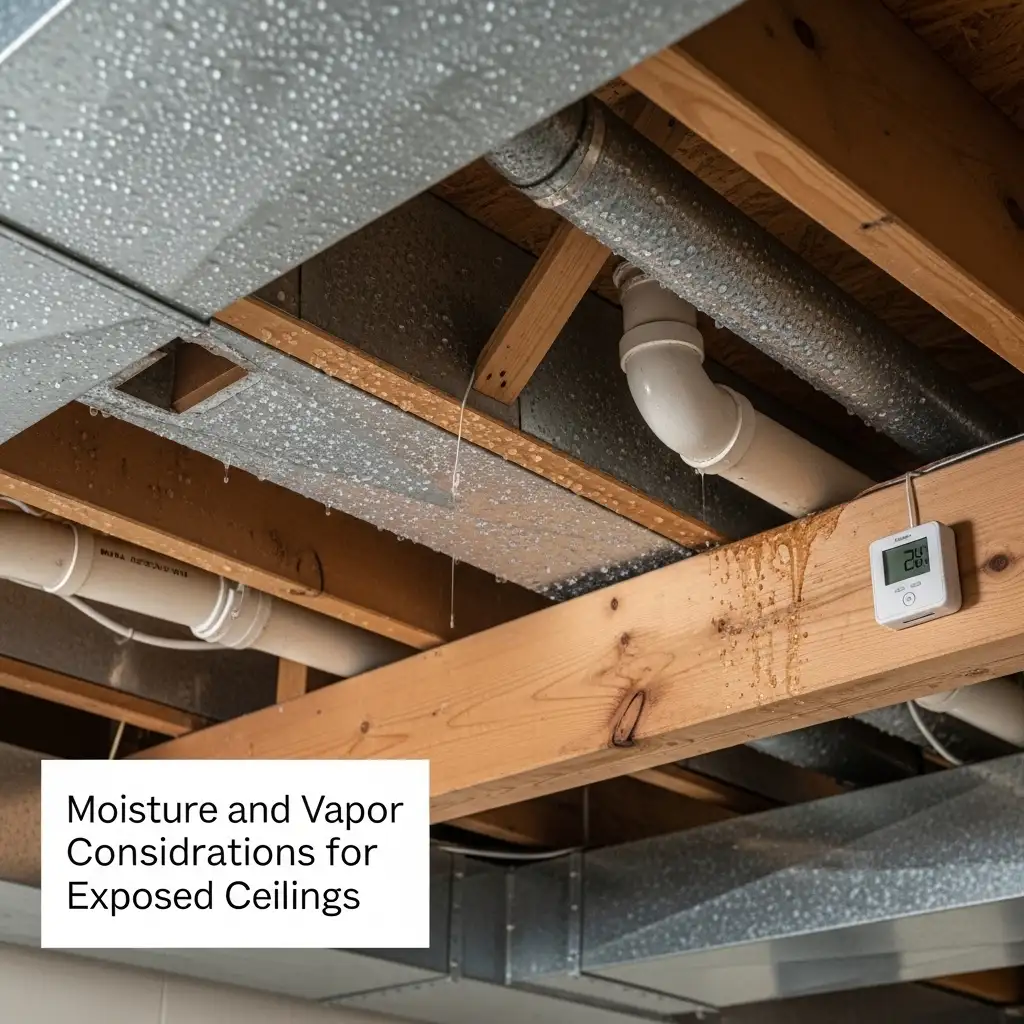
Inspect the entire ceiling cavity carefully for signs of past or current moisture intrusion. Look for water stains on the subfloor above, rust on any metal elements, and mold or mildew on the wood surfaces. Address all moisture sources before painting.
Ensure the basement has adequate ventilation and controlled humidity. A dehumidifier sized appropriately for the basement volume is essential in humid climates. Apply a mold-inhibiting primer to all wood surfaces before the topcoat of paint for long-term protection.
How to Paint an Exposed Basement Ceiling Like a Professional
The painting process for an exposed basement ceiling is physically demanding and technically different from painting a flat finished ceiling. The irregular surfaces, multiple elements at different depths, and the sheer volume of surface area to cover make it a challenging but entirely achievable DIY project with the right approach and the right tools.
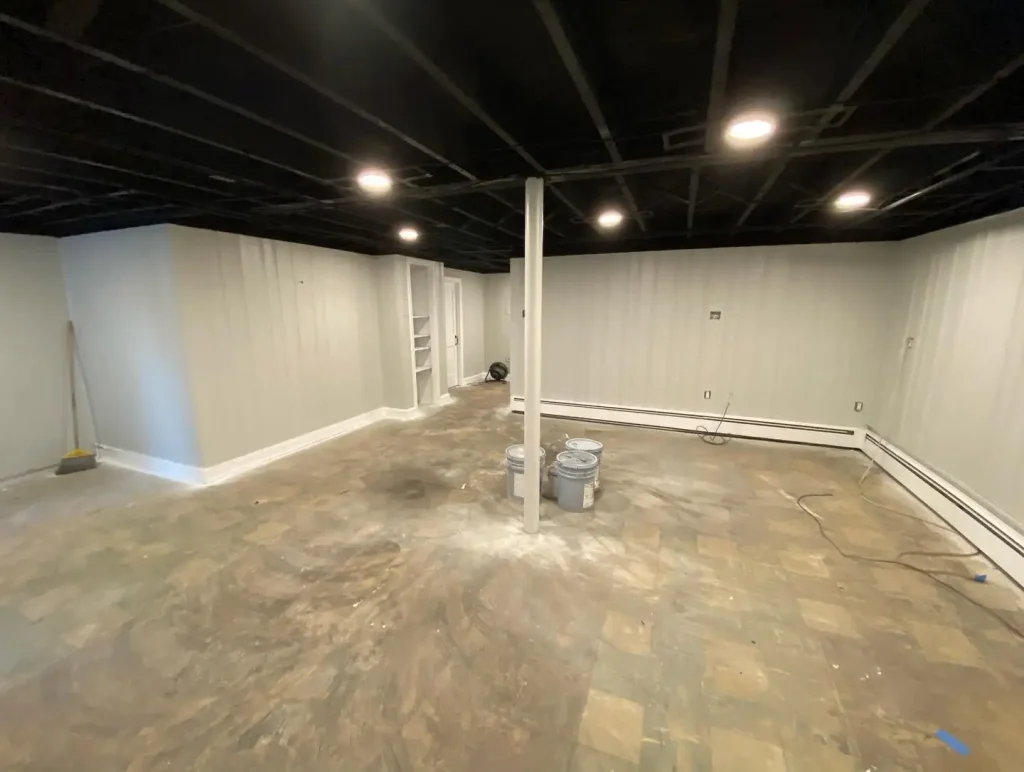
Wear old clothes and protect your eyes with safety glasses. Lay drop cloths across the entire floor. Use an airless paint sprayer to apply the first coat over everything. A sprayer covers all the complex overlapping elements far more efficiently than a brush or roller alone. Follow the sprayer with a brush to touch in any areas the spray missed, particularly the backs of pipes and the undersides of joists.
Apply the second coat by hand with a combination of roller and brush for complete coverage. The sprayer plus hand touch-in combination delivers the fastest and most thorough coverage on complex exposed ceiling surfaces.
Exposed Ceiling With Drop Ceiling Combined: The Hybrid Approach
A hybrid approach combines an exposed ceiling in the main living area with a partial drop ceiling or boxed soffit in specific zones where mechanical access is less important or where a finished ceiling is strongly preferred. This gives you the best of both approaches in the same basement renovation.
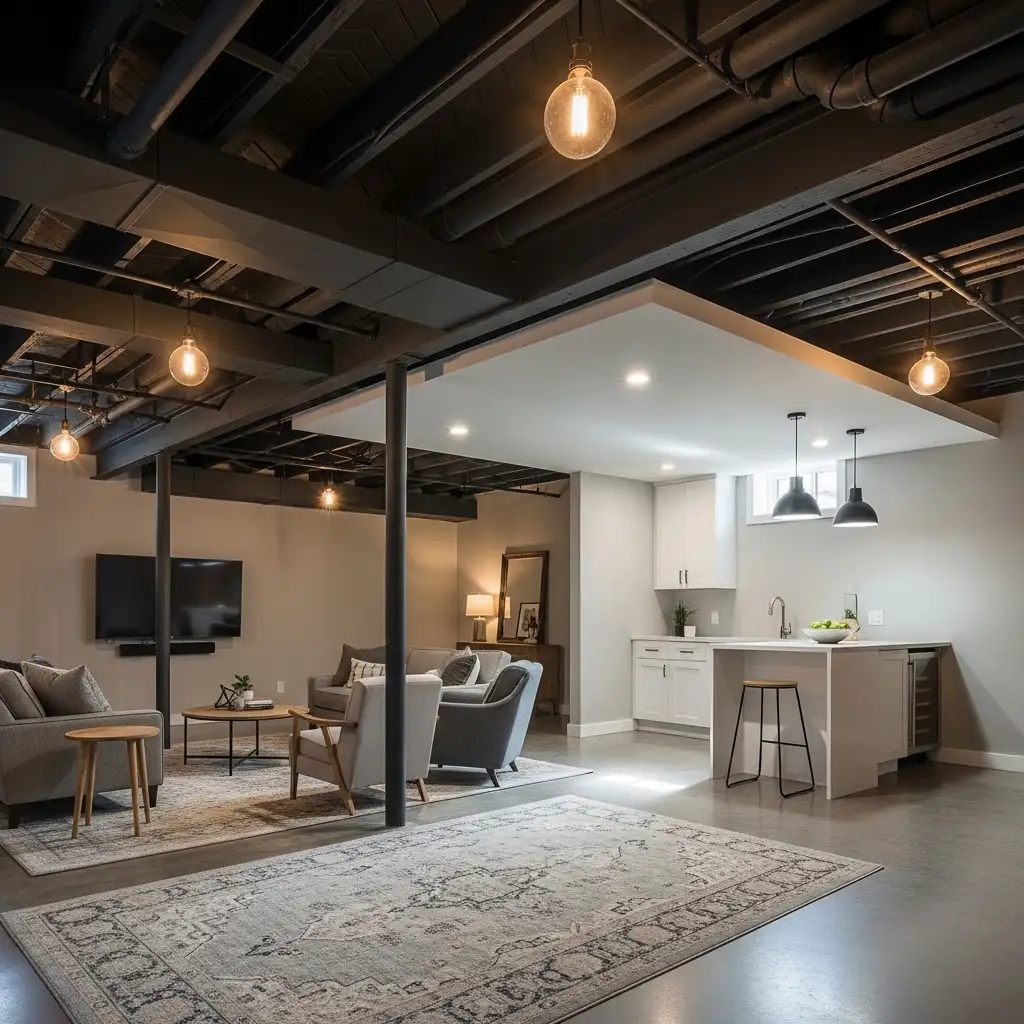
Expose the ceiling in the main open areas of the basement where ceiling height and industrial character are most desirable. Build a finished drywall soffit or partial drop ceiling only around the perimeter where ductwork runs lowest, where a bathroom requires code-compliant ceiling materials, or where a bedroom zone needs a more residential feel. The contrast between the finished soffit and the exposed ceiling within the same space can itself become an attractive design detail that defines different zones visually and functionally.
| Hybrid Zone | Ceiling Treatment |
| Main open living area | Exposed painted ceiling throughout |
| Perimeter duct zone | Boxed drywall soffit conceals lowest runs |
| Bathroom area | Full drywall ceiling for code compliance |
| Bedroom zone if present | Finished ceiling for residential feel |
| Transition between zones | Clean drywall edge as visual boundary |
Exposed Basement Ceiling with Reclaimed Wood Planks
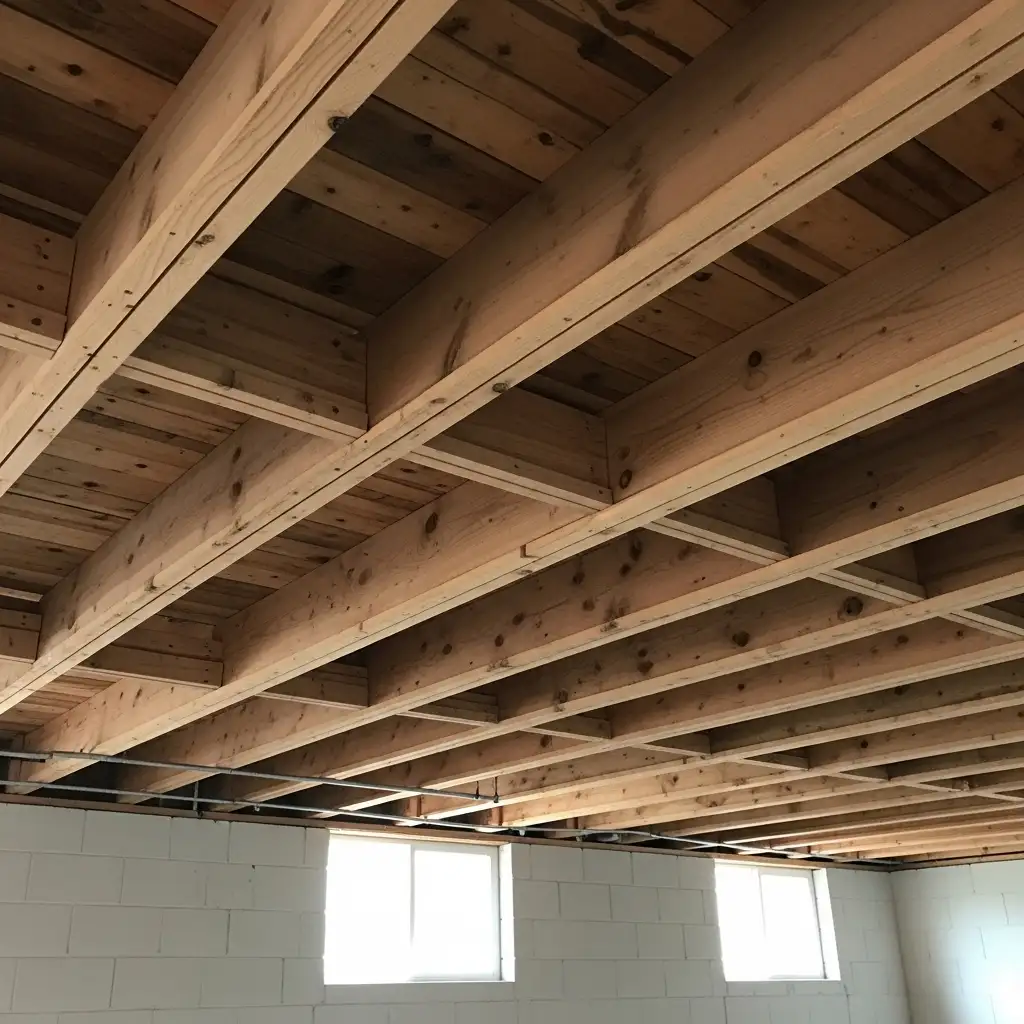
Adding reclaimed wood planks between your exposed joists creates one of the warmest, most beautiful ceiling looks you can get. You end up with the structural grid of the joists plus the natural beauty of old wood. It’s industrial in its honesty and organic in its material at the same time.
How to do it:
- Source the wood: Look for reclaimed barn wood, old flooring boards, or pallet wood.
- Prep the planks: Sand just enough to remove splinters and sharp edges. Keep the aged patina and character marks that make reclaimed wood special.
- Cut and install: Cut the planks to fit between the joists. Nail or screw them flat against the subfloor above.
- Stagger the joints: Offset the seams between boards for a more natural look.
- Seal it: Finish with a clear matte sealant. It protects the wood and makes cleaning easier.
Adding Color Accents to an Exposed Basement Ceiling
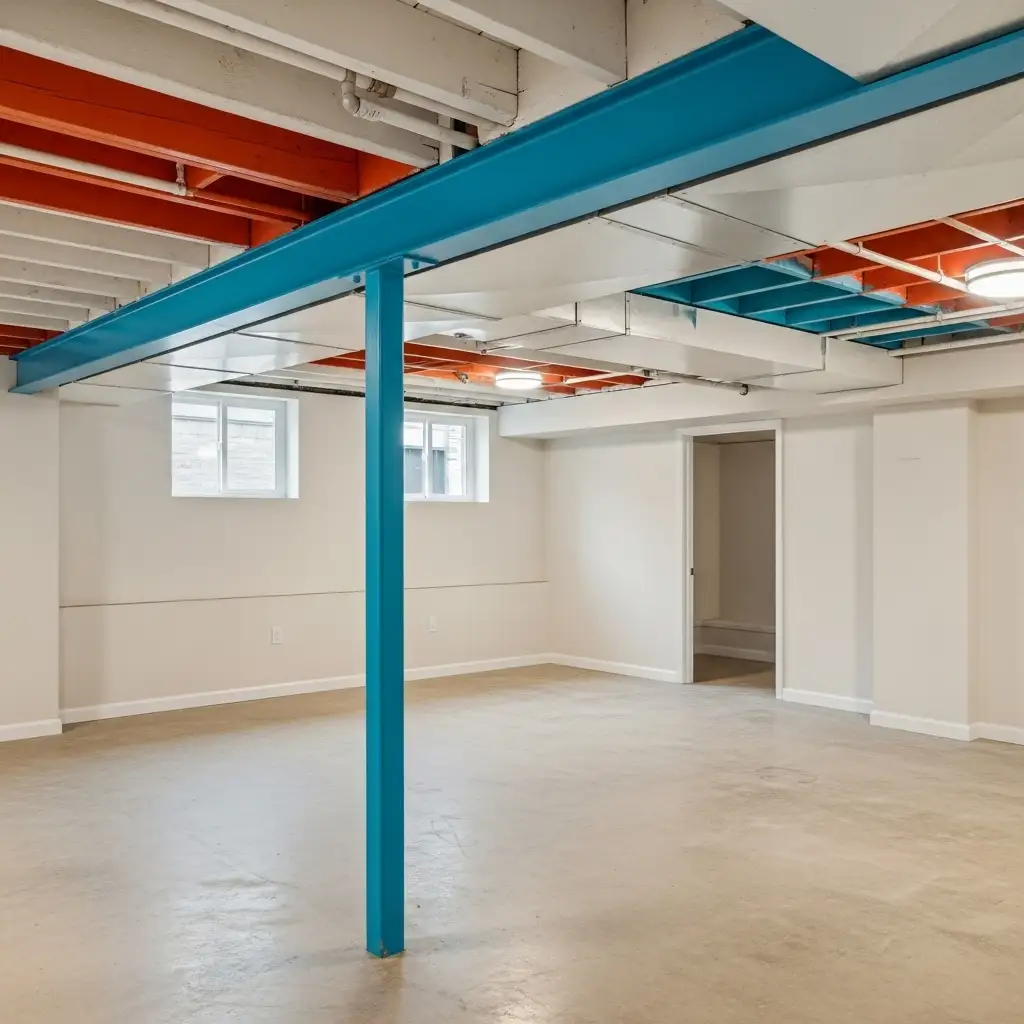
A single paint color across the whole exposed ceiling usually works best. But adding deliberate color accents can bring extra personality to certain basement spaces. The key is to keep it intentional, restrained, and connected to your room’s color scheme.
Ideas to try:
- Highlight the ducts: Paint the joists in your main ceiling color, then paint all ductwork in a contrasting metallic like copper, silver, or gold. Now the ducts become a bold graphic feature instead of something to hide.
- Home gym: Paint the ceiling black, then highlight specific pipes in bright red or yellow. Instant energetic industrial look.
- Creative studio: Treat the different overhead elements as canvases for different colors. Build an artistic, intentional composition.
Building Codes and Permits for Exposed Basement Ceilings
Before you expose or modify a basement ceiling, find out what your local building codes require and whether you need a permit. Rules vary a lot from one city to the next. Ignoring them can cost you big when you sell the home or when an inspector shows up.
When you don’t need a permit:
- Painting an existing exposed ceiling. This is usually fine since it doesn’t change structural or mechanical systems.
When you almost certainly do:
- Removing an existing finished ceiling.
- Rerouting any mechanical systems.
- Adding new electrical circuits or fixtures.
- Making any structural changes.
Exposed Basement Ceiling Maintenance and Cleaning
An exposed basement ceiling needs different care than a finished one. All those overlapping joists, pipes, and conduits trap dust and cobwebs way more than smooth drywall. Regular cleaning keeps it looking sharp and stops dust from showing against the painted surfaces.
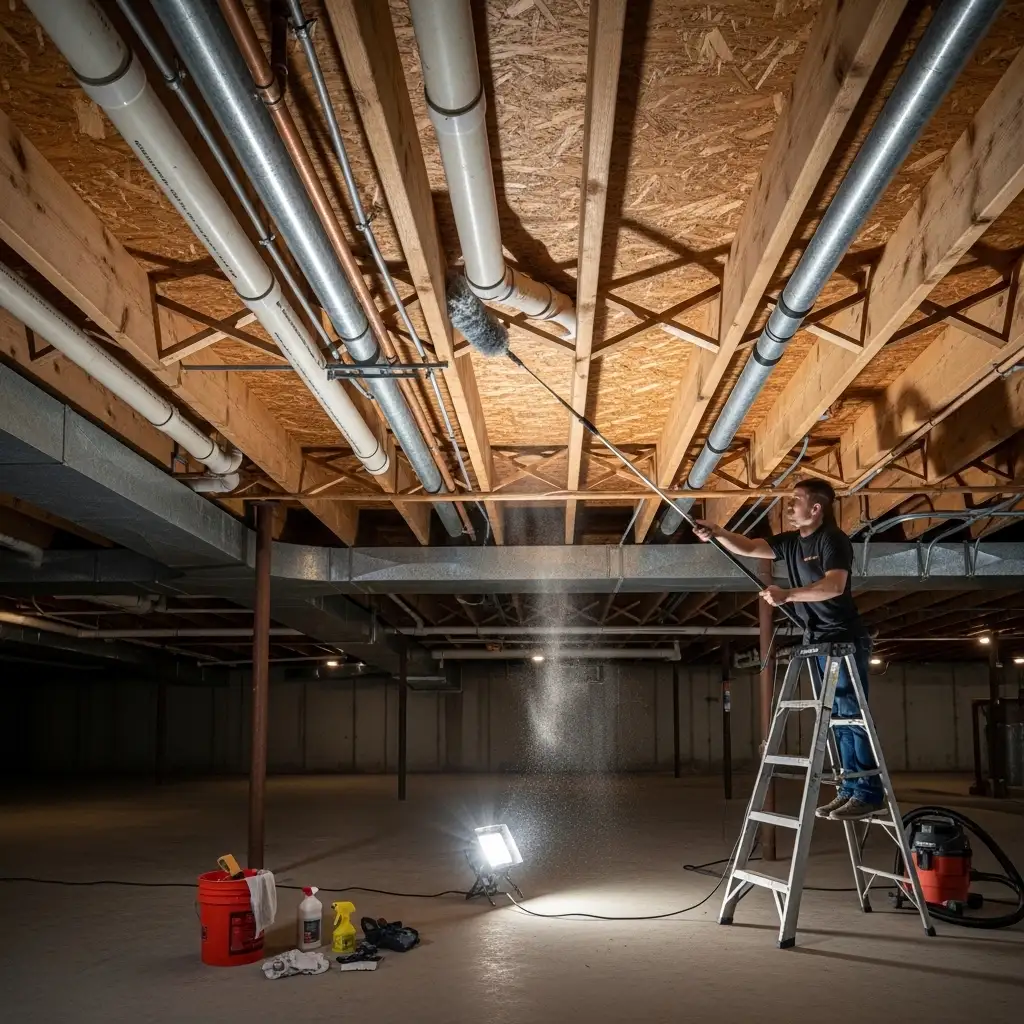
Your maintenance routine:
- Clean quarterly: Use a long-handled duster or a vacuum with a brush attachment.
- Focus on the trouble spots: The tops of horizontal pipe runs, the corners between joists and the subfloor above, and any rough textured surfaces.
- Touch up paint yearly: Fix any wear, scratches, or chipping.
- Check connections: Look at pipe joints and wire junctions periodically for leaks or damage.
The payoff: A well-maintained exposed ceiling stays beautiful and functional for years with very little ongoing effort.
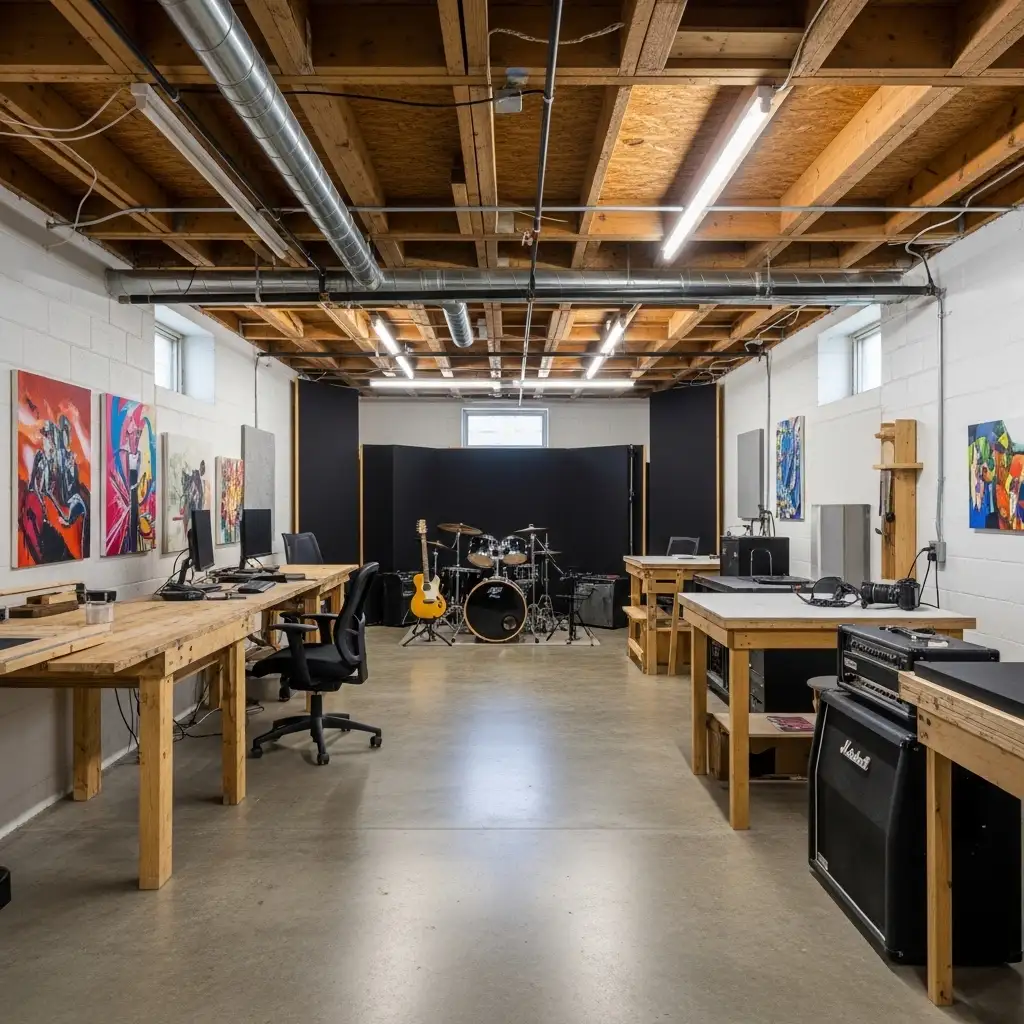
Exposed Basement Ceiling in a Creative Studio or Workshop
A creative studio or workshop basement is one of the most natural and exciting spaces for an exposed ceiling treatment. Whether the space is used for art, music, woodworking, photography, or any other creative pursuit, the raw industrial character of the exposed ceiling creates an environment that feels genuinely creative, serious, and inspiring.
Common Mistakes to Avoid With an Exposed Basement Ceiling
An exposed basement ceiling project has a few common pitfalls. Homeowners who dive in without prep or knowledge usually hit them. Learn these now and you’ll get a result that looks professionally done.
The three biggest mistakes:
Treating lighting as an afterthought: An exposed ceiling needs good lighting to look its best. If you plan lighting at the end instead of as part of the design, it always shows.
Skipping prep before painting: This is the most common one. If you start painting before organizing wiring, securing loose pipes, removing unnecessary elements, and cleaning every surface, you’ll get a messy, unsatisfying result.
Using the wrong paint sheen: Glossy or satin paint on an exposed ceiling highlights every imperfection. It makes the ceiling look messier than it is. Always use flat or matte finish.
Before and After: Transforming a Basement with an Exposed Ceiling
Understanding the full transformation that an exposed basement ceiling delivers helps you visualize the end result and commit to the project with confidence. The before and after contrast is typically one of the most dramatic improvements available in any basement renovation project.
Before the exposed ceiling treatment, a typical basement with a drop ceiling feels low, dark, and institutional. The ceiling tiles are often stained, sagging, and visually oppressive. The space underneath feels like a utilitarian afterthought rather than a genuine living area.
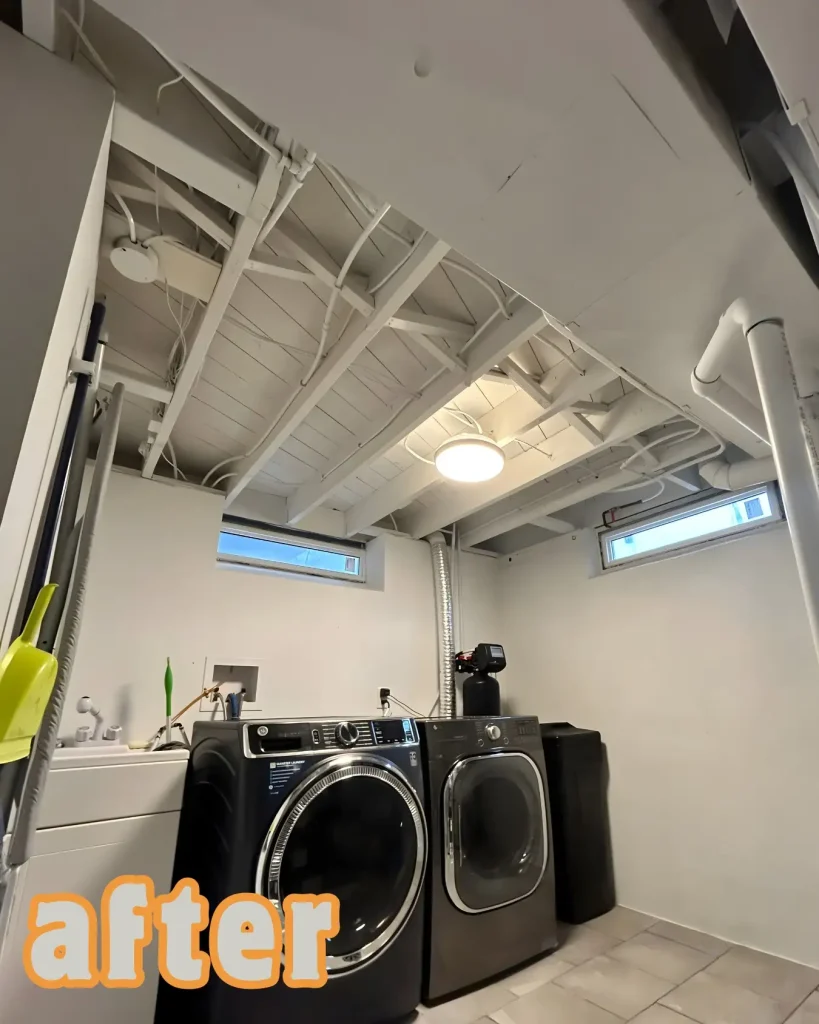
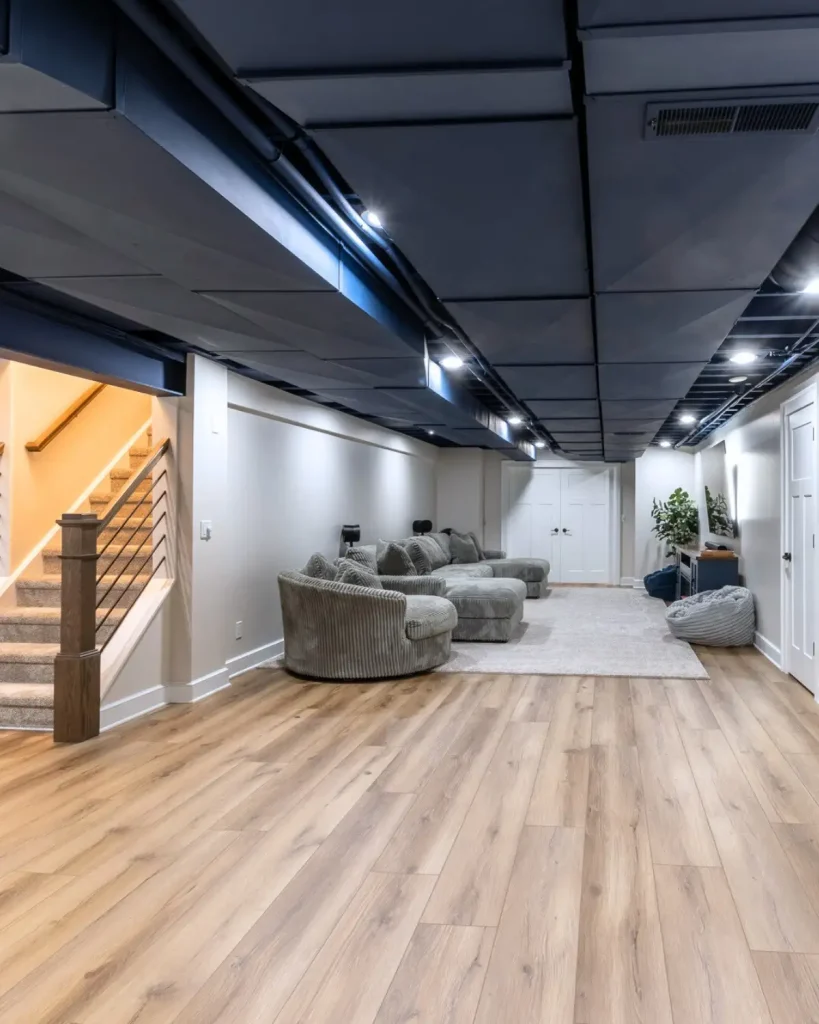
After the exposed ceiling treatment, the same basement often feels twice as tall. The consistent dark paint color creates a unified overhead composition with genuine architectural character.
The lighting, now thoughtfully designed and installed directly into the joist structure, creates a warm and inviting atmosphere. The entire space feels purposeful, cool, and genuinely worth spending time in. The transformation is real, meaningful, and achieved at a fraction of the cost of any alternative ceiling approach.
Frequently Asked Questions About Exposed Basement Ceilings
Q1: Is an exposed basement ceiling a good idea?
An exposed basement ceiling is an excellent idea for many homeowners and basement uses. It saves significant money compared to finished ceiling alternatives, preserves maximum ceiling height, keeps all mechanical systems accessible for maintenance, and delivers a genuinely cool industrial aesthetic that suits casual, recreational, and creative basement uses beautifully.
Q2: What is the best color to paint an exposed basement ceiling?
Matte black is consistently the most successful and most popular color for an exposed basement ceiling.
Q3: How much does it cost to paint an exposed basement ceiling?
The material cost for painting an exposed basement ceiling is primarily the cost of paint and any primer needed.
Q4: Do I need a permit to expose my basement ceiling?
In most jurisdictions, simply painting an existing exposed basement ceiling requires no permit. However, if your renovation involves removing an existing finished ceiling, rerouting or modifying any mechanical systems, adding new electrical circuits or fixtures, or changing the use of the basement in ways that affect egress or fire safety requirements, a permit is very likely required.
Q5: How do I make an exposed basement ceiling look good?
Making an exposed basement ceiling look genuinely good requires three things above all others. First, thorough preparation before painting, which means organizing all wiring neatly against the joists, securing all loose pipes, removing any abandoned mechanical elements, and cleaning every surface thoroughly. Second, using the right paint in a flat or matte finish applied in two full coats for complete and even coverage across all elements. Third, designing the lighting as an integral part of the ceiling rather than as an afterthought. Track lighting, pendant lights, LED strips, and recessed fixtures all work beautifully with exposed ceilings when planned deliberately.
Conclusion
An exposed basement ceiling is one of the most honest and cost-effective design choices you can make. It celebrates the structure instead of hiding it behind drywall.
Why it wins:
- Saves thousands of dollars. Put that money into better flooring, lighting, and furnishings instead.
- Keeps every inch of ceiling height. Nothing gets covered up.
- Looks incredible when done right. With proper prep, the right paint, and thoughtful lighting, it looks deliberately designed and genuinely impressive.
The 30 ideas and principles in this guide give you everything you need to plan, prepare, execute, and style an exposed basement ceiling that transforms your space.
Your game plan:
- Start with the preparation.
- Commit to the right paint color.
- Plan your lighting deliberately.
- Stand back and enjoy the transformation.
Your basement is about to become the most surprising and most admired room in your entire home.
HomeFixTrends is here to inspire and guide every step of your home improvement journey. See ideas for small apartment to decorate it well.