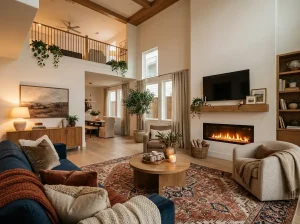
There’s nothing quite like the glow of a real fire on a cold night.
A wood burning stove turns your living room into the warmest, coziest spot in the house. It’s not just a heat source.
It’s a gathering place, a focal point, and a daily source of comfort all winter long.

This guide walks you through everything you need to know.
From choosing the right position and size to picking the perfect hearth, flue, and style. You’ll also learn the safety rules and wood-burning tips that keep your stove running clean and efficient.
Whether you love modern, Scandinavian, or traditional design, there’s a setup here for you.
Let’s turn your living room into the heart of your home. HomeFixTrends is here to inspire and guide every step of your home improvement journey.
What Is a Wood Burning Stove and How Does It Work?
A wood burning stove is a closed metal firebox that burns wood fuel to produce heat. Unlike an open fireplace, the stove contains the fire completely within a sealed chamber.
This makes it significantly more efficient at converting wood into usable room heat. The fire burns inside the stove and the heat radiates outward through the metal casing into the room.
Pair a Bold Geometric Tile Surround with Pampas Grass

The tile does the heavy lifting in this setup.
The fireplace opening is framed in a lattice diamond pattern in deep navy, black, and warm mustard gold. It is a confident choice against a plain white wall, and the stove’s matte black body ties in by pulling out the darkest tone in the tile.
To the left, a two-toned stoneware jug, glazed brown at the top and cream at the base, holds tall dried pampas stems. The height of the arrangement balances the width of the tiled surround without crowding it.
A small stack of cut logs rests on a matching geometric tile tray in front, turning something purely functional into a deliberate style detail.
This look updates a living room without changing a single piece of furniture.
You can also try burning stove in boys bedroom for your son if it’s really cold in your areas.
Why Choose a Wood Burning Stove for Your Living Room?
A wood burning stove offers benefits that no other heating solution can match. The warmth it produces is radiant heat rather than convected air heat.
Radiant heat warms people and objects directly rather than just warming the air. This feels significantly more comfortable and genuine than central heating warmth. Read our guide on hobby room to make your time valuable.
Fit a Wood Burning Stove Inside a Victorian Cast Iron Register Insert
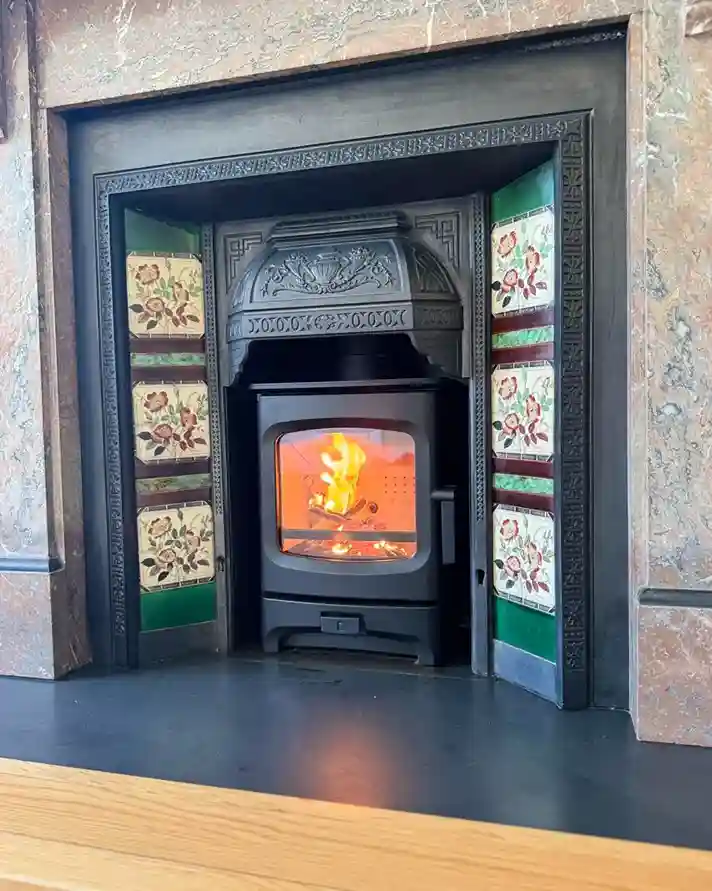
If you have an original Victorian fireplace opening in decent condition, you do not need to rip it out.
A compact black stove drops cleanly into a cast iron register insert like this one, which carries embossed detailing on the decorative hood, scrollwork borders, and that unmistakable period silhouette.
The flat black hearth below the opening grounds it all. This is one of those installs that looks like it was always meant to be there.
Recreate the Victorian look
Choosing the Right Size Wood Burning Stove for Your Living Room
Choosing the correct stove size is the most important technical decision you will make. A stove that is too small will struggle to heat the room adequately.
A stove that is too large will overheat the room and waste fuel. Getting the size right ensures efficient, comfortable heating throughout the cold season.
Gothic Arch Stove Face the View in a Mountain Cabin Living Room

Most stoves face a wall. This one faces a floor-to-ceiling window with snow-covered mountains behind it, and the contrast is the entire point.
The stove has three gothic-arched glass panels on the front door, which gives it a cathedral quality that feels intentional next to that dramatic backdrop. It sits on a raised dark hearth pad, with large woven baskets on either side.
A sheepskin rug softens the light wood floor, a chess board sits on the table in the foreground, and the whole room slows down.
The pipe rises straight through the ceiling, keeping both sides of the mountain view completely clear. That routing decision, vertical and central, is what makes the picture as clean as it is.
The pipe goes straight up and the view stays completely unobstructed. One routing decision is what makes the whole image work.
The standard calculation is one kilowatt of output for every fourteen cubic metres of room volume. Measure the length, width, and height of your living room and multiply them together to find the cubic volume. Divide that number by fourteen to find the minimum kilowatt output you need. Add one or two extra kilowatts for rooms with large windows, poor insulation, or open-plan connections to other areas of the home.
Style a Wood Burning Stove Living Room in Classic English Cottage Blue

Dusty blue walls and a crackling stove are a combination that needs no justification. Here the walls are a muted grey-blue with white painted ceiling beams, and the fireplace surround is simple natural pine with a plain mantel shelf.
Small blue and white delft-style pictorial tiles line the firebox opening. A circular brass-framed mirror hangs above the stove and catches the warm glow from two red taper candles on the mantel. Small decorative gourds sit alongside the candlesticks as the only seasonal touch needed.
On the floor: a Persian-style rug layered over jute. To the right: an armchair in a navy and white botanical leaf print. A large wicker log basket holds firewood in the hearth. Every choice in this room is quiet, warm, and considered.
💡 Quick Tip
A circular mirror above the stove bounces firelight and candlelight around the room. Hang it centered above the mantel and choose a frame in brass or warm unlacquered metal to keep the glow going.
See various ideas on IKEA mudroom to store things.
Where to Position a Wood Burning Stove

Where you put the stove affects how well it heats the room and how good it looks. Here are your main options:
- Against the chimney breast wall: This is the most natural spot. You can reuse the existing flue, so it’s the easiest install and the most traditional look.
- In a corner: Great when the main wall won’t work. A corner stove with a twin-wall flue running up through the corner gives you a compact, efficient setup.
- In the center of the room: The most dramatic choice. Heat radiates in all directions equally, and the stove becomes a real statement piece.
Important: Always keep proper clearance between the stove and any combustible surfaces on all sides.
Installing a Wood Burning Stove: What You Need to Know
Wood burning stove installation must be done by a certified professional. Like, in the UK, installers need to be registered with HETAS, the official scheme for solid fuel heating.
An uncertified install is illegal, dangerous, and can void your home insurance. Always hire a qualified, registered pro.
What the job involves:

- Flue system: Connecting the stove to a suitable flue.
- Hearth: Installing it to the correct specifications.
- Air supply: Making sure the room gets enough air for combustion.
- Chimney check: The installer assesses your existing chimney and recommends a flue liner if needed.
- Clearances: Ensuring all distances meet building regulations.
After the work: You get a professional installation certificate. You’ll need it for house sales and insurance.
Hearth Design Ideas for a Wood Burning Stove Living Room

The hearth is the non-combustible platform the stove sits on. Building regulations set minimum hearth dimensions to protect the floor from heat and stray embers. But beyond safety, the hearth is a big design feature. A beautiful hearth turns a basic stove setup into something spectacular.
Hearth materials to consider:
- Natural stone: Slate, limestone, or granite. Durable, heat-resistant, and available in dozens of beautiful finishes. The most popular pick.
- Concrete: A great fit for industrial and contemporary living rooms.
- Brick: Complements traditional and farmhouse stoves perfectly.
- Porcelain or ceramic tile: Huge range of patterns and colors at a friendlier price.
The takeaway: Meet the safety rules first, then let your style shine.
Mantel and Surround Ideas for a Wood Burning Stove
A mantel above the wood burning stove creates a complete architectural focal point in the living room.
It frames the stove beautifully and provides a display surface for candles, art, plants, and decorative objects.
The mantel transforms a standalone stove into a full fireplace feature that anchors the entire room design.

Wooden beam mantels are the most popular choice for wood burning stove living rooms. A thick oak or pine beam creates instant rustic character.
Painted wooden mantels suit farmhouse and traditional rooms. Stone mantels in limestone or marble suit period and elegant living rooms.
A floating concrete mantel shelf suits minimalist and industrial interiors. Even a simple wooden shelf mounted above the stove creates the framing effect beautifully.
Best Wall Treatments Behind a Wood Burning Stove
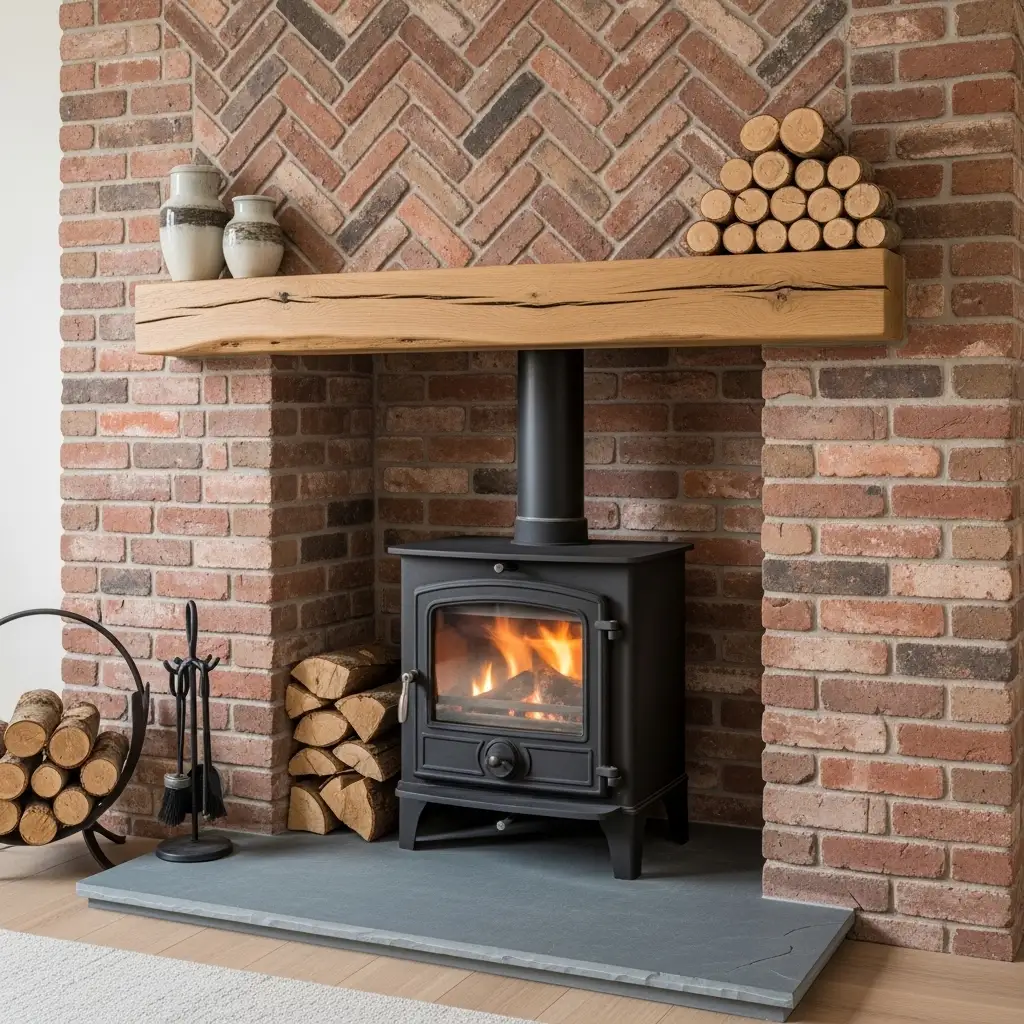
The wall behind the wood burning stove is the visual backdrop for the entire installation.
The right wall treatment dramatically amplifies the beauty of the stove and creates a cohesive, finished focal point.
The wrong wall treatment makes even an expensive stove look underwhelming and incomplete.
Exposed brick is the most universally loved backdrop for a wood burning stove. Original brick adds warmth, texture, and authentic character. Brick effect tiles achieve a similar look where original brick is not available.
Furniture Arrangement Around a Wood Burning Stove
The furniture arrangement in a living room with a wood burning stove should always prioritize the stove as the focal point.
All seating should be oriented toward the stove, just as furniture in traditional rooms was arranged facing the fireplace.
The stove creates the natural anchor around which the rest of the room is organized.

Position the main sofa directly facing the stove at a comfortable viewing and warming distance.
Flanking armchairs on either side create a symmetrical, welcoming arrangement. Avoid placing furniture too close.
Maintain minimum safe distances from the stove surface on all sides. A coffee table between the sofa and stove completes the primary seating group. This arrangement creates the most sociable and warmth-enjoying room configuration possible.
Color Palette Ideas for a Wood Burning Stove Living Room
A wood burning stove creates a warm, amber glow that influences every color in the room when it is burning.
The color palette you choose should work beautifully both with and without the fire lit. Warm, earthy colors harmonize naturally with the warmth of a burning stove.

Terracotta, warm cream, and deep ochre yellow create a Mediterranean warmth that complements the stove beautifully. Deep forest green with warm wood tones creates a dramatic, nature-inspired atmosphere.
Flooring Ideas for a Living Room with a Wood Burning Stove
The flooring in a wood burning stove living room must be both beautiful and practical. Hard flooring in particular works magnificently alongside a wood burning stove.
The warmth from the stove radiates downward and outward, making the floor itself feel warm in the area surrounding the hearth.

Oak engineered wood flooring is the most popular choice.
Its warm honey tones complement almost every stove style and color. Stone flags in slate or limestone create a traditional farmhouse feel that perfectly suits a traditional cast iron stove.
Polished concrete flooring suits modern stove installations in contemporary living rooms. A large area rug over hard flooring adds warmth, texture, and comfort to the seating area while maintaining the practical hard floor around the hearth.
Lighting Design for a Wood Burning Stove Living Room
Lighting in a wood burning stove living room must create the perfect complement to the natural flickering light of the fire.
Harsh overhead lighting fights against the warmth and intimacy that the stove creates. Warm, layered, and dimmable lighting works with the fire rather than against it.

Install all overhead lighting on dimmer switches.
Dim the lights significantly when the stove is burning to allow the firelight to dominate the atmosphere. Add table lamps on side tables and console tables for warm pools of ambient light. Wall sconces on either side of the chimney breast create a symmetrical, elegant effect.
Candles on the mantel shelf add to the warm, multi-source light atmosphere that the stove naturally invites.
Log Storage Ideas for a Wood Burning Stove Living Room
A log store beside the wood burning stove is both a practical necessity and a beautiful design opportunity.
Keeping a supply of dry logs immediately beside the stove eliminates the need to go outside in cold weather for every refuel. It also gives you one of the most naturally beautiful decorative elements you can have in a living room.

A large wicker log basket beside the stove looks warm and rustic. Built-in log alcoves on either side of the chimney breast create a symmetrical architectural feature.
A steel log holder with a handle sits directly beside the stove for the most convenient access. Stacked logs in a brick alcove add extraordinary natural texture and pattern to the room. A reclaimed wood log store or crate adds character while keeping logs organized and accessible.
Mantel Styling Ideas for a Wood Burning Stove Living Room
The mantel shelf above the wood burning stove is one of the most visible and important display surfaces in the entire living room.
Styling it beautifully creates a complete, finished focal point that draws every eye toward the stove. A poorly styled mantel undermines even the most beautiful stove installation.
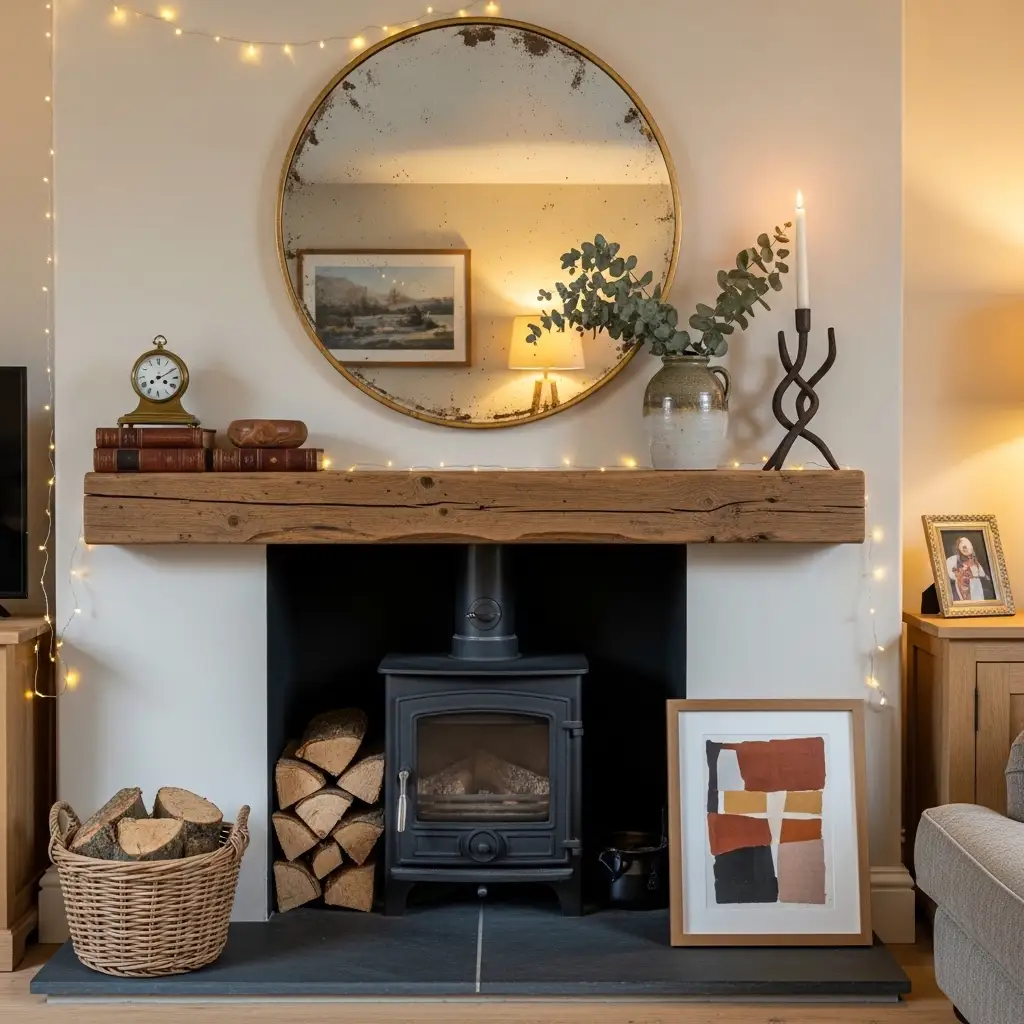
Create a layered arrangement starting with the largest piece at the center and working outward with progressively smaller items.
Lean a large mirror or artwork against the wall above the mantel as the anchor. Add candles of varying heights on either side. Include a small plant or dried botanical arrangement.
Scatter a few meaningful objects like a clock, a vase, or sculptural pieces. Change the styling seasonally to keep the mantel looking fresh and intentional throughout the year.
Farmhouse Living Room with a Wood Burning Stove
The farmhouse living room is perhaps the most natural and beloved setting for a wood burning stove.
Exposed beams, stone floors, shiplap walls, and a cast iron stove combine into the ultimate expression of rural warmth and character.
This style has become enormously popular in both genuinely old farmhouses and brand new homes that aspire to that timeless aesthetic.

Use a traditional cast iron stove with legs for the authentic farmhouse look.
Frame it with a rough hewn oak beam mantel. Expose the original brick or stone on the chimney breast.
Add a wicker log basket and a cast iron companion set.
Layer natural textures through linen curtains, wool rugs, and wicker accessories. Fresh flowers and seasonal botanicals complete the picture.
A farmhouse wood burning stove living room feels like the warmest, most welcoming room imaginable.
Modern Living Room with a Wood Burning Stove

A modern living room with a wood burning stove is a beautiful surprise. The raw, ancient energy of fire inside a clean, contemporary space creates a stunning contrast. The stove looks even more dramatic against the clean lines and neutral palette of modern design.
How to style it:
- Choose a contemporary steel stove: Matte black or anthracite finish.
- Set it on a large format hearth: Stone or concrete works best.
- Add a floating mantel: Concrete or minimal steel.
- Keep the wall simple: Dark paint or large format tile.
- Let the stove be the star: Minimize other decorative elements.
- Finish with modern furniture: Clean-lined shapes in gray, white, and natural wood.
The result: A sophisticated, contemporary look with fire at the center.
Scandinavian Style Living Room with a Wood Burning Stove

Ever wonder why a fire feels so right in a simple white room? It’s hygge. In Nordic countries, the wood stove has been the heart of the home for centuries. Warmth, comfort, togetherness. A wood stove in a clean Scandinavian space captures all of it.
Get the look:
- White walls. Light birch or pine floors. That’s your clean base.
- Pick a simple cylindrical or rectangular stove in white, cream, or matte black.
- Keep the hearth minimal. Pale stone or concrete.
- Layer in natural textures. Sheepskin throws, chunky knit cushions, woven rugs.
- A few simple candles on the mantel.
- One large plant in the corner.
The vibe: Calm, considered, deeply cozy. Nothing extra. Nothing loud.
Safety Rules for a Wood Burning Stove Living Room
Safety around a wood burning stove is non-negotiable.
The stove reaches extremely high surface temperatures during operation.
The hearth and surrounding area must be kept clear of all combustible materials at all times.
Children and pets must be kept at a safe distance from the hot stove surface.

Wood Stove Safety: Must-Do Rules
- Install a carbon monoxide detector in the room. It’s legally required in many places and a smart move everywhere.
- Sweep the chimney professionally at least once a year.
- Never burn treated wood, painted wood, or household waste.
- Only burn dry, seasoned hardwood with a moisture content below 20 percent.
- Never leave the stove burning unattended overnight with the air vents fully open.
Best Wood to Burn in a Wood Burning Stove

The type and quality of wood you burn affects four things: heat output, how clean it burns, how long your stove lasts, and how safe your flue stays.
Only burn dry, well-seasoned hardwood with a moisture content below 20 percent. Wet wood burns poorly, makes extra smoke, and builds up dangerous creosote in your flue fast.
Best woods to burn:
- Oak: The premium pick. Burns slowly and throws intense, long-lasting heat.
- Ash: The most versatile. Burns well even if it’s slightly less seasoned than ideal.
- Birch: Burns fast and bright with a pleasant aroma.
- Cherry and apple: Excellent choices with a lovely fragrance.
Softwoods:
Pine and other softwoods burn fast with high heat, but they leave more resin behind. Use them only for kindling. Never make them your main fuel load.
Alcove Ideas Beside a Wood Burning Stove
The alcoves on either side of a chimney breast are among the most valuable storage and display spaces in any living room.
Used well, they create a beautifully symmetrical, built-in appearance that makes the entire chimney breast and stove installation look genuinely bespoke and architecturally complete.

Built-in shelving in the alcoves creates storage for books, plants, artwork, and display objects.
Decorating Around a Wood Burning Stove for Each Season

A wood burning stove living room can be decorated beautifully for every season of the year.
In winter the stove is the active, burning heart of the room. In summer it becomes a decorative focal point filled with candles, plants, and decorative arrangements that maintain its visual importance even unlit.
In autumn, surround the stove with pumpkins, rich foliage, dried seed heads, and warm orange and brown accents.
How to Create a Cozy Atmosphere with a Wood Burning Stove
A wood burning stove creates the foundation for the coziest living room imaginable. But the stove alone is not enough.
The atmosphere around it must be designed equally thoughtfully. Every element in the room should reinforce and amplify the warmth and intimacy that the fire creates.

Layer multiple textures across the room. A thick wool rug underfoot. Heavy linen curtains at the windows. Velvet cushions on the sofa.
A chunky knit throw draped over the arm of the armchair.
Dim the lighting and allow the firelight to dominate.
Add candles on the mantel and side tables.
Place a tray with mugs of tea or hot chocolate on the coffee table. These sensory details create an atmosphere of deep, enveloping warmth that makes the living room the most irresistible room in the house on a cold evening.
Wood Burning Stove Living Room in a Small Space
A wood burning stove can work brilliantly in a small living room. The key is choosing a stove of the correct kilowatt output for the volume of the space. A small room needs a small stove. An oversized stove in a small room will overheat quickly and create an uncomfortable environment that is impossible to regulate.

A small stove in the three to four kilowatt range suits rooms under fifty cubic metres. Position it in a corner to maximize the usable floor space in front. Use a twin-wall flue that runs straight up through the wall rather than requiring a full chimney. Keep the hearth dimensions as compact as building regulations allow. Use light wall colors and mirrors to keep the small room feeling open and bright despite the presence of the dark stove.
| Small Room Stove Strategy | Recommendation |
| Choose 3 to 4 kW output only | Prevents overheating small space |
| Corner position maximizes floor | Leaves maximum usable floor area |
| Twin-wall external flue | No chimney required, simpler install |
| Compact minimum-spec hearth | Keeps hearth footprint as small as possible |
| Light walls and mirrors | Keeps small room feeling open |
Accessories and Companion Set for a Wood Burning Stove
A quality fire companion set beside the stove provides the essential tools for operating and maintaining the fire safely and efficiently. The companion set typically includes a poker, ash shovel, brush, and log tongs. These tools are used daily throughout the burning season and deserve to be both functional and attractive.

Cast iron companion sets suit traditional and farmhouse stoves beautifully. Brushed steel sets complement modern and contemporary installations. Matte black powder-coated sets suit minimalist and industrial rooms. A heavy-duty log basket or carrier beside the set completes the functional hearth zone. These practical accessories become part of the visual composition around the stove and should be chosen to complement the overall design of the room.
How to Reduce Mess from a Wood Burning Stove
A wood burning stove inevitably produces some mess. Ash, wood chippings, and bark debris are part of the daily reality of stove ownership. Good design and practical habits minimize the visible impact of this mess and keep the living room looking beautiful even on the heaviest burning days.
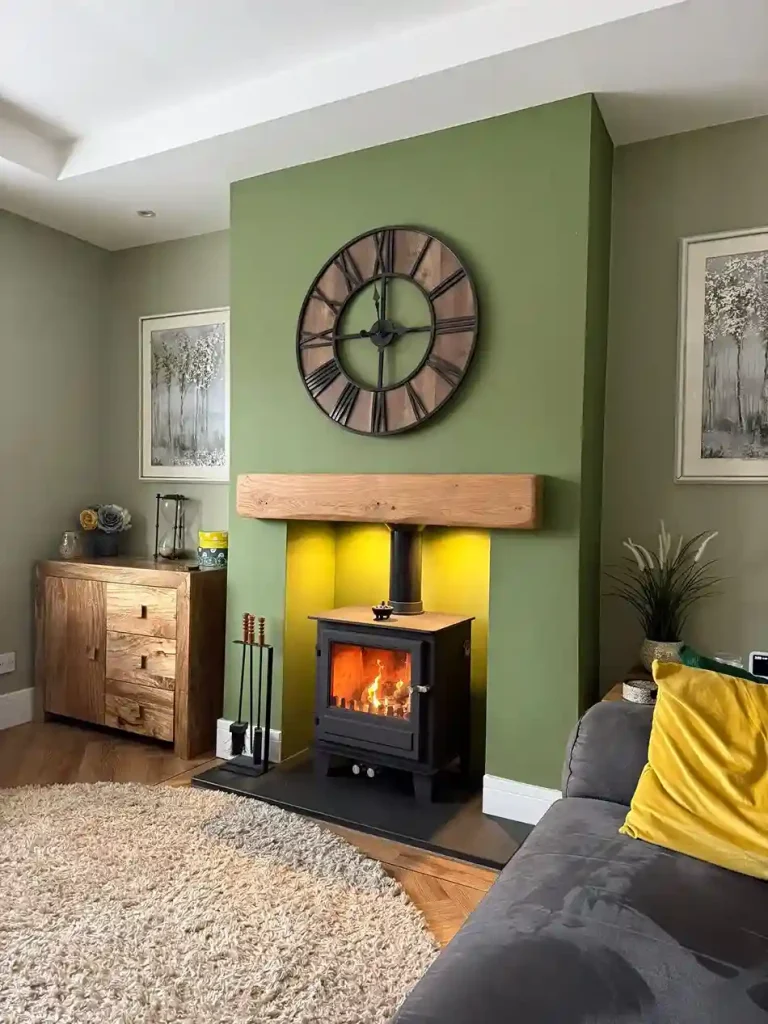
Use a log basket with a solid base rather than an open-weave base to prevent bark and debris from falling onto the floor. Place a hearth rug in front of the stove to catch any ash or embers from the stove door opening. Use a well-fitted ash bucket with a tight-fitting lid for ash removal. Keep the hearth swept daily with a small brush and pan. A well-maintained hearth zone makes the stove a pleasure rather than a chore.
| Mess Management Solution | How It Helps |
| Solid base log basket | Prevents bark debris on floor |
| Hearth rug in front of stove | Catches ash from door opening |
| Tight-lid ash bucket | Contained ash removal and disposal |
| Small brush and pan on hearth | Daily quick sweep of ash and debris |
| Slate or stone hearth surface | Easy wipe-clean non-porous surface |
Wood Burning Stove Maintenance and Care
A well-maintained wood burning stove performs better, lasts longer, and stays safer than a neglected one. Regular maintenance is simple and takes very little time. The most important annual task is the professional chimney sweep. This removes creosote buildup that poses a serious fire risk if left unchecked.

Clean the glass door with a specialist stove glass cleaner regularly to maintain visibility of the flames. Empty the ash pan regularly but leave a thin layer of ash on the firebox base as this actually helps maintain a good burn temperature. Check door seals annually and replace them if they show any cracking or gaps. Repaint the stove with specialist stove paint if the exterior finish shows wear. Annual professional inspection catches any issues before they become expensive repairs.
Energy Efficiency and Environmental Considerations
Modern wood burning stoves are significantly more environmentally efficient than older models. DEFRA-approved Ecodesign ready stoves meet strict emission standards for particulate matter and carbon output. Burning dry, seasoned wood in an efficient modern stove produces far lower emissions than an open fire while generating significantly more heat.

Cost of Installing a Wood Burning Stove: Full Breakdown
Understanding the full cost of wood burning stove installation helps you plan and budget accurately. The purchase price of the stove is only part of the total investment.
Installation costs, hearth materials, flue work, and chimney lining all add to the overall figure significantly.
A quality mid-range wood burning stove costs between six hundred and two thousand pounds.
Professional installation including a flue liner, register plate, and basic hearth typically adds one thousand to two thousand pounds.
A more elaborate installation with a bespoke hearth, built-in alcove shelving, and a timber mantel beam can add a further one thousand to three thousand pounds.
Total project costs therefore range from approximately two thousand to seven thousand pounds for a complete, beautifully finished installation.
The investment is recouped through lower fuel bills and increased property value.
Pair a Freestanding Stove with a Built-In Log Store Plinth for a Garden Room Setup

The curved body, the side glass panel alongside the front window, the log store built into the base: this stove is designed to stand alone without needing anything arranged around it. It sits on a rendered concrete-look plinth with a further open log cubby set into the platform beside it. Everything the stove needs to run is already part of the structure.
The flue pipe angles out rather than going straight up, an elbow fitting that routes it through the external wall. That is the practical answer for garden rooms and extensions where a vertical ceiling run is not available.
What lifts the whole setup is the view through those large steel-framed Crittal-style windows: deep green garden plants and foliage. The contrast of fire inside and green outside, separated by those industrial black frames, is hard to replicate. The black window frames and the black stove run as one visual thread through the room.
How to Choose the Best Wood Burning Stove for Your Living Room
Choosing the right wood burning stove for your specific living room requires balancing several factors simultaneously. Output size, aesthetic style, door configuration, and budget all need to align into a single right answer for your home. Taking time to research properly before purchasing prevents expensive mistakes.

Visit a specialist stove showroom rather than buying online without seeing the stove in person. Seeing stoves at full scale in a showroom setting gives you an accurate sense of how they will look in your room. Ask about efficiency ratings, emission certifications, and warranty terms. Request references from the installer and check their HETAS registration. A stove is a twenty to thirty year investment. Choosing it carefully and installing it correctly pays dividends every single day it burns.
Frequently Asked Questions About Wood Burning Stove Living Rooms
Q2: How much does it cost to run a wood burning stove?
Running costs depend on your local wood fuel prices, how frequently you burn, and the efficiency of your stove. A cubic metre of hardwood logs from a certified supplier typically costs between eighty and one hundred and twenty pounds.
Q3: Is a wood burning stove bad for air quality?
An Ecodesign 2022 compliant stove burning dry certified wood produces significantly lower emissions than older stove models and open fires. Modern stoves burn very efficiently with minimal particulate output.
Q4: How long does a wood burning stove last?
A quality wood burning stove from a reputable manufacturer, properly installed and regularly maintained, will last twenty to thirty years or more. The cast iron or steel body itself rarely fails. Consumable parts like door seals, grates, and firebricks are replaceable and typically last five to ten years before needing replacement.
Q5: Can I cook on a wood burning stove?
Many wood burning stoves have a flat top surface that reaches sufficient temperature for basic cooking and heating tasks. You can boil a kettle, heat soup, or warm food on the top of most stoves during normal operation.
Conclusion
A Wood Burning Stove for the Warmest Room in the House!
A wood burning stove is one of the most transformative home improvements you can make. It doesn’t just change how the room looks. It changes how the room feels, how it’s used, and how much time your family wants to spend there.
The warmth, the atmosphere, the beauty of a live flame, the deep comfort it creates. No other heating solution comes close. It’s both a practical investment and a daily source of joy all winter long.
The 30 ideas in this guide give you everything you need to design, install, and style a wood burning stove living room that’s beautiful, safe, efficient, and perfect for your home.
Start with three decisions:
- Stove size: Choose the right one for your space.
- Installer: Find a HETAS registered professional.
- Hearth and surround: Pick a style that suits your living room.
Everything else follows. Your living room is about to become the warmest, most welcoming room in your home. HomeFixTrends is here to inspire and guide every step of your home improvement journey.