Mobile homes have a reputation problem. Most people picture dark paneling, low ceilings, and cramped rooms that feel impossible to improve. Renters and owners alike assume real transformation is out of reach.
That assumption holds thousands of people back from living in a home they genuinely love.
The truth is different. Mobile homes are some of the most transformable living spaces available. The right decorating choices, smart remodeling decisions, and a few clever design moves turn a dated mobile home into a stunning, personal space.

This guide covers everything from quick weekend fixes to full renovation projects. Every idea is achievable with basic DIY skills and a realistic budget. You’ll love to see bedroom ideas for your mobile home.
1. Understand Your Mobile Home Before You Start

Every successful transformation starts with understanding the structure you are working with. Mobile homes are built differently from site-built houses. The walls, ceilings, floors, and systems all have specific characteristics that affect what renovations are possible.
Single-wide homes are narrower and require smarter space planning. Double-wides offer more square footage and more flexibility. Older homes built before 1976 follow different construction standards than those built after the HUD code was introduced.
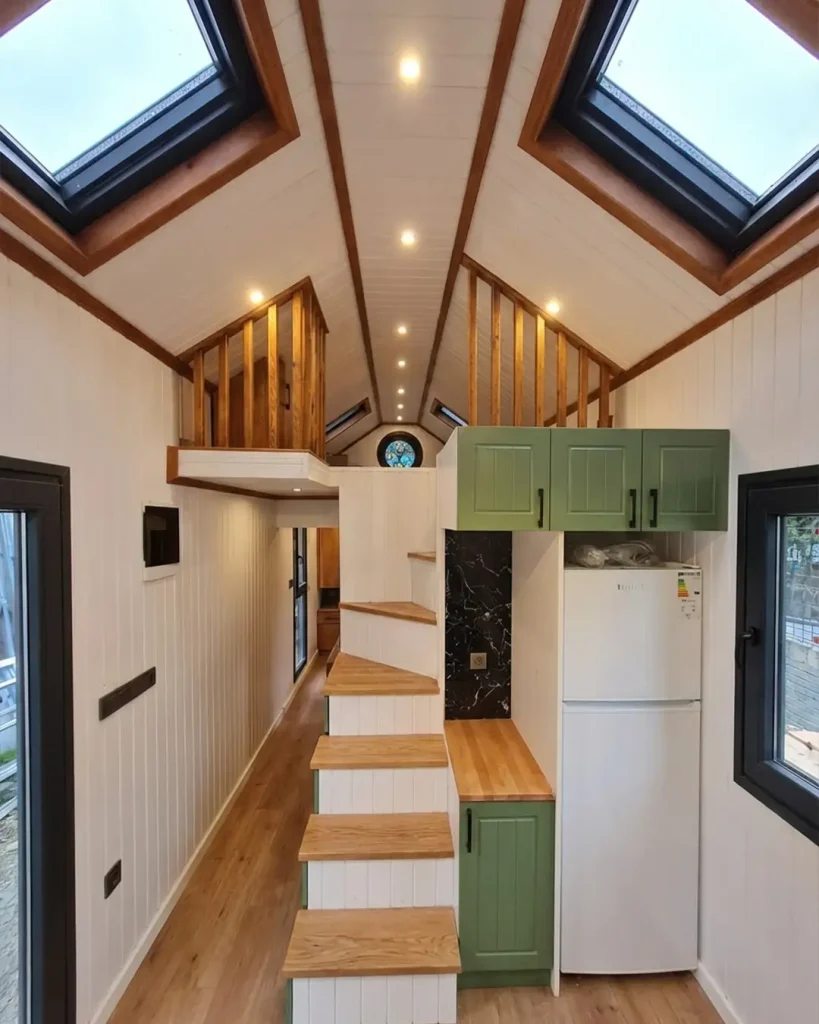
Look at the home above. Every decision in that space was made around the structure. The stairs double as storage. The loft bed uses ceiling height instead of floor space. The continuous flooring has no transitions to break up the narrow layout. That is what happens when you plan with the structure, not against it.
Do this first: Find your home’s data plate or HUD tag. It lists the model year, construction type, and original specifications. One document, answers to most of your early questions.
2. Start With a Full Interior Assessment
Walk through every room before spending a dollar. Write down what bothers you most in each space. Note what is structurally sound and what needs repair.
Separate cosmetic issues from structural ones. Cosmetic problems are cheap. Structural issues must be addressed first, before any decorating begins.
Check the floors for soft spots. Look at the ceiling for water stains or sagging. Test every window and door. Inspect under sinks for leaks. Check the HVAC system.
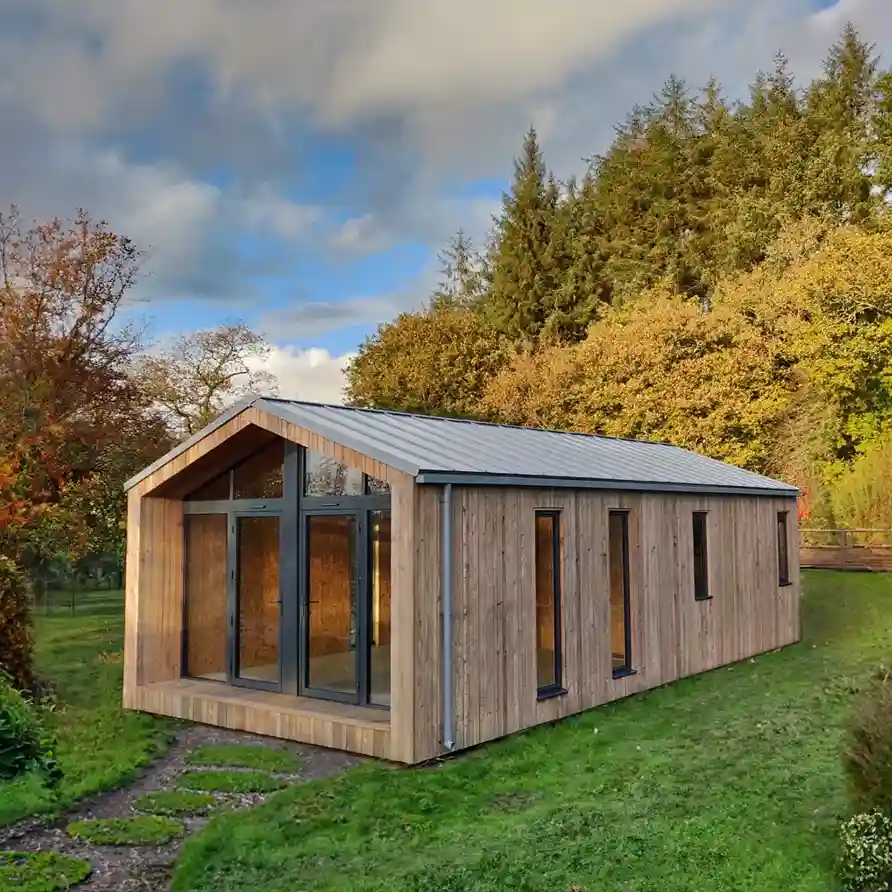
The home above is a good example of getting the exterior right before touching the interior. The siding, roofline, and windows are clean and weather-tight. That is the foundation. Everything else builds on it.
Structural warning: Soft floors and ceiling stains are the two warning signs that stop your decorating plans. Fix the source of the moisture first or you will be covering up a problem that gets worse.
3. Replace the Flooring for an Instant Transformation

Nothing transforms a mobile home faster or more dramatically than new flooring. Original mobile home flooring, whether thin carpet, worn vinyl, or faded laminate, dates the space immediately.
Luxury vinyl plank is the best choice for most mobile homes. It is waterproof, durable, and installs as a floating floor that does not need adhesive. It handles the slight movement and settling of mobile homes better than rigid tile or hardwood.
It also installs directly over most existing floors, saving demolition time and cost.
The before and after above is the clearest proof. Same room, same layout, same furniture position. The only change is the floor, and the entire room reads as a different house.
Check these apartment studio ideas for apartments learning.
4. Deal With the Dark Wood Paneling
Dark wood paneling is the most common complaint about older mobile home interiors.
The grooved brown panels make rooms feel smaller, darker, and hopelessly dated. Replacing them entirely is expensive and complex. But there are several budget-friendly approaches that transform paneled walls without full replacement.

Painting the paneling is the fastest and most affordable solution. Use a bonding primer specifically designed for glossy and laminated surfaces.
Apply two coats of a quality interior paint in a light color. The grooves disappear visually when the paneling is painted a uniform color.
The entire room feels brighter, larger, and dramatically more modern. A full room paneling paint job costs $30–$60 in materials and a weekend of work.
5. Upgrade the Walls Beyond Simple Paint
Once the paneling is painted, the walls become a canvas. You are no longer fighting them.
Peel-and-stick wallpaper on one accent wall adds pattern without any permanent change. Shiplap-look boards over painted paneling create farmhouse character. Wainscoting or beadboard on the lower half of walls adds architectural detail that makes the home feel custom.
Texture adds depth that flat paint alone cannot achieve. A simple limewash technique over painted walls creates an organic texture for almost nothing. Stenciled patterns with a craft store stencil and a small amount of contrasting paint create designer-looking walls for under $30.
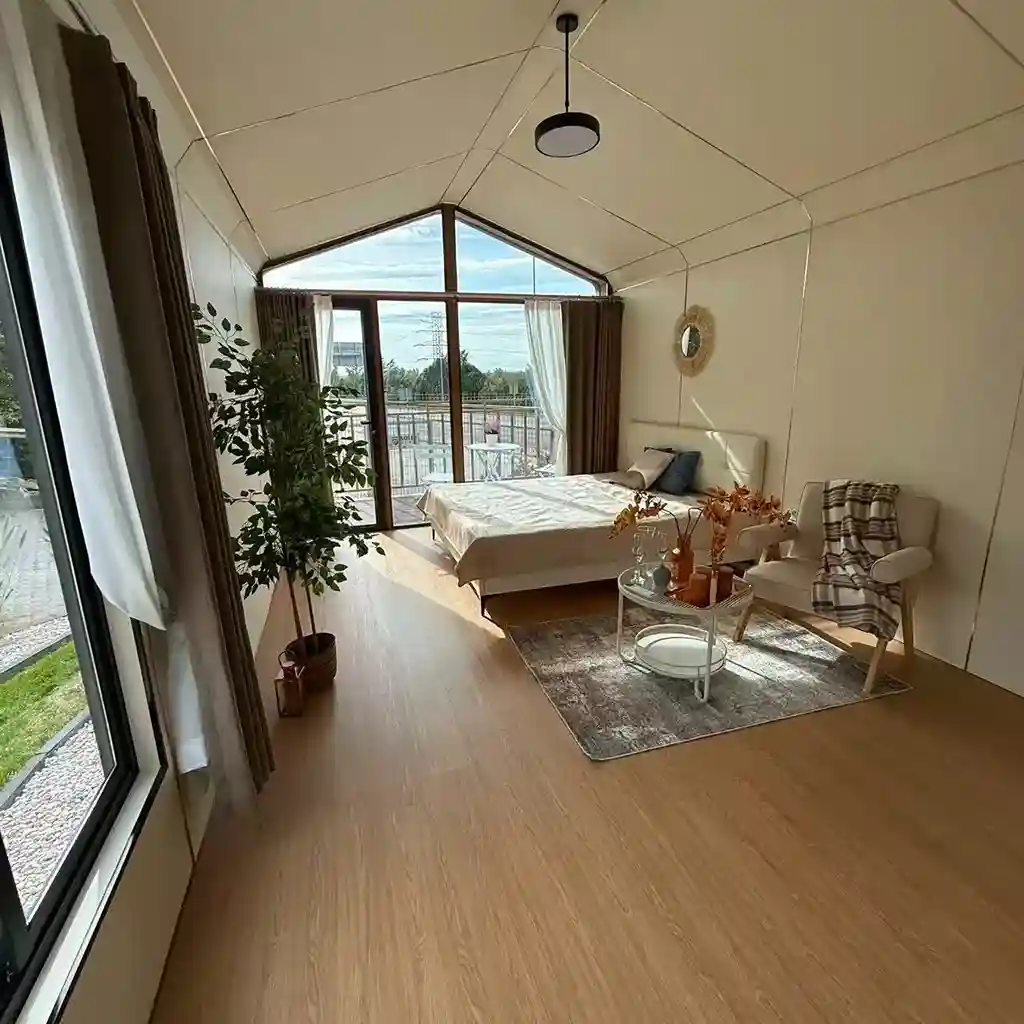
The room above uses a single gable window as the focal point. The walls stay clean and pale, letting the light and the window shape do the work. That is a decorating strategy as much as a paint choice.
Cheap upgrade: Peel-and-stick wallpaper is removable, which matters if you rent. One accent wall costs $25 to $60 and takes an afternoon. It changes the entire personality of the room.
6. Transform the Kitchen Without a Full Remodel

The kitchen above shows what happens when you get the color story right. Grey floors, white cabinets, black hardware, stainless appliances. Four decisions, all made together, all working as one look.
What I would skip: Custom cabinetry. The labor and materials rarely pay back in a mobile home. Painted boxes with new doors look almost identical for a tenth of the cost.
7. Update the Bathroom on a Tight Budget
Mobile home bathrooms are typically small and feature dated fixtures, low-quality surfaces, and minimal storage. A full gut renovation is not required to make a real difference.
Resurfacing the bathtub with a spray-on refinishing kit costs $30 to $50 and transforms a stained, yellowed tub into a fresh white surface. Re-caulking around the tub and sink costs almost nothing but looks dramatically cleaner.
A new toilet seat, a new faucet, and a fresh coat of moisture-resistant paint complete the refresh for under $150 total. Add a stylish mirror and a simple shelf for storage.

The bathroom above is a good example of an untouched mobile home bathroom. Everything works, nothing is broken, and every surface is dated. That is exactly the situation where the cheap fixes deliver the biggest jump.
The one thing that matters: Re-caulking. It is the cheapest upgrade in the entire bathroom and the one that changes the room the most. Every old, dark caulk line replaced with clean white makes the space look new.
8. Maximize Storage Throughout the Home
Storage is the most common challenge in mobile home living. The rooms are smaller than site-built homes and the original storage solutions are rarely adequate. Creative storage solutions make every room feel more organized, more spacious, and more livable without any structural changes.
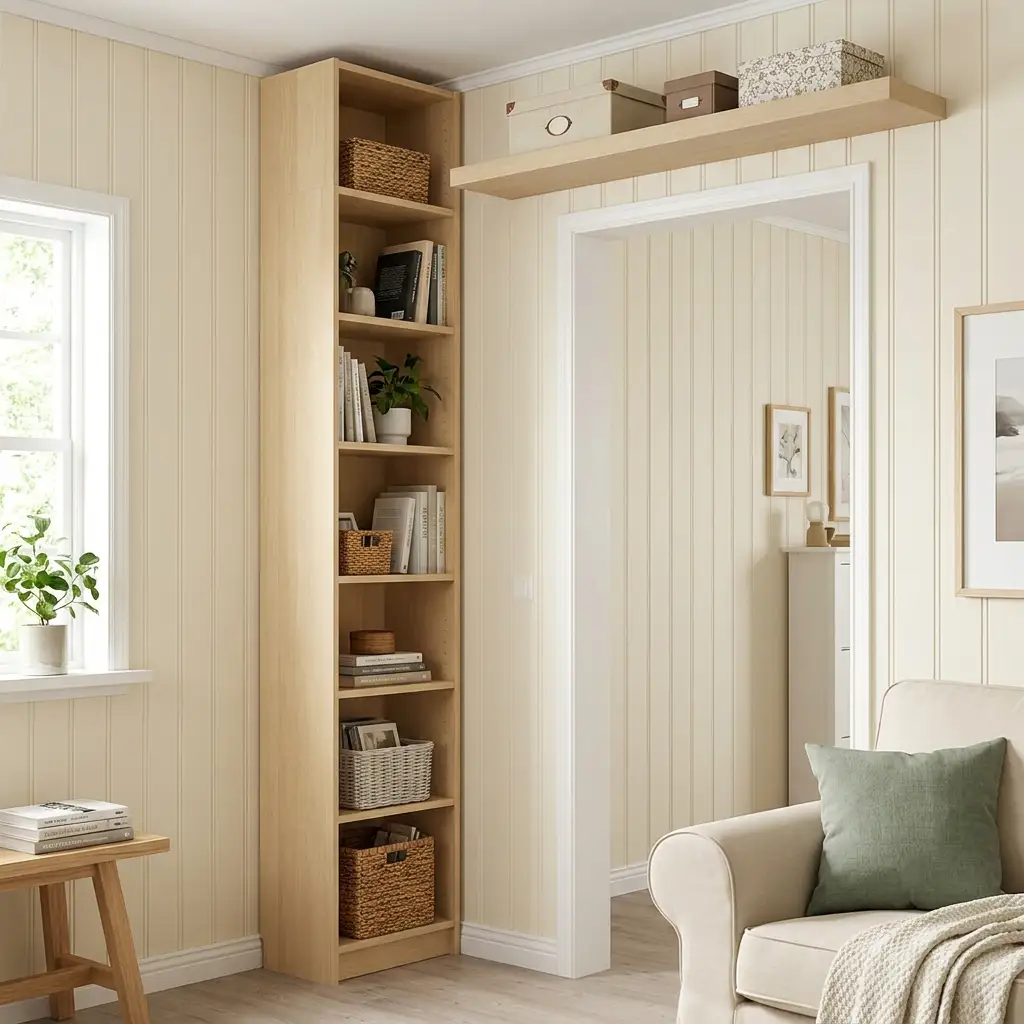
Vertical storage is the most valuable approach in a mobile home. Floor-to-ceiling shelving units use wall height that would otherwise be wasted. Floating shelves above doors, desks, and countertops capture dead space productively.
Furniture with hidden storage — ottomans, bed frames with drawers, storage benches — doubles the function of every piece. Under-bed storage bins, over-door organizers, and magnetic strips in the kitchen add significant storage capacity at minimal cost.
9. Replace Light Fixtures for an Immediate Upgrade
Original mobile home light fixtures are universally unattractive. The builder-grade flush-mount globes and fluorescent strips make every room feel institutional.
Replacing them is one of the cheapest and most impactful upgrades you can make. New fixtures cost $15 to $80 at most home improvement stores. Turn off the breaker, unscrew the old fixture, connect the wires, and mount the new one. Fifteen to thirty minutes per fixture.
Choose warm-toned LED bulbs throughout. A home where every fixture has been replaced feels dramatically more designed.

The nook above is proof. The black pendant is doing more work than any other element in that corner. Swap it for a standard flush mount and the whole scene goes flat.
10. Upgrade Windows and Window Treatments
Mobile home windows are often single-pane, poorly sealed, and a major source of heat loss. Replacing them with double-pane vinyl windows improves efficiency, reduces noise, and upgrades the look from inside and out.

The home above shows what a proper window replacement looks like. Large awning window, clean trim, insulated mini-split unit outside. The window and the HVAC upgrade happened together, which is the smart order.
If full replacement is not in the budget, window treatments deliver immediate improvement at minimal cost. Floor-to-ceiling curtains hung well above the frame make low ceilings feel taller. Roman shades in natural linen add a custom look. Cellular shades improve insulation and look clean.
11. Work With the Low Ceilings Instead of Against Them
Mobile home ceilings are typically lower than site-built home ceilings. Fighting that fact leads to frustration. Working with it leads to cozy, intimate interiors that feel intentional.
Paint the ceiling the same color as the walls, or one shade lighter. This removes the hard visual line between wall and ceiling and makes the room feel taller. Vertical elements draw the eye upward. Tall narrow furniture, vertical stripes, and floor-to-ceiling curtains all use this principle.

Mirrors are the single most effective tool for making any room feel larger. In a mobile home where rooms are inherently compact, a well-placed mirror is genuinely transformative.
A large mirror on a wall opposite a window doubles the apparent size of the room and reflects natural light deep into the interior. Choose mirrors with attractive frames that suit the room’s aesthetic.
The room above uses two mirror strategies at once. The large arched mirror on the right reflects the window and the garden beyond, effectively doubling that wall. The small gold mirrors grouped on the left wall multiply light and add a curated, intentional feel.
A mirrored wardrobe door serves as a practical full-length mirror while making the bedroom feel significantly more spacious. Even a collection of smaller mirrors grouped together creates a light-multiplying effect that improves any room.
12. Use Mirrors Strategically to Expand the Space
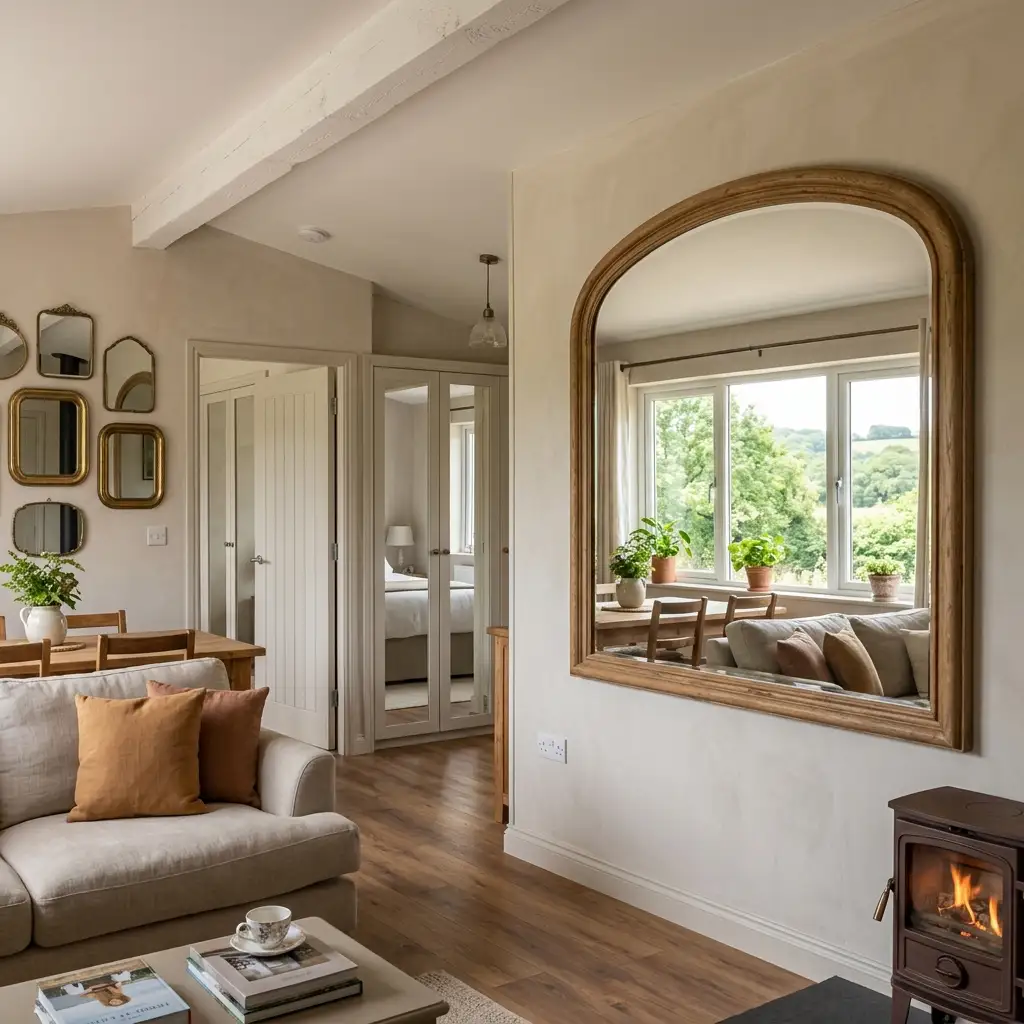
Choose mirrors with attractive frames that suit the room’s aesthetic. A large arched mirror leaning against a wall in the living room creates a focal point and expands the space simultaneously. A mirrored wardrobe door serves as a practical full-length mirror while making the bedroom feel significantly more spacious. Even a collection of smaller mirrors grouped together on a wall creates a light-multiplying effect that improves any mobile home room.
13. Refresh the Exterior for Curb Appeal

The interior transformation is incomplete without attention to the exterior. A mobile home with a beautiful interior but a neglected exterior creates a disconnected impression. Simple, affordable exterior improvements change how the home looks and how you feel coming home every day.
The exterior above shows exactly what most mobile homes look like before any work is done. Faded siding, dull skirting, patchy grass. It is not damaged. It is just tired. That is a much cheaper problem to fix.
Paint is the most impactful exterior upgrade. Exterior paint rated for mobile homes costs $30 to $60 per gallon and transforms the entire home’s appearance in a weekend. Replace old skirting with fresh lattice or a clean painted version. Add window boxes with bright flowers. Install new house numbers and a mailbox. Plant a simple foundation border of low shrubs.
Cheap upgrade: Skirting replacement. Old, dented, or faded skirting dates an entire home more than anything else on the exterior. New skirting costs $80 to $250 and takes a weekend.
14. Replace or Refinish the Front Door
The front door is the face of any home. An original mobile home door is typically thin, poorly insulated, and completely forgettable. Replacing it with a solid-core door immediately improves both appearance and energy efficiency. A new door also significantly improves security.

f full replacement is not in the budget, paint the existing door in a bold color. The before and after above shows what a weekend project delivers. The door on the right is not new. The frame is the same. The paint and hardware transformed it.
A bright red, deep navy, or forest green front door creates an immediate focal point. Add new hardware, a solid handle set, a decorative knocker, and a new house number plate for under $50. A refreshed front door changes the first impression of the entire home.
15. Add Architectural Interest With Trim and Molding
Original mobile homes have little to no interior trim detail. Baseboards are thin or absent. Door frames are minimal. Crown molding does not exist. Adding simple trim and molding creates the architectural detail that makes a mobile home feel like a proper house rather than a manufactured unit.

Crown molding at the top of the wall, chair rail dividing the wall into two colors, and baseboards at the floor. Each one is a simple flat profile. None cost much. Together they make the room look custom.
Wide baseboards along the bottom of all walls create an immediate quality impression. Simple door and window casing frames every opening. A painted wood ledge at chair rail height divides the wall attractively and creates a natural boundary for two-tone wall colors.
16. Create an Open Plan Feel Between Rooms
Mobile homes with divided, compartmentalized layouts can feel even more cramped than their square footage suggests. Removing a non-structural interior wall between the kitchen and living room opens the floor plan dramatically. The combined space immediately feels larger, lighter, and more modern.
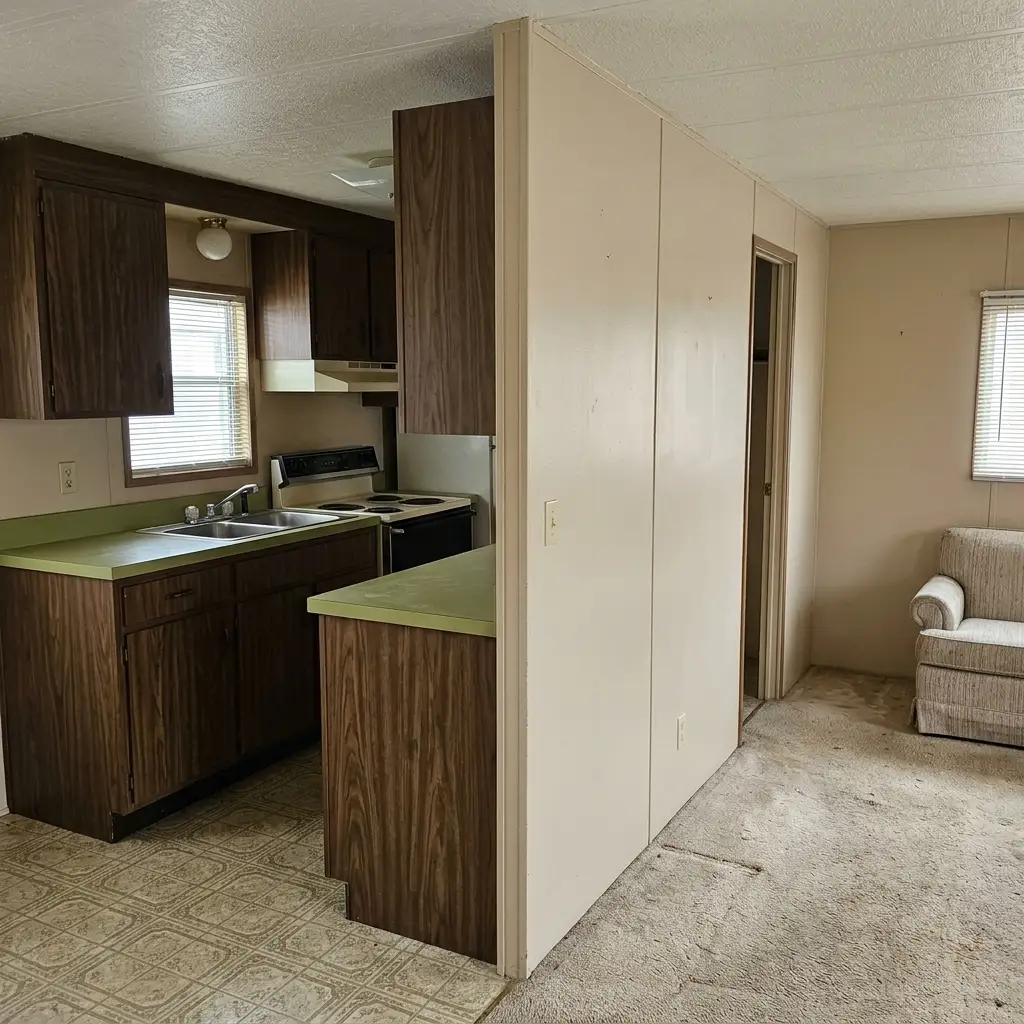
Before removing any wall, confirm it is non-structural. In a mobile home, load-bearing walls run along the exterior and typically down the center of the home. Consult a mobile home specialist before removing any interior wall.
If wall removal is not feasible, simply removing a door and leaving the opening creates a sense of connection between rooms. Painting adjacent rooms in the same color also creates the impression of one connected space rather than two separate ones.
17. Decorate With a Cohesive Color Story
A cohesive color palette running throughout the entire mobile home is the single most powerful decorating tool available. In a small home, colors move from room to room in constant visual connection. Clashing colors in adjacent rooms create visual noise that makes the home feel smaller and more chaotic.

Choose a main neutral — warm white, soft grey, or warm greige — for walls throughout the home. Add one or two accent colors that appear in cushions, throws, artwork, and accessories across all rooms. The repetition of the same colors throughout creates visual rhythm and makes the home feel larger, more designed, and significantly more expensive than it actually is.
| Color Story Approach | Effect | Cost |
|---|---|---|
| One neutral throughout | Seamless, spacious, calm | $30–$80 paint |
| Neutral walls, bold accents | Personal, energetic | $0 (accessories) |
| Two-tone walls (chair rail) | Traditional, architectural | $40–$100 |
| Accent wall per room | Focal points, drama | $15–$30 per room |
18. Upgrade the HVAC and Insulation for Comfort
A beautifully decorated mobile home that is uncomfortable due to poor temperature control fails at the most basic level. Mobile homes are notoriously poorly insulated compared to site-built houses. Addressing insulation and HVAC efficiency transforms the daily lived experience of the home far more than any decorating improvement.

Add skirting insulation around the base of the home to reduce heat loss through the floor. Seal all gaps around windows, doors, and pipe penetrations with weatherstripping and caulk.
Add blown-in insulation to the roof cavity if accessible. Replace an aging HVAC unit with a modern high-efficiency mini-split system that provides both heating and cooling in one unit. These improvements reduce energy bills and make the home genuinely comfortable in all seasons.
19. Tackle the Bedroom for a Restful Retreat
The bedroom in a mobile home is typically small. Making it feel like a restful, beautiful retreat requires intentional design choices. The bed is the most important element — invest in quality bedding even if the furniture is budget-friendly. Layered bedding in a cohesive palette makes any bed look luxurious regardless of the frame beneath it.

Maximize bedroom storage with under-bed bins, a bed frame with built-in drawers, and floating shelves above the bed instead of bulky bedside tables. A wall-mounted reading light on each side of the bed frees the bedside surface completely.
Hang curtains from ceiling height to the floor to make the bedroom windows feel grander. A full-length mirror on one wall makes the room feel immediately more spacious. Small, considered changes in the bedroom deliver disproportionately large improvements to the quality of daily life.
| Bedroom Hack | Cost | Space Impact | Comfort Impact |
|---|---|---|---|
| Under-bed storage bins | $20–$40 | High | Medium |
| Ceiling-height curtains | $20–$50 | High | High |
| Wall-mounted reading lights | $20–$50 | Medium | Very High |
| Full-length wall mirror | $30–$80 | Very High | Medium |
| Quality bedding layers | $50–$150 | Low | Very High |
20. Use Rugs to Define Zones and Add Warmth
Area rugs are one of the most transformative and affordable decorating tools in a mobile home. They define zones in open areas, add warmth underfoot, introduce color and pattern, and make hard flooring feel more livable.
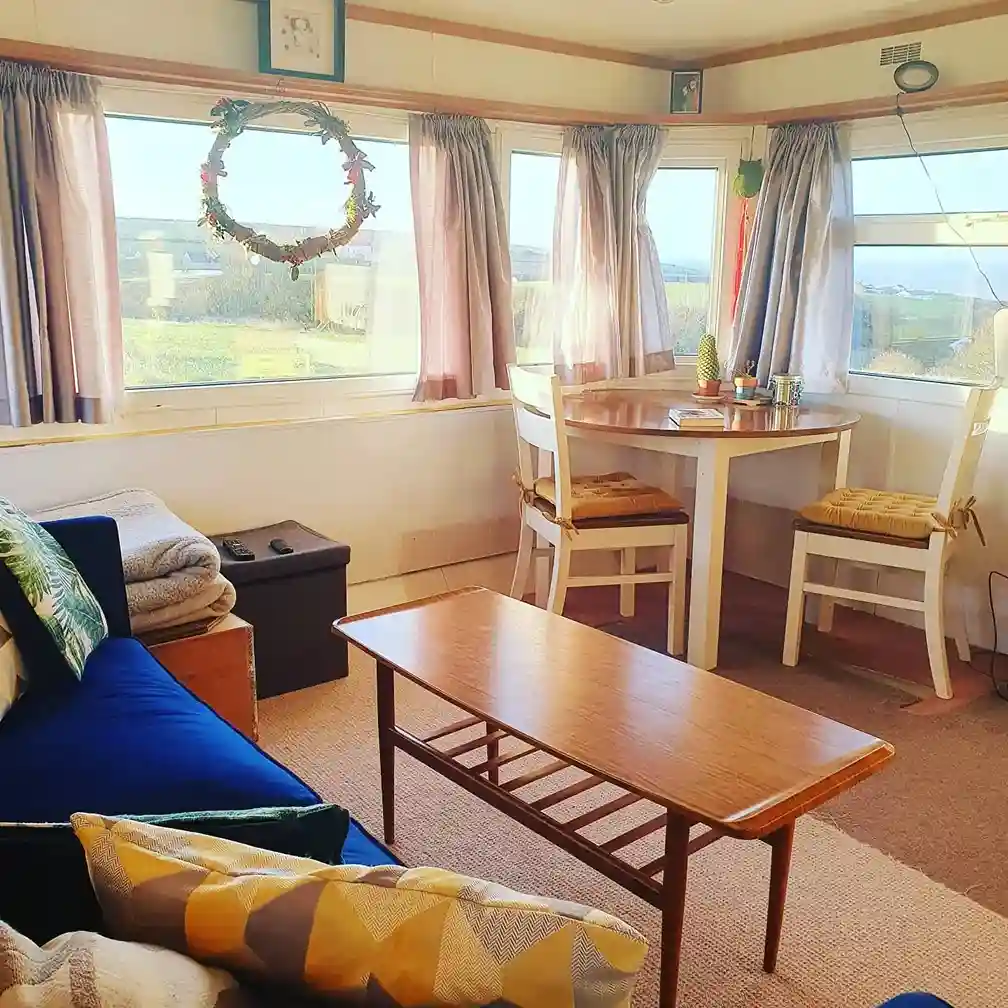
The living area above shows how one rug can anchor an entire space. The bay window nook, the blue sofa, and the dining table all sit in one open room. Without a rug, it would read as a jumble of furniture. With the right rug placement under the seating area, the room has a clear center.
Choose rugs sized generously for each space. A rug that is too small makes furniture look like it is floating on an island. The front legs of all living room furniture should sit on the rug simultaneously. A large rug that extends beyond the furniture perimeter makes the room feel substantially larger.
Quick win: Layer a smaller printed rug over a larger neutral one in the same zone. Two rugs together cost less than one large custom size and give the space more depth and interest.
21. Add Greenery and Natural Elements
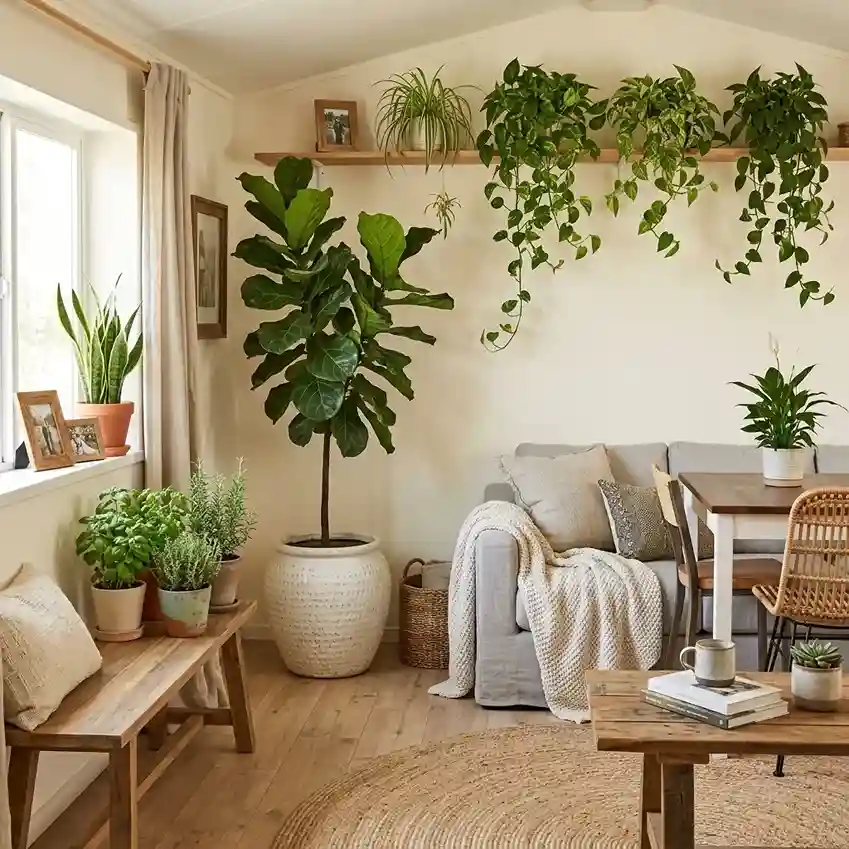
Plants transform a mobile home interior from a functional space into a living, breathing home. They add color, texture, movement, and a calming presence that no manufactured decor can replicate. Even one large plant in a beautiful pot changes the atmosphere of a room.
The living room above uses several plant strategies at once. A tall fiddle-leaf fig anchors the corner. Trailing pothos hangs from a shelf and draws the eye upward. Small potted herbs on the window bench bring greenery to the windowsill. A succulent on the coffee table adds a final touch.
Snake plants, pothos, ZZ plants, and peace lilies all thrive in mobile home interiors with varying light levels. Natural materials like rattan, jute, wood, and linen complement plant life beautifully.
What I would skip: Fake plants that look fake. One real pothos costs less than $15 and does more for the space than five plastic arrangements. Real plants add humidity and actually clean the air.
22. Plan Renovations in Priority Order

The biggest mistake in mobile home renovation is tackling projects in the wrong order. Decorating before repairing structural issues wastes money. Painting before replacing flooring creates unnecessary rework. A logical sequence protects the budget and delivers the best cumulative result.
The infographic above lays out the correct order on the right side and the common wrong way on the left. Look at the wrong side first. Painting before replacing flooring. Decorating before repairing structural issues. Ignoring faulty wiring. Every one of those mistakes means paying for the same work twice.
The right side is the sequence that works. Structural and systems first. Major construction second. Finishes third. Decoration last. Every dollar spent on decoration sits on top of a sound, finished foundation.
Structural warning: If you see evidence of water damage, sagging, or soft spots, stop the decorating plan. Cosmetic fixes over structural problems always fail. Fix the structure first or you will pay for it twice.
| Renovation Priority | Category | Do This | Before This |
|---|---|---|---|
| 1st | Structural repairs | Floor, roof, walls | Everything else |
| 2nd | Systems | Plumbing, electrical, HVAC | Finishes |
| 3rd | Finishes | Flooring, paint, trim | Decorating |
| 4th | Fixtures | Lights, faucets, hardware | Accessories |
| 5th | Decoration | Furniture, textiles, art | Nothing |
23. Set a Realistic Budget and Stick to It
Mobile home renovation budgets require the same discipline as any home improvement project. The difference is that mobile homes offer more opportunities to achieve high-quality results at lower cost. Setting a clear budget before starting any project prevents the scope creep that turns a simple refresh into an uncontrolled spending spiral.

Prioritize projects by impact per dollar spent. Painting walls and cabinets delivers the highest visual return for the lowest investment. New light fixtures deliver enormous impact for $15–$80 each. New flooring transforms the entire home for $2–$5 per square foot installed.
Save the largest budget allocations for projects that improve comfort and structural integrity — new windows, insulation, HVAC — as these investments pay back in reduced energy costs and improved daily quality of life.
- Create a full project list with estimated costs before starting any single project
- Add a 15–20 percent contingency to every budget for unexpected discoveries
- Tackle one room or one project at a time to avoid budget overwhelm
- Source materials from Habitat for Humanity ReStores, salvage yards, and online marketplaces
- Track every expense against the budget throughout the project without exception
Frequently Asked Questions (FAQs)
Q1: Can a mobile home be renovated to look like a regular house?
Yes. With the right combination of flooring, paint, trim, lighting, and fixtures, a renovated mobile home is visually indistinguishable from a site-built house interior. The structural differences exist, but they do not prevent beautiful, high-quality interior design. Many renovated mobile homes rival or exceed site-built houses in interior appearance and comfort.
Q2: What is the best first project in a mobile home renovation?
Flooring or painting, whichever has the most visible impact in your specific home. If the floors are worn or damaged, replace them first. If the walls are dark paneling that makes every room feel gloomy, paint them first. These two projects deliver the highest visual return per dollar of any mobile home renovation.
Q3: Is it worth renovating a mobile home?
Yes, for most homeowners. Renovation improves daily quality of life and comfort. It also increases the home’s value and marketability. The cost of renovation is almost always a fraction of the cost of purchasing a new home. Even modest improvements to flooring, paint, lighting, and fixtures deliver significant return on investment.
Conclusion
A mobile home is not a limitation. It is an opportunity to create a genuinely beautiful, comfortable, and personal living space without the budget demands of a site-built house. Every idea in this guide is achievable with basic DIY skills, a thoughtful approach, and a realistic budget.
Start where the impact is highest and the cost is lowest. Paint the walls. Replace the light fixtures. Add a beautiful rug and some plants. Build from those early wins into the larger projects as budget and confidence grow.
Your mobile home can be the most beautiful, comfortable, and personally expressive space you have ever lived in. The only thing standing between you and that home is the decision to begin.