Living in a small space does not mean living with less style. Across the United States, millions of homeowners and renters are working with compact living rooms every single day.
Here is the truth that most design professionals know but rarely say out loud: a small living room that is thoughtfully designed will always feel better than a large room that is thrown together without intention. Space is not the defining factor in a great living room. Design is.
This complete 2026 guide covers everything you need to know about transforming your small living room into a space that feels open, functional, stylish, and genuinely comfortable.
From furniture selection and layout strategies to color choices, lighting, storage, and where to shop across the country, this is the most practical small living room guide you will find this year.
Why Small Living Room Design Is More Important Than Ever in 2026
American homes are changing. According to the U.S. Census Bureau, the average size of newly built single-family homes has been declining since its peak in 2015, as more Americans prioritize location, affordability, and sustainability over square footage.
A well-designed small living room can increase the perceived value of a home or apartment by as much as 15 to 20 percent at resale, according to real estate professionals surveyed by Zillow. Buyers and renters consistently rate a smartly arranged, visually open living space as one of the top factors in their purchasing or leasing decision.
According to Houzz’s 2025 to 2026 U.S. Home Design Trends Report, small space optimization is the number one home improvement focus among American renters and urban homeowners this year. More Americans are investing in intentional furniture choices, multifunctional pieces, and thoughtful layouts than ever before.
Understanding how to design a small living room well is not just about aesthetics. It is a practical skill that directly impacts your daily quality of life and the financial value of your property.
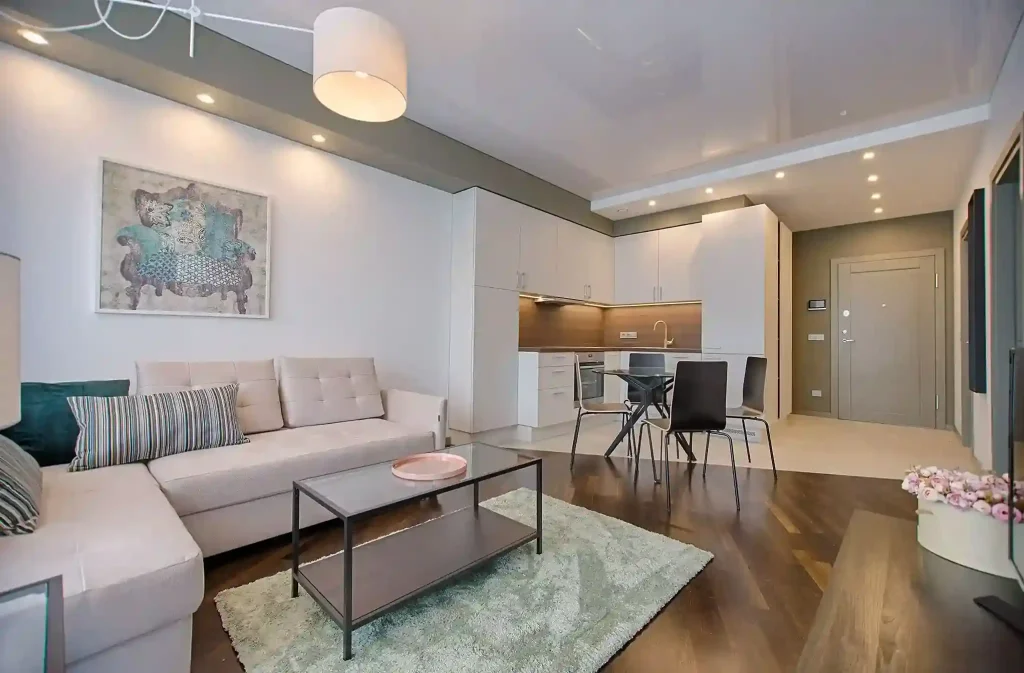
The Core Principles of Small Living Room Design
Before getting into specific tips and product recommendations, it helps to understand the foundational principles that guide every successful small living room transformation.
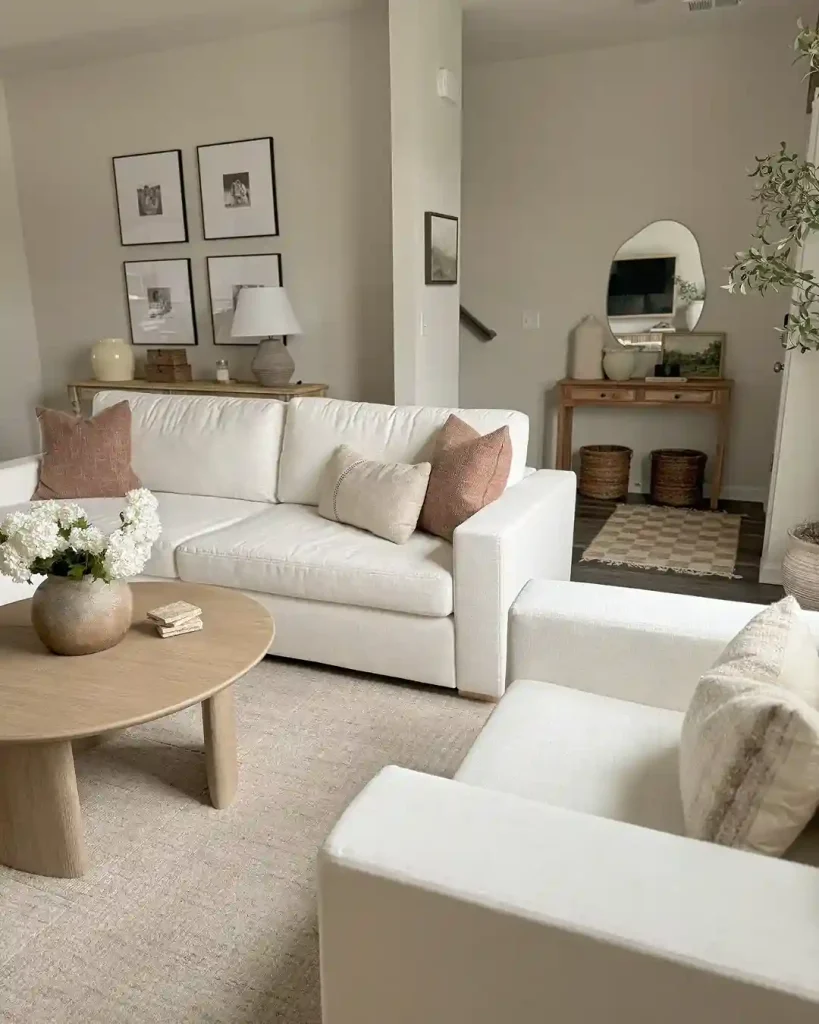
credits: @kaitlynmackenzee
Visual openness beats actual square footage. The goal is not to fit more things into a small room. The goal is to make the room feel larger than it actually is through smart use of color, scale, proportion, and negative space.
Every piece must earn its place. In a large living room, you can afford decorative pieces that serve no functional purpose. In a small living room, every item needs to either look great, serve a function, or ideally do both at the same time.
Scale is everything. Oversized furniture in a small room is one of the most common and damaging mistakes homeowners make. Choosing furniture that is correctly scaled to the room is the single most impactful decision in small living room design.
Light and color work together. Bright, light colors reflect light and make walls appear to recede. Dark colors absorb light and make walls appear to close in. This principle directly determines how large or small your room feels.
Vertical space is untapped square footage. Most small living room owners think only about floor space. The walls above eye level are frequently unused, wasted storage and display space that can dramatically change how a room functions.
Best Colors for a Small Living Room in 2026
Color is the most powerful and most affordable tool in small living room design. The right color choice can make a 200 square foot room feel airy and expansive. The wrong choice can make a 400 square foot room feel like a cave.
Light and Neutral Colors That Open Up Small Spaces
Soft white and warm white are the most reliable choices for small living room walls. They reflect natural and artificial light evenly, make ceilings feel higher, and create a clean backdrop for furniture and accessories. In 2026, warm whites with cream or yellow undertones are significantly more popular than cool, stark whites, particularly in living rooms across the Midwest and Southeast.
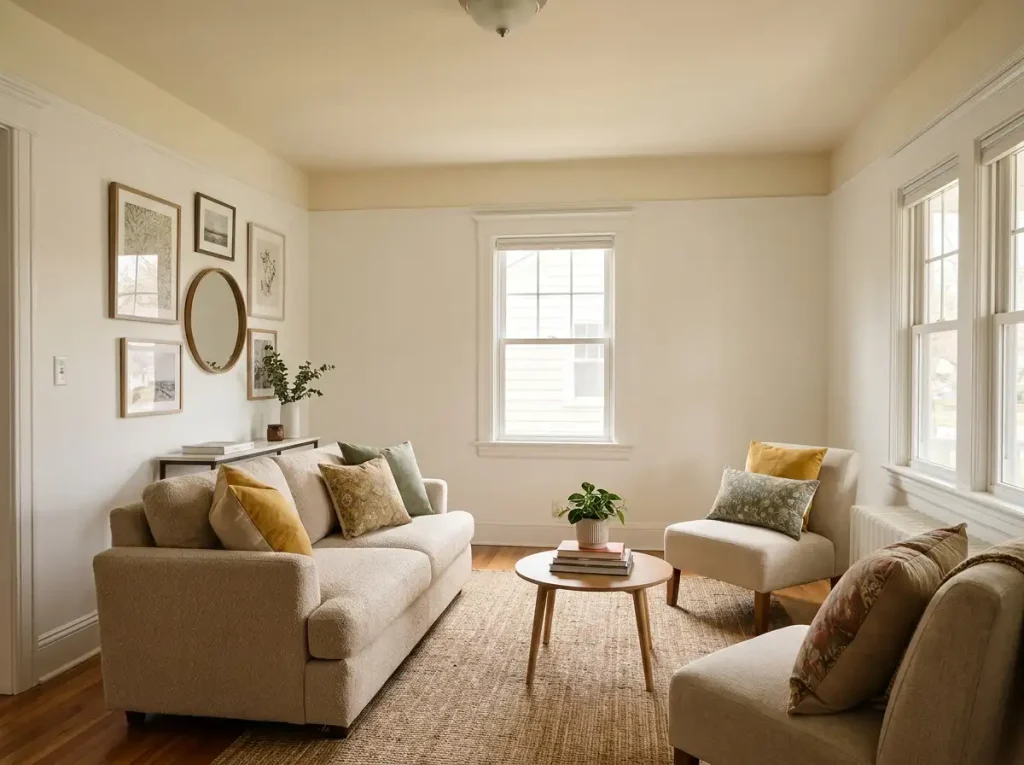
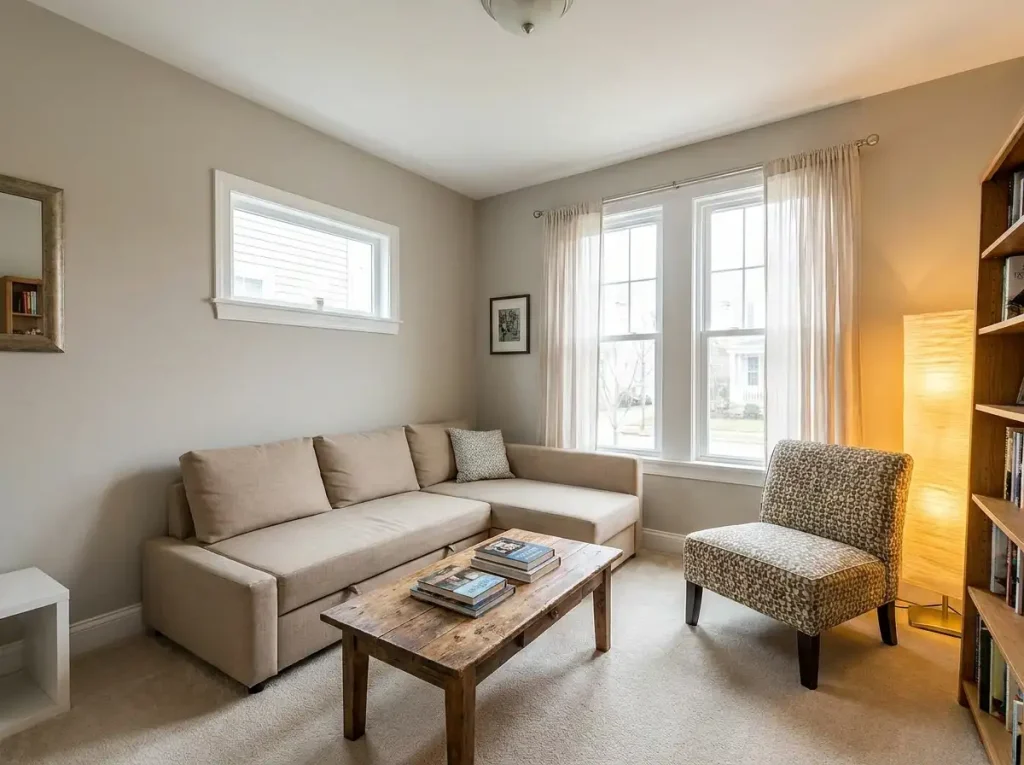
Light greige (a blend of gray and beige) is one of the most popular small living room wall colors in the United States right now. It works beautifully in rooms with variable light conditions, reads as warm and inviting in the evening, and pairs with virtually every furniture color and style. See more warm rustic living rooms that can be used with greige. Sherwin-Williams Accessible Beige and Benjamin Moore Pale Oak are two of the top-selling interior paint colors in America for exactly this reason.
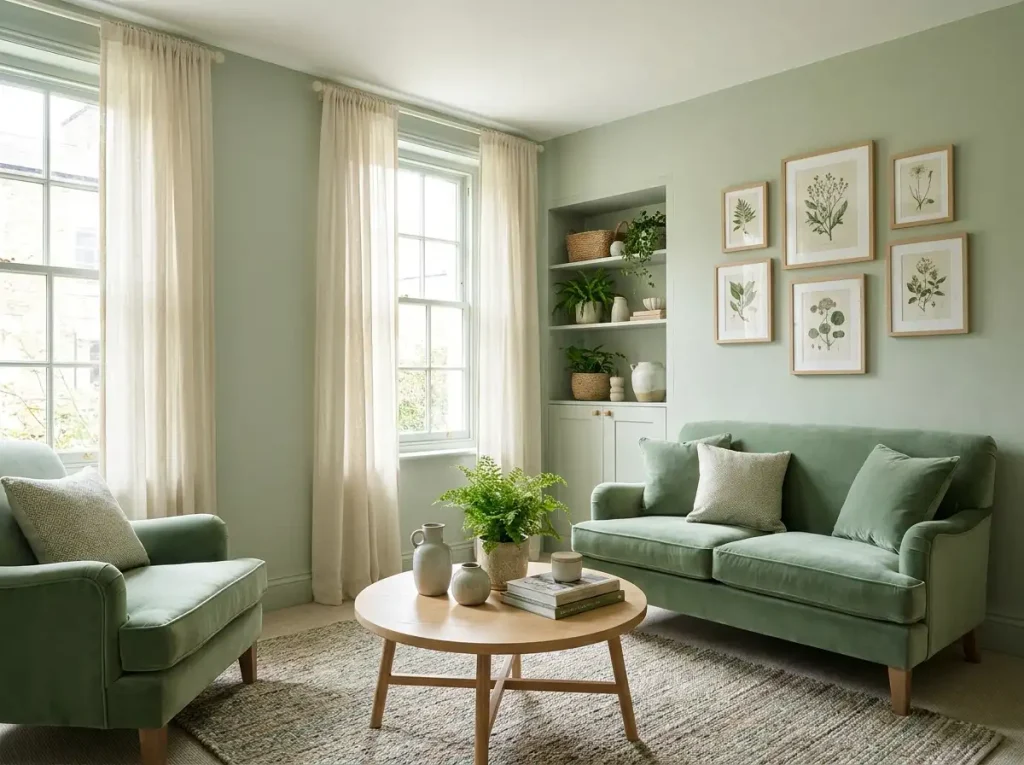
Pale sage and soft green tones are trending strongly for small living rooms in 2026. These muted, nature-inspired shades bring a sense of calm and organic freshness to compact spaces without the risk of making walls feel dark or heavy.
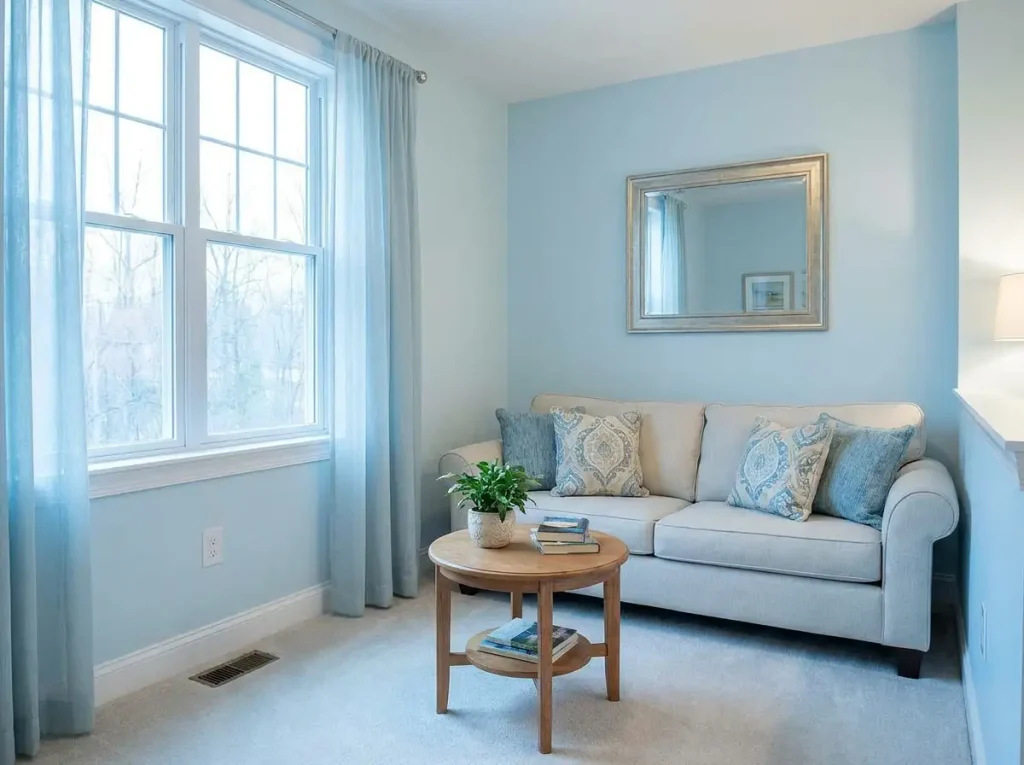
Light blue and pale sky tones are a classic small room trick. Cool, light blues visually recede, making walls appear farther away than they actually are. This is one of the most effective optical illusions in interior design, and it works particularly well in north-facing rooms that receive cooler natural light.
Can You Use Dark Colors in a Small Living Room?
Yes, but strategically. While light colors are the safer choice for most small living rooms, dark colors can actually work in compact spaces when used with intention.
A single deep-toned accent wall in charcoal, navy, or forest green can add drama and depth to a small room without making the entire space feel enclosed. The key is keeping the remaining three walls light and ensuring the room has strong lighting to compensate for the light absorption.
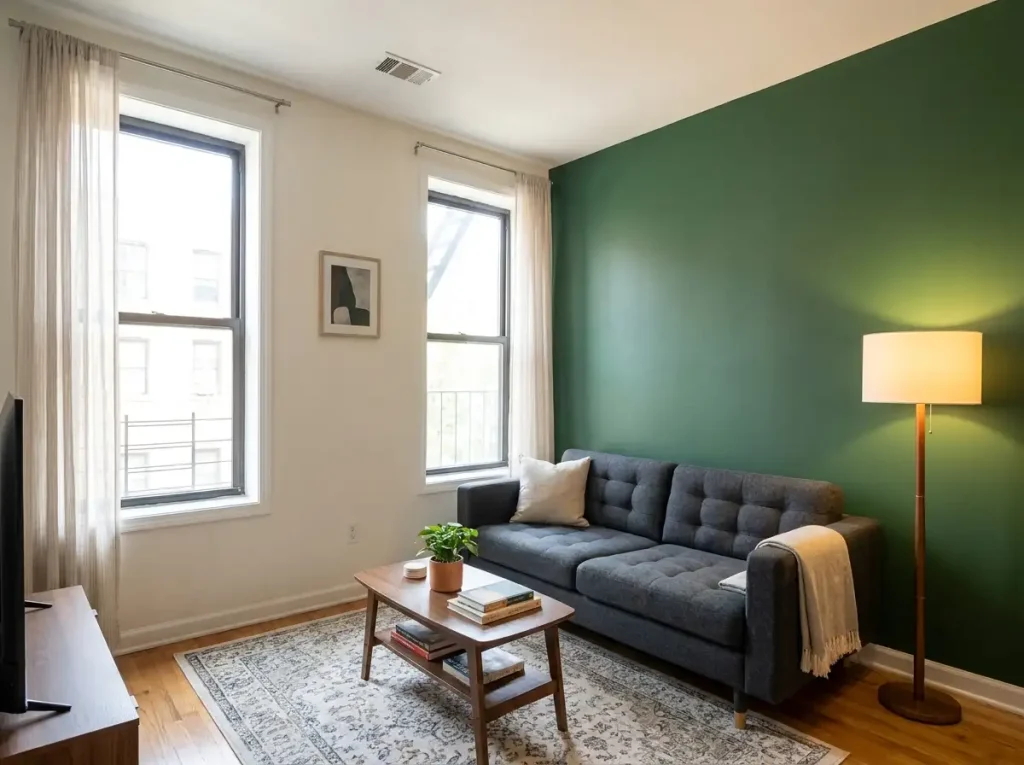
This approach is growing in popularity among design-forward homeowners in cities like Portland, Denver, and Austin who want bold, expressive living rooms without sacrificing the sense of openness they need in a compact space.
Small Living Room Layout Strategies
Layout is where most small living room design goes wrong. Many homeowners push all furniture against the walls in an attempt to create more open floor space, but this strategy almost always backfires. Furniture pushed to the perimeter makes a small room feel like a waiting room, not a living space.
The Floating Furniture Approach
Professional designers consistently recommend pulling furniture slightly away from the walls, even in small rooms. Leaving just 3 to 6 inches of space between the back of a sofa and the wall behind it makes the room feel more intentional, more dimensional, and paradoxically more spacious.
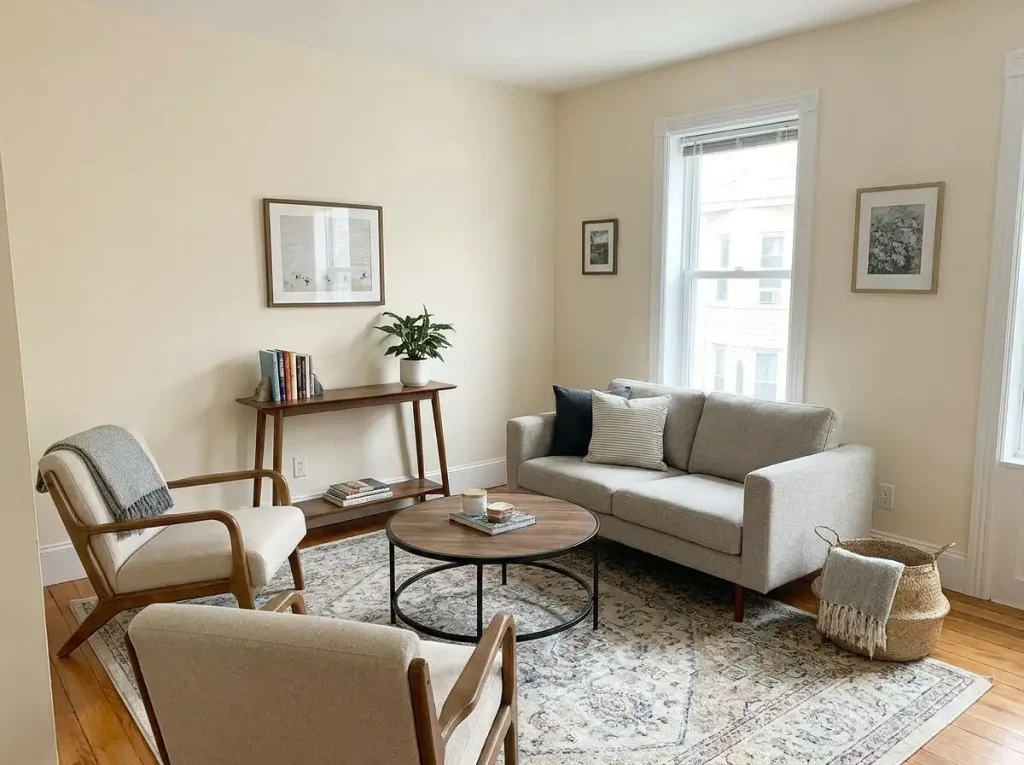
A sofa positioned to float slightly from the wall, with a narrow console table placed behind it, creates a functional zone and a visual sense of depth that flat, wall-hugging arrangements simply cannot achieve.
Define the Seating Zone With an Area Rug
In a small living room, an area rug serves as the anchor of the entire space. It defines the seating zone, gives the room a visual center, and ties all the furniture pieces together into a cohesive arrangement.
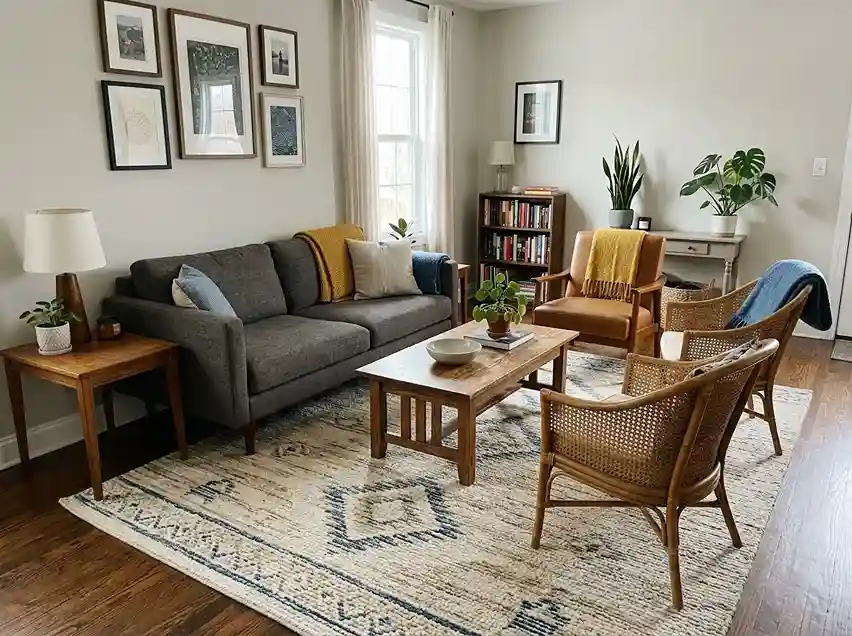
The biggest rug mistake in small living rooms is choosing a rug that is too small. A rug that only fits under the coffee table while the sofa and chairs sit on bare floor makes a small room feel fragmented and even smaller. The front legs of all major seating pieces should ideally sit on the rug. At minimum, the front two legs of the sofa should rest on it.
For a small living room in the 150 to 250 square foot range, a 5 by 8 foot rug is typically the minimum effective size. An 8 by 10 foot rug will almost always look better and make the room feel larger.
Create Conversation Zones, Not Theater Rows
One of the most common small living room layout mistakes is arranging all seating to face the television. This creates a one-directional, theater-style setup that feels cramped and limits the room’s versatility.
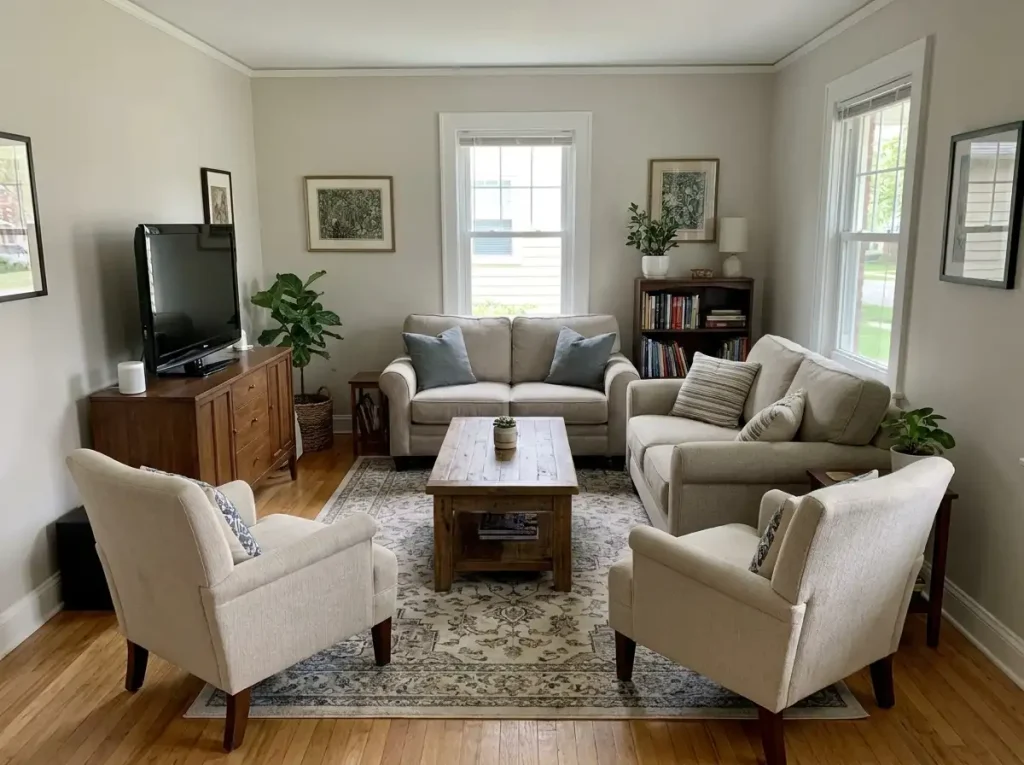
Instead, arrange seating to encourage conversation. Position the sofa facing two accent chairs at a slight angle, or use a loveseat and two armchairs in an L-shaped arrangement around a central coffee table. This creates a more dynamic, sociable space that also happens to work well for television viewing.
Use the Diagonal
Placing a sofa, rug, or even a coffee table on the diagonal is a lesser-known but highly effective trick for making a small square room feel larger. The diagonal line forces the eye to travel across the longest dimension of the room, creating a sense of greater depth and breadth.
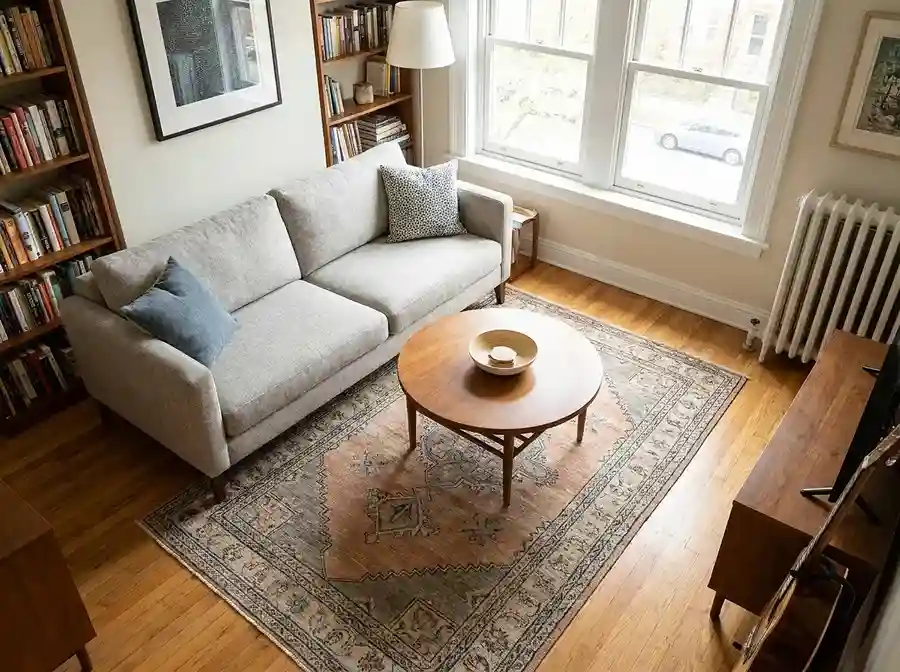
This approach requires a slightly larger room to execute comfortably, but in a square living room of 200 square feet or more, a diagonal sofa arrangement can be transformative.
Furniture Choices for a Small Living Room
Choosing the right furniture is the most consequential decision in small living room design. Here is exactly what to look for and what to avoid.
The Sofa
For a small living room, the sofa should be:
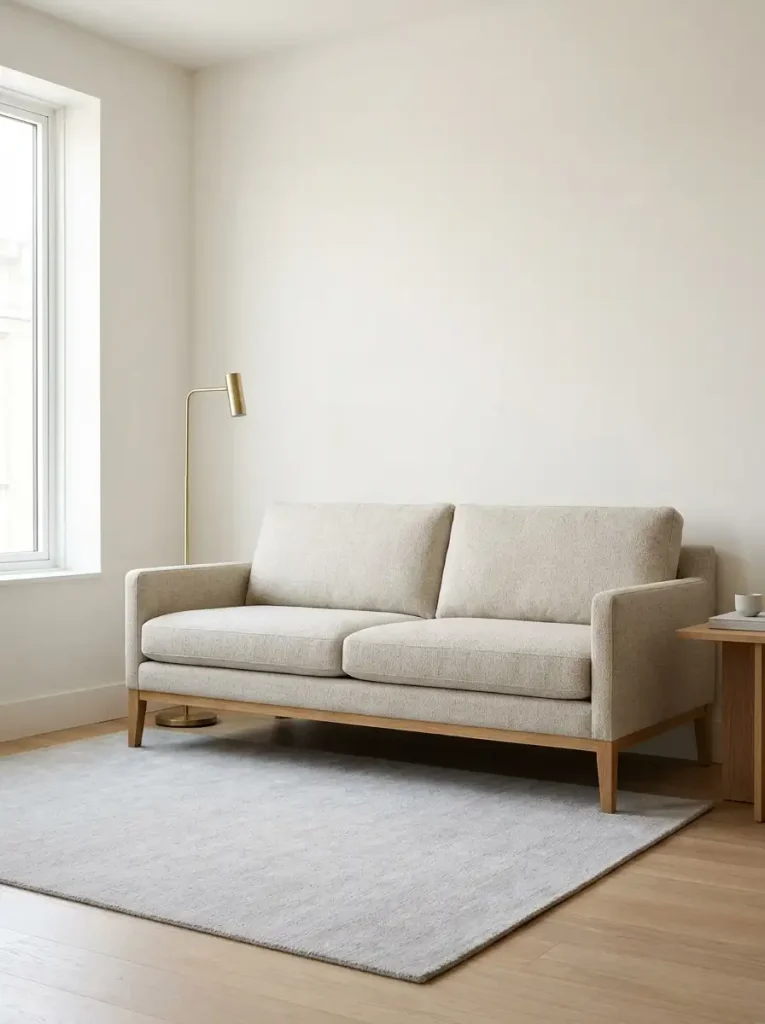
Scaled appropriately. A standard three-seat sofa runs 84 to 96 inches wide. In a truly small living room, that may be too large. Look for apartment-scale sofas, which typically measure 72 to 78 inches wide. Many brands including IKEA, West Elm, and Article offer apartment-sized versions of their most popular sofa styles.
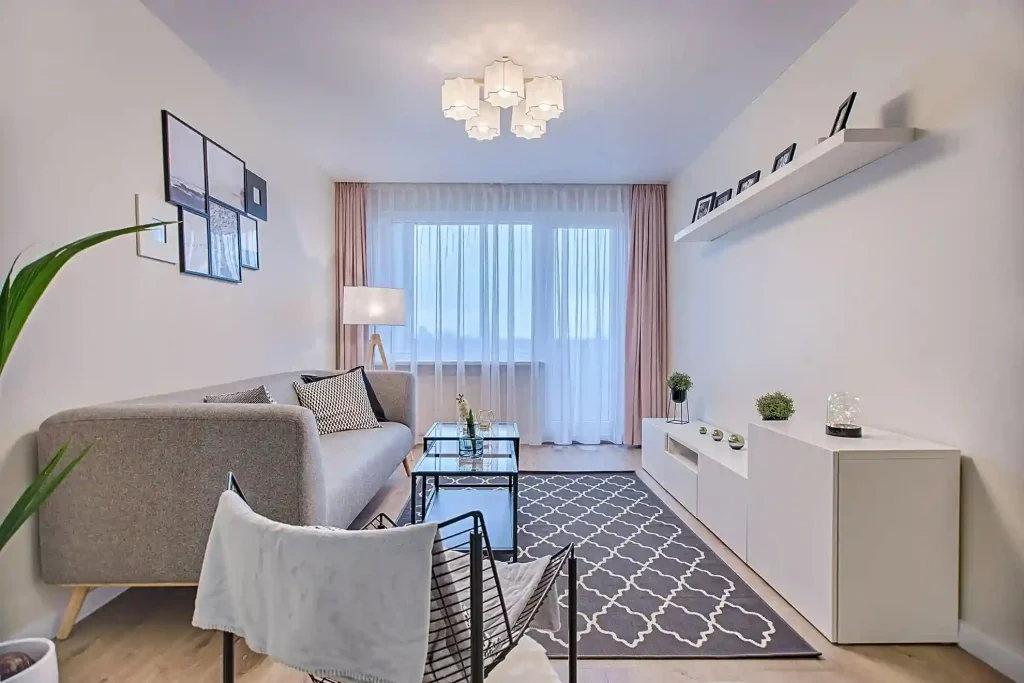
Raised on legs. A sofa with visible legs lifts the piece off the floor and allows the eye to see more of the floor beneath it, creating a sense of openness. Sofas with solid bases that extend to the floor visually block the floor and make the room feel more enclosed.
Light in color for open feel. Light-toned upholstery in cream, oatmeal, warm white, or pale gray reflects light and keeps the room feeling open. If durability is a concern, look for performance fabrics or Crypton-treated upholstery that resists stains and pet hair without sacrificing the light, airy look.
Skip the Traditional Sofa Entirely
For the smallest living rooms, consider skipping the traditional sofa altogether and replacing it with a sectional that fits a corner, a large loveseat paired with two accent chairs, or a pair of matching sofas facing each other across a narrow coffee table.

These configurations can actually provide more seating than a single large sofa while using floor space more efficiently.
Coffee Table
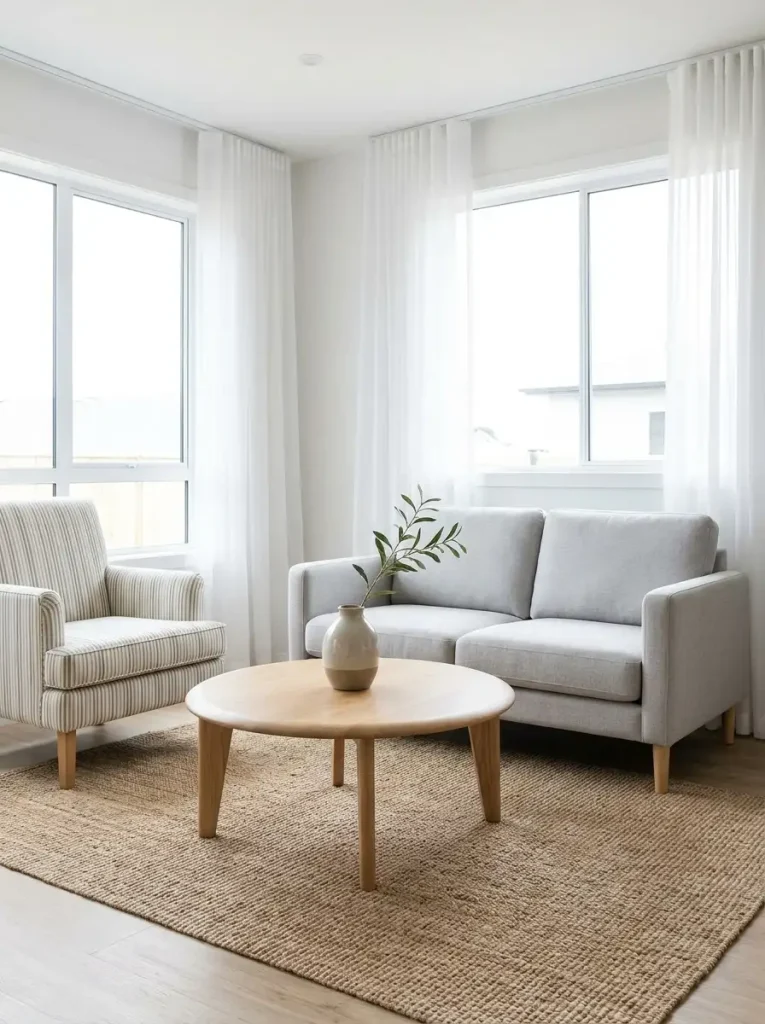
In a small living room, the coffee table should be:
Round or oval rather than rectangular. Round tables have no sharp corners, allow easier movement around them, and create a softer visual flow in tight spaces. They also tend to visually take up less space than rectangular alternatives of similar area.
Transparent or open. A glass-top coffee table or a table with an open shelf underneath allows the eye to pass through it, making it visually disappear into the room. This is one of the most effective small living room tricks available.
Multifunctional. An ottoman coffee table with hidden storage inside serves triple duty as a coffee table, footrest, and storage unit. In a small living room, this kind of piece earns its keep every single day.
Consider Nesting Tables
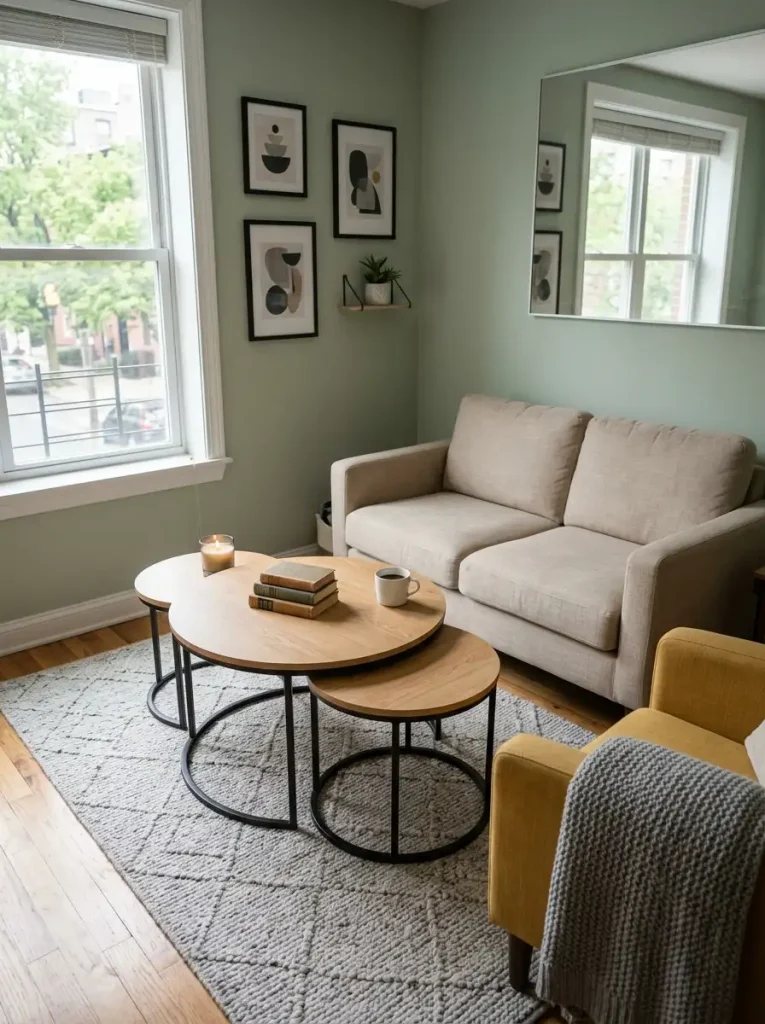
Instead of a single large coffee table, nesting tables offer extraordinary flexibility in a small living room. They can be pulled apart for extra surface space when needed and tucked together when more floor space is needed.
Accent Chairs Over Second Sofa
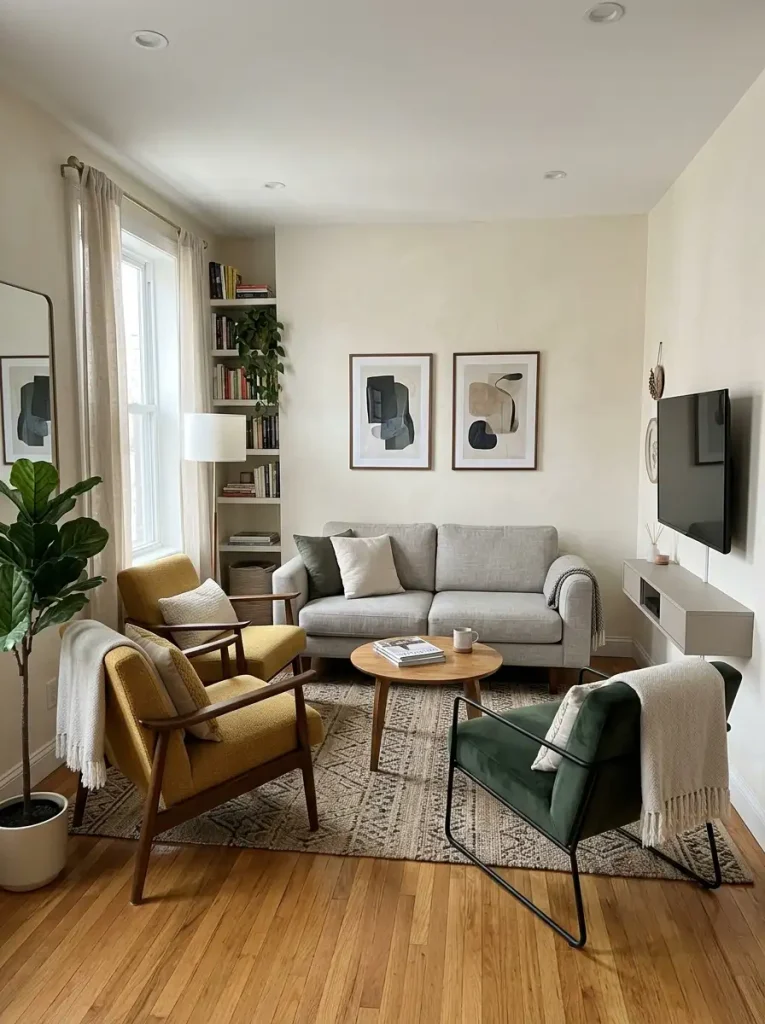
In a small living room, a second full sofa is almost always too much. Two or three accent chairs are a far better choice. They provide comparable seating, take up significantly less visual space, and offer much greater flexibility in arrangement. Look for chairs with slim profiles, exposed legs, and compact dimensions to keep the room feeling open.
Storage Solutions for Small Living Rooms
Storage is where small living rooms most frequently fail. Without adequate storage, surfaces become cluttered, and clutter is the fastest way to make any room feel smaller and more chaotic.
Built-In Shelving
If your budget allows, built-in shelving flanking a fireplace or television wall is the single most effective storage upgrade for a small living room. Floor-to-ceiling built-ins maximize every inch of vertical space and provide an extraordinary amount of organized storage without consuming any floor footprint.
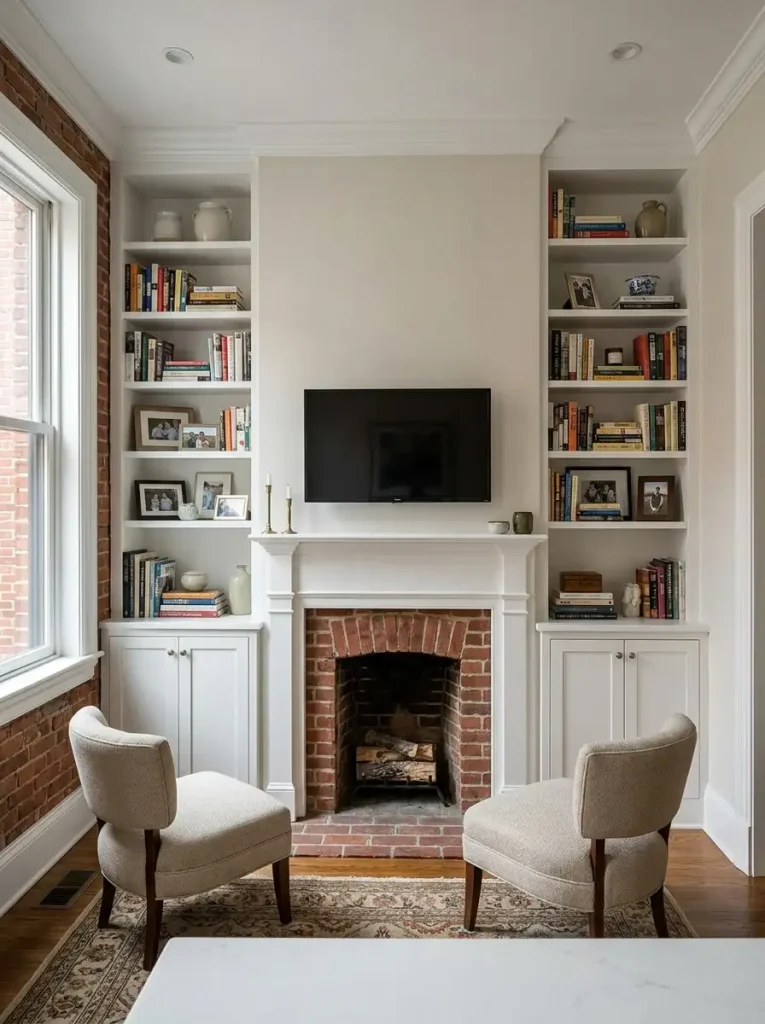
In cities like Chicago, Boston, and Philadelphia where many older homes have excellent wall structures for built-in installations, this is a particularly popular and high-value renovation choice.
Floating Wall Shelves
For renters and homeowners who cannot commit to built-in shelving, floating wall shelves are the next best option. Installed above eye level, they provide storage and display space without consuming any floor area.
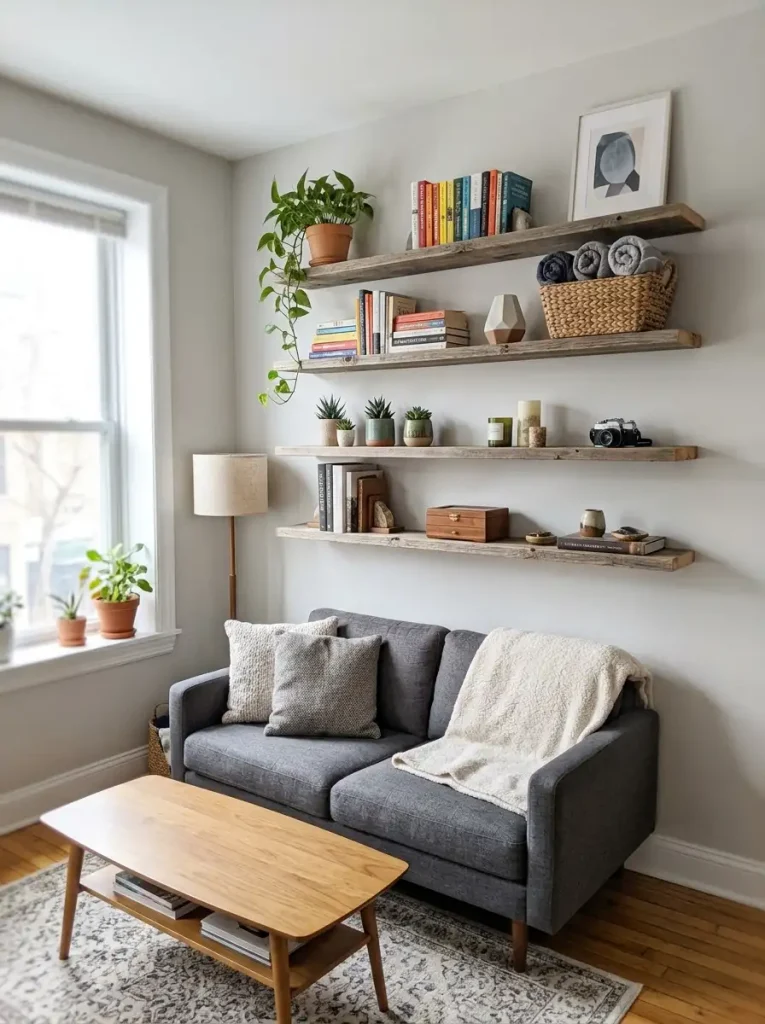
A series of floating shelves running the length of a wall can hold books, plants, decorative objects, and baskets of organized items without adding any visual bulk at floor level.
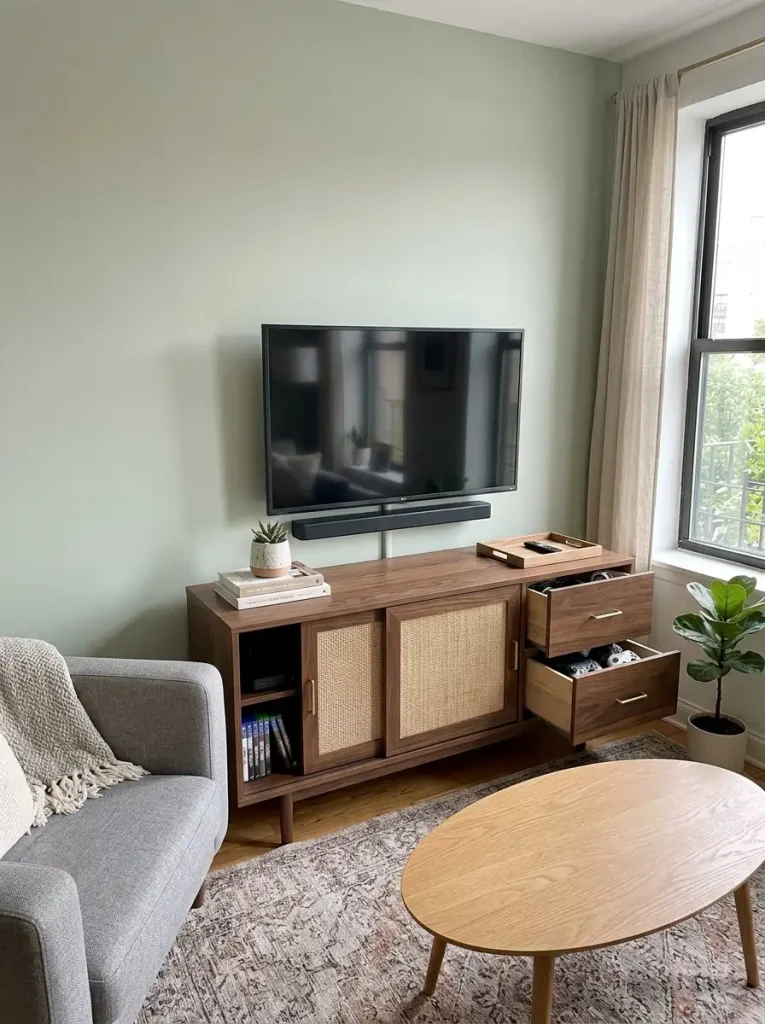
Media Console With Storage
The television stand or media console in a small living room should always include closed storage. Drawers, doors, and cabinets that hide remote controls, game controllers, cables, and media equipment keep surfaces clear and the room looking intentional and organized.
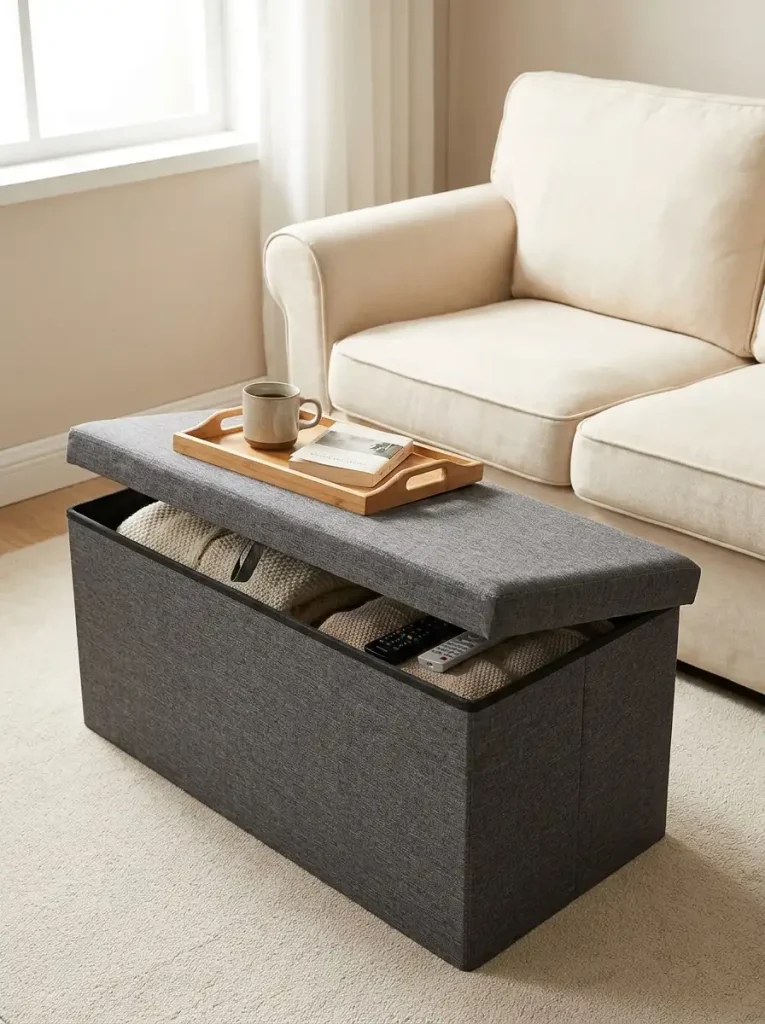
Storage Ottomans
A storage ottoman serves as a coffee table, extra seating, footrest, and hidden storage all in one piece. For a small living room, this is one of the highest-value furniture investments available at virtually any budget level.
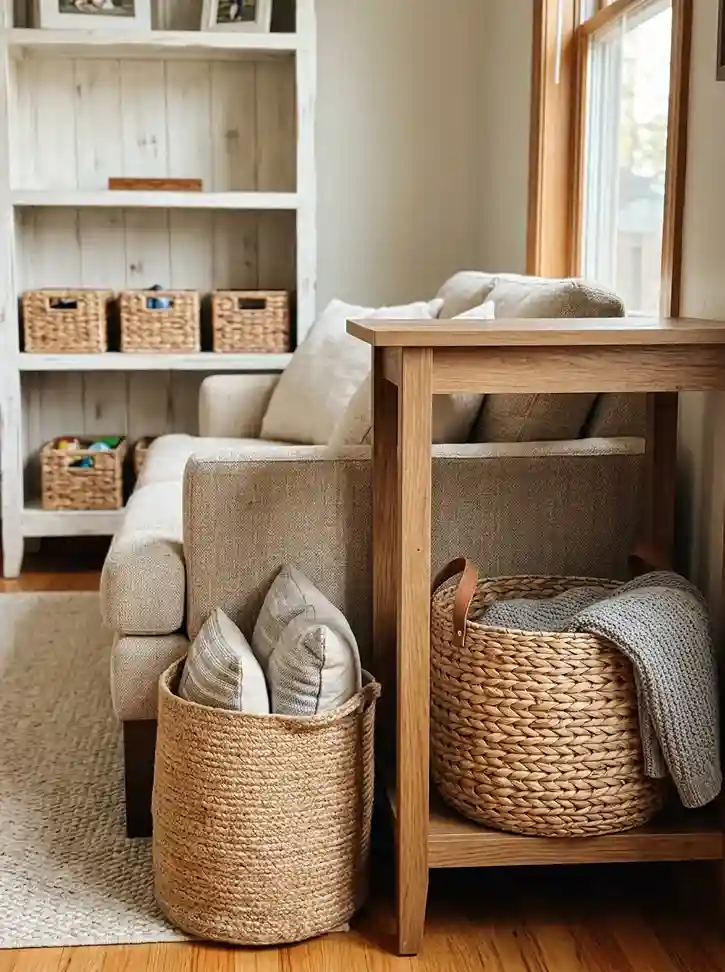
Baskets and Bins
Woven baskets tucked under consoles, beside sofas, or on lower shelves provide flexible, portable storage for throw blankets, pillows, magazines, and everyday items. They are affordable, attractive, and infinitely rearrangeable as needs change.
Lighting Strategies for Small Living Rooms
Lighting transforms small living rooms more dramatically than almost any other single element. The right lighting strategy makes a compact room feel warm, dimensional, and significantly larger than its actual square footage.
Maximize Natural Light
Natural light is the most powerful tool in small room design. In a small living room, never block windows with heavy drapes or oversized furniture. Keep window treatments light, sheer, and easy to open fully during daylight hours. Hang curtain rods as close to the ceiling as possible and let curtains fall to the floor. This simple trick draws the eye upward, makes ceilings appear higher, and maximizes the visual impact of every window in the room.
Layer Your Artificial Lighting
A single overhead light source is never sufficient in a small living room. Without layered lighting, the room will feel flat, dim, and even smaller in the evening hours.
A properly lit small living room uses at least three layers:
Ambient lighting provides overall illumination. A ceiling fixture, recessed lights, or a semi-flush mount gives the room its base level of light.
Task lighting serves specific functions. A floor lamp beside a reading chair or a table lamp on a side table provides focused light exactly where it is needed.
Accent lighting adds dimension and warmth. LED strip lights behind the television, small spotlights on artwork, or candles on a coffee table create warmth and visual interest that makes the room feel more layered and inviting.
Use Mirrors to Multiply Light
A large mirror in a small living room is one of the most effective tricks in the entire design toolkit. Positioned to reflect a window, a lamp, or a particularly attractive area of the room, a mirror literally doubles the perceived depth of the space and amplifies whatever light is available.
Lean a large floor mirror against a wall, hang an oversized round mirror above the sofa, or create a gallery wall of smaller mirrors in varying shapes and sizes. All of these approaches add light, depth, and visual interest simultaneously.
Small Living Room Design Trends in 2026
American homeowners with compact living spaces are embracing several standout design directions this year.
Multifunctional everything. In 2026, the single-purpose furniture piece is becoming obsolete in small living rooms. Sofa beds, storage ottomans, nesting tables, and lift-top coffee tables are among the most searched small living room furniture terms in the United States this year.
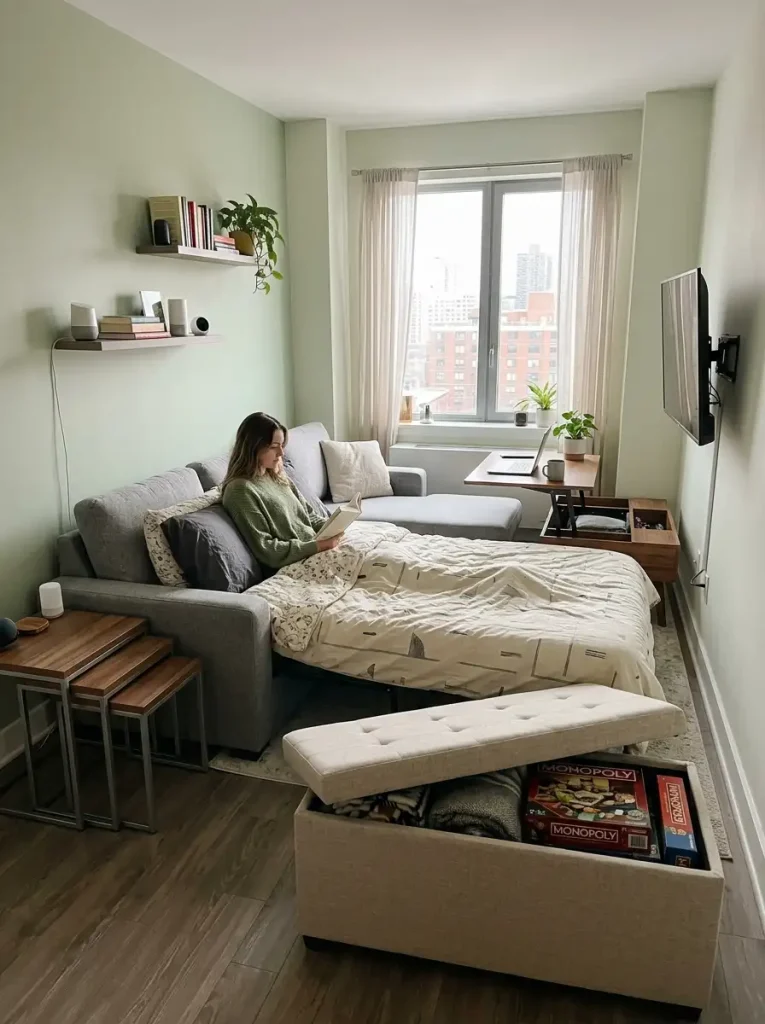
Biophilic design in small spaces. Bringing nature indoors through houseplants, natural wood tones, woven textures, and organic shapes is one of the defining design movements of 2026. In a small living room, a cluster of well-chosen plants adds life, color, and visual depth without consuming significant floor space.

Curved furniture. Curved sofas, round coffee tables, and oval ottomans are among the hottest furniture trends of 2026. Curved pieces create gentle, flowing movement in a small room and eliminate the harsh angles that can make compact spaces feel tight and boxy.
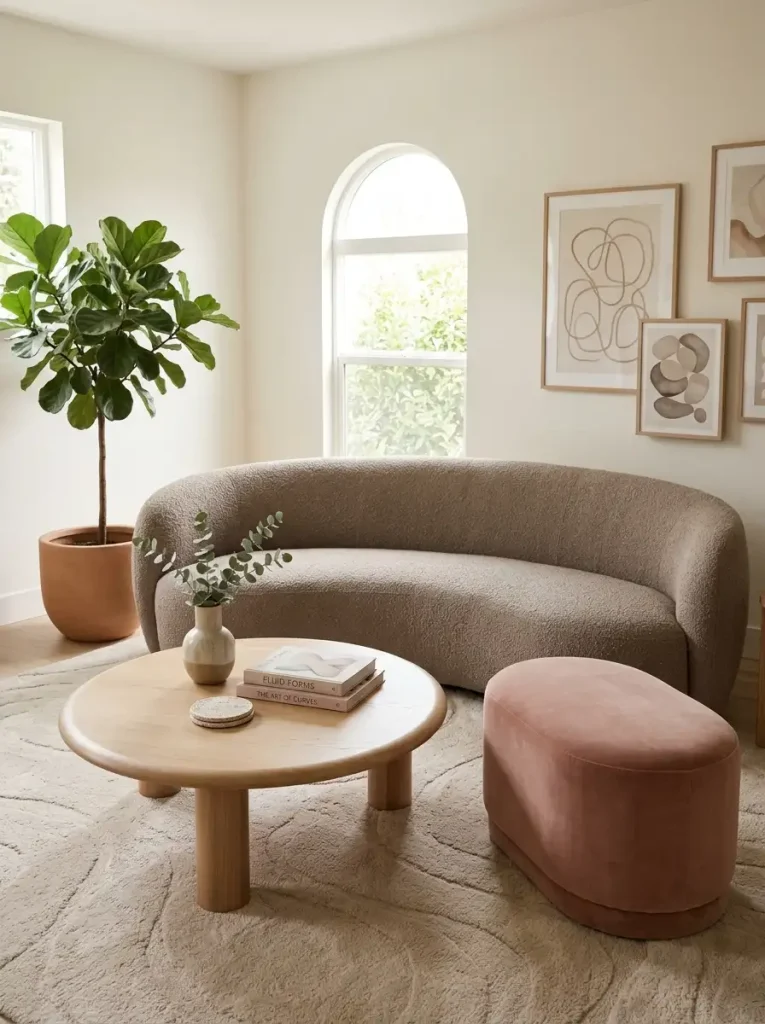
Warm, earthy neutrals. As mentioned earlier in this guide, warm creams, taupes, toffee tones, and muted greens are dominating American living rooms in 2026. These palettes work beautifully in small spaces because they are light enough to keep rooms feeling open while being warm enough to feel genuinely cozy and inviting.

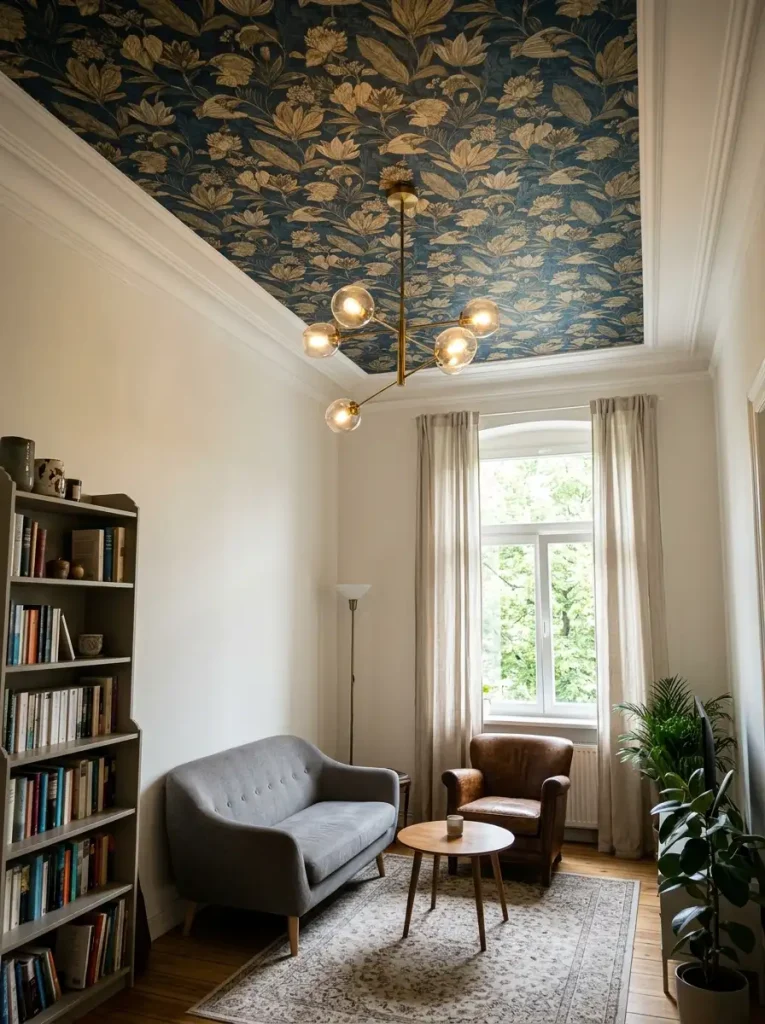
Statement ceilings. In small living rooms where floor space is at a premium, the ceiling is emerging as an exciting fifth wall. Whether painted in a contrasting color, covered in wallpaper, or fitted with decorative molding, a styled ceiling draws the eye upward and adds a sense of architectural interest that makes the room feel more significant and intentional.
Step-by-Step Process: How to Redesign Your Small Living Room
Follow this proven process to approach your small living room redesign with confidence and intention.
Step 1: Measure Everything Precisely Before purchasing a single piece of furniture, measure your living room in full detail. Note the location of windows, doors, electrical outlets, light switches, and any architectural features like fireplaces, columns, or built-ins. Create a simple scaled floor plan on graph paper or using a free tool like Roomstyler or Planner 5D.
Step 2: Identify Your Primary Pain Points What bothers you most about your current living room? Not enough seating? Too much clutter? The room feels dark? The furniture is too large? Identifying your top three problems helps you prioritize solutions and allocate your budget where it will have the greatest impact.
Step 3: Establish Your Layout First Before choosing colors, accessories, or decorative elements, settle on your furniture layout. Use your floor plan to try multiple arrangements. Confirm that every piece you plan to include fits the space with at least 18 to 24 inches of walkway clearance between major pieces.
Step 4: Choose Your Color Palette Once the layout is confirmed, select your wall color and primary furniture colors. In most small living rooms, a light, warm neutral wall color with two to three complementary accent colors in furniture and accessories delivers the best results.
Step 5: Shop Strategically Armed with precise measurements and a clear color palette, shop for furniture with confidence. Always confirm the dimensions of every piece before purchasing, and use painter’s tape on your floor to mock up the footprint of major pieces before they arrive.
Budget Breakdown: Small Living Room Makeover Costs in 2026
| Item | Budget Level | Mid-Range | High-End |
|---|---|---|---|
| Sofa or Loveseat | $300 to $700 (IKEA, Wayfair) | $900 to $2,000 (Article, West Elm) | $2,500 to $6,000 (RH, Arhaus) |
| Coffee Table | $80 to $250 (Amazon, Target) | $300 to $700 (CB2, West Elm) | $800 to $2,500 (RH, Crate and Barrel) |
| Area Rug | $60 to $200 (Ruggable, Wayfair) | $250 to $700 (Loloi, Pottery Barn) | $800 to $2,500 (RH, Visual Comfort) |
| Accent Chairs x2 | $150 to $400 (IKEA, Amazon) | $500 to $1,200 (Article, CB2) | $1,400 to $4,000 (Arhaus, RH) |
| Lighting | $60 to $180 (Amazon, Wayfair) | $200 to $600 (Lamps Plus, CB2) | $700 to $2,500 (Visual Comfort, RH) |
| Storage Pieces | $80 to $200 (IKEA, Target) | $250 to $600 (Pottery Barn, CB2) | $700 to $2,000 (RH, Arhaus) |
| Wall Paint | $50 to $100 (Behr, Glidden) | $100 to $180 (Sherwin-Williams) | $180 to $320 (Benjamin Moore) |
| Decor and Accessories | $80 to $200 (Target, TJ Maxx) | $200 to $500 (Pottery Barn, West Elm) | $500 to $1,500 (RH, Serena and Lily) |
| Total Estimate | $860 to $2,230 | $2,700 to $6,480 | $7,580 to $21,320 |
Budget Fact #1: According to HomeAdvisor’s 2025 to 2026 True Cost Guide, the average American homeowner spends between $2,500 and $8,000 on a full small living room makeover including furniture, paint, lighting, and accessories. The wide range reflects differences in city, room size, and the proportion of pieces being replaced versus refreshed.
Budget Fact #2: Urban homeowners in high cost-of-living cities like San Francisco, Seattle-Tacoma, and New York City typically spend 25 to 45 percent more than the national average on the same living room renovation scope, primarily due to higher delivery fees, local sales tax, and the premium pricing of furniture retailers concentrated in those markets.
Best Budget Tip: If you are working with a tight budget, prioritize the area rug and lighting first. These two investments have the greatest impact on how open, warm, and well-designed a small living room feels, and both can be found at strong quality levels for under $300 total.
Where to Shop for Small Living Room Furniture in the U.S.
IKEA is the undisputed champion for small living room furniture in America. Their apartment-scale sofa lines, modular shelving systems, storage ottomans, and compact coffee tables are specifically designed for smaller spaces. With major store locations in Chicago, Los Angeles, Dallas, and the greater New York and Philadelphia areas, plus nationwide online shipping, IKEA is the first stop for any budget-conscious small living room shopper.
Wayfair offers the largest online selection of small-space furniture in the United States, with robust filtering tools that let you search by exact dimensions. Particularly strong for area rugs, accent chairs, nesting tables, and lighting at every price point. Free shipping on orders over $35 makes it highly accessible to shoppers in cities like Denver, Phoenix, and Seattle-Tacoma where large furniture stores may be less convenient.
Target is one of the most underrated small living room shopping destinations in America. Their threshold and Studio McGee by Target home collections include excellent small-space accent chairs, nesting tables, storage baskets, throw pillows, and decorative accessories at very accessible price points. Available nationwide with convenient same-day delivery in most major metro areas.
The Home Depot carries a strong selection of wall shelving, floating shelf systems, storage solutions, and paint for small living room projects. Their online tool for visualizing paint colors on virtual room walls is particularly helpful for homeowners choosing between shades of warm white, greige, or light sage for small living room walls.
Small Living Room Mistakes to Avoid in 2026
Even well-intentioned homeowners make these common errors in small living room design. Knowing them in advance saves time, money, and the frustration of a redesign.
Choosing a rug that is too small. This is the most common and most damaging small living room mistake. A rug that floats in the center of the room without connecting to the furniture pieces around it makes the space feel chaotic and even smaller. Always size up.
Blocking windows with furniture. Never position a tall bookcase, an oversized sofa back, or any opaque furniture piece in front of a window. Every window in a small living room is a critical light source that must be treated as sacred real estate.
Using too many small decorative items. A collection of small, unrelated accessories scattered across every surface creates visual noise that makes a small room feel cluttered and overwhelming. Edit ruthlessly. Choose fewer, larger, more intentional pieces.
Ignoring vertical space. The walls above eye level in most small living rooms are completely bare and completely wasted. Floating shelves, tall bookcases, and large-scale wall art all draw the eye upward, make ceilings feel higher, and provide valuable storage and display opportunities.
Matching everything too precisely. A small living room where every piece of furniture matches perfectly tends to feel flat and one-dimensional. Intentional mixing of textures, materials, and slightly varied tones within a cohesive color palette creates depth and visual interest that makes the room feel more sophisticated and more spacious.
FAQ: Small Living Room Design
What size sofa is best for a small living room?
For a small living room, look for apartment-scale sofas that measure between 68 and 80 inches wide. Standard three-seat sofas at 84 to 96 inches wide are often too large and consume too much visual space in rooms under 250 square feet.
How do I make my small living room look bigger?
The most impactful tricks for making a small living room look bigger include painting walls in light, warm neutral colors to reflect light and make walls recede, hanging a large mirror to double the perceived depth of the room, choosing furniture with visible legs to show more floor surface, using large-format area rugs sized correctly for the seating zone, hanging curtains as high as possible and letting them fall to the floor to maximize the visual height of the room, and keeping surfaces clear of clutter to maintain visual breathing room.
What furniture should I avoid in a small living room?
Avoid oversized sectional sofas that wrap two or more full walls. Avoid massive entertainment centers that consume an entire wall from floor to ceiling without providing actual storage. Avoid glass-front display cabinets that are too small to have visual impact.
Conclusion
A small living room is not a limitation. It is an invitation to design with precision, intention, and genuine creativity. From compact apartments in New York City and Chicago to cozy homes in Phoenix, Denver, and Seattle-Tacoma, Americans are proving every day that thoughtful design transforms small spaces into genuinely beautiful, comfortable, and highly functional living rooms.
The strategies in this guide, from the correct furniture scale and layout approach to the right colors, lighting layers, and storage solutions, give you everything you need to make your small living room work harder, look better, and feel significantly more spacious than its square footage alone would suggest. Start with a clear plan, invest where the impact is greatest, and remember that in small living room design, less is almost always more.